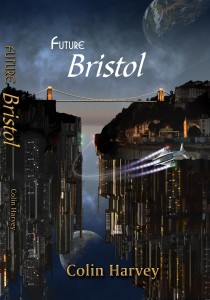
I know Colin (he reviews for Strange Horizons), but this is the first of his fiction I’ve read. It piles novum upon change upon invention, seen through a couple of days in the life of an unemployed man in near-future Bristol. One: Snarks, big subterranean bioweapon beasts, infest the country, drawn to the surface by rhythmic vibrations, such as those produced by walking. Two: jobs are scarce, and/or qualifications have been devalued; even the most menial require good degrees, if not doctorates. Three: there’s a deadly, weaponised disease called Blacktongue, that’s almost always fatal and spreads by touch, on the loose. Four: the surveillance state is worse; the narrator’s wife works at the Department of Work and Pensions, referred to as “the Stasi” by some characters; mobile phones are (it is assumed) routinely used to track citizens’ whereabouts. And so on. This is all so vigorously grim that it can’t really be taken entirely seriously, and I’m not wholly sure it coheres; but it’s fun, and bodes well for the proposed Winter Song reading group.
Month: January 2010
“By Starlight” by Rebecca J Payne
A cool drink of a story, measured and soothing; a story about freedom that itself feels free. Our protagonists are two sky sailors in a world divided into Flyers and Grounders. We learn how they met, and how they ended up where they are now. We see them trade with a merchant, and get out of a sticky situation. Their world, with its living, healing sky-ships, and “Amerika” and “Aysa” and “Europa”, could be a future and, under the skin, sf, or it could be alternate and fantastical. Payne’s story is detailed, and nicely specific, but the nature of her world doesn’t matter, not to her characters (one of whom, the narrator, is I think also casually unspecified; I didn’t notice any specific cues, and they have been read as both male and female) or to us. What matters is flying free.
One night, as we skimmed low over a wide lake, hauling up fresh water, we caught a silvery bird in our bucket. It had slippery skin instead of feathers and small wings that flapped in water as if in the air.
We threw it back over the side and watched it fly away, into the deep.
BSFA Award Nominations — Final Reminder!
Yes, today’s the day: nominations must be sent to Donna Scott, the Awards Administrator by 23.59 GMT today (Saturday). Don’t forget to include your membership number and/or postcode.
The four nomination-list posts have been updated with additional nominations received as of last night:
Me, I’m going to spend most of today reading short stories, I think…
Tender Linksels
- One more day to send in your BSFA Award nominations — they must be received by 23.59 tomorrow (Saturday 16th). And then you could vote in the SF Site Reader’s Choice awards. (You can do that if you’re not a BSFA member, even.)
- An open letter to fans, authors and critics of the male sex, and a related post by Liz Williams
- Sad news: the Internet Review of SF will be suspending publication after the February issue; so enjoy the January issue
- David Ketterer’s introduction to Plan for Chaos by John Wyndham
- China Mieville is blogging
- Kristin Cashore on writing fantasy
- Kari Sperring reviews The Cardinal’s Blades and L’Alchimiste des Ombres by Pierre Pevel
- My review of The Other Lands by David Anthony Durham
- L. Timmel Duchamp on Total Oblivion, More or Less by Alan DeNiro
- Graham Sleight interviews Farah Mendlesohn about On Joanna Russ
- A discussion about difficulty at The Valve
- Patrick Ness reviews Chronic City by Jonathan Lethem
- Adam Roberts on Shades of Grey by Jasper Fforde
- A round table on Australian sf at the World SF blog
- Discussion of cover art, with reference to Lauren Beukes’ forthcoming fantasy Zoo City
- Tony Keen and Tim Phipps on “The End of Time” (and the end of a Doctor Who era)
- More Avatar links: a round-up by Abigail Nussbaum; elsewhere, Roz Kaveney; Caleb Crain; Jonah Lehrer; Andres du Toit
- David Hebblethwaite on Galileo’s Dream by Kim Stanley Robinson
- Nic Clarke on The Road (the book)
- Mark Charan Newton asks: what do people mean when they say “clunky”?
- Realms of Fantasy is having an all-woman issue, which has attracted much comment
- Dan Hartland on Gardens of the Sun by Paul McAuley, and The Girl With Glass Feet by Ali Shaw; on the latter I echo much of his ambivalence, though I was more won over by the book in the end. Also over at Strange Horizons with a review of Sherlock Holmes, with further thoughts back on his blog here.
- New Peter Watts story at Clarkesworld: “The Things“; see Jonathan Strahan’s account of how this didn’t end up in Eclipse 3
- Books-of-2009 lists from Martin Lewis (and films), David Hebblethwaite, Abigail Nussbaum (and worst reads of the year, and best short stories).
- Science fiction is annoying Bruce
SterlingEverett - Guardian books podcast on sf, including interview with China Mieville.
- And finally: so at Worldcon, I was on a panel about the Terminator franchise with Abigail, and James Zavaglia. After the panel, we were approached by a chap from Electric Playground asking if he could interview us. We said yes, and they’ve used the material for this segment. (Also including coments from Russell Blackford.)
BSFA Award Nominations Update
I’ve updated the list for each category to reflect nominations received between Friday and yesterday evening:
Note also that of the existing nominations, “The Beloved Time of their Lives” by Roberto Quaglia and Ian Watson has been made available as a pdf.
EDIT: More stories! Lavie Tidhar has released four of the tales included in The Apex Book of World SF into the wild, as pdfs:
- “The Levantine Experiments” by Guy Hasson
- “The Wheel of Samsara” by Han Song
- “Wizard World” by Yang Ping
- “Cinderers” by Nir Yaniv
FURTHER EDIT: And Kim Lakin-Smith’s story, “Johnny and Emmie-Lou Get Married“, has also appeared.
“Here We Are, Falling Through Shadows” by Jason Sanford
“After all, why rippers kidnapped people was the only question worth asking in today’s world.” This is how Jason Sanford’s tales work, it seems: strip the world down so that the sfnal intervention demands an answer. Like “When Thorns are the Tips of Trees”, “Here We Are …” is set in a near-future crippled by disaster. The rippers are aliens that live in darkness (“light can’t remove every shdaow”) and prey on humans, either killing them, or taking them to a terrible fate Elsewhere. Its characters are, as ever, well-sketched but cast in familiar roles, even as they are defined by Sanford’s world: the firefighter (narrator) who must go out at night, the wife who has been killed or taken by the rippers, the teenage daughter alienated (ha) as a result. In “Thorns” these elements balanced each other quite nicely; here, I think, the trick is less successful. Understanding can cast its own shadow.
“Sublimation Angels” by Jason Sanford
 A nugget of New all swaddled in Old, that’s what this story is [pdf link]. Much of the pleasure in “Sublimation Angels” — as in Sanford’s two previous Interzone tales [more pdfs] — comes from the gentle unwinding of a satisfyingly odd setting, in thise case constructed in explicit homage to Leiber’s “A Pail of Air” (1951). Like that story, the narration is straightforward, more transparent even than Leiber (it lacks his folksiness); and, as in that story, the characters live, with very basic technology, on a wandering planet whose atmosphere has frozen. Unlike in that story, a repressive hierarchical society has arisen, based around access to oxygen.
Omare and I were born in the highest level of the cave in as much heat and good air as our expedition could give. While low kids raised their children in the lower cave’s cold, Omare and I never knew this deprivation when we were young. We only knew that our mother and father loved us, and if we climbed down the cave’s spiral tunnels we wore clumsy pails of frozen oxymix around our neck. The insulated pails contained a tiny tick-tock heater, and you cranked them every few minutes to smoke out the extra air needed to live.
What follows is about learning the world, rebelling against it, and becoming master of your own destiny. Heartwarmingly conventional stuff, if perhaps a bit stretched beyond its ideal length. But wait! There’s an ironic twist (arguably revealed very early on). It’s not just Sanford who has (like Karl Schroeder with his Virga) engineered his setting to allow its retro feel, protecting his colonists from the raw tech-dream that is the twenty-first century space opera future: one of the agents in his story has done the same thing.
So much for freedom.
Deborah Biancotti stories available to BSFA members
Deborah Biancotti has spotted that two of her stories have been nominated in the Best Short Story category, and has this offer:
If you are a kind British person &/or a member of BSFA & you’d like to read these stories, feel free to drop me a line (
deborahb AT livejournal DOT comrous AT deborahbiancotti DOT net) & I will cheerfully — very cheerfully — forward you an electronic copy of said stories. I may get a bit carried away & send you more than those two, but you’ll at least get those two stories & you can read ‘em or use ‘em for your electronic bird cages as is your wont.
So why don’t you?
BSFA Award Nominations So Far — Best Artwork
To recap, for anyone who wasn’t reading over the weekend: the deadline for nominating for this year’s BSFA Awards is this coming Saturday, 16 January. BSFA members can nominate as many items as they like in the four categories — Best Novel, Best Short Fiction, Best Non-Fiction, and Best Artwork. The five items with the most nominations in each case go forward to the final ballot.
As an aid to memory, I’ve been posting the nominations received so far in each category — that is, lists of everything that has received at least one nomination:
Today, the last of the categories: Best Artwork. Any single science fictional or fantastic image that first appeared in 2009 is eligible; to add your support to any of the works listed below, or to nominate anything else, email the BSFA Awards Administrator with details of what you want to nominate, and your membership number or postcode.
The list:
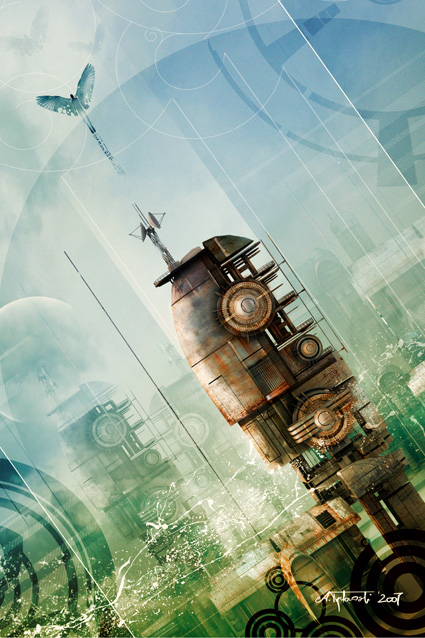
Cover of Future Bristol, ed. Colin Harvey by Andy Bigwood
Cover of The Push by Dave Hutchinson, by Andy Bigwood
Cover of The Gift of Joy by Ian Whates, by Vincent Chong
Alternate cover for Harry Potter and the Philosopher’s Stone by MS Corley
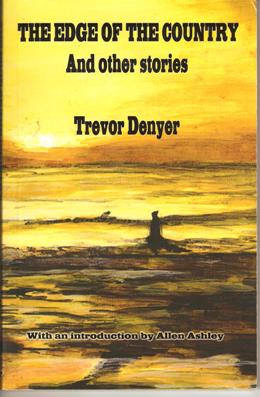
Cover of The Edge of the Country and Other Stories by Trevor Denyer
Cover of Boneshaker by Cherie Priest, by Jon Foster
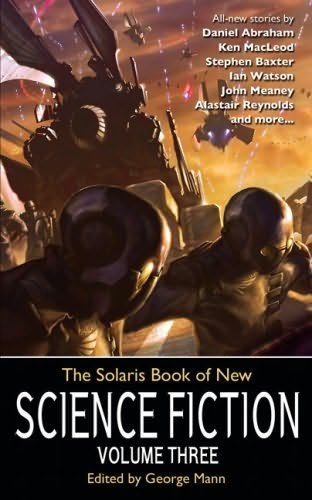
Cover of The Solaris Book of New Science Fiction, Volume Three ed George Mann, by Hardy Fowler
Alternate cover for 20,000 Leagues Under the Sea, art project by Nitzan Klamer
Cover of The Caryatids by Bruce Sterling, by Raphael Lacoste, jacket design is by David Stephenson.
“Emerald” by Stephanie Law
Cover of Murky Depths 7, by Chris Moore
Cover of Desolation Road by Ian McDonald, by Stephan Martinière, jacket design by Jacqueline Nasso Cooke.
Cover of The Sad Tale of the Brothers Grossbart by Jesse Bullington, by Istan Orosz
Cover of World’s End by Mark Chadbourn by John Picacio
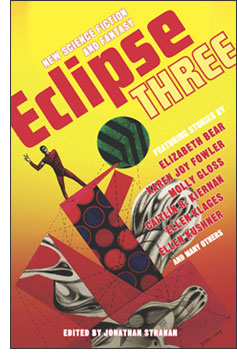
Cover of Eclipse 3 ed Jonathan Strahan by Richard Powers
Cover of Shadow of the Scorpion by Neal Asher by Steve Rawlings
Cover of Twisted Metal by Tony Ballantyne, by Jon Sullivan
Cover of Xenopath by Eric Brown by Jon Sullivan
Cover of Interzone 220, by Adam Tredowski
Cover of Interzone 221, by Adam Tredowski
Cover of Interzone 224, by Adam Tredowski
Cover of Interzone 225, by Adam Tredowski
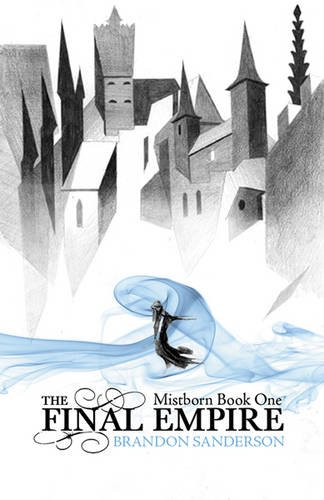
UK cover for The Final Empire by Brandon Sanderson, by Sam Green
Cover of Retribution Falls by Chris Wooding, by Stephan Martiniere
Cover of The Windup Girl by Paolo Bacigalupi, by Raphael Lacoste
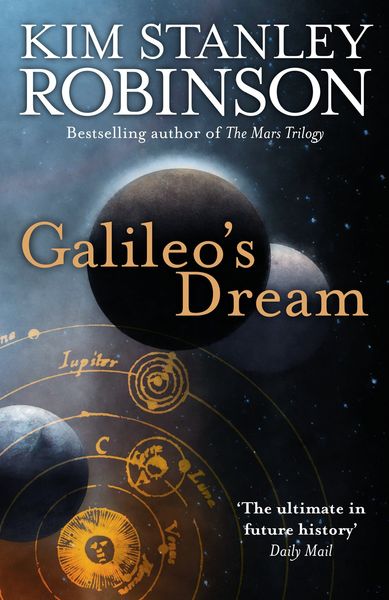
Cover of Galileo’s Dream by Kim Stanley Robinson
Cover of Journey Into Space by Toby Litt
Cover of The Resistance by Muse
Links are to the best-quality copies of each image that I could find; if you can improve on any of them (or if you know the artist details for any of the images that are missing them) do let me know.
Preach it!
… worth considering is the comment that Martin Lewis made in an earlier post of mine. In response to a comment Aidan Moher made about how “the problem doesn’t lie with the bloggers making the list, but rather with the genre as a whole and the manner in which publishers,” Martin said, “It is pretty pathetic to abdicate all responsibility like this.” There is much truth to this. If someone is going to construct a list and presume that said list will have value to others, then that list constructor better damn well be more proactive and thus basing his/her selections on what s/he receives passively from others. While there are certainly some valid arguments that could be made to the notion that reader/reviewers have the right to choose their “favorites,” once any list is presented as reflecting any sort of “authority” (and publicly posting decade’s best list, especially those derived from several who have a privileged relationship with the publishers compared to the average reader), then those reader/reviewers have certain obligations to meet in regards to considering more than their own personal tastes if they want their lists to hold any authority and if they don’t want to be called out for putting blinders on and failing to see just how diverse and wide-ranging speculative fiction (or other genres of literature and material culture, for that matter) really is.
 vector-bsfa.com