By Carrie Melmouth
The slovenly wub might well have said: Many men talk like philosophers and live like fools.
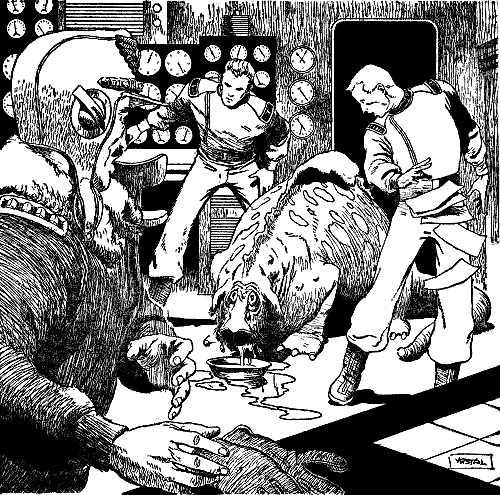
I was introduced to the work of Philip K. Dick by my (then) boyfriend (ten years ago) when I was twenty-three. His sitting room was lined with bookcases, and from it, one day, he pulled a book of Philip K. Dick short stories. ‘Beyond Lies the Wub’ is not the introduction to the work of PKD I would have chosen for myself. It explores none of the themes that interest me in PKD. The wub is a ‘huge dirty pig’. And the pig doesn’t want to be eaten. I was bored.
PKD was forty-five years old in 1974. He had sold his first short story, ‘Roog’ in 1951 and his first novel, Solar Lottery, in 1955. Both had been simultaneously pulpy and ontological. He had won the Hugo Award for The Man in the High Castle (which also bores me) in 1963. The Three Stigmata of Palmer Eldritch had not won the Nebula Award in 1965 (losing out to Frank Herbert’s Dune). Later, in what came to be known as The Exegesis, he wrote that his ‘mystical experiences start[ed] in ’63 when’ he ‘saw the “Palmer Eldritch” visage [in] the sky’. For all the plurality of his ‘mystical experiences’, though, when people do talk about PKD’s mystical experiences, what they talk about is 2-3-74. In the 1986 17th issue of Weirdo, comix cartoonist Robert Crumb illustrated a (necessarily reductive) account of 2-3-74.

In a letter to Peter Fitting (on the 28th of June), PKD wrote that:
the future is more coherent than the present, more animate and purposeful, and in a real sense, wiser. It knows more, and some of this knowledge gets transmitted back to us by what seems to be a purely natural phenomenon. We are being talked to, by a very informed Entity: that of all creation as it lies ahead of us in time.
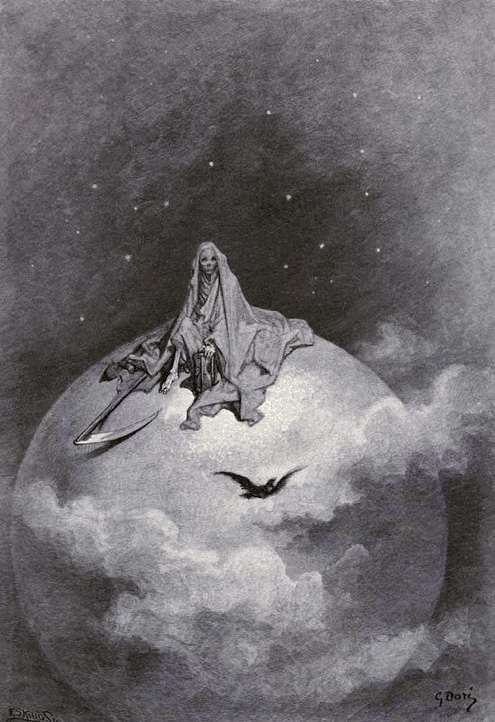
In the 1994 documentary Philip K. Dick: A Day in the Afterlife, fellow SF writer Brian Aldiss said PKD ‘went round the bend’. Clinical Psychologist Kye Arnold’s 2016 book The Divine Madness of Philip K. Dick devotes 248 pages to deciding whether or not PKD ‘went round the bend’ (verdict: he did not). In his 1975 essay for Science Fiction Studies, ‘Philip K. Dick: A Visionary Among the Charlatans’, Stanisław Lem wrote that PKD ‘leaves the reader at the end on the battlefield, enveloped in the aura of a mystery as grotesque as it is strange’. This is less the conventional territory of SF and more Edgar Allan Poe’s ‘wild weird clime that lieth, sublime, Out of SPACE—Out of TIME’, ‘time and space have been abolished’, and ‘the press of time on everything, having been abolished, reveals many elements underlying our phenomena’.
The journal PKD started in 1974 ran to thousands of pages. In 2011, fragments of the journal are published posthumously, as The Exegesis of Philip K. Dick. In his afterword, ‘A Stairway to Eleusis: PKD, Perennial Philosopher,’ Richard Doyle presents PKD as (an initiate and) an initiator into Eleusinian Mysteries (if this sounds leftfield, keep in mind that Richard Doyle is Professor of English at Penn State University).
It is (circa) 2011. I am standing outside a pub. I make a reference to The Decline and Fall of the Roman Empire. “Ah, but did Rome fall?”, my interlocutor replies. I have no idea what they are talking about. I nod and smile and laugh knowingly and feel awkward and ignorant and ashamed. It is (circa) 2016. I am a postgraduate. My thesis is on Time, Space, and Fictional Psychopharmaceuticals in Three Novels by PKD. I don’t know why. I have barely read any PKD. I am reading The Exegesis, and remember that conversation, and know what they were talking about.
There are two Romes. There is or was the phenomenal Rome printed out in linear time, which is now gone, like every other printed-out thing. But “Rome” the Platonic archetype still exists, outside of (our) time; that latter Rome is what I saw.
‘According to ’t Hooft the combination of quantum mechanics and gravity requires the three dimensional world to be an image of data that can be stored on a two dimensional projection much like a holographic image.’ (The World as a Hologram, Leonard Susskind, 1994/1995, Journal of Mathematical Physics) PKD writes that he ‘conceive[s] our universe—the hologram—to consist of an infinite number of laminated layers arranged in sequence’. And what did he see through this Scanner clearly? ‘Piercing the veil, seeing into the heart of our (present) world, I saw Urbs-Roma. [P]ower and force, stone walls, iron bars—just what Mumford expresses…
[Rome gave] a municipal form to its parasitism[.] Sinking under the soporific illusions of the Pax Romana, [t]he peace and justice that the Romans boasted had about the same degree of reality as the ‘competition’ that operates under the current monopolistic control and forced consumption imposed by American business. Predatory success underwr[iting] a sickening parasitic failure.
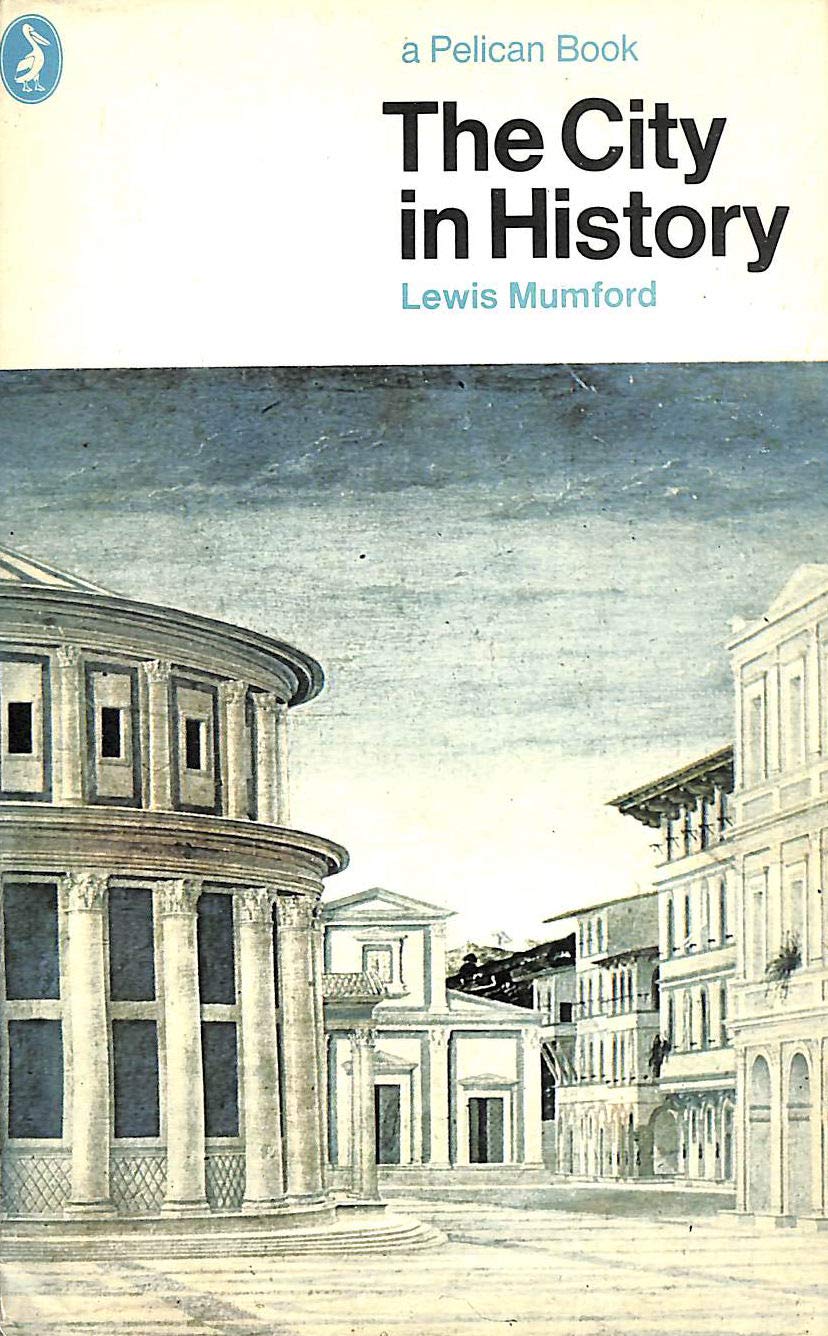
This was also the Rome of the Apostolic Age. ‘[T]ime […] ha[s] been abolished,’ and the age of miracles is enacting a The Divine Invasion of the space age of PKD’s contemporary USA, which is being viewed through the lens of Apostolic Rome. It is, like much of PKD’s fiction had been as far back as Dr Futurity in 1953, an achronological dissolution of koinos kosmos (and by “it” I mean both his work and his life, the dividing line between the two being increasingly osmotic). Something timeless and transcendent is breaking through ‘the trash of the gutter’, the atemporal temporalises itself through the all-too-temporal.
PKD’s Rome is most vividly described in his 1977 not-really-SF novel A Scanner Darkly. Commentators express surprise that such a ‘head’ a PKD was would be the author of (arguably) the defining anti-drug novel of the 1970s. Scanner was more an anti-war-on-drugs novel. In a 1994 interview for Harper’s Magazine, John Ehrlichman, counsel and Assistant to the President for Domestic Affairs under President Richard Nixon, admitted that the war on drugs was politically motivated:
The Nixon campaign in 1968, and the Nixon White House after that, had two enemies: the antiwar left and black people[.] We knew we couldn’t make it illegal to be either against the war or black, but by getting the public to associate the hippies with marijuana and blacks with heroin, and then criminalizing both heavily, we could disrupt those communities. We could arrest their leaders, raid their homes, break up their meetings, and vilify them night after night on the evening news. Did we know we were lying about the drugs? Of course we did.
The consequences of this policy for working class drug-using Americans were (by design) catastrophic. The parasitic system had made its presence too felt.

‘There [i]s’, wrote Paul Williams in Burgling the Most Brilliant Sci-fi Mind on Earth – It Is Earth, Isn’t It? (Rolling Stone, 1975), ‘something about ordinary reality that causes it to go all shimmery in the presence of Philip K. Dick.’ The objective of PKD’s writing and thinking after 2-3-74 is, as he writes in The Exegesis, ‘a medicine that cures madness; viz: the drugged intoxication of our earthly state’, ‘shared idios kosmos-es, giving the impression of illusion of a koinos kosmos’ (or ‘shared world’). PKD’s disenchanted ‘head’, rudely awakened by the alarum bell of an existentially unbearable sociopolitical situation, finds themselves in the cave.
SOCRATES: Imagine this: People live […] in a cavelike dwelling. The people have been in this dwelling since childhood, shackled by the legs and neck. Thus they stay in the same place so that there is only one thing for them to look at: whatever they encounter in front of their faces. But because they are shackled, they are unable to turn their heads around. [They] have never managed[…] to see anything besides the shadows that are projected on the wall opposite them[.] A prisoner gets free[.]
PKD describes himself as a neoplatonist (a neoplatonist equipped with a spaceage explicatory toolkit).
If I were to say to you: “The universe which we perceive is a hologram,” you might think I had said something original, until you realized that I had only updated Plato’s metaphor of the images flashed on the walls of our cave, images which we take to be real. The universe as hologram is more arresting, though, because the hologram is so strikingly like the reality which it refers to[.]
One layer of this is Rome: the layer of the cave, everyday life imperially leeched of real reality, Baudrillard’s simulacrum writ logos-illegifying, the banal pervasive self-perpetuating hell he Munch-screams at in Scanner:
[T]he same McDonaldburger place over and over, like a circular strip that turned past you as you pretended to go somewhere. And when […] you […] bought a […] burger, it was the one they sold you last time and the time before that and so forth, back to before you were born[.] Nothing changed[.] What there was always more of had been congealed into permanence long ago, as if the automatic factory that cranked out these objects had jammed in the on position.
That is the everyday layer, the koinos kosmos funneling coins up to the emperors of free-market economics. But what about the other layers? PKD wrote that he was ‘systematically undermining the philosophers and philosophy on which capitalism is based, and going back to […] neoplatonism.’
3 levels or layers are represented. No one wishes to take seriously the deepest one (except me). The logos, the word, is represented; that which is written gives rise to the living world (creatures, nature) which in turn gives rise to our artificial environment. If we place ourselves in the top world (artificial construct) we are totally walled off—have no knowledge or contact with—the logos substratum, nor, if it is called to our attention can we see any merit in it: if 2 is real and rational, 1 is not. It is even hard, if not impossible, to comprehend 2 (when one starts with 3[).]
PKD’s Layer 1 is different to Plato’s/Socrates’ 1 (PKD’s Layer 1 is different to our Layer 1), but PKD’s Layers 2 and 3 are the same as Plato’s/Socrates’ Layers 2 and 3 (and the same as our Layers 2 and 3). Beyond ‘the philosophers and philosophy on which capitalism is based’ are Layers 2 and 3. What are Layers 2 and 3 (and how do they underline capitalism)? Here we(/I) run into difficulties. As Richard Doyle has repeatedly pointed out, what we are talking about here is ontological knowledge (you had/have to be there).
PKD writes: ‘[M]ust we first be de-occluded to see the in-breaking, or will the in-breaking de-occlude us? (I know the answer: the latter.)’ Layer 2 is revelatory, both in that it is epiphanic and in that it is revealed (by Layer 3). Layer 1 is temporal and causal, layer 2 is acausal. Or is it? It cannot be caused by Layer 1 (this points to Layer 3). Layer 2 is the Layer of the unexpected/unexplained/supernormal/epiphanic, the layer of 2-3-74 and the origami unicorn in Bladerunner.
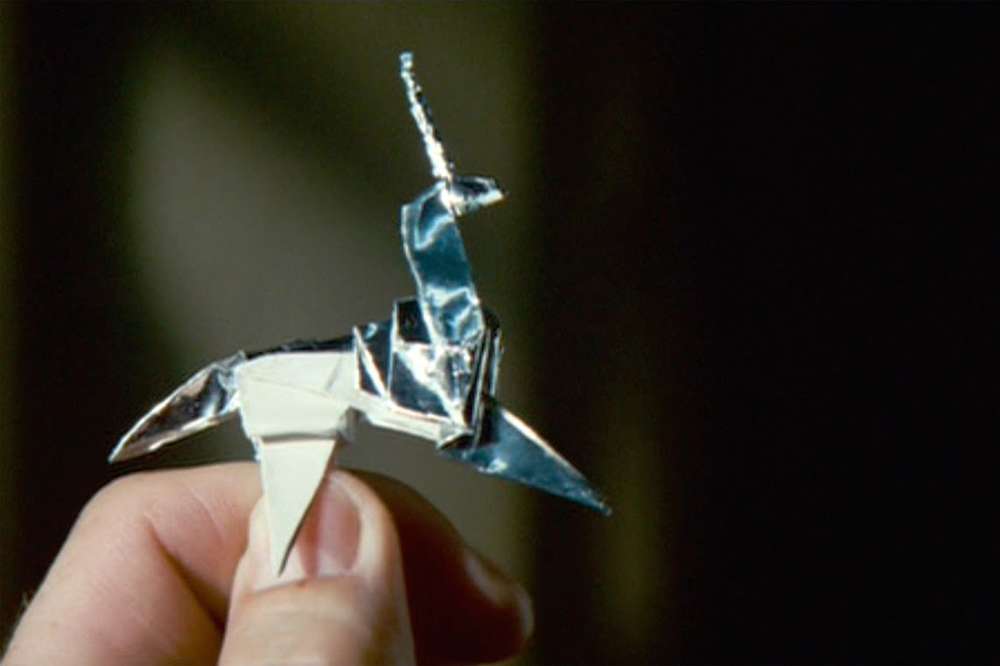
Layer 2 is the layer of light-switches you expect to be and are not, of voices and visions, ‘shining in the faces of the animals, in the trash of the gutter, in the stars’, the ‘immanent all pervading divine stuff’ which PKD ‘saw as the living force of causality’. This acausal quality, inexplicable by reference to Layer 1, suggests a further layer — and it demands, for PKD, a teleological argument for … something. That something, framed in neoplatonic terms, is Layer 3 (the Logos).
Why frame it in neoplatonic terms? Why not appeal, as Brain Aldiss did, to science? Or psychology, or psychiatry? Well, none of these framings are incompatible. Neoplatonism does perhaps connect in a specific way to PKD’s lived experience. Layer 3 airlifted PKD out of McDonalds America, and PKD, who had studied Philosophy at college (he was ‘honourably dismissed’ in 1950), recognised it from its description. If he hadn’t known about neoplatonism it is entirely possible that he would have just thought he was just going round the bend. Ironically, it was a frame of reference provided by Layer 1 (studying Philosophy at college) that provided him with an alternative to a Layer 1 explanation. (You’re only meant to study it, you’re not meant to experience it.)
from the moment that you realise most of this ain’t real to the moment that you decide shall we go out tonight and we’ll swim from these island shores ‘til there’s a fear of drowning
 vector-bsfa.com