Abolish the Family by Sophie Lewis
Review by Beyond Gender
“Abolish the family? You might as well abolish gravity.” (1)

It is with these words, spoken by an imagined, horrified reader, that Sophie Lewis begins their new book. From the outset, the magnitude of the task ahead for family abolitionists is clear. To abolish the family is to attempt something frightening, something unthinkable, something which requires one to challenge the fundamental rules which bind our world together. It is, then, no surprise that again and again Lewis reaches for science fiction (SF) to articulate this vision of a world beyond the family. For an SF creator, to abolish a so-called law of nature is not a ridiculous proposition which can be used to embarrass utopians into giving up on their belief that “things could be different” (4, emphasis in original). It is rather a serious undertaking which involves an investigation of those forces which hold life as we know it together, the willingness to experiment with those same forces, and the determination to remake the world, however alien what comes next might be. This is the spirit in which we, the Beyond Gender research collective, approach Lewis’ book. We are a group of SF fans, researchers and creators who are committed to tapping into the radical potential of SF to undo the supposed naturalness of such myths as the binary model of gender, cis- and heteronormativity and, now, the family.
“Abolish the family? You might as well abolish gravity.”
“Okay then, might as well.”
The Family is Horrifying
In Abolish the Family, Lewis lays out the science fictional, utopian project of family abolition as one which is both visionary and practical. This project begins with a call to see the family for what it is – not a natural and unavoidable feature of life which humanity shares with all non-human animals, but rather “a social technology that isolates [people], privatizes their lifeworld, arbitrarily assigns their dwelling place, class and very identity in law, and drastically circumscribes their sphere of intimate, interdependent ties” (2-3). Appealing to the estranging effects of SF, Lewis argues that the horror of the family, of this “disciplinary, scarcity-based trauma-machine” (4), is often most obvious when represented in the horror genre. In Lewis’ reading, this “medium crawling with moms turned murderers, blood-spattered dining-rooms, incest revenges, and homes set ablaze […] openly implicate[s] the family-form in the tortures it is enduring” (16-17). Lewis points to works such as Jordan Peele’s Us (2019) and Ari Aster’s Hereditary (2018), to which one might add Alison Rumfitt’s Tell Me I’m Worthless (2021), Rivers Solomon’s ‘Blood is Another Word for Hunger’ (2019) or Pamela Zoline’s ‘Heat Death of the Universe’ (1967), as texts which refuse to position ‘the family’ as an innocent and beleaguered “microcosm of the nation-state” (6). These texts make visible the fact that it is the family itself which is horrifying – that, in other words “the monster is coming from inside the house” (17).
The strength of Lewis’ argument lies in the fact that she refuses to lay the blame for the horror of the family either on individual bad actors or on some external force which has corrupted the family from its ‘true’, love-filled form. As Lewis argues so persuasively, it is not merely that families have been used as tools of oppression, it is that the family is an oppressive tool. The family is the means through which wealth is hoarded along lines of biological inheritance. It is the logic which is used to justify parents asserting “property rights in ‘their’ progeny” (5) so that children become unable to exercise autonomy over their own lives. The family is the means through which capitalist society reproduces itself. As Lewis puts it: “The family is the reason we are supposed to want to go to work, the reason we have to go to work, and the reason we can go to work” (4, emphasis in original). The family is “the name we use for the fact that care is privatized in our society” (4), so that the task of looking after children (and indeed all who need care, so, everyone) is not collectively shared but instead kept ‘in the family’. As Lewis argues, the family’s function is to “replace welfare” (7) through the “privatization of that which should be common” (9). Reliance on the family as a naturalised social safety net absolves wider communities from responsibility for providing care, thus tacitly justifying the ideological dismantling of social welfare systems. In practice what this means is that the question of ‘who receives care’ is decided on biological lines. For everyone else — those who have fallen through the gaps in this poorly woven ‘safety’ net — there is no care left. There is only freefall. Moreover, what Lewis shows us is that patching over these gaps won’t work and can only result in more entanglement within the family’s (or capitalism’s) oppressive mesh. This net, monstrously, horrifyingly, is not only failing to catch us, it is designed to strangle us. The family, in Lewis’ reading, is then itself a monster.
Anti-family Science Fiction
To see the family as a horrifying mechanism is, for Lewis, a crucial first step in the process of abolishing it. In line with the early, SF-obsessed writing of Donna Haraway — whom Lewis describes as “the philosopher to whom I owe my feminism” (83) but with whom she has a number of important philosophical differences, particularly regarding Haraway’s embrace of anti-natalism and the fallacy of overpopulation in her later writings (see Lewis, ‘Cthulhu Plays No Role For Me’ (2017)) — Lewis insists that acknowledging that the family is strange and unnatural allows one to think of it as potentially open to transformation. Moreover, while the “hostile kitchen appliances, creepy children, murderous kin and claustrophobic hellscapes” (17) of horror serve to bring the strangeness of the family to light, this is not where SF’s relevance to family abolition ends. Rather, science-fictional thinking is shown to have played an integral part in the broader project of, as Haraway puts it, theorizing “an ‘unfamiliar’ unconscious, a different primal scene, where everything does not stem from the dramas of identity and reproduction” (cited in Lewis 83).

The theorists of this utopian, ‘unfamiliar’ unconscious, whose work Lewis tracks in their potted history of family abolition, are frequently shown to be science-fictional thinkers. Their work ranges from the utopian visions of French philosopher Charles Fourier — described by M.E. O’Brien as “a delightfully kinky science fiction writer” (cited in Lewis 73), who imagined worlds filled with both seas of lemonade and kitchenless cities which served “to abolish the woman-crushing norm of the private kitchen” (37) — through to the anti-family pamphleteering of Soviet thinker Alexandra Kollontai — who “demand[ed] something magnificent”, as Lewis puts it, from communist women, namely that “the narrow and exclusive affection of the mother for her own children […] expand until it extends to all the children of the great proletarian family” (cited in Lewis 50) — to Shulamith Firestone’s The Dialectic of Sex (1970) which “voices scalding refusals of almost every ‘natural’ premise of American society” by advancing “a vision of a future in which children and adults together — having eliminated capitalism, work, and the sex distinction itself — democratically inhabit large, nongenetic households” (57). To make family abolitionist SF is not, then, simply to critique the family. Rather these thinkers use SF to begin to imagine what lurks beyond the family’s horizons.
In many ways these family abolitionist tracts are themselves works of SF. However, anti-family politics have also informed writing published within the genre. As Lewis described in her first book, Full Surrogacy Now (2019), within SF it is the critical feminist utopias of the 1970s which most explicitly show the influence of these visions of kitchenless futures structured around what Kollontai called “red love” (50 emphasis in original) and made possible by experiments in “automating labor (even reproductive labor, as far as possible)” (56), à la Firestone. The feminist utopianism of works such as Marge Piercy’s Woman on the Edge of Time (1976), Ursula K Le Guin’s The Dispossessed (1974), Suzy McKee Charnas’ Motherlines (1978) and Samuel Delany’s Triton (1976) all variously and unevenly bear the mark of the family abolitionist politics of the Gay, Women’s and Children’s liberations movements of the long 1960s – movements from which, as Tom Moylan has famously argued, these texts directly emerged. While these may be the best known family abolitionist SF texts, as Lewis notes, “family abolitionism has by no means been a continuous or even consciously coalitional campaign” (36). Alongside, sometimes in concert with, sometimes in opposition to, this Euro-American revolutionary tradition, lies a history of family abolition which takes as its chief object what Kim TallBear (Sisseton Wahpeton Oyate) has termed the insidious effects of “colonial notions of the family” (cited in Lewis 40) on Indigenous peoples. Lewis discusses how, during the (ongoing) colonisation of what are now known as the Americas, the enforcement of patriarchal, Christian monogamy by European settlers on Indigenous peoples was a crucial method of “dissolving tribal models of collective ownership that went along with gender-nonbinarism, non-monogamy, and/or matrilocal open marriage” (40). This colonial dispossession of Indigenous land via the imposition of the family dovetails with slavers’ attempts to render enslaved people “kinless” (to use Hortense Spillers’ phrase) (43). Lewis makes it clear that it is only when one considers the “abolition of the family as a decolonial imperative” (43, emphasis in original) that the contradiction at the heart of pro-family politics is made visible: namely, that a key “method of imposing ‘the’ family” has involved the “breaking of kinship ties”, in Indigenous communities through the abduction and imprisonment of thousands of Indigenous children in so-called “Indian Schools” (41) and within Black communities through the rape and forced impregnation of captive laborers and the selling of children away from their parents. Here, Lewis shows that the family is a white supremacist structure, not merely distinct from, but actively opposed to, those “heterogenous, anti-propertarian versions of kinship” (43) practiced by dissident Indigenous and Black communities. To care for one another by “mothering outside of motherhood” (44), as discussed by Octavia Butler scholar and activist Alexis Pauline Gumbs, is here shown to be an anti- rather than pro-family move – an example of what Lewis calls “family-abolitionism-from-below” (46).
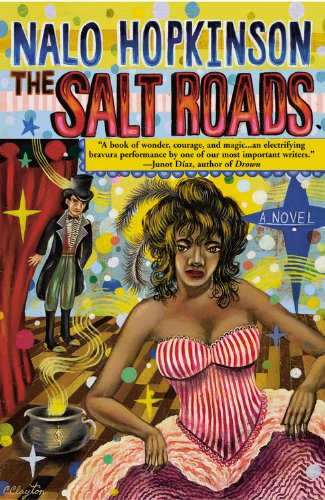
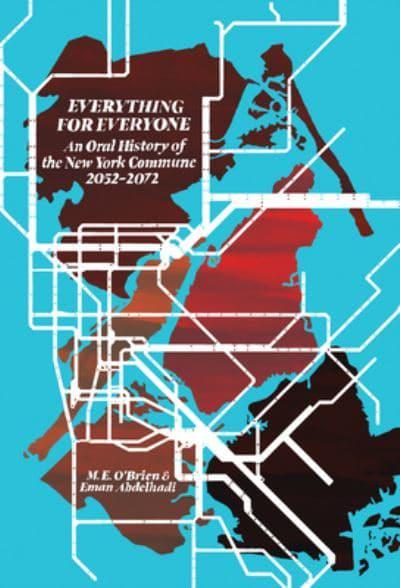
What family-abolitonism-from-below opens up is a world of anti-family SF which extends far beyond the core feminist utopias of the 70s which, while they retain important lessons for family abolitionists, have had to bear the weight of the genre’s utopian potential for too long. Some texts, such as Octavia Butler’s Kindred (1979) or Clare Coleman’s Terra Nullius (2017), tell this story directly by, respectively, depicting the traumatic inheritance of slavery and the horror of the residential schools in Australia. Others draw inspiration from what Saidiya Hartman has called the wayward lives and beautiful experiments of “riotous black girls, troublesome women, and queer radicals” (cited in Lewis 45) who have operated against the family. In The Salt Roads (2003), for example — Nalo Hopkinson’s tale of queer enslaved midwives, sex workers and prophets — Hopkinson explores the possibility of creating networks of care and connection outside of and against ‘the family’. Meanwhile, Lewis instructs their readers to “as a matter of urgency” heed the words of Lola Olufemi who, in “in her paean to diasporic Black revolutionary feminism” (87) Experiments in Imagining Otherwise (2021), writes of “the possibility that we could reorganize the family and the buildings we live in and the food we eat and the education we receive and start taking things for free in order to raise children in ways that make sacrifice or regret or biological drives or gendered alienation impossible” (cited in Lewis 87). Overlapping with this Black feminist tradition of family abolition — which extends from maroon enclaves to welfare activists — lies a history of trans liberation against the family, one which comes with its own attendant SF history. From Susan Stryker’s defiant association with that un-parented being, Mary Shelley’s Creature, voiced in ‘My Words to Victor Frankenstein Above the Village of Chamounix’ (1994), to Isabel Waidner’s exploration of the violence of the border and the threat it poses to delegitimised queer and trans relations in Sterling Karat Gold (2021), the “exponents of ‘transgender Marxism’ and ‘abolition feminism’”, who Lewis argues “are driving the resurgence” (72) of family abolition, speak with a science-fictional voice. Indeed, it is with a work of SF that Lewis ends their potted history. Writing of O’Brien and Eman Abdelhadi’s co-authored 2022 novel Everything for Everyone: An Oral History of the New York Commune 2053-2072, Lewis argues that it is in science fictional works such as this that family abolitionists of the twenty-first century are able to educate their desires “by speculating concretely about the architectures, challenges, timelines, infrastructures and affects of family abolition” (74).
Embodied Science Fiction
These experiments in imagining otherwise do not merely exist on the page. Abolish the Family also calls forth an embodied form of SF — an understanding of the genre as a process: “[…] as something one can do and be, as well as create and critique” (Stone, 2020). What this means is that the influence of SF on Abolish the Family stretches far beyond Lewis’ citation list. Alongside the imagined tales of artificial wombs and alien surrogates, Lewis demonstrates that SF also “nestles latently in the present […] everyday utopian experiments” (6) of real life family abolitionists. In these various “cradles of possibility, relief, and reciprocity” (77) one can find people who are living the lives of which SF creators dream. Further, Lewis insists that these “micro-cultures” of family abolitionist collectivity “could be scaled up if the movement for a classless society took seriously the premise that households can be formed freely and run democratically; the principle that no one shall be deprived of food, shelter, or care because they don’t work” (6). Lewis’ engagement with SF is so important for SF scholars because she weaves it seamlessly into her political vision. It is not that she cannot distinguish between, say, the multi-parent households of Le Guin’s planet of O and the “domestic units comprising 200 to 250 people” proposed by Angry Workers of the World (cited in Lewis 74). Rather, it is that she argues for collapsing the difference between the two. For Lewis, family abolition in real life “feels like the horizon toward which speculative fictions like Le Guin’s are reaching” (19). “Like all utopias” even the most seemingly impossible of family abolitionist dreams “has its wispy sprouts in nooks and crannies wherever people, against all odds, are seeking to devise liberatory and queer—which is to say, anti-property—modes of care.” (19)
It is in Lewis’ dedication to theorizing family abolition as an embodied form of SF that the connection between family abolition and world-building becomes clear. Initially, one might think of abolition as a primarily destructive form of politics. And, indeed, Lewis does not shy away from the destructive aspects of abolition; writing: “Abolitionists want to abolish. We want things not to be. We want an absence of prisons, of colonizers. We desire the nonexistence of police” (80). In this we might ally the politics of family abolition with those of N K Jemisin’s The Fifth Season (2015), where a character chooses to literally rip the world apart rather than continuing to reproduce children for an oppressive state. However, Lewis views family abolition as combining this world destruction with a move towards world creation. Taking inspiration from the words of abolitionist theorist Ruth Wilson Gilmore – who notes that abolition “is not the absence of something; it’s the presence of something” (cited in Lewis 81) — Lewis argues that in much the same way that “the abolition of prisons and of the police, rather than constituting a simple deletion of infrastructure, is better understood as a world-building endeavor”, family abolition is a creative process (81) . Thus, even when family abolitionist theorists Michèle Barrett and Mary McIntosh answer the question “What would you put in the place of the family?” (84) by stating, “we would put nothing in the place of the family” (cited in Lewis 75), Lewis writes: “I hope it is a glorious and abundant nothing” (88). To make the new world we must first destroy the old. Lewis acknowledges that “it’s existentially petrifying to imagine relinquishing the organized poverty we have in favor of an abundance we have never known and have yet to organize” (4), and still she holds out a hand to her readers and invites them to join her in imagining the never known world, insisting that “if we hold hands, we can certainly be brave enough to step into the abundance that will be the nothingness that comes after the family” (84).
Chosen Family is Not Enough
Our writing, organising, creating, and being as Beyond Gender has involved engaging with Lewis’ thought almost from the very beginning of our collective’s existence. Reading Abolish the Family together we asked ourselves, what new challenge did this text pose to how we think about SF, and how we think about ourselves? With this question in mind we looked back at some of our old writing projects and thought about what we might change in light of our renewed commitment to family abolition.
The first tendency that we found in our work was to qualify the kind of family we were critiquing. We expressed desires to “leave that capitalist technology of containment, the heteropatriarchal, nuclear family, behind” (Beyond Gender 2022, 198) and talked about exploring “affective bonds that exist outside those of the heteronormative family” (Beyond Gender 2023, 45). In this we were conforming to a broader tendency, identified by Lewis, among would-be family abolitionists to “take pains to specify that they mean the ‘white’ or ‘bourgeois’ or ‘nuclear’ family— not, perish the thought, your complex, financially struggling, queer and/or racially marginalized kinship network” (20). As we read Abolish the Family these qualifications felt less and less necessary. Rather than trying to separate the bad families from the good, Lewis encourages us to “insist that there is no family other than the white, nuclear, bourgeois family, in a structural sense” (20). To abolish the family is to support, not to oppose, attempts to nurture community in a hostile world. Love your relatives (or disavow them), Lewis urges, but know that the family as an institution does not help you to do either.
This first tendency, to qualify the kinds of family we don’t like, is tied to our second, now questionable, tendency — namely, to qualify the kinds of family we do like. Although we have not used the language of family itself we have, again and again, discussed the desirability of kin. We wrote of the “intricate networks of queer kinship and identity” in Kaia Sønderby’s Tone of Voice (2018) and the possibilities that they offered for “queering the notion of kinship” (Beyond Gender 2022, 202 and 218) . We wrote about wanting to be part of a “tradition of unnatural feminist kin-making” and, following Haraway, equated our practice as Beyond Gender with “becoming science fictional oddkin” (Beyond Gender 2023, 44 and 47). Again, our desire for a radical form of kinship is prevalent in family abolitionist-adjacent work where, as Lewis writes, arguments are “typically made for ‘expanded,’ ‘extended,’ ‘non-sanguinal,’ ‘queer,’ and ‘intergenerational’ alternatives” (26) to the family. While they have some sympathy with these desires, Lewis, drawing on the scholarship of Tiffany Lethabo King, notes that “kinship” still “functions as a linguistic appeal to something non-contingent that can ground a relation” (83). When we talk about wanting to be kin we negate our desire to be together, the practice of caring for one another, the sharing of responsibilities, as legitimate means of making us into a bonded community. As Lewis puts it: “We can talk about extending kinship to the whole world all we want,” but “if kinship were truly something we valued as made, not given, we wouldn’t have to specify the word ‘chosen’” (as in chosen family) when talking about non-genetic kin (85). In the future, then, we join with Lewis in her “serious and concerted effort to loosen, unseat, and unlearn the thought, practice, and language of ‘kinship’” (84). We are friends, comrades, kith, ammari (see ‘The Shobies Story’ (1990) by Le Guin), attendant not only to those we choose to be with but to those who are unchosen. We work, not for inclusion into the family, or a queered version of it, but for a queer mode of being together which retains what Lewis calls the “abolitionist freight” of the word ‘queer’, “signifying resistance to capitalism’s reproductive institutions: marriage, private property, patriarchy, the police, school” (19).
And for those who are, as yet, without our commitment to queer collectivity, do not let this stop you from picking up this book. A great strength of Lewis’ argument is that they do not mock those who are “worried about [their] dad getting all upset if he sees [them] with this book” (4). They “get it” (4). Indeed, it is precisely because they get it — because Lewis understands the allure of the family as embodying “a chance of guaranteed belonging, trust, recognition, and fulfillment” (10) — that they are able to argue effectively for family abolition. To want to hold onto the family as the logic that glues our society together is understandable, but, as Lewis argues again and again, we must nevertheless relinquish “the organized poverty we have in favor of an abundance we have never known” (4). For us, this includes relinquishing even a qualified attachment to the language of family.
A Wager
This non-contingent, non-privatised way of living is what Abolish the Family offers us, as SF scholars and as people. It is a short book and there is so much more to say about the family and what lies beyond it. What would childcare, eldercare, ongoing, painful, mutual care, look like without the family? How does the family’s shape differ in differing colonial, postcolonial and anticolonial contexts, and what do these different shapes mean for the project of family abolition? What does a family abolitonist house look like? How about a street? A city? A world? These are questions which may well be addressed in M E O’Brien’s book Family Abolition: Capitalism and the Communizing of Care (forthcoming) among other exciting new family abolitionist scholarship currently being produced. But it is also for us, Lewis’ readers, to take up this torch. We hope that those in the business of creating, shaping, reading and tearing apart the imagined worlds of SF texts will take Lewis’ challenge to think more critically about the family to heart. More than this, we hope that they will work to nurture the “latent utopian kernels” of family abolitionist possibility located in our present (82). We leave you with a wager from Lewis:
I’d wager that you, too, can imagine something better than the lottery that drops a neonate arbitrarily among one or two or three or four individuals (of a particular class) and keeps her there for the best part of two decades without her consent, making her wholly beholden to them for her physical survival, legal existence, and economic identity, and forcing her to be the reason they give away their lives in work. I’d wager that you, too, can imagine something better than the norm that makes a prison for adults – especially women – out of their own commitment to children they love. (18)
We wager that you, too, can imagine something better.
Notes
[1] Lewis uses she/they pronouns and we will be using both in this review
Beyond Gender are a group of researchers, activists and practitioners engaged in collective close readings of queer / trans / feminist science fiction. For more details about the collective see our website.
This work is licensed under a Creative Commons Attribution-NonCommercial-NoDerivatives 4.0 International License.
 vector-bsfa.com
This essay is *not* a discussion of science fictional elements in Sophie Lewis’ book “Abolish the Family”. Instead, it is a full-blown advocacy of the book’s political program:
” For us, this includes relinquishing even a qualified attachment to the language of family.”
“We hope that those in the business of creating, shaping, reading and tearing apart the imagined worlds of SF texts will take Lewis’ challenge to think more critically about the family to heart. More than this, we hope that they will work to nurture the “latent utopian kernels” of family abolitionist possibility located in our present.”
The essay subordinates the discussion of SF to an uncritical promotion of Ms. Lewis’ ideas, and also states that people involved in the science fiction community should carry out the political program in Ms. Lewis’ book.
It should be pointed out that Ms. Lewis’ political ideas have been extraordinarily divisive, drawing criticism from left-wing, centrist and right-wing authors.
I do not feel that an essay with a thin patina of SF references, enthusiastically advocating a controversial political program, is an appropriate thing for a science fiction magazine to publish.
Publishing this essay will make SF readers who dissent from Ms. Lewis’ political program of “family abolition” feel that the BSFA and “Vector” are now unwelcoming to them.
If the authors wish to publish an essay advocating the ideas of Sophie Lewis, there are numerous non-SF magazines that would be open to publishing such an essay.
I agree it is a very positive review, but it does engage with SF in interesting ways. It does not represent either Vector’s or BSFA’s position, only the opinions of the authors. We certainly continue to welcome readers who do not wish to ‘abolish the family’ or who do not, like me for instance, fully support every element of the ‘program’. Best regards, Polina