Over the course of the last thirty years, the standard model of literary modernism has eroded.
This model offered an origin story, beginning with the fiction of Joseph Conrad and Henry James and the poetry of W.B. Yeats; a consolidation in the figure of Ford Madox Ford and the ethos of Impressionism; a quickening in the face of war and the avant-garde, as represented by Imagism and Vorticism; a fluorescence in the post-war aftermath of T.S. Eliot, James Joyce, and Virginia Woolf; and then a slow decay during the 1930s and `40s, culminating in the endgames of Samuel Beckett. What this narrative described was the rise and fall of a literary doctrine – art for art’s sake – in which the fever dream of history could be cooled by the impersonal application of myth and symbol. The type of artist this narrative valued was austere, detached, ironic and analytical. For John Carey, in his jeremiad The Intellectuals and the Masses (1992), such an image was but an excuse for elitism, social prejudice, and even fascism.

For an undergraduate like myself, though, it seemed a bit rich for the Merton College Professor of English Literature to be condemning other writers as elitists, especially when he pronounced that what the masses really wanted was the middlebrow novels of Anita Brookner. Growing up in working-class Gillingham, in a single-parent family that barely kept itself above the breadline, what I wanted was not Brookner’s insufferable Hotel du Lac but J.G. Ballard’s Empire of the Sun, outmanoeuvred on the 1984 Booker Prize shortlist by that year’s Chair, Professor Richard Cobb. When eight years later I was studying Joyce’s A Portrait of the Artist as a Young Man (1916) and realised that a whole passage had been parodied by Alfred Bester in The Stars My Destination (1955), this received history about modernism and mass culture began to smell decidedly fishy.
Luckily, I was not alone. If Carey’s ill-judged intervention did any good, it was to encourage literary scholars to look critically at the formalist assumptions that underwrote the standard model, which effectively duplicated the rhetoric of Eliot and Ezra Pound. Both William Greenslade and Peter Nicholls (not to be confused with the originator of The Encyclopedia of Science Fiction) wrote directly in response to Carey. Greenslade’s Degeneration, Culture and the Novel, 1880-1940 (1994) rooted modernism’s emergence in the structural anxieties of the late Victorian period, rather than the prejudices of individual authors, whilst Nicholls’s Modernisms (1995) took a comparatist approach to emphasise that the standard model was only one story within a series of competing and overlapping developments within the European and Anglo-American avant-gardes. Nicholls, in particular, was fully aware of the work that feminist scholars, such as Shari Benstock and Gillian Hanscombe and Virginia Smyers, had already done in extending the modernist canon beyond Woolf, the token woman. Beginning with essay collections such as Modernist Writers and the Marketplace and High and Low Moderns (both 1996), a very different image of Pound’s ‘serious artist’ emerged: one preoccupied with the marketing and branding of their work in a marketplace that they shared with their ostensible non- or anti-modernist rivals. Whilst Lawrence Rainey, in Institutions of Modernism (1998), uncovered the networks of patronage that underwrote modernism’s economic base, Peter McDonald in his British Literary Culture and Publishing Practice, 1880-1914 (1996) asserted that the public sphere desired by modernism was already an invention of the late Victorian age and its ever-proliferating range of periodicals, little magazines, paperback reprints and newly minted popular genres. Such transformations went hand-in-hand with what Thomas Richards had already termed ‘the commodity culture of Victorian England’. With an increasing emphasis upon the cultural and socio-economic origins of modernism, by the decade’s end, modernist studies had turned to the technocultural context, beginning with Tim Armstrong’s Modernism, Technology and the Body (1998).
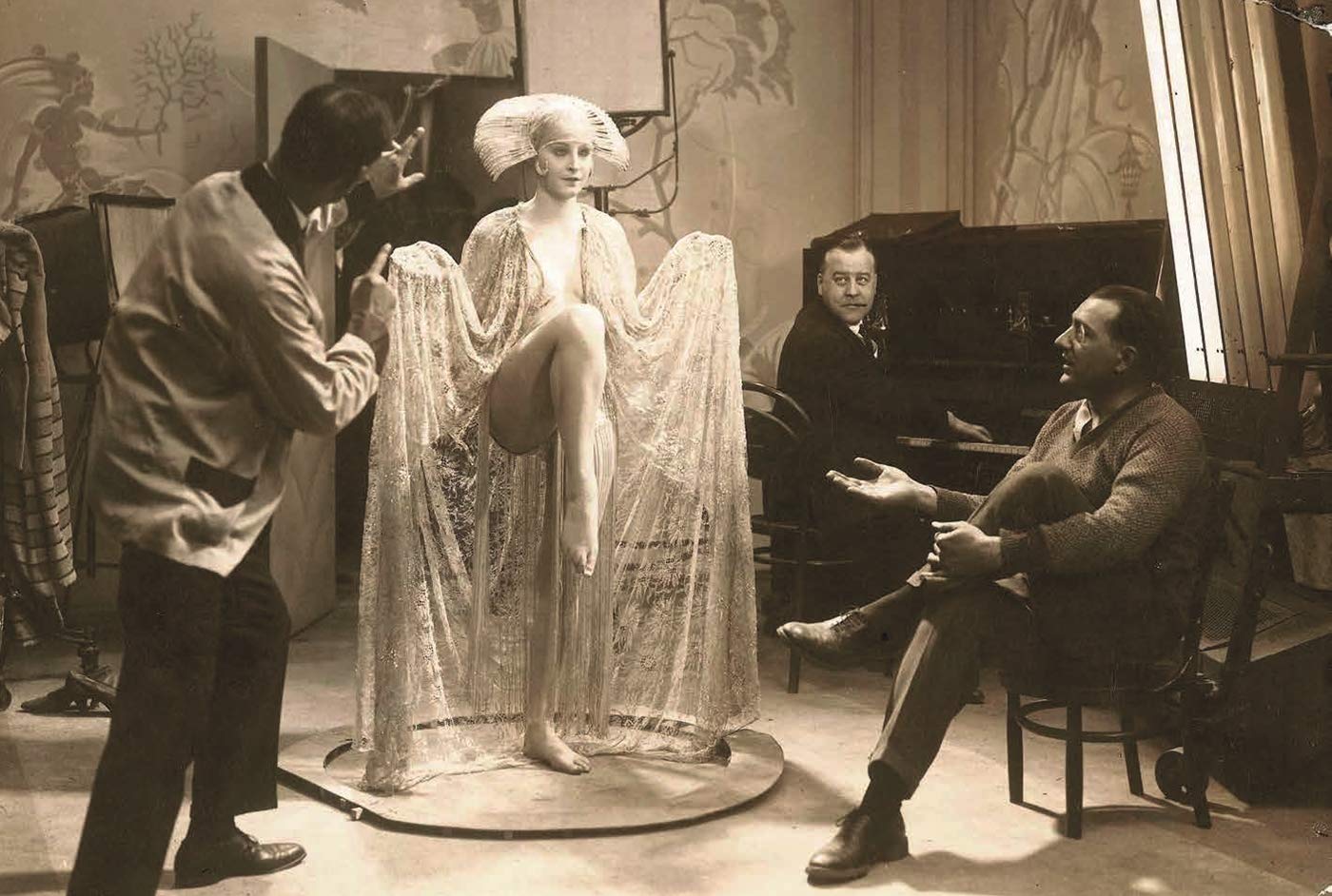
Yet, whilst modernist scholarship was freeing itself from earlier paradigms, the standard model was being enforced by the dominant shibboleth of literary and cultural studies in the 1990s – postmodernism. Far from being the slayer of grand narratives, as proposed by its most acute theorist Jean-François Lyotard, postmodernism in its institutional guise repeatedly cast itself as more open, eclectic, and diverse than its closed, hierarchical and monocultural modernist predecessor. A perfect summation of this hypocrisy is seen in Andreas Huyssen’s landmark text, After the Great Divide: Modernism, Mass Culture and Postmodernism (1986). At one point, Huyssen focuses upon Fritz Lang’s Metropolis (1927) as a modernist classic that presents technology, and the reconciliation of labour and capital, ‘as a harbinger of social progress’ through the ‘metaphoric witch-burning’ of the android Maria and the suppression of the mob (Huyssen 1988: 81). Although Huyssen also cites Thea von Harbou’s original novel, nowhere does he describe Metropolis as science fiction, neither its influence upon archetypal ‘tech-noir’ films such as Blade Runner (1982) nor its exemplification of a local sf tradition in Germany (Cornils 2020); let alone Lang and von Harbou’s next collaboration with Frau im Mond (1929). To do so would be to acknowledge the eclecticism and promiscuity of genres that postmodernism had sequestered for itself. Instead, Lang and von Harbou’s use of science fiction renders their treatment of mass culture not only more ambiguous than what Huyssen claims but also evocative (up to a point) of Siegfried Kracuaer’s contemporaneous observation that social change ‘leads directly through the center of the mass ornament, not away from it’ (Kracauer 1995: 86).
Although the legacy of postmodernism as a concept remains, in the 21st century it has been combated by the so-called ‘New Modernist Studies’. In introducing the PMLA special issue on the topic in 2008, Douglas Mao and Rebecca Walkowitz argued that ‘expansion’ was the keynote of this new approach, whether that be temporally (shifting the dates of modernism from the more familiar 1890-1940 to anywhere between the 1850s and the 1970s); spatially (emphasising modernist practices from the Global South); and vertically (highlighting modernism’s interactions with mass culture, mass media and the literary marketplace). Despite their obvious excitement at re-energising modernism at the expense of its once fashionable counterpart, postmodernism, there are two key problems in Mao and Walkowitz’s summary. The first is an unreflective cosmopolitanism which, whilst celebrating ‘the transnational turn’ in modernist studies, nonetheless regards those trends from the perspective of an anglophone tourist in those cultures. Although this criticism goes beyond the purview both of this editorial and the new modernist studies, to signal a discrepancy at the heart of comparative literature, it is worth noting that Mao and Walkowitz play down the extent to which Global South modernisms register the damaging effect done to their cultures by the combined and uneven developments of western capitalism. Secondly, in expanding modernism beyond its standard model, it almost seems as if anything can now be called ‘modernist’; at one point, Mao and Walkowitz even toy with the idea that all of postcolonial writing can be regarded ‘as a form of modernist literature’ (Mao and Walkowitz 2008: 740). While the new modernist studies threaten to re-colonise Humanities departments, they seem to have lost sight of what ‘modernism’ was.
In contrast, I suggest that reading science fiction alongside modernism helps to shed light upon them both. Sf critics, when they have turned to the possible relationship between modernism and science fiction, have tended to reproduce an unquestioning view both of what modernism is and what sf was breaking from. Fred Pfeil for example, looking backwards from cyberpunk and its identification with postmodernism, regards the New Wave as a moment when the genre ‘briefly becomes modernist’ (Pfeil 1990: 85-6) in contrast with pulp sf’s ‘pre-pubescent techno-twit satisfactions’ (84). More sophisticatedly, Phillip Wegner has offered a putative history in which science fiction emerges from an early realist phase embodied by H.G. Wells; experiences its ‘first modernist moment’ with such writers as Aldous Huxley, Olaf Stapledon and Yevgeny Zamyatin; undergoes a second realist phase with the rise of pulp sf; achieves a full-scale ‘modernist period’ from the late 1950s to the mid-1970s; before culminating in the rise of postmodern sf in the 1980s (Wegner 2007: 7-10). Yet, as Andrew Milner has observed, Wegner fails to explain why Wells is a realist and his immediate successors are modernist (Milner 2012: 30). There are further problems: like Pfeil, Wegner reads backwards from the 1980s; values ‘literary’ utopianism over pulp sf of the same period; flattens out overlapping trends, eddies and flows into a single narrative; and largely disregards when and where modernism and science fiction occurred in the non-anglophone world. More recently, J.P. Telotte has revalued pulp sf as a modernist practice by charting its stylistic similarities with cinema, in particular, the latter’s ‘composite gaze’ that elided both fantasy and actuality (Telotte 2019: 9). Although Telotte compensates for the limitations of Pfeil and Wegner, he doesn’t define modernism, describing instead formal similarities between sf and the already modernist technology of cinema. Similarly, the authors of the handily titled Speculative Modernism (2021) look for thematic similarities between the High Modernists and their pulp or scientific romance counterparts; the latter’s modernism is simply taken as read because of their commitment to novelty and innovation. Significantly, it is an actual practitioner, China Miéville, who focuses on the language of pulp modernism and its underlying stance towards the cosmos. Writing of H.P. Lovecraft’s eldritch prose, Miéville asserts ‘that the frenzied succession of adjectives’, the indescribability of what is being described, and ‘its obsessive qualification and stalling of the noun’ signifies ‘an aesthetic deferral according to which the world is always-already unrepresentable’ (Miéville 2009: 511-2). If for Lovecraft, this unrepresentability is indicative of a ‘sublime backwash’ (511) emanating from a malign cosmic presence, for modernists as politically diverse as Theodor Adorno and Wyndham Lewis, it evokes the discontinuous experience of modernity in which socio-economic ties are reified in the interests of capital, and the world comes to us fractured and hollow but also shocking, thrilling and vertiginous.
In Modernism and Science Fiction (2015), I argued that the sf imaginary is suspended between the twin ‘poles of immanence and transcendence’ (March-Russell 2015: 6), and that it is through this dialectical movement that sf explores the nomic quest, which the historian Roger Griffin sees as defining modernism in response to ‘the secularizing and disembedding forces of modernisation’ (Griffin 2007: 116). A central starting-point for my research was to recuperate the multiple scientific, technological, and mathematical contexts in which both modernism and scientific romance emerged, an investigation that Will Tattersdill has since extended by exploring the intersections between science, fiction, and the Victorian periodical press. I think my approach remains useful, insofar as it delineates science fiction as both a mode and a para-modernist practice, one that has affinities with other, more recognisable forms of modernism, such that it could be utilised by those forms, and that this dialogue was both generative and reciprocal. I am also delighted that the book inspired a panel at the MLA convention in 2019, an online section of Modernism/Modernity in 2022, and now this special issue of Vector. But the book – bound by word limits and the series focus – was never intended to be the final say but a springboard to other (hopefully better) investigations. In particular, with the exception of the Argentinians Jorge Luis Borges and Adolfo Bioy Casares, it failed to address responses from the Global South.
More work needs to be done in this area. Instead of attempting to merge all of postcolonial writing under the rubric of the New Modernist Studies, we could focus on the socio-economic and technological imbalances that characterise sf from the Global South, and which act as a symptom of colonial rule. We could, for instance, take the narrator’s encounter with the ‘television-handed ghostess’ in Amos Tutuola’s My Life in the Bush of Ghosts (1954) as an emblematic moment. Although the phantom has its origins in Yoruba myth, the narrator’s description of how he can both see and hear his mother and neighbours ‘talking about me’ (Tutuola 1954: 164) conflates indigenous folklore with an encroaching western technology. Instead of the primitivism with which western reviewers romantically associated Tutuola, the scene articulates the narrator’s estrangement from both his community’s beliefs and the technological gifts of a spectral modernity. Too often the literature of West Africa is described as ‘magical realist’ (a western conception that has its origins in Germany during the First World War) whereas, from Tutuola to Ben Okri to such writers of the African Diaspora as Nnedi Okorafor, Wole Talabi and Tade Thompson, speculative fiction serves as a legitimate vehicle to explore the estranging effects of globalisation and neo-colonialism. Whilst Africa, China, India and Latin America increasingly shape our understanding of contemporary sf, we need to consider how indigenous futurisms also constitute a global modernism.
The contributions here tend to cleave to Anglo-European modernisms but they significantly extend the standard models of both modernism and sf. We are especially grateful to Nina Allan for her thoughts on J.G. Ballard and her consideration of writers who are achieving new prominence: Kay Dick, Anna Kavan and Ann Quin. Andrew M. Butler focuses on the cyborg imagery to be found in Fernand Léger and Thorvald Hellesen. Angela Acosta also begins with art, in the work of the Spanish surrealist Ángeles Santos, before considering the roles of utopianism and dystopianism in short stories by Ángeles Vicente and Halma Angélico. Henry Farrell’s interview with Kim Stanley Robinson explores the modernist influences that lie behind his novel Icehenge (1984). And lastly, check out other related items that appear on the website, such as our cover artist James Gillham’s interview with Paul Minott about Marcel Duchamp.
Bibliography
Armstrong, Tim. 1998. Modernism, Technology and the Body: A Cultural Study. Cambridge: Cambridge University Press.
Benstock, Shari. 1987. Women of the Left Bank: Paris 1900-1940. London: Virago.
Carey, John. 1992. The Intellectuals and the Masses: Pride and Prejudice Among the Literary Intelligentsia, 1880-1939. London: Faber.
Cornils, Ingo. 2020. Beyond Tomorrow: German Science Fiction and Utopian Thought in the 20th and 21st Centuries. New York: Camden House.
DiBattista, Maria and Lucy McDiarmid, eds. 1996. High and Low Moderns: Literature and Culture, 1889-1939. Oxford: Oxford University Press.
Gillard, William et al. 2021. Speculative Modernism: How Science Fiction, Fantasy and Horror Conceived the Twentieth Century. Jefferson NC: McFarland.
Greenslade, William. 1994. Degeneration, Culture and the Novel, 1880-1940. Cambridge: Cambridge University Press.
Griffin, Roger. 2007. Modernism and Fascism: The Sense of a Beginning under Mussolini and Hitler. Basingstoke: Palgrave Macmillan.
Hanscombe, Gillian and Virginia L. Smyers. 1987. Writing for Their Lives: The Modernist Women 1910-1940. London: The Women’s Press.
Huyssen, Andreas. 1988 (1986). After the Great Divide: Modernism, Mass Culture and Postmodernism. Basingstoke: Macmillan.
Jeffrey, Keith. 2011. Review of Tim Heald, ed. My Dear Hugh: Letters from Richard Cobb to Hugh Trevor-Roper and Others. The Times Literary Supplement (21 October): 9.
Kracauer, Siegfried. 1995 (1927). ‘The Mass Ornament’, in The Mass Ornament: Weimar Essays, ed. and trans. Thomas Y. Levin. 75-86. Cambridge MA: Harvard University Press.
Levenson, Michael H. 1984. A Genealogy of Modernism: A Study of English Literary Doctrine, 1908-1922. Cambridge: Cambridge University Press.
McDonald, Peter D. 1996. British Literary Culture and Publishing Practice, 1880-1914. Cambridge: Cambridge University Press.
Mao, Douglas and Rebecca L. Walkowitz. 2008. ‘The New Modernist Studies.’ PMLA 123.3: 737-48.
March-Russell, Paul. 2015. Modernism and Science Fiction. Basingstoke: Palgrave Macmillan.
Miéville, China. 2009. ‘Weird Fiction’, in The Routledge Companion to Science Fiction, eds. Mark Bould et al. 510-5. London: Routledge.
Milner, Andrew. 2012. Locating Science Fiction. Liverpool: Liverpool University Press.
Nicholls, Peter. 1995. Modernisms: A Literary Guide. Basingstoke: Macmillan.
Pfeil, Fred. 1990. Another Tale to Tell: Politics and Narrative in Postmodern Culture. London: Verso.
Rainey, Lawrence. 1998. Institutions of Modernism: Literary Elites and Public Culture. New Haven: Yale University Press.
Richards, Thomas. 1991. The Commodity Culture of Victorian England: Advertising and Spectacle, 1851-1914. London: Verso.
Stock, Adam and Miranda Iossifidis, eds. 2022. ‘Modernism and Science Fiction.’ Modernism/Modernity Print+ 6.3. https://modernismmodernity.org/forums/modernism-and-science-fiction (accessed 15 July 2023).
Tattersdill, Will. 2016. Science, Fiction and the Fin-de-Siècle Periodical Press. Cambridge: Cambridge University Press.
Telotte, J.P. 2019. Movies, Modernism, and the Science Fiction Pulps. Oxford: Oxford University Press.
Tutuola, Amos. 1954. My Life in the Bush of Ghosts. New York: Grove Press.
Wegner, Phillip E. 2007. ‘Jameson’s Modernisms; or, the Desire Called Utopia.’ Diacritics 37.4: 3-20.
Willison, Ian et al, eds. 1996. Modernist Writers and the Marketplace. Basingstoke: Macmillan.
Paul March-Russell is editor of Foundation: The International Review of Science Fiction and co-commissioning editor of Gold SF. He is currently writing a study of J.G. Ballard’s Crash. His introduction to Edward Shanks’s The People of the Ruins is forthcoming from MIT Press, as is his chapter on modernism and prosthetics in The Edinburgh Companion to Science Fiction and the Medical Humanities.
 vector-bsfa.com