By Lynne Lumsden Green

Astounding Science Fiction, January 1955
–
She blinded me with science, And hit me with technology.
Excerpt from ‘She Blinded Me With Science’ by Thomas Dolby
–
The concept of a ‘Spinster Scientist’ is an artefact of Western Society during the twentieth century. Women, historically, had to fight for the right to be allowed to study and matriculate at universities, as they were effectively barred from tertiary education in the Western world until the late 19th century. Once women scientists existed in academia, popular culture, and mainstream society, they were of perceived as being different from their male colleagues; women were considered somehow less intelligent, and less ambitious, than their brother scientists: persistent Victorian-era beliefs within the medical profession that over-educating women would make them infertile. Even Charles Darwin argued that British women were intellectually inferior to British men. These gender biases contributed to the creation of the Spinster Scientist stereotype. However, the interactions between science practice, science fiction, and feminist movements have influenced the effect of this stereotype, creating a feedback loop where the stereotype also influenced those three arenas.
Birth of a Stereotype
The Spinster Scientist evolved over the course of the twentieth century, with the following stereotypical traits: a woman scientist, unmarried because she is dedicated to her career, or because she is socially awkward or frumpy. She generally wears glasses and isn’t interested in the latest style of clothes; she dresses for safety or comfort, not to conform to fashion. Her attitude to men is straightforward, brooking no nonsense, and though she might appear meek, she will stick to her convictions. The trope is exemplified in Susan Calvin, the robopsychologist created by Isaac Asimov, who narrates the stories collected in the anthology, I, Robot. Her character was written to be confident, brilliant, with a lifelong commitment to her work. Yet, from Asimov’s description of her in I, Robot: “She was a frosty girl, plain and colourless, who protected herself against a world she disliked by a mask-like expression and a hypertrophy of intellect.” In other words, she is a textbook example of the stereotype. In the one story where she shows a romantic interest in one of her colleagues, she is derided for wearing make-up and trying to conform to the current beauty standards. Damned when she tried to conform to gender norms, and damned when she wasn’t trying, this is a fictional example of a double standard applied to women in the professional work arena.
The connection between a spinster and a female scientist pops up frequently in other media. Brenda Guiled called her autobiography Spinster of Science: A Memoir, From Girlhood to B.Sc. Graduate. Both words were often used to refer to Rosalind Franklin. Rosalind Franklin was a British chemist and X-ray crystallographer, now famous for her contribution towards discovering the double helix structure of DNA. However, the circumstances behind this discovery were murky, as Franklin had a strained relationship with Linus Pauling, and with James Watson and Francis Crick – the men who were awarded the Nobel Prize for this discovery – as they used her research without proper consent. Franklin was a spinster, known to have strong opinions, intelligent, and wasn’t fussed to follow fashion; superficially, she conforms to the Spinster Scientist stereotype. Was her portrayal in the history of science shaped by the Spinster Scientist stereotype?
Marlise van der Veen came up with a detailed description of the Spinster Scientist in her article, ‘It’s a Man’s World: stereotypes of female scientists in films, series and literature’, published in the Leiden Science Magazine in February 2021. She details six stereotypes for female scientists, based on 20th century films: the old maid, the male woman, the naïve expert, the evil plotter, the daughter or assistant, and the lonely heroine. These are all subsets of the Spinster Scientist, as they are all unmarried. All these stereotypes are also described by their relationship to a man – usually the protagonist.
Sanjukta Chakraborty discusses how seeing these gender stereotypes affects the likelihood of women entering the STEM (Science, Engineering, Technology, and Mathematics) academic fields, in her article ‘The Position of Women in Science Fiction,’ published in the Journal of Language and Linguistic Studies in 2022. She points out how a woman’s perceived level of attractiveness affects how intelligent they are believed to be. An attractive woman is considered less intelligent and frivolous, while ‘good’ scientists who are women are commonly depicted as frumpy, dowdy, and old-fashioned. These representations were amplified by literary and visual media. Yet, some progress has been made nonetheless, exemplified by the changes of public opinion towards Rosalind Franklin. She started off being perceived as a problematic team member, and we now know her research was exploited by her male colleagues.
How the stereotype changed during the 20th century
At the end of the Victorian era, women were campaigning for the vote and equal rights with men. Suffragettes pushed for equality from 1880 until they achieved the vote in 1918, with Emmeline Pankhurst and the Women’s Social and Political Union being the leaders in the British brigade. American women achieved the vote in 1920. Australian white women got the vote in 1902, while indigenous women remained without suffrage until the 1960s. Aotearoa New Zealand women got the vote in 1893, making them the first Western Country to do so. Meanwhile, tertiary scientific education became available to more women as universities allowed them to matriculate with science degrees. In 1867, Seven women entered the University of Edinburgh to study medicine. It must be noted that some universities were reluctant to become coeducational; Oxford University only allowed women to matriculate from October, 1920. With increasing education in the sciences, many science fiction authors – though the genre was not yet named – were women who hid their gender behind masculine or ambiguous pen names. In The Biopolitics of Gender in Science Fiction: Feminism and Female Machines, by Emily Cox-Palmer-White, there is a correlation between science education and the number of science fiction writers of both genders.
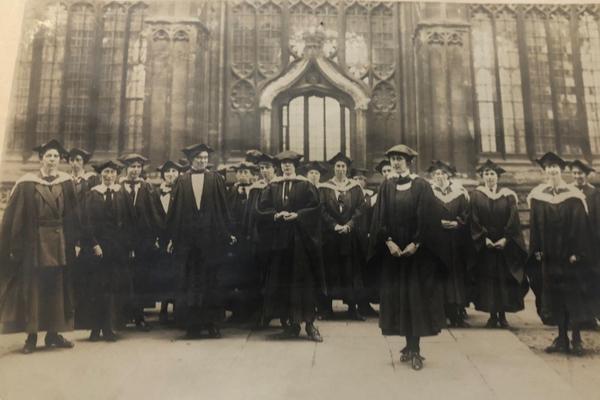
Women’s degree ceremony, ‘A Short History of Women’s Education at the University of Oxford,’ https://www.history.ox.ac.uk/article/a-short-history-of-womens-education-at-the-university-of-oxford
–
The so-called ‘hard’ sciences, like Physics and Mathematics, were still considered too difficult for women to understand, even as more women entered the STEM academic fields. Dr Gerald Berman describes in his article “The history of the human female inferiority ideas in evolutionary biology” that it was ‘general knowledge’ in the Victorian era that women were biologically and intellectually inferior to men, because women were less evolved. This set up barriers for women to succeed in such fields. The Spinster Scientist stereotype was particularly damaging, limiting, and restricting women’s perception of their own abilities and life goals and preventing them from following their career ambitions. Among the barriers was a phenomenon known as the ‘Matilda Effect:’ when the achievements of women scientists are attributed to their male colleagues, as with Rosalind Franklin. The term was coined by science historian, Margaret W. Rossister, in 1993. Further, the number of women in the STEM fields was also influenced by the ‘Leaky Pipe Effect,’ whereby women entering the field were so discouraged by various barriers that they would leave for other careers. Clark Blickenstaff coined the term in 2005, in his article, Women and science careers: leaky pipeline or gender filter? Still, there were more women entering the fields as the century progressed, helped by the need for women to take on ‘masculine’ roles during the two world wars.
As more women moved into the field of STEM during the years after World War II, women in science became normalized in popular culture as well. In the 1950s, 1960s and 1970s, this led to an increase of female scientists portrayed in all media, particularly television. Among the most popular were:
- Liz Shaw from Doctor Who, with degrees in medicine, physics, and a dozen other subjects.
- Dr Steele from Get Smart, whose qualifications include studying at Johns Hopkins and at the Winthrop Institute of Research.
- Colonel Virginia Lake from U.F.O., who designed the UFO tracking equipment, and was an expert in programming SHADO’s main computer.
- Tricia Marie McMillan, also known as Trillian Astra, from The Hitchhiker’s Guide to the Galaxy, who was both a mathematician and astrophysicist.
What did all these women have in common? They were all fairly young, attractive, and well educated. However, all are defined more by their looks and their relationships to men, rather than their qualifications. In the particular case of Dr Steele, she works undercover as a showgirl and dancer, and her costumes reflected that; this was played for laughs, but it still reflects the lack of respect for women scientists. And – it should be mentioned – none of these women were married (though Trillian was married off at the end of the original radio series). In the 1970s, the popular culture was still replete with Spinster Scientists, conforming to a stereotype of lonely heroines or faithful assistants. When Liz Shaw left Doctor Who, she reportedly told the Brigadier that all the Doctor really needed was someone to pass him his test tubes and tell him how brilliant he was. Eventually, Colonel Lake did manage to take over the post of first officer, so she has the strongest story arc of the four characters listed. While this is by no means a complete list, it does give a clear illustration of how the stereotype was slowly being influenced by changes in the social perception of women scientists.
First-Wave feminism was about gaining equal political power, and Second-Wave Feminism was/is about gaining equality in society; increased agency for female scientists is basically a Second-Wave phenomenon. It was also encouraging more women authors to enter the Science Fiction genre. By the middle of the 20th century, women could study and gain degrees in mathematics and the sciences, and this increased the influx of women writers and authors. Excellent feminist Science Fiction authors, like Ursula K. Le Guin, Octavia E. Butler, Anne McCaffrey, Joanna Russ, Vonda McIntyre, Marion Zimmer Bradley, Elizabeth A. Lynn, James Tiptree Jr, Sheri S. Tepper, and Angela Carter, among many others, pushed the boundaries of the genre to its limits.
By the end of the 20th century, fictional women scientists were being depicted in a positive manner and were often the protagonists within their own stories. Listed below are four notable fictional scientists:
- Dana Scully from The X-Files, attended University of Maryland and received a B.Sc. in physics. She went on to attend medical school at Stanford University.
- Ellie Sattler from Jurassic Park is a paleobotanist and graduate student studying under Dr. Alan Grant. In the original novel, it is stated that she plans to marry sometime during the following year.
- Jo Harding from Twister is a meteorologist with a Ph.D., working at Muskogee State University. In the movie, she is divorcing Bill Harding.
- Eleanor Arroway from Contact, graduated from Harvard, and then earned a doctorate from Caltech in radio astronomy. She eventually becomes director of ‘Project Argus’, which is a radio telescope array searching for extraterrestrial intelligence (SETI). The character is based on the real-life SETI researcher, Jill Tarter.
Three of the four scientists are married, engaged, or are in a committed relationship, so being a spinster is no longer a requirement. Needless to say, by the end of the 20th century, (potential) relationship status has become a less deterministic measure of a woman’s worth, scientist or not, than at any other point in recent history in Western cultures. Yet, the most widely watched portrayal of women scientists at that time presented attractive, relatively young women, still defined by their relationships to various men, particularly Dr. Sattler in both the novel and the movie. However, the relationships are no longer central to the main plotline of the narrative. Dr Arroway’s main emotional relationship is with her late father; he inspired her to become a scientist.
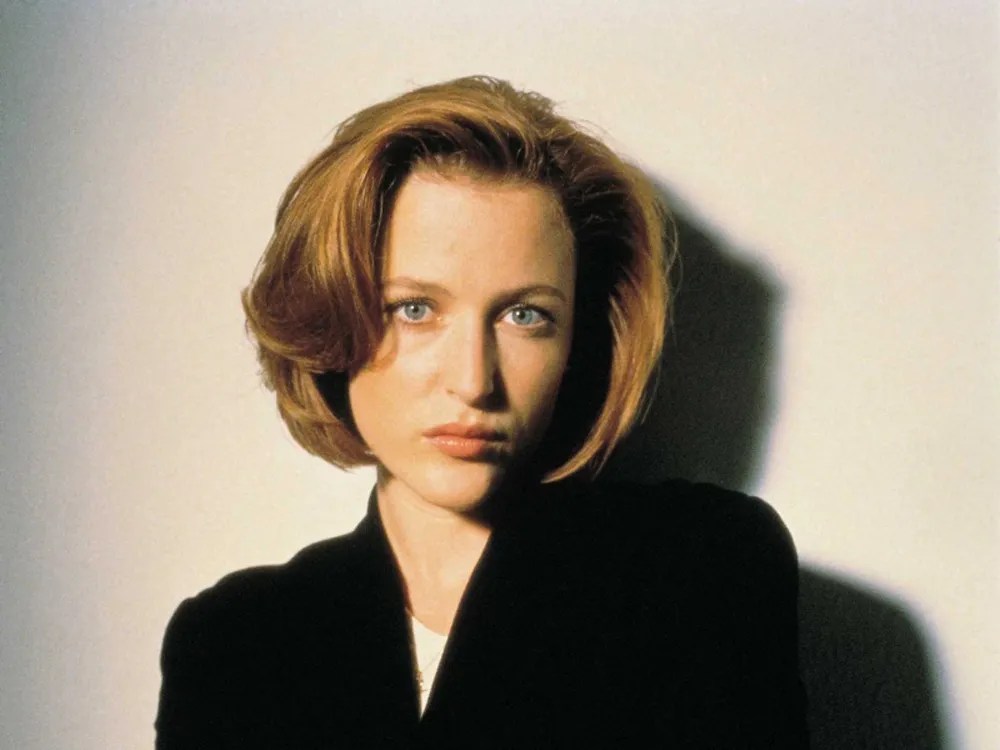
Dana Scully’s character made such an impact on young women wanting to enter the STEM and law enforcement fields, that they named the phenomenon after her – the ‘Scully Effect.’ Since her first appearance, she has gained a following of young scientists and there has been a marked increase in the numbers of women in these fields. No-one has pinpointed when the term was first coined, but it was first studied at the Geena Davis Institute on Gender in Media. Abby Norman’s article in 2015, The Scully Effect: How “X-Files” Helped Mainstream Women in STEM Careers, notes that the character of Scully was originally visualised as a ‘sexy bombshell’, but Gillian Anderson made the role her own and turned her into a foil for the broody Fox Mulder. The effect is so pronounced that it has become its own field of scientific enquiry, and it is currently being studied in the Media Depictions of Women in STEM Series by the Simon Fraser University in Canada.
So, what is happening today, a quarter-way into the 21st century? There is still inequality in the number of women in STEM. This inequality is clear in the positions they occupy (e.g. relatively few are professors) and representations across various fields with STEM (ecology and biology have more women scientists than physics, engineering, or math), the pace of their career progression (women find it harder to attain tenure especially if they are married with children, something that does not impede rising up the ranks for male scientists), the sacrifices they have to make as parents if they desire to be (the instability during the postdoctoral stages leads many women to delay child-bearing until the age when it is risky, expensive or simply no longer feasible). There are also inequalities in the amount of emotional and caring labour they perform as educators (as well as in their private lives, caring for children and the elderly still falls disproportionately on women whether they are scientists or not). These problems are intersectional, meaning, for example, that scientists who are women of colour are impacted by the structural inequalities in academia due to both gender and race.
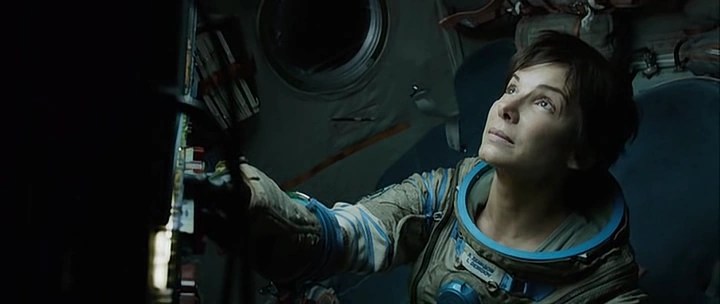
Currently, there is a backlash in the US against equal rights for women and diversity more generally, and our society might return to a point where women lose their place of respect as SF authors and as scientists. Just like misogyny, the Spinster Scientist stereotype hasn’t completely gone away, and one might question its relevance in a society where the majority of women remain single by choice – as is the case in the USA. The women scientists in books and on screen have much more agency than the previous depictions of women scientists, and even though they are still defined by their physical attractiveness, the actors playing the characters cover a range of ages from teenagers like Princess Shuri to middle-aged women such as Astronaut Dr. Ryan Stone in Gravity. Older women scientists are still underrepresented both in science fiction and the real world of science. The more recent characterisations of women in science are more rounded, with lives outside of their work, even when career-orientated. Their character arcs are less often defined by their marital status or their relationships to men; at least this seems to be the case in Anglophone Western science fiction.
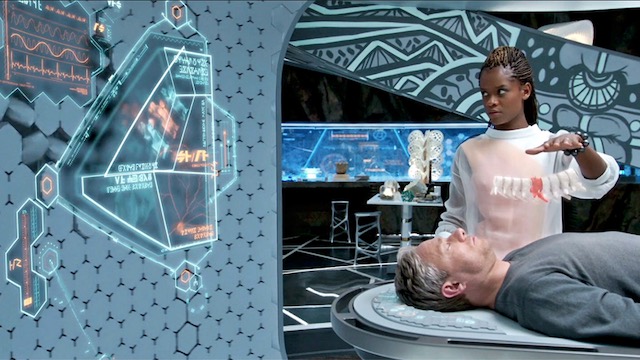
Representation matters, and so do role models, both real and fictional. More women are taking up careers in the sciences, including the hard sciences. We can look forward to a time when there are equal numbers of women choosing to be scientists, and writers of science fiction and hope that science fiction runs ahead of this trend, showing us a world of science less marred by sexism and gender discrimination. The concept of the Spinster Scientist is no longer relevant but it should not be supplanted by other gendered ideas of what scientists should look like.
Lynne Lumsden Green has been writing stories since she was in Grade Three; she is a persistence predator. You’d think she would have given up by now. Her short stories have been published in over a score of anthologies and online magazines. If you want a further taste of her recent work, you can find stories in Antipodean SF and articles in the Aurealis magazine. She has a novella coming out in August with Brain Jar Press.

 vector-bsfa.com
My PhD Supervisor told me to call off my wedding. When I didn’t, he refused to support or guide me in anyway – telling me I had thrown away my career in Astrophyics. This was 1986.