2009 Arthur C Clarke Award Submissions

Spring! And a young fan’s fancy lightly turns to thoughts of the Arthur C Clarke Award. This year’s shortlist is due to be announced in mid-March, but for the first time the Award is officially announcing the list of submitted works, and very generously they’ve decided to do it through Torque Control. Administrator Tom Hunter writes:

The Arthur C. Clarke Award was originally created to celebrate science fiction literature at its best. One of the things that most struck me when I became the Award’s administrator was the volume of creative and original talent we were seeing submitted every year.

Speculation and active debate have always surrounded the announcements of the shortlists and the eventual winner. By announcing the full list of eligible books for the first time I hope we can also highlight the strength and diversity of current science fiction, create more conversation and debate and show the awesome challenge that faces the judging panel every year.

And so, without further ado, here are the submitted books:

Clarke submissions 2009

This image is deliberately tiny because last year, certain people had too much fun reverse-engineering a list of submissions from a similar picture, and have indicated that they would like to play the game again. Far be it from me to stand in the way of people having fun, so: have at it!


(For everyone else, I’ll update the post with a proper-sized image and the full list later.

Here you go, all forty-six books, in alphabetical order by author:

The Ashes of Worlds by Kevin J Anderson (Simon & Schuster)
Line War by Neal Asher (Tor)
The Heritage by Will Ashon (Faber & Faber)
Man in the Dark by Paul Auster (Faber & Faber)
Neuropath by Scott Bakker (Gollancz)
Matter by Iain M Banks (Orbit)
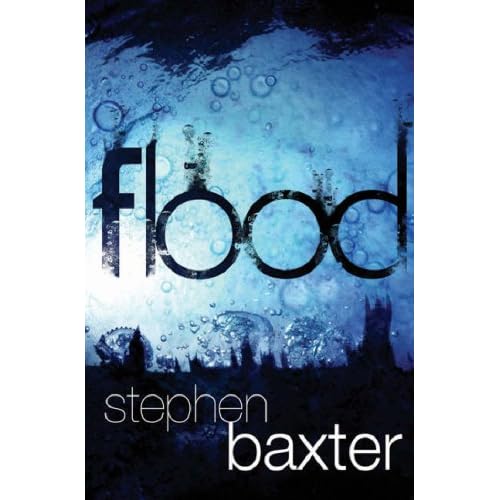
Flood by Stephen Baxter (Gollancz)
Weaver by Stephen Baxter (Gollancz)
City at the End of Time by Greg Bear (Gollancz)
Kethani by Eric Brown (Solaris)
Necropath by Eric Brown (Solaris)
Sputnik Caledonia by Andrew Crumey (Picador)
Little Brother by Cory Doctorow (HarperCollins)
Incandescence by Greg Egan (Gollancz)
Infoquake by David Louis Edelman (Solaris)
The Broken World by Tim Etchells (William Heinemann)
Omega by Christopher Evans (PS Publishing)
Blonde Roots by Bernadine Evaristo (Hamish Hamilton)
Principles of Angels by Jaine Fenn (Gollancz)
Eve: The Empyrean Age by Tony Gonzales (Gollancz)
The Temporal Void by Peter F Hamilton (Macmillan)
The Gone-Away World by Nick Harkaway (William Heinemann)
Template by Matthew Hughes (PS Publishing)
The Invention of Everything Else by Samantha Hunt (Harvill Secker)
Song of Time by Ian R MacLeod (PS Publishing)
The Night Sessions by Ken MacLeod (Orbit)
The Affinity Bridge by George Mann (Snowbooks)
The Quiet War by Paul McAuley (Gollancz)
Dark Blood by John Meaney (Gollancz)
The Steel Remains by Richard Morgan (Gollancz)
The Knife of Never Letting Go by Patrick Ness (Walker)
Debatable Space by Philip Palmer (Orbit)
House of Suns by Alastair Reynolds (Gollancz)
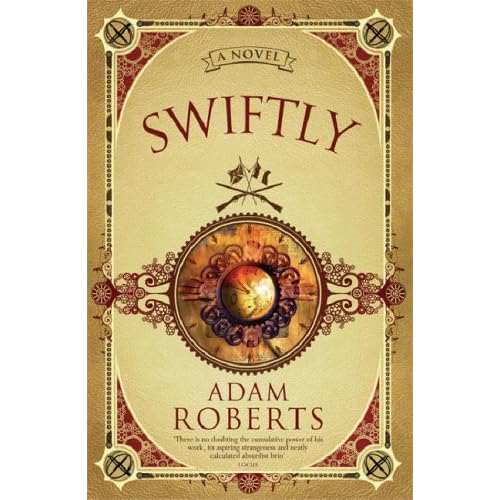
Swiftly by Adam Roberts (Gollancz)
Going Under by Justina Robson (Gollancz)
The Last Colony by John Scalzi (Tor)
DogFellow’s Ghost by Gavin Smith (Macmillan)
Anathem by Neal Stephenson (Atlantic)
The Dog of the North by Tim Stretton (Macmillan)
Halting State by Charles Stross (Orbit)
Saturn’s Children by Charles Stross (Orbit)
The Margarets by Sheri S Tepper (Gollancz)
Blue War by Jeffrey Thomas (Solaris)
Off Armageddon Reef by David Weber (Tor)
Martin Martin’s on the Other Side by Mark Wernham (Jonathan Cape)
Winterstrike by Liz Williams (Tor)

As I posted in the thread below: 13% of this year’s submissions are by women, and 17% are ‘mainstream’ in origin, both figures down slightly (I think) from the last few years. And as Nick asks: what would your shortlist be?

Today’s Free Book

Is The Heritage by Will Ashon, who reports that:

So, the good burghers of Faber & Faber have decided against publishing a mass-market paperback edition of “The Heritage”. I would’ve been pissed off, anyway, I guess, but I think would have understood this hard-headed business decision. After all, if you wanna kiss the ring of the Leather Pope then corporate capitalism’s where it’s at and fuck any of the considerations (art, literature, quality) you may pay lip service to. But I think my sense of fair play was piqued by being told less than two weeks before said paperback edition was supposed to be out. I mean, really, how shit is that? Sorry? Pardon? What was that I heard about putting authors first? Anyway, as the only way left to me to build any sort of a readership for what I think is a pretty good book (not a great book by any means, but not as bad as a lot of the shit out there), I’m posting it here for you to download. The file is only 853.5 KB and it downloads as a pdf direct from this link.

There are reviews here by Colin Greenland and here by Martin Lewis. I haven’t read it yet — indeed, I now feel slightly guilty for not having got to my dead-tree copy yet — but I liked Ashon’s first novel, Clear Water, and this sounds like it has similar virtues. So, as the man says, give it a go.

In Link Waters

Well, here I am at Montreal airport, waiting for my flight home. Time for some overdue links:

And now it’s time to board the plane, so time for me to sign off.

War in SF

Even all the snow ever can’t stop the new Vector getting through, it seems:

Torque Control — editorial
Letters — from Anna Feruglio Dal Dan and Martin Lewis
HG Wells’ The War of the Worlds as a controlling metaphor for the twentieth century — Stephen Baxter
The Menace of War: Einstein, Freud and SF by James Holden
After Heinlein: Politics in Scalzi’s Green Soldier Universe by Martin McGrath
The Flowers of War — Nick Hubble considers The Carhullan Army
First Impressions — book reviews edited by Kari Sperring
Transmission, Interrupted — a TV column by Saxon Bullock
Foundation Favourites: Memoirs of a Spacewoman — Andy Sawyer
Resonances: Hitler Wins — Stephen Baxter
The New X: Wings of Song — Graham Sleight

It’s a big issue — twelve pages more than usual! — but as noted in the editorial, I also recommend the following supplementary reading:

Wild Hearts in Uniform — Gwyneth Jones
Denvention 3 Guest of Honour Speech — Lois McMaster Bujold

Letters to the usual address; and, as ever, if your copy doesn’t arrive in a timely fashion, let us know. Otherwise, apologies for the quiet period around here — very busy with the day job at the moment, and I’m off to Montreal (for all of 48 hours!) tomorrow.

London Meeting: Michael Swanwick

The guest at tonight’s BSFA London Meeting is Michael Swanwick, who will be interviewed by Roz Kaveney.

As usual, the venue is the upstairs room of The Antelope, 22 Eaton Terrace, London, SW1W 8EZ. The closest tube station is Sloane Square, and a map is here.

The meeting is free (although there will be a raffle, with sf books as prizes), and any and all are welcome. The interview will start at 7pm, although there’ll be people in the bar from 6 onwards.

Unwritten

Things I would totally write posts about if I weren’t spending all my time either playing Final Fantasy XII or keeping up with commitments elsewhere, a partial list:

1. Survivors. Watched the final episode last night; I’ve seen the odd post about the series, but did anyone else watch it through to the end? I was much more impressed than not, I have to say. I’m not keen on the Secret Conspiracy, which makes me wary of the second series, since it looks set to play a greater part in the story than it has done so far; and sometimes the plots are a mite predictable. But sometimes they’re not, and I think all the central characters are well-realised. And I’m a sucker for community- and society-building stories, anyway.

2. The return of Battlestar Galactica. While I empathize with reactions like Abigail’s, in that I invariably find that reading what the people making Galactica have to say about it diminishes my enjoyment, if I ignore what they’re saying I can still find much to appreciate. In the first episode of season four round two, for instance, I didn’t much care for the manner in which the reval that ended the episode was handled — clumsy, I thought — but I do like the reveal itself. I like that, this time, it has a greater weight for the previously-revealed cylons than for the humans; I like that the the relationship it references becomes a model for the whole human-cylon relationship (particularly given what we appeared to learn elsewhere in the episode about the relationship between the populations of the twelve colonies and the skinjob cylons). I’m glad that it doesn’t invalidate major character development. And I also find it satisfying, in a perverse way, that I found it initially disappointing, and only found things to appreciate on reflection, because it seems to me that disappointment was an effective way of mirroring the series characters’ disappointment at the end of the previous episode in the audience. I don’t believe for a second that the makers intended that effect — I can’t have that much faith in TV showrunners — but I think it’s there nonetheless.

3. Further adventures in Theory. I’ve still got comments on the previous threads I should respond to, and indeed it’s not like I’ve read much more of the book yet (see above re: Final Fantasy and other commitments). But at the moment I am wrestling with Structuralism. As related, I am not convinced by some of the arguments for the creational power of language (I don’t think we divide the spectrum into individual colours entirely arbitrarily, purely as a matter of language; I think we divide it up the way we do because certain physical phenomena filters light into particular bands of wavelengths, and it is useful to have words for those bands), and I find some of the examples of structralist criticism given to get a bit, er, abstract. But at the same time I am sympathetic to the idea of a mode of criticism that is about relating texts to larger structures — not surprisingly, since I buy into Damien Broderick’s concept of the sf megatext (at least as I understand it from reading discussions of the concept), even if it does take me away from the text I start with.

4. Reading, and particularly reading of shortlists, as social behaviour; although on this one I’m not sure I have anything to add, so much as I want to point it out as a concise statement of something I am often conscious of. The urge to write reviews, in this model, is something of a totalitarian impulse, an urge to make, or at least persuade, people to talk about what you’re interested in talking about. (So is there an extent to which I approve of the BSFA novel shortlist because it consists largely of things I’ve already read? Maybe.)

List of the Day

Blatant blog-fodder, but hey: the Guardian is doing a series on 1000 novels everyone must read, and today they reached science fiction and fantasy (and horror). Don’t worry, I’m not going to post the whole list — Martin’s done that, if you’re interested — but here are the links:

I’m not sure to what extent the novels on the sidebar lists count towards the total; I assume Crumey’s list, at least, is separate, given that it overlaps with the main list and other sidebars, and I hope that, say, Susanna Clarke’s picks count towards the total, because they’re rather canonical, though I have no idea whether they’re counting The Chronicles of Narnia as one entry or seven. In a way I wish they’d done the whole thing as individual lists because that would make it easier to track the preferences of the nominators, though there are no real surprises (i.e. the vast majority of the genre-published books are picked by genre-published writers: Jon Courtenay Grimwood, Eric Brown, and Keith Brooke). The other nominators make plenty of interesting (or perhaps challenging) picks — Darkmans; The Blind Assassin; The Unconsoled — and there’s plenty to argue with in the list itself, which presumably is the point of the exercise. As Martin says, the idea that The Years of Rice and Salt is the Kim Stanley Robinson novel that everyone should read before they die is barmy, ditto Greg Bear and Darwin’s Radio; The Einstein Intersection is almost certainly not the essential Delany, ditto Calvino and The Baron in the Trees. And as ever, I’m sure you could come up with another list, just as long, comprised entirely of books omitted from this one. But, all things considered, not bad. I’ve read about a third.

BSFA Award Nominees

Best Novel

Flood cover Gone-Away World cover
Night Sessions cover Anathem cover

Flood by Stephen Baxter
The Gone-Away World by Nick Harkaway
The Night Sessions by Ken MacLeod
Anathem by Neal Stephenson

Best Short Fiction
“Exhalation” by Ted Chiang (Eclipse 2)
Crystal Nights” [pdf] by Greg Egan (Interzone 215)
Little Lost Robot” [pdf] by Paul McAuley (Interzone 217)
Evidence of Love in a Case of Abandonment” by M. Rickert (F&SF, Oct/Nov 2008)

Best Non-Fiction
Physics for Amnesia” by John Clute
Superheroes!: Capes and Crusaders in Comics and Films by Roz Kaveney (I.B. Tauris)
What It Is We Do When We Read Science Fiction by Paul Kincaid (Beccon)
Rhetorics of Fantasy by Farah Mendlesohn (Wesleyan)

Best Artwork
Cover of Subterfuge, ed. Ian Whates, by Andy Bigwood
Cover of Flood by Stephen Baxter, by Blacksheep
Cover of Swiftly by Adam Roberts, by Blacksheep
Cover of Murky Depths 4 by Vincent Chong
Cover of Interzone 218 by Warwick Fraser Coombe

Congratulations to all the nominees! Note that there are only four nominees in the Best Novel, Best Short Fiction, and Best Non-Fiction categories due to multiple-way ties for fifth place. The Awards will be presented at this year’s Eastercon, LX, on 11th April.

Last Chance to Nominate

Your final reminder, BSFA members: today is the deadline for BSFA Award nominations. Best novel, best short fiction, best artwork, best non-fiction: send them all to the Awards Administrator, Donna Scott, at awards@bsfa.co.uk, by the end of today. The list of nominations so far (or at least so far as the middle of last week) is here; remember, only the top five most-nominated works go forward to the shortlist, so if there’s something you like on that list, you still need to nominate it. And then check back here next week for the shortlists. Thank you!