- Andrew Mckie (among other things, sf reviewer for the Telegraph, interviewer of Ken Macleod and Gary Wolfe at past BSFA meetings, and introduction-writer for Glorifying Terrorism) has a blog.
- So do Elizabeth Hand, Lucius Shepard, Paul Witcover and Paul di Filippo.
- John Clute reviews Matthew Sharpe’s Jamestown.
- Where’s the YA sf? (via)
- The contents for the first Best American Fantasy, and Matt Cheney’s preface.
- M. John Harrison describes the M1 then uses it as an example of writing about landscape.
- Early word on Red Seas Under Red Skies is positive, but not unreservedly so.
- SF on film (via).
- Draft programme for the 2007 Science & the Public conference (more info), on May 19th.
- And in July there’s a conference on short stories that’s calling for papers.
- And to finish, another iteration of “what is the minimum one should reasonably be able to expect from a reviewer?“
Author: Niall
A Mixed Bag
Since Vector 251 has started arriving (and as Peter notes, confirmations that it’s arrived are appreciated), here’s the table of contents. No colour cover this time, but there is a spiffy design by Gabe Chouinard:

Torque Control — editorial
Fantastic Cities — a discussion between Michael Swanwick, Jeffrey Ford, Ian R. Macleod and Claire Weaver
To Travel Hopefully — Stephen Baxter on the novels of Nevil Shute
The Human as Alien — Ken MacLeod’s Guest of Honour talk from last year’s Novacon
Leibniz’s Fix-Ups — Adam Roberts on Stephen Baxter and the nature of sf
Skin Deep Fiction — James Bacon interviews Anton Marks
“… a million Clutes screaming ‘Haecceity!’…” — discussion about the BSFA non-fiction Award
Archipelago: Long Live The UK SF Scene — by Niall Harrison
The New X: The Dark Side of the Boom — by Graham Sleight
You may notice the absence of reviews from this issue: that’s because the schedule has slipped slightly, and we’re trying to play catch-up. Issue 252 will have reviews as normal (and possibly even Particles).
In the meantime, I’m hoping this issue will generate some comment — in particular on the non-fiction Award. The discussion in this issue is an edited-down version of the comments here and here, which covered a lot of useful ground, but it would be great to have opinions from as wide a range of people as possible. So, you know what to do.
Of course, there are also new issues of Matrix and Focus, both of which look particularly fine this time around (I haven’t read them cover-to-cover yet); congratulations in particular to Martin McGrath on his first issue as editor of Focus.
Vector 250: Articles Online
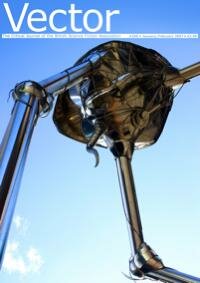 It’s really long past due that I put some content from Vector 250 online, particularly since reports are that the next mailing (complete with Award ballots) is on its way. So, here’s some Saturday reading.
In a one-off revival of his “Behind the Scenes” column, Peter Weston looks at the start of the BSFA:
The very first fans – people like you and me, who loved reading and talking about science fiction – popped up in Britain almost as soon as the early SF magazines crossed the Atlantic in the late 1920s, and by 1937 there were enough of them to hold the world’s very first science fiction convention in Leeds, which attracted over twenty people! They voted to set up the Science Fiction Association (SFA), which was rather optimistically ‘devoted to the stimulation of interest in science fiction and scientific progress.’ Unfortunately the SFA lasted little more than two years and had to be disbanded at the outbreak of war.
Somewhat closer to the present, Andrew M. Butler — in “Boom Fizz”, one of a number of retrospective pieces by former editors — looks back on ten years of Vector:
I walked into a PhD on PKD, and started going to academic conferences. Perhaps the weirdest of these was one in Warwick on Virtual Futures, in about 1995, where I met Istvan Csiscery-Ronay for the first time. (He claims we met in 1992, when he gave a paper at Reading, but that can’t have been me. Perhaps the twin from the other universe was passing through, but he’d long since given up on science fiction.) Istvan, part of the team that edits Science Fiction Studies, was excited about a number of British writers, including Gwyneth Jones, whom he got to meet that weekend, and Jeff Noon. He already had the sense that Something Was Going On, or his palate was already jaded by American sf.
It was not long after that that I became co-editor of features with Gary S. Dalkin, and one of the things we were keen to do was to take British sf seriously – we knew we were the British Association of Science Fiction rather than the Association of British Science Fiction, so to speak, but we were still aware of the nationality. I guess part of this was practical, since British authors were more getatable; this was pre-Blog, barely post-email. This didn’t mean we’d give British writers an easy ride, but we would give them a ride.
Graham Sleight’s column this issue takes a look at where we are now:
First, in North America – its homeland as a self-conscious genre – science fiction is in relative but not absolute decline. Looking at Locus‘s figures for original books published in the US, about 250 original sf novels have been published per year since 1990. Fantasy, by contrast, was at about 250 a year in 1990, and is now closer to 400. This is reflected in, for instance, the Hugo results: before Robert Charles Wilson’s superb Spin won the Hugo this year, the last time a widely-acclaimed science fiction novel won that award was Vernor Vinge’s A Deepness in the Sky in 2000. Other wins have either been fantasy novels (Harry Potter, Strange & Norrell) or best explained by the circumstances of a particular Worldcon.
 In First Impressions, Paul Kincaid reviews Hav by Jan Morris:
It is a book suffused with a sense of loss, a prolonged and exquisite lament for the passing of a world. Although there are lots of names in the book, lots of people that ‘Jan’ encounters during her stay, there are few real characters, but the character of Hav itself is huge and overwhelming. I cannot think of a single fantasy writer who could not learn from this book how to give depth and solidity to a place by the patient accumulation of detail: the way the market operates, the unique Havian fruit of snow raspberries, the extraordinary roof race, the old woman living in seclusion who still recalls when Hav was a summer retreat for Tsarist aristocracy, the curious architecture of the Chinese tower in the old town. And on and on and on, by the end you understand why some readers of the original novel believed it described a real place.
 And Tony Keen looks at Emperor by Stephen Baxter:
It’s not always a good idea for historians to read novels set in periods they’re familiar with. However thorough the author’s research, the historian’s view of what actually happened is unlikely to entirely coincide. Best to go with the author’s flow, regardless of disagreements on issues of interpretation.
So, when I read Stephen Baxter’s previous Romano-British excursion, Coalescent, I put aside finding implausible a Cotswolds villa-owning family not speaking Latin as their first language, or having connections with troops on Hadrian’s Wall. I let Baxter take me through his version of Roman Britain’s end.
But sometimes the author pushes the historian too far, and that, sadly, is the case with Emperor.
BSFA Awards: Best Novel
Today’s award-related post: a roundup of reviews of the nominees for the BSFA Best Novel Award, leading off with the Vector review in each case. For two of the Vector reviews, this is their first appearance: the reviews of End of the World Blues and Nova Swing will be in V252.
Note that the voting deadline is fast approaching: if you’re going to Eastercon, you can vote there, but if not you need to vote by post or by email in the next two weeks. Don’t worry, this won’t be the last reminder I put up.
So, the nominees are:
End of the World Blues by Jon Courtenay Grimwood, reviewed by Claire Brialey:
Depending on where you’re standing, Grimwood’s novels could appear to be noir-ish thrillers in a science-fictional setting, or science fiction novels with all the ambience of crime. Here, each story – complete and, by comparison, straightforward in itself – effectively compliments and lifts the other. The science fiction may be in another dimension, but it’s intruded directly into this world; now the plot can’t be resolved without it.
Other reviews: Paul Kincaid at SF Site; David Soyka at Strange Horizons; Paul Raven at VCTB; Jonathan McCalmont at SF Diplomat; Grumpy Old Bookman.
Nova Swing by M. John Harrison, reviewed by Gary Dalkin:
As Harrison’s The Centauri Device parodied space opera, so Nova Swing parodies the hard boiled detective novel. A second introductory quote offers the idea that “Nostalgia and science fiction are spookily close” (A. A. Gill in The Sunday Times). And this is a book filled with nostalgia, set-dressed with retro recreations of the past. With old forms of fiction, with old objects, old music. Detective Lens Aschemann is nostalgic for New Nuevo Tango. The band in the Surf Café play BeBop. The radio in Len’s 1950’s style Cadillac plays Radio Retro. So much of the novel transpires in a trio of drinking joints it might be called Three Bar Blues. Except Nova Swing isn’t a form of music, but the name of the spaceship Irene the Mona dreams of buying to escape the planet and live her dreams.
Other reviews: John Clute in The Guardian; Abigail Nussbaum at Strange Horizons; Nicholas Royle in Time Out; Andrew McKie in The Telegraph; Brian McCluskey in Scotland on Sunday.
Icarus by Roger Levy, reviewed by Paul Raven:
The core theme of Icarus is the concept of history, and also the mutable and viral nature of truth. The characters all have dark secrets and real human flaws – there are no paragons among them, and this makes it easier to sympathise with their often desperate actions. The echoes of Orwellian dystopia resonate with today’s world of governmental deceit and doublespeak, but have a timeless lesson as their axis. In the societies portrayed and in the writing itself, certainty is a fleeting thing, all the more precious for its scarcity. Near the end of the book, Marten experiences this in a revelatory moment; “Memory and knowledge were two different things, he realised, and neither was necessarily the truth.” (p408) Perspective is everything, and judgements made in a vacuum of information are frequently revealed to be dangerously false. The truth must be mined, dug out from its grave of lies and obfuscation.
Other reviews: Pete Young at Strange Horizons; Victoria Strauss at SF Site.
The Last Witchfinder by James Morrow, reviewed by Dave M. Roberts:
There is a significant cast of real historical figures, whose role is much expanded by our knowledge of these people and what they stood for. We are reminded, for example, that while Newton was the father of modern science and the champion of reason, he never abandoned his religion. The juvenile feud between Newton and Robert Hooke can be seen as triggering the events of the book, the unreasonable behaviour eventually leading to the spirited defence of reason. The historical characters are not there merely as place-markers, but as real people loaded with historical and intellectual resonance.
Other reviews: Farah Mendlesohn at Strange Horizions; Pamela Sargent at Sci Fi Weekly; Ron Charles in the Washington Post; Janet Maslin in the New York Times; Brandon Robshaw in The Independent.
Darkland by Liz Williams, reviewed by Penny Hill:
The depth of the presentation of sexual politics across the four different cultures would make this novel suitable for consideration for the Tiptree award. There are disturbing and provocative messages here about manipulative and destructive sexual relationships and the power they can exert long after the events are over. The history of Vali’s previous damaging relationship with Frey, a Vishtie adept, is gradually revealed to us in flashback. The influence this still has on her psyche permeates the narrative. Her urge to self-harm and the placebo she has found to contain this craving are shown to be coping mechanisms, that hint at the depths of the damage and make it clear that there will be no simplistic healing process available. Likewise Gemaley’s sexual power over Ruan reduces him to the status of an addict unable to reject the source of his desire even when he becomes aware of its destructiveness.
Other reviews: Colin Harvey at Strange Horizons; Cheryl Morgan in Emerald City.
As Others See Michael Chabon
And here I thought everyone was looking forward to The Yiddish Policemen’s Union. From comments at TEV:
No super-heroes in this one, right? ‘Cause if there are, you know, I’m out.
Seriously, I have been a fan — fairly, fan; not connoisseur or scholar or anything so sophisticated — of Chabon’s since I by chance picked up the first paperback edition of “The Mysteries of Pittsburgh” back in 1902, or whenever it was. It is heartening to read that he retains his gift for near-corporeal simile and metaphor; it is frightening to read that he is now putting them all in one paragraph.
I’m going to go out on a limb: I say, in advance of reading no more than just this one paragraph, he’s yellow-dogged this one. Mind you, I don’t want him to, I’m not after any hero-takes-a-fall sensationalism. I merely, as they say, got a feeling. Tell me I’m wrong, I’ll be happy.
[…]
I think he’s of late become sort of a caricature of himself. Occupational hazard maybe, for a successful, prize-winning novelist who sort of got genre-slammed. I mean, his work started as quite a bit more stable, less big-idea-centric and has sort of swiftly bogged down in the consistently fantastical. I don’t think it’s irredeemable, but it’s notable. I mean his screenwriting career alone is starting to sound like the pitch for a Charlie Kaufman script. That said, he’s a supremely talented writer. One of the best American writers currently publishing.
And There’s Five More Where That One Came From
Nic and Victoria at Eve’s Alexandria are going to review the Clarke Award shortlist, book by book. First up: Streaking by Brian Stableford. It would be fair to say they are underwhelmed.
I’m glad that Nic quoted the short passage about Canny Kilcannon’s large ham and mushroom pizza: it was the first (of many) points at which I closed Streaking by Brian Stableford, blinked, and sighed. In disbelief. My dear Clarke judges, what were you thinking about? Heavy-handed prose, stilted dialogue, two-dimensional characters, forced thematics and a blatant thread of misogyny – it’s all here.
Enjoy.
From the Archives: Meetings With Remarkable Men
A couple of weeks ago, I mentioned reading the transcript of a 1979 guest of honour speech by Christopher Priest, in an old issue of Vector. Chris has generously allowed me to put the text of the speech, “Meetings With Remarkable Men”, up on the Vector website. As noted last time around, it touches on the state of sf and the state of sf criticism; as Jed Hartman recently noted, in some senses there’s nothing new under the sun in these debates, but it’s still well worth reading the full speech. Here’s another quote to tempt you:
You have probably heard Heinlein’s remark that writers are competing for the readers’ beer-money. […] [This attitude] crops up all over the place, in articles in fanzines, in interviews with writers, in criticism. Boiled down to its essence, it says: “We are but entertainers, and entertainment is a humble trade. Therefore our sights are set low.” I believe that entertainment is a high art, and should be treated as such. Everyone at the convention today is here because we believe that science fiction is a stimulating, radical and entertaining form of literature, yet by their very words the Poul Andersons and Robert A Heinleins are asking you to settle for less.
The parts of the essay that discuss criticism also chime with recent debates over at urban drift.
Links and Bombs
- “At the risk of sounding like a nerd, I’m beginning to think science fiction’s actually quite good“
- David Langford has put an essay by David Masson online: Some Thoughts on Language in Science Fiction.
- New fiction by David Marusek: “Osama Phone Home“
- Greg Egan posts to usenet, spawns giant thread; the original post points to a FAQ for Permutation City
- Nic Clarke on Yvgeny Zamyatin’s We
- Abigail Nussbaum on the Nebula short story ballot
- Paul Kincaid on Un Lun Dun
- The latest issue of The Internet Review of SF has an interview with Elizabeth Bear and a review of her latest novel, Carnival, among other things. Elsewhere, Jonathan wonders what’s wrong with IROSF.
- Jeff Vandermeer is unimpressed by Terence Rafferty’s review of The Terror
- An interview with Richard Morgan about his new novel Black Man (which, I have to say, despite not getting on with Morgan’s fiction in the past, sounds promising)
- Neal Stephenson’s inexplicable defence of The 300
- John Scalzi is running for SFWA president as a write-in candidate. More discussion here.
- And Paolo Bacigalupi on futurizing:
Futurizing: The process of adding kick-ass gadgets, tools, and extrapolations to a sci-fi story to make it feel more futuristic so that it can fit more comfortably in the sci-fi genre. Closely related to Sense-of-Wonder Interior Designing.
Map of Dreams
Over the weekend, M. Rickert won the William L. Crawford Award (shortlist) for best first fantasy book for her collection, Map of Dreams. Today, my much-delayed review of Map of Dreams is up at Strange Horizons.
You may also want to read the Locus reviews by Gary K. Wolfe and Nick Gevers. And then you should read the book itself.
The Steep Approach to Linkadale
- Paul Raven started a debate about publishing online: sf magazines don’t have to die. One of the things that fed into it was Jason Stoddard’s thoughts on new marketing 101 for sf publishers and writers, which he subsequently followed up with a second post (which takes us back in the direction of the author-reader relationship again). Meanwhile, Big Dumb Object remembers Bruce Sterling’s talk at the last BSFA/SFF AGM event, and Gordon van Gelder responded to Paul’s original post on the Nightshade forums, sparking another thread of discussion (telling quote from Daryl Gregory: “It’s interesting that people here see techies as natural screen readers, but not SF fans. Everybody outside the ghetto would assume that SF folks would be first in line. I mean, online.”)
- Speaking of content from print magazines online, F&SF has essays on Gene Wolfe by Neil Gaiman, Michael Swanwick, and Michael Andrei-Driussi. While the Matrix team have put up Tom Hunter’s interview with Josh Conviser, and Martin McGrath’s review of Children of Men.
- And a new online magazine: Darker Matter. Which, among other things, appears to have unearthed a Douglas Adams interview from 1979
- Adam Roberts on Fredric Jameson’s Archaeologies of the Future.
- Nic Clarke on Mary Gentle’s Ilario.
- James Wood comprehensively not getting Thomas Pynchon’s Against the Day; a partial response.
- Michel Faber on Jed Mercurio’s Ascent, which looks fascinating.
- Kim Stanley Robinson has been verging on ubiquitous this week, which has the effect of making me want to read Sixty Days of Counting even more than I already did. There are brief pieces at Salon and in the UCSD Guardian, an interview at Sci-Fi Weekly, and sundry radio and podcast appearances.
- Bookslut interviews Scarlett Thomas (whose The End of Mr Y I also want to read; hurry up, UK publication).
- And finally, for those going to Contemplation, a more-or-less final programme is online.
 vector-bsfa.com