Firefly: The Ghost Machine by James Lovegrove

Reviewed by Nick Hubble. This review first appeared in The BSFA Review.
It is now coming up for fourteen years since the one and only series of Joss Whedon’s Firefly first aired but we still want more. If anything the basic premise of a likeable bunch of losers – literally so in the case of Mal and Zoe, veterans of the defeated ‘Browncoat’ side in the recent Unification War – scraping an often less-than-legal living at the edge of the star system speaks more to the present than the early pre-crash years of the century. Forget the brief flurry of hot takes a few years ago that the crew were really the bad guys, camaraderie in resistance is increasingly the only option for many, rather than simply a choice over the corporate progressivism of the Blair and Clinton years made in the name of ‘freedom’.
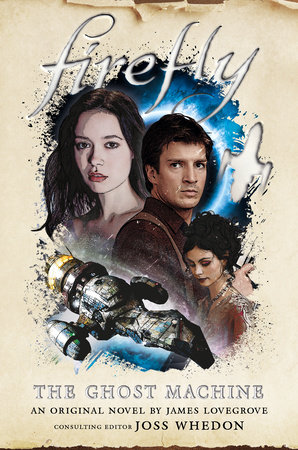
Firefly - The Ghost Machine by James Lovegrove

The Ghost Machine is the third in Titan’s series of Firefly tie-in novels, all of which have so far been written by Lovegrove (and he has another one due to come out next year). An ‘Author’s Note’ informs us that the action is set between the Firefly TV series and the movie Serenity. In an interview with sci_fidelity.co.uk, Lovegrove points out that ‘essentially what I’m doing is fan fiction but by a professional writer’. His love for the characters certainly comes across and the obvious fun he had writing them makes this an entertaining read. I hadn’t seen any of these before and so I wasn’t sure what to expect but I was immediately convinced by the opening scene, in which an exchange of dodgy merchandise in the remote outback of an obscure planet rapidly goes pear-shaped. The voices and characterisation are spot on and I sat back to enjoy the ride but, as with the high points of the series, I also found that the story ended up making me think about some of those fundamental questions, which genre fiction can be better at highlighting than more self-consciously literary work. As Lovegrove says in the interview, if we think of these novels as a mini season two then ‘The Ghost Machine is the season’s “high concept” episode’.

The dodgy merchandise in question turns out to be a bit of black tech developed by the Blue Sun Corporation in an illegal lab for the purposes of social control. Within hours of taking off from the planet where the novel begins, all of the crew except River are hopelessly ensnared in wish-fulfilment fantasies oblivious to the fact that their ship is heading full speed for a direct collision with the nearest moon. As the story progresses, these fantasies break down into overt horror but perhaps the most horrible thing about it all is just how conventional and capitalist the fantasies are in the first place. Mal imagines himself in domestic bliss, married to Inara with two kids; Wash dreams of being the wealthy head of an interplanetary freight corporation, the subject of puff pieces in society magazines; Simon wishes himself back as the privileged son of his wealthy family. Success breeds fear of betrayal as shown by the disintegration in Wash’s fantasy of his marriage with Zoe; while Zoe’s own fantasy of the Browncoats having won the war is to the detriment of her friendship with Mal. Tellingly, Zoe suspects Mal would have been happier if the war had been lost: ‘He defined himself by what he resisted, and therefore without anything to oppose he was nothing’. However, the novel is not critiquing the series for endorsing a loser mentality. Rather, it is reaffirming that oppositional mentality against the truly obscene consequences of adopting a winning mentality in what we might think of as ‘capitalist realism’. In particular, the sequence featuring Simon reveals the sheer violence underpinning patriarchal systems. Fortunately, resistance turns out to be too ingrained in some of the crew members for them to succumb completely. In its own way therefore, Firefly: The Ghost Machine has a very strong moral message: it has certainly put me on my guard against idly indulging in wish-fulfilment daydreams of conventional success.

Copyright Nick Hubble. All rights reserved.

Mexican Gothic by Silvia Moreno-Garcia

Reviewed by Paul Graham Raven. This review first appeared in The BSFA Review.

Let me lay my lotería cards on the table: I read little horror, if any. I picked out Silvia Moreno-Garcia’s latest novel because I bought and published some of her earliest stories, back when Futurismic was still a going concern, and I was curious to see what she was capable of with a decade more experience under her belt; suffice to say it’s very clear to see why she’s lasted the course. The novel’s title makes it plain, even to a dilettante interloper, that there’s a direct connection to the earliest manifestations of the horror tradition—but I can’t tell you to what extent Mexican Gothic might be in dialogue with its generic predecessors, because I don’t have the necessary knowledge. As such, I will limit myself to a discussion of the book’s technique, affect and plot.

Let’s start with the latter: Noemí Taboada is a socialite in 1950s Mexico City, and her life of glamorous parties (and carefully distant dalliances with handsome but stupid young men) is interrupted by her father’s receipt of a letter from her cousin; Catalina recently married (unexpectedly, and against the family’s wishes and better judgement) and shipped out to El Triunfo, a faded former silvertown in the eastern state of Hidalgo, and has hardly been heard from since. The letter, full of high-gothic histrionics—cruelty, decay, poison, whispering voices in the night, the full works—suggests to Noemí’s father, already predisposed to disapproval of Catalina’s unsuitable husband Virgil Doyle, that she needs rescuing from her situation, or psychiatric attention, or some combination of the two: Catalina had a traumatic youth before coming to live with Noemí’s side of the family, after all, and has always been a bit flighty, her nose buried in literary Victoriana, a romantic in both the capitalised and lower-case senses of the term. Despite the horrors to come later in the novel, Noemí’s being dispatched on this mission by her stern yet doting father is perhaps the hardest event to swallow in terms of plausibility—but it’s done quickly, and no more than ten pages have passed before Noemí is en route to El Triunfo by train, with instructions to scope out the situation, and (if required) to persuade Virgil that he must either let Catalina see a shrink, or let her go entirely.

The Doyle family pile is the plainly-named High House, some way outside of El Triunfo proper, halfway up the mountain containing the mine that made the town’s (and the Doyles’s) much-diminished fortunes. High House and its cast of residents are as gothic as the title suggests they should be: this lot are, for the most part, monstrous and unpleasant from the get-go. Noemí, who starts confidently—as is her way—with the assumption that she’ll soon have her cousin out of there and onto a train back to the capital, discovers that things are (of course!) rather more complicated than the simple abusive-gold-digger-husband set-up that she and her father had assumed (though that is very much a part of the problem) and is soon entrapped in High House herself.

Now, I’ve never been much of one for deferring to the Spoiler Police, but I will in this case refrain from going deep into the spooky mechanics of the plot, which leavens its classic gothic hauntings and horrors with some scientific speculation and an (un)healthy dose of social psychology. I will say that it’s not a very violent or gory book, which I appreciated, and is perhaps all the more horrific (rather than thrilling or chilling) for that… and I will also note that the horror elements are used to explore, with no small degree of subtlety, the more mundane horrors of racism, colonialism and patriarchy. Mexican Gothic treats these themes with a sort of unflinching care, tracing the toxins without collapsing the veins of the plot. High House may be mostly lit by candles and oil lamps, but there’s a fair amount of gaslight in play, if you catch my drift; the entitled and not-always-passive aggressions of toxic masculinity, and the ways in which it warps and damages its protagonists as well as its victims, is poignantly portrayed, to the point that what might have been a far-too-fairytale ending instead feels both earned and redemptive.

It is telling, perhaps, that Moreno-Garcia chose the era of the post-war “economic miracle” as the temporal setting for the story—a period in which Mexico, like much of the rest of the world, was generally on the up in terms of social progress, particularly for women and those with indigenous (rather than Spanish) roots. Noemí fits both of those categories, and her privilege is contextualised with an appreciation of how much has changed, and how much is still to be done. As such, her distaste both for the obsolete patriarchal mores of the Doyles, and their interest in eugenic “science”, is informed by intellect and experience alike. (The redoubtable Clute would perhaps add something here about the ways in which the Doyles are Bound to the earth and their adopted home, both literally and figuratively, but I’ll leave that sort of theory to the experts.)

In terms of technique, while the gothic informs the imagery, atmosphere and plot, Moreno-Garcia mostly leaves the overwrought prose stylings out of it, writing instead from Noemí’s whipsmart sceptical POV as she figures out the form of the trap she’s wandered into. Furthermore, the way in which Moreno-Garcia displaces the classic gothic tropes to Central America, so as to expand and illuminate both the source genre and its idiosyncratic setting, is handled with deft and understated craft. Is it good horror? I’m really not the man to ask—but it’s a bloody good novel, that’s for sure.

Copyright Paul Graham Raven. All rights reserved.

Smin Smith: Transmedia Worlding in Marine Serre’s FutureWear

By Smin Smith. This article first appeared in Vector 292.

Defining Science Fiction Art

The term science fiction as critic Adam Roberts states “resists easy definition […] it is always possible to point to texts consensually called SF that fall outside the usual definitions” (2006:1). This makes the process of defining science fiction particularly difficult, especially as an artist. The science fiction art we produce often falls outside of definitions which centre literature, film and television narratives. 

When I started Vagina Dentata Zine in 2015 (a print publication documenting the relationship between fashion and science fiction), I had Norman Spinrad’s definition in mind: “science fiction is anything published as science fiction” (quoted in Roberts, 2006:2). I am particularly drawn as an artist to understandings of science fiction that prioritise multiplicity, and ultimately reclamation. Having been involved in queer, feminist zine publishing for a number of years now, I regularly witness visual science fiction beyond film and television — beyond the “mainstream white supremacist capitalist patriarchal cinema” (hooks, 1996:107) that criticism still prioritises. It seems more important than ever to move science fiction studies beyond these constructs, to let the emergent and more generative science fiction happening on the fringes into academia. 

Here I think particularly of the Afrofuturist legacy, a potent multimedia project that encompassed “the theoretical and the fictional, the digital and the sonic, the visual and the architectural” (Eshun, 2003:301). We do speculation a disservice when we limit its reach. Thanks to the work of multiple artists, zines and journals like Vector, science fiction criticism is finally expanding its remit to encompass the various modes of science fiction art. 

My understanding of science fiction art has also been shaped by convergence culture, a contemporary phenomenon affecting both science fiction and the arts. Transmedia studies of science fiction identify a phenomenon where the “boundaries between media have blurred to the point at which it makes little sense to foreground fundamental distinctions between contemporary media” (Hassler-Forest, 2016:4-5). Narratives are simultaneously built across (but not limited to) films, television shows, books, comic books, video games and toys. 

Similarly, contemporary art necessarily involves a convergence of media, building “a general field of activities, actions, tactics, and interventions falling under the umbrella of […] a single temporality” (Medina, 2010:19), that of the contemporary. For both Hassler-Forest and Medina, convergence has liberatory potential; as Medina puts it “[…] there is some radical value in the fact that “the arts” seem to have merged into a single multifarious and nomadic kind of practice that forbids any attempt at specification” (2010:19). As a fashion stylist once confined to the genre of visual culture, blurring the boundaries of art, science fiction, and science fiction art specifically feels especially productive. 

Samuel R. Delany once proposed that “we read words differently when we read them as science fiction” (2012:153). This essay declares that we read art differently when we view it as science fiction, specifically fashion design and imaging practices. 

Continue reading “Smin Smith: Transmedia Worlding in Marine Serre’s FutureWear”

The Evidence by Christopher Priest

Reviewed by Nick Hubble. This review first appeared in The BSFA Review.

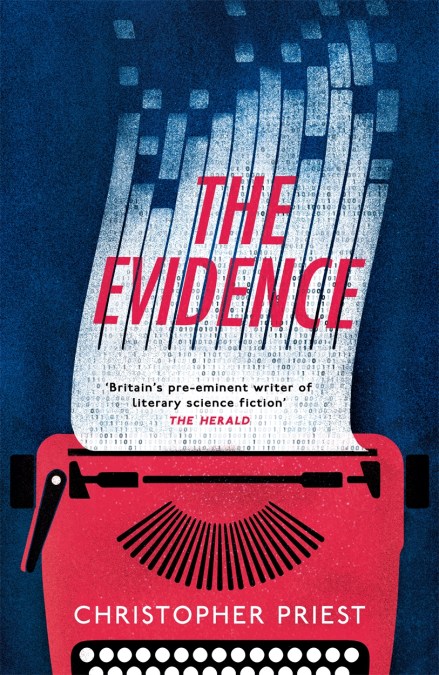
Christopher Priest’s sixteenth novel, his fifth in the last decade, returns to the uneasy setting of the Dream Archipelago, most recently traversed in 2016’s The Gradual. On the one hand, The Evidence is classic Priest with the full panoply of twins, stage magicians and the endless war between Glaund and Faiandland trundling on in the background. But, on the other, it’s a crime novel with several variants on the locked-room mystery and a particularly violent murder scene. Has Priest sold out to the demands of commercial genre writing or is he sarcastically deconstructing the format?

The Evidence

The novel begins with crime writer, Todd Fremde, on a train on Dearth Island heading to Dearth City, where he will be staying in the Dearth Plaza Hotel, in order to give a keynote lecture, to a conference organised by the University of Dearth Literary and Historical Society, on ‘The Role of the Modern Crime Novel in a Crime-Free Society’. Fremde has accepted the invitation against his better judgment, swayed by the promise of top cuisine, a suite at the hotel, and being driven around in a university car. Therefore, he makes it clear he only has time to give the lecture and then leave the next day. While it would no doubt be a mistake to conflate Fremde with Priest himself, the following fear seems heartfelt: ‘The prospect of prolonged and detailed academic discourse from theoreticians who knew little of the art and craft of writing filled me with dread’. Ouch! Suitably chastened, I shall try and rein in my well-known proclivities to quote large chunks of Derrida, Lacan or Agamben for the duration of this review.

Needless to say, the amenities on Dearth fail to match up to their billing but the real trouble arises from Fremde’s inability to adhere to the ‘Seignioral mutability regulations’ with the consequences that his watch stops, the electrical equipment in his room (not suite) takes on a life of his own, letters disappear from his emails and texts, and he incurs hefty fines for ‘electrical mutability abuse’ and a ‘Seignioral surcharge’ for ‘unauthorized horizontal prejudice’. Fortunately, he is able to offset some of the cost of these by cashing in the return half of his rail ticket and accepting the offer of a lift back across the island from a woman, Frejah Harsent, who attended his talk. But even this has its consequences as Harsent, who drives a gullwing roadster with a barely-concealed automatic weapon in the boot, turns out to be a semi-retired detective in the ‘Transgression Investigation Department, Dearth Seignioral Police’. Not only does she insist on telling him extensive details of a cold case that she was involved in because it will give him material for his writing but it also transpires that she is incredibly prejudiced against serfs leading to his blunt admission that he is a ‘citizen serf’, which provokes the following exchange:

‘I’m embarrassed – I assumed you were a professional, a vassal.’

‘That’s just your assumption,’ I said. ‘Don’t feel sorry for me. I’m a writer. All writers are serfs.’

Subsequently, Fremde gets back to his home island of Salay Raba and over the following days all seems back to normal apart from the fact that there is no sign of his expenses and fee from the University of Dearth. But then, once more against his better judgement, he finds himself slowly dragged into the ongoing fallout of the cold case that Harsent insisted on describing to him and the attendant complications of twins, magicians and illusory perfect crimes. None of which is helped by the financial collapse and run on the banks, which threatens to destabilise the economy of the entire Archipelago that Fremde may have inadvertently triggered through his mutability transgressions. All of this is great fun, narrated with deadpan irony to characteristic understated comic effect; but with a marked political charge. 

The feudal class system of the Dream Archipelago has never been laid out so starkly as in the drop-down list of ‘social level’ options that Fremde accesses at one point in the proceedings: ‘Serf, Citizen Serf, Villein, Squire, Vassal, Corvée Provider, Cartage Provider, Demesne Landed, Knight, Manorial Landed, Baron, Seignior.’ Although, amusingly, magicians are categorised as a separate category of ‘Mountebank’. In The Evidence, this outdated class system is linked with finance as a manifestation of mutability, which is both a real and unreal process that happens or is thought to happen: ‘best understood as existing somewhere between quantum physics and psychology’. 

The unexpected appearance of the medieval term ‘Vassal’ in contemporary British usage presents an example of this kind of simultaneously real and unreal existence. It is used to express the concern of Brexiteers, such as the Prime Minister of the United Kingdom, not to be reduced to the status of vassals of the European Union regardless of the fact that this is neither a likely outcome nor necessarily an undesirable one. That this kind of absurdity now constitutes the political reality of the UK is a reflection of the state of affairs described in a recent book, This is Not Normal: The Collapse of Liberal Britain (2020), by William Davies, Professor of Political Economy at Goldsmiths, University of London. Davies posits that the mismatch between ever-expanding digital data and timebound analogue frames of meaning is generating ‘escalating opportunities for conflict over the nature of reality’. This strikes me as essentially the same phenomenon that Priest describes as mutability. Fremde might have been tasked with the seemingly paradoxical task of talking about the role of the modern crime novel in a crime-free society but Priest sets himself the even more difficult problem of writing about the relationship between illusion and reality in a world in which the distinction between them has collapsed. Somehow, by sleight of genre and time-honed skill, he achieves this, and order is restored at the end of The Evidence with revels ended as all is mended. The dream still works even as all falls apart around us.

Copyright Nick Hubble. All rights reserved.
Green Planets: Ecology and Science Fiction edited by Canavan and Robinson

Reviewed by Anthony Nanson. This review first appeared in The BSFA Review.

In Rob Latham’s Oxford Handbook of Science Fiction (2014) the field of ecocriticism was conspicuous by its absence. That gap could have been nicely filled by Gerry Canavan’s Introduction to Green Planets, or indeed Latham’s own contribution to this book. Ecocriticism and SF may have been reluctant bed-mates, but in this book we see an explicit insemination of SF criticism with ecocritical thinking. Not only that, Canavan argues that science fiction itself is an ideal means of ecological critique. As Kim Stanley Robinson points out in the interview concluding this volume, the ecological crisis confronting the world is so complex, and so much about process unfolding in time, that it is better described in terms of story than of abstract concept.

Canavan structures his introduction and – the book’s three parts – using a set of categories borrowed from Samuel Delany. First, the contrasting utopias of New Jerusalem (the high-tech super city) and Arcadia (the rustic good life). Each of these inverts into a dystopia: respectively, the Brave New World and the Land of the Flies. In the interstices between these arise new postmodern categories: Junk City (slow-motion urban collapse), whose positive side (‘an ecstatic vision of improvisational recombinative urban chaos’) is unnamed (how about ‘Brexit’?); and the not formally named ‘ruined countryside’ (‘Edgeland’?), whose positive aspect is the Culture of the Afternoon (sunset shining through the smog). Transcending these sixteen categories is the Quiet Earth, where humankind is completely or almost completely absent.

Part 2, ‘Brave New Worlds and Lands of the Flies’, thus focuses on dystopian stories. Part 3, ‘Quiet Earths, Junk Cities, and the Cultures of the Afternoon’, tends that way also. Eric C. Otto’s chapter there applies the concept of ‘critical dystopia’ (from Raffaela Baccolini and Tom Moylan’s Dark Horizons [2003]) to show how Paolo Bacigalupi exercises an ecotopian (ecologically utopian) desire through dystopian scenarios that create a tension between his characters, who become motivated to act differently but whose options are foreclosed by the structures of their world, and the reader in this world for whom change remains possible.

What really struck me is that most of the texts examined in the supposedly utopian Part 1, ‘Arcadias and New Jersusalems’, also incline towards dystopia. Christina Alt’s chapter on H.G. Wells compares the ecological awareness of The War of the Worlds with humankind’s ruthless extermination of undesired species in his notionally utopian novel Men Like Gods. Latham’s ‘Biotic Invasions: Ecological Imperialism in New Wave Science Fiction’ surveys a range of grim invasion stories. Michael Page’s study of Golden Age SF touches on some utopian texts when discussing the theme of ‘evolution’ but then returns firmly to dystopia with his second ecological theme of ‘apocalypse’. This leaves Gib Prettyman’s study of Le Guin as the only chapter, besides the Robinson interview, that wholeheartedly engages with the utopian imagination.

The notion of a kind of merging of SF and ecological critique is made tangible by two chapters about ‘science faction’, texts that are essentially works of speculative popular science but framed in a future narrative. I use the term in a broader sense than the narrow one in which Brent Bellamy and Imre Szeman deploy it, to refer specifically to depictions of a world devoid of people. Equally ‘science faction’, I’d say, is Garrett Hardin’s Exploring New Ethics for Survival: The Voyage of the Spaceship Beagle, the focus of Sabine Höhler’s chapter. Both these chapters run into a political dead end: Bellamy and Szeman’s because, as they conclude, a post-human world is a priori devoid of politics; Höhler’s because Hardin’s thought experiment leads to a neoliberal cum fascist conclusion that the resource limitations of Spaceship Earth necessitate a coercive survival of the fittest. In proposing a lifeboat exit strategy from this dilemma, Höhler appears to reject the premise that the Earth is a closed system and fall back on the dream of a destiny somewhere else – which both Canavan’s introduction and the interview with Robinson make clear is no solution to humankind’s ecological quandary.

For me, the most interesting line of thought arises in three chapters that, in different ways, engage with the idea of a change of consciousness through some concept of immersive ‘depth’. Melody Jue explains now, in Stanisław Lem’s Solaris and Greg Egan’s ‘Oceanic’, the metaphor of mysterious ocean depths is manipulated to suggest possibilities of reciprocal connection between the human and non-human. Timothy Morton’s essay on the film Avatar is a tour de force of postmodernist criticism, blithely drawing upon the likes of Kant, Spinoza, and Heidegger to explore an alluring void of reason in which we may find connection with all that is, only to leave us with a nightmarish image of alienation. Brilliant though it be, this kind of writing strikes me as more a performance of the critic’s cleverness than a useful contribution to our problems, whether ecological or existential. Contrast this with Prettyman’s clearly structured argument that the transcending of the ego facilitated by a spiritual path such as Daoism, to enter a broader field of connectedness, is instrumental to Le Guin’s strategic engagement with ‘the “enshrinement” of egocentrism that makes capitalism “the enemy of nature”’ (quoting Joel Kovel).

With the passing of Saint Ursula – I say that with tearful respect – this excellently produced book only reinforces my impression that Kim Stanley Robinson is out there on his own in applying the SF imagination to explore hopeful pathways into the future. We need more writers like him with the guts to step beyond the self-fulfilling prophecy of dystopia. As Canavan says, ‘The future has gone bad; we need a new one.’

(c) Anthony Nanson. All rights reserved.

Eco-Sci-Fi Art and Interspecies Technology

By Stephanie Moran. This article was first published in Vector 292.

Since at least the beginnings of industrialism, technological innovation has incorporated attributes of animal perception and behaviour. More recently, this process has been recursively intensifying, in a process of ‘the biologisation of computer technology and the computerization of biology’ (Vehlken, 2019). Technologies inspired by nature deepen our understanding of natural systems, in turn fostering new technological developments: from the development of behavioural biology around 1900, through the use of media technology in biological research and the acceleration of bio-technoscience in the 1970s, to the use of simulation modelling and then computational-intensive modelling beginning in the 1980s, and most recently the rise of Machine Learning methodologies in Artificial Intelligence. Now studies of birdsong inform voice recognition software such as Siri and Alexa, while billionaire sci-fi fan Elon Musk is funding research into neural interfaces with the brains of mice and pigs.

Continue reading “Eco-Sci-Fi Art and Interspecies Technology”

Science Fiction edited by Dan Byrne-Smith

The MIT Press/Whitechapel Art Gallery (2020), 240 pp

Reviewed by Andrew M. Butler. This review first appeared in Vector 292.

There is a moment in an 1836 lecture at the Royal Institution when John Constable argues that “Painting is a science, and should be pursued as an inquiry into the laws of nature. Why, then, may not landscape be considered as a branch of natural philosophy, of which pictures are but experiments?” Various nineteenth century artists actually made science-fictional paintings — John Martin and Thomas Cole spring to mind — and groups of artists such as the Futurists, the Vorticists and the Surrealists embraced the ambiguities of modern technology in the first half of the twentieth century. In 1956, the “This is Tomorrow” exhibition at the Whitechapel Art Gallery was opened by Robbie the Robot from Forbidden Planet and featured science-fictional imagery among its utopian and dystopian reactions to post-war, consumerist Britain. Among its many visitors was a new writer called J.G. Ballard. 

It is thus appropriate that this book on science-fiction art is published by the Whitechapel Art Gallery (in conjunction with MIT). As part of the Documents in Contemporary Art series — other titles include The Gothic, Beauty, Abstraction, The Sublime and Ruins— it brings together extracts from theoretical essays, academic journals, museum catalogues, interviews and written creative works, mainly produced in the last two decades. The book is arranged by theme rather than chronologically: “Estrangement”, “Future”, “Posthumanism” and “Ecology”, the first being driven by academic definitions of sf and the others by three broad areas of sf art. It is perhaps surprising that “Utopia”, “Dystopia”, “Technology” or “The City” are not sections, but it seems a reasonable breakdown. There is no editorial voice to situate each extract, beyond the bare fact of bibliography, and so most voices are gifted equal status, some contesting and others contradicting. Occasionally I longed for a map, or perhaps a clarification of whether, say, Afrofuturism starts in 1993 (South Atlantic Quarterly) or 1994 (that issue reprinted as Flame Wars) and I’m not clear whose typo M.R. Shiel was. And the volume assumes that you are familiar with the artists under discussion — a good many of them were names new to me, reflecting the eclectic range.

Across the volume there are some leading academic voices, such as Jean Baudrillard, Donna Haraway, N. Katherine Hayles and Darko Suvin — represented by judicious extracts from central works — and writers such as Margaret Atwood, J.G. Ballard, Ted Chiang, Tom McCarthy and Kim Stanley Robinson. Atwood is given prominence as someone who has been accused of committing science fiction and who begs off the label, as what she writes isn’t what she thinks science fiction is, and she apologises that we may have taken offence at being misled into thinking it is science fiction. This is nicely countered in the interview with Kim Stanley Robinson, “Whenever science fiction gets interesting, then people try to give it another name. […] If its content becomes relevant, you call it cyberpunk, cli-fi, Anthropocene literature or dystopian fiction” (195). Nevertheless, Atwood places herself in the Vernian rather than the Wellsian tradition. But, of course, she isn’t producing art, in the sense of the other practitioners in the book.

The heart of the “Estrangement” section is an extract from Darko Suvin’s Metamorphoses of Science Fiction, which situates science fiction as “the literature of cognitive estrangement” (36). It is estrangement that is picked up on by the rest of the book — the sense of the familiar becoming unfamiliar and the unfamiliar becoming familiar, which we can surely see in the dialectical dance between the artistic simulation of, say, a landscape in paint or the reimagining of a location thanks to its depiction. Estrangement is a socio-political act, persuading us to think about the real world in a new way. The cognitive part of the equation — loosely, the science — is not really discussed in the extract, although Sherryl Vint picks it up in the next one. Suvin’s formulation allows us to see art in Pawel Althamer’s salutation to the new millennium in a Warsaw housing estate and then the travels of its inhabitants in gold spacesuits to Brasilia, Belgium, Mali and Oxfordshire. It empowers Afrofuturism and a huge amount of non-Western art by reframing European colonialism as an alien invasion and opens the space for new myths and fables. For example, Amna Malik discusses Ellen Gallagher’s Ichthyosaurus installation at the Freud Museum as “the basis of a foundation myth in which the sea becomes an incubator for the potentiality of the future” (79) (and Nnedi Okorafor’s Lagoon is mentioned in an interview with Ama Josephine Budge [215]). Meanwhile Yinka Shonibare MBE’s Dysfunctional Family, featuring an alien family dressed in batik cloth imported to Nigeria from Indonesia, was on display at the “Alien Nation” exhibition at the ICA, reappropriating fabrics sold to that country because it was perceived to be African.

Continue reading “Science Fiction edited by Dan Byrne-Smith”

The Left Hand of Darkness by Ursula K. Le Guin

Reviewed by Nick Hubble. This review first appeared in The BSFA Review.

The Left Hand of Darkness is set on the planet Gethin, also known as Winter where there is no sexual difference between people apart from a monthly period of kemmer. When the androgynous Gethenians meet in kemmer, hormonal secretions increase so that either male or female dominance is established in one and the partner takes on the other sexual role: 

Normal individuals have no predisposition to either sexual role in kemmer; they do not know whether they will be the male or the female and have no choice in the matter. (Otie Nim wrote that in the Orgoreyn region the use of hormone derivatives to establish a preferred sexuality is quite common; I haven’t seen this done in rural Karhide.). Once the sex is determined it cannot change … If the individual was in the female role and was impregnated, hormonal activity of course continues, and for the 8.4 month gestation period and the 6 to 8 month lactation period this individual remains female. … With the cessation of lactation the female … becomes once more a perfect androgyne. No physiological habit is established, and the mother of several children may be the father of several more. (91)

Thus read the field notes of Ong Tot Oppong of the Hainish Ekumen on her initial observations concerning the sexual life of the Gethenians. These notes are in the possession of Genly Ai, who has openly come to Gethen as an ambassador from the Ekumen with the purpose of inviting the Gethenians to join the wider interstellar community. ‘The Question of Sex’ – as the chapter in which Ong’s notes appear is titled – is the aspect of The Left Hand of Darkness which has attracted most attention over the near half century since its original publication.

Front cover of the first edition, with art by the Dillons. Cover depicts two faces against an abstract background.

I was going to begin this review by arguing that ‘if Heinlein’s line “the door dilated” is often presented as an example of the cognitive estrangement of 1940s Golden Age SF, then Le Guin’s “The king was pregnant” is representative of a more profound late 1960s countercultural and feminist defamiliarisation’. But then I read China Miéville’s introduction to this new edition of Le Guin’s 1969 classic and discovered to my horror that not only does he make the exact same comparison, he also sums up its significance more effectively: ‘Heinlein renders one corridor strange: Le Guin reconfigures society’. For Miéville, the novel’s defamiliarisation of gender makes it unquestionably a precursor of the gender queerness and sexual fluidity of our twenty-first-century present. 

However, as he acknowledges, it was not always seen in such a radical light. Le Guin’s use of universal male pronouns to denote a society without a permanent sexual divide and therefore without a gender division, led to Joanna Russ, among others, criticising The Left Hand of Darkness for only containing men in practice. In In the Chinks of the World Machine (1988), Sarah Lefanu argues that the lack of sexual difference means that there is no historical dialectic and that the novel’s popularity is due to it simultaneously offering women a retreat from conflict back to the pre-Oedipal imaginary order while offering men the opportunity to roam freely unconstrained by the difficulties that arise from sexual difference. Adam Roberts went as far as to say, in Science Fiction (2000), that The Left Hand of Darkness is remarkably non-binary as a novel, with an appealing spirituality but an unengaging storyline, and mainly dependent on the quality of its world-building to attract readers’ imaginative and emotional investment.

In fact, The Left Hand of Darkness has long had all the hallmarks of one of those novels which one feels guiltily ashamed of uninhibitedly enjoying in private while publicly pretending indifference in order to fit in with the apparent critical consensus. There is something about all that apparently non-existent narrative tension concerning the fate of Genly’s mission and his relationship with the mysterious and enigmatic King’s Ear, Estraven, that makes one need to keep turning the pages even on the umpteenth rereading. The plot is not negligible by any means. The central irony that the rather backward kingdom of Karhide does eventually turn out to be more important to Genly than the apparently more modern and democratic Orgoreyn, is the inspiration for Iain M. Banks’s Culture-related planetary romance, Inversions (1998). And, of course, the Culture is also a society in which it is possible for the mother of several children to become the father of several more.

Continue reading “The Left Hand of Darkness by Ursula K. Le Guin”

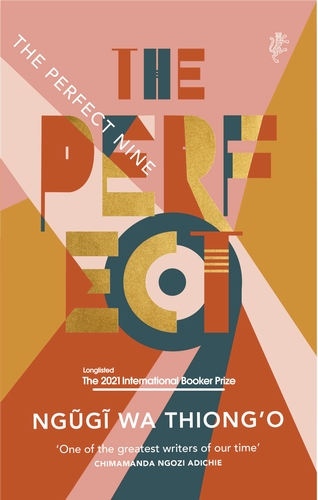
Review: The Perfect Nine: The Epic of Gĩkũyũ and Mũmbi by Ngũgĩ wa Thiong’o

Reviewed by Eugen Bacon. This review first appeared in The BSFA Review.

“Making things is a matter of hands and eyes. 

All my daughters are makers of things.”

If you’ve read Ngũgĩ wa Thiong’o’s fiction, comprising Wizard of the Crow, Petals of Blood, The River Between—some curriculum in African literature, seen his plays, like The Black Hermit, or read his essays and memoirs, you know to expect the unexpected. This preps you for his black speculative fiction The Perfect Nine: The Epic of Gĩkũyũ and Mũmbi, on the founding of the nine clans of the Gĩkũyũ people of Kenya. 

The Perfect Nine

The verse narrative borrows from the mythology of Gĩkũyũ and Mũmbi, the male and female forebearers created by the god of the mount, the giver supreme, the god of many names, also known as Mulungu, Unkulunku, Nyasai, Jok, Ngai, Yahweh, Allah. He/She is a unifying god, a being and nonbeing of distance and nearness, the here and there, the stars, moon and sun, the mother of the soil, water and wind. The giver grants Gĩkũyũ and Mũmbi nine perfect daughters, and a tenth with a disability, and now the daughters have come of age. 

In this mightily feminist story that blends folklore, mythology, adventure and allegory, translated from its original Gĩkũyũ version titled Kenda Mũiyũru(2018), the daughters are self-sufficient women who till the land, build their own huts, are self-reliant yet united in mind, heart and kinship. 

There’s Wanjirũ, who put a curse on the hyena to smother greed. Wambũi, who rode a zebra to war, led an army to victory. Wanjikũ, who has a fierce love for personal freedom and self-reliance, and a healing power of peace. Wangũi, whose lullabies can dispel a war. Waithĩra, who resolves disputes with the wisdom of the mount. Njeri, whose power of glance is a quest for justice. Mwĩthaga, who can make rain. Wairimũ, who sculpts and invents life, can trap souls. Wangarĩ, whose courage of a leopard protects the powerless from the powerful. And Warigia, the unspoken tenth, born with a disability, but she charms animals, so much joy in her laughter, the whiteness of her teeth lights a path in the darkness, and her arrow never misses an eye.    

Suitors arrive from far afield, lured by the silhouettes of the daughters’ beauty in their dreams, girls in fantasies who lead them down valleys to rivers with song. The suitors perform their own songs and dances of their regions, some picked up on the way, and they’re willing to serve the trinity of life—birth, life, death; the trinity of day—morn, noon and evening; the trinity of time—yesterday, today, tomorrow. 

But with its caution on the lure of strangers, the cunning of ogres, the folly of greed and the ugliness of discord, the philosophical story tosses up challenges and much peril to the daughters and their ninety-nine suitors, until only the worthy remain. 

With its inclusion of no distinction between man or woman, its inspiration on care of the land, its adages on the power of nature, and knowing to listen to the dictates of the heart, The Perfect Nineis an accomplished work that’s deeply cultural. It platforms the importance of naming in African tradition, the place of ceremony and the heart of kinship, bonded by blood or marriage—as one groom says to Gĩkũyũ and Mũmbi:

“I want to talk to you, my father and my mother,” he said, 

“For I cannot call you by any other name, given that

You received me and accepted me as your son.” 

In this lush chronicle on the genesis of Gĩkũyũ clans through valour, family, nature and nurture, Ngũgĩ wa Thiong’o shows how supremely he’s a leading literary African author and scholar, a recipient of twelve honorary doctorates, and a nominee for the Man Booker International Prize.

“Life has and has not a beginning.

Life has and has not an end.

The beginning is the end and the end is the beginning.”