BSFA Award Nominations So Far — Best Artwork

To recap, for anyone who wasn’t reading over the weekend: the deadline for nominating for this year’s BSFA Awards is this coming Saturday, 16 January. BSFA members can nominate as many items as they like in the four categories — Best Novel, Best Short Fiction, Best Non-Fiction, and Best Artwork. The five items with the most nominations in each case go forward to the final ballot.

As an aid to memory, I’ve been posting the nominations received so far in each category — that is, lists of everything that has received at least one nomination:

Today, the last of the categories: Best Artwork. Any single science fictional or fantastic image that first appeared in 2009 is eligible; to add your support to any of the works listed below, or to nominate anything else, email the BSFA Awards Administrator with details of what you want to nominate, and your membership number or postcode.

The list:

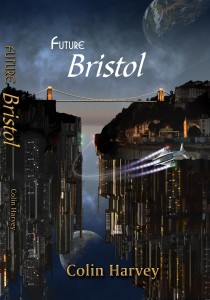
Cover of Future Bristol, ed. Colin Harvey by Andy Bigwood
Cover of The Push by Dave Hutchinson, by Andy Bigwood
Cover of The Gift of Joy by Ian Whates, by Vincent Chong
Alternate cover for Harry Potter and the Philosopher’s Stone by MS Corley
Cover of The Edge of the Country and Other Stories by Trevor Denyer
Cover of Boneshaker by Cherie Priest, by Jon Foster
Cover of The Solaris Book of New Science Fiction, Volume Three ed George Mann, by Hardy Fowler
Alternate cover for 20,000 Leagues Under the Sea, art project by Nitzan Klamer
Cover of The Caryatids by Bruce Sterling, by Raphael Lacoste, jacket design is by David Stephenson.
Emerald” by Stephanie Law
Cover of Murky Depths 7, by Chris Moore
Cover of Desolation Road by Ian McDonald, by Stephan Martinière, jacket design by Jacqueline Nasso Cooke.
Cover of The Sad Tale of the Brothers Grossbart by Jesse Bullington, by Istan Orosz
Cover of World’s End by Mark Chadbourn by John Picacio
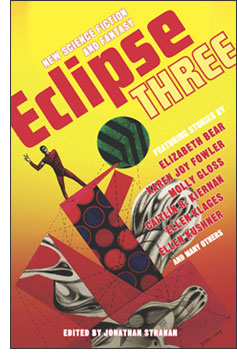
Cover of Eclipse 3 ed Jonathan Strahan by Richard Powers
Cover of Shadow of the Scorpion by Neal Asher by Steve Rawlings
Cover of Twisted Metal by Tony Ballantyne, by Jon Sullivan
Cover of Xenopath by Eric Brown by Jon Sullivan
Cover of Interzone 220, by Adam Tredowski
Cover of Interzone 221, by Adam Tredowski
Cover of Interzone 224, by Adam Tredowski
Cover of Interzone 225, by Adam Tredowski
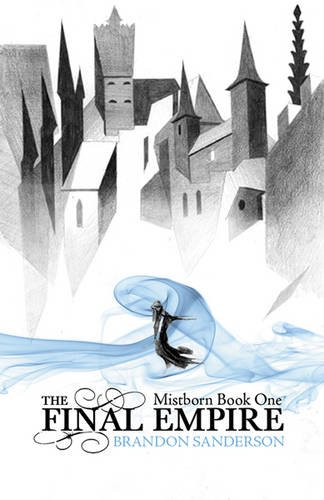
UK cover for The Final Empire by Brandon Sanderson, by Sam Green
Cover of Retribution Falls by Chris Wooding, by Stephan Martiniere
Cover of The Windup Girl by Paolo Bacigalupi, by Raphael Lacoste
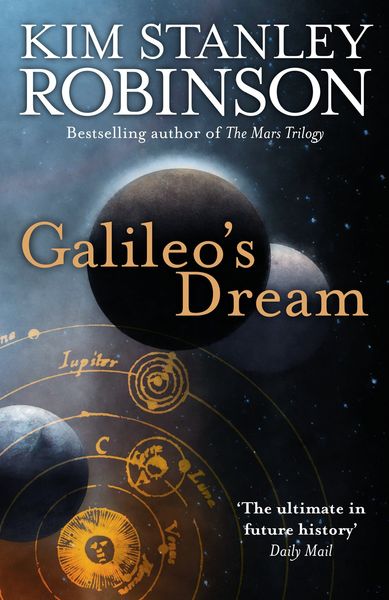
Cover of Galileo’s Dream by Kim Stanley Robinson
Cover of Journey Into Space by Toby Litt
Cover of The Resistance by Muse

Links are to the best-quality copies of each image that I could find; if you can improve on any of them (or if you know the artist details for any of the images that are missing them) do let me know.

The Art of Penguin Science Fiction

Your nifty website of the day: James Pardey’s collection of the art of Penguin science fiction.

There’s a full table of contents here, and something of an explanation here:

Penguin books and their iconic covers have a place in history that merits study and appreciation. They have influenced generations of readers and played an important role in our cultural heritage. Over the years new cover designs have appeared, and in the 1950s a transition took place from typographical to pictorial covers. This was followed by the introduction of a radically new cover design in the 1960s, and the launch of a Penguin science fiction series with covers featuring reproductions of abstract and surrealist art.

This curious linkage of modern art and sf is at the heart of this website, and is made all the more intriguing by the subtle and often ingenious connections between the artworks and the stories within. Following on from this, Penguin continued to publish sf as a number of mini-series, with covers that reveal the influence of Pop Art and to some extent Op Art. But to put these later developments in perspective it is necessary to go back to the first sf titles that Penguin published in the 1930s, for these early covers, now celebrated on a stamp, have come to be regarded as artworks in their own right.

Until recently the history of Penguin sf and its cover art has been largely overlooked. This website, along with a series of articles on the subject, attempts to rectify this. But what the articles convey with words this website does with images, and thereby offers what words cannot: over 150 Penguin sf covers, and the ability to trace their evolution at the click of a button, as titles were reprinted and different covers came and went. As such this website complements the articles, which focus more on the science fiction and its linkage to each book’s cover art. Here, however, it is the covers themselves that light the way along the multiple paths that weave through the history, and art, of Penguin sf.

One of the mentioned articles is available here; the others are forthcoming. Still, plenty of browsing pleasure to be had!

BSFA Awards: Cover Art

I’m finding this category the most difficult to nominate for. The rules say:

The Best Artwork award is open to any single science fictional or fantastic image that first appeared in 2007. Again, provided the artwork hasn’t been published before 2007 it doesn’t matter where it appears.

First, establishing whether or not artwork has been previously published is, well, challenging. I do like some of Clarkesworld’s covers, for instance — particularly those for issue 5 and issue 8 — but I’m almost certain I remember seeing that the cover of issue 12 is a reprint, and I have no idea about the others. Second, this doesn’t seem to have been a particularly exciting year for sf artwork on book covers. You’d really be hard-pushed to tell, from the covers, that recent books by Paul McAuley, Ken MacLeod and Richard Morgan are sf, and while the covers of books like Splinter and the “Future Classics” edition of Fairyland are terribly pretty, I’m not sure they’re science fictional or fantastic images. (Although the award has taken a pretty broad view of what that means in past years, it has to be said.)

Here are the other nominations listed on the BSFA website:

Cover of Dark Benediction – Dominic Harman (novel by Walter M Miller; Gollancz SF Masterworks edition)
Cover of Interzone #209 – Jim Burns
Cracked World’ – Andy Bigwood (cover of disLocations, ed. Ian Whates; Newcon Press)
‘Dada Jihad’ – Chris Nurse (Interzone #212)
It Will Never Fly Again’ – Alexander Kruglov (cover of Albedo One #32)
‘Looking In, Looking Out’ – Martin Deep (Murky Depths #1)
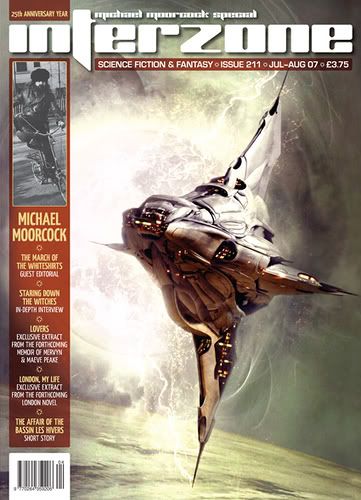
Lunar Flare’ – Richard Marchand (cover of Interzone #211)
Transcendance Express’ – Vincent Chong (cover of Hub #2)

I quite like the Dark Benediction cover, and “Lunar Flare” is a very fine spaceship, but beyond that I’m not being particularly inspired. What else can I think of? The cover of Interfictions, which I think probably can be justified under “fantastic image”; the cover of The Fade, although to an extent that is just Edward Miller (I assume) doing what Edward Miller does; and I’m quite fond of the cover of In War Times. But I feel I must be missing something. Any suggestions, anyone? Remember, the deadline for your nominations is midnight tonight…

Cover Art

A short essay on the Solaris website explains their approach to genre cover art:

As I see it, there are currently two schools of thought – to package your SF/F novel to appeal to as wide a readership as possible, in the hope of enticing readers from other areas of the bookstore to pick it up on a whim; or to package your SF/F novel to appeal to the perceived core readership of the genre, or indeed, fans of Battlestar Galactica and Doctor Who, people who want a book with a spaceship or a wizard on the front of it.
[…]
In setting up the Solaris imprint for BL Publishing, though, Publisher Marc Gascoigne and I decided – for better or for worse – to place ourselves directly in that second camp. The reasons for this were two-fold. Firstly, our existing imprint, the Black Library, had been successfully publishing SF/F novels for eight years – novels that tie-in to the Warhammer and Warhammer 40,000 fantasy worlds of Games Workshop. Experience had shown us that we already knew, as a business, how to package books for a niche audience – our recent range of Horus Heresy tie-in novels have sold over three hundred thousand copies combined since last April. Secondly, we believed we could see a gap emerging in the market, and we wanted to fill it.

Many genre imprints in both the UK and the US were taking the other route, packaging novels to appeal to a wider audience, focusing on getting front-of-store promotions and aiming for the bestseller lists. Sales expectations for genre novels seemed to be getting higher and higher. On the other end of the scale, a proliferation of small presses seemed to be flourishing, publishing limited run books for a small collector’s market. Essentially, at the heart of the genre, the midlist was disappearing. The result of this was that the core SF/F readership was not being as well served as it had been in the past; people who went into a high street bookshop to browse the SF/F section were not necessarily seeing those aforementioned books with wizards and spaceships on the front.

There’s smart commentary from Ariel and Lou Anders, who has a quote form John Picacio:

“The field must visually celebrate itself, rather than run away from itself. Couldn’t agree with you [George] more. And I realize the context in which you’re saying this, regarding the midlist specifically. When sf/fantasy publishing shows an insecurity about its visual strengths, that insecurity rubs off negatively not only on our audiences, but in the broader media, and we push ourselves backwards every time we do that.

BSFA Awards: Best Artwork

It’s that time of year again. At last night’s meeting, Ian Snell, the BSFA Awards Administrator, handed round forms to remind everyone to start nominating for the BSFA Awards. For any new members reading, it works like this: there are awards for Best Novel, Best Short Story, Best Non-Fiction, and Best Artwork; for Best Novel the work has to be published in the UK, otherwise they can be available anywhere; you can nominate as many things as you want in each category; the five in each category with the most nominations go forward to form the shortlist, which is subsequently voted on (by STV). In short, you don’t have to wait until the end of the year; you can nominate whenever you encounter something you think is worthy of shortlisting. Continuing the theme of last night’s meeting, I thought I’d throw up some potential artwork nominations.

The artwork award is open to any single science fictional or fantastic image that first appeared in 2006. Again, provided the artwork hasn’t been published before 2006 it doesn’t matter where it appears.

As with most things related to the BSFA, the definition of “single science fictional or fantastic image” tends to be pretty flexible. Admittedly, the last couple of winners (Pawel Lewandoski’s cover for Interzone 200, and Stephan Martiniere’s cover for Newton’s Wake) have been traditionally science-fictional landscapes, but in the same period nominees have also included a Frank Quitely double-spread from We3, and even a photograph of the Millau Bridge.

So here’s what’s been catching my eye.

Magazine covers, left to right: Interzone 206 (let’s be honest, you can’t go wrong with a giant robot), Farthing 2 (although covers for the other issues have been nifty, too) and Postscripts 6 (probably the least exciting of the three, but nicely composed, I think). Illustrations for individual stories (such as those occasionally used by Strange Horizons, or as standard in recent issues of Interzone) are also worth looking at.

Book covers, left to right: US cover for River of Gods; Stephan Martiniere doing what he does best. I love the washed-out look of the Rainbows End cover (if you ignore the text all over it, anyway), and the UK cover of Black Juice struck me as being much more evocative of the stories it contains than the US or Australian editions. The cover for Nova Swing left me cold the first time I saw it, but it’s grown on me. Irene Gallo’s blog often features rather lovely covers … but fairly often they’re rather lovely covers for books that aren’t published yet.

And finally, whatever the merits of the film, I do love this poster:

Now, here’s where I throw it open to the floor. What artwork has been grabbing your attention this year? Don’t worry if you’re not a member; maybe someone who is will like your suggestion, and end up nominating it. That email address in full: BSFA.Awards@gmail.com.