Beyond the Library as Utopia: Conditional Belonging, Representative Collections and Science Fiction Librarianship
Gina Bastone and Adriana Cásarez
Introduction
When we tell strangers or new acquaintances that we are librarians, we hear reactions like “Oh, how wonderful that you get to read books all day!” Sometimes, we might get the response, “You’re doing such important work. The public library changed my life as a kid!”
While we much prefer the latter response, both reflect a stereotype of libraries as utopian institutions necessary for a healthy democracy and immune from criticism. Some people even hold libraries in holy regard, comparing librarians to clergy with a vocational calling, as Fobazi Ettarh notes in her groundbreaking article on vocational awe.[1] For many readers and SF fans, the library is a sacred place where knowledge is preserved and where they have treasured memories of encountering their favorite books for the first time or discovering their favorite SF authors.
We share a love for books, particularly SF stories, but we have a realistic view of libraries beyond these utopian visions. Margaret Atwood discusses the paradoxical nature of a similar utopia/dystopia binary in her book, In Other Worlds: SF and the Human Imagination. She says, “[W]ithin each utopia, a concealed dystopia; within each dystopia a concealed utopia. …”[2] It is from this tension that we draw similarities in libraries. Our idealized values of unfettered, egalitarian access to information and strong nostalgia for the love of books have a shadow side, especially when interrogated around white supremacy and patriarchy.
In her article “Concealing White Supremacy through Fantasies of the Library: Economies of Affect at Work”, Michele R. Santamaria describes “The Library” as “a fantasy space that denies its role in white supremacy.”[3] Santamaria builds on Gina Schlesselman-Tarango’s work on the concept of cuteness and how it insidiously reinforces the status quo in libraries. Schlesselman-Tarango says,
“By promising safety through gesturing to a pre-technological past, books preclude exposure to and engagement with the nasty realities of contemporary society. Inasmuch as they are associated with books, libraries too might be understood to provide an outlet for this sentimental yearning. …”[4]
We see library nostalgia as a crucial underpinning to the romanticized utopian stereotype of libraries, yet Santamaria, Schlessleman-Tarango, and Ettarh all point to the dystopian shadow side of our shared profession. We will explore this further as we unpack our collecting philosophy.
Additionally, Santamaria’s use of “The Library” denotes a sense of institutional authority and is a direct reference to librarian, writer, and poet Jorge Luis Borges’ concept of the “library as a universe”.[5] In particular, Borges’ famous short story The Library of Babel comes to mind. The Library of Babel has dystopian elements, such as meaningless books that are never accessed, used, or even seen by the librarians doomed to wander its endless halls.[6] This Borgesian “library as universe” may seem the product of a dark fantasy far from the reality of working in libraries, but it is a helpful metaphor for challenging the equally unrealistic stereotypes underpinning library nostalgia and vocational awe.
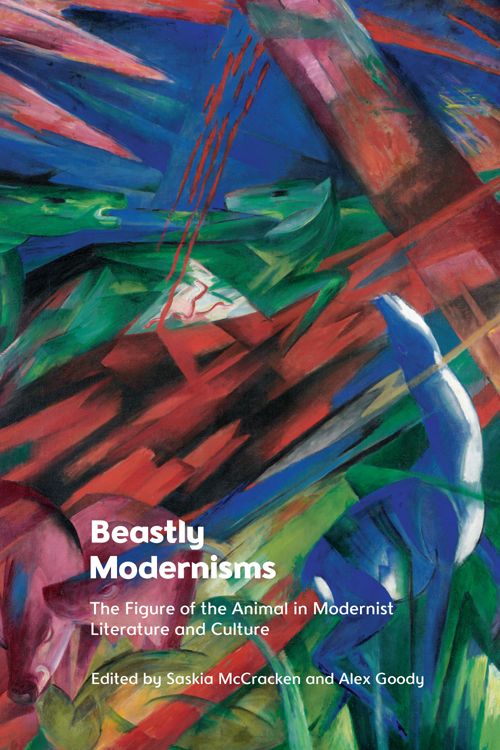
At face value, this collection of essays may not seem to be of immediate interest to the sf reader. It is primarily concerned with the development of Animal Studies – a sub-discipline that has already been significantly explored in relation to sf in the work of Sherryl Vint, Joan Gordon, and others – with reference to literary modernism, a diverse movement already noted for its challenge to traditional notions of identity and individual autonomy. The potential, though, for creative overlaps between modernism, sf and Animal Studies is already indicated by the fact that one of the co-editors, Alex Goody, was a keynote speaker at the 2019 Corroding the Now conference at Birkbeck College, London. Seen through a science-fictional lens, the encounter between human and non-human animals, the slippages between them, and their mutual affinities and kinships immediately invoke the First Contacts and uncanny relations between humans and aliens which are the stuff of genre sf. As the introduction’s reference to Jorge Luis Borges and Karen Eckersley’s chapter on Leonora Carrington make clear, imagined bestiaries are common to both Animal Studies and speculative fiction.
Without seeking to be a guide, the introduction nonetheless touches upon many of the key moments in the evolution of Animal Theory: from Peter Singer’s pioneering Animal Liberation (1975) and Donna Haraway’s ‘cyborg manifesto’ (1985) to Gilles Deleuze and Félix Guattari’s concept of ‘becoming animal’ (1982) and Jacques Derrida’s pivotal essay ‘The Animal That Therefore I Am’ (2002). The introduction also registers many of the other posthuman thinkers whose ideas have contributed both to Animal Studies and this volume in particular; from Giorgio Agamben and Rosi Braidotti to Michel Foucault and Cary Wolfe. The editors however, beginning their account with an exchange between Djuna Barnes and James Joyce (two modernists in exile, both of whom would flit between the centres and margins of the modernist canon), emphasise the affinities between Animal Studies, the revaluation of women’s writing and the decolonising of the curriculum. All such practices foreground and deconstruct the historic imposition of borders, the arbitrary gatekeeping that has characterised academic protocols and the maintenance of cultural shibboleths. To that end, the editors also note the collapsing boundary between ‘high’ and ‘low’ cultures, an elision that not only permits the entry of sf into the conversation, but which would also have appealed to such modernists as Barnes (boxing fan and purveyor of crime fiction) and Joyce (publican’s son, cineaste, and Anita Loos devotee).
We live in a golden age for speculative fiction. Futurist novels, shows, and movies have achieved a cultural saturation which would have been difficult to foresee just a couple decades ago, largely thanks to our increasingly unpredictable and perilous world. But rather than simply doling out temporary escapist relief, speculative stories help us comprehend our own cultures and their problems. Often, contemporary issues are approached via one side of a binary: either they’re exaggerated, showing us their destructive potential via a dystopia, or else they’re understood via their solution, producing a utopia.
So far, so obvious. But why are utopia and dystopia the genres we use to exaggerate and comprehend our own societies? Human communities are not structured according to a simplistic binary, instead being dependent on ever-changing laws, ideas, and social conventions. We know that truth ultimately lies in shades of grey, so why do black and white narratives still predominate in speculative fiction? Is this binary still useful as we wade deeper into the 21st century? What alternatives are out there?
Binary Problems
A few years ago the speculative writer Laurie Penny and I were interviewed on the subject of utopia. Penny, who is also a prominent journalist, posited a serious problem with utopias: namely, that the desire to create an idealised society has been used to justify numerous atrocities throughout our own history. Considering the many massacres committed in the name of a perfect world – theocratic, eugenicist, nationalist, agrarian, or Communist – it’s a difficult point to argue with. In Penny’s words, “true utopia is fascism”, underscored by a rigid set of idealised rules, unable to ever truly change or adapt; at best stagnant, and at worst, totalitarian.
Fantasy tales are littered with beings that can fly, whether in video games like The Legend of Zelda1 and Skyrim2, classic films such as Prince Vultan’s hawk men in Flash Gordon3, dozens of Marvel and DC heroes, TV series, blockbusters like the Harry Potter4 series and the classic Dungeons and Dragons5. The fantasy creatures of China Mieville provide us with a multitude of winged and armed creatures whilst Le Guin provides us with winged entities of a more recognisable feline form (Le Guin, 1999).
Characters who can fly capture our imagination. They are seen as having the ability to rise above and they often have power and God-like appearances. In this article we will be looking at the anatomy of flight and whether it can help us understand how these beings can fly, or whether it is best left to special effects.
As we are looking at self-propelled flight, we will ignore characters who fly by some means of alternative propulsion such as Ironman6, Thor7 and Mary Poppins8. We shall ignore those that fly using a cape such as Dr Strange9 and potentially Superman10 and we will limit our exploration to those creatures who present with anatomical wings that propel flight as opposed to fins or flaps that allow for gliding.
In the history of life on Earth there have only been four classes of creatures who have possessed the ability to truly fly. These are the pterosaurs, insects, birds, and bats.
Pterosaurs have been extinct for millions of years and so how they flew can only be speculated upon. Insects, due to their exoskeletons have a different anatomy and flight patterns which are not often represented in fantasy literature, although accurately depicted in the new Dune movie11. This article will concentrate on bats and birds and how they can inform our understanding (Evans 2020) of the flight of fantasy creatures.
Black Utopias: Speculative Life and the Music of Other Worlds by Jayna Brown. Duke University Press, 2021. Paperback 212 pg. $24.95. ISBN: 978-1478010548
Brown’s Black Utopias is one of the most scholarly and comprehensive works exploring Black Utopian futures. Very apt for a Covid-19 pandemic period that has seen the initial overwhelming loss of Black and Brown lives. In light of this mass death, Brown’s study asks — and through this work, answers — “What might Black futures mean, and how might we challenge our imaginations to create futures that are not only different to what we know and what we expect, but even allows us to evolve beyond our physical existence? Packed into these pages is a narrative that encompasses Afro-futurism, death, theology, spirituality, music, philosophers, science fiction, fantasy, and gender, stories that had to be absorbed, analyzed, and contemplated before beginning the review. There were layers after layers of new ideas packed into a narrative that also centered the stories of Black women’s religious and cultural beings in which they constantly sought a physical and metaphysical utopia within an Afro-futurist and Afro-centric framework.
Cultural critic Mark Dery is credited with coining the term Afro-futurism as “techno cultural aesthetic that blends science fictional imagery, technology, philosophy, and the imagery, languages, and cultures of Africa and the worldwide African diaspora.” Scholar Yusuf Nuruddin also notes that Afrofuturism “includes black science fiction or Afrocentric science fiction, more broadly defined as African American signification about culture, technology and things to come” (or, in the case of alternative histories, “things that might have come” from a reconfigured past). Brown’s adds to our understanding of Afro-futurism that undergirds her work: Brown defines Afro-futurism as “a program for recovering the histories of counter-futures […] most notable for resisting disciplinary boundaries” (p17). Moreover, combined with this Afro-centric, interdisciplinary attitude toward futures and counter-futures, the genre of Afro-futurism centers works of science fiction, fantasy, and other speculative fiction created by African Americans, Africans and the African diaspora. Afro-centricity embodies works that are often critical writings that focus on race, the institution of slavery, class, gender, oppression, inequality, and sexuality, all woven throughout Brown’s book.
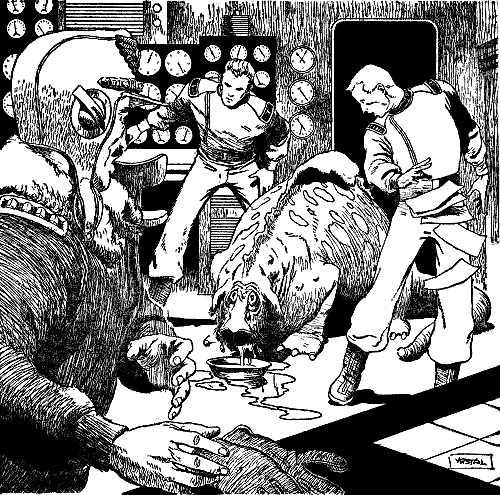
The slovenly wub might well have said: Many men talk like philosophers and live like fools.
I was introduced to the work of Philip K. Dick by my (then) boyfriend (ten years ago) when I was twenty-three. His sitting room was lined with bookcases, and from it, one day, he pulled a book of Philip K. Dick short stories. ‘Beyond Lies the Wub’is not the introduction to the work of PKD I would have chosen for myself. It explores none of the themes that interest me in PKD. The wub is a ‘huge dirty pig’. And the pig doesn’t want to be eaten. I was bored.
“Really, Captain,” the wub said. “I suggest we talk of other matters.”
PKD was forty-five years old in 1974. He had sold his first short story, ‘Roog’ in 1951 and his first novel, Solar Lottery, in 1955. Both had been simultaneously pulpy and ontological. He had won the Hugo Award for The Man in the High Castle (which also bores me) in 1963. The Three Stigmata of Palmer Eldritch had not won the Nebula Award in 1965 (losing out to Frank Herbert’s Dune). Later, in what came to be known as The Exegesis, he wrote that his ‘mystical experiences start[ed] in ’63 when’ he ‘saw the “Palmer Eldritch” visage [in] the sky’. For all the plurality of his ‘mystical experiences’, though, when people do talk about PKD’s mystical experiences, what they talk about is 2-3-74. In the 1986 17th issue of Weirdo, comix cartoonist Robert Crumb illustrated a (necessarily reductive) account of 2-3-74.
“Abolish the family? You might as well abolish gravity.” (1)
It is with these words, spoken by an imagined, horrified reader, that Sophie Lewis begins their new book. From the outset, the magnitude of the task ahead for family abolitionists is clear. To abolish the family is to attempt something frightening, something unthinkable, something which requires one to challenge the fundamental rules which bind our world together. It is, then, no surprise that again and again Lewis reaches for science fiction (SF) to articulate this vision of a world beyond the family. For an SF creator, to abolish a so-called law of nature is not a ridiculous proposition which can be used to embarrass utopians into giving up on their belief that “things could be different” (4, emphasis in original). It is rather a serious undertaking which involves an investigation of those forces which hold life as we know it together, the willingness to experiment with those same forces, and the determination to remake the world, however alien what comes next might be. This is the spirit in which we, the Beyond Gender research collective, approach Lewis’ book. We are a group of SF fans, researchers and creators who are committed to tapping into the radical potential of SF to undo the supposed naturalness of such myths as the binary model of gender, cis- and heteronormativity and, now, the family.
“Abolish the family? You might as well abolish gravity.”
This piece contains mild spoilers and mild mind scrambling if you haven’t seen the 2018 film Spider-Man: Into the Spider-Verse.
Margaret Thatcher had something to say about Miles Morales, so too did narrative theorist Seymour Chatman, as well as those fighting the idea of a “half-black, half-Hispanic” Spider-Man (Rose, 2018). It wouldn’t be a stretch of my tingly senses to say these folks share the belief that there is no alternative, there is a single, right, way. Thankfully, the opening sequence of the film Spider-Man: Into the Spider-Verse (screenplay by Phil Lord and Rodney Rothman, story by Phil Lord), sets the scene for social change with some cool emancipatory narrative devices.
It’s the kind of interventionist work that needs to be done because audiences have been trained to approach their story experiences, and much of life, with closed thinking. As part of his work on The Psychology of Closed Mindedness, social psychologist Arie Kruglanski explains that ‘the need for closure is the desire to have certainty, to have a definite answer to a question and avoid ambiguity’ (Kruglanski, 2021). A consequence of this is we can ‘jump to conclusions about others, and to form impressions based on limited and incomplete evidence’ (Kruglanski, 2004, 2). That character is the killer! Capitalism is the answer!
Former British Prime Minister Margaret Thatcher found it hard to imagine alternatives, and encouraged everyone else to find it hard. Thatcher is associated with the slogan ‘There is No Alternative’ — which refers to the neoliberal logic she popularised. In a speech, Thatcher not only said ‘there’s no real alternative,’ but also said ‘What’s the alternative? To go on as we were before?’ (Thatcher, 1980). As if the future is a long, single, inevitable, line of progression and the only choice is to stick with what isn’t working or proceed in the only available direction. Do nothing and crumble, or do the only change available.
In Capitalist Realism, Mark Fisher connected the belief that there is no alternative to capitalism with dystopian films and novels that don’t imagine ‘different ways of living’ (Fisher, 2009, 2). Instead of representing or prefiguring different ways of living together, many works of fiction depict the destruction of the world by unbridled capitalism. Even our fiction jumps to conclusions.
As I sit and write this in December 2022, I am surrounded by the excruciating noise of buildings being torn down, knowing that they will be replaced by something similar. The continuous drilling of machines make sounds like the earth is screaming as they cut deeper and deeper into it. The roads are being dug up again to replace or repair cables for our ‘modern’ technology. It’s not so much the abrasiveness of the noise that I find shocking, it’s the sheer waste of precious resources combined with the stark reminder of how we accept and even relish the bashing of nature into submission. Is this really the best we can do? Are we really advancing? Talking of which, the sun is shining bright, possibly a little too much for the time of year, and yet we appear to be unable to stop ourselves from destroying this planet which allows us our precious life. If only we could heed the warnings from fiction, as suggested by various articles in this issue. One step forward, two steps back. Then I reflect some more. I’ve just had a consultation with my doctor without leaving home and I’m preparing for a Cybersalon Christmas event that will be held simultaneously in a physical venue, an online platform and in Virtual Reality. Thankfully though, there are no hoverboards, drones or cars flying past the window of my top floor flat. I revise my pessimism. Two steps forward, one back. Which brings me on to the subject of this issue.
Speculative fiction is one of the sources the media, the general public, scientists and technologists use to frame the future. When asked about guest editing, I was in the midst of wondering whether, as a writer of near-future science fiction, I have a moral duty to reflect potential futures as accurately as possible, rather than simply selling the sensational. I was also beginning a project with King’s College London, writing short stories that raised ethical issues around using AI to automate the prediction of youth mental health problems. Issues such as whether it’s sensible to predict potential problems, whether we should use automated tools to minimise the costs and help clinicians, and whether losing the privacy of data is a price worth paying. At the same time as exploring the questions, I was busy asking myself if speculative fiction affects the future at all. Reading the articles in this issue has made me think that it most certainly does, and I’m not the only one who has been considering this. In 2020 Cory Doctorow published an article, ‘I’m Changing How I Write Fiction—for the Benefit of the Real World.‘ If fiction affects what people do through ‘intuition pumps’, he argues, then it could be a form of activism. For example:
New stories will help us understand the importance of seizing the means of computation and using it to build movements that break up monopolies, fight oligarchy, and demand pluralistic, shared power for a pluralistic, shared world.
Changing our intuition pumps is not easy, but it’s urgent—and overdue.
As I began to read around about the topic, I came across three terms that are often used interchangeably—prediction, forecast and foresight. If you’re not familiar with them, as you read through articles you’ll see how they differ and why we need clarity of definitions. Will Slocombe’s article also points out that speculative fiction has been used to explore how these might work, or not, in different contexts.
In Torque Control, Jo and Polina have taken me further with their four different approaches to applied science fiction. As they suggest, it’s possible that, ‘science fiction does make important differences to the world but that there is simply not yet a comprehensive or consistent theory to articulate how and why.’ So, I ask you to keep an open mind about the role of science fiction as you read on.
A 2013 working paper from the innovation foundation Nesta, ‘Better Made Up: The Mutual Influence of Science Fiction and Innovation,‘ sets out different ways in which speculative fiction might predict or influence the future. Its authors Caroline Bassett, Ed Steinmueller, and Georgina Voss argue, in a nutshell, that speculative fiction can: imagine technology that is then directly translated into reality (emphasising that this is very rare); influence how technology is framed, for example in discussion, regulation and development; inspire innovation industries and certain groups, such as hackers, the military or resistance movements; and influence how science and technology are understood, debated and judged in public.
A quote that is often used to describe the role of sci-fi in extrapolating current trends and their impact on society is from Frederick Pohl: ‘A good science fiction story should be able to predict not the automobile but the traffic jam.’ I would take this further and say that science fiction should enable discussions on whether the car is worth the traffic jam. It should provide us with ideas that can help us reflect on the political and ethical dimensions of the future. After all, science fiction doesn’t always warn us about the right things. For example, it has a tendency to focus on the existential risk of robots taking over and killing us all, when the mundane aspects of artificial intelligence are more likely to have serious consequences for society. Predictions don’t necessarily need to be accurate to encourage useful debate.
I’ve seen this play out through Cybersalon’s 22 Ideas About the Future project, with the subject experts developing their understanding of how science fiction can be used in foresight. As David Birch, thought leader in digital identity and digital money, says, ‘What these stories had in common was that they were not so much about how the money of the future would work, but what it would do to us and our relationships. I like being challenged to think about this because, as is often said, we tend to overestimate the short-term impact of new technology (cf. self-driving cars) but completely underestimate the long-term impact of new technology (cf. MySpace).’
With this in mind, it’s worth considering the long-term questions around how society might evolve. While preparing for a foresighting workshop I settled on four aspects: Firstly, the extent to which we continue to delegate decisions and outsource our agency to technology, mainly because we believe it to be more rational and hence more accurate than us; secondly, whether as a species we take the route of community and collaboration or whether we continue with a competitive ‘survival of the fittest’ worldview; thirdly, how far we continue into the insularity and individualism of neoliberalism and nationalism in contrast to becoming a more open and connected set of societies; and finally, our ability and willingness to shift our thinking, and in particular our planning and actions, from the immediate of the next few years to the longer term view of many decades.
That’s all very well, but how do we discuss these possible futures and how does fiction help us achieve them?
We know that stories are important in helping us imagine. We are a storytelling species. To quote Dr Danbee Kim, the neuroscientist for the wonderful graphic essay in this issue, ‘stories profoundly improve our abilities to remember and pass on complex information, gain perspective on difficult situations, and expand our capacity for empathy.’ And, in 22 Ideas About the Future media theorist Douglas Rushkoff explains that he sees speculative fiction creating ‘space for the novel‘ and ‘revealing truths we have hidden from ourselves.‘
Being inclusive about who takes part, and how, is crucial. Whenever we discuss our future(s) it is vital that we acknowledge who is fortunate enough to have access to conversations or the time to think about it, whether through set-piece projects or by reading and watching speculative fiction. Then, we must ensure those who are excluded become included. If this is not a familiar activity for someone, it can be worth pointing to the fact that, as Sara Stoudt alludes to in her article, many of our day-to-day encounters with statistics have a speculative narrative attached, the different possible impacts of climate change for example. However, we can expect resistance to democratising the future from those with power because, as Andrew Merrie notes in his interview, ‘Saying “that’s implausible” is often a way of cutting people out of the conversation or a power play to preserve or reify the status quo.’
If storytelling is this powerful, shouldn’t it focus more on positive futures, such as AI and humans working together to solve the big problems rather than competing for jobs, or even control of the planet? Solarpunk is a prime example of a subgenre that focuses on positive futures, and if you’re not familiar with it then it’s worth using the QR code in the graphic essay to find out more. However, as we see from the traffic jam argument, storytelling can also play a significant role in imagining the futures we want to avoid. As Douglas Rushkoff observes, ‘My facts and insights don’t penetrate closed minds […] If they would only consider the utterly implausible, even if just for kicks, I know I could take care of the rest.’ But beware. Whether a story is optimistic, realistic or pessimistic, as writer-researcher Yen Ooi notes, ‘It is exciting and romantic to dream about these technologically inspired futurescapes, but what these science fictional worlds often ignore—usually in an effort to create more exciting entertainment—is the fact that technology isn’t and will never be the main star in our reality.’ In a similar vein, Lauren Prater challenges us in her piece for UNHCR’s Project Unsung: ‘Could we embrace nature’s logic of emergence and shift from scaling to seeding change? Would something novel still be innovative if it was built slowly, over many generations and was decorated with our values rather than the capitalist logic of simply moving fast and breaking things? Would you give up efficiency and ease for mutual flourishing? No, really, would you?’
Storytelling in all its forms is important and what these articles and the projects I’m involved in tell me is that at every stage of the life-cycle of a story, from its worldbuilding and narrative, through to it being ‘received’, interpreted and retold, there is the potential for two-way flows of influence between scientists, technologists, writers and readers.
Recently, I was invited to take part in the project described in the article by Allen Stroud with the Defence Science and Technology Lab (DSTL), an executive agency funded by the UK Ministry of Defence (MoD). Deciding whether to get involved helped crystallise the moral issue I was busy thinking about into a real-life decision. One point of view is that it’s better to be in the room than not, another is that mere contact will taint. Having been approached by DSTL after a talk I gave at the Royal Anthropological Institute, I asked around to see if they were to be trusted and was fortunate enough to spend time chatting with their principal anthropologist. This led me to Allen’s project. My natural political inclination is anarchism, towards bottom-up community led action, delegating upwards the things that cannot be dealt with locally, all the way up to the global level. It was from this standpoint that I was making my decision. If my conclusion is that the life-cycle of a piece of speculative fiction does influence the future, then I had to decide if I would be contributing to the UK trying to be ‘top dog’ in a conflict or whether I’d be helping avoid conflict. I believe I made the right decision to get involved, but am keeping a close eye on how the project develops.
Coming back to the practicalities of using speculative fiction overtly to imagine possible futures. It’s important to think carefully about method and structure, and there are articles here that give good insights into how collaborative projects between subject experts and speculative fiction writers can work.
One of the standout problems I’ve already touched on is who gets to influence and be influenced. Therefore, in projects using speculative fiction the paramount issue has to be about creating a ‘level playing field’ for all, including any of the general public who are participating, making it clear that everyone has their own expertise to bring to the table. This can be achieved by equal payments, but often the project is part of a subject expert’s day job for which they are already paid, meaning it is better achieved by structuring the introductions and activities in a way that makes the equality explicit. It’s worth noting here that my experience is UK centric and there may be different difficulties with representation elsewhere that have different solutions.
An important factor in my deliberations has been understanding what’s in it for the authors, because if they’re not on board then we’re sunk before we start. Dr. Christine Aicardi, a Senior Research Fellow at King’s College London, interviewed the sci-fi writers in 22 Ideas about the Future: ‘I write from the perspective of a social scientist concerned with the social and ethical imports of future and emerging technologies […] I propose that through their speculative fictions, the authors are engaging with us to develop an ethics of the future—a fundamentally relational, speculative ethics of the future, which, to borrow from a foundational paper theorising responsible innovation, would aim at “taking care of the future through collective stewardship of science and innovation in the present.”’
It’s also worth noting that Christine and I have been involved in numerous projects over the past 7 years, often with returning experts, so there must be some perceived value in what we’re doing.
And there I am, back at the core question. However, after a wonderful journey of discovery, I have answers to my original questions.
Yes, speculative fiction does influence scientists and technologists in what and how they research, discover and invent. Yes, its predictions do affect the future if you take ‘predictions’ and ‘affect’ in their broadest sense. To an extent, it has a responsibility to be accurate and not sensational, but shouldn’t lose the ‘attractiveness’ of the story because then it’ll be ignored. It doesn’t have to be tech-utopian. For example, I want to warn and inspire, but not demoralise. At the very least, it should generate some action even if that’s only in subtle shifts of understanding and behaviour. And, although the primary purpose of speculative fiction is entertainment, don’t forget that pondering possible futures can also be entertaining.
Finally, to consider our futures through speculative fiction effectively we should avoid using individual stories as a prediction, but rather get a sense from a wide range of stories about the possibilities of where we might be heading, and what we might do about it.
I want to end with supercharged activism, the fourth approach to applied science fiction described by Jo and Polina in Torque Control. Having often been on the ‘fringe of the fringes’ with one foot on the ‘outside’ and one on the ‘inside’ of the mainstream, this is an incredibly attractive notion. After all, the future is ours and it’s up for grabs. So, let’s give it a nudge in the right direction.
Bio:
Stephen Oram writes near-future science fiction. His short story collections have been praised by publications as diverse as The Morning Star and The Financial Times. He is published in many anthologies and has two published novels. He also works with scientists and technologists to explore possible futures through short stories, and has co-edited three anthologies along these lines. He is a writer for sci-fi prototypers SciFutures and a founding curator for near-future fiction at Virtual Futures.
Extracting Humanity and Other Stories will be published in July 2023 by Orchid’s Lantern Press. His latest novel—Machine Nations—is currently looking for a home.
This article first appeared in Vector: Futures, a publication in part supported by the PASTRES programme (Pastoralism, Uncertainty, Resilience: Global Lessons from the Margins, http://www.pastres.org), funded by the European Research Council (ERC) (Grant No. 70432). PASTRES is co-hosted by the Institute of Development Studies (IDS) and the European University Institute (EUI).
It seems that the utopian imagination is trapped, like capitalism and industrialism and the human population, in a one-way future consisting only of growth. All I’m trying to do is figure out how to put a pig on the tracks.
Ursula K. Le Guin, “A Non-Euclidean View of California as a Cold Place to Be”
What happens when we combine TTRPGs, an artistic medium that often depends on the productive forces of failure, with utopianism, a ‘philosophy of hope’[1]that expresses the ‘desire for a better way of being’[2] but which has been undermined by its ties to the social and political failures of the 20th century?
TTRPGs often build their mechanical foundations on the bedrock tension between success and failure through action-resolution systems that some game studies scholars identify as one of ‘three key design areas […] relevant for all types of RPGs.’[3] Failure, for many players, makes the eventual successes that emerge through these improvisational stories all the sweeter. As Sarah Lynne Bowman remarks, ‘even players who enjoy various types of games for entertainment… locate their pleasure as rooted in the mental challenges necessary for success and the competitive gratification inherent to outwitting an opponent.’[4]
Utopianism, on the other hand, seems to have been undermined in the popular imagination due to its association with failure. In our current socio-political climate, ‘to call a political ideology or project “utopian” in this context was not only to signal that it was unrealistic or unrealizable,’ but also that utopianism as a whole is ‘irresponsibly and actively dangerous, an effort to exert political control over whole societies, freeze history, deny social complexity, and treat human beings as so much raw material for the fulfillment of grand philosophical visions.’[5] These visions were more often than not ‘the emanation of a single, individual will, a fantasy of total control.’[6] Remnants of a utopian desire persist, but have to contend with the bleak socio-political landscapes where they are often drowned out by the ‘empty din of globalized neoliberal capitalism’ and the general consensus within ‘mature capitalist liberal democracies’ that the ‘prospect of gradual progress under consensual, relatively depoliticized, liberal or social-democratic governance’ is the best path forward.[7] Because of its perceived failures, utopianism as a method of representing and bringing about concrete ‘replacement ideologies’[8] and ‘full-fledged alternative communities ready to supplant existing institutions’[9] has lost much of its foothold in the contemporary imagination, despite the urgent feeling that we need a better world now more than ever.