As an overseas subscriber to The Magazine of Fantasy & Science Fiction, I have become used to issues arriving with a charming disregard for anything so mundane as a predictable frequency. This year so far has set a new standard, however. The January issue never arrived at all (admittedly I left it a bit late to resubscribe); the March issue turned up, miraculously, at the start of March; the February issue turned up about a fortnight ago; and I just got back from a brief trip to Glasgow to find that the May issue had arrived. Now, I’m not complaining: after all, the issue includes a new novella by Ian R. Macleod. But that does make three issues arriving in the space of a month, not to mention the first time an issue of F&SF has ever arrived here at approximately the same time that US subscribers (from what I can tell) are receiving their copies. And I can’t help wondering where the April issue’s got to — have any other UK subscribers seen it?
Category: uncategorized
A Mixed Bag
Since Vector 251 has started arriving (and as Peter notes, confirmations that it’s arrived are appreciated), here’s the table of contents. No colour cover this time, but there is a spiffy design by Gabe Chouinard:

Torque Control — editorial
Fantastic Cities — a discussion between Michael Swanwick, Jeffrey Ford, Ian R. Macleod and Claire Weaver
To Travel Hopefully — Stephen Baxter on the novels of Nevil Shute
The Human as Alien — Ken MacLeod’s Guest of Honour talk from last year’s Novacon
Leibniz’s Fix-Ups — Adam Roberts on Stephen Baxter and the nature of sf
Skin Deep Fiction — James Bacon interviews Anton Marks
“… a million Clutes screaming ‘Haecceity!’…” — discussion about the BSFA non-fiction Award
Archipelago: Long Live The UK SF Scene — by Niall Harrison
The New X: The Dark Side of the Boom — by Graham Sleight
You may notice the absence of reviews from this issue: that’s because the schedule has slipped slightly, and we’re trying to play catch-up. Issue 252 will have reviews as normal (and possibly even Particles).
In the meantime, I’m hoping this issue will generate some comment — in particular on the non-fiction Award. The discussion in this issue is an edited-down version of the comments here and here, which covered a lot of useful ground, but it would be great to have opinions from as wide a range of people as possible. So, you know what to do.
Of course, there are also new issues of Matrix and Focus, both of which look particularly fine this time around (I haven’t read them cover-to-cover yet); congratulations in particular to Martin McGrath on his first issue as editor of Focus.
Vector 250: Articles Online
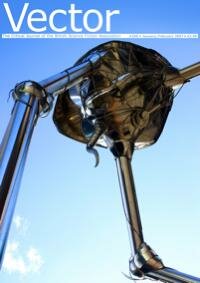 It’s really long past due that I put some content from Vector 250 online, particularly since reports are that the next mailing (complete with Award ballots) is on its way. So, here’s some Saturday reading.
In a one-off revival of his “Behind the Scenes” column, Peter Weston looks at the start of the BSFA:
The very first fans – people like you and me, who loved reading and talking about science fiction – popped up in Britain almost as soon as the early SF magazines crossed the Atlantic in the late 1920s, and by 1937 there were enough of them to hold the world’s very first science fiction convention in Leeds, which attracted over twenty people! They voted to set up the Science Fiction Association (SFA), which was rather optimistically ‘devoted to the stimulation of interest in science fiction and scientific progress.’ Unfortunately the SFA lasted little more than two years and had to be disbanded at the outbreak of war.
Somewhat closer to the present, Andrew M. Butler — in “Boom Fizz”, one of a number of retrospective pieces by former editors — looks back on ten years of Vector:
I walked into a PhD on PKD, and started going to academic conferences. Perhaps the weirdest of these was one in Warwick on Virtual Futures, in about 1995, where I met Istvan Csiscery-Ronay for the first time. (He claims we met in 1992, when he gave a paper at Reading, but that can’t have been me. Perhaps the twin from the other universe was passing through, but he’d long since given up on science fiction.) Istvan, part of the team that edits Science Fiction Studies, was excited about a number of British writers, including Gwyneth Jones, whom he got to meet that weekend, and Jeff Noon. He already had the sense that Something Was Going On, or his palate was already jaded by American sf.
It was not long after that that I became co-editor of features with Gary S. Dalkin, and one of the things we were keen to do was to take British sf seriously – we knew we were the British Association of Science Fiction rather than the Association of British Science Fiction, so to speak, but we were still aware of the nationality. I guess part of this was practical, since British authors were more getatable; this was pre-Blog, barely post-email. This didn’t mean we’d give British writers an easy ride, but we would give them a ride.
Graham Sleight’s column this issue takes a look at where we are now:
First, in North America – its homeland as a self-conscious genre – science fiction is in relative but not absolute decline. Looking at Locus‘s figures for original books published in the US, about 250 original sf novels have been published per year since 1990. Fantasy, by contrast, was at about 250 a year in 1990, and is now closer to 400. This is reflected in, for instance, the Hugo results: before Robert Charles Wilson’s superb Spin won the Hugo this year, the last time a widely-acclaimed science fiction novel won that award was Vernor Vinge’s A Deepness in the Sky in 2000. Other wins have either been fantasy novels (Harry Potter, Strange & Norrell) or best explained by the circumstances of a particular Worldcon.
 In First Impressions, Paul Kincaid reviews Hav by Jan Morris:
It is a book suffused with a sense of loss, a prolonged and exquisite lament for the passing of a world. Although there are lots of names in the book, lots of people that ‘Jan’ encounters during her stay, there are few real characters, but the character of Hav itself is huge and overwhelming. I cannot think of a single fantasy writer who could not learn from this book how to give depth and solidity to a place by the patient accumulation of detail: the way the market operates, the unique Havian fruit of snow raspberries, the extraordinary roof race, the old woman living in seclusion who still recalls when Hav was a summer retreat for Tsarist aristocracy, the curious architecture of the Chinese tower in the old town. And on and on and on, by the end you understand why some readers of the original novel believed it described a real place.
 And Tony Keen looks at Emperor by Stephen Baxter:
It’s not always a good idea for historians to read novels set in periods they’re familiar with. However thorough the author’s research, the historian’s view of what actually happened is unlikely to entirely coincide. Best to go with the author’s flow, regardless of disagreements on issues of interpretation.
So, when I read Stephen Baxter’s previous Romano-British excursion, Coalescent, I put aside finding implausible a Cotswolds villa-owning family not speaking Latin as their first language, or having connections with troops on Hadrian’s Wall. I let Baxter take me through his version of Roman Britain’s end.
But sometimes the author pushes the historian too far, and that, sadly, is the case with Emperor.
As Others See Michael Chabon
And here I thought everyone was looking forward to The Yiddish Policemen’s Union. From comments at TEV:
No super-heroes in this one, right? ‘Cause if there are, you know, I’m out.
Seriously, I have been a fan — fairly, fan; not connoisseur or scholar or anything so sophisticated — of Chabon’s since I by chance picked up the first paperback edition of “The Mysteries of Pittsburgh” back in 1902, or whenever it was. It is heartening to read that he retains his gift for near-corporeal simile and metaphor; it is frightening to read that he is now putting them all in one paragraph.
I’m going to go out on a limb: I say, in advance of reading no more than just this one paragraph, he’s yellow-dogged this one. Mind you, I don’t want him to, I’m not after any hero-takes-a-fall sensationalism. I merely, as they say, got a feeling. Tell me I’m wrong, I’ll be happy.
[…]
I think he’s of late become sort of a caricature of himself. Occupational hazard maybe, for a successful, prize-winning novelist who sort of got genre-slammed. I mean, his work started as quite a bit more stable, less big-idea-centric and has sort of swiftly bogged down in the consistently fantastical. I don’t think it’s irredeemable, but it’s notable. I mean his screenwriting career alone is starting to sound like the pitch for a Charlie Kaufman script. That said, he’s a supremely talented writer. One of the best American writers currently publishing.
And There’s Five More Where That One Came From
Nic and Victoria at Eve’s Alexandria are going to review the Clarke Award shortlist, book by book. First up: Streaking by Brian Stableford. It would be fair to say they are underwhelmed.
I’m glad that Nic quoted the short passage about Canny Kilcannon’s large ham and mushroom pizza: it was the first (of many) points at which I closed Streaking by Brian Stableford, blinked, and sighed. In disbelief. My dear Clarke judges, what were you thinking about? Heavy-handed prose, stilted dialogue, two-dimensional characters, forced thematics and a blatant thread of misogyny – it’s all here.
Enjoy.
From the Archives: Meetings With Remarkable Men
A couple of weeks ago, I mentioned reading the transcript of a 1979 guest of honour speech by Christopher Priest, in an old issue of Vector. Chris has generously allowed me to put the text of the speech, “Meetings With Remarkable Men”, up on the Vector website. As noted last time around, it touches on the state of sf and the state of sf criticism; as Jed Hartman recently noted, in some senses there’s nothing new under the sun in these debates, but it’s still well worth reading the full speech. Here’s another quote to tempt you:
You have probably heard Heinlein’s remark that writers are competing for the readers’ beer-money. […] [This attitude] crops up all over the place, in articles in fanzines, in interviews with writers, in criticism. Boiled down to its essence, it says: “We are but entertainers, and entertainment is a humble trade. Therefore our sights are set low.” I believe that entertainment is a high art, and should be treated as such. Everyone at the convention today is here because we believe that science fiction is a stimulating, radical and entertaining form of literature, yet by their very words the Poul Andersons and Robert A Heinleins are asking you to settle for less.
The parts of the essay that discuss criticism also chime with recent debates over at urban drift.
Map of Dreams
Over the weekend, M. Rickert won the William L. Crawford Award (shortlist) for best first fantasy book for her collection, Map of Dreams. Today, my much-delayed review of Map of Dreams is up at Strange Horizons.
You may also want to read the Locus reviews by Gary K. Wolfe and Nick Gevers. And then you should read the book itself.
Have You Seen These Members?
A brief public service announcement: several copies of the last BSFA mailing were returned with “no longer at this address” notices. So if you’re any of these people —
Mel Anderson
Jenny Jones
Archie Lacey
Jeremy Lever
— or know them, then please get in touch; we have magazines for you.
An Interstitial Sceptic
Via Christopher Barzak, there’s a blog for Small Beer’s forthcoming Interfictions anthology, including (so far) the table of contents and excerpts from an interview with the editors, Theodora Goss and Delia Sherman.
I commmented over on Chris’ blog that reading the interview made me start to understand the allergic reactions some people have to the term “slipstream“, because I found it an increasingly frustrating experience. Given that I’m an advocate of the usefulness of slipstream as a descriptor, and given that most people seem to lump the two terms together anyway, this may seem surprising. The difference is that I know what people mean when they say a story is slipstream, or I can find out. To put it crudely, if they’re Bruce Sterling, they mean a story that generates a certain effect; if they’re Rich Horton, they mean a story that disturbs a familiar context with fantastic intrusions; if they’re James Patrick Kelly and John Kessel, they mean a story that uses certain techniques and narrative strategies. We can argue all day long about which of these definitions is most useful, which identifies the most interesting set of stories, but they are all, to an extent, testable.
It’s hard to judge Goss and Sherman’s descriptions of the Interfictions stories without actually having read said stories — though I expect that, like Feeling Very Strange, Interfictions will be a strong collection, independent of whether you agree with the frame it’s presented in. But “Interstitial”, at least as Goss and Sherman are using it, doesn’t seem to work the way that slipstream works. The descriptions of slipstream above are bottom-up: if a story has these characteristics, maybe it’s slipstream. The descriptions of interstitial that Goss and Sherman give are dreadfully vague, and tend to be top-down: this story is interstitial, but why?
Q: Did you have a particular definition of interstitiality in mind before you began reading the stories?
DORA: […] interstitiality has been defined in so many ways, at various forums where Delia and I have discussed the concept, that I wanted to forget my own definition, to say to the writers, I’ve asked you for an interstitial story. Now show me what you think is interstitial. […]
DELIA: What I began with was less a definition of interstitial fiction than a short list of things I felt I knew about it. An interstitial story does not hew closely to any one set of recognizable genre conventions. An interstitial story does interesting things with narrative and style. An interstitial story takes artistic chances. These things are true, as far as they go. But the other thing I know is that every interstitial story defines itself as unlike any other.
Perhaps a better way of approaching the subject is to look at the overall aim of the Interstitial Arts Foundation, which is to promote “art that doesn’t fit neatly within recognised categories of genre or marketing”. This, it seems to me, is only a useful aim if you’re more concerned with the commercial restrictions placed on a given mode than with the mode itself; or to put it another way, it’s an aim that seems more useful for writers than for readers. If I were a writer, I might be reluctant to be labelled, because a label is reductive, and I know my work has many aspects. As a reader, I have a preference for stories of the fantastic, but I don’t care whether they’re labelled as such or not; I’ll pick up Against the Day and Nova Swing, both of which chafe against their assigned labels, in the same shopping trip. So as a reader, the “interstitial” label is barely useful — it’s tempting to say, “ok, name three books that do fit neatly within the categories of genre and marketing”. And as a reviewer, I’d never consider using it; part of a reviewer’s job is description, and “interstitial” is a smokescreen. By definition, even more than other labels, it avoids the specifics of what a story is doing, the details that make it interesting.
Why
A little while ago, Paul semi-tagged me with the ‘five reasons why I blog’ meme that’s been doing the rounds of some parts of the blogosphere. It’s taken me a while to get around to answering, in part for the usual real-life reasons that usually get in the way of blogging, and in part because I’ve had to think about what the answer is.
For starters, for me at least there’s both the question of why I blog, and why I blog here. Torque Control isn’t set up as “Niall Harrison’s blog”, it’s set up as “the Vector editorial blog”, and in the back of my head there’s always been the hope that when I step down as editor, whoever takes over from me will take over here as well. Part of the reason Torque Control exists, at least in theory, is to promote Vector and the BSFA, and ideally to provide some sort of forum for BSFA members. How well this is working, I have no idea — not well enough to get Vector into the drop-down list for the “Best Magazine” category in the Locus poll, at least, though Foundation makes it; on the other hand, there have been some good discussions here over the past couple of months, and the website gets a healthy number of inbound links.
On another level, of course, Torque Control is “Niall Harrison’s blog” — I have a livejournal, but deliberately don’t use it for any kind of formal blogging any more — and on that level, several of the reasons Paul cites for why he blogs apply to me too. I also like sharing cool stuff with other people (for somewhat idiosyncratic values of “cool stuff”); I too see blogging as a way of engaging with the wider sf community, and have made a number of good friends along the way; and, yes, it’s nice to have an audience. I like thinking out loud, or at least have got into the habit of thinking out loud, and I like thrashing out ideas in the comments section. Quite often, if I just post a quote, it’s because something in that quote has piqued my interest, but I haven’t quite pinned down why yet; seeing other peoples’ responses to the quote helps me to think more clearly about my own. Paul’s point about using blogging to maintain a writing discipline sort of applies to me, too. As with the comments, it’s all an aid to thinking; writing about things I’ve read or seen or done helps me to work out what I think of them (not to mention helps with remembering what I think of them, and why) — although now I’m shading into a separate post about why I write reviews.
Thinking about this, though, has made me wonder exactly where “Niall Harrison’s blog” stops and “Torque Control” begins, or vice versa. Matt Cheney made a post recently about how and why he uses The Mumpsimus in the way that he does. Some of what he says doesn’t apply to me — I do feel some pressure to be consistent in my thoughts, for the more “formal” posts to be quite fully worked-through before I post them; I feel more comfortable writing through that filter, rather than writing more directly, as in this post — but quite a lot of it sounds familiar, particularly the part about posting frequency, and the effect of other writing commitments on that. I try to aim for at least one “content” post a week, but it doesn’t always work out that way.
And I like Matt’s point about finding connections, “talking about sf, but not only sf.” To date I’ve resisted posting about non-sf as much as I can, because Torque Control is what it is; but I think I’m going to start waiving that rule, because I suspect it strikes everyone else as completely pointless. This is not to say that you’re going to suddenly see a flood of posts about, for example, ten-pin bowling (on which topic I can be surprisingly boring). This will still be a blog about things I read and watch, and most of what I read and watch is still sf, and even for those parts that aren’t I can still usually find a way to bring an sf reader’s eye to the proceedings. But hopefully you’ll see a little bit more diversity over the next few months.
Are there five reasons why I blog in there? I think there are, somewhere.
 vector-bsfa.com