Hugo Nominees 2009

It’s all awards all the time, at the moment. Taken from the Anticipation website:

Best Novel

Anathem by Neal Stephenson
The Graveyard Book by Neil Gaiman
Little Brother by Cory Doctorow
Saturn’s Children by Charles Stross
Zoe’s Tale by John Scalzi

You know what Adam Roberts said earlier about feeling that the stuff he’s interested in and value in sf are not the things sf as a whole considers interesting or valuable? That’s how this ballot makes me feel.

Best Novella

The Erdmann Nexus” by Nancy Kress (Asimov’s Oct/Nov 2008)
The Political Prisoner” by Charles Coleman Finlay (F&SF Aug 2008)
“The Tear” by Ian McDonald (Galactic Empires)
True Names” by Benjamin Rosenbaum and Cory Doctorow (Fast Forward 2)
Truth” by Robert Reed (Asimov’s Oct/Nov 2008)

On the upside, at least I should get to read “The Tear” now.

Best Novelette

Alastair Baffle’s Emporium of Wonders” by Mike Resnick (Asimov’s Jan 2008)
The Gambler” by Paolo Bacigalupi (Fast Forward 2)
Pride and Prometheus” by John Kessel (F&SF Jan 2008)
The Ray-Gun: A Love Story” by James Alan Gardner (Asimov’s Feb 2008)
Shoggoths in Bloom” by Elizabeth Bear (Asimov’s Mar 2008)

On the downside, I have to read another Mike Resnick story.

Best Short Story

26 Monkeys, Also the Abyss” by Kij Johnson (Asimov’s Jul 2008)
Article of Faith” by Mike Resnick (Baen’s Universe Oct 2008)
Evil Robot Monkey” by Mary Robinette Kowal (The Solaris Book of New Science Fiction, Volume Two)
Exhalation” by Ted Chiang (Eclipse Two)
From Babel’s Fall’n Glory We Fled” by Michael Swanwick (Asimov’s Feb 2008)

Two Mike Resnick stories! And a good year for Monkey stories, it seems.

Best Related Book

Rhetorics of Fantasy by Farah Mendlesohn (Wesleyan University Press) [Introduction online]
Spectrum 15: The Best in Contemporary Fantastic Art by Cathy & Arnie Fenner, eds. (Underwood Books)
The Vorkosigan Companion: The Universe of Lois McMaster Bujold by Lillian Stewart Carl & John Helfers, eds. (Baen)
What It Is We Do When We Read Science Fiction by Paul Kincaid (Beccon Publications)
Your Hate Mail Will be Graded: A Decade of Whatever, 1998-2008 by John Scalzi (Subterranean Press)

Excellent to see Rhetorics and What is is We Do … there.

Best Graphic Story

The Dresden Files: Welcome to the Jungle. Written by Jim Butcher, art by Ardian Syaf (Del Rey/Dabel Brothers Publishing)
Girl Genius, Volume 8: Agatha Heterodyne and the Chapel of Bones. Written by Kaja & Phil Foglio, art by Phil Foglio, colors by Cheyenne Wright (Airship Entertainment)
Fables: War and Pieces. Written by Bill Willingham, pencilled by Mark Buckingham, art by Steve Leialoha and Andrew Pepoy, color by Lee Loughridge, letters by Todd Klein (DC/Vertigo Comics)
Schlock Mercenary: The Body Politic. Story and art by Howard Tayler (The Tayler Corporation)
Serenity: Better Days. Written by Joss Whedon & Brett Matthews, art by Will Conrad, color by Michelle Madsen, cover by Jo Chen (Dark Horse Comics)
Y: The Last Man, Volume 10: Whys and Wherefores. Written/created by Brian K. Vaughan, pencilled/created by Pia Guerra, inked by Jose Marzan, Jr. (DC/Vertigo Comics)

Excellent to see this category got enough nominations to form a ballot at all.

Best Dramatic Presentation, Long Form

The Dark Knight, Christopher Nolan & David S. Goyer, story; Jonathan Nolan and Christopher Nolan, screenplay; based on characters created by Bob Kane; Christopher Nolan, director (Warner Brothers)
Hellboy II: The Golden Army, Guillermo del Toro & Mike Mignola, story; Guillermo del Toro, screenplay; based on the comic by Mike Mignola; Guillermo del Toro, director (Dark Horse, Universal)
Iron Man, Mark Fergus & Hawk Ostby and Art Marcum & Matt Holloway, screenplay; based on characters created by Stan Lee & Don Heck & Larry Lieber & Jack Kirby; Jon Favreau, director (Paramount, Marvel Studios)
METAtropolis by John Scalzi, ed. Written by: Elizabeth Bear, Jay Lake, Tobias Buckell and Karl Schroeder (Audible Inc)
WALL-E Andrew Stanton & Pete Docter, story; Andrew Stanton & Jim Reardon, screenplay; Andrew Stanton, director (Pixar/Walt Disney)

Scalzi is having a good year, I see.

Best Dramatic Presentation, Short Form

“The Constant” (Lost) Carlton Cuse & Damon Lindelof, writers; Jack Bender, director (Bad Robot, ABC studios)
Doctor Horrible’s Sing-Along Blog Joss Whedon, & Zack Whedon, & Jed Whedon & Maurissa Tancharoen , writers; Joss Whedon, director (Mutant Enemy)
“Revelations” (Battlestar Galactica) Bradley Thompson & David Weddle, writers; Michael Rymer, director (NBC Universal)
“Silence in the Library/Forest of the Dead” (Doctor Who) Steven Moffat, writer; Euros Lyn, director (BBC Wales)
“Turn Left” (Doctor Who) Russell T. Davies, writer; Graeme Harper, director (BBC Wales)

I guess Abigail was right about the votes splitting for Sarah Connor Chronicles.

Best Editor, Short Form

Ellen Datlow
Stanley Schmidt
Jonathan Strahan
Gordon Van Gelder
Sheila Williams

Best Editor, Long Form

Lou Anders
Ginjer Buchanan
David G. Hartwell
Beth Meacham
Patrick Nielsen Hayden

Best Professional Artist

Daniel Dos Santos
Bob Eggleton
Donato Giancola
John Picacio
Shaun Tan

Best Semiprozine

Clarkesworld Magazine edited by Neil Clarke, Nick Mamatas & Sean Wallace
Interzone edited by Andy Cox
Locus edited by Charles N. Brown, Kirsten Gong-Wong, & Liza Groen Trombi
The New York Review of Science Fiction edited by Kathryn Cramer, Kris Dikeman, David G. Hartwell, & Kevin J. Maroney
Weird Tales edited by Ann VanderMeer & Stephen H. Segal

No Ansible!

Best Fanzine

Argentus edited by Steven H Silver
Banana Wings edited by Claire Brialey and Mark Plummer
Challenger edited by Guy H. Lillian III
The Drink Tank edited by Chris Garcia
Electric Velocipede edited by John Klima
File 770 edited by Mike Glyer

Oho, Electric Velocipede? That makes things a bit more interesting.

Best Fan Writer

Chris Garcia
John Hertz
Dave Langford
Cheryl Morgan
Steven H Silver

No surprises here, however.

Best Fan Artist

Alan F. Beck
Brad W. Foster
Sue Mason
Taral Wayne
Frank Wu

The John W. Campbell Award for Best New Writer

Aliette de Bodard [with fiction sampler]
David Anthony Durham [with novel excerpts]
Felix Gilman
Tony Pi [with links to online fiction]
Gord Sellar [with links to online fiction]

And that’s an interesting list to finish on; I look forward to seeking out the work of those writers I haven’t already encountered.

The 2009 Arthur C Clarke Award Shortlist

Forty-six from seventeen publishers have become six from four. There are two previous winners among the nominated authors, and two first-timers (one with their first novel); one woman, and two Americans. One novel also appears on the BSFA Best Novel shortlist. There are, this year, quite a lot of spaceships.

Yes, the Arthur C. Clarke Award shortlist is upon us! This year’s judges — for the British Science Fiction Association, Chris Hill and Ruth O’Reilly; for the Science Fiction Foundation, Robert Hanks and Rhiannon Lassiter; and for SF Crowsnest.com, Pauline Morgan — have deliberated, and decided.

Paul Billinger, Chair of the judges, reports:

“It was a long and intense meeting to decide this year’s shortlist, with passionate debate from all of the judges. Although at times it seemed almost impossible, they eventually concluded that these six books were the ones that demonstrated to them what was best about the science fiction novels published in 2008.”

And Award Administrator Tom Hunter says:

“Speculation and active debate have always surrounded the announcement of the award shortlist, and earlier this year we took the unprecedented step of releasing the full long list of eligible submitted works from which this final shortlist was decided. Our aim was to highlight the strength and diversity of current science fiction publishing and to show the awesome task that faces our judging panel every year. I think they’ve risen to this challenge admirably and I’m greatly looking forward to the full range of reactions and conversations to come and, of course, to finding out the eventual winner at the end of April.”

That winner will be announced on Wednesday 29th April, at a ceremony held on the opening night of the Sci-Fi London film festival. They will receive £2009, and a commemorative engraved bookend.

Let the debate begin! I’ll be updating this post with links to additional reviews as they appear, but for now, here are the nominees:

Song of Time by Ian R MacLeod (PS Publishing)

Reviewed by Adam Roberts for Strange Horizons
Reviewed by Edward James for Strange Horizons
Reviewed by Nic Clarke at Eve’s Alexandria
Reviewed by Eric Brown for The Guardian
An appreciation by Helena Bowles
Reviewed by Tanya Brown
Reviewed by David Hebblethwaite at Follow the Thread
Reviewed by Niall here

The Quiet War by Paul McAuley (Gollancz)

Reviewed by Abigail Nussbaum for Strange Horizons
Reviewed by Edward James for Strange Horizons
Reviewed by Paul Kincaid for SF Site
Reviewed by Nic Clarke at Eve’s Alexandria
Reviewed by Duncan Lawie for The Zone
Reviewed by Eric Brown for The Guardian
Reviewed by Annalee Newitz at io9
Reviewed by Lisa Tuttle for The Times
Reviewed by Adam Roberts at Punkadiddle
Reviewed by Niall here

House of Suns by Alastair Reynolds (Gollancz)

Reviewed by Dan Hartland for Strange Horizons
Reviewed by Edward James for Strange Horizons
Reviewed by Rich Horton for SF Site
Reviewed by Paul Kincaid for SF Site
Reviewed by Adam Roberts at Punkadiddle
Reviewed by Charlie Jane Anders at io9
Reviewed by Lisa Tuttle for The Times
Reviewed by Eric Brown for The Guardian
Reviewed by Jonathan Wright for SFX
Reviewed by David Hebblethwaite at Follow the Thread
Reviewed by Niall here

Anathem by Neal Stephenson (Atlantic)

Reviewed by Martin Lewis for Strange Horizons
Reviewed by Edward James for Strange Horizons
Reviewed by Gary K Wolfe for Locus
Reviewed by Nic Clarke at Eve’s Alexandria
Reviewed by Adam Roberts at Punkadiddle
Reviewed by Abigail Nussbaum at Asking the Wrong Questions
Reviewed by Michael Dirda for the Washington Post
Reviewed by Laura Miller for the LA Times
Reviewed by Tom Shippey for the TLS
Reviewed by Andrew McKie for The Telegraph
Reviewed by Jakob Schmidt for SF Site
Reviewed at The Complete Review
Reviewed by Niall here
Reviewed by Liz here

The Margarets by Sheri S Tepper (Gollancz)

Reviewed by Nic Clarke and Sherryl Vint for Strange Horizons
Reviewed by Edward James for Strange Horizons
Reviewed by Andrew McKie for The Telegraph
Reviewed by Adam Roberts at Punkadiddle
Reviewed by Annalee Newitz at io9
Reviewed by David Langford for SFX
Reviewed by Cynthia Ward for Sci-Fi Weekly
Reviewed by Adrienne Martini for Bookslut

Martin Martin’s on the Other Side by Mark Wernham (Jonathan Cape)

Reviewed by Jonathan McCalmont for Strange Horizons
Reviewed by Edward James for Strange Horizons
Reviewed by Nic Clarke at Eve’s Alexandria
Reviewed by Jonathan Gibbs for The Independent
Reviewed by Cathi Unsworth for The Guardian
Reviewed by Saxon Bullock for SFX
Reviewed by Adam Roberts at Punkadiddle
Reviewed by David Hebblethwaite at Follow the Thread
Reviewed by Andrew McKie for The Telegraph

Roundups and miscellany
Edward James
Adam Roberts
Nic Clarke
Niall’s roundup
A poll
The winner

Previous shortlist roundups
2008
2007

SFRA Award Winners

An email from Lisa Yaszek announces the 2008 SFRA Awards winners:

The Pilgrim Award for lifetime contributions to SF and fantasy scholarship goes to Brian Attebery

The Pioneer Award for the best critical essay-length work of the year goes to Neil Easterbrook for “Giving An Account of Oneself”: Ethics, Alterity, Air

The Clareson Award for for Distinguished Service to SF and fantasy scholarship goes to Hal Hall

The Mary Kay Bray Award for the best essay, interview, or extended review to appear in the SFRA Review in the past year goes to Sandor Klapcsik for his review of Rewired (SFRAR #284 [pdf])

The Graduate Student Paper Award for the best essay presented at the 2008 SFRA conference [pdf] goes to Dave Higgins for “The Imperial Unconscious: Samuel R. Delany’s The Fall of the Towers.”

Congratulations to all the winners. Can we have a reprint of Strategies of Fantasy now, please?

2009 Arthur C Clarke Award Submissions

Spring! And a young fan’s fancy lightly turns to thoughts of the Arthur C Clarke Award. This year’s shortlist is due to be announced in mid-March, but for the first time the Award is officially announcing the list of submitted works, and very generously they’ve decided to do it through Torque Control. Administrator Tom Hunter writes:

The Arthur C. Clarke Award was originally created to celebrate science fiction literature at its best. One of the things that most struck me when I became the Award’s administrator was the volume of creative and original talent we were seeing submitted every year.

Speculation and active debate have always surrounded the announcements of the shortlists and the eventual winner. By announcing the full list of eligible books for the first time I hope we can also highlight the strength and diversity of current science fiction, create more conversation and debate and show the awesome challenge that faces the judging panel every year.

And so, without further ado, here are the submitted books:

Clarke submissions 2009

This image is deliberately tiny because last year, certain people had too much fun reverse-engineering a list of submissions from a similar picture, and have indicated that they would like to play the game again. Far be it from me to stand in the way of people having fun, so: have at it!


(For everyone else, I’ll update the post with a proper-sized image and the full list later.

Here you go, all forty-six books, in alphabetical order by author:

The Ashes of Worlds by Kevin J Anderson (Simon & Schuster)
Line War by Neal Asher (Tor)
The Heritage by Will Ashon (Faber & Faber)
Man in the Dark by Paul Auster (Faber & Faber)
Neuropath by Scott Bakker (Gollancz)
Matter by Iain M Banks (Orbit)
Flood by Stephen Baxter (Gollancz)
Weaver by Stephen Baxter (Gollancz)
City at the End of Time by Greg Bear (Gollancz)
Kethani by Eric Brown (Solaris)
Necropath by Eric Brown (Solaris)
Sputnik Caledonia by Andrew Crumey (Picador)
Little Brother by Cory Doctorow (HarperCollins)
Incandescence by Greg Egan (Gollancz)
Infoquake by David Louis Edelman (Solaris)
The Broken World by Tim Etchells (William Heinemann)
Omega by Christopher Evans (PS Publishing)
Blonde Roots by Bernadine Evaristo (Hamish Hamilton)
Principles of Angels by Jaine Fenn (Gollancz)
Eve: The Empyrean Age by Tony Gonzales (Gollancz)
The Temporal Void by Peter F Hamilton (Macmillan)
The Gone-Away World by Nick Harkaway (William Heinemann)
Template by Matthew Hughes (PS Publishing)
The Invention of Everything Else by Samantha Hunt (Harvill Secker)
Song of Time by Ian R MacLeod (PS Publishing)
The Night Sessions by Ken MacLeod (Orbit)
The Affinity Bridge by George Mann (Snowbooks)
The Quiet War by Paul McAuley (Gollancz)
Dark Blood by John Meaney (Gollancz)
The Steel Remains by Richard Morgan (Gollancz)
The Knife of Never Letting Go by Patrick Ness (Walker)
Debatable Space by Philip Palmer (Orbit)
House of Suns by Alastair Reynolds (Gollancz)
Swiftly by Adam Roberts (Gollancz)
Going Under by Justina Robson (Gollancz)
The Last Colony by John Scalzi (Tor)
DogFellow’s Ghost by Gavin Smith (Macmillan)
Anathem by Neal Stephenson (Atlantic)
The Dog of the North by Tim Stretton (Macmillan)
Halting State by Charles Stross (Orbit)
Saturn’s Children by Charles Stross (Orbit)
The Margarets by Sheri S Tepper (Gollancz)
Blue War by Jeffrey Thomas (Solaris)
Off Armageddon Reef by David Weber (Tor)
Martin Martin’s on the Other Side by Mark Wernham (Jonathan Cape)
Winterstrike by Liz Williams (Tor)

As I posted in the thread below: 13% of this year’s submissions are by women, and 17% are ‘mainstream’ in origin, both figures down slightly (I think) from the last few years. And as Nick asks: what would your shortlist be?

BSFA Award Nominees

Best Novel

Flood cover Gone-Away World cover
Night Sessions cover Anathem cover

Flood by Stephen Baxter
The Gone-Away World by Nick Harkaway
The Night Sessions by Ken MacLeod
Anathem by Neal Stephenson

Best Short Fiction
“Exhalation” by Ted Chiang (Eclipse 2)
Crystal Nights” [pdf] by Greg Egan (Interzone 215)
Little Lost Robot” [pdf] by Paul McAuley (Interzone 217)
Evidence of Love in a Case of Abandonment” by M. Rickert (F&SF, Oct/Nov 2008)

Best Non-Fiction
Physics for Amnesia” by John Clute
Superheroes!: Capes and Crusaders in Comics and Films by Roz Kaveney (I.B. Tauris)
What It Is We Do When We Read Science Fiction by Paul Kincaid (Beccon)
Rhetorics of Fantasy by Farah Mendlesohn (Wesleyan)

Best Artwork
Cover of Subterfuge, ed. Ian Whates, by Andy Bigwood
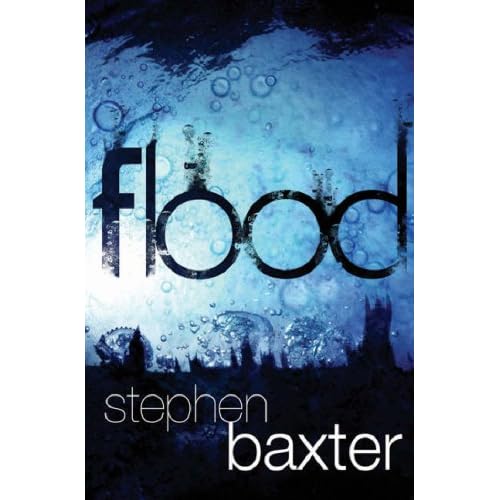
Cover of Flood by Stephen Baxter, by Blacksheep
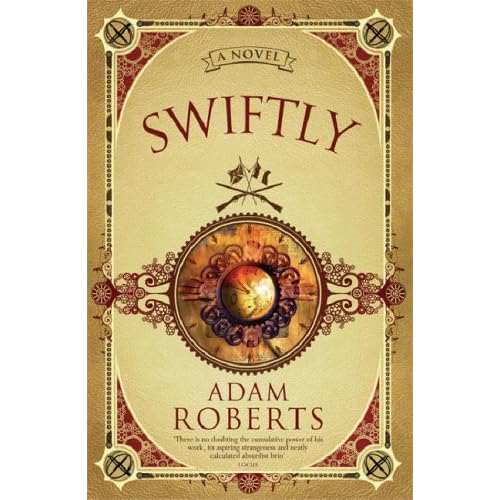
Cover of Swiftly by Adam Roberts, by Blacksheep
Cover of Murky Depths 4 by Vincent Chong
Cover of Interzone 218 by Warwick Fraser Coombe

Congratulations to all the nominees! Note that there are only four nominees in the Best Novel, Best Short Fiction, and Best Non-Fiction categories due to multiple-way ties for fifth place. The Awards will be presented at this year’s Eastercon, LX, on 11th April.

Nebula Award Rules Revised

I had more or less given up on the Nebula Awards as a useful guide to, well, anything much, but it’s just been pointed out to me that they’ve quite dramatically revised their rules for 2009 and beyond. In particular:

  • No more rolling eligibility; the awards are now tied to the calendar year
  • No more preliminary ballot; there will be a nomination period between November and February, after which a final ballot will be created comprising the six works in each category with the most nominations
  • No more awards juries adding books to the ballot; “publishers are encouraged to make eligible works available to the membership”, and if there are fewer than six works nominated, then there will be fewer than six works on the ballot (Exception: The Andre Norton Award retains its jury)
  • No more “best script” category; instead the “Ray Bradbury Award for Outstanding Dramatic Presentation” (which is Not A Nebula) will be given to the writer and director of the winning work

I have to say, this all looks very positive, and I look forward to seeing the ballots that result.

The Warwick Prize for Writing

So, the first Warwick Prize for Writing longlist is out:

Mad, Bad and Sad: A History of Women and the Mind Doctors from 1800 by Lisa Appignanesi (Virago)
The Tiger That Isn’t, by Michael Blastland & Andrew Dilnot (Profile Books)
Torques: Drafts 58-76, by Rachel Blau Duplessis (Salt Publishing)
Glister, by John Burnside (Jonathan Cape)
Planet of Slums, by Mike Davies (Verso)
The Art of Political Murder: Who Killed Bishop Gerardi?, by Francisco Goldman (Atlantic Books)
Someone Else, by John Hughes (Giramondo Publishing Company)
Reinventing the Sacred, by Stuart A Kauffman (Perseus)
The Shock Doctrine by Naomi Klein (Penguin)
The Burning, by Thomas Legendre (Abacus)
Adam’s Ancestors: Race, Religion and the Politics of Human Origins, by David Livingston (Johns Hopkins University Press)
The Wild Places, by Robert Macfarlane (Granta Books)
The Meaning of the 21st Century, by James Martin (Eden Project Books)
Brasyl, by Ian McDonald (Gollancz)
Netherland , by Joseph O’Neill (4th Estate)
The Rest Is Noise, by Alex Ross (4th Estate)
The Informers, by Juan Gabriel Vasquez (translator: Anne McLean) (Bloomsbury)
Montano’s Malady, by Enrique Vila-Matas (translator: Jonathan Dunne) (New Directions)
Portrait with Keys, by Ivan Vladislavic (Portobello Books)
The Trader, the Owner, the Slave, by James Walvin (Jonathan Cape)

As you may be able to tell from the above list, it’s a bit of an oddity, this one. The process that generated it is pretty quirky, to start with: it’s a biennial award with a 30-month eligibility period; nominations come originally from university staff; the longlist can include a maximum of 15 titles, except that each of the five judges can add one directly, for the total of 20 you see above.

It’s certainly high-minded enough: the website says that “The Warwick Prize for Writing is an international cross-disciplinary award which will be given biennially for an excellent and substantial piece of writing in the English language, in any genre or form, on a theme which will change with every award”, and declares with teleological certainty that “The winning submission will represent an intellectual, scientific and/or imaginative advance and be written with an energy and clarity that makes it accessible and attractive to a wide audience”.

The prize also has a substantial fund behind it — the winner gets £50,000 — not to mention a well-qualified judging panel. On some level, it is undoubtedly a good and welcome thing. But the more I look at that list, with its seven fiction titles, twelve non-fiction titles, and one poetry title, the more sceptical I am about the meaningfulness of choosing a winner.

Bear in mind that it’s a list that includes books I have enjoyed, books I want to read, and books I’ve never heard of but which look interesting, which is about all you can ask of a longlist. My reservation is that measuring fiction, non-fiction and poetry against each other always strikes me as a bit pointless when the Whitbread/Costa does it, and it strikes me as a bit pointless here. This is not to say that such comparisons can’t be illuminating: I’m sure that reading Glister, Portrait with Keys and Planet of Slums together with an eye to how they treat the idea of the city could be fascinating, for instance. Assuming that you found all three to be good, however, I’m baffled as to how you could declare one to be better than the others in ways that rise above the simple subjective fact of enjoying one more than another. Put another way, I can’t think of any sensible evaluative way to compare, say, Brasyl and The Rest is Noise: their goals, reference points, interests, and techniques seem to be so divergent as to make such comparison meaningless.

The publicity for the Warwick prize states that it “is set to redefine traditional forms of writing”; I take this to be a reference to the fact that there are obviously books which blur the lines between fiction and non-fiction, and that it makes more sense — is more honest? — to treat types of writing as a continuum rather than a series of categories. This is true as far as it goes, but the problem is that, as with Larus Gulls, the existence of border cases doesn’t mean that distinct, incompatible categories don’t exist.

Perhaps the stated theme for this iteration of the award — “complexity“, although to be honest I’m pretty sure I could argue for just about anything under that definition of the term — is intended to help. But certainly for the ones I’ve sampled, the most useful answer to the question, “how do these books tackle or embody complexity?” is “very differently”; better and worse don’t really come into it. But it’s a prize, so better and worse have to come into it, and there has to be a winner. Part of me thinks that to be truly radical, they should forego picking a winner entirely, and just divide up the prize money between the works they’ve considered worthy of a longlisting.

World Fantasy Award Winners

Aaannnd … we’re back. And how better to celebrate than with a set of award winners?

Novel: Ysabel, Guy Gavriel Kay (Viking Canada/Penguin Roc)
Novella: Illyria, Elizabeth Hand (PS Publishing)
Short Story: “Singing of Mount Abora”, Theodora Goss (Logorrhea, Bantam Spectra)
Anthology: Inferno: New Tales of Terror and the Supernatural, Ellen Datlow, Editor (Tor)
Collection: Tiny Deaths, Robert Shearman (Comma Press)
Artist: Edward Miller
Special Award, Professional: Peter Crowther for PS Publishing
Special Award, Non-Professional: Midori Snyder and Terri Windling for Endicott Studios Website

Congratulations to all, and now I really have to get around to reading my copies of Ysabel and Illyria.

In other news, the holiday was lovely. We were in this house and had many books to read, although most of my time was taken up by one huge book, namely A Suitable Boy. (I probably won’t get around to writing anything substantive about it, but you could do worse than check out Victoria’s review at Eve’s Alexandria.) There was also time for a side-trip to Hay-on-Wye, where I think we were remarkably restrained, and where Liz spotted a particularly good example of mis-shelving.

Coming later this week: other stuff.

Who wins Nebulas?

In the Tor.com thread referenced in the previous Hugo post, Charlie Stross asks:

Leading off at a tangent: in light of the age profile of Hugo nominees/winners, has anyone done anything similar about SFWA and the Nebulas? What’s the average age of SFWA members, and what’s the average age of Hugo voters? Could the perceived loss of relevance of the Nebulas over the past decade possibly be a harbinger of the same trend — age-related conservativism — hitting the Hugos?

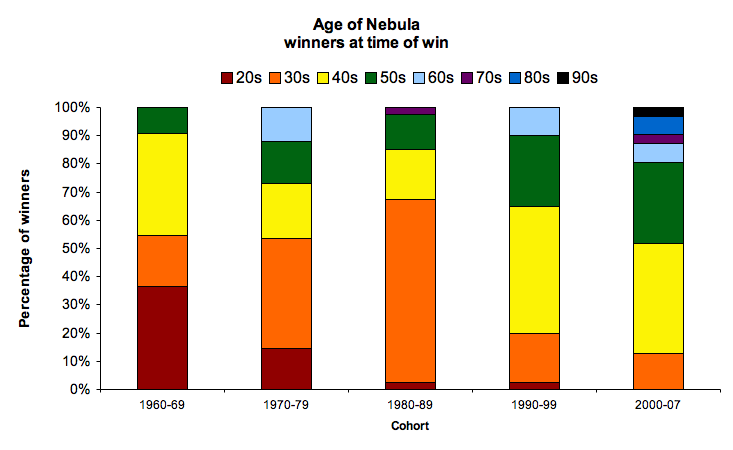
I don’t know of any available demographic data about the age of SFWA members or Hugo voters, but we do have the list of Nebula winners, courtesy once again of Nicholas Whyte. Here’s the graph for the Nebulas, done in the same way as for the Hugo graph in the previous post:

Doesn’t look much different, does it? The average age of a Nebula winner has risen from 37 in the 1960s, to 53 in the most recent decade, but the most telling data is the number of winners who were in their twenties and thirties per decade. In the 1980s, there were 27 winners in their twenties and thirties; in the past seven years, there have been four. And three of them were Kelly Link.

This age trend doesn’t hold for the Clarke or Tiptree award, both juried awards, but neither of them have been around for very long compared to the Hugos and Nebulas. Jeff suggests that we look at the Hugo nominees, to see if the nominees are younger and the older, familiar name always wins, and it might be interesting to look at the Locus award to see if the wider voting population makes a difference, but I think I am turning into crazy stats lady already and I will leave those for another day.

There’s more interesting discussion over at James Nicoll’s journal. If you want to do your own number-crunching, you can get the spreadsheet Niall and I used here.