By Zoe Mantas

What could the future look like? What do we want it to look like? ‘All Tomorrow’s Futures: scientists meet sci-fi writers to invent possible futures’ hosted by the King’s Institute for Artificial Intelligence attempts, if not to answer, then to explore how we might try.
Bringing together creatives and experts, All Tomorrow’s Futures is a project in foresight, attempting to provide plausible (or at least thought-provoking) narratives for how technologies may change our society. What makes it different from other projects is its methodology tying experts and creators together from the very start of the process to bounce ideas off each other and bring in research and creative resources. The panel was chaired by Dr. Christine Aicardi, senior research fellow in science and technology studies (STS) from King’s College London, and included editors and writers Benjamin Greenaway and Stephen Oram, with contributions from Dr. Elizabeth Black and Professor Claire Steves, and the discussions focused more on the process and intent of the project rather than the content of the book which contained resulting stories.
So, what is foresighting? Let’s start with what it isn’t: a definitive prediction. Foresighting isn’t about saying what will happen. It’s about saying what could happen. More importantly than that, it is about the skill of asking important questions and developing ideas to support future possibilities. Interestingly, the panellists emphasized the importance of participatory foresight, bringing in perspectives beyond the usual ‘experts’. The panellists emphasized the importance of asking who is envisioning these futures in the status quo right now and the need to actively include those in society who feel, in the main quite rightly, that they do not have agency in the decisions being made that will affect their futures.This also goes beyond the UK, for example, the future is African – it is the youngest continent, yet our global future imaginaries in the field of science fiction and beyond are not yet shaped in a way representative of people who will live in those futures.
Continue reading “Who Writes the Future: All Tomorrow’s Futures at King’s College London”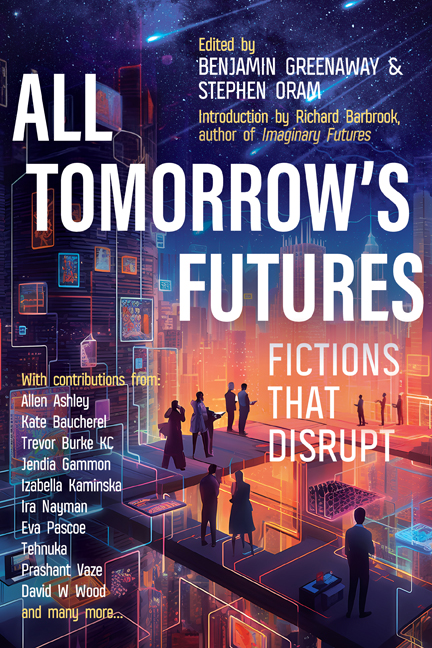
 vector-bsfa.com