Bold as Love: III

Bold as Love cover

(previously.)

”They’re both very brave men and very good officers,” says Richard Kent, ex-regular CCM army commander, with whom they served in that little English pocket-war in Yorkshire last year. “And that’s what counts today: leadership and vision. I don’t know where the rock music comes in.” (271-2)

It is Bold as Love’s central strangeness: that it asks us to believe rock stars could really be revolutionaries. It’s not, I think, the exchange of celebrity for political power that’s problematic – not in a post-Governator era, at least; not until after the initial off-screen hand-wave that brings the musicians into politics in the first place, anyway – but the idea that such individuals might make the transition yet retain principles. Even Ax is forced to comment on the implausibility of that.

It’s a potent notion, this belief in the power of music, with enough juice to often obscure the fact that Jones is at her weakest when writing about it, when creating a musical world. She displays an absolute tin ear for band names and song titles, her made-up music journalism is cringeworthy, and there is little sense of the wonder and transformative power of music itself. What she can convey is the ambience of musical events: her gigs are all jagged energy and aftermath, her festivals true worlds unto themselves, right from the start, when Fiorinda stands outside Reading seeking “the mere will to cross that boundary and join that fair field full of folk” (2). To enter faerie, with its customs and denizens and magical ways.

Bold as Love is, as Francis Spufford puts it in his review, a novel in which a festival swallows up the whole country. The answer to “where the rock music comes in” is “everywhere”; it has to, to give the idea of the Counterculture some gravitas, to make it a political force, a movement with sufficient cohesion and will to drive events. Ax, with his sixties Real Year, is merely the purest expression of the Counterculture. usic brings him security, and enables him to lead: to inspire, and occasionally placate the masses. And yet despite its pervasiveness, I don’t know that Bold as Love actually presents rock itself as revolutionary. Ax is as much a revolutionary who happens to be a rock star as the other way around, and the meaningfulness of the rockstar part of his identity is constantly challenged, from the quote at the head of this post to a sharp awareness of the sinister side of cultural conformity, to the simple, heavy irony of Sage and Ax’s repeated “Hey rockstar” / “Hey, other rockstar” greeting. Fiorinda certainly sees no glory:

From a distance she could see it happening: Ax’s future, the rock and roll lifestyle written over everything, the nomadic idleness, the emotional excess, the tantrums … she saw no hope in the development. A certain model of human life becomes accepted: once we were manufacturing workers, then we were venture capitalists, now we’re rockstars. The world stays the same. (91)

It’s perhaps useful to consider the “we” in this statement. Manufacturing workers, venture capitalists and rockstars are not equivalent classes – each is smaller than the previous – nor can Fiorinda meaningfully lay claim to have ever been the first two. (She is literally born to her position.) It’s tempting to take it as a premonition of the all-famous-now YouTube future, but I think that would be mistaken; I think Fiorinda is imposing a narrative on history whereby power has travelled from the many to the few. A false narrative, mainly, but that’s not the point; what matters is that she can’t believe any of the power is meaningful. Ax, meanwhile, doesn’t know whether he believes the power of rock is meaningful, but puts his finger on the real strength of his government:

Had the country been about the split in two, collapse into civil war, until the situation was saved by rock and roll? This morning the idea seemed absurd. We will never know, he thought. Maybe we made a difference, maybe we didn’t.

It didn’t hurt for the future, however, that a heavy proportion of the forty million seemed quite convinced that the Rock and Roll Reich had saved everyone’s bacon. Again. (255)

This, I think, is the closest to a definitive understanding of the role of music that the novel offers, a viewpoint that downplays the importance of music as music. Rather, what’s significant is the potential of music to be a vehicle for belief, at a moment when belief in all other systems of the world has been shattered by catastrophic cynicism.

(next.)

Bold as Love: II

Bold as Love cover

(previously.)

There is a current in the novel that snakes outside the 1997-2001 moment; or at least a character who seems out of step with his surroundings. Ax Preston, guitarist with The Chosen Few, destined (it seems) leader of England, the nearest thing to a hero we’re going to get, “bit old fashioned, bit left wing” (23), and most importantly:

Ax would continue to come and go as he pleased. […] Go on living his fearfully public life in this fearfully changed world as if he were a private person with no enemies, and the date some mythical year in the nineteen sixties. (206)

The aptness of his particular nostalgia in a novel which springs partially from the nostalgic Britpop moment aside, this is what makes Ax special: this ability to preserve his own private Real Year in the face of the progressive isolation of England, first politically, through dissolution and an ongoing economic and ecological collapse, then culturally and digitally as their internet is collapsed by a virus. This new England is an island England, cut adrift (it seems) from the main line of history (I gather later volumes in the Bold as Love sequence get around a bit more). And Ax is both the moral leader we might wish for England, and a literal dictator: military, temporary, populist.

Ax is also Arthur returned (and updated), although I don’t feel qualified to do very much more than just note the fact. Accompanying him are Sage, the skull-masked “brilliantly commercial techno-wizard” to Ax’s “pure musician with critical and political cred” (27) and, I gather from Tanya Brown’s extremely lucid reading of the novel in The Arthur C Clarke Award: A Critical Anthology, Lancelot with a hint of Merlin. I find him the novel’s bedrock, the wall off which other characters can bounce. (I find him a little dull.) Decoding the third of the triumverate, Fiorinda, takes longer, because she’s loaded down with more symbolism. Guinevere, says Tanya; rock royalty, precocious teen, Titania, virgin queen, says the novel; “a phenomenon,” thinks Ax, “where did she get those cold, wise eyes, where did she find that tone of contemptuous authority?” (40-1). Fiorinda sees her position more clearly than either of her companions, as when Sage tries to protect her from the darkness of war: “I’m not built to play Red Sonja, so I have to be the lickle princess. There aren’t any parts for me as a human being in this movie” (161). Perils of being in a mythic story while female.

Everything real the trio does is also symbolic, and everything symbolic they do is also real. Ax is a soldier, and carries his guitar like an assault rifle as a reminder of that power. In his conversion to Islam midway through the novel, in the fetishization of Fiorinda, in Sage’s abusive past, in their varied class and ethnic backgrounds, and most of all in their shifting relationships with each other, they represent their country in more ways than one, a polymorphousness condensed by an artist, late in the book:

He grinned, envisaging Sage as the big strong mother of the tribe, Ax the father of his people, Fiorinda their shining prince. But any permutation of the roles would be equally valid. (282)

Ax nags like a mother, Sage is headstrong like a prince, Fiorinda negotiates like a father. And so on. The self-consciousness of it all could get wearing — seems to get wearing for many readers — but for me the novel’s centre of gravity was elsewhere. The role of the triumverate is to be a prism: to ensure that Fiorinda is telling the truth when, to buck up her band, she insists: “This is England. This is how it feels” (244).

(next.)

Bold as Love: I

Bold as Love cover

It’s a truism that time is cruel to science fiction, that the relentless now eats into the future and leaves husks of stories in its wake and that, per William Gibson, the lag time is decreasing. When editing the 2002 Nebula Awards Showcase, Kim Stanley Robinson asked some writers to riff on the science-fictionalisation of the present, specifically on the role of science fiction in the twenty-first century. Gwyneth Jones was one of the contributors to the resulting symposium, and described “the problem of meaning”:

… which can best be understood by considering the ratio between the author’s intention and the rest of the content of a science fiction novel or story. The whole vast edifice of reality, the universe, and everything may have a single meaning that is known only to God. […] A science fiction novel or story, however, has a meaning known to the author. […] In the space of three hundred pages, where the author has elected to explain life, or consciousness, or theories of everything (typical projects among sf writers), meaning is so concentrated as to distort the most perceptive prediction to the point where it is almost unrecognisable. (241)

At first glance — which is particularly to say, when it was first published, back in 2001 — the predictive bedrock of Bold as Love may seem more unrecognisable than most. It chronicles the unlikely rise of a “Rock and Roll Reich”, an authoritarian Green state within which protagonists struggle for something better, and self-consciously constructs a future that only gets stranger the further into it we travel. It seems to fully earn its “near future fantasy” subtitle, and I speculate — this is the first time I’ve read it — that in 2001 Bold as Love seemed as much as anything to be about the possibility of an unknowable future; that its rockstar protagonists, improbably recruited into a Think Tank intended to define a new future for England, seemed written with a wind of millennial possibility in their sails.

Time may be cruel, but it’s the friend of the critic of sf who wants to strip away the layers of future, to get past the singularity of authorial intent. This, too, is a truism, encapsulated by the Clutean concept of the Real Year. Some of the things that stand out so starkly now must have been obvious at time, although the extrapolation of New Labour “Cool Britannia” co-option of pop seems to have been little commented-on in contemporary reviews. (Adam Roberts suggested it’s not even really about politics; Cheryl Morgan provided an exception; Roger Luckhurst, a couple of years later, digs into this aspect a little in an essay in Science Fiction Studies.) Some things might have been dimly discernable on the horizon, such as the extent to which the internet would gut the mega-label mega-bucks model of music distribution that dominates Bold as Love (no bittorrent, no YouTube). But what fixes this novel in time most profoundly seemed to come out of a clear blue sky: a door slammed shut, a month after the novel was published, on what in retrospect feels like a wasted moment of historical possibility. There are about a dozen mentions of terrorism in this novel. It’s there, but low down in the mix.

Bold as Love has already earned its place in sf’s modern canon. It’s probably the most sustained engagement with the nature of Englishness published within the genre in the last ten years, not to mention an early entry into the broken-Union trope that’s been so common in recent British sf, in novels by Charles Stross, Ken MacLeod, Adam Roberts. It’s a clear influence on Justina Robson’s even more dislocated near-future fantasy sequence Quantum Gravity (indeed, in one character’s crack about not wanting to “end up transformed into some crackpot post-human elf” [194] it could have offered direct inspiration). Yet it feels somehow irretrievable, locked away from me, innocent. I discovered Jones’ contribution to Robinson’s Nebula symposium because her novel had put me in mind of what one of the other participants said. Over to Ken MacLeod:

What sf enables us to do is not to forsee the future, but to entertain possibilities. The more possibilities science and technology —

[At this point, about 3.30 British Summer Time, 11 September 2001, the phone rang.]

I leave this piece as I wrote it, words from the old world. (248)

If I’m unbothered by Bold as Love‘s much-touted lack of plausibility (and I am, largely), this is most of the reason why. For once, being yesterday’s tomorrow is a kindness. It’s words from the old world; and by that token, it owns its world.

(next.)

BSFA Nominees So Far: Best Novel

And the final category: Best Novel. As for the other lists, everything below has received at least one nomination. The five books with the most nominations at the end of today (23.59 GMT) will go forward to the shortlist. So, last chance: send your nominations in!

  • The Technician by Neal Asher (Tor)
  • A Festival of Skeletons by RJ Astruc (Crossed Genres)
  • The Windup Girl by Paolo Bacigalupi (Orbit)
  • Blood and Iron by Tony Ballantyne (Tor)
  • Surface Detail by Iain M Banks (Orbit)
  • The Holy Machine by Chris Beckett (Corvus)
  • The Reapers Are The Angels by Alden Bell (Tor)
  • Zoo City by Lauren Beukes (Angry Robot)
  • Engineman by Eric Brown (Solaris)
  • Guardians of the Phoenix by Eric Brown (Solaris)
  • Farlander by Col Buchanan (Tor)
  • The Orphaned Worlds by Michael Cobley (Orbit)
  • Servant of the Underworld by Aliette de Bodard (Angry Robot)
  • Zendegi by Greg Egan (Gollancz)
  • Under Heaven by Guy Gavriel Kay (Voyager)
  • Empire of Light by Gary Gibson (Tor)
  • Zero History by William Gibson (Viking)
  • The Places Between by Terry Grimwood (Pendragon)
  • The Evolutionary Void by Peter F Hamilton (Macmillan)
  • Horns by Joe Hill (Gollancz)
  • Alison by Andrew Humphrey (TTA Press)
  • The Dervish House by Ian McDonald (Gollancz)
  • The Restoration Game by Ken MacLeod (Orbit)
  • Warm Bodies by Isaac Marion (Vintage)
  • Absorption by John Meaney (Gollancz)
  • Kraken by China Mieville (Macmillan)
  • The Thousand Autumns of Jacob de Zoet by David Mitchell (Sceptre)
  • Monsters of Men by Patrick Ness (Walker)
  • City of Ruin by Mark Charan Newton (Tor)
  • Silversands by Gareth L Powell (Pendragon)
  • The Quantum Thief by Hannu Rajaniemi (Gollancz)
  • Terminal World by Alastair Reynolds (Gollancz)
  • New Model Army by Adam Roberts (Gollancz)
  • Time Crystal vol 1 by Wyken Seagrave (Podiobooks)
  • Birdbrain by Johanna Sinisalo (Peter Owen)
  • The Fuller Memorandum by Charles Stross (Orbit)
  • Lightborn by Tricia Sullivan (Orbit)
  • Above the Snowline by Steph Swainston (Gollancz)
  • The Scarab Path by Adrian Tchaikovsky (Tor)
  • Orgasmachine by Ian Watson (Newcon)
  • The Noise Within by Ian Whates (Solaris)
  • City of Dreams and Nightmare by Ian Whates (Angry Robot)
  • How to Live Safely in a Science Fictional Universe by Charles Yu (Corvus)

BSFA Nominees So Far: Best Short Fiction

Not surprisingly, the longest list so far: here’s all the works of short fiction that have received at least one nomination from BSFA members. Send yours to awards@bsfa.co.uk by the end of the day.

  • “Flying in the Face of God” by Nina Allan (Interzone 227)
  • “The Phoney War” by Nina Allan (Catastrophia)
  • “Feet of Clay” by Nina Allan (Never Again)
  • “Darwin Anathema” by Stephen Baxter (The Mammoth Book of Alternate History)
  • “Our Land” by Chris Beckett (Conflicts)
  • The Heart of a Mouse” by KJ Bishop (Subterranean)
  • “Hanging Around” by Neil K Bond (Shoes, Ships and Cadavers)
  • Hothouse Flowers” by Chaz Brenchley (The Bitten Word)
  • “Sussed” by Keith Brooke (Conflicts)
  • “Have Guitar Will Travel” by Chris Butler (The Immersion Book of SF)
  • The Nightmare of You and Death in the Room” by Christopher Adam (Hub 126)
  • “In the Long Run” by David L Clements (Conflicts)
  • “A War of Stars” by David L Clements (Analog Jan/Feb 2010)
  • “The Maker’s Mark” by Michael Cobley (Conflicts)
  • “Where the Vampires Live” by Storm Constantine (The Bitten Word)
  • “The Shoe Factory” by Michael Cook (Interzone 231)
  • “The Shipmaker” by Aliette de Bodard (Interzone 231)
  • “Spare Change” by Jay Eales (Murky Depths 12)
  • On Not Going Extinct” by Carol Emshwiller (Strange Horizons)
  • The Mad Scientist’s Daughter” by Theodora Goss (Strange Horizons)
  • Flower, Mercy, Needle, Chain” by Yoon Ha Lee (Lightspeed 4)
  • The Issuance of One Hundred and Thirty-Six” by Mark Harding (Future Fire 21)
  • The Red Bride” by Samantha Henderson (Strange Horizons)
  • “The Pearl Diver with the Gold Chain” by Paul Hogan (GUD 5)
  • “Ne Cadant in Obscurum” by David Hoing (The Company He Keeps)
  • Dali’s Clocks” by Dave Hutchinson (Daybreak)
  • On the Banks of the River Lex” by NK Jemisin (Clarkesworld)
  • Reflection” by Jessica E Kaiser (Future Fire 19)
  • “Hibakusha” by Keevil Tyler (Interzone 226)
  • “The Earth Beneath My Feet” by James Lecky (Jupiter 29)
  • “Torhec the Sculptor” by Tanith Lee (Asimov’s Oct/Nov)
  • “Alternate Girl’s Expatriate Life” by Rochita Luenen-Ruiz (Interzone 229)
  • Second Journey of the Magus” by Ian R MacLeod (Subterranean)
  • Havana Augmented” by Tim Maughan (M-Brane 12)
  • “War Without End” by Una McCormack (Conflicts)
  • Seven Sexy Cowboy Robots” by Sandra McDonald (Strange Horizons)
  • “Hirasol” by Melissa Mead (Bull Spec 2)
  • The Isthmus Variation” by Kris Millering (Beneath Ceaseless Skies)
  • “The Untied States of America” by Mario Milosevic (Interzone 228)
  • “The Raft of the Titanic” by James Morrow (The Mammoth Book of Alternate History)
  • “Trouble with Telebrations” by Tim Nickels (Catastrophia)
  • “The Cloth From Which She is Cut” by Gareth Owens (Fun With Rainbows)
  • Abandonware” by An Owomoyela (Fantasy)
  • “Fallout” by Gareth L Powell (Conflicts)
  • “Pallbearer” by Robert Reed (The Mammoth Book of Alternate History)
  • “Psi.Copath” by Andy Remic (Conflicts)
  • “Partly ES” by Uncle River (Albedo One)
  • A Serpent in the Gears” by Margaret Ronald (Beneath Ceaseless Skies)
  • “Red Letter Day” by Kristine Kathryn Rusch (Analog)
  • “In the Face of Disaster” by Ian Sales (Catastrophia)
  • Somadeva: A Sky River Sutra” by Vandana Singh (Strange Horizons)
  • “A Winter’s Tale” by Sarah Singleton (The Bitten Word)
  • “Songbirds” by Martin Sketchley (Conflicts)
  • “Coldrush” by Kari Sperring (The Bitten Word)
  • “Star in a Glass” by Vaughan Stanger (Music for Another World)
  • “The Shostakovich Ensemble” by Jim Steel (Music for Another World)
  • “That Leviathan, Whom Thou Hast Made” by Eric James Stone (Analog)
  • “I Won the Earth Evacuation Lottery” by Tim C Taylor (Shoes, Ships and Cadavers)
  • To Soar Free” by Todd Thorne (Lorelei Signal)
  • “The Insurance Agent” by Lavie Tidhar (Interzone 230)
  • Cloud Permutations by Lavie Tidhar (PS Publishing)
  • “Lode Stars” by Lavie Tidhar (The Immersion Book of SF)
  • Thirteen Ways of Looking at Space/Time” by Catherynne M Valente (Clarkesworld)
  • “Dark Mirrors” by John Walters (Warrior Wisewoman 3)
  • “A Walk of Solace with my Dead Baby” by Ian Watson (Shoes, Ships and Cadavers)
  • The Things” by Peter Watts (Clarkesworld)
  • “The Cruel Ship’s Captain” by Harvey Welles and Philip Raines (Lady Churchill’s Rosebud Wristlet)
  • “Mano Mart” by Andy West (Shoes, Ships and Cadavers)
  • “The Abomination of Beauty” by Ian Whates (The Bitten Word)
  • “Several Items of Interest” by Rick Wilber (Asimov’s)
  • “Arrhythmia” by Neil Williamson (Music for Another World)
  • “A to Z in the Ultimate Big Company Superhero Universe (Villains Too)” by Bill Willingham (Masked)

BSFA Nominees So Far: Best Artwork

With just a few days to go (midnight on Friday) until nominations close for this year’s BSFA Awards, the Awards Administrator Donna Scott has been diligently posting lists of the nominees so far on the BSFA forum. To provide an excuse to remind you all several times to email her with your nominations, I’m going to post one category per day here, starting with Best Artwork — for which you can find some additional suggestions here and here.

So, the list of all artworks that have received at least one nomination currently looks like this:

  • Cover of Conflicts, ed. Ian Whates (Newcon Press) by Andy Bigwood
  • Cover of A Capella Zoo 5 (“Acrobats”) by Martha Brouer
  • Cover of Silversands by Gareth L Powell (Pendragon Press) by Vincent Chong
  • Cover of Shine ed. Jetse de Vries (Solaris) by Vincent Chong
  • Illustration for “Flying in the Face of God” by Nina Allen (in Interzone)
  • Cover of Crossed Genres 21 (“A Deafened Plea for Peace”) by Ben Greene
  • Cover of Fun with Rainbows by Gareth Owens (Immersion Press), by Charlie Harbour
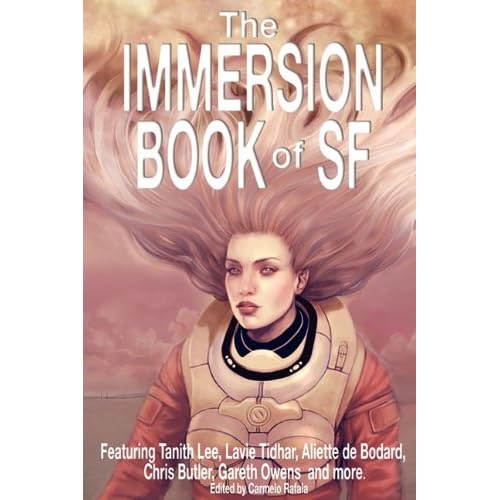
  • Cover of The Immersion Book of SF ed. Carmelo Rafala (Immersion Press), by Charlie Harbour
  • Cover of Engineman by Eric Brown (Solaris), by Dominic Harman
  • Cover of The Noise Within by Ian Whates (Solaris), by Dominic Harman
  • Cover of Cats Cradle by Kurt Vonnegut (Gollancz), by Dominic Harman
  • Cover of Zoo City by Lauren Beukes (Angry Robot), by Joey Hifi
  • Cover of Rigor Amortis (Absolute Xpress) by Robert Nixon
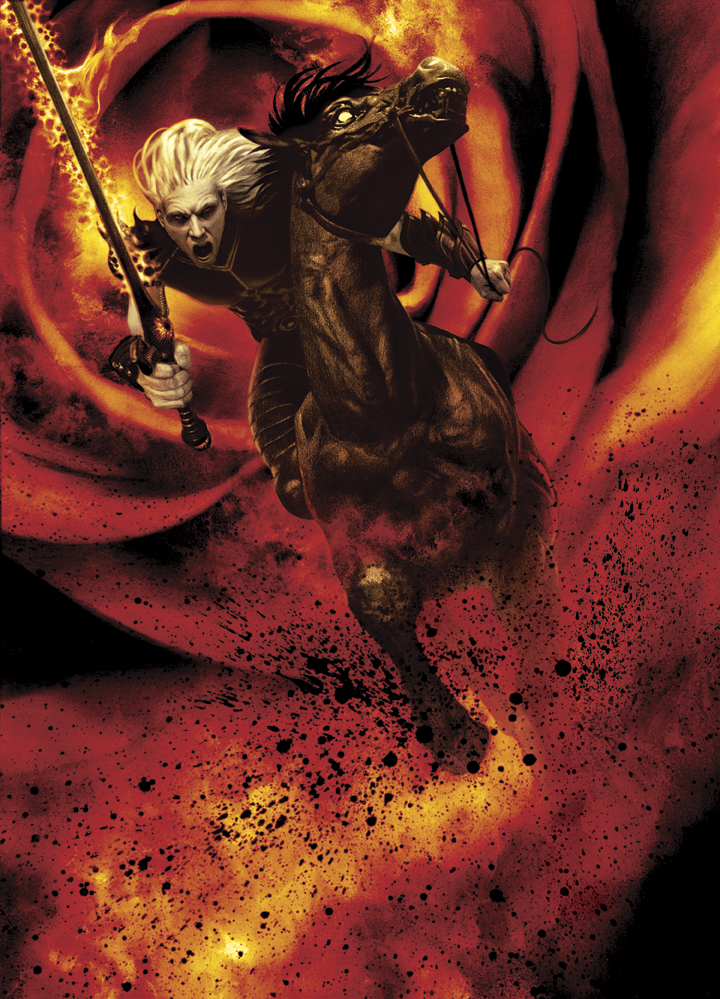
  • Cover of Elric: Swords and Roses by Michael Moorcock (Del Rey), by Jon Picacio
  • Cover of Clarkesworld 44, by Rodrigo Ramos
  • Cover of Go Mutants by Larry Doyle (HarperCollins), by Owen Smith
  • Cover of Crossed Genres 17 (“Our Hell”) by Tania Sousa Ribeiro
  • Cover of The Voyage of the Sable Keech by Neil Asher (Tor UK), by Jon Sullivan
  • Cover of How to Live Safely in a Science Fictional Universe by Charles Yu (Corvus), Unknown
  • Cover of The Holy Machine by Chris Beckett (Corvus), Unknown
  • Cover of Finch by Jeff VanderMeer (Corvus), Unknown
  • Cover of Lightborn by Tricia Sullivan (Orbit), Unknown
  • Cover of The Lifecycle of Software Objects by Ted Chiang (Subterranean), Christian Pearce
  • Cover of The Stories of Ibis by Hiroshi Yamamoto (Haikasoru), by Natsuki Lee
  • Cover of Music for Another World ed. Mark Harding (Mutation), Unknown
  • Cover of The Habitation of the Blessed by Catherynne M Valente (Night Shade Books), by Rebecca Guay, design by Cody Tilson.
  • Cover of Feed by Mira Grant (Orbit), Unknown
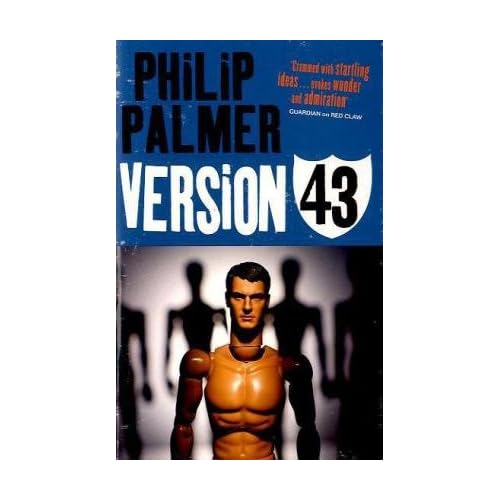
  • Cover of Version 43 by Philip Palmer, Unknown
  • Cover of Cthulhurotica (Dagon Books), by Oliver Wetter
  • Cover of The Future Fire 20, by Rebecca Whitaker
  • Cover of New Model Army by Adam Roberts (Gollancz), by Blacksheep

Zoo City

Zoo City coverWelcome to Zoo City:

People who would happily speed through Zoo City during the day won’t detour here at night, not even to avoid police roadblocks. They’re too scared, but that’s precisely when Zoo City is at its most sociable. From 6pm, when the day-jobbers start getting back from whatever work they’ve been able to pick up, apartment doors are flung open. Kids chase each other down the corridors. People take their animals out for fresh air or a friendly sniff of each other’s bums. The smell of cooking — mostly food, but also meth — temporarily drowns out the stench of rot, the urine in the stairwells. The crack whores emerge from their dingy apartments to chat and smoke cigarettes on the fire-escape, and catcall the commuters heading to the taxi rank on the street below. (132)

What I like about this passage is its incongruous homeliness. Despite the fact that none of the details are original — several are close to cliche — and for all that it’s clear that Zoo City is a pretty beat-up place, this isn’t a judgmental portrait. These people may be caged, but they’re not animals. Our narrator is matter of fact about the meth being cooked alongside the food; if we didn’t already know by this point, we probably wouldn’t be too surprised to learn that she lives here, that she is part of the community she sets out for our consumption.

It’s clearly a place for people short on choices, however. Zinzi Lelethu December is out of prison but far from out of debt, and has been forced to turn her journalistic tricks to 419 scams: a role she’s good at playing, but not happy about. What’s weighing her down is the novel’s fantastic conceit, so thoroughly normalised that taking the above passage in isolation you might miss it. In Zoo City‘s alternate day after tomorrow (the novel is set in March 2011), there’s a new outcast class, sufferers of a fantastical condition termed Acquired Asymbiotic Familiarism by researchers, and animalism or worse on the street. Its defining symptom is the appearance of a flesh-and-blood animal familiar (and these are animals, not talking pets), it seems to afflict those condemned by society or even by their own conscience (justice be damned) and those affected are excluded, exoticised, or both; and they need places like Zoo City to live. The resonances with Pullman’s His Dark Materials in this setup are unavoidable but, apparently, coincidental, although the similarity is acknowledged and there is at least one witty reversal: familiars often reflect their host’s inner character through a mirror darkly. So Zinzi’s sloth, which appeared after the death of her brother, tells you that she’s smart, sharp, and constantly on the move.

As she has to be, to navigate the competing currents that make up the novel’s plot. There’s her desire to pay her way out of her scamming debt; her uneasy relationship with Benoit, a Zoo City hustler whose presumed-dead wife may in fact be alive; the cryptic emails that keep mysteriously appearing in her inbox; and her private enterprise, her magical talent for finding lost things. It’s the last of these that provides most of the forward motion in Zoo City, as Zinzi is recruited by two deeply shady animalled, on behalf of mysterious music mogul Odi Huron, to track down the missing half of the twins that make up his latest pop sensation. The quest takes her, naturally, out of the zoo and into the wilds of the middle and upper class enclaves of Johannesburg: and back, in some cases, into the circles in which she used to swim.

So far so noir, an impression reinforced by the cool terseness of Zinzi’s narration and, at times, of Zinzi herself — “There are two things in the interrogation room with me and Inspector Tschabalala. The one is Mrs Luditsky’s ring. The other is twelve and a half minutes of silence” (28) — and by the pervasive unfairness of the unfolding story. AAF confers something between the stigma of the ex-con and, as the pervasive presence of AIDS reminds us, the stigma of the disease sufferer. Like those, it is based as much or more on assumptions as it is on any empirical reality. Found documents scattered through Zoo City tell the story of AAF — the journal article, the documentary synopsis, the prison tales. The fantastic nature of the conceit has put some reviewers in mind of Jeff Noon’s surreal Vurt (1993), although I was reminded of the more rationalised fantastic of Kit Whitfield’s Bareback (2006). Either way, for most of the novel what’s striking is how low down in the mix it seems to be: a back-note, not a central flavour. It’s only quite late on that it becomes clear, not just from those found documents, how much the existence of AAF has shaped the society Beukes describes.

More immediately obvious, however, is the care with which Beukes sketches the jungle of Johannesburg, and the people Zinzi meets. We watch, fascinated and helpless, as they are used and use each other in turn. Like Beukes’ first novel, Moxyland (2008 South Africa, 2009 UK, 2010 US), Zoo City is distinguished by its texture. The husbandry of information is mostly superb; the glimpses of Zinzi’s world captivate, from the gated high-rise where a broken lift means the wealthy residents simply throw their rubbish out of the windows, to be cleaned up once it hits the ground, to a “Great Gatsby by way of Lady Gaga” (219) nightclub and Zinzi’s own cluttered, crappy flat; and the various characters Zinzi meets, from Huron himself, to popsters Song and S’bu, to current and ex lovers Benoit and Gio, are captured with precision and detail. Per John Clute’s review, Zoo City is indeed an energetic read; but it’s Zinzi’s binding voice that makes it a visceral one, and more transporting than the earlier novel.

Less welcome is the way in which the marketing-driven cynicism familiar from Moxyland — “it’s not just about the music anymore,” Zinzi is told, “it’s about the brand” (120) — becomes here something of a red herring. Shadowing the brisk surface narrative is the Undertow, a metaphysical darkness that threatens to consume those with AAF. It is the attrition of stigma, and the burden that the novel’s villain seeks to use power and privilege to escape. The impeccably chroegraphed ending that Beukes contrives from these ingredients however, is a betrayal, an imposition of justice that everything else Zinzi has told us, and everything Moxyland might have lead us to expect, insists is unearned. And it diminishes an otherwise fine novel, even if the clue was there from the start. The thing about a zoo, after all, is that it’s a lie: the real world is a jungle.

Short Story Club Post-Mortem

So, another round of short story club is complete. For reference, here are the links to the various stories and discussions:

As previously mentioned, I’d now like to open the floor for a more general discussion. There are two topics here. The major one is the stories themselves — which ones you liked, which you didn’t, what patterns or trends you spotted. And the minor one is about the logistics of the club — too many stories? Too few? Too similar? All feedback welcome.

Short Story Club: “Throwing Stones”

Plenty of comment for the final story, starting with Lois Tilton:

This is a lovely fantasy, mannered and sensuous. There is also a subtle subtext about the nature of gender roles that rouses echoes of our own culture.

Karen Burnham goes into more detail:

Baker offers a beautiful tale of identity, politics, power, and love, all intertwined together. Tuo feels just slightly alien, slightly Other, in an effectively disconcerting way. The gender power reversal works well, and the relationship between the goblin and the man, both physical and emotional, queers gender on several levels. Of course, much is left to the imagination of the reader. But in an allusive tale, the poetry of the prose is key, and lines such as:

I leaned forward and pressed my lips to the slick skin of his forehead; it tasted of salt and fish and something acrid I could not identify. The immediacy and honesty of it hit me like a gust of dry wind blowing fog from water.

show a mastery of craft — the repeated use of water imagery, the contrasts of dry wind and lake fog, and the overall rhythm of the piece all come together to make this tale well worth reading.

Matt H wasn’t so impressed by the gender reversal:

This is a story about a society with inverted gender roles, but the story feels like it was written about a woman in a male dominated society, then had all gender references inverted in revision. Certainly it doesn’t read any differently than its opposite, except perhaps to readers so new to the genre that they haven’t encountered a story challenging gender roles before. The story finally approaches interesting territory as the narrator is given a transient female body via magic, but the author seems like she’s in a hurry to reach the ending by this point and nothing much is done with it.

However:

all that said, I found myself won over to large degree upon finishing the story. Nothing about the writing jumped out at me as really superlative, but as a whole I was impressed with the execution: the slimy, amphibian true form of the goblin, the narrator’s hatred for his own body, the way the goblin’s chaos infects and destroys the narrator’s life in a way that he observes but doesn’t see as important, and then the implication that the goblin is here acting as an agent of Ru, the very goddess in whose name the matriarchs suppress the men in their society. These elements weren’t enough to turn this story into one more to my particular tastes, but they did make it unexpectedly enjoyable to read.

For Chad Orzel:

It’s very well written and paced, and what we see of the world is nicely detailed. But it seemed a little too obviously to be making a Point, and as a result didn’t really connect with me. Despite the fact that it’s a well put together story, I still found myself doing the “Yes, you’re very clever, now move it along,” thing, and that’s never good. But, of course, the usual disclaimers apply– it’s entirely possible that this is an idiosyncratic reaction on my part.

The one thing that struck me as a real flaw in the story, and not just something that failed to work for me, was the passivity of the narrator. I mean, this is supposedly a person who has embarked on a dangerous plan to subvert the basis of his whole society, and yet he never takes any initiative, ever. He doesn’t approach the goblin until the goblin notices him first, he just sort of falls into the relationship with the goblin without really wanting it, and he doesn’t really have a plan for how to get into the Temple structure until the goblin practically pushes him into it.

Maria Lin appears to disagree:

You could call “Throwing Stones” a romance, as the whole of it centers upon the relationship between these two characters. Baker manages to make slimy, froglike creatures sensual, which is some feat. Both the narrator and Luo are reserved, calculating people, but for the narrator at least the strength of emotion pushes through and makes things more complicated. By the end of the story the narrator has entered training in the temple, but their conspiracy has yet to be revealed, and the relationship between himself and Luo remains uncertain.

Because “Throwing Stones” leaves the stone still poised to be thrown in the end, the reader is left to come to their own conclusion about what will happen when our protagonist starts making ripples in his society. Baker has written a neat story with a sympathetic narrator that is worth checking out. She is also apparently working on a novel set in the same world, so if this story appeals you might have more to look forward to.

And for Pam Phillips:

The story attempts to turn our expectations about gender upside down, like the customers at the teahouse being powerful women, or the narrator blaming his/her shyness on being male (rather than just being born shy). And yet, I still mostly read both the narrator and the poet as men. Both feel stifled by the society they live in. Tuo wants the narrator to “throw a stone” into the lake of civilization, raising ripples that will someday lead to change.

But what is the change they want? The way the women in Jiun-shi are keeping (at least some) men from being what they want to be, suggests that no matter what, one side will oppress the other. Or maybe the idea of a city ruled by women is just trying to get us to think about how our world feels to some people. And this is where trying figure out what this story wants to be gets all slippery on me.

So, as ever, the floor is open. And pop back next Friday for a general discussion of the short story club — favourites and least favourites, what worked and what didn’t.