So it seems I end my gallop through Interzone as I started it, with a disappointment. “Bone Island” is the overlong, over-digressive tale of a hapless young male protagonist caught between two witchy women. There’s a deal of would-be portentious talk about types of magic, creation myths, and suchlike (“Just as the eggs flow from a woman on a river of blood, so do the futures flow from the world on a river of blood”); its attempt to portray a tight-knit island community rather pales in comparison to Ali Shaw‘s (and at times feels rather ersatz); and it is, most criminally, rather dull. A shame.
Tag: fantasy
“Funny Pages” by Lavie Tidhar
I think Lavie Tidhar had a pretty good year for short fiction; there was “The Dying World” at Clarkesworld, “Spider’s Moon” at Futurismic, and of course “The Shangri-La Affair” at Strange Horizons. All extremely stylish, poised stories, deft with their chosen tropes. This is Tidhar’s best 2009 story, though, for my money.
The polish is still there, but “Funny Pages” feels like it has more going on underneath. It’s a superhero tale, set in Israel — a little like something Jonathan Lethem might have written — and does everything you would expect and hope a modern prose superhero tale set in Israel would do. It’s grounded in the day-to-day mundane, with superheroes facing romantic entanglements and unpaid bills; its superpowers are inventive (“Orchestra is music, Orchestra is a weave of notes: Tank can never see her face, her figure, only hear her, like thousands of pirate radio stations clashing with each other”); it is knowing in its invocation of cliche (the supervillain: “The Doctor, hawk-nosed, white hair combed back, a thick German accent he’d never quite lost […] ‘I will show them! I will show the world!'”); it is often funny; it is political; and it makes good use of comic-script-style back and forth:
The Prime Minister: “You’re a superhero! It’s your job to deal with this stuff!
Solomon2: “Job? I work in hi-tech, with all due respect. Fighting crime doesn’t pay the mortgage. Plus, well …”
PM: “Well what?”
Solomon2: “This is beyond the realm of, well, strictly speaking, crime, now.”
PM: “What are you talking about?”
Solomon2: “It’s become … political.”
PM: “You’re damn right it’s political!”
Solomon2: “Ah, but there lies, as they say, the rub. We’re strictly non-political. Traditional crime only. I don’t think it’s right for us to interfere.”
PM: “But Dr. Meshugeh is!”
Solomon2 shrugs: “Supervillains have different standards.”
“By Starlight” by Rebecca J Payne
A cool drink of a story, measured and soothing; a story about freedom that itself feels free. Our protagonists are two sky sailors in a world divided into Flyers and Grounders. We learn how they met, and how they ended up where they are now. We see them trade with a merchant, and get out of a sticky situation. Their world, with its living, healing sky-ships, and “Amerika” and “Aysa” and “Europa”, could be a future and, under the skin, sf, or it could be alternate and fantastical. Payne’s story is detailed, and nicely specific, but the nature of her world doesn’t matter, not to her characters (one of whom, the narrator, is I think also casually unspecified; I didn’t notice any specific cues, and they have been read as both male and female) or to us. What matters is flying free.
One night, as we skimmed low over a wide lake, hauling up fresh water, we caught a silvery bird in our bucket. It had slippery skin instead of feathers and small wings that flapped in water as if in the air.
We threw it back over the side and watched it fly away, into the deep.
BSFA Award Nominations — Final Reminder!
Yes, today’s the day: nominations must be sent to Donna Scott, the Awards Administrator by 23.59 GMT today (Saturday). Don’t forget to include your membership number and/or postcode.
The four nomination-list posts have been updated with additional nominations received as of last night:
Me, I’m going to spend most of today reading short stories, I think…
Deborah Biancotti stories available to BSFA members
Deborah Biancotti has spotted that two of her stories have been nominated in the Best Short Story category, and has this offer:
If you are a kind British person &/or a member of BSFA & you’d like to read these stories, feel free to drop me a line (
deborahb AT livejournal DOT comrous AT deborahbiancotti DOT net) & I will cheerfully — very cheerfully — forward you an electronic copy of said stories. I may get a bit carried away & send you more than those two, but you’ll at least get those two stories & you can read ‘em or use ‘em for your electronic bird cages as is your wont.
So why don’t you?
BSFA Award Nominations So Far — Best Artwork
To recap, for anyone who wasn’t reading over the weekend: the deadline for nominating for this year’s BSFA Awards is this coming Saturday, 16 January. BSFA members can nominate as many items as they like in the four categories — Best Novel, Best Short Fiction, Best Non-Fiction, and Best Artwork. The five items with the most nominations in each case go forward to the final ballot.
As an aid to memory, I’ve been posting the nominations received so far in each category — that is, lists of everything that has received at least one nomination:
Today, the last of the categories: Best Artwork. Any single science fictional or fantastic image that first appeared in 2009 is eligible; to add your support to any of the works listed below, or to nominate anything else, email the BSFA Awards Administrator with details of what you want to nominate, and your membership number or postcode.
The list:
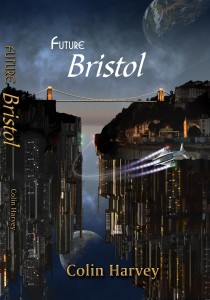
Cover of Future Bristol, ed. Colin Harvey by Andy Bigwood
Cover of The Push by Dave Hutchinson, by Andy Bigwood
Cover of The Gift of Joy by Ian Whates, by Vincent Chong
Alternate cover for Harry Potter and the Philosopher’s Stone by MS Corley
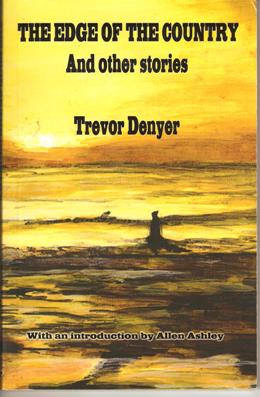
Cover of The Edge of the Country and Other Stories by Trevor Denyer
Cover of Boneshaker by Cherie Priest, by Jon Foster
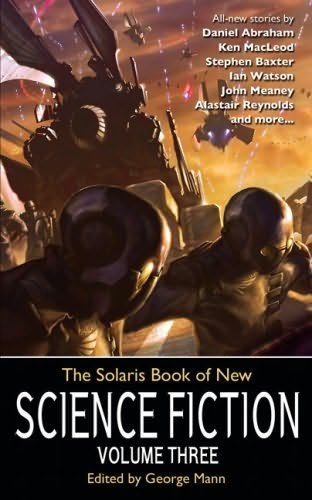
Cover of The Solaris Book of New Science Fiction, Volume Three ed George Mann, by Hardy Fowler
Alternate cover for 20,000 Leagues Under the Sea, art project by Nitzan Klamer
Cover of The Caryatids by Bruce Sterling, by Raphael Lacoste, jacket design is by David Stephenson.
“Emerald” by Stephanie Law
Cover of Murky Depths 7, by Chris Moore
Cover of Desolation Road by Ian McDonald, by Stephan Martinière, jacket design by Jacqueline Nasso Cooke.
Cover of The Sad Tale of the Brothers Grossbart by Jesse Bullington, by Istan Orosz
Cover of World’s End by Mark Chadbourn by John Picacio
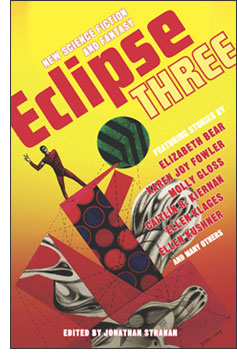
Cover of Eclipse 3 ed Jonathan Strahan by Richard Powers
Cover of Shadow of the Scorpion by Neal Asher by Steve Rawlings
Cover of Twisted Metal by Tony Ballantyne, by Jon Sullivan
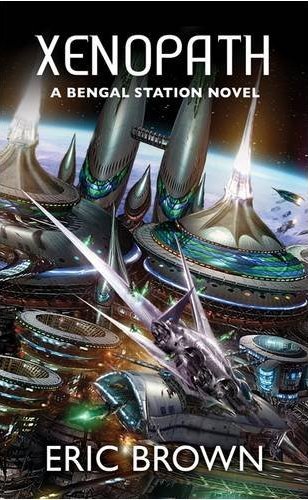
Cover of Xenopath by Eric Brown by Jon Sullivan
Cover of Interzone 220, by Adam Tredowski
Cover of Interzone 221, by Adam Tredowski
Cover of Interzone 224, by Adam Tredowski
Cover of Interzone 225, by Adam Tredowski
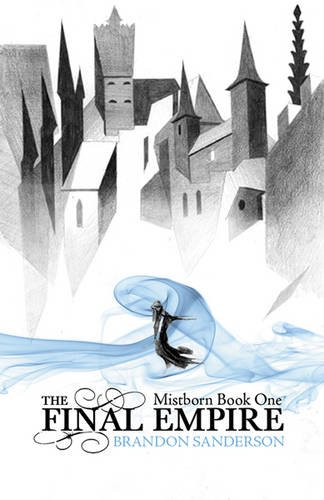
UK cover for The Final Empire by Brandon Sanderson, by Sam Green
Cover of Retribution Falls by Chris Wooding, by Stephan Martiniere
Cover of The Windup Girl by Paolo Bacigalupi, by Raphael Lacoste
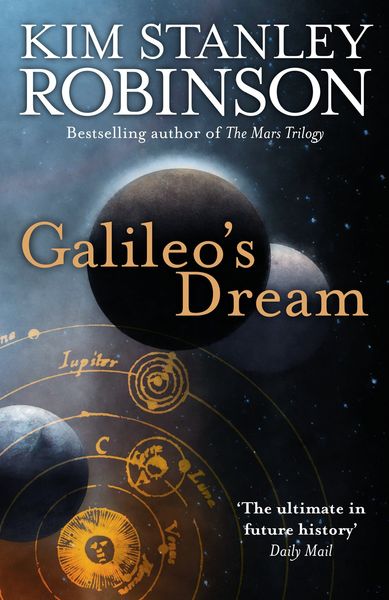
Cover of Galileo’s Dream by Kim Stanley Robinson
Cover of Journey Into Space by Toby Litt
Cover of The Resistance by Muse
Links are to the best-quality copies of each image that I could find; if you can improve on any of them (or if you know the artist details for any of the images that are missing them) do let me know.
BSFA Award Nominations So Far — Best Short Story
Once more, with feeling: this is a list of all works that have so far received at least one nomination for this year’s BSFA Award for Best Short Story. Why not read a couple? I’m going to try to get through as many of the ones I haven’t yet read as I can by next weekend. Send additional nominations with your membership number and/or postcode, by January 16th. After that, the five with the most nominations go forward to the final ballot.
“The Best Monkey” by Daniel Abraham (The Solaris Book of New SF, Volume Three, ed. George Mann, Solaris)
“After the Revolution” by Pauline J Alama (Abyss & Apex, first quarter 2009)
“Microcosmos” by Nina Allan (Interzone 222)
Genesis by Bernard Beckett (Quercus Publishing)
“Atomic Truth” by Chris Beckett (Asimov’s, April/May 2009)
“Diamond Shell” by Deborah Biancotti (request; from A Book of Endings, Twelfth Planet Press)
“Problems of Light and Dark” by Deborah Biancotti (request; from A Book of Endings, Twelfth Planet Press)
“Ys” by Aliette de Bodard (Interzone 222)
“An Education of Scars” by Philip Brewer (Futurismic, March 2009)
Starship Fall by Eric Brown (PS Publishing)
“After the Change” by Stephanie Burgess (Future Bristol, ed Colin Harvey, Swimming Kangaroo Press)
“The Festival of Tethselem” by Chris Butler (Interzone 224)
“The Branding of Shu Mei Feng” by Amanda Clark (Daybreak, 29 November 2009)
“Re-Creations” by David L Clements (Footprints)
“Erosion” by Ian Creasey (Asimov’s, Oct/Nov 2009)
“The Certainty Principle” by Colin Davies (Asimov’s, Feb 2009)
“Tyrannia” by Alan DeNiro (Strange Horizons, 30/11/09)
“The Other Side of Life” by Ian R Faulkner (Murky Depths 10)
“Sinner, Baker, Fabulist, Priest; Red Mask, Black Mask, Gentleman, Beast” by Eugie Foster (Interzone 220)
“It Takes Two” by Nicola Griffith (Eclipse 3, ed. Jonathan Strahan)
“The Slows” by Gail Hareven (New Yorker, May)
“Fembot” by Carlos Hernandez (Daybreak, 25/12/09)
“Homeostasis” by Carlos Hernandez (Futurismic, July)
“The Assimilated Cuban’s Guide to Quantum Santiera” by Carlos Hernandez (Interfictions 2, ed. Chris Barzak and Delia Sherman)
“All the Anne Franks” by Erik Hoel (Strange Horizons, 23/11/09)
The Push by Dave Hutchinson (Newcon Press)
“Seventh Fall” by Alex Irvine (Subterranean, Summer 2009)
“Spar” by Kij Johnson (Clarkesworld, October 2009)
“Trembling Blue Stars” by Richard Kadrey (Flurb 7)
“A Journal of Certain Events of Scientific Interest from the First Survey Voyage of the Southern Waters by HMS Ocelot, As Observed by Professor Thaddeus Boswell, DPhil, MSc; or, A Lullaby” by Helen Keeble (Strange Horizons, 1/06/09 and 8/06/09)
“Galatea’s Stepchildren” by Sam S Kepfield (The Future Fire 16)
“Johnnie and Emmie-Lou Get Married” by Kim Lakin-Smith (Interzone 222)
“horrorhouse” by David D Levine (Daybreak, 30 October 2009)
“Where the Time Goes” by Heather Lindsley (Asimov’s, Oct/Nov 2009)
“Death Knocks” by Ken MacLeod (When it Changed, ed. Geoff Ryman)
“Moss Witch” by Sara Maitland (When it Changed, ed. Geoff Ryman)
“Vishnu at the Cat Circus” by Ian McDonald (in Cyberabad Days)
“A Clown Escapes from Clown-Town” by Will McIntosh (Interzone 221)
“Mother of Champions” by Sean McMullen (Interzone 224)
“Love in Another Language” by Eugene Mirabelli (Not One of Us 42)
“On the Road” b Nnedi Okorafor (Eclipse 3, ed. Jonathan Strahan)
“Silence and Roses” by Suzanne Palmer (Interzone 223)
“By Starlight” by Rebecca Payne (Interzone 225)
“Minya’s Astral Angels” by Jennifer Pelland (The Solaris Book of New SF, Volume Three, ed George Mann, Solaris)
The Language of Dying by Sarah Pinborough (PS Publishing)
“Troublesolving” by Tim Pratt (Subterranean, Fall 2009)
“Unexpected Outcomes” by Tim Pratt (Interzone 222)
“The Beloved Time of their Lives” by Roberto Quaglia and Ian Watson (The Beloved of my Beloved, Newcon Press; pdf link)
“The Receivers” by Alastair Reynolds (Other Earths, ed. Nick Gevers and Jay Lake)
“The Fixation” by Alastair Reynolds (The Solaris Book of New SF 3, ed. George Mann)
“Hair” by Adam Roberts (When it Changed, ed. Geoff Ryman)
“After Everything Woke Up” by Rudy Rucker (Interzone 220)
“Sublimation Angels” by Jason Sanford (Interzone 224)
“Here We Are, Falling Through Shadows” by Jason Sanford (Interzone 225)
“Lily Glass” by Veronica Schanoes (Strange Horizons, 27/04/09)
“Unrest” by Grace Seybold (Beneath Ceaseless Skies, 12/03/09)
“Dog-Eared Paperback of Our Lives” by Lucius Shepard (Other Earths, ed. Nick Gevers and Jay Lake)
“The Very Difficult Diwali of Sub-Inspector Gurushankar Rajaram” by Jeff Soesbe (Daybreak, 13 October 2009)
“Black Swan” by Bruce Sterling (Interzone 221)
“Palimpsest” by Charles Stross (in Wireless)
“Eros, Philia, Agape” by Rachel Swirsky (Tor.com, March 2009)
“The Shangri-La Affair” by Lavie Tidhar (Strange Horizons, 19/01/09 and 26/01/09)
“Spiders Moon” by Lavie Tidhar (Futurismic, November 2009)
“The Radiant Car Thy Sparrows Drew” by Catherynne M Valente (Clarkesworld, August)
“The Island” by Peter Watts (The New Space Opera 2, ed. Gardner Dozois and Jonathan Strahan, Eos; read online [select “chapter two”])
“Out of Time” by Jack Westlake (Murky Depths 8)
“Glitch in the System” by Ian Whates (The Gift of Joy, Newcon Press)
“Ghosts in the Machine” by Ian Whates (The Gift of Joy, Newcon Press)
"The Assistant" by Ian Whates (The Solaris Book of New SF Volume 3, ed. George Mann, Solaris)
“Infected” by Lilah Ward (Not One of Us 41)
Well, the short story club selections seem to be doing pretty well; be interesting to see if any of them make the final ballot. Surprised not to see “Vishnu at the Cat Circus” nominated yet. And I think I’ve managed to link all the stories that are online, but if I’ve missed any, let me know.
BSFA Award Nominations So Far — Best Novel
As I have mentioned, the deadline for nominating in this year’s BFSA Awards is nearly upon us — just over a week to go. Full details are here, but the short version is that BFSA members should send their nominations, plus membership number (or failing that, postcode), to awards@bsfa.co.uk. You can nominate in four categories — Best Novel, Best Short Fiction, Best Non-Fiction, and Best Artwork. Novels must have been published in the UK in 2009; the rest can have appeared anywhere in 2009.
Over the next four days I’m going to post the nominations received so far in each category, as a prompt to get people thinking, possibly last-minute reading, and nominating. Remember, inclusion on one of these lists means that something has received one or more nominations; the five items with the most nominations go forward to make the shortlist. You can make as many nominations as you want, so if you see something and think, oh yes, that was good, wasn’t it? — you should nominate it.
So, to start with: here’s what’s been nominated for Best Novel so far.
Twisted Metal by Tony Ballantyne (Tor UK)
Ark by Stephen Baxter (Gollancz)
Transition by Iain Banks (Little, Brown)
The Manual of Detection by Jedediah Berry (William Heinemann)
Moxyland by Lauren Beukes (Angry Robot)
The Accord by Keith Brooke (Solaris)
Xenopath by Eric Brown (Solaris)
The Naming of the Beasts by Mike Carey (Orbit)
Fire by Kristin Cashore (Gollancz)
Generation A by Douglas Coupland (William Heinemann)
Makers by Cory Doctorow (HarperCollins)
The Other Lands by David Anthony Durham (Doubleday)
Fragment by Warren Fahy (Harper)
Nova War by Gary Gibson (Tor UK)
The Magicians by Lev Grossman (William Heinemann)
Avilion by Robert Holdstock (Gollancz)
Spirit, or, The Princess of Bois Dormant by Gwyneth Jones (Gollancz) [download pdf]
Tender Morsels by Margo Lanagan (David Fickling)
Lavinia by Ursula K Le Guin (Gollancz)
Journey into Space by Toby Litt (Penguin)
The Age of Ra by James Lovegrove (Solaris)
Patient Zero by Jonathan Maberry (Gollancz)
Gardens of the Sun by Paul McAuley (Gollancz)
The City & The City by China Mieville (Macmillan)
The Ask & The Answer by Patrick Ness (Walker)
White is for Witching by Helen Oyeyemi (Picador)
Unseen Academicals by Terry Pratchett (Doubleday)
Yellow Blue Tibia by Adam Roberts (Gollancz)
Book of Secrets by Chris Roberson (Angry Robot)
Galileo’s Dream by Kim Stanley Robinson (Harper Voyager)
The Forest of Hands and Teeth by Carrie Ryan (Gollancz)
The Girl with Glass Feet by Ali Shaw (Atlantic)
Drood by Dan Simmons (Quercus)
Far North by Marcel Theroux (Faber & Faber)
Ultrameta by Douglas Thompson (Eibonvale)
Slights by Kaaron Warren (Angry Robot)
In Great Waters by Kit Whitfield (Jonathan Cape)
One by Conrad Williams (Virgin)
Peter and Max: a Fables Novel by Bill Willingham (Titan)
Retribution Falls by Chris Wooding (Gollancz)
I confess: if “Vishnu at the Cat Circus” has received only one nomination, it is mine. I wonder whether I am the only one. (Per wordcount in the comments, it has been moved to the short fiction category.)
History and In Great Waters
I’ve been meaning to post this all week, but somehow not getting around to it. Anyway: as Martin noted, the most popular fiction books in this year’s Strange Horizons best of the year round-up were, first, The City & The City by China Mieville, second, In Great Waters by Kit Whitfield, and third equal, Ark by Stephen Baxter and Cloud & Ashes by Greer Gilman. (And wouldn’t those four be a good start for a Hugo shortlist?) I’d been meaning to link to Hannah’s appreciative post about In Great Waters anyway, but it picked up this fascinating comment:
I happened to read this just this week because sovay told me to, and it staggered me. It’s set in a period where I do know the history very well, and one of the things that absolutely blew me away was the way it uses the real history to create suspense. After the marriage, I was absolutely terrified for everybody, simply because of the names of the characters, because she’s Anne and he’s Henry and the ramifications of that. Anne and Mary are the Boleyn girls, with Philip changed from brother to uncle, incestuous implications and all. I sat there going oh, God, do not be Anne of the thousand days, it would be so easy, with the most significant man Anne Boleyn was accused of adultery with (other than Philip) cast as Henry’s foster-brother… and I knew what kind of trouble Henry was going to have most violently on coming to the throne, and couldn’t guess how they were going to get out of it. Because of course Samuel is Saint Sir Thomas More, and that was a trainwreck coming.
I can’t recall seeing another novel that has done this particular thing, where it isn’t a one-to-one AU but the resonances of our history shape the tensions of the plot without being either obtrusive or implausible. The expectations that come from knowing what ought to happen to these people make the last half of the book almost unbearably cruel, but then also pull off what I experienced as a genuine eucatastrophe, also an incredibly rare bird.
This book gets my Hugo nomination this year, and I need to write a long review in hopes of drawing the attention of more people towards it, because I’ve seen almost no buzz, which is a damn shame.
The long review has, sadly, not appeared yet, but I’d love to hear more about this side of the book; history is very much not my thing, so my appreciation for In Great Waters — it’s getting my Hugo nomination, too — is independent of any of these resonances.
Also of note: Faren Miller’s Locus review.
While Whitfield’s strong sense of character gives life and complexity even to the schemers, arrogant power-mongers, and borderline maniacs who collectively make life for Henry, Anne and other relative innocents more dangerous than any ocean current swarming with sharks, her two young protagonists stand at the heart of the book. Still it’s not just their tale. She interweaves the story of their trials and maturation into a mixture of real and imagined political and cultural history (both English and in a larger European sphere) that manages to be thoroughly compelling, even without the drama of those later revolutions.
Go on, pick up a copy of In Great Waters. You know you want to.
“No Longer You” by Katherine Sparrow and Rachel Swirsky
 A novella is a job for the weekend, so we start issue 224 with story two. I don’t think I’ve read anything else by Katherine Sparrow, but this is up to Rachel Swirsky’s usual standards. Like “Eros, Philia, Agape”, it takes a familiar sfnal conceit — in this case, absorption of an individual into a hive mind, here called Aviva — and ferrets out its implications for normal human relationships. It’s narrated by an absorb-ee, Simon, looking back at the circumstances that lead to his absorption: a painful breakup, and a rebound with Aviva.
“Relationships between people with lone bodies and lone minds are always unequal.” That’s what Aviva says. “Power springs up between them like a weed, and tangles everything.”
As Lois Tilton notes, the story is filled with contradictions: Aviva seeks out Simon because she is entranced by his dancing, but he ends the story having given up physical existence entirely; Aviva is the creation of a group of Orthodox Jewish geneticists looking for a way to preserve their culture, and does she what she’s doing as preservation, yet it’s clear there is at least some loss of individuality: personalities can be closer to or further from the surface of Aviva. But it seems to me the story is entirely aware of this, that it grows from the central contradiction of any relationship — two (or more) people trying to be one entity (also a particularly apt theme for a collaborative story, of course) — and that absorption into Aviva is far from being “too good to be true”. For Simon, at least, it’s a capitulation, an acknowledgement that he cannot — does not want to — carry on alone. “You can’t preserve things without changing them”, says Aviva, as if in explanation of the doped-up nature of existence inside her; but at some point, the title’s prediction comes true.
 vector-bsfa.com