This article first appeared in Vector 247.
Colourful Stories
Fantastic Fiction by African Descended Authors, by Nisi Shawl
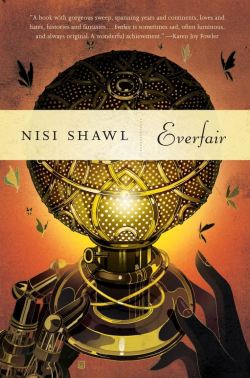 So rich a sea, so broad the currents … in exploring fantastic literature by African-descended authors, where do we start?
“Begin at the beginning” is standard advice for writers. “Begin where you are” is more my style. Where I am at the moment, where I’ve been most of my life, is North America. Though I know there are many other schools of African-descended writers out there, myriad fabulists swimming in gorgeous array, I’m at my best talking about those with whom I’ve had the most contact, those about whom I have something substantial to say: those who inhabit the Western Hemisphere. In the course of this essay, then, I’ll focus on “New World” writers of fantastic fiction whose ancestors came from Africa. I’ll talk about specific works by them and also touch a bit on what I see as a commonly shared theme.
Just as important as my location in the three dimensions of physical space is my location in a fourth, time. When I am is one week out from learning of the death of my friend Octavia Estelle Butler. So despite the fact that her fiction’s far better known than that of some of her colleagues, it’s to her work I’ll turn first.
Octavia, as almost anyone who knew her will tell you, was not quite a recluse, but 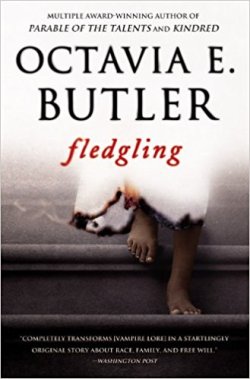 someone who valued her loneliness very highly. Yet a major concern of the heroine of Fledgling, her last complete book, is building a community. Shori belongs to a sentient species known as the ‘Ina’, and must consume human blood to live. In other words, she’s a vampire–but a scientifically plausible one. At its best, the Ina/human relationship is symbiotic, and Shori, survivor of a vicious, lethal attack on her original family, instinctively seeks to reconstruct what she has lost: a feminist-oriented blending of species and sexual preferences that might be the envy of a Utopianist visionary.
Shori’s other quest, of course, is to bring to justice those who murdered her mother, her sisters, and the humans they had gathered into their extended family. The killings may have been “racially” motivated; that is, though Shori’s not human, she has been genetically altered so that her skin is as dark as most blacks, and the tactics her enemies use are those of the Klan and other racist lynchers.
While it’s these last points that will probably impress most readers as drawing on African American culture, the book’s concern with social and familial structure shares the same roots, I would argue. Historically, most New World descendents of Africans came to this hemisphere as victims of the slave trade. This means that a large percentage of the cultural artifacts that survived that trauma are non-material. And even these were difficult to retain, subject to enormous stresses under the system of chattel slavery. Language, genealogy, occupational associations: all vanished or were transformed beyond easy recognition. It seems to me that a longing for these lost inheritances underpins the frequent tendency of New World African descendents to write what’s known as “third order” stories.
Continue reading “From Our Archive: Nisi Shawl”
 [The cover] painting is a made-up decoration merely done in Pacific Northwest style … meant to say to a reader “This novel is based on the mythology of the Pacific Northwest,” just as covers for other kinds of fantasy use images from Celtic, Norse, or Japanese mythologies to signal “pick me up” to the right kind of reader. ([Name withheld], p.c. Feb. 9, 2005)

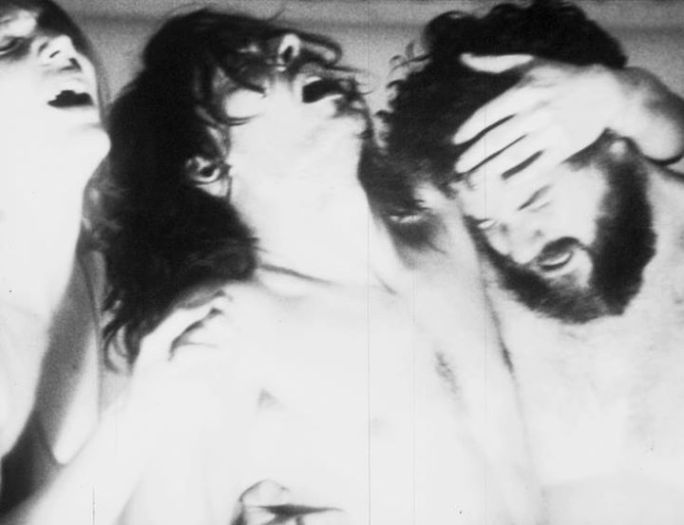 Jeremy Shaw’s
 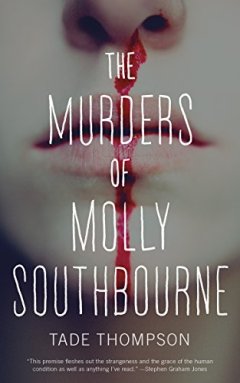 Tade Thompson, whose novel Rosewater was reviewed in Vector earlier this year (see below), has just published a new work of fiction. The Murders of Molly Southbourne is set to appear on screen as well, which is not surprising given the beautifully harrowing images that the novel fosters. It is a work of science fiction which reads like a thriller. It might be bloodier than Cormac McCarthy, yet it has the sweetness of a coming-of-age romance. The emotional confrontation with one’s reading self that ensues (‘should I be enjoying this scene?’), as well as all other inner conflicts, are put into perspective by the novel’s narrative of self-destruction. The science-fictional world of Molly Southbourne is a combination of Cold War past and a low-fertility future. The latter is particularly refreshing given the dominance of overpopulation scenarios in both science fiction and everyday conversations. Tade Thompson’s medical and psychiatric knowledge is always put to good use in his novels, the characters are entirely plausible in their contradictions, and the science is internally consistent and evidently very carefully thought through.


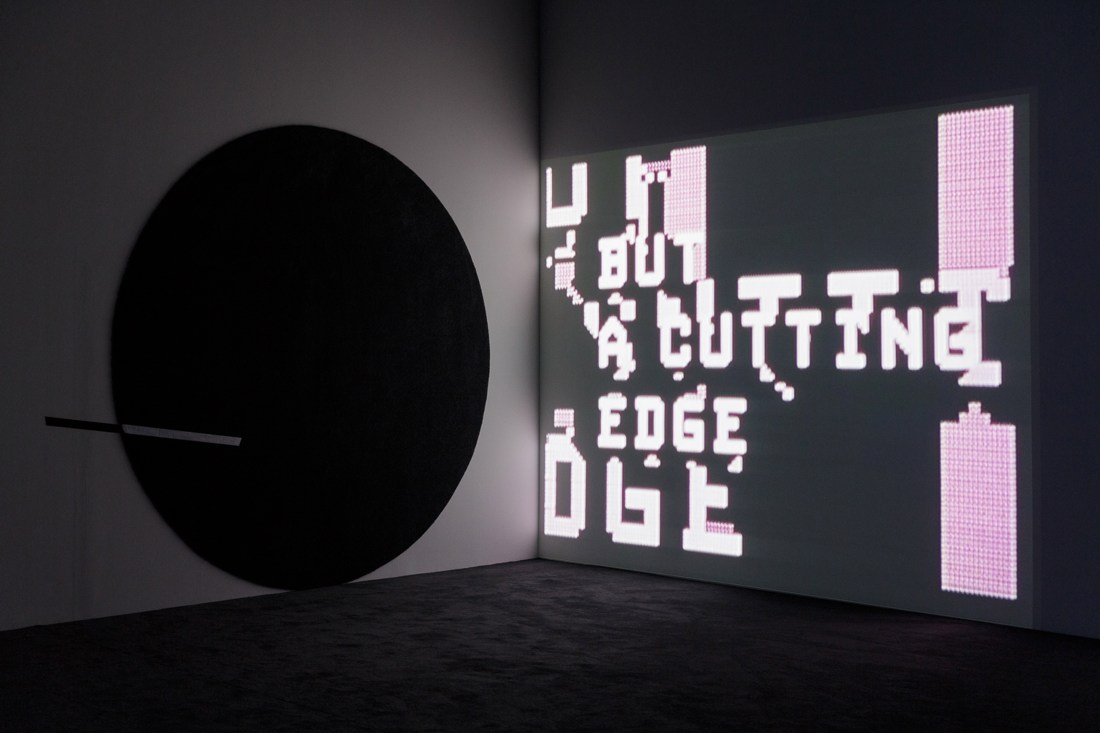
![Navigational chart from the Marshall Islands, made of wood, sennit fiber, and cowrie shells. [Wikimedia/UC Berkeley]](https://vector-bsfa.com/wp-content/uploads/2017/10/navigational-chart-from-the-marshall-islands.jpg?w=1100)
 vector-bsfa.com