CfP: Speculative Modernisms

Ibrahim El-Salahi: Behind the Mask series 2020-2021

Vector invites proposals for articles on speculative modernisms, exploring modernist, experimental, and avant-garde literary and artistic traditions in relation to science fiction, fantasy, and cognate genres and modes.

The inspiration for this topic arises from Nina Allan’s nomination, in Strange Horizons, of Nicola Barker’s H(A)PPY as her favourite novel of 2017. As Allan writes, the ‘profound’ and ‘unsettling’ experience of reading Barker’s experimental text is ‘inextricably bound up in the novel’s innovative use of form’. Although the apex of science fiction’s interaction with literary modernism is often identified with Michael Moorcock’s tenureship of New Worlds, we argue that not only is there a more sustained relationship but that modernism was not confined solely to the literary. In its political guises, modernism also imagined new social and technological regimes in ways that complemented, utilised and informed SF’s utopian visions. As Ali Smith has proposed, modernism ‘broke everything up and everything could start all over again. So you could understand both reality and books from a new angle, a renewed angle’. Disruption, novelty, estrangement, defamiliarization – these too are often regarded as characteristics of science fiction. As Virginia Woolf wrote to Olaf Stapledon, on receipt of Star Maker (1937), ‘it seems to me that you are grasping ideas that I have tried to express, much more fumblingly, in fiction.’ Woolf, like Stapledon, was fascinated by discoveries in physics and biology that fundamentally changed our understanding of reality, as well as its artistic representation. From H.G. Wells’s influence on the European avant-garde to contemporary slipstream novels, such as Ned Beauman’s Venomous Lumpsucker (2022), we can see that ongoing interaction. ‘Speculative modernisms’, though, are not confined solely to literature – they can also be found in art, architecture, film, music, design and photography. As the critical focus on postmodernism wanes, we perhaps now have ‘a renewed angle’ on a half-buried history of modernism and SFF. 

We are open to submissions from academics from any discipline and at any career stage, from independent scholars, as well as from SFF writers, fans, and others. We especially welcome voices from marginalized groups. All contributions will automatically be considered for publication in a special issue of Vector (guest-edited by Paul March-Russell) as well as Vector’s digital platform.

Please submit your proposal by 4 September 2023 to vector.submissions@gmail.com, including:

  • a 150-500 word proposal, including estimated length;
  • something about yourself, either a 50-100 word bio or a CV.

Articles should be between 1,000 and 8,000 words. Please let us know your intended word count. We seek articles that are carefully grounded in scholarly research, while also being clear, engaging, and suitable for a broad audience (including non-academics). Articles will be due by 29 January 2024.

Please also feel free to make queries about other formats, e.g. reviews, interviews, curated reading lists, roundtable discussions, unusual / innovative formats. 

Suggested questions / topics

  • Science fiction and literary experiment
  • Global modernisms and science fiction
  • Modernism and techno-culture
  • Modernist utopias/dystopias
  • Science fiction and the visual arts
  • Science fiction and modernist architecture
  • Science fiction and modernist cinema
  • Modernism and SF theatre
  • Scientific influences on modernism and science fiction
  • Language, modernism and science fiction
  • Science, modernist poetics and science fiction
  • Modernism and Afrofuturism, Africanfuturism, and other regional futurisms
  • Modernism and Indigenous futurisms
  • Modernism, science fiction and non-Western knowledges
  • Modernism, science fiction and sexual expression
  • SF fanzines, modernism and science communication
  • Politics, modernism and science fiction
  • Coteries in modernism and science fiction

Bibliography

Tim Armstrong, Modernism, Technology and the Body: A Cultural Study (CUP, 1998)

Gunter Berghaus, ed. Futurism and the Technological Imagination (Rodopi, 2009)

Matthew Biro, The Dada Cyborg: Visions of the New Human in Weimar Berlin (University of Minnesota Press, 2009)

David Brittain, Eduardo Paolozzi at New Worlds: Science Fiction and Art in the Sixties (Savoy Books, 2013)

Ian Christie, The Last Machine: Cinema and the Birth of the Modern World (BBC Books, 1994)

Seo-Young Chu, Do Metaphors Dream of Literal Sleep? A Science-Fictional Theory of Representation (Harvard University Press, 2010)

Sara Danius, The Senses of Modernism: Technology, Perception, and Aesthetics (Cornell University Press, 2002)

James Gifford, A Modernist Fantasy: Modernism, Anarchism, and the Radical Fantastic (ELS Editions, 2018)

Alex Goody, Technology, Literature and Culture (Polity, 2011)

Linda Dalrymple Henderson, The Fourth Dimension and Non-Euclidean Geometry in Modern Art (Princeton University Press, 1983)

Holly Henry, Virginia Woolf and the Discourse of Science (CUP, 2003)

Stephen Kern, The Culture of Time and Space, 1880-1918 (Harvard University Press, 1983)

Roger Luckhurst, ‘Laboratories for Global Space-Time: Science-Fictionality and the World’s Fairs, 1851-1939’, Science Fiction Studies 39.3 (2012)

—– Science Fiction (Polity, 2005)

Paul March-Russell, Modernism and Science Fiction (Palgrave, 2015)

—– ‘Science Fiction, Modernism, and the Avant-Garde’, in Gerry Canavan and Eric Carl Link, eds. The Cambridge History of Science Fiction (CUP, 2019)

Sarah J. Monstross, ed. Past Futures: Science Fiction, Space Travel, and Postwar Art of the Americas (MIT Press, 2015)

Mark S. Morrisson, Modernism, Science and Technology (Bloomsbury, 2017)

Adam Roberts, The History of Science Fiction (Palgrave, 2006)

Andrew Ross, Strange Weather: Culture, Science and Technology in the Age of Limits (Verso, 1991)

Charlotte Sleigh, ‘“Come on you demented modernists, let’s hear from you”: Science Fans as Literary Critics in the 1930s’, in Robert Bud et al, eds. Being Modern: The Cultural Impact of Science in the Early Twentieth Century (UCL Press, 2018)

Richard Stites, Revolutionary Dreams: Utopian Vision and Experimental Life in the Russian Revolution (OUP, 1989)

Adam Stock and Miranda Iossifidis, eds. ‘Modernism and Science Fiction’, Modernism/Modernity Print + 6.3 (2022), https://modernismmodernity.org/forums/modernism-and-science-fiction

Cecelia Tichi, Shifting Gears: Technology, Literature, Culture in Modernist America (University of North Carolina Press, 1987)

Philip E. Wegner, Shockwaves of Possibility: Essays on Science Fiction, Globalization, and Utopia (Peter Lang, 2014)

Michael H. Whitworth, Einstein’s Wake: Relativity, Metaphor, and Modernist Literature (OUP, 2001)

Flights of fantasy

By Janet Philp

Fantasy tales are littered with beings that can fly, whether in video games like The Legend of Zelda1 and Skyrim2, classic films such as Prince Vultan’s hawk men in Flash Gordon3, dozens of Marvel and DC heroes, TV series, blockbusters like the Harry Potter4 series and the classic Dungeons and Dragons5. The fantasy creatures of China Mieville provide us with a multitude of winged and armed creatures whilst Le Guin provides us with winged entities of a more recognisable feline form (Le Guin, 1999).

Characters who can fly capture our imagination.  They are seen as having the ability to rise above and they often have power and God-like appearances. In this article we will be looking at the anatomy of flight and whether it can help us understand how these beings can fly, or whether it is best left to special effects. 

As we are looking at self-propelled flight, we will ignore characters who fly by some means of alternative propulsion such as Ironman6, Thor7 and Mary Poppins8.  We shall ignore those that fly using a cape such as Dr Strange9 and potentially Superman10 and we will limit our exploration to those creatures who present with anatomical wings that propel flight as opposed to fins or flaps that allow for gliding.

In the history of life on Earth there have only been four classes of creatures who have possessed the ability to truly fly.  These are the pterosaurs, insects, birds, and bats. 

Pterosaurs have been extinct for millions of years and so how they flew can only be speculated upon. Insects, due to their exoskeletons have a different anatomy and flight patterns which are not often represented in fantasy literature, although accurately depicted in the new Dune movie11.  This article will concentrate on bats and birds and how they can inform our understanding  (Evans 2020) of the flight of fantasy creatures.

Wings of Desire (1987)
Continue reading “Flights of fantasy”

Black Utopias: Speculative Life and the Music of Other Worlds

Reviewed by Rebecca Hankins

Black Utopias: Speculative Life and the Music of Other Worlds by Jayna Brown. Duke University Press, 2021. Paperback 212 pg. $24.95. ISBN: 978-1478010548

Brown’s Black Utopias is one of the most scholarly and comprehensive works exploring Black Utopian futures. Very apt for a Covid-19 pandemic period that has seen the initial overwhelming loss of Black and Brown lives. In light of this mass death, Brown’s study asks — and through this work, answers — “What might Black futures mean, and how might we challenge our imaginations to create futures that are not only different to what we know and what we expect, but even allows us to evolve beyond our physical existence? Packed into these pages is a narrative that encompasses Afro-futurism, death, theology, spirituality, music, philosophers, science fiction, fantasy, and gender, stories that had to be absorbed, analyzed, and contemplated before beginning the review. There were layers after layers of new ideas packed into a narrative that also centered the stories of Black women’s religious and cultural beings in which they constantly sought a physical and metaphysical utopia within an Afro-futurist and Afro-centric framework. 

Cultural critic Mark Dery is credited with coining the term Afro-futurism as “techno cultural aesthetic that blends science fictional imagery, technology, philosophy, and the imagery, languages, and cultures of Africa and the worldwide African diaspora.” Scholar Yusuf Nuruddin also notes that Afrofuturism “includes black science fiction or Afrocentric science fiction, more broadly defined as African American signification about culture, technology and things to come” (or, in the case of alternative histories, “things that might have come” from a reconfigured past). Brown’s adds to our understanding of Afro-futurism that undergirds her work: Brown defines Afro-futurism as “a program for recovering the histories of counter-futures […] most notable for resisting disciplinary boundaries” (p17). Moreover, combined with this Afro-centric, interdisciplinary attitude toward futures and counter-futures, the genre of Afro-futurism centers works of science fiction, fantasy, and other speculative fiction created by African Americans, Africans and the African diaspora. Afro-centricity embodies works that are often critical writings that focus on race, the institution of slavery, class, gender, oppression, inequality, and sexuality, all woven throughout Brown’s book. 

Continue reading Black Utopias: Speculative Life and the Music of Other Worlds

2-3-74: Philip K. Dick and His Far-Out Exegesis

By Carrie Melmouth

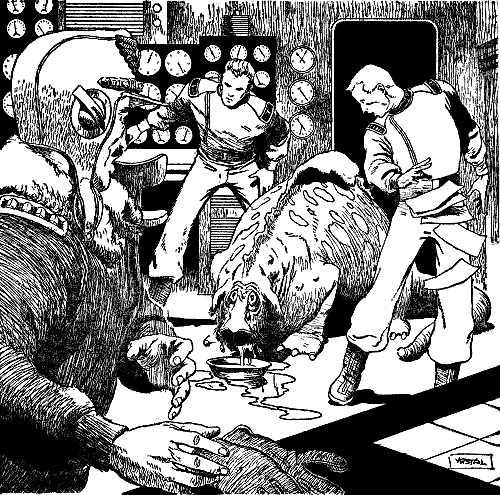
The slovenly wub might well have said: Many men talk like philosophers and live like fools.

I was introduced to the work of Philip K. Dick by my (then) boyfriend (ten years ago) when I was twenty-three. His sitting room was lined with bookcases, and from it, one day, he pulled a book of Philip K. Dick short stories. ‘Beyond Lies the Wub’ is not the introduction to the work of PKD I would have chosen for myself. It explores none of the themes that interest me in PKD. The wub is a ‘huge dirty pig’. And the pig doesn’t want to be eaten. I was bored.

“Really, Captain,” the wub said. “I suggest we talk of other matters.”

PKD was forty-five years old in 1974. He had sold his first short story, ‘Roog’ in 1951 and his first novel, Solar Lottery, in 1955. Both had been simultaneously pulpy and ontological. He had won the Hugo Award for The Man in the High Castle (which also bores me) in 1963. The Three Stigmata of Palmer Eldritch had not won the Nebula Award in 1965 (losing out to Frank Herbert’s Dune). Later, in what came to be known as The Exegesis, he wrote that his ‘mystical experiences start[ed] in ’63 when’ he ‘saw the “Palmer Eldritch” visage [in] the sky’. For all the plurality of his ‘mystical experiences’, though, when people do talk about PKD’s mystical experiences, what they talk about is 2-3-74. In the 1986 17th issue of Weirdo, comix cartoonist Robert Crumb illustrated a (necessarily reductive) account of 2-3-74.

Continue reading “2-3-74: Philip K. Dick and His Far-Out Exegesis”

Beyond Gender Collective: Abolish the Family!

Abolish the Family by Sophie Lewis

Review by Beyond Gender

Abolish the family? You might as well abolish gravity.” (1)

It is with these words, spoken by an imagined, horrified reader, that Sophie Lewis begins their new book. From the outset, the magnitude of the task ahead for family abolitionists is clear. To abolish the family is to attempt something frightening, something unthinkable, something which requires one to challenge the fundamental rules which bind our world together. It is, then, no surprise that again and again Lewis reaches for science fiction (SF) to articulate this vision of a world beyond the family. For an SF creator, to abolish a so-called law of nature is not a ridiculous proposition which can be used to embarrass utopians into giving up on their belief that “things could be different” (4, emphasis in original). It is rather a serious undertaking which involves an investigation of those forces which hold life as we know it together, the willingness to experiment with those same forces, and the determination to remake the world, however alien what comes next might be. This is the spirit in which we, the Beyond Gender research collective, approach Lewis’ book. We are a group of SF fans, researchers and creators who are committed to tapping into the radical potential of SF to undo the supposed naturalness of such myths as the binary model of gender, cis- and heteronormativity and, now, the family.

“Abolish the family? You might as well abolish gravity.” 

“Okay then, might as well.”

Continue reading “Beyond Gender Collective: Abolish the Family!”

Into The Spider-Verse and (Side)Setting the Scene for Social Change

By Christy Dena

This piece contains mild spoilers and mild mind scrambling if you haven’t seen the 2018 film Spider-Man: Into the Spider-Verse.

Margaret Thatcher had something to say about Miles Morales, so too did narrative theorist Seymour Chatman, as well as those fighting the idea of a “half-black, half-Hispanic” Spider-Man (Rose, 2018). It wouldn’t be a stretch of my tingly senses to say these folks share the belief that there is no alternative, there is a single, right, way. Thankfully, the opening sequence of the film Spider-Man: Into the Spider-Verse (screenplay by Phil Lord and Rodney Rothman, story by Phil Lord), sets the scene for social change with some cool emancipatory narrative devices.

It’s the kind of interventionist work that needs to be done because audiences have been trained to approach their story experiences, and much of life, with closed thinking. As part of his work on The Psychology of Closed Mindedness, social psychologist Arie Kruglanski explains that ‘the need for closure is the desire to have certainty, to have a definite answer to a question and avoid ambiguity’ (Kruglanski, 2021). A consequence of this is we can ‘jump to conclusions about others, and to form impressions based on limited and incomplete evidence’ (Kruglanski, 2004, 2). That character is the killer! Capitalism is the answer!

Former British Prime Minister Margaret Thatcher found it hard to imagine alternatives, and encouraged everyone else to find it hard. Thatcher is associated with the slogan ‘There is No Alternative’ — which refers to the neoliberal logic she popularised. In a speech, Thatcher not only said ‘there’s no real alternative,’ but also said ‘What’s the alternative? To go on as we were before?’ (Thatcher, 1980). As if the future is a long, single, inevitable, line of progression and the only choice is to stick with what isn’t working or proceed in the only available direction. Do nothing and crumble, or do the only change available. 

In Capitalist Realism, Mark Fisher connected the belief that there is no alternative to capitalism with dystopian films and novels that don’t imagine ‘different ways of living’ (Fisher, 2009, 2). Instead of representing or prefiguring different ways of living together, many works of fiction depict the destruction of the world by unbridled capitalism. Even our fiction jumps to conclusions.

Continue reading “Into The Spider-Verse and (Side)Setting the Scene for Social Change”