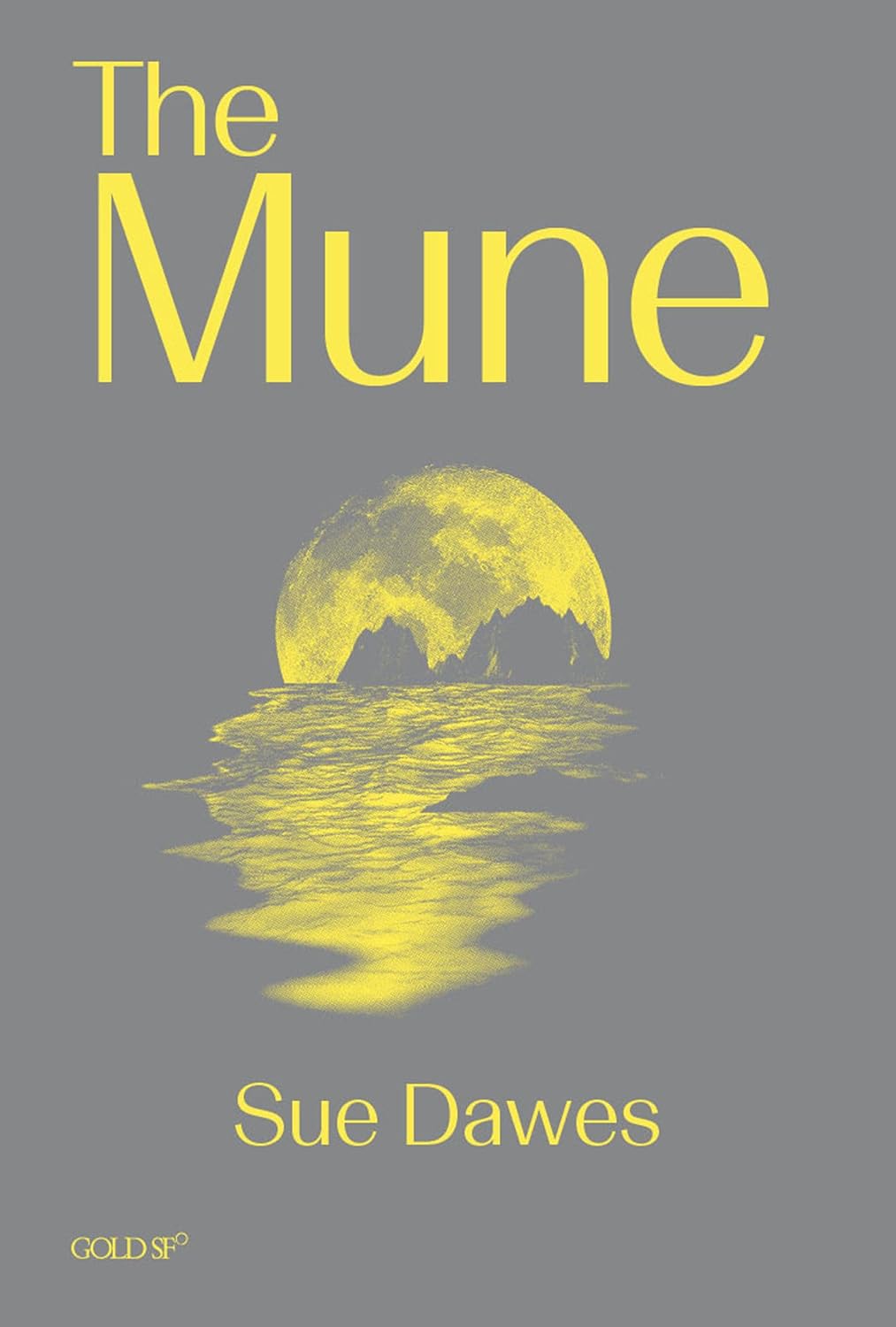
What came first, the characters, the language, or the shape of the commune? In some ways, the text suggests that the shape of the commune was predetermined: children needed to be raised communally because there was too much work… How much did initial conditions and the founders determine the trajectory?
Sue: The characters and the environment shaped each other as they interacted and the story developed, but I started off with two main ideas.
Firstly, I knew I’d have to set the story in the past, with a cast of characters who would want change but not be in a position to have an intellectual discussion about gender. Secondly, shipwrecking them on a hostile, barren island would force a departure from their rigid, oppressive gender roles, as survival would be their primary motivator.
The language evolved with the different dialects and experience each character brought to the island, which also affected the roles the founders adopted within the community.
There were a lot of adjustments made during the editing process.
The Mune functions without any form of money; was this a deliberate choice? The workload and resources are allocated without any particular system, even as crises pass and the commune grows.
The short answer is yes. I wanted to create as close to a true democracy as possible —where no role was valued more than another. Everyone on the island contributed what they could and had equal worth. Even when the Mune was stable, there was never an excess of food or time, so there was never complacency. They lived in the present not the past, with no desire to hoard.
History shows us that money tends to create inequality, and wealth is not an indicator of ability or productivity, quite often it’s down to luck and lineage.
Some of the commune’s most important tenets were suggested by a sci-fi story within the novel. The commune is a model of applied science fiction – however, the relationship is not linear, utopian stories don’t build utopian worlds. Did you intentionally separate the stories and their impacts?
Master’s Science stories are actually pastiches based on work written in the Victorian period that The Mune is set. The stories not only reflect the society of the time but showcase social and political ambitions and the methods imagined for achieving them. I hoped the stories would provide a bridge between accurate historical fact and SF narratives, which contained key nineteenth century ideas and technological advances, whilst imagining a more compassionate future. They also allowed me to shape my characters and add details about the island, reducing exposition in the main narrative.
Speaking of complexity, Betty and Master are among the most challenging protagonists, zigzagging from crimes to saviourism (and/or saviourism as crimes). They are on a different level of complexity compared to other characters. Incidentally, they are both science fiction writers. Is this a coincidence?
I wanted Betty’s character to be influenced by the stories she read with Master, and to use some of the key utopian ideas from those texts to shape the community. It felt just that Betty would be able to use her lived experience and imagination to gain her independence once back in the old world.
Master’s love of science fiction and discovery meant he was open to novel environments and more focused on discovery once on the island, than trying to control the community. Neither Betty nor Master is inherently bad, but a product of their environment. It’s the inability to change and adapt that causes the problems.
On the back of this, did you intentionally make the main protagonist one that your readers might grow to dislike, or did the Betty character come into her own as the story developed?
Betty came into her own as the story developed. Her character provided conflict, being so resistant to change. She reacts as I believe the majority of us would do in a life-altering situation, wanting to escape or be rescued rather than face her demons. She was just a child when she arrived on the island, having been gaslit and deeply traumatised.
If gender is technology, then The Mune is a very techno-optimistic narrative. Transformation happens quickly and thoroughly. It is a social tipping point – a tiny nudge (a vote) and all the awful stuff vanishes. It is exhilarating. But was there a temptation to make the process of change slower and painful for society as a whole, not just for Betty or Master?
I wanted the narrative to be optimistic so, there was never a temptation to slow the process of change or make the journey more painful for the society. I felt the majority of the founders had suffered enough in asylums, in service and on the streets of London. Despite the hard work of surviving, the founders acquired agency on the island, learned skills denied to them, and had the freedom to express themselves and there was no one on the island with (perceived) authority to oppose change. It seemed logical that they would want their children to be free of the shackles that bound them and embrace transformation.
The plot ends with a deus ex machina. Commune has to move. I was left with a longing, hoping that another novel was waiting around the corner, waiting to see the Old World remade by the intrusion. Will there be? And, why did you choose to end the story there?
There are a few characters who have refused to leave my imagination despite the fact I’m working on something quite different. There’s Star, the traveller, who would be well placed to reflect on our society, although currently it feels a little too dystopic! And there’s Betty’s child, in the womb on the island, who would have the advantage of the technology brought back by the Mune and witness the altered world.
However, I’d need my own shipwreck and an isolated island to write it all.
 vector-bsfa.com