By Hannah Robinson
Spoilers alert.
I’m primarily a writer, script consultant and animation producer, but my side hustle is running a collective called Archway Upcycle. We encourage people to creatively repair and repurpose things that are destined for landfill – providing tools, support and reclaimed materials. We have a WhatsApp group where people post pictures of discarded objects they’ve spotted in the street for others to rush out and rescue. The two sides of my life are mainly separate – I enjoy the physicality of DIY in contrast to the sedentary lifestyle of writing. But increasingly I find my upcycle brain is influencing my screen brain.
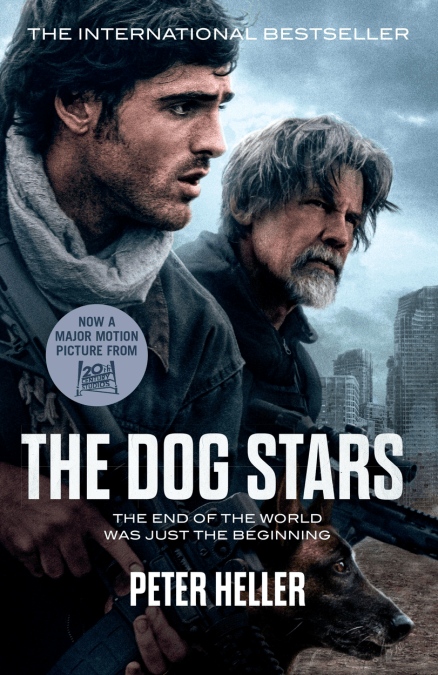
One evening after a session building a children’s wildlife tower out of junk in Highbury Fields, I attended the London BAFTA premiere of The Dog Stars movie introduced by novelist Peter Heller, who wrote the book upon which the movie is based. He described how he just started writing his post-apocalyptic narrative without a plan – allowing the characters to lead him where they wanted to go, so even he didn’t know what would happen next. This is a very familiar myth of creation. As so many writers before him describe – Homer, Milton, Coleridge, Stephen King – the muse visits, the characters start to speak and take on a life of their own. But I often wonder, who is that muse? Is it really something external, supernatural, mythical? Or is it just our own collective subconscious talking – formed by all the stories, books, TV and movies we have consumed? Is the Muse actually a plagiarist?
I am very interested in post-apocalyptic visions and have watched a lot of them on the large and small screens. Ridley Scott’s movie adaptation of The Dog Stars has coughed up a familiar, deeply xenophobic post-apocalyptic landscape where airplane mechanic Hig (Jacob Elordi) and old-timer survivalist Bangley (Josh Brolin) defend their turf against attacks from ‘roaches’ – a term applied by the protagonists indiscriminately to any group of outsiders regardless of gender, age or number. The film’s clear love of nature doesn’t seem to extend to humans – as the film progresses, intruders multiply and turn into heaps of smouldering bodies. Ultimately, Scott depicts dozens of marauding men descending on the outpost at night, bare-chested with Maori-style full-body tattoos, and lit in neon – climbing up the legs of Bangley’s watch tower like a swarm of cockroaches auditioning for a Duran Duran video. It is not the only visual reference to Indigenous peoples; their identities are borrowed again and again to portray implacable and irrational enemies that must be slaughtered.
Hig leaves Bangley to fend off these attacks by himself as he pursues a glitchy glimmer of hope for a surviving “civilisation” that he catches on a radio while flying his tiny Cessna airplane (and providing the film with its best cinematic moments). I was hoping that Hig’s search for some other way of life than this Gun-nut fantasy would have yielded something new despite Bangley’s scepticism: “What do you expect to find? Happy people everywhere?” But it turns out he was right; the radio message was just a honey trap set by the worst form of evil incarnate – a female past reproductive age. The movie’s ending is a Maga dream homecoming – a Little House on the Prairie homestead, complete with trad wives, a new generation of innocent children and a couple of grateful foreigners for a touch of white saviour beneficence.
The Dog Stars protagonists represent the debate between Dog Eat Dog and Community. And as I watched, I realised the connection between the two sides of my life – filmmaking and upcycling – is community. Whatever we make at our Upcycle group, the most valuable creation is the community of people co-operating and supporting each other to make things out of existing resources. And Ridley Scott didn’t make his movies on his own; he needed a vast team of experts around him, from the script through to the set, the edit, the distribution and even the consumption. So why does he want to make a hero out of Bangley and an enemy out of ‘the other’? Is he so submerged in the lighting and style of his set pieces that he can’t see the xenophobia they contain? Or is the only funding he can get from the Tech Bros?
When I teach screenwriting for returnable drama series, I ask the students to try to distil their ideas into a thematic debate which has two equally strong sides to the argument and can be debated episode after episode. Buffy the Vampire Slayer has to choose between protecting humanity and living a normal life. In Breaking Bad, Walter White is pulled between doing a bad thing for the good of providing for his family / versus enjoying how good he is at being bad (but endangering his family).
The rights of the individual v. the rights of the community seems to be the debate at the heart of most dystopian drama series. The Last of Us examines a mycological zombie apocalypse that almost wipes out mankind’s ability to form trusted connections – to be an ‘us’ or a community. Ironic, given that the Cordyceps fungi joins its infected into a massive interconnected mycelium web. Lead characters Joel and Elly face the ultimate distillation of this debate – If you could save humanity by killing the one person you love the most, would you do it?
In Fall Out, another drama series developed from a video game, their version of the argument emerges as ‘Is being kind to others a luxury or a necessity?’ Lucy McLean’s optimistic, peppy ‘do as you would be done by’ attitude is shown as the privilege of the Vault Dwellers – those whose families could afford to purchase a spot in the underground nuclear bunkers, not forced to survive on the surface. Again ironic since the very vault that protected and nurtured Lucy’s positive caring attitude was built by a corporation whose excessive greed saw the apocalypse as a marketing opportunity.
In The End We Start From, a 2024 movie set in a near future where it never stops raining and people are forced to flee a submerged London, we learn that even being a prepper is high risk: the more cans of beans you stash, the more you are a target for raiders. The debate becomes hyper personal – should ‘The Mother’ act with ruthless self-interest to protect her newborn child or rely on the healing power of the commune?
In season 1 of Silo, the inhabitants of a giant underground survival shelter don’t leave community to chance – they are forced to co-operate by strict controls imposed by (what is perceived as) a benign dictatorship – until doubt creeps in and rebellion starts to foment in the vertical concrete panopticon. The debate becomes ‘Is a community sustained by a collective lie better than a warring society built on the individual truth?’ We need to stay for Season 2 to discover that perhaps they had good reason to fear the insurgency. The individual might survive, but if no one else does, what value does their freedom have?
In Season 2 of Paradise, we meet a pod more organically formed by a couple of online gamers. Ennis and Gary managed to survive the nuclear winter, not because they were part of the elite group of presidential invitees who took up residence in a luxury shelter under a Colorado mountain, but because they’d started a kind of catastrophe cosplay – prepping for the imaginary apocalypse over their headsets. When Gary accidentally finds a decommissioned bunker underneath his work at the post office, they stock it not just with cans of food, but also with the perfect mix of survival recruits: a medic, a carpenter, an engineer, a gardener. Gary admits he never thought it would be needed – it was just a fun thing to do to stave off loneliness. But maybe this is the kind of planning we all need to be doing – building up communities and skillsets: the knowledge of how to organise, build things, grow things, fix things – radios, engines, broken legs. Help each other rather than just ourselves.
The problem with the action and horror genres is they feed off our more negative emotions. The most gripping, dramatic bits are when the conflict and stakes are at their peak – when the hero/ine is running or fighting for their life, when the raiders are descending upon your camp, when the zombies are within biting distance. They don’t pull in audiences with the promise of co-operative crop farming. We come for the thrill of the roaches grabbing at our ankles and the release of a single homemade bullet exploding their heads like a blood-filled pumpkin. And this is what The Dog Star delivers, abstracted violence appliquéd within a nature documentary.
And sadly, it seems the very act of watching a narrative like this makes it more likely to happen. As Jane Doherty & James Giordano point out in their essay: What we may learn – and need – from pandemic fiction “studies have linked the practice of visualizing to cognitive functions beyond the mere ability to enjoy a story. They demonstrate that the act of mental simulation or visualization increases the likelihood of believing the visualized events will occur in the future” ( ref 1)
So the biggest problem with The Dog Star’s vision of the future is that it is a self-fulfilling prophecy. If we imagine that the reaction to an apocalypse will be a fight for diminishing resources, then we are more likely to perceive others who might help us as a threat. Governments might divert resources towards a Silo like clamp down and control of the mob rather than training in how to foster cooperation.
During and after COVID, questions were raised about the role of such science fiction narratives in actual social resilience during a crisis. In COVID-19 and Pandemic Preparedness: Foresight Narratives and Public Sector Responses, Ivana Milojević highlights the xenophobic scapegoating that went on during the pandemic: “The current “China-virus” or “kung-flu” metaphors similarly aim to apportion blame…This group of people could include anybody deemed as ‘the other’, from foreign nationals, migrants and refugees, to recently returned travellers” ( ref 2)
There is one series that is more interested in how to best form communities. Station Eleven proposes a different take on a post-pandemic wipeout – one where many different collectives have formed, each with a different idea of how to forge a future after losing everything and everyone they loved. The ‘Travelling Symphony’ theatre troupe are the most successful at balancing collective co-operation with individual freedom – processing their personal traumas. And the thing they need for that is not guns or knives – it’s culture. In a world that no longer has TV, cinema or the internet, it’s plays, museums and graphic novels that become central to people’s lives. It’s only through a graphic novel written by someone who had experienced great loss long before that they are finally able to understand that they don’t need to kill others to survive. “To the Monsters: we’re the monsters.”
As Jerome Bruner and other psychologists have extensively argued, humans are storytelling beings: “We organize our experience and our memory of human happenings mainly in the form of narrative-stories, excuses, myths, reasons for doing and not doing, and so on.” ( ref 3) Our brains order experiences into stories to make sense of them, to remember them, to convey them. We do it in our sleep, forming fragments of the day – the people we talked to, the TV we watched – into often nonsensical narratives. The dreams usually disintegrate on exposure to daylight, but films stay with us for longer. As we learn in Fallout and Silo, beliefs are handed down through the generations in tales and truisms – beliefs are the true survivors, persisting even when their origins are forgotten. If we don’t properly examine what we are transmitting in our narratives, we will undermine the very foundation of our resilience. Handing down fears and distrust of the outsider, we might hasten our own demise.
References:
1. What we may learn – and need – from pandemic fiction by Jane Doherty & James Giordano
2. COVID-19 and Pandemic Preparedness: Foresight Narratives and Public Sector Responses, Ivana Milojević: https://jfsdigital.org/wp-content/uploads/2021/09/01-Milojevic-COVID-19-and-Pandemic-Preparedness-ED-9-Layout.pdf
3. Bruner, J. (1991). “The Narrative Construction of Reality.”
https://web.english.upenn.edu/~cavitch/pdf-library/Bruner_Narrative.pdf

