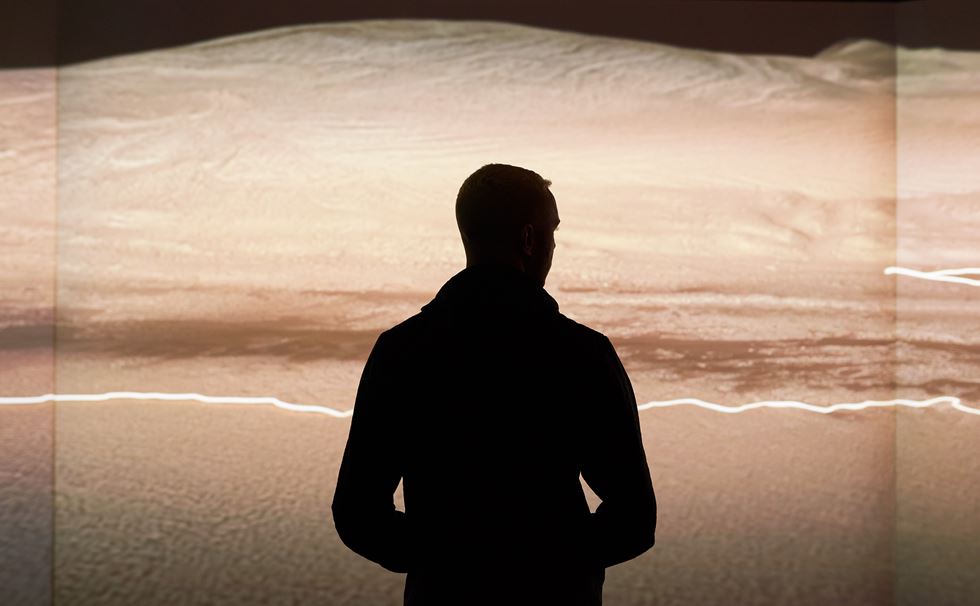
The Design Museum used to be tucked away somewhere on the south bank of the Thames but since relocating to Kensington in 2016 has established itself as a premier cultural venue in the capital. Those of us a little longer in the tooth would recognise its newish home as having once held the Commonwealth Institute. Today the array of flags has gone but the building is still nestled next to parkland. It’s drizzling on the longish walk from the tube station. It’s the final week of “Moving to Mars” and it’s also half-term; which, as a sometime supply teacher, I should have taken into account. Let’s face it, what do kids love most? Dinosaurs. And second most? Space. (Witches are third, in case you’re wondering.) Continue reading “Mars By Design”→
With H.G. Wells’s classic and hugely influential work The Time Machine celebrating its 125th anniversary, Creation Theatre has teamed up with Jonathan Holloway, The London Library, and a host of consultant scientists and experts from The Wellcome Trust, to create an immersive theatrical experience inspired by Wells’s work. The Time Machine is on Wednesday through Sunday till the 5th of April at The London Library, with a future run taking place in Oxford. We asked playwright Jonathan Holloway to reflect on his process for Vector. Here’s what he had to say …
Jonathan Holloway
Creation’s production of THE TIME MACHINE at the London Library is billed as an ‘adaptation’. That’s not really quite what it is. When I was asked to do it, I hadn’t re-read the book for more than forty years, and on doing so, my heart sank. There isn’t really enough story to allow for an ‘adaptation’ as such. To make something that was going to be worthwhile, the task needed a different approach. The original is basically a yarn about a man who builds a time machine in his conservatory, travels forwards in time, finds the human race has evolved into two halves, one of which lives underground and eats those who live on the surface, then travels back to the present appalled by what he found. The theatre can’t do what a movie can – it doesn’t present ‘actuality’, instead it’s about a collusive relationship with the audience which forefronts ideas. We don’t necessarily ‘show’ it, we describe it, and you create the pictures in your head.
On the set of The Time Machine (Photo by Richard Budd)
Creation Theatre Company put me in touch with the Wellcome Centre in Oxford and I visited on several occasions, meeting scientists, philosophers and ethicists, and hearing what they had to say about the future – over roughly the next fifty years. So, inspired – as it were – by H.G. Wells’ THE TIME MACHINE, I penned a journey through the labyrinth of the iconic London Library, where the author was a member, and imagined a future in which time travel has generated thousands of parallel universes. Effectively, I rather unceremoniously pulled apart this classic sci-fi novel, re-invented it, and pieced it back together to create a world in which the present is endlessly shifting, and the future is strange and uncertain. Travellers have tinkered with timelines causing people’s names, faces and indeed the colour of their socks to change without warning. It is a very ‘theatrical’ evening which requires that we suspend our disbelief and enter into the fanciful creation of an alien dramatic world. Humour sits alongside appalling predictions. It’s a hybrid kind-of show wherein dramatic situations surrender ground to an event that alternates between being a play and something approximating to a TED talk. The script was pretty much done by the end of October, but alarmingly some of the material that seemed farfetched back then concerning climate change and the possible threat of pandemics has subsequently appeared on our TV’s in the form of Australian wild-fires and the spread of Coronavirus. Wells has offered myself and Creation an opportunity to work the fantasy of time travel into a theatrical event that now sometimes feels more like a documentary.
The audience are divided into groups, each of which is accompanied by a time travelling guide. This character bears more than a passing resemblance to Wells’ protagonist – The Time Traveller – and s/he leads our groups through the wonderfully atmospheric interior of the London Library, where they meet other characters, see projected images and listen to recorded speech as if it’s leaking from the many thousands of books on the shelves. The logistics of a show like this are themselves mind-bending. Each group will see the same show, but staggered, as they process in series from room to room. Each group must be kept separate from the others. It’s a theatrical Rubric’s Cube which, thank Heavens, is organised by a wonderful director called Natasha Rickman.
Wells’ THE TIME MACHINE remains one of the great science fiction novels of all time. In this production we have to demonstrate how important a thinker like Wells is to the fabric of how we see ourselves, the purpose we find in existence and what we bequeath to our children. So, I’d ask you please to leave your preconceptions at the door. Yes, you will receive something of Well’s brown furniture and tobacco-soaked club-land atmospherics … but more importantly, we hope you may feel a connection being made between the socialist author and today’s activists.
Personally I can’t believe my luck as I add THE TIME MACHINE to a list of adaptations of great science fiction I have done for the theatre and the BBC including Alfred Bester’s TIGER TIGER, Philip K. Dick’s DO ANDROIDS DREAM OF ELECTRIC SHEEP, Waugh’s BRAVE NEW WORLD and Orwell’s NINETEEN EIGHTY-FOUR.
There was a lot to try to keep up with in 2019. As usual my attention was split between what was new, what I’d missed and what I revisited. As this is the regular review of the new, I’ll keep my attention squarely there — though I’ll confess to missing key releases that will doubtless prove to be among the best of the year.
As 2019 was also the end of a decade, this is a moment to note that over the last ten years we’ve seen a number of new writers establish themselves as major names in the genre.
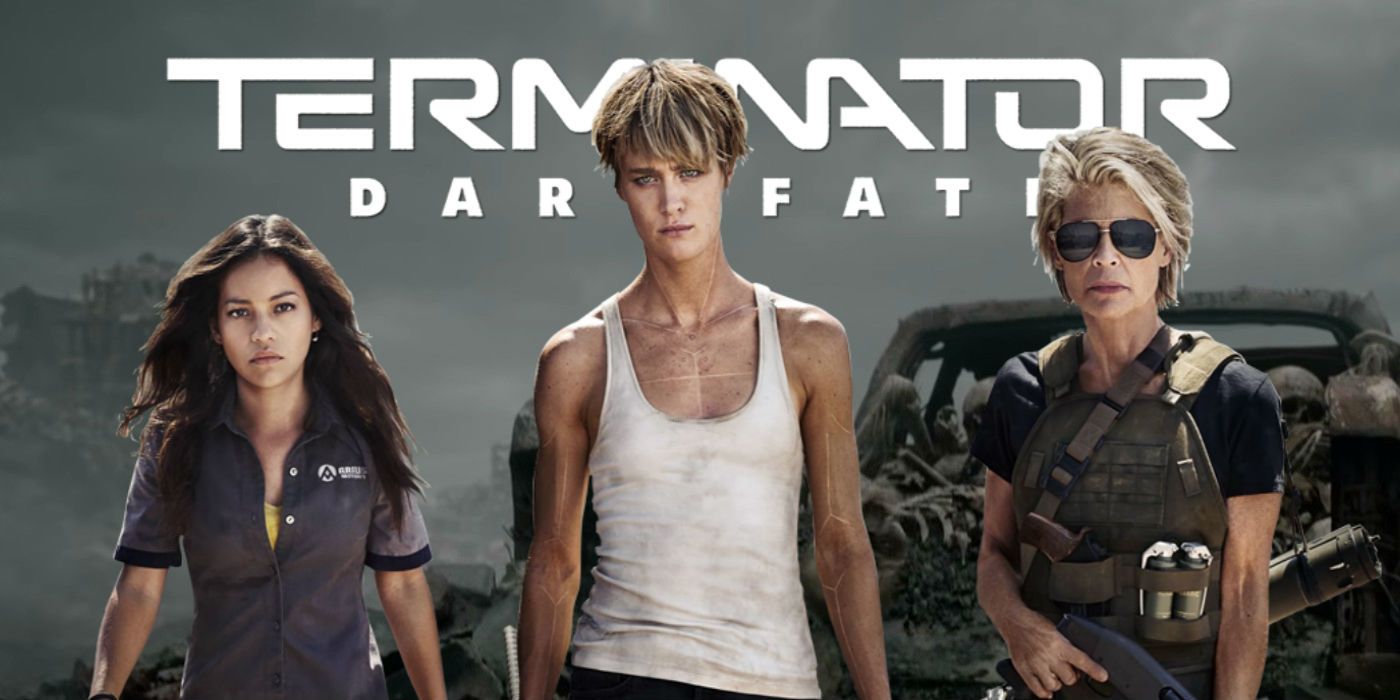
I went to see Terminator Dark Fate with my regular film going friend, Nik. Despite going to the cinema together since we were kids, we worked out that this was the first time we’d been to see a Terminator film together in the cinema. Given Dark Fate’s poor box office and the fact that Schwarzenegger is 72 years old, this felt like our last chance saloon.
I’ll state my positions now. Firstly, it’s impossible to discuss this film without spoilers, so don’t read further if you don’t want any. Second, I’m a big fan of the original film and have watched it many times. I had been disappointed in different ways by many of the films in the series and I had high hopes of Dark Fate. It came with a pedigree of James Cameron’s blessing, the strategic rejection of the dead ends of earlier films, and it was made by the director behind the popular film, Deadpool, Tim Miller.
Like most franchises that have survived decades, TheTerminator films are no longer about one single thing, they combine and rework themes and cultural and social issues. While a principal concern is time travel and the paradox of changing the present by altering the past, the films are also commentaries on machine intelligence, nuclear destruction and individuals striving against a faceless powerful enemy.
A science fiction and fantasy author with a background in physics and finance, Stew Hotston is something of a Renaissance man (right down to the sword-wielding bit). Vector sent Robert S. Malan for a friendly duel of words …
Tell us a little about your work to date – are there distinct strands linking the stories you tell?
Yes, for sure. Despite moving around across SF, fantasy, horror and the just plain weird, there are a couple of themes which recur. One theme is family. Not always blood, but always who we choose to be vulnerable with, who we choose to have by our side when we’re facing challenging times. I think asking who those people are and what we’d do for them are interesting questions, no matter the setting.
The other recurring theme for me is worlds on the edge of collapse. I like returning to the idea of how times and places, which at first appear idyllic, have nearly always required bad decisions to get there, and these will lie in wait, festering until their time comes again. It’s a little of dealing with the past, but also about asking what price we are willing to pay in order to get what we want.
Finally, you’ll see a lot of dreams in my books. Not in an ‘it was all a dream’ kind of way! But as ways of characters processing what’s going on, as ways of communication and, even in the hardest SF, to remind us there’s more out there than we’ve dreamed of (literally).
What motivates you when it comes to storytelling, which can be a hard and lonely craft at times?
To be honest, the last ten years have been such a blur I’d barely registered the fact that we have arrived at the threshold of a new decade. But here we are (or not, depending how pedantic you’re feeling – I’m happy to be guided by common usage), and it’s a useful moment for thinking about what I’ve read in that time. Or not, because, along with time passing at a speed that seems indecent, it turns out that this last decade was one in which I either didn’t read much (being a recovering postgraduate will do that to a person) or else a lot of what I did read somehow didn’t find its way into my long-term memory.
Except that, once I looked at a few lists, I realised that, actually, I had read quite a lot during that period but the effort of moving forward had somehow subsumed it into an amorphous space called ‘the recent past’. Also, I am hopeless at remembering dates of publication: last week, last month, last year, some time ago, whenever.
But I can tell you that in 2010 I was very excited about Ian McDonald’s The Dervish House. I was and am a huge admirer of McDonald’s work, and at that point also deeply preoccupied with Orhan Pamuk’s writing (still am), so the Turkish setting intrigued me, as did the presence (or indeed, mostly, absence) of a mellified man, reflecting my interest in the strange, the offbeat, the peculiar. But I also appreciated the novel’s densely layered portrayal of a near-future society with a very complex cultural identity. Looking back I can see now that The Dervish House has set the tone for a lot of my reading since then.
What a long strange decade it has been. Ten years ago it looked as if social democracy was in the ascendant around the world; today, populist, nationalist, right-wing governments are in power in Britain, the USA, Australia, Israel, India, Hungary, Italy and elsewhere. The world has become a scary, unwelcoming, unpleasant place to live. Politicians took the voters for granted, and voters became tired and disdainful of the politicians, so real life is coming more and more to resemble the dystopias we used to read. Which may be why there are no dystopias on my list of the ten books that I have chosen as representative of the last ten years in science fiction.
Which is not to suggest that politics is absent from the list. Far from it, in fact I begin with what is, I think, the most politically acute novel science fiction has produced this decade: Europe in Autumn by Dave Hutchinson (2014). Published two years before the Brexit referendum, it captures with uncanny prescience the mood of fragmentation and disintegration that Brexit embodies. Startlingly, the three subsequent volumes, which I don’t think Hutchinson had even conceived at the time he wrote the first book, maintain the awareness and the quality of the first. And in the final volume, Europe at Dawn (2018), there is a passage set among refugees on a Greek island that perfectly encapsulates the damage that fear of the other has done to Europe.
When the history of science fiction fandom in the 2010s is written, the key event to be discussed will doubtless be the Puppy War. That a group of right-wing fans should attempt to take over the Hugo Awards is perhaps not surprising. The 2010s are, after all, the decade in which it was conclusively proved that democratic systems are vulnerable to attack by malicious actors. That the attack failed is perhaps a testament to the strength of community sentiment within the SF&F community. But what is really surprising is what happened afterwards.
For the last three years of the decade, every single written fiction-related award in the Hugos was won by a woman.
Channel 4’s Humans was one of the big successes of the 2010s. It won many accolades across its three seasons, including a BAFTA. Based on a Swedish drama, Real Humans, it provided a timely reflection on the changes we are actually experiencing due to the rise of AI, but framed as a thriller set in a world of robots. In Humans, the robots look human but are machines with very Asimovian constraints on behaviours, constraints that sentience removes. Enter one group of robots who have moved beyond the programmed and are fully aware.
The essential story of season 1 is where I’d like to focus. The ingredients are a family strained by tensions, husband about to lose his job to a robot, a wife who is a busy, successful lawyer, and their three kids. Into their lives comes a robot with a buried sentience.
The first series inspires moral and legal questions. How fast does an artificial sentience grow relative to how we think of maturity in humans and when does it become responsible for its actions? Is there an equivalent period of ‘childhood’ for AI that should be reflected in the laws governing sexual consent? Who is developing a legal framework applicable to AI?
If this wasn’t ethically challenging enough, further themes explored in the series include whether it’s possible to love a robot (the conclusion being very much a ‘yes’) and an even deeper one: ‘is there a right to sentience?’.
Humans holds up a mirror to make us aware of how driven we are by appearances. The show is very deliberate with the blurring of boundaries when the robots look and behave as we think people do. While the cast went to synth school to learn how to not move like people, the plot depended on robots being able to pass for humans, sometimes in order to harm them.
The episode where Niska – one of the sentient robots – is on the run having murdered an abusive human, is a riff on the film Fight Club. She passes for human and is allowed to join in with a group (largely men) whose evening’s pleasure consists of beaten and destroying other robots. The robots look like people and are helpless. To all intents and purposes, the baying crowd were killing people they’d relabelled as objects. Sometimes it’s easy to despair of humanity.
It’s not clear we are anywhere close to answering any of the ethical questions raised by this show, while the rise of AI in the actual workplaces continues apace. Let’s hope we do a better job than Humans suggests we might.


 A science fiction and fantasy author with a background in physics and finance,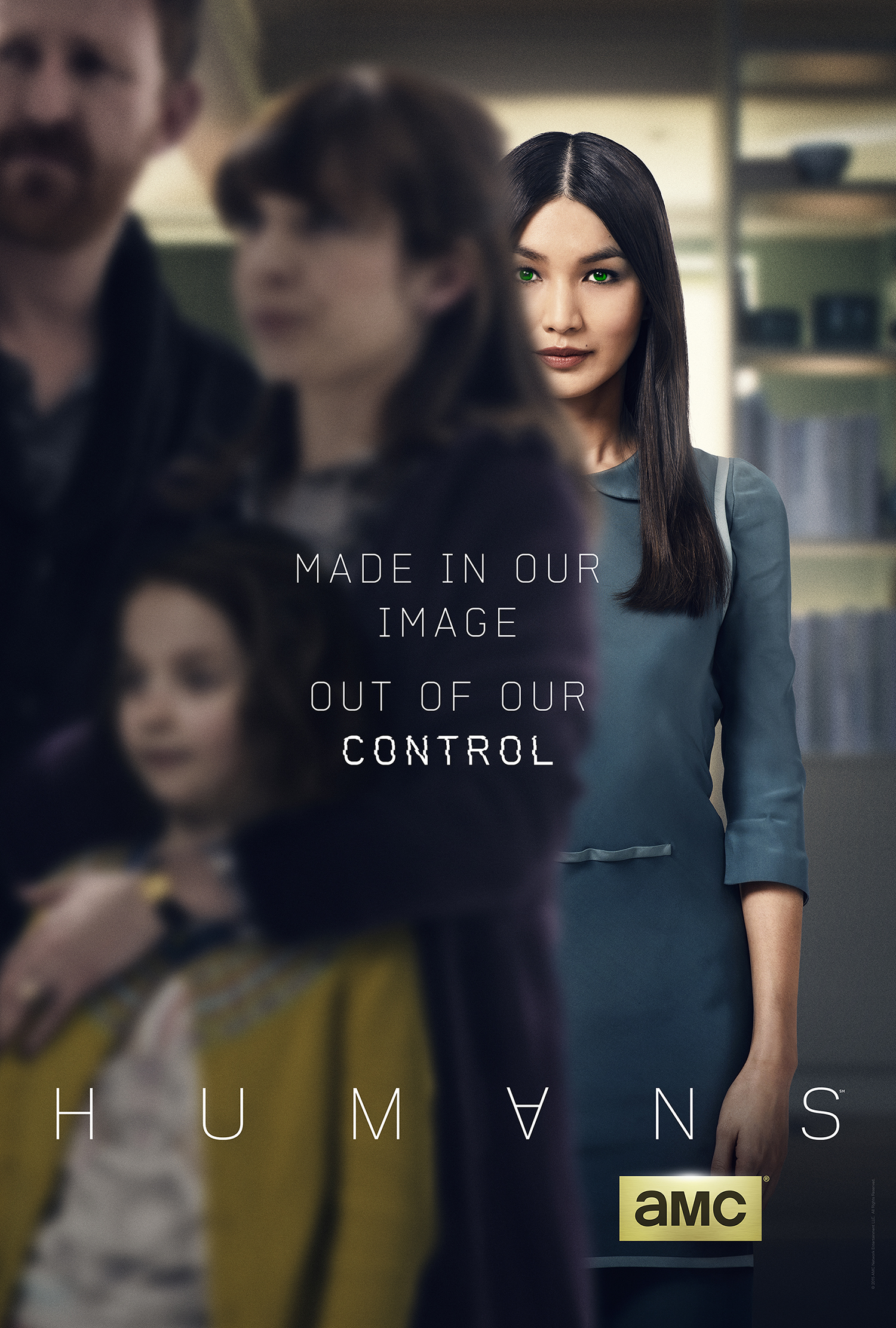
 vector-bsfa.com