Interview with Samantha Mills

by Jean-Paul L. Garnier

Samantha Mills is a Nebula, Locus, and Theodore Sturgeon Memorial Award winning author living in Southern California, USA. You can find her short fiction in Uncanny Magazine, Beneath Ceaseless Skies, Strange Horizons, and others, as well as the best-of anthologies The New Voices of Science Fiction and The Year’s Best Science Fiction & Fantasy 2023. Her debut science fantasy novel, The Wings Upon Her Back, is out now. You can find more at www.samtasticbooks.com

JPG – The culture in The Wings Upon Her Back is a theocracy where labor and religion are intertwined, can you tell us about using this as a worldbuilding device? 

SM – When developing The Wings Upon Her Back, I wanted a claustrophobic, monocultural setting to reflect the isolation of the main character and the fraught history of her city. Everything had to revolve around the five gods that are sleeping overhead. 

In the book, the division of labor is a core tenet of their religious and social framework because they are emulating the gods, who arrived with very clearly defined roles. I ended up with five sects: the workers and farmers are the biggest groups, who keep the city running; the scholars and engineers are documenting and implementing the teachings of the gods; and the warriors keep the city isolated from outside forces. The primary conflict of the book comes from the unbalancing of these factions, as the warriors take more power over the others. 

One of my favorite worldbuilding techniques is to build out social expectations – what everyone is supposed to believe, what everyone is supposed to do – and then to imagine the characters who do not fit the mold. I set a limit at five sects because it automatically creates tension: you can’t actually sort the breadth of humanity or the tasks needed to keep society running into such a small number of categories!  

This tension permeates the book. There are jobs, such as medicine, that rely on teachings from multiple gods, and therefore arouse some unease. And there are many individuals who don’t fit neatly into their sect. My main character, Zemolai, was born into a family of scholars, but left them to be a warrior. The hodgepodge group of rebels she falls in with later in life have all either changed sects, or are revolting against the expectations placed on workers specifically. The right to question the division of labor (and therefore, the teachings of the gods) is central to the story. 

Continue reading “Interview with Samantha Mills”

Issue 300, ‘Community’— Call for proposals

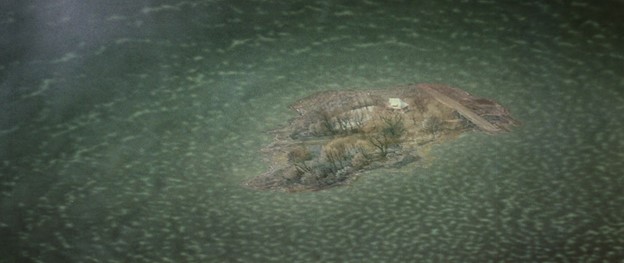
Solaris (1972), Andrei Tarkovsky

Science fiction, for all it encompasses strange new worlds and fantastical creatures, is a literary genre that is built and sustained by human communities. Writers, artists, and creators have imagined new social formations, technologies, economic, ecological, and sociopolitical systems for centuries; indeed, science fiction may be the most nakedly political of all literary genres, as thought-provoking as it is beguiling. Who is present in narratives of futurity? What kinds of technologies enable—or stymie—human connection? How can inter-species communities develop and flourish? 

Pre-internet, fanzines and conventions were the spaces where editors, authors, and fans met, shaping the genre in new and exciting ways. Praise and critique and conflict and collaboration were equally already common before social media. Some landmark dates include: the first WorldCon (1939), the first British science fiction convention, Eastercon (1937), the Maleyevka seminars, Nihon SF Taikai (from 1962), and many others, around the globe.

In 2024, the ideologies of ‘community’ are under pressure and scrutiny. Violent geopolitical events shadowplay on smartphone screens, small enough to fit in the palm of our hands, fulfilling the most dystopian dreams of the genre; we venture to fight and commiserate and celebrate with people from all over the world, instantly. Where wealthy industrialists were (and are) once praised as saviors of humanity with the glittering promise of their space programs, now SF tends to show how the relentless logics of capitalism undermine any notions of transcendence. The challenge of space travel was supposed to unite us. What would the pioneers of SF make of the now-straining politics around the International Space Station, scheduled for dismantling by 2030? 

In light of these challenges, the Vector team—for the journal’s milestone 300th issue—invites contributions that reify the notion of ‘community’ as it manifests in speculative cultures. What tools can SF offer us to construct better tomorrows, together? How can we innovate new ways of collaborating, such as the world-building projects of Syllble? What does ‘community’ look like in fiction, non-fiction, conventions, awards, conferences, collaborations, online spaces, and other literary and paraliterary formations?

Suggested questions / topics

  • history of fandom/conventions 
  • the practice of writing: zines, magazines, letters 
  • science fiction publishing: editors and collaborators on the printed page 
  • utopias and dystopias 
  • terraforming
  • defining personhood 
  • future societies 
  • sex and sexuality 
  • navigating conflict 
  • political divides, past and present 
  • interspecies alliances
  • the posthuman 
  • the future of communication 
  • translating SF 

Please submit your proposal by June 15th, 2024 to vector.submissions@gmail.com, including:

  • a 150-500 word proposal, including estimated length;
  • something about yourself, either a 50-100 word bio or a CV.

Articles should be between 1,000 and 8,000 words. Please let us know your estimated word count. We seek articles that are carefully grounded in scholarly research, while also being clear, engaging, and suitable for a broad audience (including non-academics). Articles will be due by July 31st, 2024.

Please also feel free to make queries about other formats, e.g. reviews, interviews, curated reading lists, roundtable discussions, unusual / innovative formats. 

Electricity as a Speculative Device: The Romanian Modern(ist) SF

By Amalia Cotoi

This article explores how Romanian science fiction novels written between 1899 and 1954 engage with modernity. I am particularly interested in examining how key texts that center around the protagonist’s exploration beyond the familiar realms intersect with a modern development that was a game changer in human history: electric energy.  The analysis centers on three novels from the modernist era − Victor Anestin’s pioneering Romanian Sci-Fi novel, În anul 4000 sau o călătorie la Venus [In the Year 4000 or A Trip to Venus] (1899), Henri Stahl’s Un român în lună [A Romanian on the Moon] (1914), and Felix Aderca’s Orașe scufundate [The Submerged Cities] (1937) − and one written and published in the aftermath of WWII − Drum printre aștri  [Path Among Stars] (1954), penned by I. M. Ștefan and Radu Nor. If the works written during the interwar period represent initial major forays into the Sci-Fi genre, it wasn’t until the postwar era that the first notable presence of Sci-Fi in Romanian literature, holding institutional significance and capturing general interest, emerged. By including a novel written in the 1950s in this inquiry, I aim to challenge the chronological convention of the modernist era ending with World War II. The emergence of the communist regime, influenced by the Soviet model, signaled an unparalleled drive toward industrial and technological advancement in a European nation that was among the least developed, with a rural population twice the continental average (Murgescu, 140). Such a transition is all the more justifiable in the case of electricity, as the pace of electrification accelerated after World War II, particularly between 1950 and 1970 (Murgescu, 344), witnessing the shift from electricity as a speculative concept to a democratically commodified resource.

Continue reading “Electricity as a Speculative Device: The Romanian Modern(ist) SF”

The Valediction: Christopher Priest (1943-2024)

By Paul March-Russell

Christopher Priest

Have not many of us felt we have been living in a parallel universe since 2016? Brexit, Trump, QAnon, space billionaires, anti-vaxxers, AI deepfakes, microplastics, dashes for growth as the world burns, Sudan, Gaza, Ukraine… 

Maybe the planet slipped through a portal when the Large Hadron Collider was switched on? Or maybe we just stepped into a Christopher Priest novel and we’ve been trying to get out ever since?

Chris was the master of the imperceptible reality shift. That moment when we slip into an alternate reality, and everything distorts around us, and we can’t find the way back, because we didn’t realise we’d stepped across a threshold until it was too late. But maybe there’s another way? Or a series of pathways? But which is the right one? Is there a right one?

Reading Chris’s fiction was to lose oneself. To experience the vertigo of existential angst. But not so much in the story itself. Of course it’s a fiction, we know that, this isn’t a novel by McEwan or Amis junior, we don’t need telling. No, the dread is not that this fiction is made up, but that it is one of many fictions, unfolding indefinitely around you. And then you’re lost, lost like the protagonist, gripping to the contours of reality as the map – very neatly, very expertly – is elegantly pocketed by the author.

We read, I read, Chris’s fiction precisely for that moment. The moment of deception. The moment we realise we have been deceived. And there’s no going back. We can only read on, not in hope of revelation, but in hope of understanding better the prestidigitation, the trick of it. Yes, the trick has been played, there’s no going back, but for every good magician there’s a willing assistant. So much better to be the sidekick, hand in glove, observing, participating, knowing the trick is always more than the trick itself.

That was Chris’s invitation to his readers. To step out of the stalls, out of the shadows, onto the stage, into the limelight. To tread the boards with the storyteller, the one who shapes meaning from thin air, to catch his words and handle them with care, to palm the key so that the illusionist can make his escape yet again. To trip the light fantastic together.  

It’s an unnerving experience to begin with. But with practice confidence grows. Knowing, yes, you will be sawn in two. But knowing, yes, you will be made whole again. The trick, for there is a trick, is to trust to the tale. Just not the teller. 

Smoke and mirrors? No, not quite. An author needs their assistant, the attentive reader. It’s a liberating, even democratising, experience. Night after night, book after book, the trick falls upon the author to perform. And the willing assistant is vital to that performance – they may not practise the trick, but how they conduct themselves, learning the cues, reading the signs, responding intuitively to what the maestro requires of them… 

Yes, without an attentive assistant, there would be no performance at all. No trick, no magic, no wonder. Only a darkened theatre, a disgruntled audience, a critical floor manager picking over the discarded stubs. Yes, writers need readers to be more than just popcorn accessories. 

Chris had the reputation of being an occasional curmudgeon. His blast at the 2012 Clarke Award shortlist was notorious, but when he won the BSFA Award for The Islanders (a brilliant book), he made light of the incident, declaring that the massed throng of voters should probably now resign. In company, he was a witty, generous man – numerous writers have, since his death, described the support he gave them; it’s just that he took the business of writing very seriously. And what he expected of himself, he hoped also of his readers. In that sense, he led by example. 

Chris once remarked that he did not abandon SF but that SF abandoned him. His unexpected appearance in 1983 on the first of Granta’s lists of the best young British writers, alongside the likes of Amis, McEwan, Rushdie and Barnes, possibly looked to those within the genre as if he had found a door in the wall and sneaked into the sunnier climes of literary fiction. Far from it since Chris, a natural outlier, was never fully accepted there either. His receipt of both the World Fantasy Award and the James Tait Black Memorial Prize for The Prestige (1995) suggests someone who straddled the worlds of mainstream and genre fiction or who benefitted from the dissolution of such distinctions. But equally it might suggest someone who could, by happenstance, appeal to demographics that would usually not see one another, like the obscure protagonists of The Glamour (1984). Like it or not, this was a writer who found their home in the margins, nibbling at the edges of what constituted the borderlines. It may not have been good for Chris’s bank balance, until Christopher Nolan’s adaptation of The Prestige in 2006, but it was this odd (shall we say ‘adjacent’?) cultural positioning that helped to generate one of the finest bodies of literature in the post-war period. 

Chris did not outgrow SF; rather, he grew the genre so that it could encompass an author like himself, and by so doing, he inspired other writers, who did not emerge from the traditional magazine market, to create work in a speculative mode. His influence is apparent in writers like Nina Allan, Adam Roberts and Lavie Tidhar or last year’s Clarke Award winner, Ned Beauman. But, most of all, Chris grew a readership. By which I don’t only mean the dedicated fans who bought his work so that, although he never cracked the lucrative US market, Chris could go on producing fiction right up until the end. (In fact, the period from The Islanders [2011] to Airside [2023] possibly constitutes one of the most remarkable late runs of any major writer.) No, what I mean is that Chris helped to grow the kind of serious, attentive reader for science fiction which has meant that, over the last fifteen years, much of the most important contemporary fiction is to be found on the shortlists of the BSFA and Clarke Awards rather than the Man Booker. By taking the form seriously, and by encouraging others to do the same, Chris’s influence on what is now produced under the umbrella term of ‘SF’ is far greater than book sales can ever suggest. It is no coincidence that when Mark Fisher was looking for case studies for his influential thesis on the weird and the eerie, he chose Chris’s game-changing novel The Affirmation (1981). 

When, at a reading at the University of Kent in 2011, I introduced Chris as Christopher, he stopped me and said, ‘No, Chris to my friends’. Reality contorted, in a single word, and I stumbled on because that’s what you have to do when inducted into Chris’s world. I was proud then, and I am proud now, to say that Chris Priest was my friend. Go on, you can still get to know him, read his books. 

The Resistance

By Nick Hubble 

It might seem rather strange to start writing a column for Vector focusing on sf as a fiction of practical resistance to capitalist realism and oppression in a special issue on sf and modernism. After all, isn’t modernism the literature of the metropolitan elites? Influential books such as John Carey’s The Intellectuals and the Masses (1992) and Jonathan Rose’s The Intellectual Life of the British Working Classes (2001) certainly make this case. The latter argues that writers from the educated classes sought to maintain their elite status in the face of challenges from the masses by creating modernism, ‘a body of literature and art deliberately made too difficult for a general audience’ (393). His illustrative list of such elitists includes T.S. Eliot and Ezra Pound, but also less obviously conservative writers, such as H.G. Wells and Virginia Woolf.

While Wells was educated, he was hardly from the educated classes, being the son of a shopkeeper and domestic servant. His brilliant novel Tono-Bungay, charting the rise and fall of a quack medicine, was serialised from 1908 in Ford Madox Ford’s English Review, one of the foundational modernist magazines. The lively style of first-person narrative Wells adopted for the novel was highly influential on the work of modernist writers, including Ford’s own The Good Soldier (1915). Yet far from being deliberately difficult in order to deter general readers, Wells was a popular writer who expressed the dreams of millions who aspired to escape from the class-bound hierarchies of the age  As George Orwell pointed out, reading Wells’s sf during the early years of the twentieth century at a time of lingering Victorian values and moral hypocrisy was a liberating experience because he ‘knew that the future was not going to be what respectable people imagined’ (171). 

One feature that modernism and sf share is a resistance to the capitalist conception of time: the relentless metronomic recording by the factory or office clock of the seconds, minutes and hours of empty time to be filled by work. Instead, both genres enable the depiction of time as elastic: moments that stretch to encompass the entirety of eternity and epochs that pass in the blinking of an eye. The archetypal example of this latter phenomenon is Well’s The Time Machine (1895), in which his protagonist fast-forwards from Victorian London into a distant class-flipped future in which the Morlocks, evolved offspring of the workers, hunt and eat the descendants of their former masters, the Eloi. While the satire is savage, the experience of time travel itself is recorded in aesthetic terms through the hero’s description of watching ‘the moon spinning swiftly through her quarters from new to full’ before blurring into a ‘fluctuating band’ faintly visible against a ‘wonderful deepness of blue’ (17). 

Continue reading “The Resistance”

Destroying ‘Centuries of Evil Work’: Female-Authored Dystopian Science Fiction in Spain

By Angela Acosta 

The Speculative and Surrealist Origins of Spanish Modernism 

Ángeles Santos’s painting, Un mundo [A World] (1929), is a large surrealist composition one may easily miss if one is too eager to reach Pablo Picasso’s Guernica (1937) in Madrid’s Reina Sofia Museum. In 1929, at the age of seventeen, Santos presented Un mundo at the Ninth Autumn Salon of Madrid where prominent Spanish intellectuals like Ernesto Giménez Caballero, Vicente Huidobro, and Federico García Lorca noticed her work. The three-by-three metre painting projects a surrealist world not unlike literary utopias of the early twentieth century. A world in the shape of a cube hangs suspended by angels in the sky. Female figures clad in dark dresses race down a staircase, reaching towards stars that serve as anchors for this small world. The image is equally precarious as it is carefully crafted. Santos painted the self-sufficient world with the same dark, muted palette as the cloudy blue sky. There, one can see into buildings as miniature humans go to work, play sports, and ride the steam train that snakes its way across each side of the cube. What lives do these people lead? What references to modern Spain can be found in this painting and similar works of literature? How might we recognize the contributions of women within this milieu? 

“Un mundo” by Ángeles Santos (1929) photographed by eckelon is licensed under CC BY-NC-ND 2.0.
Continue reading “Destroying ‘Centuries of Evil Work’: Female-Authored Dystopian Science Fiction in Spain”

Ukrainian Women in SF: A Roundtable Conversation

Interviewed by Michael Burianyk

Nataliya Dovhopol, Natalia Matolinets, Iryna Hrabovska, Daria Piskozub and Svitlana Taratorina are five young, diverse Ukrainian women writers of Science Fiction and Fantasy. Not only is their fiction significant but they also have a YouTube channel “Фантастичні talk(s)/Fantastic talk(s)” (@fantalks) where they discuss the history and current state of Ukrainian fantastic literature and interview foreign writers. All are fluent and articulate in English. More importantly they are expressive in their understanding of their own work and the importance of Science Fiction and Fantasy in understanding real life. Their insights into their writing reveal how it fits into contemporary Ukrainian culture and literature. Their responses are often touching and even harrowing, considering the horrific war they are experiencing.

Note for the following that both Nataliya Dovhopol and Natalia Matolinets share the same first name, spelled the same in Ukrainian, but use different English spellings.

What themes and topics do you explore in your work? 

Nataliya Dovhopol I combine my interests in local history, mythology, art history and cultural studies with my degree in Theory and History of Art. I consider my novels to be historical fantasy (To Find the Amazon’s Land, The Knight of the Drevlyanian Land and the Lady Eagle) and ethnic fantasy (Wandering Circus of the Silver Lady). I also explore urban fantasy and like to experiment with genres and topics to reveal unknown pages of Ukrainian history, but always in the context of the real world. As well, suffering a lack of coming-of-age stories in my childhood, I want today’s youngsters to easily find exciting books by Ukrainian authors.

Iryna Hrabovska I’ve written in many genres, including detective stories and adventure novels. But most of all I love researching history. My debut was the steampunk duology Leoburg mostly set in a world with an alternate European history. My new trilogy (The Crystal Castle) is a sword and sorcery fantasy based on the events of the Hundred Years’ War. I am particularly proud of my mystical story The Closest to Hell, about the disappearance of miners in one of the first mines in Donbas in the early 20th century. It’s based on historical material about the small mining town of Snizhne, where I was born, and I want Ukrainians to see the Donetsk region not only as a place of war but also as a place of beauty and fantasy.

Continue reading “Ukrainian Women in SF: A Roundtable Conversation”

Duchamp’s time machines: Paul Minott in discussion with James Gillham

Paul Minott worked as a leading graphic designer for over thirty years, working for
numerous international design consultancies in London and abroad. He ran a
successful partnership in London before embarking on a teaching career at Bath Spa University. He now works making one-off abstract prints using an etching press.

James Gillham completed a practice-led Ph.D. in Fine Art at the University of Reading in 2014, researching capability via the intersection of institutional demands and intersubjective expectation. He continues this research by painting the Humpty character from Olaf Stapledon’s Last Men in London, and by seeking similar representations in Science Fiction.  James lives and works in Wiltshire, and is the cover artist for the latest issue (299) of Vector.

Marcel Duchamp, The Bride Stripped Bare by her Bachelors, Even (The Large Glass), 1915–23. VIA CREATIVE COMMONS/COURTESY PHILADELPHIA MUSEUM OF ART

Marcel Duchamp’s famous work The Large Glass (1915-23) has been duplicated numerous times, by artists such as Richard Hamilton (1965) and Ulf Linde (1961).  Duchamp’s approval of these pieces emerges from his established interest in the ready-made, but also points to a more nuanced conception of time situated in popular contemporary European Modernist thought.  

Nude Descending a Staircase, No 2 (1912) is perhaps the most explicit example of this interest with temporality, but the glass mechanisms such as Rotary Demisphere (Precision Optics) (1925) bring these engagements into clearer focus.  These spinning devices suggest an investigational approach to time’s passage – expansions and contractions operating between objective measurement and subjective experience.

Duchamp’s ludic approach to time has interested artist and printmaker Paul Minott for many years, and is the impulse behind Minott’s latest work: Portrait de Voyage dans le TempsPortrait de Voyage dans le Temps is an Artificially Generated visual essay, showing Marcel Duchamp alongside his various time machines.

Minott discusses Duchamp’s Modernist conception of time and how this appeared in Duchamp’s artwork – while finding parallels with contemporary use of Artificial Intelligence to generate images – with fellow artist James Gillham.

Continue reading “Duchamp’s time machines: Paul Minott in discussion with James Gillham”

Review of The International Black Speculative Writing Festival 2024

Reviewed by Amirah Muhammad

Founded by Dr Kadija George Sesay, the International Black Speculative Writing Symposium and Festival was a three-day in-person event at Goldsmiths, University of London, held in February 2024, alongside a single-day online event for global audiences. The festival offered workshops for writers, readings and performances, speakers’ panels, interviews, and group discussions. The festival’s many partners included Comma Press, Spread The Word, New Writing South, Writing East Midlands, TLC, Writing Our Legacy, Peepal Tree Press and Yaram Arts. The event was supported by Arts Council England, Professor Deidre Osborne and the Department of English and Creative Writing at Goldsmiths. The festival’s authorised bookseller was This is Book Love. The BSFA had a stall featuring its publications, showcasing African writers from the Luna Press and launching Kampala Yénkya – an applied African speculative culture project on imagining climate futures by Dilman Dila and Vector editors.

As the first of its kind, the festival promised all the thrills of a new experience, alongside the anticipation of a skilfully curated event. Across its online and in-person events, titans of Black Speculative Fiction abounded, including Sheree Renée Thomas, Professor Reynaldo Anderson, Dr. Karen Lord, Dr. Courttia Newland, and Leone Ross. I spent three days at Goldsmiths absorbing new fiction in all its forms, building new personal and intellectual connections, and exploring new ways of thinking about Black Speculative Fiction.

Professor Reynaldo Anderson
Continue reading “Review of The International Black Speculative Writing Festival 2024”

Future of Education: Wild Blue Yonder by Daniel Hesk

Queen’s Tower, Imperial College London

The Faculty of Natural Sciences (FoNS) at Imperial College London held a speculative fiction contest on the subject of education in 2045. Here is the story that won first place.

The world is changing and there is little doubt that the future will be different from today, possibly profoundly.

In the face of these possible futures, what could this mean for education and for FoNS? What do we teach and how do we teach it? What is it like being a student or a lecturer here?

We invite you to join FoNS in the year 2045. What will you be doing? How will you be learning or teaching? We do not just want to hear about futuristic technologies or subject matter, nor do we want a purely dystopian vision. Instead, we invite you to write about what life is really like using those technologies or learning about relevant subjects in the context of a challenging world. Build us a world where we can look around and see the fabric of our faculty and university in all its detail.

www.imperial.ac.uk/natural-sciences/education-and-teaching/short-story-competition/

Wild Blue Yonder

By Daniel Hesk

I’m sat on the bench and I’m cold, and I’m tired, and here is what I can see: 

1. The prim lawn, stretching off into the haze of dusk. An upswelling wind pulls a few leaves across the grass and mud towards me. My eyes water in the chill blast. 

2. The tower, emerald dome still set afire by a sun which from my vantage has long since sunk into the ravenous outline of the library. 

3. The statue, looking almost conventional from this angle. Lines of neon-red graffiti adorn its torso, too remote to read but I can guess at their essence. They must be recent,  really recent – unmolested by caretakers or rainwater. 

4. The grey buildings across the road, featureless in the dark, only two or three windows glowing. As I watch, a silhouette appears in the highest, backlit by bright fluorescence.  It recedes after a second or two. 

5. The sky, a pale azure turning to brilliant orange in the west. Something is unzipping it – over my head extends a lengthening streak of slate, diffuse at the back but hardening to a strict point at its end. There is a steady roar, like waves crashing somewhere far distant. Four turbines thrashing like crazy, modified fuselage churning out aerosol in immense volumes. 

6. No stars. Not these days, thanks to our long and fruitful efforts. 

When Leo arrives he approaches from my left and stands over me, grinning to hide his exhaustion. Two fingers tap behind his ears, and the implants are disabled. I ask him what he was listening to and the band he names sounds like a crossword clue. He calls me Al, because he finds it funny and he can’t pronounce Alparslan off the cuff. 

‘Come on, Al,’ he says, ‘project time,’ He tries to take my hand.

‘Yeah,’ I respond, manoeuvring out of the way. ‘I know.’ I stand and stalk off towards the library. Unprepared for these English winters, I’m wearing just thin jeans and an Oxford shirt.  The cold wraps around me. It burrows into my flesh. I imagine there might be frost tomorrow, emergent in the lee of buildings and bushes. I don’t think I’ve never seen frost before, not in my country, except maybe as a very young child. I have a vague memory of the fountain pool in our town square turning to ice, of the smooth and glittering surface like a mirror under my palm. Still, they say half your early memories are just subsequent inventions. I can’t trust myself to know. 

In the library’s glass façade I see Leo following me. He’s dressed more sensibly than I am in a long, thick jacket. He fiddles with the lapel; I suspect he wants to shed the coat and drape it caringly over my shoulders. I walk a little faster and step gratefully indoors, sirocco air from the heaters a welcome relief. The rooms are largely empty, and I recognise many of the sparse occupants from our own course. Most degrees don’t set assignments this close to Christmas,  but most degrees don’t have to justify their existence to the extent that Maths does. The department has been on death row for years, and they apparently feel that increasing the workload will present an image of vitality and necessity. 

We find a spot on the fourth floor, by the western windows. The setting sun shines over the rooftops like a lighthouse from out across a black and frozen sea. Leo removes a silver rod from his pocket and fans it out into a screen and keyboard with a languid flick of his wrist. I  try to ignore him and bring out my own laptop, firmly and consistently rectangular. It recognises my face and lights up, a picture of my parents frowning at a museum in İstanbul. I  lean back in the chair until it starts to creak, and pull up the project. Spreadsheets and code,  code and spreadsheets. Local Precipitation Effects of Marine Cloud Brightening, 2036-2039. 

‘I can’t believe this,’ mutters Leo. ‘That we have to waste time on this crap.’ ‘Whatever. Just get on with it.’ I keep looking at the screen, but I hear him swing around to face me. 

‘I mean, we’re supposed to be maths students, for god’s sake. I know it’s important, but  there’s thirty other courses doing exactly this.’ 

I click my teeth together. ‘You realise that we are doing maths. You know, with the numbers  and the sums and everything.’ 

‘Come on, you know what I mean.’ 

I do know what he means, unfortunately. My feet kick the ground and I rotate, not to look at him but back at the window. The sunset is unbelievably beautiful, a deepening bloodstain on the sky. The sulphur we’ve been pumping without end into the stratosphere has spread to every reach of the earth, making the Wild Blue Yonder that little bit whiter, making every evening shine that little bit more like burnished gold. They say you used the get the same effect after tests of nuclear weapons. The final formula for the aerosol was developed here,  actually, at Imperial. It reflects enough heat to offset hundreds of thousands of times its weight in carbon dioxide. If you believe the press releases, it’s going to save the world. 

Yes, we are the beating heart of progress. One of the last few universities in the UK, but we’re immune to the closures now. Practically every degree has turned its gaze towards the roiling, boiling planet, to the neglect of any other frontiers. Besides medicine, it’s the only  

thing governments are willing or able to fund. There’s no time for any other pursuits. No time left at all. 

‘Fifty people died in Kiribati last week.’ I say flatly. Leo pauses. 

‘Yeah, I saw that. In Tuvalu or something…’

‘Tarawa.’ I still don’t look at him. 

‘That’s it. Damn shame.’ 

‘A rogue wave took out the foundations of an emergency shelter. Whole thing just collapsed  into the sea.’ 

‘Sure, tragic, but that’s not our fault.’ This now, this I laugh at. The sound of it rings with impertinence across the low-ceilinged space. From far behind me another student coughs,  while a third drums their fingers on the table. In abject silence, noise can be contagious. 

‘Of course it’s not our fault. By and large, it’s not the fault of anyone born this century. Still  our planet though, isn’t it?’ 

‘Hmm.’ He folded his arms. ‘I think you’re looking at this wrong.’ 

Honestly, he’s a lot more tolerable when he’s arguing instead of flirting. ‘Go on, what do  you think?’ 

‘You see Al, for me it’s about the principle…’ 

The sun disappears at last, and the starless sky presses down on the city like a bandage, like  a hand. 

*** 

I’m standing under a dark alder and I’m warm, and I’m tired, and here is what I can feel. 

1. The rough bark behind me, uncompromisingly alive. My fingers trace its contours, the solid grooves slick with moisture and moss. 

2. The leaf litter under my feet, crushed and crackling between bootheel and pavement. The little flakes carry their deaths with them, darting, dancing along the breeze. 

3. The air, frigid and all too warm for this time of year. I sometimes imagine I can taste the changes in the wind, all the new and pervasive chemicals. What weaknesses we can find in the belly of the beast. 

4. Leo’s coat across my shoulders. It’s heavy, and it smells of rain. I promised to return it tomorrow, and it’s a promise I intend to keep to the bastard. He left his gloves in the pockets and I play with the idea of pulling them on. 

5. Hope, unexpected, maybe unwarranted. It wells up inside me and I exhale, my breath freezing instantly into a mist that swirls and drifts outwards into the night. 

6. The world, spinning softly, dawn-bound, older than it has ever been before.

Inspired by my belief in the all-consuming severity of the climate crisis, and current theories of the geoengineering efforts that may have to be spearheaded by scientific institutions. I’m interested in how an increasingly singular focus for the natural sciences might be perceived,  both in terms of its necessity and what other avenues might fall by the wayside amid such a pragmatic approach to research.

Daniel Hesk