Over the course of the last thirty years, the standard model of literary modernism has eroded.
This model offered an origin story, beginning with the fiction of Joseph Conrad and Henry James and the poetry of W.B. Yeats; a consolidation in the figure of Ford Madox Ford and the ethos of Impressionism; a quickening in the face of war and the avant-garde, as represented by Imagism and Vorticism; a fluorescence in the post-war aftermath of T.S. Eliot, James Joyce, and Virginia Woolf; and then a slow decay during the 1930s and `40s, culminating in the endgames of Samuel Beckett. What this narrative described was the rise and fall of a literary doctrine – art for art’s sake – in which the fever dream of history could be cooled by the impersonal application of myth and symbol. The type of artist this narrative valued was austere, detached, ironic and analytical. For John Carey, in his jeremiad The Intellectuals and the Masses (1992), such an image was but an excuse for elitism, social prejudice, and even fascism.
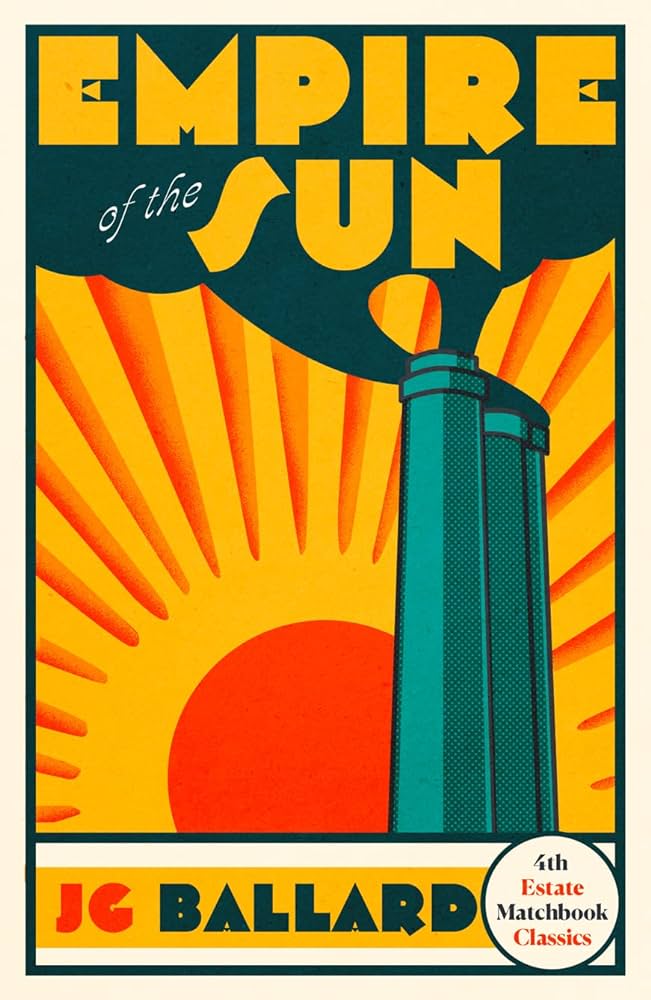
For an undergraduate like myself, though, it seemed a bit rich for the Merton College Professor of English Literature to be condemning other writers as elitists, especially when he pronounced that what the masses really wanted was the middlebrow novels of Anita Brookner. Growing up in working-class Gillingham, in a single-parent family that barely kept itself above the breadline, what I wanted was not Brookner’s insufferable Hotel du Lac but J.G. Ballard’s Empire of the Sun, outmanoeuvred on the 1984 Booker Prize shortlist by that year’s Chair, Professor Richard Cobb.When eight years later I was studying Joyce’s A Portrait of the Artist as a Young Man (1916) and realised that a whole passage had been parodied by Alfred Bester in The Stars My Destination (1955), this received history about modernism and mass culture began to smell decidedly fishy.
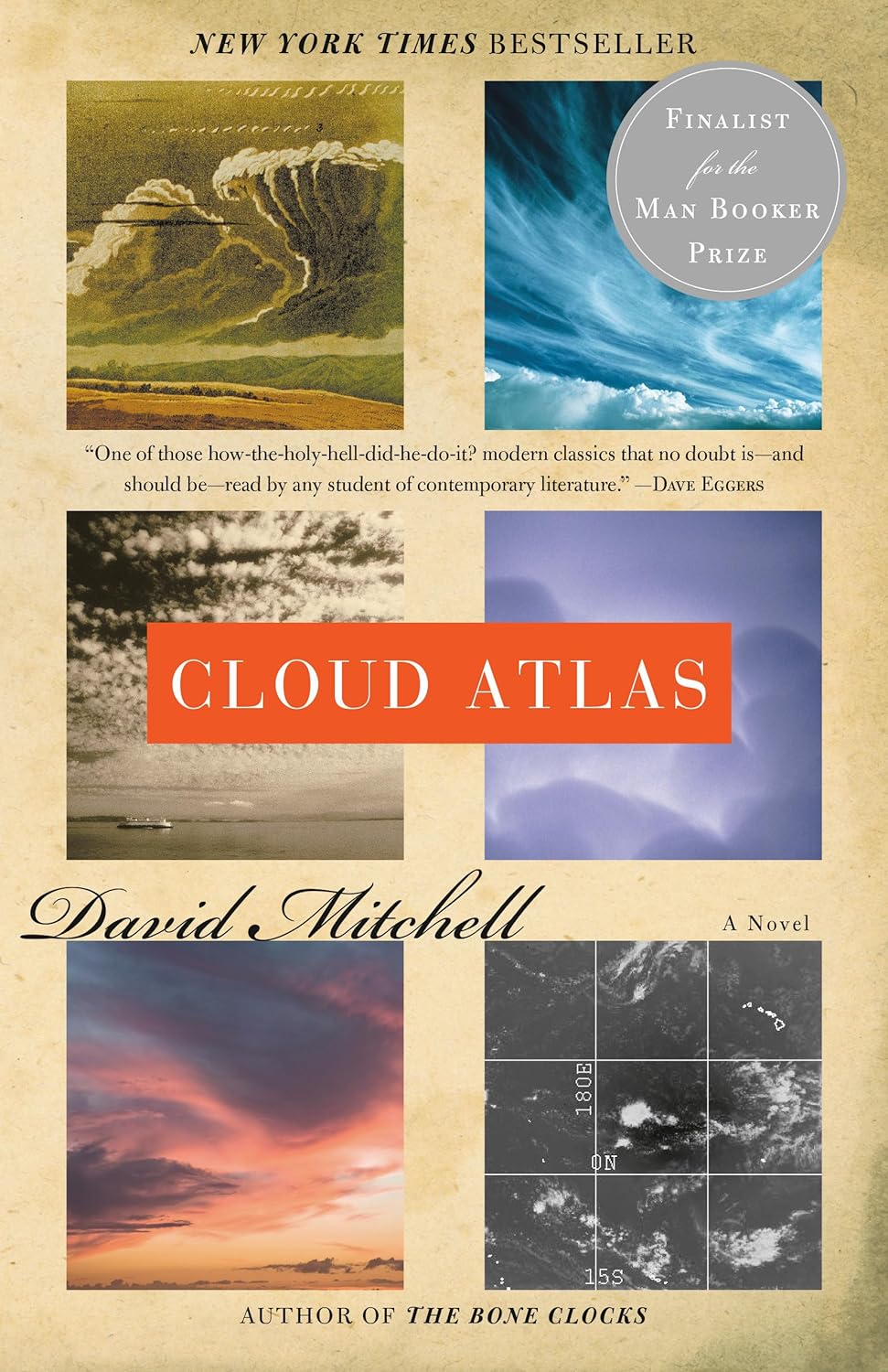
Immediately praised upon its release, David Mitchell’s Cloud Atlas (2004)stands as one of the most significant books of the 21st century. Though it has its skeptics, the novel was shortlisted for the Booker Prize, Arthur C. Clarke Award, and Nebula Award for Best Novel and won in Literary Fiction at the British Book Awards. The novel’s support across the communities of historical, speculative, and literary fictions is itself quite interesting but, suffice to say, the novel was well received and remains so in myriad lists of Best Books of the Century.
One reason potentially behind its plaudits is how Cloud Atlas attempts to catalogue the challenges, tensions, and anxieties of its post-postmodern period. Many of the sociopolitical concerns shared by theorists regardless of their periodizing name of choice also drive Cloud Atlas’ structure and world. Less a realist representation of the contemporaneous moment than a warning about violent mistakes being repeated over and over, the novel assesses what entwines human’s past, present, and future morally as well as, in the broadest sense, politically. Put simply, Cloud Atlas is one of the most comprehensive attempts at understanding and representing the anxieties of the present moment.
The impressive chronological and physical scope of Cloud Atlas is both obvious from its audacious structure and poured over in critical assessments. More than any other element, its expansive world motivates and helps organize analysis of the novel. Spanning roughly 1200 years with sections set on four different continents, Cloud Atlas presents a truly global vision of connectivity through time and space. The recurrence of objects, themes, and markers, as well as the reappearance of distinct, previous texts in newer sections, binds the eleven sections together as not simply diegetically related, but in many ways as repetitions of similar stories, phenomena, and souls.
Science fiction, for all it encompasses strange new worlds and fantastical creatures, is a literary genre that is built and sustained by human communities. Writers, artists, and creators have imagined new social formations, technologies, economic, ecological, and sociopolitical systems for centuries; indeed, science fiction may be the most nakedly political of all literary genres, as thought-provoking as it is beguiling. Who is present in narratives of futurity? What kinds of technologies enable—or stymie—human connection? How can inter-species communities develop and flourish?
Pre-internet, fanzines and conventions were the spaces where editors, authors, and fans met, shaping the genre in new and exciting ways. Praise and critique and conflict and collaboration were equally already common before social media. Some landmark dates include: the first WorldCon (1939), the first British science fiction convention, Eastercon (1937), the Maleyevka seminars, Nihon SF Taikai (from 1962), and many others, around the globe.
In 2024, the ideologies of ‘community’ are under pressure and scrutiny. Violent geopolitical events shadowplay on smartphone screens, small enough to fit in the palm of our hands, fulfilling the most dystopian dreams of the genre; we venture to fight and commiserate and celebrate with people from all over the world, instantly. Where wealthy industrialists were (and are) once praised as saviors of humanity with the glittering promise of their space programs, now SF tends to show how the relentless logics of capitalism undermine any notions of transcendence. The challenge of space travel was supposed to unite us. What would the pioneers of SF make of the now-straining politics around the International Space Station, scheduled for dismantling by 2030?
In light of these challenges, the Vector team—for the journal’s milestone 300th issue—invites contributions that reify the notion of ‘community’ as it manifests in speculative cultures. What tools can SF offer us to construct better tomorrows, together? How can we innovate new ways of collaborating, such as the world-building projects of Syllble? What does ‘community’ look like in fiction, non-fiction, conventions, awards, conferences, collaborations, online spaces, and other literary and paraliterary formations?
Suggested questions / topics
history of fandom/conventions
the practice of writing: zines, magazines, letters
science fiction publishing: editors and collaborators on the printed page
utopias and dystopias
terraforming
defining personhood
future societies
sex and sexuality
navigating conflict
political divides, past and present
interspecies alliances
the posthuman
the future of communication
translating SF
Please submit your proposal by June 15th, 2024 to vector.submissions@gmail.com, including:
a 150-500 word proposal, including estimated length;
something about yourself, either a 50-100 word bio or a CV.
Articles should be between 1,000 and 8,000 words. Please let us know your estimated word count. We seek articles that are carefully grounded in scholarly research, while also being clear, engaging, and suitable for a broad audience (including non-academics). Articles will be due by July 31st, 2024.
Please also feel free to make queries about other formats, e.g. reviews, interviews, curated reading lists, roundtable discussions, unusual / innovative formats.
This article explores how Romanian science fiction novels written between 1899 and 1954 engage with modernity. I am particularly interested in examining how key texts that center around the protagonist’s exploration beyond the familiar realms intersect with a modern development that was a game changer in human history: electric energy. The analysis centers on three novels from the modernist era − Victor Anestin’s pioneering Romanian Sci-Fi novel, În anul 4000 sau o călătorie la Venus [In the Year 4000 or A Trip to Venus] (1899), Henri Stahl’s Un român în lună [A Romanian on the Moon] (1914), and Felix Aderca’s Orașe scufundate [The Submerged Cities] (1937) − and one written and published in the aftermath of WWII − Drum printre aștri [Path Among Stars] (1954), penned by I. M. Ștefan and Radu Nor. If the works written during the interwar period represent initial major forays into the Sci-Fi genre, it wasn’t until the postwar era that the first notable presence of Sci-Fi in Romanian literature, holding institutional significance and capturing general interest, emerged. By including a novel written in the 1950s in this inquiry, I aim to challenge the chronological convention of the modernist era ending with World War II. The emergence of the communist regime, influenced by the Soviet model, signaled an unparalleled drive toward industrial and technological advancement in a European nation that was among the least developed, with a rural population twice the continental average (Murgescu, 140). Such a transition is all the more justifiable in the case of electricity, as the pace of electrification accelerated after World War II, particularly between 1950 and 1970 (Murgescu, 344), witnessing the shift from electricity as a speculative concept to a democratically commodified resource.
It might seem rather strange to start writing a column for Vector focusing on sf as a fiction of practical resistance to capitalist realism and oppression in a special issue on sf and modernism. After all, isn’t modernism the literature of the metropolitan elites? Influential books such as John Carey’s The Intellectuals and the Masses (1992) and Jonathan Rose’s The Intellectual Life of the British Working Classes (2001) certainly make this case. The latter argues that writers from the educated classes sought to maintain their elite status in the face of challenges from the masses by creating modernism, ‘a body of literature and art deliberately made too difficult for a general audience’ (393). His illustrative list of such elitists includes T.S. Eliot and Ezra Pound, but also less obviously conservative writers, such as H.G. Wells and Virginia Woolf.
While Wells was educated, he was hardly from the educated classes, being the son of a shopkeeper and domestic servant. His brilliant novel Tono-Bungay, charting the rise and fall of a quack medicine, was serialised from 1908 in Ford Madox Ford’s English Review, one of the foundational modernist magazines. The lively style of first-person narrative Wells adopted for the novel was highly influential on the work of modernist writers, including Ford’s own The Good Soldier (1915). Yet far from being deliberately difficult in order to deter general readers, Wells was a popular writer who expressed the dreams of millions who aspired to escape from the class-bound hierarchies of the age As George Orwell pointed out, reading Wells’s sf during the early years of the twentieth century at a time of lingering Victorian values and moral hypocrisy was a liberating experience because he ‘knew that the future was not going to be what respectable people imagined’ (171).
One feature that modernism and sf share is a resistance to the capitalist conception of time: the relentless metronomic recording by the factory or office clock of the seconds, minutes and hours of empty time to be filled by work. Instead, both genres enable the depiction of time as elastic: moments that stretch to encompass the entirety of eternity and epochs that pass in the blinking of an eye. The archetypal example of this latter phenomenon is Well’s The Time Machine (1895), in which his protagonist fast-forwards from Victorian London into a distant class-flipped future in which the Morlocks, evolved offspring of the workers, hunt and eat the descendants of their former masters, the Eloi. While the satire is savage, the experience of time travel itself is recorded in aesthetic terms through the hero’s description of watching ‘the moon spinning swiftly through her quarters from new to full’ before blurring into a ‘fluctuating band’ faintly visible against a ‘wonderful deepness of blue’ (17).
The Speculative and Surrealist Origins of Spanish Modernism
Ángeles Santos’s painting, Un mundo [A World](1929), is a large surrealist composition one may easily miss if one is too eager to reach Pablo Picasso’s Guernica (1937) in Madrid’s Reina Sofia Museum. In 1929, at the age of seventeen, Santos presented Un mundo at the Ninth Autumn Salon of Madrid where prominent Spanish intellectuals like Ernesto Giménez Caballero, Vicente Huidobro, and Federico García Lorca noticed her work. The three-by-three metre painting projects a surrealist world not unlike literary utopias of the early twentieth century. A world in the shape of a cube hangs suspended by angels in the sky. Female figures clad in dark dresses race down a staircase, reaching towards stars that serve as anchors for this small world. The image is equally precarious as it is carefully crafted. Santos painted the self-sufficient world with the same dark, muted palette as the cloudy blue sky. There, one can see into buildings as miniature humans go to work, play sports, and ride the steam train that snakes its way across each side of the cube. What lives do these people lead? What references to modern Spain can be found in this painting and similar works of literature? How might we recognize the contributions of women within this milieu?
Paul Minott worked as a leading graphic designer for over thirty years, working for numerous international design consultancies in London and abroad. He ran a successful partnership in London before embarking on a teaching career at Bath Spa University. He now works making one-off abstract prints using an etching press.
James Gillham completed a practice-led Ph.D. in Fine Art at the University of Reading in 2014, researching capability via the intersection of institutional demands and intersubjective expectation. He continues this research by painting the Humpty character from Olaf Stapledon’s Last Men in London, and by seeking similar representations in Science Fiction. James lives and works in Wiltshire, and is the cover artist for the latest issue (299) of Vector.
Marcel Duchamp, The Bride Stripped Bare by her Bachelors, Even (The Large Glass), 1915–23. VIA CREATIVE COMMONS/COURTESY PHILADELPHIA MUSEUM OF ART
Marcel Duchamp’s famous work The Large Glass (1915-23) has been duplicated numerous times, by artists such as Richard Hamilton (1965) and Ulf Linde (1961). Duchamp’s approval of these pieces emerges from his established interest in the ready-made, but also points to a more nuanced conception of time situated in popular contemporary European Modernist thought.
Nude Descending a Staircase, No 2 (1912) is perhaps the most explicit example of this interest with temporality, but the glass mechanisms such as Rotary Demisphere (Precision Optics) (1925) bring these engagements into clearer focus. These spinning devices suggest an investigational approach to time’s passage – expansions and contractions operating between objective measurement and subjective experience.
Duchamp’s ludic approach to time has interested artist and printmaker Paul Minott for many years, and is the impulse behind Minott’s latest work: Portrait de Voyage dans le Temps. Portrait de Voyage dans le Temps is an Artificially Generated visual essay, showing Marcel Duchamp alongside his various time machines.
Minott discusses Duchamp’s Modernist conception of time and how this appeared in Duchamp’s artwork – while finding parallels with contemporary use of Artificial Intelligence to generate images – with fellow artist James Gillham.
Imagine fighting your way across dangerous terrain to finally enter The Library, a vast stronghold containing thousands upon thousands of priceless arcane tomes, each one filled with the world’s most valuable knowledge… and then imagine that you can’t look at any of the books. Most of them have no titles on their spines, the majority are identical copies of each other, and the only one you can read opens to a single page, containing a single paragraph of text that immediately sends you away on yet another quest.
The above description applies to any number of digital games, in which impressively beautiful libraries are common but functional ones are rare. Most in-game libraries exist as graphically interesting settings with little-to-no interactivity, and those with readable books or bookcases present only snippets of information, often limited to minor world lore, game hints, or easter eggs. Players rarely interact with an in-game library in a meaningful way, and more rarely still take any game actions that mimic or simulate the way libraries are used in real life. In short, libraries as a concept are underused by speculative game developers.
Fortunately, a small but growing sub-genre of games center on library-like mechanics, in which players spend most of their time collecting, organizing, and distributing or protecting information about the game world. In these games, players are not using an in-game library as much as they are creating and maintaining one, and can even be seen as embodying the library itself. Two recent examples are In Other Waters (2020), in which the player helps a xenobiologist explore, catalogue, and understand an alien ecosystem; and The Return of the Obra Dinn (2018), in which the player must extrapolate the names, positions, and ultimate fates of the crew and passengers of a missing merchant vessel, information they are responsible for reporting, or choosing not to report. These examples and others suggest the existence of a “library game,” in which the player’s interactive experience focuses on collecting, organizing, and distributing in-game information, regardless of whether a traditional library appears in the game at all. The library game makes use of the naturally archival structure of digital games, in which massive amounts of in-game information and content is organized and efficiently presented to players, and allows for game experiences focused on the aggregation and understanding of knowledge, as well as the player’s ethical responsibility as the curator of that knowledge. Ultimately, the library game is an appealing new direction for speculative game design, and is particularly effective when it positions the player not as a patron but as the librarian, or the library itself.
Obra Dinn logbook
Libraries in Speculative Digital Games
The relationship between libraries and games is less straightforward than it seems. An online search for the term “library games” often turns up libraries looking to add digital and analog games to their collections (Snyder Broussard 2012; Forsythe 2021; Haasio, Madge, and Harviainen 2021), or discussions about the difficulties of archiving and cataloging games for reference (Kaltman, Mason, and Wardrip-Fruin 2021; Sköld 2018; McDonald et al. 2021). In game development, a “game library” is a collection of code or assets intended for reuse, often as part of a larger framework or game engine (“GameDev Glossary: Library Vs Framework Vs Engine” 2015; Unity Technologies 2022). Additionally, game engines can be used as platforms for large-scale projects in citizen science such as Foldit (2008), an experimental puzzle game in which thousands of users folded protein structures and catalogued their results; or for the curation and dissemination of real-world information. The most famous of these is the Uncensored Library, a collection of banned reporting from countries without press freedoms that exists in a free-to-access Minecraft server (Maher 2020; Gerken 2020). Libraries also make for popular content for analog and other non-digital games, including Biblios (2007), Ex Libris (2017), Gutenberg (2021), and The Big Book of Madness (2015).
In addition to the above, there are a remarkable number of fictional libraries in digital games, especially those with speculative content. Libraries appear in games as varied as the action-horror game Bloodborne (2015), indie games Night in the Woods (2017) and Undertale (2015), classic platformers like Castlevania: Symphony of the Night (1997), action games like Assassin’s Creed Origins (2017) and Shadow of the Tomb Raider (2018), adventure games like The Longest Journey (1999) and Darkside Detective (2017), numerous role-playing games from Chronotrigger (1995) to Octopath Traveler (2018), nearly every game in the Final Fantasy series, most games in the Legend of Zelda series, and most major ongoing massively multiplayer role-playing games from World of Warcraft (2004) to Final Fantasy XIV (2014). Dungeons & Dragons’ Candlekeep Library appears in multiple digital games, mostly notably Baldur’s Gate (1998). An accurate recreation of the Boston Public Library appears in the post apocalyptic Fallout 4 (2015). Even Halo: Combat Evolved (2001), best known as a fast-paced multiplayer shooter, includes the infuriatingly difficult and famously reviled level “The Library” in its single-player campaign (Burford 2016). In short, libraries are so common in digital games that they are arguably harder to avoid than to seek out.
In-game libraries vary widely in both content and use. Games with fantasy settings often include a traditional book-and-scroll-laden library inhabited by scholars or spellcasters who provide information, share secrets, and send players on quests. In these non-technological spaces, books are valued as physical objects that can be retrieved, collected, or stolen, as with the lost tome that begins Cyrus’ story in Octopath Traveler (2018) or the numerous books that can be collected, read, and organized in the player’s home in The Elder Scrolls V: Skyrim (2011). In addition to physical libraries, science fiction games often also feature a digital archive that serves as either an extension of the player’s user interface or a technological macguffin that must be found, hidden, repaired, or destroyed. All three are present in Horizon Zero Dawn (2017), in which heroine Aloy uses a Focus, an information-gathering augmented reality device, to uncover the Zero Dawn project, both a digital archive and physical library space that originally protected the core knowledge of human civilization from an extinction-level event. Horror games commonly present libraries as ruined or abandoned spaces in which the player’s only goal is to survive, as with the Duke’s Archive in Dark Souls (2011). As with much popular media, games rarely make a distinction between libraries and archives (Buckley 2008), but both are prevalent in speculative digital games, regardless of whether they are appropriately labeled.
Despite their prevalence, most in-game libraries exist more as graphical backgrounds than truly interactable spaces. Generally, players can interact with only one or two plot-important books or with bookcases that provide a single relevant paragraph of information, as in Garregh Mach Library in Fire Emblem: Three Houses (2019). It is also common for a game’s books to be represented by a few duplicate art assets, as with the beautiful but heavily replicated piles of books in What Remains of Edith Finch (2017). Few games present libraries of a specific type: exceptions include the explicitly academic library that serves the students of the College of Winterhold in Skyrim (Lai 2022) and the rural, small-town library in Stardew Valley (Lai 2021). Even fewer games allow players to take library-like actions, such as checking out books or searching through the stacks for specific pieces of information.
“The computer” – a character unnamed save its technological form – is one of the most enduring characters of Star Trek, spanning multiple generations of hardware and software over a 250-year period ranging from Enterprise in the 2150s to Picard in 2399. The prominence of the computer as an information agent, and the repeated deployment of “the archive” as a mysterious space of potential discovery[1] has the effect of overshadowing a more familiar figure from our own era: the librarian. In this article, we take the librarian as the starting point for understanding the information landscape of Star Trek. What, in the universes of Star Trek, do librarians do, and how do those activities relate to the scope of librarianship in the real 21st century? We find the visible librarian pushed into a stereotyped corner, where a large swath of activities associated in particular with modern data librarians simply disappear from view. In this future landscape, it is as if data organizes itself – or at least, we are led to assume as much. We see the utopian embodiment of this process through Data, who both has access to these vast knowledge stores, and a positronic brain to deploy that data and interact with the world at a level where he is deemed sentient. But another form that data takes is “the computer”, which is narratively relegated to the background as a service worker, however complex that service may be upon closer interrogation. As one of the services computers perform, often hyper-invisibly, in the Star Trek universe is translation, we conclude with a case study of how translation depends not only on advanced computation, but an enormous amount of data – including cultural and linguistic information we might assume resists datafication. We pair examples from a few novels with a corpus of 774 Star Trek novels, using digital humanities text analysis methods to draw together those examples – much as one might do by calling upon the computer.
By Linna Fredström, Laura Pereira, Simon West, Andrew Merrie and Joost Vervoort
Examples from a small city in the middle of a Swedish forest
‘We live in capitalism. Its power seems inescapable. So did the divine right of kings. Any human power can be resisted and changed by human beings. Resistance and change often begin in art, and very often in our art, the art of words.’ Ursula K Le Guin
Intro and motivation for study
A growing body of research is calling for radical transformation of society to avoid catastrophic levels of climate change and create a more sustainable and just future (Adger et al., 2009; Westley et al., 2011; Kates, Travis and Wilbanks, 2012; Patterson et al., 2017; Fazey, Moug, et al., 2018). Such transformation will disrupt political and economic structures as well as knowledge and value systems, and require fundamentally changing “norms, values, and beliefs; rules and practices, such as laws, procedures, and customs; and the distribution and flow of power, authority, and resources” (Moore et al., 2014).
Many researchers studying such transformations are also acknowledging that their own role must change: rather than simply producing knowledge, they are beginning to actively participate in making knowledge actionable, with the explicit goal of enabling radical change (Cornell et al., 2013; Sala and Torchio, 2019; Fazey et al., 2020). In this new task, the social sciences can offer valuable insights on how to approach the value-laden and political dimensions of using science to bring about change (Wittmayer and Schäpke, 2014; Fazey, Schäpke, et al., 2018; Vervoort and Gupta, 2018; Woroniecki et al., 2019; Miller and Wyborn, 2020; Scoones et al., 2020; West et al., 2020). Critical social theory and critical perspectives in particular are believed to offer tools for sustainability transformation research (Death, 2014; Lövbrand et al., 2015; Stirling, 2015; Blythe et al., 2018). Critical social theory focuses on illuminating and challenging the power dynamics and hidden biases of science and knowledge itself. This focus on reflexive and critical perspectives is now gaining traction within the field of transformation toward sustainability. Conversely, researchers within the field of sustainability are reaching conclusions that point toward the need for critical theory. It’s becoming clear that to enable transformation to a more sustainable and just society we must be willing to challenge not only political and economic systems, but also the value and knowledge systems that brought us to this point in history (Stirling, 2015, 2019; Gottschlich and Bellina, 2017; Fazey et al., 2020).
Scenarios have become a frequently used approach to explore radically different futures and to identify transformative potential in the present (Pereira et al., 2019). As a tool, scenario development is versatile and allows for transdisciplinary exploration, combining scientific, local, practical, and emotional insights (Oteros-Rozas et al., 2015; Merrie et al., 2018; Pereira et al., 2018; Sweeney, 2018; Wangel et al., 2019). Scenario exercises in times of impending climate crisis can be a way to practice imagining the future, and through this practice to see potentialities in the here and now. We need new understandings of the world, new stories: alternatives to both climate catastrophe and naïve never-ending growth narratives. But how do we make space for such visions?



 vector-bsfa.com