BSFA Awards Voting — Final Reminder

Yes, for those not attending Eastercon, today is the day to get your votes in. Those who are attending Eastercon can vote now if you want, or can vote at the convention itself.

As a reminder:

And here’s what you do: send your votes (nominees ranked in order of preference) and your BSFA or Eastercon membership number to awards at bsfa.co.uk by the end of the day. Easy.

Oh, and a service announcement: something’s gone wrong with the BSFA website, such that it seems to be crashing peoples’ browsers when they visit. So you might want to avoid it for a couple of days. I’ll post another announcement when it’s fixed.

BSFA nominee: “Little Lost Robot”

And last but not least (yes, I know I got my order mixed up), we have Paul McAuley’s “Little Lost Robot”: read here [pdf] or listen here. The roundup:
Martin Lewis:

This is very much the winner by default. There is nothing massively interesting about it – a giant robot flies around the universe exterminating humanity before being confronted by its origins – but at least it isn’t completely bloodless. The stories by Chiang and Rickert are icily perfect and pointless, the story by Egan could have done with being a bit more abstract, out of all of them only McAuley is having fun and being serious at the same time.

David Hebblethwaite at The Fix:

In his notes on “Little Lost Robot,” Paul McAuley says he was aiming to subvert the usual template of the killer-robot story by telling the tale from the viewpoint of the machine. So, here we have a “superbad big space robot” dedicated to roaming the universe and destroying all life. It’s nigh-on invincible—so good at its job, in fact, that it’s running out of targets. The robot is keen, therefore, to chase after a new signal it picks up far away, even though it seems naggingly familiar for some reason. By the time the robot arrives, the signal is gone, but then the machine notices an apparent infiltration into its own programming, and then…

As may be anticipated, this story is rather dense with information; it’s a mark of McAuley’s skill that the tale drags so little. The beginning is especially striking, as the author weaves language evocative of space opera movies (”Sooner or later it’ll be coming to the star next door to you, and it will rock your world”) into prose of a more literary style, which has the effect of anchoring this impossible creation into the fictional reality—it’s an aid to suspending disbelief. As for the rest, good prose can only take “Little Lost Robot” so far; its ultimate success depends on its ideas. And, though the ideas were interesting enough whilst I was reading the story, sadly I didn’t find them striking enough to think about them much afterwards.

James Bloomer:

Paul McAuley has written novels and stories that I love, Fairyland and Gene Wars are both stories that I often think about. And I really enjoyed this story too. Little Lost Robot starts with fun big robot prose. Boy’s toys stuff perhaps. I loved it. A quick quote from the opening:

“Sooner or later it’ll be coming to the star next door to you, and it will rock your world.”

Nice. The story is fast, fun and entertaining and yet ends on a thoughtful note, suddenly casting the story in a different light. With a chunk of hard science thrown in too. Great stuff. My favourite of the nominees.

Karen Burnham:

Paul McAuley’s “Little Lost Robot” is just about the Exact Opposite of the Asimov story he references in the title. Asimov’s lost robot was simply a man-sized robot trying to get away with something, trying to escape. McAuley’s is a planet-sized solar-system-killing war machine… that finds itself with not much left to kill. It finds its way to a solar system and has a conversation with what may be a remnant of humanity. McAuley has done an interesting thing in giving the “robot” four distinct functional avatars: Librarian, Philosopher, Navigator and Tactician. However, the Philosopher got damaged somewhere along the way, and that lack gives and extra frisson of tension to the story.

Lois Tilton:

A superbad big space robot, bigger than an asteroid, smaller than a moon. A self-aware, heavily-armed killer machine on a mission of no return, seeking out the enemy wherever the enemy may be hiding and destroying every last trace of the motherfuckers. It’s a midnight rambler.

But after wiping out all traces of life in this side of the galactic disc, it has run out of targets. Driven by its prime directive, it sends out radio telescopes to search for any signs of life elsewhere. But it is not prepared for what it encounters.

McAuley is clearly re-imagining the sort of autonomous killer machines epitomized by Saberhagen’s Berserkers. But this encounter seems rather anticlimactic and lacking conflict, after all that has gone before.

And my original thoughts:

This is a fun story on several levels. For starters, it’s about an immense civilization-killing robot, travelling from solar system to solar system, carrying out a prime directive to wipe out The Enemy, which basically seems to be any organic life. It’s not hugely pyrotechnic, but there is a sense of intoxicating power hanging over the story. The style is rather droll; the robot is described simply as “the big space robot”, and the narrator says things like, “Sooner or later it’ll be coming to the star next door to you and it will rock your world”. And although the dilemma that ultimately faces the robot – it uncovers evidence that it may be about to destroy the civilization that birthed it; can said evidence be trusted? – is familiar, McAuley finds an angle on the dilemma, and a resolution, that feel fresh. It’s big, clever fun in five pages.

So perhaps the most varied reception of any of the nominees — to which, of course, you are invited to add your thoughts. And, since this is the last of the four nominees, feel free to give your opinion on the shortlist as a whole …

BSFA nominee: “Evidence of Love in a Case of Abandonment”

Or to give it its full title, “Evidence of Love in a Case of Abandonment: One Daughter’s Personal Account”, also now nominated for a Stoker Award. You know the drill by now — read (or listen), survey the opinions collected below, then give your own. First up, Nader Elhefnawy in The Fix:

M. Rickert’s “Evidence of Love in a Case of Abandonment: One Daughter’s Personal Account” is written from the point of view of a girl whose mother has “disappeared” in a theocratic future America reminiscent of Margaret Atwood’s The Handmaid’s Tale. It is, however, not a simple redo of that earlier story, and if anything, this piece struck me as being creepier than Atwood’s book, partly because of the use of the perspective of a child who has never known any other world; and partly because of Rickert’s subtler worldbuilding (though admittedly, it also has the advantage of being more recent, enabling it to exploit more immediate sources of anxiety). While there certainly are politics here, Rickert succeeds in crafting a very personal (and devastating) tale.

Lois Tilton:

A dystopian vision of how it would be to live in such a country, with Taliban-style public executions in football stadiums. The narrator is a young girl whose mother has fled to avoid execution for an earlier abortion, and she wrestles with her conflicted feelings, missing her mother and hating her for the stigma her actions have inflicted on her family.

With the example of the Taliban before us, no one can really say anymore: This couldn’t happen. Yet it is up to the author to convince us that it could have actually happened, or at least to willingly suspend disbelief and enter into the mutual pact between author and reader in which we accept the scenario for the sake of the message the story is meant to deliver. The problem with such fiction, however, is that the Message can outweigh the story, and I think that in this case it has done so, going too close to the line between chilling and absurd.

Abigail Nussbaum:

More disappointing is M. Rickert’s “Evidence of Love in a Case of Abandonment: One Daughter’s Personal Account,” but then I expect a great deal from Rickert, who has a knack for combining present day events with SFnal speculation and a possibly unhealthy dollop of cynicism about human nature. She does all that here, imagining a world in which abortion has been made retroactively punishable by death, and in which women are rounded up by the hundreds and thousands to pay for abortions performed years or even decades ago. As the title indicates, the story is narrated by the daughter of one of these condemned women, who has fled rather than face her punishment, to her family’s everlasting shame. It’s an effective piece, as, indeed, how could it help being? Mass executions! Gross miscarriages of justice! Institutionalized misogyny! Young women brainwashed into a Handmaid’s Tale-esque attitude of seeing themselves as nothing but walking wombs! It is also, however, shamelessly manipulative and unsubtle, a piece aimed only at people who agree with its politics, and one which encourages them to sneer rather than think.

James Bloomer:

This story is a harrowing extrapolation what might happen if fundamentalist anti-abortion laws are pursued. It reminded me of The Handmaiden’s Tale or The Carhullan Army. It’s undoubtedly designed as a warning to US citizens and the right wing religious tendencies. The extrapolation is taken to a horrible future conclusion. It’s emotional and well written, but it’s hard to love a story that makes me feel like that. You should read it, but it isn’t fun.

Michael J DeLuca:

Mary Rickert, as far as I’m aware, is incapable of writing a less than phenomenal story. “Evidence of Love in a Case of Abandonment: One Daughter’s Personal Account” freaked me the hell out. A totalitarian future USA in which abortion is not only illegal, but punishable by death. Profoundly unsettling. Somebody should give this lady a Tiptree.

Russ Allberry:

This is one of the creepiest stories that I’ve ever read. It’s set in a nasty 1984-style dystopia built by fundamentalists around the punishment of anyone who has gotten an abortion. Both the effectiveness and the terrifying creepiness are hightened by a thoroughly brainwashed first-person narrator who believes every word of it. Rickert pulls no punches in portraying the anti-abortion horror show, complete with execution of women as mass spectacle. Like all dystopias, it’s an extrapolation of a position to extremes that probably would never occur, but I found it chillingly effective. I’m not sure I really wanted to read it, though. (6)

Martin Lewis:

Like ‘Exhalation’ it is a well executed take on an extremely unlikely and not very interesting idea. The only thing that bumps it up over Chiang and Egan is that contains characters who are recognisably human. Niall Harrison has a typically lengthy, articulate and wrong review. God knows how he managed to write for so long about a story that, as others have pointed out, is like a modern version ‘The Lottery’ by Shelley Jackson. That isn’t a good thing, by the way.

As Martin points out, I actually already wrote about this one at some length. Can I possibly have anything left to say?

BSFA nominee: “Crystal Nights”

Today’s story: “Crystal Nights” by Greg Egan. read here, or listen here. Today’s opinion roundup starts with Karen Burnham:

“Crystal Nights” covers enough ground for any ten short stories. Actions have consequences here too, but messing with the nature of the universe is more than simply metaphorical. A rich dot-com-style billionaire sinks a considerable portion of his fortune into developing the fastest computer ever. And he keeps the technology all to himself. (Egan may not be familiar with how computer geniuses become billionaires – they can be obsessive geniuses, but usually if they keep the things they do secret they don’t become the rich kind.) He hires a team of people to put together a complete simulation of a universe inside the computer. His plan is to evolve an intelligent lifeform inside the computer that will then be able to help him in the inevitable war of super-intelligences that he just *knows* is coming. (Again, I’m just not sure that people this unstable really run billion-dollar software companies.) He repeatedly tweaks the design of the universe to keep evolution going in the way he wants it to: towards abstract thought, towards spoken and written language, towards sophisticated mathematics. Entire species evolve and go extinct in a heartbeat. He’s literally playing God. Let’s stop for a moment and reflect on the implications of intelligent design. What if someone has designed us, and the world, to achieve an evolutionary outcome? Given all the incredible pain, misery, and suffering that goes on in the world, how fucked up would that entity have to be? Egan presents us with the answer to that question in this story’s protagonist.

Eventually the billionaire talks to his creations directly, telling one of them essentially what he wants and why. He lays out the choices: help him, or he’ll regretfully have to destroy them and start over. He leaves an “Easter Egg” for them on their Moon, in the form of a monolith straight out of 2001. Through this interface, they can interact, in the most limited possible way, with our universe. We’ve all read “Frankenstein,” and we know what happens to unethical creator figures. The computer beings find a third way and forge their own destiny, and we can’t help but cheer. This review may seem spoiler-ridden, but there’s a so much more going on in this story than my bare-bones summary can begin to cover. Egan is one of my all-time favorite authors, especially when he’s using hard sf to examine ethical propositions. Here he’s in excellent form. All the world building, the descriptions of the artificial simulation and the computerized evolutionary process are fascinating. This one substantial story is probably worth the price of the issue alone, and I’ll be keeping it in mind come awards time.

Kimberley Lundstrom at The Fix:

In Greg Egan’s “Crystal Nights,” wealthy tech entrepreneur Daniel Cliff has a vision. He wants to create true AI, functioning at a human level, through a carefully controlled evolutionary process. Because Daniel has the money and the will, he does succeed with his project, but the end result is not what he expected.

“Crystal Nights” is an interesting take on the themes first explored by Mary Shelley in Frankenstein. Unlike most stories of manmade intelligence, Egan focuses not on the plight of the creatures or the effect on society of their existence, but on the motivations of their creator and on how the creatures and their actions affect him. Although Daniel is not the most sympathetic of characters, his dreams and his flaws are quite recognizable, and therefore compelling.

Steve Redwood

Reading Greg Egan’s Crystal Nights, at times I felt the same sense of wonder and excitement I used to feel decades ago when I first came across SF. I’ve never read any of Egan’s books, all I knew was that he was a ‘hard’ SF writer, and I was mentally prepared to be bored, as I don’t even understand really how a light bulb functions (I assume there’s an alert homunculus inside with a candle)! And there were a lot of details in the story I simply knew nothing about, starting from the very beginning with FLOPS ratings, which apparently are quite the opposite of flops! But though the precise workings of the computational (and, later, subatomic physics) developments were a mystery, their effects were clear, and the creation (following a cruel natural selection process imposed by a creator not in himself cruel – an interesting touch) of AI in the Phites, and their progress, is every bit as intense and exciting – and real – as any detective story or thriller, or indeed as the history of the universe itself from the Big Bang to… well, I won’t reveal that. Read the story; be thrilled. If fuzzy (yes, yes, it’s a poor pun!) me got so much out of it, readers with a scientific background will get so much more: this is a master-class in how to avoid info-dump. And don’t go expecting a hackneyed updating of the Frankenstein myth; this is a classic in its own right.

Martin’s take:

this is a typical Egan story. Some good stuff about artificial life let down by the total implausibility of the characters. At least it has got some cool bits in it. […] could have done with being a bit more abstract

Best SF:

Back to the SF. Huzzah! It’s Greg Egan, which is good. And it’s Egan and good form, which is even better news. He follows one driven scientist whose discovery of a means of creating computational power previously only dreamt of, enables him to explore the limits of just what can be created inside silicon. He creates powerful simulations, in which the building blocks of life are created, and in which he encourages his creations to develop sentience through setting environmental challenges.

The processing power enables him to develop sophisticated creatures quite rapdily, but this does require him to play god with those he creates, discarding those headed into evolutionary dead-ends. Fortunately, he is able to recognise the point at which those which he has created are sentient enough to feel sadness, and then it becomes more of a challenge, encouraging them to grow thorugh direct intervention.

As his creations develop apace it becomes clear that he has succeeded beyond his wildest dreams, although a nightmare unfolds as they are able to make the leap from creatuers living in a computer simulation to ones which can manipulate the world outside.

Top quality.

And finally, my original thoughts:

Charles Stross with the lobsters filed off. This is a story about evolving AI by darwinian selection — crab-shaped AI with control of their own physiology, in fact — and the ethical pitfalls thereof. As with Beckett’s story, in fact, the deeply felt and convincingly articulated ethical concern for other forms of sentience is one of the most satisfying aspects of the story. It comes in this story from the author, not the protagonist; Daniel Cliff thinks himself not an unkind god, just one who is prepared to make some sacrifices, cause some suffering, to promote the development of the kind of intelligence he wants. The story accelerates nicely, in a “Sandkings” direction, with some welcome flashes of wit (how Daniel made his money, for instance, or what the crabs find when they reach their simulated moon), and an ending that is apt, if not completely satisfying.

As you may guess, I haven’t actually read “Microcosmic God”. But did my opinion of the story change on a re-read? I’ll tell you later…

BSFA/Hugo nominee: “Exhalation”

I’m going to be lazy with this one, and quote other people. In the pro camp, Alvaro Zinos-Amaro:

And now for something quite extraordinary. If you’re looking for a single reason to purchase Eclipse Two then you may be out of luck, because Ted Chiang’s “Exhalation” is at least three of them. It is without a doubt one of the finest and freshest breaths of story I’ve ever come across. It is immediately compelling, a superlative example of a story that pulls on a seemingly mundane observational thread, and reasonably proceeds from it to unwrap the entire fabric of existence. Though time will be the ultimate judge, I have no reservation in calling it a masterpiece. The story is narrated in the first person by a character who appears to make a crucial discovery about air. What he is able to deduce from his initial and further experiments comprises the narrative’s unforgettable journey into expanding consciousness. The story’s execution, on the whole minimalist in approach, is flawless. It unfolds in gradual revelation, and every component fits as perfectly as those described in the character’s empirical forays into literal self-reflexivity. Of course, it also functions superbly on a metaphorical level and pays tribute to classic SF stories dealing with entropy and thermodynamics. The intellectual thrill of reading it might be compared to directly experiencing William Blake’s “world in a grain of sand” and “eternity in an hour,” except in this case contained in a few molecules of air.

Rich Horton also likes it:

“Exhalation” is quite as spectacular as last year’s Hugo winner, “The Merchant and the Alchemist’s Gate”, and yet completely different. It depicts an utterly unusual artificial world, apparently completely made of metal, whose inhabitants are likewise metal, and who breathe air supplied by replaceable lungs. It is told by one of these people, who discovers how their brains work, as it becomes clear that the supply of air is diminishing. The setup seems to imply some history that other writers might have exploited — is this a society of robots after humans have left, perhaps? — but Chiang’s interests are elsewhere, and the story explores deeper philosophical questions, and comes to a very moving conclusion. To make the obvious pun — it took my breath away.

Abigail Nussbaum:

Ted Chiang’s “Exhalation,” though a chilly thought exercise of a story, is a chilly thought exercise by Ted Chiang and therefore cooler, more inventive, and more interesting than just about anyone else’s chilly thought exercises.

But Martin Lewis is less keen:

If you had told me before I had read the stories that I would be rating the Chiang bottom I would have told you to pull the other one. Generally, it is much as you would expect a Chiang story to be: typically rigourous, taking a single idea and working it through. Unfortunately it is a lame idea. Chiang sits us down and explains the terrible beauty of, er, entropy. Great. Oh, and it contains no dialogue which must make it slipstream.

EDIT: And Ian Sales:

It is a truth universally acknowledged that Chiang is one of the best writers of short science fiction currently being published. Which means every Chiang story is not only judged against all others published around the same time but against every other Chiang story. Which does him no favours. Especially in this case. ‘Exhalation’ is pretty much a thought experiment, with very little in the way of plot. It’s well-written, but it failed for me in several aspects. It lectures the reader… and the explanation for this doesn’t quite justify the up-front info-dumping. Further, the central premise isn’t actually that interesting, and all the story does is provide a slow and cumbersome vehicle for the narrator to figure out that entropy exists.

So: read the story (or listen), and while I’m driving home, post a comment to tell me which camp you fall into — and, most importantly, why. (Spoiler! I liked it. And my why will wait until later.)

The Rest of the Mailing

Really, never mind Vector, how ’bout the rest of that mailing?

It’s turned out to be a fiction-heavy mailing, but that’s no bad thing (and don’t worry, non-fiction fans, there are counterbalancing projects in the pipeline for later this year). We have:

  • Focus fiction special — presenting the winner and final shortlist of the BSFA’s 50th anniversary short story competition: “Nestbuster” by Roderick Gladwish, plus stories by Nina Allan, James Bloomer, Nigel Envarli Crowe, Gary Spencer, and Andy West
  • Postscripts sampler issue — a special issue of the magazine for BSFA members, featuring stories by Stephen Baxter, Joe Hill, Lisa Tuttle, Gene Wolfe, Paul McAuley and others.
  • BSFA Awards Short Fiction Shortlist — for the first time, we’ve been able to make all the nominees for this year’s BSFA short fiction award available to members. Many thanks to the authors and venues involved for making this possible; and to members, you’ve got just over a week to read them. Final ballots are due, by post, or by email to awards at bsfa.co.uk, by Monday April 6th

Given the latter of these, I’m going to postpone my planned Hugo short fiction reading for a week, and instead read the four BSFA nominees, then make discussion posts here. For those who’d like to play along at home, the schedule I’m going to follow is:

(EDIT: In the comments, Tony reminds me that anyone going to Eastercon will be able to vote there, until late Saturday afternoon; it’s only people who aren’t going, like me, who have to vote by April 6th.

And on an unrelated note, I meant to mention the details of this year’s BSFA AGM, as announced on the cover sheet of this mailing — Saturday 27th June 2009, at 12pm, in Conway Hall, 25 Red Lion Square, London.)

London Meeting: BSFA Awards Discussion

A Very Special Meeting, tonight: instead of an interview, a panel discussion about this year’s BSFA Awards, featuring Jon Courtenay Grimwood, Alastair Reynolds, and Adam Roberts.

The time and place stay the same, though: turn up from 6pm for discussion from 7pm, in the upstairs room of The Antelope (22 Eaton Terrace, London, SW1W 8EZ. The closest tube station is Sloane Square, and a map is here). The meeting is free, and open to any and all; and there will be a raffle with books as prizes.

BSFA Award Nominees

Best Novel

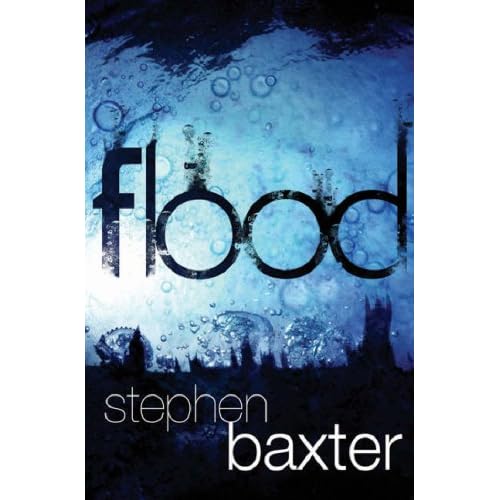
Flood cover Gone-Away World cover
Night Sessions cover Anathem cover

Flood by Stephen Baxter
The Gone-Away World by Nick Harkaway
The Night Sessions by Ken MacLeod
Anathem by Neal Stephenson

Best Short Fiction
“Exhalation” by Ted Chiang (Eclipse 2)
Crystal Nights” [pdf] by Greg Egan (Interzone 215)
Little Lost Robot” [pdf] by Paul McAuley (Interzone 217)
Evidence of Love in a Case of Abandonment” by M. Rickert (F&SF, Oct/Nov 2008)

Best Non-Fiction
Physics for Amnesia” by John Clute
Superheroes!: Capes and Crusaders in Comics and Films by Roz Kaveney (I.B. Tauris)
What It Is We Do When We Read Science Fiction by Paul Kincaid (Beccon)
Rhetorics of Fantasy by Farah Mendlesohn (Wesleyan)

Best Artwork
Cover of Subterfuge, ed. Ian Whates, by Andy Bigwood
Cover of Flood by Stephen Baxter, by Blacksheep
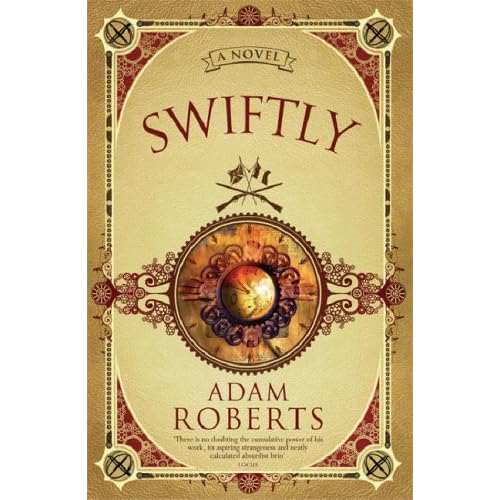
Cover of Swiftly by Adam Roberts, by Blacksheep
Cover of Murky Depths 4 by Vincent Chong
Cover of Interzone 218 by Warwick Fraser Coombe

Congratulations to all the nominees! Note that there are only four nominees in the Best Novel, Best Short Fiction, and Best Non-Fiction categories due to multiple-way ties for fifth place. The Awards will be presented at this year’s Eastercon, LX, on 11th April.

Last Chance to Nominate

Your final reminder, BSFA members: today is the deadline for BSFA Award nominations. Best novel, best short fiction, best artwork, best non-fiction: send them all to the Awards Administrator, Donna Scott, at awards@bsfa.co.uk, by the end of today. The list of nominations so far (or at least so far as the middle of last week) is here; remember, only the top five most-nominated works go forward to the shortlist, so if there’s something you like on that list, you still need to nominate it. And then check back here next week for the shortlists. Thank you!