BSFA Award Nominees

Best Novel

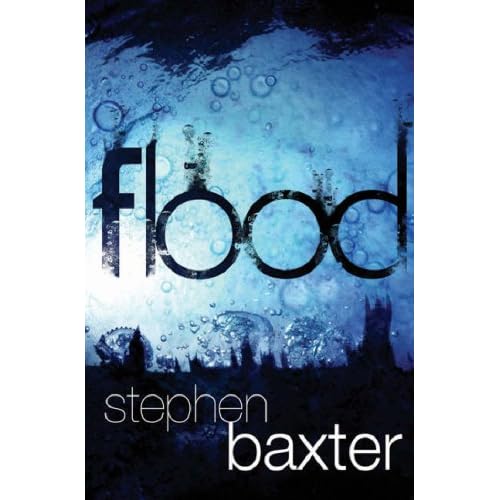
Flood cover Gone-Away World cover
Night Sessions cover Anathem cover

Flood by Stephen Baxter
The Gone-Away World by Nick Harkaway
The Night Sessions by Ken MacLeod
Anathem by Neal Stephenson

Best Short Fiction
“Exhalation” by Ted Chiang (Eclipse 2)
Crystal Nights” [pdf] by Greg Egan (Interzone 215)
Little Lost Robot” [pdf] by Paul McAuley (Interzone 217)
Evidence of Love in a Case of Abandonment” by M. Rickert (F&SF, Oct/Nov 2008)

Best Non-Fiction
Physics for Amnesia” by John Clute
Superheroes!: Capes and Crusaders in Comics and Films by Roz Kaveney (I.B. Tauris)
What It Is We Do When We Read Science Fiction by Paul Kincaid (Beccon)
Rhetorics of Fantasy by Farah Mendlesohn (Wesleyan)

Best Artwork
Cover of Subterfuge, ed. Ian Whates, by Andy Bigwood
Cover of Flood by Stephen Baxter, by Blacksheep
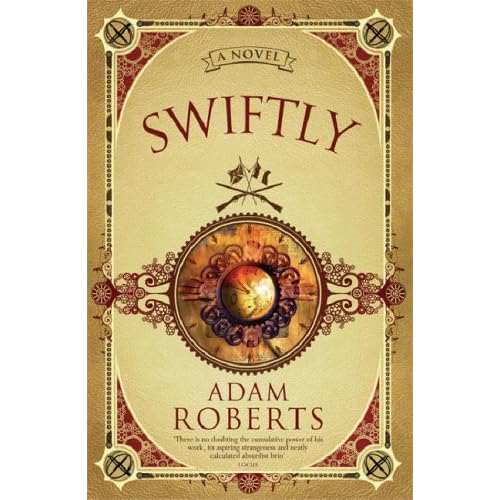
Cover of Swiftly by Adam Roberts, by Blacksheep
Cover of Murky Depths 4 by Vincent Chong
Cover of Interzone 218 by Warwick Fraser Coombe

Congratulations to all the nominees! Note that there are only four nominees in the Best Novel, Best Short Fiction, and Best Non-Fiction categories due to multiple-way ties for fifth place. The Awards will be presented at this year’s Eastercon, LX, on 11th April.

Last Chance to Nominate

Your final reminder, BSFA members: today is the deadline for BSFA Award nominations. Best novel, best short fiction, best artwork, best non-fiction: send them all to the Awards Administrator, Donna Scott, at awards@bsfa.co.uk, by the end of today. The list of nominations so far (or at least so far as the middle of last week) is here; remember, only the top five most-nominated works go forward to the shortlist, so if there’s something you like on that list, you still need to nominate it. And then check back here next week for the shortlists. Thank you!

Nebula Award Rules Revised

I had more or less given up on the Nebula Awards as a useful guide to, well, anything much, but it’s just been pointed out to me that they’ve quite dramatically revised their rules for 2009 and beyond. In particular:

  • No more rolling eligibility; the awards are now tied to the calendar year
  • No more preliminary ballot; there will be a nomination period between November and February, after which a final ballot will be created comprising the six works in each category with the most nominations
  • No more awards juries adding books to the ballot; “publishers are encouraged to make eligible works available to the membership”, and if there are fewer than six works nominated, then there will be fewer than six works on the ballot (Exception: The Andre Norton Award retains its jury)
  • No more “best script” category; instead the “Ray Bradbury Award for Outstanding Dramatic Presentation” (which is Not A Nebula) will be given to the writer and director of the winning work

I have to say, this all looks very positive, and I look forward to seeing the ballots that result.

Call for papers, applications, and nominations

Firstly, a reminder that the Third Annual Science Fiction Foundation Masterclass is still open for applications until the end of the month.

Secondly, the Science Fiction Foundation has issued a Call for Papers for their latest book, The Unsilent Library: Adventures in new Doctor Who:

Published by the Science Fiction Foundation
edited by Simon Bradshaw, Antony Keen, and Graham Sleight

The Science Fiction Foundation, which has published a number of books on sf (including The Parliament of Dreams: Conferring on Babylon 5 and Terry Pratchett: Guilty of Literature) is now seeking contributions for a new book, proposed for publication in 2010, on Doctor Who. This book will focus on the series’ revival since 2005. Contributions are invited on all aspects of the new series, including its scripting, production, and reception, as well as links to the “classic” series. A variety of critical approaches/viewpoints will be encouraged.

Potential authors are asked to submit brief proposals (max. 250 words) for chapters by 1st March 2009. Final chapters (max. 6,000 words) will be due by 1st August 2009. Please send proposals to sjbradshaw@mac.com.

Finally, another reminder that if you have not yet nominated anything for the BSFA Awards, you can do so until Friday 16th; here’s the list of current nominations if you need some inspiration.

The Best of 2008, Redux

Following on from Liz’s two lists of her best 2008 reads, here are some more for you to peruse.

And on related notes:

(Of course, you may be wondering what my books of the year are. Unfortunately, I acquired Final Fantasy XII over Christmas, and have now been well and truly sucked in, which means that blogging is falling by the wayside a little. Plus, there’s a whole bunch of 2008 titles I haven’t read yet, and want to get to before the Hugo nomination deadline at the end of February. So, no lists from me at the moment, I’m afraid.)

The Best Novels of 2008

According to SFX readers:

  1. Making Money by Terry Pratchett
  2. Flood by Stephen Baxter
  3. Matter by Iain M. Banks
  4. The Last Theorem by Arthur C. Clarke and Frederik Pohl
  5. Empire of Ivory by Naomi Novik
  6. House of Suns by Alastair Reynolds
  7. The Red Wolf Conspiracy by Robert VS Redick
  8. Last Argument of Kings by Joe Abercrombie
  9. The Name of the Wind by Patrick Rothfuss
  10. Anathem by Neal Stephenson

I’m not quite sure how the eligibility for this works, given that Making Money, The Empire of Ivory and The Name of the Wind were first published in 2007; but that aside, I will be interested to see what, if any, correspondence there turns out to be with the BSFA Award shortlist, when that’s announced in January. (Get your nominations in now, folks!)

The Warwick Prize for Writing

So, the first Warwick Prize for Writing longlist is out:

Mad, Bad and Sad: A History of Women and the Mind Doctors from 1800 by Lisa Appignanesi (Virago)
The Tiger That Isn’t, by Michael Blastland & Andrew Dilnot (Profile Books)
Torques: Drafts 58-76, by Rachel Blau Duplessis (Salt Publishing)
Glister, by John Burnside (Jonathan Cape)
Planet of Slums, by Mike Davies (Verso)
The Art of Political Murder: Who Killed Bishop Gerardi?, by Francisco Goldman (Atlantic Books)
Someone Else, by John Hughes (Giramondo Publishing Company)
Reinventing the Sacred, by Stuart A Kauffman (Perseus)
The Shock Doctrine by Naomi Klein (Penguin)
The Burning, by Thomas Legendre (Abacus)
Adam’s Ancestors: Race, Religion and the Politics of Human Origins, by David Livingston (Johns Hopkins University Press)
The Wild Places, by Robert Macfarlane (Granta Books)
The Meaning of the 21st Century, by James Martin (Eden Project Books)
Brasyl, by Ian McDonald (Gollancz)
Netherland , by Joseph O’Neill (4th Estate)
The Rest Is Noise, by Alex Ross (4th Estate)
The Informers, by Juan Gabriel Vasquez (translator: Anne McLean) (Bloomsbury)
Montano’s Malady, by Enrique Vila-Matas (translator: Jonathan Dunne) (New Directions)
Portrait with Keys, by Ivan Vladislavic (Portobello Books)
The Trader, the Owner, the Slave, by James Walvin (Jonathan Cape)

As you may be able to tell from the above list, it’s a bit of an oddity, this one. The process that generated it is pretty quirky, to start with: it’s a biennial award with a 30-month eligibility period; nominations come originally from university staff; the longlist can include a maximum of 15 titles, except that each of the five judges can add one directly, for the total of 20 you see above.

It’s certainly high-minded enough: the website says that “The Warwick Prize for Writing is an international cross-disciplinary award which will be given biennially for an excellent and substantial piece of writing in the English language, in any genre or form, on a theme which will change with every award”, and declares with teleological certainty that “The winning submission will represent an intellectual, scientific and/or imaginative advance and be written with an energy and clarity that makes it accessible and attractive to a wide audience”.

The prize also has a substantial fund behind it — the winner gets £50,000 — not to mention a well-qualified judging panel. On some level, it is undoubtedly a good and welcome thing. But the more I look at that list, with its seven fiction titles, twelve non-fiction titles, and one poetry title, the more sceptical I am about the meaningfulness of choosing a winner.

Bear in mind that it’s a list that includes books I have enjoyed, books I want to read, and books I’ve never heard of but which look interesting, which is about all you can ask of a longlist. My reservation is that measuring fiction, non-fiction and poetry against each other always strikes me as a bit pointless when the Whitbread/Costa does it, and it strikes me as a bit pointless here. This is not to say that such comparisons can’t be illuminating: I’m sure that reading Glister, Portrait with Keys and Planet of Slums together with an eye to how they treat the idea of the city could be fascinating, for instance. Assuming that you found all three to be good, however, I’m baffled as to how you could declare one to be better than the others in ways that rise above the simple subjective fact of enjoying one more than another. Put another way, I can’t think of any sensible evaluative way to compare, say, Brasyl and The Rest is Noise: their goals, reference points, interests, and techniques seem to be so divergent as to make such comparison meaningless.

The publicity for the Warwick prize states that it “is set to redefine traditional forms of writing”; I take this to be a reference to the fact that there are obviously books which blur the lines between fiction and non-fiction, and that it makes more sense — is more honest? — to treat types of writing as a continuum rather than a series of categories. This is true as far as it goes, but the problem is that, as with Larus Gulls, the existence of border cases doesn’t mean that distinct, incompatible categories don’t exist.

Perhaps the stated theme for this iteration of the award — “complexity“, although to be honest I’m pretty sure I could argue for just about anything under that definition of the term — is intended to help. But certainly for the ones I’ve sampled, the most useful answer to the question, “how do these books tackle or embody complexity?” is “very differently”; better and worse don’t really come into it. But it’s a prize, so better and worse have to come into it, and there has to be a winner. Part of me thinks that to be truly radical, they should forego picking a winner entirely, and just divide up the prize money between the works they’ve considered worthy of a longlisting.

BSFA News: Awards and Party

Or, in chronological order, Tony Keen has news about a party:

On Wednesday 26th November 2008, from around 7pm

in

The Melton Mowbray (18, Holborn, London, ec1n 2le)

BSFA 50th anniversary party

Including the announcement of the winner of the BSFA Short Story competition

ALL WELCOME

(No entry fee or tickets. Non-members welcome. There will be a raffle.)

(Note one-time only change of venue.)

And Donna Scott wants nominations for the awards:

BSFA Awards 2008 – Nominations

The rules
You may nominate a work if YOU:
— Are a member of the BSFA
— Send or give your nominations to the Awards Administrator to arrive by January 16th 2009.

Best Novel
The Best Novel award is open to any novel-length work of science fiction or fantasy that has been published in the UK for the first time in 2008. (Serialised novels are eligible, provided that the publication date of the concluding part is in 2008). If a novel has been previously published elsewhere, but it hasn’t been published in the UK until 2008, it is eligible.

Best Short Fiction
The Best Short Fiction award is open to any shorter work of science fiction or fantasy, up to and including novellas, first published in 2008 (in a magazine, in a book, or online). This includes books and magazines published outside the UK.

Best Artwork
The Best Artwork award is open to any single science fictional or fantastic image that first appeared in 2008. Again, provided the artwork hasn’t been published before 2008 it doesn’t matter where it appears.

Best Non-Fiction
The Best Non-Fiction award is open to any written work about science fiction and/or fantasy which appeared in its current form in 2008, in print or online. Whole collections comprised of work that has been published elsewhere previous to 2008 are ineligible.

Notes
Subject to these other rules, you may nominate as many pieces as you like in any category, but you may only submit one nomination for any particular piece.

The shortlists for these four awards will be comprised from the five works in each category that receive the most individual nominations by the deadline. Works published by the BSFA, or in association with the BSFA, are ineligible for a BSFA award. The deadline for me to receive nominations will be midnight, Friday January 16th 2009.

Your nominations can reach me in several ways. Perhaps the easiest is by email – I can be reached at awards@bsfa.co.uk. It would be helpful if you can write the award category, author or artist, title, and the source (i.e. the publisher or magazine). There are columns for this information on the form that should have gone out with this mailing for those who would prefer to use snail mail. All nominations must be received in writing, and must include your name to be accepted.

World Fantasy Award Winners

Aaannnd … we’re back. And how better to celebrate than with a set of award winners?

Novel: Ysabel, Guy Gavriel Kay (Viking Canada/Penguin Roc)
Novella: Illyria, Elizabeth Hand (PS Publishing)
Short Story: “Singing of Mount Abora”, Theodora Goss (Logorrhea, Bantam Spectra)
Anthology: Inferno: New Tales of Terror and the Supernatural, Ellen Datlow, Editor (Tor)
Collection: Tiny Deaths, Robert Shearman (Comma Press)
Artist: Edward Miller
Special Award, Professional: Peter Crowther for PS Publishing
Special Award, Non-Professional: Midori Snyder and Terri Windling for Endicott Studios Website

Congratulations to all, and now I really have to get around to reading my copies of Ysabel and Illyria.

In other news, the holiday was lovely. We were in this house and had many books to read, although most of my time was taken up by one huge book, namely A Suitable Boy. (I probably won’t get around to writing anything substantive about it, but you could do worse than check out Victoria’s review at Eve’s Alexandria.) There was also time for a side-trip to Hay-on-Wye, where I think we were remarkably restrained, and where Liz spotted a particularly good example of mis-shelving.

Coming later this week: other stuff.

Who wins Nebulas?

In the Tor.com thread referenced in the previous Hugo post, Charlie Stross asks:

Leading off at a tangent: in light of the age profile of Hugo nominees/winners, has anyone done anything similar about SFWA and the Nebulas? What’s the average age of SFWA members, and what’s the average age of Hugo voters? Could the perceived loss of relevance of the Nebulas over the past decade possibly be a harbinger of the same trend — age-related conservativism — hitting the Hugos?

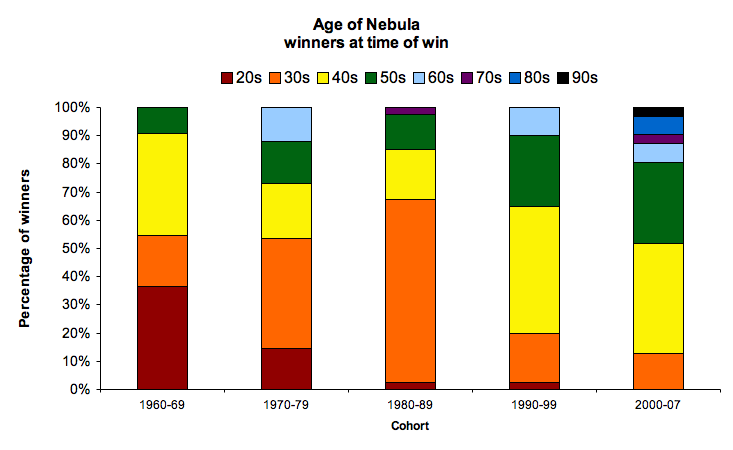
I don’t know of any available demographic data about the age of SFWA members or Hugo voters, but we do have the list of Nebula winners, courtesy once again of Nicholas Whyte. Here’s the graph for the Nebulas, done in the same way as for the Hugo graph in the previous post:

Doesn’t look much different, does it? The average age of a Nebula winner has risen from 37 in the 1960s, to 53 in the most recent decade, but the most telling data is the number of winners who were in their twenties and thirties per decade. In the 1980s, there were 27 winners in their twenties and thirties; in the past seven years, there have been four. And three of them were Kelly Link.

This age trend doesn’t hold for the Clarke or Tiptree award, both juried awards, but neither of them have been around for very long compared to the Hugos and Nebulas. Jeff suggests that we look at the Hugo nominees, to see if the nominees are younger and the older, familiar name always wins, and it might be interesting to look at the Locus award to see if the wider voting population makes a difference, but I think I am turning into crazy stats lady already and I will leave those for another day.

There’s more interesting discussion over at James Nicoll’s journal. If you want to do your own number-crunching, you can get the spreadsheet Niall and I used here.