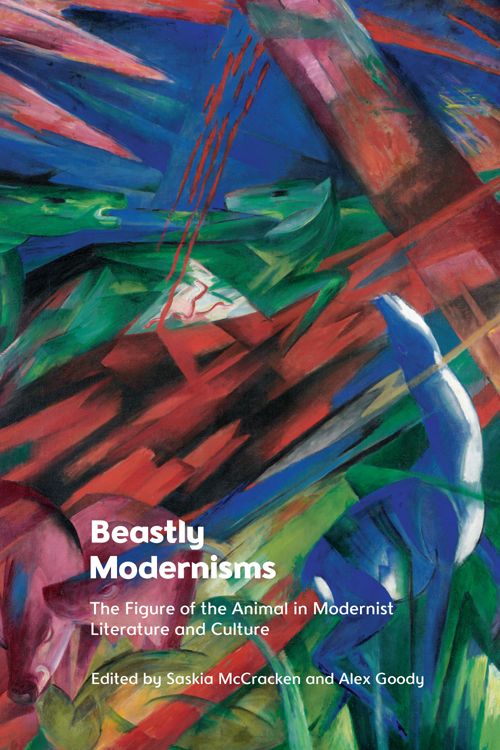
At face value, this collection of essays may not seem to be of immediate interest to the sf reader. It is primarily concerned with the development of Animal Studies – a sub-discipline that has already been significantly explored in relation to sf in the work of Sherryl Vint, Joan Gordon, and others – with reference to literary modernism, a diverse movement already noted for its challenge to traditional notions of identity and individual autonomy. The potential, though, for creative overlaps between modernism, sf and Animal Studies is already indicated by the fact that one of the co-editors, Alex Goody, was a keynote speaker at the 2019 Corroding the Now conference at Birkbeck College, London. Seen through a science-fictional lens, the encounter between human and non-human animals, the slippages between them, and their mutual affinities and kinships immediately invoke the First Contacts and uncanny relations between humans and aliens which are the stuff of genre sf. As the introduction’s reference to Jorge Luis Borges and Karen Eckersley’s chapter on Leonora Carrington make clear, imagined bestiaries are common to both Animal Studies and speculative fiction.
Without seeking to be a guide, the introduction nonetheless touches upon many of the key moments in the evolution of Animal Theory: from Peter Singer’s pioneering Animal Liberation (1975) and Donna Haraway’s ‘cyborg manifesto’ (1985) to Gilles Deleuze and Félix Guattari’s concept of ‘becoming animal’ (1982) and Jacques Derrida’s pivotal essay ‘The Animal That Therefore I Am’ (2002). The introduction also registers many of the other posthuman thinkers whose ideas have contributed both to Animal Studies and this volume in particular; from Giorgio Agamben and Rosi Braidotti to Michel Foucault and Cary Wolfe. The editors however, beginning their account with an exchange between Djuna Barnes and James Joyce (two modernists in exile, both of whom would flit between the centres and margins of the modernist canon), emphasise the affinities between Animal Studies, the revaluation of women’s writing and the decolonising of the curriculum. All such practices foreground and deconstruct the historic imposition of borders, the arbitrary gatekeeping that has characterised academic protocols and the maintenance of cultural shibboleths. To that end, the editors also note the collapsing boundary between ‘high’ and ‘low’ cultures, an elision that not only permits the entry of sf into the conversation, but which would also have appealed to such modernists as Barnes (boxing fan and purveyor of crime fiction) and Joyce (publican’s son, cineaste, and Anita Loos devotee).
Before we dive into the myriad wonders of the first-ever collected volume on plants in SF, let me signpost by saying this article is not intended as a straightforward book review, more a subjective-entangled way into an intense and highly transformative text. As an Artist, Ecologist, Healer and dyspraxic my approach might be perceived as that of a fuzzy set, so named by Brian Attlebury, that is ‘affiliated with other texts that might seem to belong to other…terrains’ and tending to spy unexpected connections and join unexpected dots. I draw attention to this method as the unconventional, multidisciplinary approaches might be the essence of what this book points to, namely an urgent need for ‘cross-species intimacy, or inter-kingdom intimacy’. My hope is that bridging the separate islands on which different academics tend to reside will foster such closeness.
Black Utopias: Speculative Life and the Music of Other Worlds by Jayna Brown. Duke University Press, 2021. Paperback 212 pg. $24.95. ISBN: 978-1478010548
Brown’s Black Utopias is one of the most scholarly and comprehensive works exploring Black Utopian futures. Very apt for a Covid-19 pandemic period that has seen the initial overwhelming loss of Black and Brown lives. In light of this mass death, Brown’s study asks — and through this work, answers — “What might Black futures mean, and how might we challenge our imaginations to create futures that are not only different to what we know and what we expect, but even allows us to evolve beyond our physical existence? Packed into these pages is a narrative that encompasses Afro-futurism, death, theology, spirituality, music, philosophers, science fiction, fantasy, and gender, stories that had to be absorbed, analyzed, and contemplated before beginning the review. There were layers after layers of new ideas packed into a narrative that also centered the stories of Black women’s religious and cultural beings in which they constantly sought a physical and metaphysical utopia within an Afro-futurist and Afro-centric framework.
Cultural critic Mark Dery is credited with coining the term Afro-futurism as “techno cultural aesthetic that blends science fictional imagery, technology, philosophy, and the imagery, languages, and cultures of Africa and the worldwide African diaspora.” Scholar Yusuf Nuruddin also notes that Afrofuturism “includes black science fiction or Afrocentric science fiction, more broadly defined as African American signification about culture, technology and things to come” (or, in the case of alternative histories, “things that might have come” from a reconfigured past). Brown’s adds to our understanding of Afro-futurism that undergirds her work: Brown defines Afro-futurism as “a program for recovering the histories of counter-futures […] most notable for resisting disciplinary boundaries” (p17). Moreover, combined with this Afro-centric, interdisciplinary attitude toward futures and counter-futures, the genre of Afro-futurism centers works of science fiction, fantasy, and other speculative fiction created by African Americans, Africans and the African diaspora. Afro-centricity embodies works that are often critical writings that focus on race, the institution of slavery, class, gender, oppression, inequality, and sexuality, all woven throughout Brown’s book.
“Abolish the family? You might as well abolish gravity.” (1)
It is with these words, spoken by an imagined, horrified reader, that Sophie Lewis begins their new book. From the outset, the magnitude of the task ahead for family abolitionists is clear. To abolish the family is to attempt something frightening, something unthinkable, something which requires one to challenge the fundamental rules which bind our world together. It is, then, no surprise that again and again Lewis reaches for science fiction (SF) to articulate this vision of a world beyond the family. For an SF creator, to abolish a so-called law of nature is not a ridiculous proposition which can be used to embarrass utopians into giving up on their belief that “things could be different” (4, emphasis in original). It is rather a serious undertaking which involves an investigation of those forces which hold life as we know it together, the willingness to experiment with those same forces, and the determination to remake the world, however alien what comes next might be. This is the spirit in which we, the Beyond Gender research collective, approach Lewis’ book. We are a group of SF fans, researchers and creators who are committed to tapping into the radical potential of SF to undo the supposed naturalness of such myths as the binary model of gender, cis- and heteronormativity and, now, the family.
“Abolish the family? You might as well abolish gravity.”
This piece contains mild spoilers and mild mind scrambling if you haven’t seen the 2018 film Spider-Man: Into the Spider-Verse.
Margaret Thatcher had something to say about Miles Morales, so too did narrative theorist Seymour Chatman, as well as those fighting the idea of a “half-black, half-Hispanic” Spider-Man (Rose, 2018). It wouldn’t be a stretch of my tingly senses to say these folks share the belief that there is no alternative, there is a single, right, way. Thankfully, the opening sequence of the film Spider-Man: Into the Spider-Verse (screenplay by Phil Lord and Rodney Rothman, story by Phil Lord), sets the scene for social change with some cool emancipatory narrative devices.
It’s the kind of interventionist work that needs to be done because audiences have been trained to approach their story experiences, and much of life, with closed thinking. As part of his work on The Psychology of Closed Mindedness, social psychologist Arie Kruglanski explains that ‘the need for closure is the desire to have certainty, to have a definite answer to a question and avoid ambiguity’ (Kruglanski, 2021). A consequence of this is we can ‘jump to conclusions about others, and to form impressions based on limited and incomplete evidence’ (Kruglanski, 2004, 2). That character is the killer! Capitalism is the answer!
Former British Prime Minister Margaret Thatcher found it hard to imagine alternatives, and encouraged everyone else to find it hard. Thatcher is associated with the slogan ‘There is No Alternative’ — which refers to the neoliberal logic she popularised. In a speech, Thatcher not only said ‘there’s no real alternative,’ but also said ‘What’s the alternative? To go on as we were before?’ (Thatcher, 1980). As if the future is a long, single, inevitable, line of progression and the only choice is to stick with what isn’t working or proceed in the only available direction. Do nothing and crumble, or do the only change available.
In Capitalist Realism, Mark Fisher connected the belief that there is no alternative to capitalism with dystopian films and novels that don’t imagine ‘different ways of living’ (Fisher, 2009, 2). Instead of representing or prefiguring different ways of living together, many works of fiction depict the destruction of the world by unbridled capitalism. Even our fiction jumps to conclusions.
Isn’t capitalist system, which humans invented 200 years ago, growing into an uncontrollable beast that will devour human society?
Clock of Babel runs the whole world to the same rhythm of time.1]
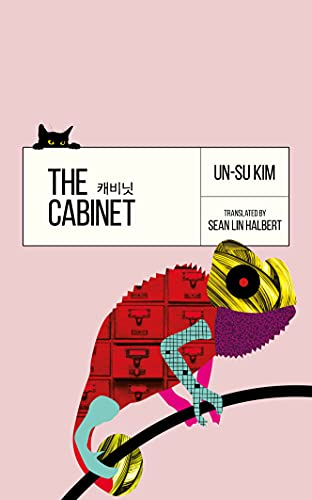
The Cabinet
The Cabinet starts with a description of the cabinet. Inside, there are files of amazing people. A man who is turning into a tree, a woman who is growing a lizard instead of a tongue, and many more. This is not regarded as much of a mystery, and we never learn what is the mechanism of their transformation. The fantastic simply exists, not to be questioned, though for sure, in other respects this is our world. The protagonist could have come straight from the pages of David Graeber’s Bullshit Jobs. When he is not describing the fantastic files, he is ranting about his predicament: “As long as you don’t ask yourself what you are doing, you can keep doing it until the end of life” or “the only thing that capitalism ever produced is anxiety”. Reading The Cabinet from the perspective of Bullshit Jobs seems appropriate in more senses than one. The Cabinet is a multipronged critique of capitalism disguised as a fantasy novel.
This article contains moderate spoilers, so please do watch the film before reading!
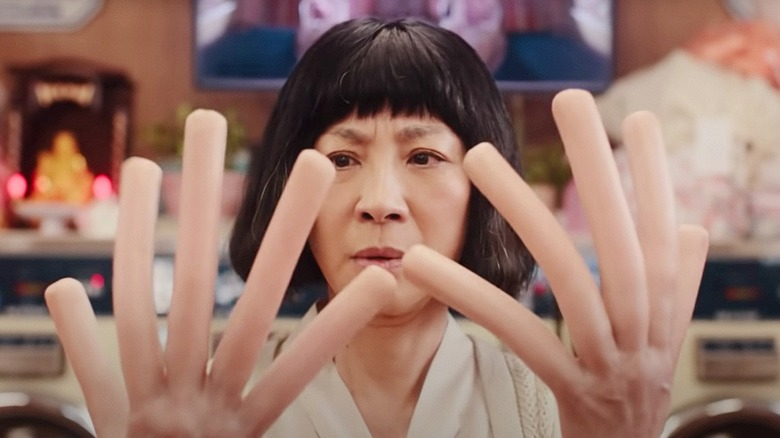
Yen: Everything Everywhere All At Once is a 2022 film by Daniel Kwan and Daniel Scheinert. I watched it on a quiet weekday morning at a lush cinema with only two other people in the room. I laughed out loud and cried real tears, many times throughout. It’s a habit of mine to stay to the end of film credits to appreciate the number of people (who made it and those who didn’t) it took to make the film, and this time, I didn’t want to leave. I wanted to stay in the cinema to try and hold on to my feelings a little longer.
The film was bumpy in places for me, but it felt like quality entertainment that was nutritional for my soul. I couldn’t articulate why that was the case, so I reached out to an East and Southeast Asian writers network that I belonged to in the UK, Bubble Tea Writers, and crowdsourced some thoughts:
“I loved how funny and wacky it was, whilst having a super simple mother-daughter relationship at its heart. It made me think of my mum…” Martin Ngwong
“In many ways the film was something that I’d both never seen before and yet it was uncannily familiar.” Arianne Maki
“I’ve seen it twice and loved it!! Thought it was a really original film that didn’t feel predictable.” Nozomi Tolworthy
Everything continued to nibble away at my thoughts, so much so that I couldn’t help but mention it to Christy. I knew that she would be able to help me analyse how the narrative structure plays into the success of the film and why I’m so taken by it. I was also curious as to how she (who’s not from an Asian diasporic background) would experience the film. A couple of weeks later, I received an email from Christy titled: Seen Everything! We quickly got together to chat and afterwards, it was clear that we both had a lot of thoughts about the film, and we wanted to share them. We continued our conversation on a shared document, and this is the result.
To start the journey, I find myself licking the ‘y’ key on my keyboard to jump into Christy’s world!
Multiverses & Multiplicity
Christy: Yen! Hey, I was listening to the Script Apart podcast, and the Daniels say It’s a Wonderful Life is a multiverse film.[1] One way it does this is through exploring an alternative universe, in which the protagonist was never born. I would add another way it is a multiverse: the movement of the protagonist from their assumption things will inevitably end up bad, to shifting perspective and chasing a different path. There is the verse of closed thinking, and the verse of ‘optional thinking’… or optional thinking creates another verse!
On Sky Arts, over some months, they’ve been playing Alfred Hitchcock Presents. This was a schlocky but nevertheless highly entertaining series of spooky psychodramas, each just 25 minutes long, interrupted by its sponsors, Bristol Myers. Running from 1955 till at least 1957, the films featured stars such as Ralph Meeker, Charles Bronson, Thelma Ritter and the unimpeachable Claude Rains. Hitchcock would appear comically – from inside a space helmet, or at the centre of an enormous spider’s web – in a short spoof before the plot; also, in a splenetic, dour diatribe at the back end.
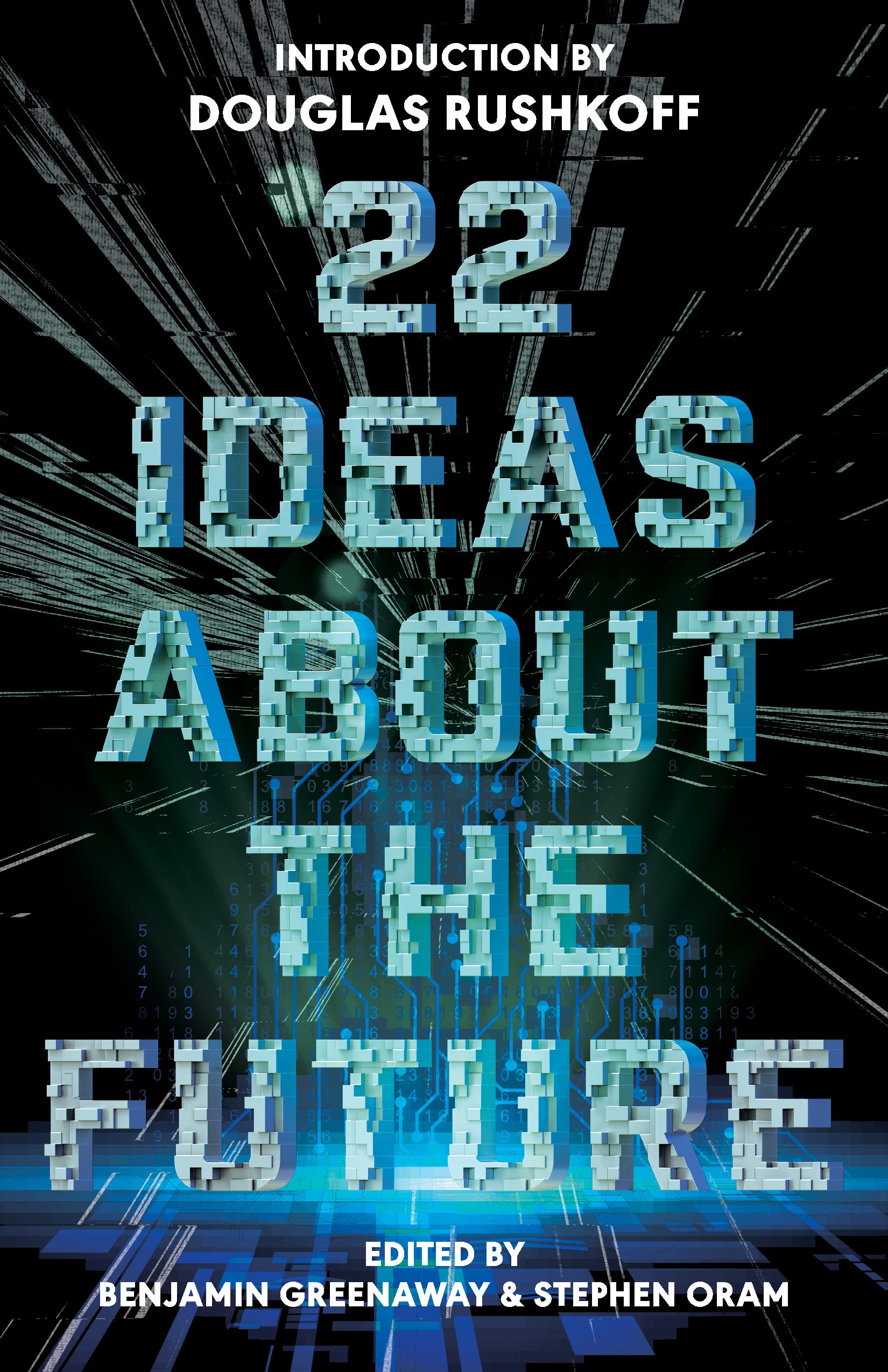
Perhaps numbered after the 22 in the year 2022, this collection of very short sci-fi stories has the same scary, translucent tone to it as those old Hitchcock shorts. While Hitch directed other directors to capture the southern, sinister and sardonic brightness he later gave us with Psycho, editors Benjamin Greenaway and Stephen Oram have wrung something similar from their contributors here. These are forecasts of the future in fictional form. Not all are successful, but some are fun.
Kingdoms of Elfin, Sylvia Townsend Warner’s 1977 short story collection, is one of her oddest and most fantastical works, the culmination of “a progressive shifting away from realism toward the explicitly anti mimetic modes of allegory and fable” (Castle, 1993), a departure which “seemed calculated to irritate and confuse a great many readers.” (Harman, 2015, p. 312) The tales were written over a period of several years, originally published separately in the New Yorker, before being published as a collection about a year before Townsend Warner’s death in 1978. They are loosely satires of class systems and aristocracy, as Harman describes: “She used Elfindom as a mirror to society, although all the satire in her elfin stories is very casually arrived at; she seems too uninterested in human dealings to aim at them with any care” (Harman, 2015, p. 313). Elfin (or fairy, the terms are often used interchangeably by both author and critics) society is portrayed as deeply decayed and corrupt, with a rigid class structure and archaic rituals dependent primarily on the whims of the powerful, disintegrating under the weight of their own isolationism and greed, and in opposition to the mortals of the tales, who are “almost universally working class”. (Priest, 2010)
There are two main layers to the class division in these stories. The most prominent is the division within Elfin society, between “flying servants [and] strolling gentry” (p.93). The division between Elfin and human society is also stratified along class lines, with the aforementioned working class mortals forming the main part of the human characters. The intersections between both of these stratifications will serve as the basis for my exploration of Warner’s treatment of class.
Claire Harman, in her 1989 biography of Sylvia Townsend Warner, describes the Elfins as “anarchic [and] amoral”. Harman is likely using ‘anarchic’ in the colloquial sense, to mean ‘chaotic’, however, in contrast to the literal sense of the word, we see that Elfin society is deeply hierarchical, and the power of flight, through the possession and usage of wings, is frequently employed as a symbol of the delineation of those hierarchies. It’s a physical power, an inherited characteristic, a visual marker to differentiate between Elfins and those they consider to be their human inferiors. It serves as a marker of the differences between Elfins and humans, a demonstration of Elfin superiority that is tied in with human religious symbolism. It also serves as a class marker within Elfin society, between the working classes who must rely on flight for labour and transport, and the upper classes who consider it beneath their dignity. We are told quite flatly of the theoretically simple social position of flight: Elfins “fly or don’t fly according to their station in life”, and the aristocrats “marked their social standing by scorning to use their wings” (p. 66). The stories frequently concern themselves with instances in which these social rules are transgressed.
I am resisting the impulse here to taxonomise every symbolic function of the power of flight in these stories, to fit them all into some universal system, since this runs counter to the playfully and deliberately contradictory nature of these stories. Partly this is due to their being written over a long period of time, changing style and tone to suit the needs of particular stories, and partly it is an artefact of the stories’ function as social satires. Though some critics have discussed her “attempt to construct a typology of fairies” (Simons in Davies & Malcolm eds. 2006), I would disagree that she makes any such attempt. It is possible to read a typology into the book, but I’d argue that this requires flattening a lot of the apparent contradictions. Flight is forbidden, except when it’s not. Contact with humans is forbidden, except when it’s not. Religion is irrelevant to them, except when it’s not. She sets out a theoretical typology, then throughout the collection she explores the complications and violations and contradictions of this typology. It might be more accurate to say that the book is a typology of contradictions, and in laying out the Elfin contradictions we are led to consider the human ones.
In writing about Warner’s treatment of animals in her fiction, Mary Sanders Pollock discusses Warner’s project to “suggest ways that Marxist thinking might permeate and complicate the boundaries […] between the “human” and the other lively beings” (2015), which I would suggest applies equally to her treatment of the Elfins as it does to her treatment of animals. We see a convergence of these two concepts in the tale ‘The Mortal Milk’, which concerns “the Royal Pack of Werewolves” (p. 68) in the Court of Brocéliande as they sicken and die. They are described as both men and beasts, as both unnatural and mortal, as a liminal state between sapient and animal, and their treatment mirrors the treatment of the human children raised in Elfin. Permeability is a recurrent symbol in these stories, be it the permeable geographical boundaries between the two worlds, the permeable species boundaries between humans and Elfins, or the resisted permeability of class boundaries.
This article is a brief introduction to science fiction theatre by Greek artists based in Greece and the UK. I’m happy to have been asked to also discuss the theatre company I co-founded, Cyborphic, as the main case study. One would hope that science fiction theatre hardly requires an introduction: the genre has been on stage for at least a hundred and one years, since Karel Čapek’s R.U.R. (Rossum’s Universal Robots), which premiered in 1921 in Hradec Králové. However, science fiction theatre has been present as a largely invisible and underexplored category. In the 20th century, it not only included stage adaptations of Mary Shelley’s and H.G. Wells’s novels, or musicals such as Little Shop of Horrors or the Rocky Horror Show; it also included plays by Samuel Beckett, Caryl Churchill, George Bernard Shaw, Alan Ayckbourn, and Vladimir Mayakovsky. A foundational text by Ralph Willingham, Science Fiction and the Theatre (1993), remains one of the few studies that demonstrate the strength of the science fictional imagination in 20th century theatre.
The genre has proliferated in the 21st century, most notably in experimental and fringe productions. More and more artists and theatre companies appear happy to label their work ‘science fiction theatre,’ marking a change from the last century, in which dystopian and post-apocalyptic settings such as that of Beckett’s Endgame, or devices such as time travel or alternate history, could often appear on stage without terms like “sci-fi” appearing anywhere in the accompanying marketing. Notable exceptions to this included the Science Fiction Theatre of Liverpool (founded in 1976), and Ray Bradbury’s theatrical adventures in Los Angeles, where he led the Pandemonium Theatre Company and adapted several of his well-known science fiction stories for the stage.
More recently, Jennifer Haley’s The Nether, a crime/science fiction thriller set in a virtual realm, had its world premiere in California in 2013. Plays by Alistair McDowall, such as Pomona (2014), X (2016), and The Glow (2022), featured genre elements, from Lovecraftian horror to science fiction and the supernatural, and have been staged in the National Theatre and the Royal Court. Jordan Harrison’s Marjorie Prime was a finalist for the 2015 Pulitzer Prize in Drama, later adapted into a 2017 film. The first theatre festival to focus on science fiction was Sci-Fest LA in 2014; it included theatrical adaptations of works by Neil Gaiman and Clive Barker. California seems to be particularly friendly to the genre, as does New York, where the Untitled Theater Company #61 has staged new science fiction plays by Edward Einhorn and his adaptations of Ursula K. Le Guin’s and Philip K Dick’s work. Also in New York, Mac Rogers has presented his Honeycomb Trilogy (2012), a trilogy of science fiction plays based on R.U.R. Meanwhile, in the UK, science fiction plays and performances have been populating fringe festivals such as the Edinburgh Fringe, Vault Festival and others — including the Talos Science Fiction Theatre Festival since 2015. On that note, and to begin discussing where contemporary Greek theatre-making fits into this world, I will next reflect on a company and a festival dedicated to science fiction on stage.
I. On Cyborphic — or do Orphics dream of Cyber sheep?
Cyborphic is a London-based Greek and Science Fiction theatre company, founded in 2017, producing ancient and contemporary Greek theatre. The company is run by playwright and lecturer Dr Christos Callow Jr. and dramaturg and classicist Dr Andriana Domouzi. Its projects have included a reconstruction of Euripides’ fragmentary tragedy Melanippe Wise, and the solo performances Mayuri and Posthuman Meditation. Cyborphic has also run the TalosScience Fiction Theatre Festival of London (which predates the company, being founded in 2015). The festival has featured contemporary science fiction plays, including work by Greek theatremakers, such as Superhero by Andreas Flourakis. Cyborphic also organised the Performing Greece conferences on contemporary Greek theatre (including papers on Greek science fiction theatre) and the latest Stage the Future conference on science fiction theatre. The company runs a small network for science fiction theatre artists and academics, SF Theatre Network, and organised a network of Greek artists in London.
Liza Callinicos as Mayuri
Of these projects, the most ambitious is Melanippe Wise. The completed text included Domouzi’s translation of the play’s surviving fragments and is based on Domouzi’s doctoral research into Euripides’ two lost Melanippe tragedies, Melanippe Wise (c.418-411 BC) and Melanippe Captive (c. 413-412 BC). It was first presented at the Hope Theatre in London in November 2019, funded by the Institute of Classical Studies and the University of Derby. The process for researching and reconstructing the play was explored in a workshop series titled “Lost Greek Tragedy: Staging the Fragmented and the Fantastic” (Domouzi 2020), and will be further explored in a chapter of Domouzi’s forthcoming edited volume Tragedy Resurrected. Reconstructing, Adapting and Staging Lost Greek Tragedy, to be published by De Gruyter.
Finally, Cyborphic aims to bring interdisciplinary research to theatre-making. Cyborphic’s website features an online database of 21st century science fiction theatre plays and performances, chronicling more than 100 plays with sci-fi elements, including Afrofuturist, contemporary fantasy, horror, and others. Currently, Cyborphic are planning TalosV, and a full production of Melanippe Wise.
II. On Greek Science Fiction Theatre; Live or Leave your Myth in Greece
If we’re happy to consider proto-science fiction when discussing the underexplored Greek science fiction theatre, one may start as early as the fragmentary play Daedalus by Sophocles (likely a satyr drama) where the fragments “160 and 161 testify that the play contained something about Talos” (Sophocles, 1996), the artificial man of bronze. If we were to maintain this flexible approach to genre, we could consider several Greek adaptations of classical Greek drama that have used science fictional, futuristic and/or dystopian elements across the 20th century. One of the most interesting such texts is Medea by Vasilis Ziogas, written in 1995, which features a chorus of metahumans in addition to three goddesses, and blends ideas from Greek philosophy, Christianity and astronomy along with a posthuman take on Medea. The play is unpublished but there’s a copy in the library of the Department of Theatre Studies of the University of Athens. The following quote demonstrates well the style and attitude of the play:
And you Metahumans, that the wisdom you achieved while you were living, rewarded you with the fourth level of galactic life. It is not Jason that elevated himself to the meadow of the fourth dimension, but it was me who descended to meet him. (Ziogas, cited in Domouzi, 2016)
What is of particular interest here — and this is an important theme that science fiction and ancient Greek theatre share — is the struggle of the individual with the cosmos, a struggle which takes mythical proportions. Domouzi argues that at the heart of the play is “the dual substance of Medea,” who is presented here as “some kind of human goddess,” and that the “meaning of the universe and the purpose of existence are central to the text, positioning the characters and the myth against a cosmic problem” (Domouzi, 2016).
Besides such adaptations of classical Greek plays, there have been in Greece — as is the case everywhere — several theatrical adaptations of science fiction films and novels, including quite a few takes on Clockwork Orange as well as We ; an adaptation of The Man from Earth was at Theatre Alkmini from 2013 to 2014, and theatre director Katerina Evangelatos had presented a new adaptation of 1984 in 2016.
But what of Greek science fiction on stage? The first co-production of the Greek National Theatre with the Greek National Opera, Galaxy, also premiered in 2016. The show combined ambitious visual effects, dance and performance, and explored, among other things, cosmic topics from the Big Bang to hopes of alien life elsewhere in the universe. Other examples include another production at Alkmini, Mars 1, by the theatre company “θεατρικό σωματίδιο πΟδήλατρΟν” (which might best be translated to “theatrical particle bIcycle”) and the dystopian drama 3% by Vily Sotiropoulou — set in 2040 — which first ran from 2016 -2017, and was presented again in early 2021. Even its pre-pandemic edition featured Skype connections with actors based in other countries. There was also Mission to Planet Earth by Sakis Serefas, produced by the National Theatre of Northern Greece in 2010 and concerning two alien beings that visit Earth. Home Greco by Vaggelis Alexandris and Odysseas Androutsos, which ran from December 2018 to March 2019 at Theatre Stathmos, was an intergalactic sci-fi comedy exploring the history of Greece through aliens. Another surreal but sf-relevant play is Blood Enemies by Arkas, published in 2007 and performed in 2008 at Neos Kosmos Theatre in Athens; the play features anthropomorphised organs in the body of a dying alcoholic shortly after an accident — the dialogue between the Small Intestine and the Colon is meant to be both funny and existential, as they’re stuck in a Beckettian scenario, with no luck being transplanted and thus surviving in another body, unlike other organs.
It is safe to assume that if Greek science fiction theatre is influenced by anything, it’d primarily be the Theatre of the Absurd and subsequently Science Fiction Cinema and Literature, rather than the lesser known tradition of science fiction on stage, such as in American or British theatre. I doubt that Alistair McDowall or Anne Washburn are well-known in Greek or Greek-Cypriot theatre; however there was a staging of Caryl Churchill’s A Number in Athens at 2005 and a staged reading of a Jennifer Haley’s The Nether directed by Evita Ioannou in October 2020 in Lefkosia, Cyprus.
Many of the performances mentioned above rely more heavily on surreal and absurdist elements than science fiction; what is exciting from an interdisciplinary perspective is how Greek theatre aesthetics can influence the exploration of science fiction in Greece, Cyprus and European theatre more broadly. Some of these plays explore what it means to be Greek, or to exist in modern Greece, from an alien or dystopian perspective. But what of Greeks abroad?
When it comes to thinking about science fiction theatre and performance of the Greek diaspora, especially in the UK, identity issues related to immigration and isolation may be more dominant, alongside general concerns about the state of the world and/or of the planet.
An Ice Thing to Say by London-based Vertebra Theatre and directed by Mayra Stergiou, has involved several Greek artists in its production and has participated at several festivals (in London, Melbourne, Reykjavik, Stockholm and elsewhere), having had both digital versions for online events (that blended live and recorded performance) and live, in-person shows. The performance, blending elements of physical theatre and ice installation, explores the encounter between a human being and a polar bear, and engages with issues of the Anthropocene Era and anthropocentrism. It also featured in one of the Talos theatre festivals (at the Cockpit Theatre in November 2020) alongside another theatre project by Greek creatives, Genome Theatre’s Genesis 37, an immersive performance that involved audience participation both in-venue and online (via Zoom and thanks to a projector and live-streaming from a camera-person on stage), in a feminist story exploring the ethics of cloning.
My own science fiction play, Mayuri; or, The New Human, was performed as part of the Kensington + Chelsea Festival and online for Edinburgh Fringe in August 2021, and explored issues of robotics, posthumanism and immigration. I’d rather not talk about it in my own words here; but according to Geraint D’Arcy in a lovely review in Foundation 140 (Winter 2021 issue), the play is centred “on the triumph and anguish of abandoning the body in favour of a technological and philosophical unknown.”
III. A Conclusion; or, perhaps, a Cliffhanger
One of the challenges of science fiction theatre-making is the creation of work that succeeds both as theatre and as science fiction. Willingham noted that most of the science fiction plays he catalogued in Science Fiction and the Theatre “are the work not of science fiction writers, but of independent dramatists schooled in the old playwriting formulas” (Willingham, 1994, 3). The ideal perhaps here is that, as the cultures of science fiction and theatre continue to explore each other, we have in the 21st Century more plays that build on both traditions. My hope for the future of Greek science fiction theatre is that it engages with both the more-developed science fiction theatre traditions beyond Greece, and with contemporary science fiction literature by Greek writers — rather than operating in a vacuum or reacting mainly to classic dystopian texts. Another hope is that it interacts more with the speculative fiction — and proto-sci-fi themes — of Greek myth and classical theatre.
In any case, I hope that this article has demonstrated that — for better or worse — Greek science fiction theatre exists, and that it has a growing (and perhaps a glowing) presence.
D’Arcy, G, 2021, “Review of Mayuri, or the New Human,” Foundation, vol. 140, no. 50.3, pp.130-132.
Domouzi, A, 2016, “The Metahuman in Modern Greek Theatre: science fiction motifs in Medea by Vasilis Ziogas.” Performing Greece II: Conference on Contemporary Greek Theatre, 3 December, London.
Domouzi, A. (2020) “New life for lost Greek drama: reflections on reconstructing and staging Euripides’ Melanippe Wise.” Institute of Classical Studies blog. July 2020. Available from: ics.blogs.sas.ac.uk/2020/07/09/new-life-for-lost-greek-drama-reflections-on-reconstructing-and-staging-euripides-melanippe-wise. Last accessed 2 February 2022.
Sophocles (1996). Fragments. Edited by Hugh Lloyd-Jones. Cambridge, MA: Harvard University Press. P.64
Willingham, R. (1994). Science Fiction and the Theatre. London: Greenwood Press.
Christos Callow Jr is a Greek British Playwright and Lecturer in Creative Writing at the University of Derby. He has founded the Talos: Science Fiction Theatre Festival and has written several science fiction plays which have been presented at Being Human Festival 2021, Kensington + Chelsea Festival and Edinburgh Fringe.