Interview with Larissa Sansour

IntheFuture2
‘In the Future, They Ate From the Finest Porcelain’ by Larissa Sansour and Søren Lind.

Larissa Sansour is an artist working across video, photography, sculpture and installation, often to create political artworks that explore life in Palestine. Our cover image for Vector No. 287 is taken from her recent film installation, ‘In the Future, they Ate from the Finest Porcelain’, a collaboration with the artist Søren Lind.

An interview with Larissa Sansour first appeared in the same issue, Spring 2018.

Vector: In an interview for “Reorient”, you talk about how your piece uses SF to address the ongoing trauma that is both national and personal. The film swerves away from a documentary approach, yet you leave room for it to be interpreted as a realistic narrative by using a framing device common to 19th and early 20th century SF. It is possible to imagine our world just off screen. On the soundtrack we hear a conversation between a woman and her therapist – they can be in the here‑and‑now; the visual narrative of the film can be interpreted to describe an imaginary world of the patient’s mind, her dreams, her hopes, fears and fantasies. Was this ambiguity intentional? Was there a decision not to commit fully to science fiction?

Larissa Sansour: Working with science fiction offers a lot of malleability in how I choose to comment on present day issues. There is a tendency when addressing heated or urgent political topics to fall into an already established and non-flexible discourse. One then generally has to accept the premise of the arguments that preceded your contribution. Science fiction helps me posit a new equation in which a new approach to can be formulated. So, the trauma, fear and fantasies are intended to occupy the blurry space between fantasy and reality and, like in most of my work, to question the basis of our understanding of what reality means. In In the Future They Ate From the Finest Porcelain, this focus is very much on historical narratives, and how much of that is really based on truth value.

The anachronism in the film is also very intentional. It is hard to talk about the Palestinian trauma without addressing several tenses. The Palestinian psyche seems to be planted in the catastrophic events of 1948 and is tied to a constant projection of the future, yet the present is in a constant limbo. Continue reading “Interview with Larissa Sansour”

Why science fiction set in the near future is so terrifying

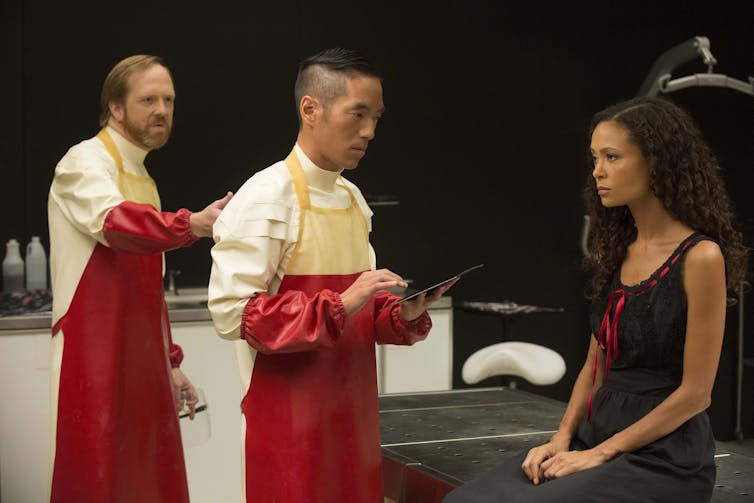
Image 20170224 22983 kskule.jpg?ixlib=rb 1.1Westworld: how far away is this future?
©2016 Home Box Office, Inc. All rights reserved

Amy C. Chambers, Newcastle University

This article accompanies episode 10 of The Anthill podcast on the future.


From Humans to Westworld, from Her to Ex Machina, and from Agents of S.H.I.E.L.D to Black Mirror – near future science fiction in recent years has given audiences some seriously unsettling and prophetic visions of the future. According to these alternative or imagined futures, we are facing a post-human reality where humans are either rebelled against or replaced by their own creations. These stories propose a future where our lives will be transformed by science and technology, redefining what it is to be human.

The near future science fiction sub-genre imagines a future only a short time away from the period in which it is produced. Continue reading “Why science fiction set in the near future is so terrifying”

Organic Systems: Environments, Bodies and Cultures in Science Fiction

The London Science Fiction Research Community (LSFRC, possibly pronounced “Lucifer” for those who prefer their initalisms to be acronyms) played host to a larger crowd than usual in Gordon Square on Saturday 16th September for their first day-long conference, organised principally by Rhodri Davies, Francis Gene-Rowe, and Aren Roukema. One of the primary activities of the LSFRC is its monthly reading group: each year, the organisers decide on a theme and request suggestions for texts that might interact with the theme in interesting ways. Once the (typically extensive) list has been compiled, it is voted on by the community, and the texts which come out top form the next year’s reading list. “Organic Systems” was the topic of discussion for 2016-2017 – for anyone interested the topic for 2017-2018 is “Sublime Cognition: Science Fiction and Metaphysics” and the group meets in Gordon Square on the first Monday of each month (I’d advise checking the Facebook group for relevant details). Consequently, this one-day conference marked the culmination of a year of discussion and gently percolating thought regarding, in Chris Pak’s words, “interlocking systems intersecting on multiple levels” within sf and its accompanying critical discourse. I suppose it should be noted for reasons of editorial balance that I did attend at least some of the reading group sessions.

posterLSFRC Sublime Cognition poster by Sing Yun Lee

Continue reading “Organic Systems: Environments, Bodies and Cultures in Science Fiction”

Post-Cyber Feminist International

Glitch @ Night - BBZ London, photo Mark-Blower, no24Post-Cyber Feminist International, Glitch@Night BBZ London (Photo: Mark Blower)

‘A particularly gendered set of obstacles emerges from the contemporary ubiquity and commodification of the digital sphere. From sexual harassment and privacy to issues surrounding divisions of labour, the progress of gender justice has in some ways failed to keep pace with the dizzying velocity of digital developments. At the same time, new networked technologies have come to dominate the horizons of critical discourse, pushing older and more quotidian devices to the margins of cultural visibility. And yet, these domesticated technologies (from the Hoovers to HRT) continue to exert a shaping influence on many people’s everyday lives. It is critical that feminists find new ways of interrogating technologies in order to forge a radical gender politics fit for an era in which the analogue and the digital are inexorably intertwined’ [ICA]

Black Feminism and Post-Cyber Feminism, photoMark-Blower, no27Black Feminism and Post-Cyber Feminism (Photo: Mark Blower)

Post-Cyber Feminist International took place at the ICA between 15-19 Nov 2017, and consisted of a series of events, exhibitions and workshops dedicated to exploring how radical gender politics can shape our technological future. Visual artists, musicians, writers and theorists came together to find new ways of engaging with race, class, gender and to discuss their work-in-progress. Post-Cyber Feminist International showcased interrelated constituents such as sonic feminisms, Black feminism and glitch feminism, celebrating the 20th anniversary of The First Cyberfeminist International (1997). Continue reading “Post-Cyber Feminist International”

Jeremy Shaw’s ‘Liminals’

jeremyJeremy Shaw’s Liminals can be seen at The Store Studios 180 The Strand, until 10th of December 2017. It is the first off-site exhibition by Berlin based KÖNIG Galerie and forms part of their recent expansion to London.

Liminals, a work of Vancouver-born artist Jeremy Shaw, takes the form of a fictional documentary made not more than a couple of decades into our future. From the narration, we reconstruct some of its historical context, although the focus of the documentary is on ‘periphery altruist cultures’. The Liminals are one such sub-cultural group, who are observed by the posited filmmakers with a detached fascination (and a style) reminiscent of the early 20th century ethnographies.

It is far from clear who is the intended audience, because humanity’s days, the documentary reveals, are numbered. Technology is to blame, specifically, choosing to let computation replace ritual. Kieslowski’s warning in the first episode of Decalogue against elevating computers above faith has clearly gone unheeded, and in 2024 all spiritual experiences are replaced by VR via a technological innovation called ‘The Unit’. ‘The Singularity Disaster’ follows in 2033, and soon after ‘The Announcement’ of ‘the countdown to extinction’ is made.

Amongst the general apathy that ensues, radical groups emerge, as they always do – observes the film’s narrator – during the Millenarian periods of history. The most radical of these groups believe that a possible salvation lies in the ideas of ‘pre-Unit’ science fiction writer Samuel Delany, specifically the paraspace:

a specific paraspace could serve as a transitory zone for humanity – an intermediate area between the physical and the virtual where a generative incubation period towards our next phase in evolution could take place. They refer to this paraspace as The Liminal.

The documentary is an exposition of the methods by which The Liminals are trying to reach that paraspace.


Inception

Because what the internet needs, clearly, is another post about this film. At least it should be relatively short, since at this point all I really need to do is stake out my position relative to those of other people. Matt Cheney links to a post arguing that Inception is “not a dreamer’s movie, it’s a clockmaker’s movie” which seems fair enough, allowing for two quibbles: (1) it assumes the conventional fictional representation of dreams as incessantly surreal is the representation of dreams to which all such work should aspire, and I at least found the fragile normality of Nolan’s dreamscapes quite familiar, and refreshing (though I should say I’m not a great one for remembering dreams); and (2) these are entirely neutral descriptions, and we all accept that a “dreamer’s movie” is no more, but no less, valid a choice than a “clockmaker’s movie”. I dislike, for instance, Annalee Newitz’ contention that Inception offers an “intellectual high” but is “emotionally cold”; that intellectual buzz is itself an emotional reaction, and for me Inception is a powerful film.

That said, these are only quibbles, because I would have no trouble substituting “idea-centred” and “character-centred” into Newitz’ piece, and because I don’t really think Christopher Nolan is particularly interested in dreams as dreams. One thing that doesn’t particularly interest me, then, is whether Cobb ends the film in “reality”, because in a trivial sense he doesn’t – he’s still a character in a film – and if the clever tricks with the music mean anything, I think that’s what they’re intended to signal: that Inception is ultimately the dream we are sharing with Nolan. No, where I think Nolan’s interest lies – as in Memento, as in The Prestige — is in the mechanisms of narrative, and in constructing models through which to explore the workings of those mechanisms, which is why the ending, although delicately handled, is never less than expected. The excitement of the film for me, from about half-way through, was simply watching Nolan keep his various plates spinning, and tension came not from whether the characters would achieve their goals, but from whether Nolan would allow the characters to achieve their goals. Another way of putting this is that I think Inception is essentially Nolan showing off.

This, I think, puts me largely in agreement with Brian Francis Slattery, over in the comments of Abigail Nussbaum’s review, and I do take Nolan’s purpose to be the same as that of his characters, to place the seed of an idea within viewers’ minds. As in the film’s plot itself, I think this is done obliquely, not explicitly; so the answer I’d suggest to Abigail’s question, “what is Nolan saying about storytelling?”, is: don’t trust stories. Remember that stories have a storyteller. Realise that our responses to the stories we’re told shape the stories we tell. The ambiguity of the ending, in this view, is necessary not to set up a simple question about whether or not what we’re seeing is “real”, but as an expression of scepticism: we shouldn’t take the catharsis we’re apparently being offered without thinking about it first. For this to work, you do have to find the film well-paced — have to be convinced by the stories being told all the way through — which I know is the stumbling block for many; fortunately, it was all balanced just about right for me, and I enjoyed watching the tumblers of the various dreams click into alignment. Like Martin Lewis, I’d say Inception is lesser Nolan, if only because it doesn’t push as far as it could, but I’d say it’s still very much worth seeing.

EDIT: And now I’m mulling over Adam Roberts’ take.

EDIT 2: And Abigail has some further thoughts here, including discussion of inception as a model for storytelling.

Tools of the Trade

From Farah Mendlesohn’s review of The Seven Beauties of Science Fiction:

Yet, as we shall see, Csicsery-Ronay succeeds in incorporating movies successfully only in his chapters on the science-fiction sublime and the grotesque, and, within that, in his discussion on the visual forms. While I accept his arguments (and those of other critics) that sf cinema and games, among other forms, are becoming the dominant cultural conception of what sf is, their values are so different, or so skewed in a specific direction that it seems to me ‘accommodation’ is neither enough nor appropriate, that the tools applied to literary forms of science fiction can only leave the impression that the non-literary forms are inadequate, and that it is past time that the academic community withdrew from a theory of everything in this field, and acknowledge instead that there are separate and immensely valuable critical approaches which place cinema and gaming and graphic novels at the centre, and leave the literary beyond the Pale when viewed through their filters

I actually said something related to Richard last week, that part of the reason I don’t write much about films or TV is that I feel I lack the vocabulary to talk about them seriously: that is, to address their specifically filmic or televisual aspects. So I’m sympathetic to the argument here (and to the criticism of Seven Beauties; although it hinges on what you mean by incorporating “successfully”, and I would allow some of the instances excluded in the review as successful), even as I’m also sympathetic to those critics arguing that visual modes of sf are culturally dominant, and feel that I should write more about film and TV. On the other hand, I can’t be so absolutist as to state that a primarily literary understanding of sf will inevitably cast non-literary forms as inadequate, or indeed vice versa. See, for example, Gattaca, Primer, Eternal Sunshine of the Spotless Mind, films with goals not very different from the types of literary sf I tend to enjoy; and is a generic sf action flick any less “inadequate” as serious sf, or inadequate for radically different reasons, than your average Neal Asher novel? It’s not as though “academics” are out on a limb in placing sf films within essentially the same framework as sf books, either. Not for nothing is the fannish crack about the former being at least a decade behind the latter so familiar. Nor, I think, is it possible to deny that the relationship is a two-way street, and that we have seen an increasing amount of cinema-influenced sf. So I end up thinking that accomodation actually is the correct approach (and that I want to read more film criticism) — that there are enough points of overlap between the two modes to make co-consideration useful, as long as the non-overlapping points are not ignored. Agree? Disagree?

Sci-Fi London 8

A belated report on what I did a couple of weekends ago: a trip to the Sci-Fi London film festival. Currently held in the extremely plush Apollo West End, the programme is a mixture of classic SF, newer independent works, panels, film all-nighters, and short films. The latter is one of my favourites, because there are few opportunities to see short genre films, and there’s always a few brilliant films, plus you get a bonus short in front of every feature. This year the short film programme included not one but two sets of sub-15 minute shorts, a feature on the short films of Israel, and even a programme of “long shorts”, for those films which were a little too long to be in the short film competition.

The “long shorts” were first, and ended up containing some of my favourite films of the weekend. Arcadia is a shining example of how well an ultra-low-budget short can work. The sets are made of cardboard – literally, as every set looks to have been built as a tiny cardboard set, with the actors green-screened in. At first it’s distracting, but I stopped noticing the fuzzy edges and the cardboard props, and enjoying the weird and charming film. The very ending is perhaps a little predictable, but too many shorts lose their way near the end for me to fault this one, and the penultimate scene manages to tie everything together in a couple of well-chosen lines.

In Afterville, the countdown which started when spaceships which landed in Italy fifty-one years ago is about to hit zero, and no one knows what will happen when it gets there. It’s reminiscent of Last Night, the Canadian film about how people face the end of the world, except they’re facing uncertainty and not certain death (and consequently it’s less depressing). Clearly made on a much higher budget than Arcadia, they’ve put the effort into some excellent effects shots of both the spaceships and the near-future tech, and it’s shot well enough to pull off a long, dialogue-free walkthrough of a half-deserted Turin. Once again the ending doesn’t quite hold up, with the focus on two young Italians reconnecting rather than on the exciting spaceships, but it just about pulls it off. It’s also notable for featuring Bruce Sterling as a scientist/futurist, who appears to be playing himself. In Italian.

Do It, by contrast, is not only not science fiction it’s not very good. Bernie is a lowly store clerk in Los Angeles, who often fantasizes about cleaning up the streets but never acts out his fantasies. When he learns the Mayor is visiting his store, he decides that killing him will solve all the problems, and he has three days to get the courage to act. It’s another well-made film, with a washed-out and industrial vision of LA, but not SF unless you think that Bernie’s visions make it fantastical. The main problem is that Bernie is a pretty unpleasant character to spend a half-hour with – he fantasizes about cleaning up the neighbourhood, but that equates to befriending prostitutes, imagining himself beating up black guys, and judging the customers of the pharmacy where he works, and he blames all of his personal problems on the Mayor as well. The film doesn’t take sides on whether Bernie is a violent and dangerous figure or someone to be applauded, but the plot is very slim, and as a character piece it has a central character I don’t want to spend any time with.

Soulmates is much more lightweight – a terrible couples counsellor must use his skills to avoid being possessed by an old woman’s ghostly lover. It’s quite funny, but not really funny enough, and it’s the only one of the four I felt could have been done at shorter length without losing anything.

I only saw half of the short short films, and there were no real standouts as there have been in previous years. Too many films don’t seem to have an ending, or a plot – I can see that if you’re making a short film to showcase your skills, the focus may not be on the writing, but too many of the films were let down by stopping rather than finishing – Jerome’s Weakness, an atmospheric and creepy film about the resurrection of a dead child, was technically good but seemed to stop about a minute before I expected it to end. The Day the Robots Woke Up is a cute animation with 50s-style robots roaming around abandoned London and a slightly forced narration all in rhyming couplets, which won the audience award; Marooned? is an entertaining take on live-action roleplay and 50s SF, which no one liked but me; and Die Schneider Krankheit is a bonkers fake newsreel film about a space chimp who brings a deadly virus back to Germany, which can only be treated using a huge turtle-leech-lizard creature which sucks your blood.

Focus On: Israel is intended to be the first in a series highlighting the short films of different countries (next year is Poland): there was an introduction from Uri Aviv, director of the Icon Festival, followed a series of ultra-low budget, incredibly depressing films, of which the least depressing was about the Grim Reaper wanting to give it up. (Aviv assured us that not all Israeli film is this depressing.) My favourite was Circuit, a short animation about a bomb-disposal robot, but the two entries made for the 48-hour film challenge did good things on a very low budget, and were better and more coherently plotted than the bigger-budget War of Salvation.

The only feature film I saw was Cryptic, another low-budget time travel film which gets compared to Primer and is inevitably not as good. Interestingly this one was originally scripted as a much higher budget special effects heavy film and they removed a lot of the flashy effects. It’s focused on a teenage girl who changes her timeline by communicating with her younger self on a mobile phone, and spends a lot of time dealing with teenage drama, while the time-travel is a magical MacGuffin. I did like that the protagonist was a young woman who didn’t get rescued by someone else, but in fact rescued her younger self and changed her life for the better.

There was also the pub quiz, in which our team Ultimate Awesome Fist Explosion came third, avoiding the tie-breaking dance-off which is probably a good thing. They got an Xbox and a crate of beer; we got a Star Trek: Enterprise promotional kite. Maybe next year we will triumph.

2-for-1 on Unpopular Fannish Opinions

1. Star Trek is not that good. It has its virtues, certainly: a certain amount of verbal and visual pizzazz (the closing credits look like a series of John Picacio paintings); decent performances, if not really ones that I feel able to hold close to my heart (Karl Urban probably the best, for my money); headlong, yet not quite hectic velocity, even if sometimes sustained by utterly extraneous set-pieces (Kirk being chased by ice-planet monsters, say). I laughed, I enjoyed, and I haven’t felt as strongly that I was watching a culturally significant piece of science fiction since Doctor Who’s “Rose”. And yet. It is really, epically, heroically stupid, and I’m not even talking about the science (though the disregard for scientific plausibility felt distastefully wilful at points, in contrast to the disregard-for-sake-of-plot that defines the archetypal moment of Treknobabble), but about the plot, which rests on convenience and coincidence upon convenience and coincidence. Think about it for more than thirty seconds and the whole house of cards fall down.

More fundamentally, I find myself uneasy about what that nagging feeling of cultural significance might mean: something in the cross-breeding of shameless, box-ticking nostalgia and gung-ho shininess doesn’t sit well with me.. This is something of a surprise. I’ve never thought of Trek as being particularly important to me; I’ve seen a lot of it, of course, but with the exception of Deep Space Nine much of it was watched just because it was there, not because I was actively seeking it out. And yet. Much has been made of Star Trek as a return to a bright, colourful, boundless universe, a celebration of an optimistic vision of the future, in contrast to the miserabilism of (say) Battlestar Galactica. But the brightness and colour of Abrams’ Star Trek indicate a fun film, no terrible thing in itself except that it feels like a hollowed-out version of the vision that made Trek first appealing, which was – and I can feel myself turning into one of the Onion News Network’s outraged Trekkies as I type this – that it was inspirational, aspirational, a vision of a better world. This Trek doesn’t feel like it’s set in a better world, particularly; as has been widely observed, diversity is somewhat noticeable by its absence. I find myself missing that nerdy, unfashionable (and, let’s be realistic, often terrible) aspect of Trek much more than I would have expected. I cannot see this incarnation of the franchise, for instance, centering one of its instalments around diplomatic shenanigans and a peace process, as The Undiscovered Country did – indeed, I expect Star Trek 2 to be KLINGONS RARR (with a side-order of Uhura coming between Kirk and Spock). And that feels like a shame.

2. Dollhouse is not that bad. It has multiple and serious flaws, certainly; even allowing for everything positive I’m about to say, there is a hesitancy to the show’s development of its argument, a caution that often looks like damaging reticence. I would go so far as to say that the first season is, taken in the round, a failure, with only two episodes – Joss Whedon’s own “Man on the Street” and “Spy in the House of Love”, written by Andrew Chambliss – that really work, a second tier — “Needs”, “Briar Rose”, “Omega” — that have some things to recommend them, and a majority that range between half-hearted and shockingly inept. But my feeling is that it’s an interesting, worthwhile failure, not a worthless one.

Three reasons. First, the premise – what happens when identity becomes a commodity? – is simple to grasp, and strong; fertile angles of attack fairly spring out of the ground, and you can see where the writers were going with episodes like “Stage Fright” and “True Believer”, even if they singularly failed to make anything of them. Second, it is more ambitious than anything else Whedon has done in what is, I think, a key area – a structural critique is built into the bones of the show, whereas both in Buffy (with the Watcher’s Council) and Angel (with Wolfram & Hart) such elements were grafted on later, never entirely successfully. My knowledge of Marxist theory could kindly be described as rudimentary, but consider: Dollhouse concerns the exploitation of one class of people by another; the exploited class is literally alienated from their work, with no sense of the overall nature or purpose of the system within which they reside; the individuals in this class are literally treated as things, as dolls, and are made to believe they are freely choosing what is in fact being forced upon them; and through this make-believe, the dollhouse itself provides a frame story that alienates us, as viewers, and makes us aware of much of what happens in each episode as a constructed text. (The clearest example of this being Mellie’s parody of empowerment in “Man on the Street”, but I think it’s there in every episode; it’s always clear that the clients’ fantasies – the stories the show tells – arise out of a basic power imbalance. I even think there is a strand of self-critique on Whedon’s part running through Dollhouse, having to do with the value and authenticity, or lack thereof, of the fantasies of empowerment he has previously created.) So I think it functions productively as a particular critique of the society we live in, which is why I was so pleased that the finale showed an imprinted doll claiming the identity that had been imposed upon them: for the metaphor to work fully, we have to understand the subjective experiences of the imprints as valid, they have to be like us (hence, perhaps, Boyd’s comments that the dollhouse are murderers as well as pimps). Third, although there is much in Charlie Anders’ analysis of the show at io9 that I disagree with – particularly with regard to the characters, where I think what’s interesting is not that the dollhouse employees are morally ambiguous, but that they have good, even likeable qualities despite their decisions not being in the slightest ambiguous, being entirely reprehensible – I think she puts her finger on something important when she notes that the focus of Dollhouse is not going to be Echo/Caroline’s journey to regain her individuality, but an exploration of the corrupting effects of doll technology. I don’t believe it’s intended to end with liberation; I don’t think it could do so, not without dishonestly stuffing a genie back into its bottle. I think it’s about an inexorable slide towards the dystopic future we’ve had signalled a couple of times now, in which individuality is extinguished, and everyone is interchangeable; a pure science fiction horror story, about the absence of political agency.

(That said, of course, if someone at Fox happens to be reading, and is dithering between renewing this for a second season, or The Sarah Connor Chronicles for a third, then go with Sarah Connor, and don’t look back.)
Wanted

James MacAvoy is Wesley Gibson, total loser, whose life is changed when he meets Angelina Jolie (Fox) in a drugstore. She tells him that a) his dad was a famous assassin b) his dad is dead and c) the man who killed him is standing over there in the cereal aisle with a gun. Then there is a big shootout with guns and explosions, and a car chase where Angelina drives a fast and sexy car with her feet while shooting out of the sunroof.

That’s pretty much the tone of the film. Director Timur Bekmambetov’s previous films were the Russian blockbusters Night Watch and Day Watch, and now Hollywood has let him loose with a larger budget and an R-rating to see what he can do. The result is a film which, while I am dubious about some of the morality and misogynistic overtones, can’t help but sweep me along with overblown stunts and serious violence.

Wesley’s life is changed by his meeting with the Fraternity of Assassins, where he discovers his panic attacks, which he takes as yet another sign of his loserdom, are actually an indication of his incredible reflexes and shooting ability. Guns as martial arts is not a new idea, but here it’s taken to extremes, with the assassins able to bend bullets, shoot other bullets out of the air, and generally ignore the laws of physics.

Once he’s over the initial shock of meeting a society of trained killers, Wesley tells his boss to fuck off, smacks his friend in the face with a keyboard, and takes this opportunity to become a man and learn how to kill people. This undercurrent of machismo runs through the whole film. Wesley isn’t just taking control of his life, he’s becoming a man, a lone wolf, fulfilling his destiny. To become an assassin first involves getting punched in the face a lot by Marc Warren until he admits he doesn’t know who he really is, then realising that what he wants is to follow in his father’s footsteps. (Not that this method of training is portrayed as a universal good, as it’s implied that it sent at least one of the Fraternity insane.)

Now we need a rationale so that we can have the main character go around shooting people in the head and not think he’s an amoral murderous dick, and it comes in the form of the Loom of Fate, which spits out the names of people who need to die. Yes, they may murder people in cold blood, but they do it because the loom tells them we’ll be better off for it. It’s taking one life to save one thousand, a message hammered home by the story Fox tells of a child who watched her father die when the Fraternity failed to kill the murderer in time, and in case you weren’t paying attention they spell it out to you that she’s talking about herself. All the targets of assassination are businessmen in suits and limos, often smoking cigars, and it’s a surprise when they don’t start cackling and stroking their cats.

Criticising Wanted for lacking in subtlety is probably missing the point. Shortly after that scene, we have a stunt where Wesley performs an assassination by getting his car to fly through the air and shooting his target through the sunroof, and there’s a certain joy in watching them stage preposterous stunts with the only possible reasoning being “because it will look cool”. Bekmambetov has a familiar style from his earlier work, filled with slow-motion and quick cutting, and there are some really spectacular scenes in Wanted – a train derailment, Wesley on a roaring rampage of revenge, the car chase early on. On the level of brainless gosh-wow action, it’s a good film.

And yet I can’t help but poke at the problems with it. There are parallels between the character of Anton from Night Watch and Wesley Gibson – both are nerdy loser-types and not your typical action leading man despite MacAvoy’s newfound six-pack, who discover they have supernatural skills and get involved with a mysterious organisation with shadowy leadership. But while Anton is sympathetic when caught up in the plans of others, it’s hard to feel any real sympathy for Wesley and what little there is comes from James MacAvoy’s convincing fear as he gets brought into the Fraternity. It’s all so very masculine, and out of the three female characters, one is Wesley’s fat tyrant of a boss, and one is his cheating harridan of a girlfriend, with Jolie’s Fox as the only female assassin we ever seen, sharing a curiously sexless kiss with Wesley only to piss off his ex.

The other problem is that the plot twists are not so much twists as gentle turns you can see coming from quite a long way off, and that includes the ending. Again, though, you don’t go and see Wanted for the plot, and you don’t watch it for the characterization or the acting. You watch this film if you want to see exploding rats, cars driven into trains, and a man shooting people while his gun is embedded in someone else’s brains, and it turns out that sometimes that is what I want to watch even if it leaves a faintly nasty taste in the mouth.