Wole Talabi’s short story ‘Embers’ (2024) explores the potential consequences of energy transition for a rural community in Nigeria, focusing on one oil worker who cannot let go of dreams of petrochemical prosperity.
Kawashida fuel cells were invented by a team of scientists at the ShinChi Technology Company of Japan […] By using a proprietary genetic modification technique to rewire the metabolism of a heterotrophic bacterial strain, making it autotrophic, and then further splicing the synthetic microbe with a cocktail of high cell density, rapid reproduction genes, Dr. Haruko Kawashida and her team created a living, breathing, renewable supply of energy for the planet. The synthetic autotroph used concentrated sunlight to efficiently consume carbon dioxide and exchange electrons, creating a steady stream of electricity.1
How convenient! And as if its abundant, net carbon-negative energy weren’t enough, Kawashida cell technology also revolutionizes wastewater treatment. It’s a near-perfect deus ex machina for the climate crisis.
But not everyone is happy. When Kawashida decimates the oil industry, Uduak is abruptly cut off from his sponsored scholarship. Cast adrift, Uduak becomes a kind of inverted solarpunk protagonist—he uses grit and ingenuity not to jury-rig funky green utopiatech, but rather to attempt to revive the village’s derelict oil refinery. Even though clean energy is widely available, Uduak argues that the village’s real needs remain unmet, and he remains hostile to the post-carbon vision laid out by his idealistic rival, Affiong.
The story comes to a grisly and tragic conclusion—murder, arson, suicide. Without excusing Uduak’s rather OTT response, we can see that there is a clear lack of compassion to support him transition to the era of a stabilised climate. One wonders if Uduak might also have a point: will the village as a whole be left behind by government, industry and civil society? Just as Uduak was left behind by the village?
Uduak becomes what is sometimes called a ‘stranded asset,’ something once valuable, whose value has vanished because of a probably permanent shift in its circumstances. The story’s core tension—between his thwarted social mobility and the new sustainable technology—reflects the current dilemma of green transition for petro-states like Nigeria.
It also implies broader questions about energy transitions. Within science fiction, transformation of the energy system often forms the hard-to-imagine bridge between the dystopian present and the ambiguously utopian future. There are the dilithium crystals and warp cores in Star Trek, there is the Grid in Iain M. Banks’ Culture novels. But the questions which arise are not just about what energy will power the future. They are also about how societies will allocate and manage such energy. Could energy itself somehow be the foundation of a just and equitable economy? If the flow of energy were to directly underpin the flow of money, could this support systems that are more cooperative, collective, and liberated, and less exploitative? Systems that are not just energy-based, but also just based pure and simple?
Jean-Paul L. Garnier, ed. Wave IX. Joshua Tree, CA: Space Cowboy Books, 2024.
By Carter Kaplan
Wave IX
J.G. Ballard’s story “Studio 5, The Stars” appeared in Science Fantasy magazine in 1961. The story is set in “Vermilion Sands”, a desert art colony suggesting the post-war “hothouse” desert compounds created in the American Southwest by painters like Max Ernst and Georgia O’Keefe. In Ballard’s Vermillion Sands, art, artists, poetry and landscape blend in remarkable ways, and the possibility of elements of virtual reality appear to be an operative dynamic, though this possibility remains unexplained, or anyway is deliberately obscured to enhance the futuristic feel of the community, and as well represent the confusion that should properly attend a world that is in contact with computers, simulation, and muddled human perceptions. The setting is thus an opportune field for blending a broad—indeed unlimited—range of aesthetic figures and themes. The plot follows the adventures of Paul Ransom, editor of the poetry magazine Wave IX. He is beset by submissions of bad writing (fragments in the form of computer tapes are often floating through the sky above Vermilion Sands). The poetry is produced by computers styled as Verse Transcribers or VT’s. The stale submissions form a point of departure for exploring the subject of poor writing, and how the production of poor writing is driven by complacency, intellectual laziness, cliché, formulae, cultural homogenization, stale involvement, theoretical strictures, official channelings, academic repetition, market forces, fossilized traditions, and so on.
Jean-Paul L. Garnier, the editor of Wave IX the book before us, presented Ballard’s story to the contributors and asked for submissions. There were very little instructions; contributors were simply encouraged to follow their inspiration. A variety of graphic images, poems and fictions were submitted. Here is a review of these pieces, followed by suggestions for further exploration and discussion. I am a contributor to the project, as described below.
Samantha Mills is a Nebula, Locus, and Theodore Sturgeon Memorial Award winning author living in Southern California, USA. You can find her short fiction in Uncanny Magazine, Beneath Ceaseless Skies, Strange Horizons, and others, as well as the best-of anthologies The New Voices of Science Fiction and The Year’s Best Science Fiction & Fantasy 2023. Her debut science fantasy novel, The Wings Upon Her Back, is out now. You can find more at www.samtasticbooks.com.
JPG – The culture in The Wings Upon Her Back is a theocracy where labor and religion are intertwined, can you tell us about using this as a worldbuilding device?
SM – When developing The Wings Upon Her Back, I wanted a claustrophobic, monocultural setting to reflect the isolation of the main character and the fraught history of her city. Everything had to revolve around the five gods that are sleeping overhead.
In the book, the division of labor is a core tenet of their religious and social framework because they are emulating the gods, who arrived with very clearly defined roles. I ended up with five sects: the workers and farmers are the biggest groups, who keep the city running; the scholars and engineers are documenting and implementing the teachings of the gods; and the warriors keep the city isolated from outside forces. The primary conflict of the book comes from the unbalancing of these factions, as the warriors take more power over the others.
One of my favorite worldbuilding techniques is to build out social expectations – what everyone is supposed to believe, what everyone is supposed to do – and then to imagine the characters who do not fit the mold. I set a limit at five sects because it automatically creates tension: you can’t actually sort the breadth of humanity or the tasks needed to keep society running into such a small number of categories!
This tension permeates the book. There are jobs, such as medicine, that rely on teachings from multiple gods, and therefore arouse some unease. And there are many individuals who don’t fit neatly into their sect. My main character, Zemolai, was born into a family of scholars, but left them to be a warrior. The hodgepodge group of rebels she falls in with later in life have all either changed sects, or are revolting against the expectations placed on workers specifically. The right to question the division of labor (and therefore, the teachings of the gods) is central to the story.
The Faculty of Natural Sciences (FoNS) at Imperial College London held a speculative fiction contest on the subject of education in 2045. Here is the story that won first place.
The world is changing and there is little doubt that the future will be different from today, possibly profoundly.
In the face of these possible futures, what could this mean for education and for FoNS? What do we teach and how do we teach it? What is it like being a student or a lecturer here?
We invite you to join FoNS in the year 2045. What will you be doing? How will you be learning or teaching? We do not just want to hear about futuristic technologies or subject matter, nor do we want a purely dystopian vision. Instead, we invite you to write about what life is really like using those technologies or learning about relevant subjects in the context of a challenging world. Build us a world where we can look around and see the fabric of our faculty and university in all its detail.
I’m sat on the bench and I’m cold, and I’m tired, and here is what I can see:
1. The prim lawn, stretching off into the haze of dusk. An upswelling wind pulls a few leaves across the grass and mud towards me. My eyes water in the chill blast.
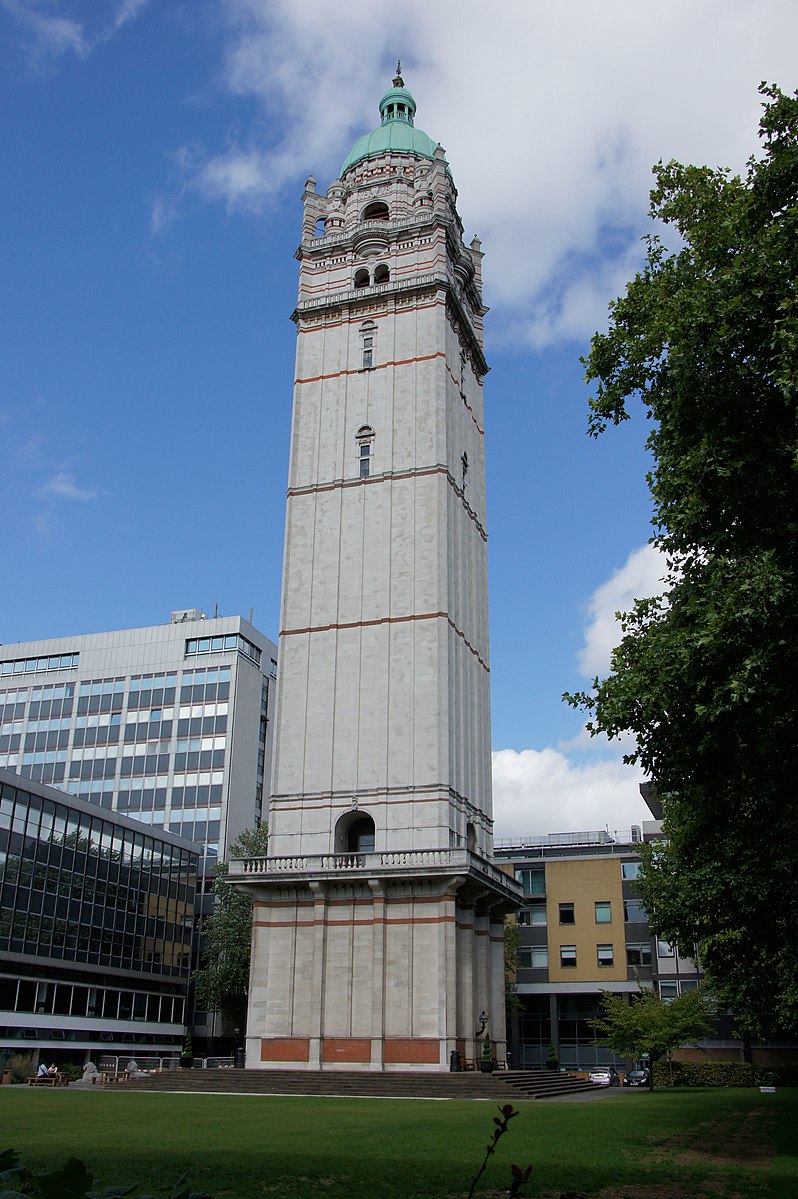
2. The tower, emerald dome still set afire by a sun which from my vantage has long since sunk into the ravenous outline of the library.
3. The statue, looking almost conventional from this angle. Lines of neon-red graffiti adorn its torso, too remote to read but I can guess at their essence. They must be recent, really recent – unmolested by caretakers or rainwater.
4. The grey buildings across the road, featureless in the dark, only two or three windows glowing. As I watch, a silhouette appears in the highest, backlit by bright fluorescence. It recedes after a second or two.
5. The sky, a pale azure turning to brilliant orange in the west. Something is unzipping it – over my head extends a lengthening streak of slate, diffuse at the back but hardening to a strict point at its end. There is a steady roar, like waves crashing somewhere far distant. Four turbines thrashing like crazy, modified fuselage churning out aerosol in immense volumes.
6. No stars. Not these days, thanks to our long and fruitful efforts.
When Leo arrives he approaches from my left and stands over me, grinning to hide his exhaustion. Two fingers tap behind his ears, and the implants are disabled. I ask him what he was listening to and the band he names sounds like a crossword clue. He calls me Al, because he finds it funny and he can’t pronounce Alparslan off the cuff.
‘Come on, Al,’ he says, ‘project time,’ He tries to take my hand.
‘Yeah,’ I respond, manoeuvring out of the way. ‘I know.’ I stand and stalk off towards the library. Unprepared for these English winters, I’m wearing just thin jeans and an Oxford shirt. The cold wraps around me. It burrows into my flesh. I imagine there might be frost tomorrow, emergent in the lee of buildings and bushes. I don’t think I’ve never seen frost before, not in my country, except maybe as a very young child. I have a vague memory of the fountain pool in our town square turning to ice, of the smooth and glittering surface like a mirror under my palm. Still, they say half your early memories are just subsequent inventions. I can’t trust myself to know.
In the library’s glass façade I see Leo following me. He’s dressed more sensibly than I am in a long, thick jacket. He fiddles with the lapel; I suspect he wants to shed the coat and drape it caringly over my shoulders. I walk a little faster and step gratefully indoors, sirocco air from the heaters a welcome relief. The rooms are largely empty, and I recognise many of the sparse occupants from our own course. Most degrees don’t set assignments this close to Christmas, but most degrees don’t have to justify their existence to the extent that Maths does. The department has been on death row for years, and they apparently feel that increasing the workload will present an image of vitality and necessity.
We find a spot on the fourth floor, by the western windows. The setting sun shines over the rooftops like a lighthouse from out across a black and frozen sea. Leo removes a silver rod from his pocket and fans it out into a screen and keyboard with a languid flick of his wrist. I try to ignore him and bring out my own laptop, firmly and consistently rectangular. It recognises my face and lights up, a picture of my parents frowning at a museum in İstanbul. I lean back in the chair until it starts to creak, and pull up the project. Spreadsheets and code, code and spreadsheets. Local Precipitation Effects of Marine Cloud Brightening, 2036-2039.
‘I can’t believe this,’ mutters Leo. ‘That we have to waste time on this crap.’ ‘Whatever. Just get on with it.’ I keep looking at the screen, but I hear him swing around to face me.
‘I mean, we’re supposed to be maths students, for god’s sake. I know it’s important, but there’s thirty other courses doing exactly this.’
I click my teeth together. ‘You realise that we are doing maths. You know, with the numbers and the sums and everything.’
‘Come on, you know what I mean.’
I do know what he means, unfortunately. My feet kick the ground and I rotate, not to look at him but back at the window. The sunset is unbelievably beautiful, a deepening bloodstain on the sky. The sulphur we’ve been pumping without end into the stratosphere has spread to every reach of the earth, making the Wild Blue Yonder that little bit whiter, making every evening shine that little bit more like burnished gold. They say you used the get the same effect after tests of nuclear weapons. The final formula for the aerosol was developed here, actually, at Imperial. It reflects enough heat to offset hundreds of thousands of times its weight in carbon dioxide. If you believe the press releases, it’s going to save the world.
Yes, we are the beating heart of progress. One of the last few universities in the UK, but we’re immune to the closures now. Practically every degree has turned its gaze towards the roiling, boiling planet, to the neglect of any other frontiers. Besides medicine, it’s the only
thing governments are willing or able to fund. There’s no time for any other pursuits. No time left at all.
‘Fifty people died in Kiribati last week.’ I say flatly. Leo pauses.
‘Yeah, I saw that. In Tuvalu or something…’
‘Tarawa.’ I still don’t look at him.
‘That’s it. Damn shame.’
‘A rogue wave took out the foundations of an emergency shelter. Whole thing just collapsed into the sea.’
‘Sure, tragic, but that’s not our fault.’ This now, this I laugh at. The sound of it rings with impertinence across the low-ceilinged space. From far behind me another student coughs, while a third drums their fingers on the table. In abject silence, noise can be contagious.
‘Of course it’s not our fault. By and large, it’s not the fault of anyone born this century. Still our planet though, isn’t it?’
‘Hmm.’ He folded his arms. ‘I think you’re looking at this wrong.’
Honestly, he’s a lot more tolerable when he’s arguing instead of flirting. ‘Go on, what do you think?’
‘You see Al, for me it’s about the principle…’
The sun disappears at last, and the starless sky presses down on the city like a bandage, like a hand.
***
I’m standing under a dark alder and I’m warm, and I’m tired, and here is what I can feel.
1. The rough bark behind me, uncompromisingly alive. My fingers trace its contours, the solid grooves slick with moisture and moss.
2. The leaf litter under my feet, crushed and crackling between bootheel and pavement. The little flakes carry their deaths with them, darting, dancing along the breeze.
3. The air, frigid and all too warm for this time of year. I sometimes imagine I can taste the changes in the wind, all the new and pervasive chemicals. What weaknesses we can find in the belly of the beast.
4. Leo’s coat across my shoulders. It’s heavy, and it smells of rain. I promised to return it tomorrow, and it’s a promise I intend to keep to the bastard. He left his gloves in the pockets and I play with the idea of pulling them on.
5. Hope, unexpected, maybe unwarranted. It wells up inside me and I exhale, my breath freezing instantly into a mist that swirls and drifts outwards into the night.
6. The world, spinning softly, dawn-bound, older than it has ever been before.
Inspired by my belief in the all-consuming severity of the climate crisis, and current theories of the geoengineering efforts that may have to be spearheaded by scientific institutions. I’m interested in how an increasingly singular focus for the natural sciences might be perceived, both in terms of its necessity and what other avenues might fall by the wayside amid such a pragmatic approach to research.
By Niall Harrison. Published as part of Vector293 exploring Chinese SF.
1. Introduction
This coming August will mark the tenth anniversary of Clarkesworld Magazine’s English-language publication of “The Fish of Lijiang” by Chen Qiufan. It’s the first-person account of a middle-aged businessman sent to a commercial beauty spot for some forced rest; he is recovering from “time sense compression,” an experimental procedure to make him a more productive employee. He meets a woman who has undergone the reverse procedure, enabling her to work as a carer for rich old men who are having their last days stretched out to subjective years. They bond; they go their separate ways.
“The Fish of Lijiang” was not, of course, the first translation of genre science fiction from China into English — there have been occasional stories for decades; just a couple of years earlier, in the first Apex Book of World SF, Lavie Tidhar included stories by Han Song and Yang Ping — but it was still a milestone. It’s a neat if-this-goes-on commentary on class, wealth, and labour conditions, and as an ambassador story for Chinese SF, I think it was a smart pick: following on from novels like Lauren Beukes’ Moxyland (2008), Paolo Bacigalupi’s The Windup Girl (2009) and Ian McDonald’s The Dervish House (2010), its sardonic take on a near-future non-Western setting felt comfortably familiar. It went on to win the (short-lived) Science Fiction and Fantasy Translation Award the following year.
It also became the foundation for Clarkesworld’s ongoing collaboration with Storycom, a Chinese ‘story commercialization agency’ with a focus on SF; and it was the first published translation by Ken Liu. Many readers of Vector will be familiar with the outline of what happened next. Liu became a powerhouse of translation — according to his website, he has translated over 50 works to date — and when his translation of Liu Cixin’s novel The Three-Body Problem was published in 2014, it became not just the first translated novel to win a Hugo, but a genuine commercial success. A trickle of Chinese SF has become a healthy and continuous flow, with the volume of new stories, collections and novels probably exceeding the ability of most readers to keep up with it (Figure 1).
2020 started out dangerously for me. A volcano erupted near Manila just as I was flying into the city to transit back to Kuala Lumpur and we all watched with concern as the pilot had to dodge the dust and volcanic ash cloud to get us into the city. Exciting. Or not. We were the last flight to land before the airport was shut down for 3 days for safety so we were stuck there. It was a mess. One could say it was an omen of what was to come because what followed that in quick succession within the first few weeks of the year was political turmoil, an oil price crash, and then the pandemic and all that followed it.
What a difference a year makes.
Despite all that though, some good things did happen and I look forward to 2021 with cautious optimism that things will get better by the end of it.
Although I didn’t have any new stories published in 2020 (I was just far too busy with personal life and work and research and other things) I did sow the seeds of things that could/should pay off in the future, especially for my writing. I signed with the excellent Van Aggellen African Literary Agency and edited a book I’m quite proud of – Africanfuturism: An Anthology with the good folks at Brittlepaper and it includes stories by some excellent authors: Nnedi Okorafor, TL Huchu, Dilman Dila, Rafeeat Aliyu, Tlotlo Tsamaase, Mame Bougouma Diene, Mazi Nwonwu, and Derek Lubangakene. Its gotten (two!) great reviews from Locus and I personally think it contains some of the best African SF stories of the year. I suppose that makes me eligible for best editor (Short Form) for the Hugo awards and stuff so that’s nice. It is available for free download and you can also read the individual stories online.
Africanfuturism: An Anthology is just one of several places to find excellent African SFF in 2020. There was a lot to choose from. If you want a working list of (almost) everything that came out last year, check out THIS link. (I’d also like to encourage you to please fill this form with any works that might have been missed out, it is growing increasingly difficult to keep up with everything published – which is a good problem to have – but with constraints on my time tightening, its also a problem that’s getting worse). This gives us all plenty of material to be considered for this year’s Nommo awards. Especially in the short fiction category which I have repeated multiple times is the category I enjoy writing, reading and keeping up with most because I basically grew up on SF short fiction – Asimov’s Hugo winners collections and Dozois’s Years Best SF kept me tethered to the field even when I went through the valley of the shadow of my SF reading-death. So as it is now a tradition of sorts, I’d like to highlight the African speculative fiction short stories I read and enjoyed most from the wildly disruptive year gone by.
[Before we begin, as always, a few notes: these are my personal favorites or those that left a lasting impression on me based on my own tastes. They are largely stories I’d personally recommend. Also, while I’ve read a lot of the African SFF short work put out this year, I’m sure I haven’t read everything. I am also really restricting myself to just 10 in this list, as difficult as that is, unlike in previous years where I would use ties to sneak more works in by pairing them with others that are thematically similar. And finally, I usually don’t include my own stories published that year for obvious bias and while Africanfuturism: An Anthology easily contains many of my favorite stories of the year, given how involved I was in shaping those stories, I have decided not to include any of them on this list. So without further ado, here are my 10 favorite African speculative fiction short stories of 2020, in no particular order.]
Just a quick post from me to say that those of you who enjoyed the last couple of years of short storyclubs here might enjoy a project that Karen is kicking off over at the Locus Roundtable blog: a club to read some of this year’s award-nominated stories, on the following schedule:
June 12: “The Things”, Peter Watts [nominated for a Locus, a Hugo, a BSFA, and a Shirley Jackson]
June 19: “Plus or Minus”, James Patrick Kelly [nominated for a Locus, a Hugo, and a Nebula]
So the first discussion is this Sunday. See you over there?
(Actually, while I’m here, I’ll also point out the ongoing Tiptree Award book club, which is working its way through some work from recent honor lists; they’ve discussed “Useless Things” by Maureen F. McHugh, “Galapagos” by Caitlin R. Kiernan, Lifelode by Jo Walton, and are currently considering “Beautiful White Bodies” by Alice Sola Kim.)
Not surprisingly, the longest list so far: here’s all the works of short fiction that have received at least one nomination from BSFA members. Send yours to awards@bsfa.co.uk by the end of the day.
“Flying in the Face of God” by Nina Allan (Interzone 227)
“The Phoney War” by Nina Allan (Catastrophia)
“Feet of Clay” by Nina Allan (Never Again)
“Darwin Anathema” by Stephen Baxter (The Mammoth Book of Alternate History)
Early on in “Wilkolak”, the story’s protagonist, a London-based Polish teenager known as Kip, has spotted and photographed a man who he thinks bears a striking resemblance to a wanted criminal. But:
Kip didn’t want to think about the murder. It was the photograph of the murderer that interested him, some loser with a plastic carrier bag crossing the street. The image might seem ordinary but Kip knew it wasn’t, that the very act of framing the man in his viewfinder and then choosing to release the shutter made the picture significant. The main point of a photograph was to invite you to look, to concentrate on the world around you a little harder.
“Wilkolak” (which can be found in Crimewave 11) is a horror story with only the faintest hint of a suggestion of a trace of anything not scrupulously mimetic, yet this is a passage that can be taken as emblematic of Nina Allan’s approach to the fantastic in her short fiction. Situations seem ordinary, but are not, and their lack of ordinariness is signalled primarily by small details or moments. In “Wilkolak”, for all that the criminal’s victim is one Rebecca Riding, last seen wearing a red coat, and for all that the predatory nature of the man in the photograph reminds Kip of the Polish folk tale from which the title is taken, there’s no suggestion that the game of is-he-or-isn’t-he-guilty is going to resolve into a literal werewolf tale. Rather, if the fantastic lurks anywhere in this story, it lurks in Kip’s interactions with his girlfriend, Sonia, who asks for a print of the photo only to later reveal that it reminds her of a man she saw in a dream, “some kind of monster … He could kill people, just by looking at them”; and who, after a perfect afternoon in a park, insists out of nowhere that she wants Kip “to know that whatever happened today was real … That all of this really happened.” Such moments may seem to be sidebars to the main action, which circles around Kip’s growing fascination with the man, but the psychic dread they evoke is the story’s true motor.
Kip’s attraction to photography is typical, though: a lot of Allan’s protagonists either are or know people of a creative bent. In other stories she’s published this year we find a blocked writer of fiction, a somewhat desperate journalist, a documentary film-maker, and an acquaintance of a painter. The last of these, in “The Upstairs Window” (Interzone 230), provides the opportunity for another seemingly self-reflective passage. His paintings appear to be an abstract mass of colours, but in fact are composed of miniature paintings of disparate objects, whose connection is not at all clear to Allan’s narrator, Ivan:
Whenever Niko was interviewed he was asked to spill the beans on what the pictures were supposed to mean but he always refused. He said the meaning of any painting always depended on who was looking at it. I’ve never had time for that kind of talk and I didn’t pay it much attention.
Ivan may not have time for this, but we should; just because Allan’s stories are filled with the specific does not mean — in the best cases — that they are overdetermined. To go back to the earlier quote, framing does not determine meaning; framing is an invitation to look at the world around you.
And even in her overtly fantastic stories, Allan’s settings are recognisably derived from the world around her: that is, contemporary London. Often, the fantastic has been normalised; the first indication that the setting of “The Upstairs Window” is in fact not contemporary London, at least not as we know it, is a passing reference to what seems to have been a theocratic revolution. Gradually a clearer picture emerges, of a Britain in which the “Bermondsey Statutes” have instituted severe restrictions on freedom of expression, including the reintroduction of the death penalty for particularly upsetting artists. It’s these statutes that Ivan’s artist friend, Niko, has fallen foul of, and which mean he needs to flee the country. But that’s not what the story is about, it’s just what happens, and only part of what happens, at that. None of the threads are fully resolved; as Lois Tilton observes, it makes for an ending that forces us to choose, to find the overt meaning that the collage of glimpses seems to deny.
There’s another departure in Allan’s other Interzone tale of the year, the more science-fictionally sophisticated “Flying in the Face of God” (IZ227). This might have been the story of a bold American astronaut, Rachel Alvin, who’s volunteered for the deep-space adaptations known as the Kushnev process. Like Cordwainer Smith’s Scanners, or the Spacers of Delany’s “Aye, and Gomorrah”, once she’s gone through the process, Rachel will be removed from the normal run of humanity. The initial physiological changes involve thickened skin, paled eyes, reduced need for food and water, and by the time of the voyage the fliers will be able to exist in a “a kind of para-existence.” Allan’s focus, however, is not on the changes experienced by the woman travelling to the stars, but on the continuity experienced by a woman who remains behind. “Flying” is actually the story of the London-based film-maker, Anita Schleif, who has already had one flier in her life — her mother, now dead — and who in getting to know Rachel has had the misfortune to fall in unrequited love with another.
It’s a story with a complex relationship with more conventional sf, fully engaged with the troubled myths of the frontier that space exploration stories always draw on, yet more about a life touched by sf, struggling to integrate an sfnal event into the texture of the everyday, than about a life being shaped by sf, or using sf to shape the world. This is, of course, how it is and will be for most of us, most of the time, and I think the great achievement of the story is in the way it establishes a firm connection to the reader (at least this English reader) while acknowledging the frustrating partiality of any human connection — and without selling the strangeness of the Kushnev process short, to the point of actually allowing and succeeding in a moment of honest-to-god sense of wonder, when Anita visits Rachel before her launch: “She’s really going up, thought Anita. For the first time the sight of her friend brought not sorrow or anger, but awe.”
It remains an awe rooted in the specific — in the sense that Anita has finally seen Rachel’s new reality — but “Flying in the Face of God” is rare among Allan’s stories for representing a connection between humans so generously. “The Phoney War”, perhaps the best story Allan has published in 2010, portrays a more fraught situation, at all levels. In the foreground of the story is a journalist, Nicky, setting out on a journey to find out what’s happened to an old friend, across a landscape that if we didn’t read the story in Allen Ashley’s anthology Catastrophia we might at first think is just the greyest parts of Britain on an off-day. It soon becomes clear, however, that there’s an ongoing and pervasive deterioration. There are problems with the power supply. There are no broadsheets on sale, only slimmed-down tabloids. Petrol stations are empty. As much as anything, Nicky keeps working to try to impose a frame on the uncertainty, to force herself to pay attention to the world.
She still wrote for the Clapham Gazette even though her writing no longer paid her enough to make ends meet. She wrote her regular column in the form of a diary and it satisfied the same purposes: the need to externalise thought, the need to make sense of her life and above all the need to keep a record of the things that happened.
As Nicky travels, and the story flashes between past and present, we learn that the cause of the chaos is the possibility of first contact. News of impending alien arrival has caused widespread panic, and the government appears to have taken the opportunity to impose a more autocratic regime; the extent to which the former is exaggerated as cover for the latter is, to those on the ground, unclear. But this remains background — a more insistent background than the worlds of “Flying in the Face of God” and “The Upstairs Window”, but nevertheless — with Nicky’s foremost concern her attempt to find her friend. When she succeeds, however, on the cold coast at Dungeness, she finds that personal truth remains just as elusive.
In her conversations with her friend, and with the “foreign-looking” man she turns out to be living with, Nicky is almost, but not quite, allowed to reach a moment of understanding; indeed, another way of looking at Allan’s stories is that they almost all, in different ways, address moments of hesitation, both for their characters and for their readers. They get away with it, I think, because of the normalised, even mundane nature of Allan’s settings; but “The Upstairs Window” leaves threads dangling; “The Phoney War” refuses any neat emotional closure; “Wilkolak” ends literally in mid-scene, much like Joe Hill’s “Best New Horror” leaving it to the reader to resolve the story. Only “Flying in the Face of God”, of the stories I’ve been discussing here, moves past the moment of hesitation to suggest that something like connection is possible — and even there, it may be a self-deluding, one-sided connection.
Nina Allan’s had a busy year, and a very strong one, yet I feel she’s still one of the better-kept secrets of British sf. What remains to be seen, I suppose, is how well she can sustain her approach — or how she evolves it — at greater length. Apparently she’s been putting the finishing touches to a novel; I’d like to read it.




 vector-bsfa.com