I recently came across a most curious and unsettling pair of essays by Brian Aldiss that I am still trying to process, because they seem to strike against the very heart of science fiction literature, and even much of Aldiss’s own writing. “As far as we know, we are alone in a universe,” Aldiss points out in the second of these essays on the subject of aliens (Aldiss 1999, 340), and he is absolutely right. As far as we know.1 But although the jury is still out on the Big Question, in this essay Aldiss seems fervidly convinced that extraterrestrial sentience simply does not exist. When Aldiss argues “the case for mankind’s solitary state here [the universe], for which the evidence is plentiful” (Aldiss 1999, 334). He appears to accept an absence of evidence as evidence of absence, an extrapolative leap which defies logic and scientific method.
“There is no scientific evidence that [alien sentience exists], any more than there was ever any evidence for the long-held belief in spontaneous generation”2 (Aldiss 1999, 335), an unfair comparison, because spontaneous generation (the theory that living creatures could arise from nonliving matter—for example, that flies grow from rotting meat or that frogs grow from mud) was disproved by scientific evidence against it, a state of affairs that has not been reached regarding the existence or non-existence of sentient extraterrestrial life.
Still, anyone who believes in aliens absent any definite proof is misleading themselves, according to Aldiss. Such belief “represents a continuation of that venerable credulity” (Aldiss 1999, 340) that cursed our race with gods and monsters. Yet absent any definite proof that aliens do not and have never existed, Aldiss seems to be just as guilty of relying on a type of faith — just as “credulous” — in forming his conclusions.
Whatever the reasons for it, or the reasoning behind it, this personal disbelief in the existence of aliens is of little consequence to anyone but Aldiss himself. Of far greater import, however, and far more troubling to the science fiction genre, is an earlier essay in which Aldiss presents an overview of the development of the role and portrayal of sentient alien life in SF literature from its long pre-Campbellian days to the present, and an examination of the causes and effects of the debased and increasingly “monsterish” concept of aliens and what is alien (Aldiss 1996).
Adedapo Adeniyi (also goes by Dapo The Abstract) is a Nigerian artist working in literature, film and photography, music (DJ) as well as art curation and counterculture archiving. He expresses his art through abstract avant-garde sensibilities. His debut novel, Wanderer, is available in stores. You can read an excerpt of his novel below, courtesy of the author.
Chisom Umeh is a Nigerian fiction writer and poet. His short stories have been featured in Omenana, Apex, Clarkesworld, Year’s Best African Speculative Fiction 2023, African Ghosts anthology, Isele, Mythaxis, Scifi Shorts, and elsewhere. His short story, “Ancestor’s Gift”, won the 2024 Tractor Beam short story contest. He was a finalist for the Seattle Worldcon Short Story Contest and is the winner of the 2025 Nommo Award for Best African Speculative Fiction Short Story.
Chisom, holding a copy of the Wanderer. Image: African Imaginary
Chisom: Hey Dapo.
Nice to have you do the interview.
I finished reading your novel Wanderer a couple of days ago, and I must say, the journey feels like one long dream. It’s a steady flow of alternating sentences and logic that sometimes contradict each other and yet, strangely enough, feels complete and cohesive. Can you tell me how you were able to keep the story you were trying to tell in focus, even while spinning such a wild tale?
Dapo: Thank you, Chisom. I’m excited to have this interview with you.
I want to start by saying the story mostly wrote itself; I was just a conduit. Most of this book was written in an automatist, stream-of-consciousness style. They were retellings of dreams, memories, and reality, and I wanted them to appear that way. I never lost sight of the story because I welcomed getting lost as I was writing it to find myself.
Chisom: Oh, that’s pretty interesting. To me, the novel reads like Amos Tutuola’s The Palmwine Drinkard crossed with Vajra Chandrasekera’s luminous prose. It definitely felt like older hands were guiding yours on the page. Were there literary influences you were channeling when writing the book?
Dapo: Yeah, I mean, I try to stay away from direct influences while I’m writing, and I didn’t read The Palmwine Drinkard until after I wrote Wanderer. I took influences more from films and cinematic sensibilities than literary, but in that regard, Borges, Philip K. Dick, Timothy Leary, André Breton’s Surrealist Manifesto, Aldous Huxley’s The Doors Of Perception, and my editor and friend, Manuel Marrero. I think these are the ones I can remember right now, plus I don’t want to go overboard. But these people and their works across surrealism, psychedelia, paranoid fiction, sci-fi, metafiction, and so on influenced me in many ways and were formative for how I approached writing and this book.
Chisom: It’s interesting that you mentioned Surrealist Manifesto, psychedelia, and paranoid fiction, because in an essay in Medium titled Abstractism Manifesto, you talked about how ‘abstractism’ is a term that subsumes all of these concepts and more. I like the way you explained it in the essay and how it relates to your work. But could you do a quick description of the term (abstractism) so we could understand it in relation to your work?
Dapo: Absolutely! So when I wrote the Abstractism Manifesto in early 2023, I defined it as being an amalgamation of solipsism, surrealism, psychedelia, subjective reality, and the physics of psychosis. I believe abstractism brings these concepts together to take reality and the world around us from a state of form to an abstract sensory state of formlessness, and that’s what I try to do with my work — the dissolution of some absolute real into an abstract cosmic real.
Chisom: In your experience as a filmmaker, what is the major difference between visual storytelling and written one? Do you prefer one medium over the other?
Dapo: I mean, writing is definitely cheaper. Making films is more expensive and taxing. I also think it’ll kill me faster so that might be why right now it excites me more than writing does. But, frankly, the major difference is the painting. With words, I’m guiding the readers’ imagination. At the end of the day, everyone will come out of it with different images. But with film, I have to literally represent those images on the screen. I’m doing the painting for the audience, they just have to watch and engage.
Chisom: Besides making movies, I know that you do some DJ work on the side. You had a collaboration with NTS, which is really great. How did that happen?
Dapo: Let me put it in context: I work with this new-age collective called Freewater, which was founded by my friends. I serve as its curator and co-director. Freewater secured a residency with NTS Radio, and since I also DJ, they featured one of my mixes as part of the collective. We’re having an underground, new wave music festival/concert on the 11th of December (I think the interview will be out after it?), and NTS is our major partner.
Chisom: That’s incredible, actually. So, does your music influence your writing in any way? Some writers like to curate playlists for particular writing projects. Something they listen to just to put themselves in the mood. Are you that kind of writer?
Dapo: Music definitely plays a huge part in my process. When I was writing Wanderer, all I listened to was shoegaze. I found a shoegaze playlist that had over a hundred songs and it was all I listened to while I slept and dreamt and while I wrote as well. I’ve been DJing for almost 2 years now, and it’s made me understand music as well as how different people interact with it. There are sensibilities of transience I borrowed from writing and translated to how I DJ.
Chisom: I kept wondering about the shoegaze reference when I was reading the book. Something told me there was more to it than just being an element in the story, and I’m glad you just confirmed that. Which brings me to your process with writing your stories and how you edit them. Do you edit while writing or after?
Dapo: Oh yeah, shoegaze has a very dreamlike, haze-inducing feeling and I wanted the book to feel like that. I do very minimal editing while writing. I finished the entire thing then read it over a couple of times before sending it to my editor, and we had this period of sending drafts back and forth and conversations on the subject matter.
But enough about me, I want to hear what type of music you listen to and how editing works for you. I mean, you just won the Nommo, haha.
Chisom: Oh, lol.
Well, I’m very mundane with my music. I don’t have any playlists or do any sort of curation. In fact, when I’m writing, I wouldn’t want to hear any music at all as it easily interferes with my thought processes and breaks my stream-of-consciousness, AKA “flow”. But when I do listen to music, outside writing, it’s very Davido and Asake and Victony, and whatever Dlala Thukzin just released. For edits, I can’t move forward with writing if I feel like there’s something wrong with a previous sentence. So I tinker with that till it feels fine to me. So we’re maybe kind of opposites on this.
Dapo: Correct me if I’m wrong but you seem like a very calculated writer. You’re delicate about detail, you’re careful. I think it’s beautiful. I wish I could be that type of writer. Like I said before (this may sound a little pretentious but I fully believe it), I don’t really do any writing, these things write themselves and use me as a conduit. I don’t know where they come from or where they are going or why; they come raw and I write in real time. My flow can be erratic most times.
Chisom: I like to think I have an eye for detail, but, trust me, I’m not really that meticulous. I know writers who would draw up elaborate plots that cover the first scene to the last, and fill up a board with sticky notes. Me? I mostly just sit down and write a story as it comes into my head. I think both our approaches are valid, so long as the outcome is something folks can read and enjoy. When I’m done writing and send the work out, that’s where my effort ends. But I’ve seen you go through hell and high water to publicize your book. And it has really paid off. Maybe that’s something you’d teach me someday?
Nardwuar holding a copy of Dapo’s first novel, Wanderer
Dapo: You’re amazing, so we’re kin.
Thank you, I think it’s been a learning curve. A lot of how this book has been handled is experimental, constantly trying to see how to reinvent whatever a rollout is supposed to be. Some days before the book came out I’d post videos of just my legs as I was walking around. Wandering, if you will. I made cards and handed out googly eyes. I’ve had readings and talks. I even had an abstractism lecture and played a psychedelic techno set. I keep thinking of ways to present a work of literature outside of just the confines of literature, especially as a multimedia artist. I look forward to reinterpreting the book and presenting it in so many other formats: photograph, sound, installation, you name it.
Chisom: Say I wanted to try my hand at writing abstractism, are you holding one of those lectures anytime soon?
Dapo: Hopefully sometime early next year. I’m working on writing another edition of the manifesto that’s more professional, but I think that through reading the manifesto that’s up right now, as well as Wanderer and some of my short stories, anyone could get the gist of what abstractism is.
What’s next for you now Chisom? In the world of African Speculative Fiction.
Chisom: For me, I’m also trying to piece together a collection of short stories that hopefully might be my debut in the book-publishing space. I want most of the stories in the collection to be centered around two themes, so that means I’m writing mostly new stories.
Anyway, it’s really been wonderful having this chat with you. I’m looking forward to reading more of your stuff in the future.
Dapo: Sending you love and the best of wishes Chisom, excited to see your collection. I’ll send you mine as it comes along. You’re a refreshing voice in the scene here.
Jean-Paul L. Garnier, ed. Wave IX. Joshua Tree, CA: Space Cowboy Books, 2024.
By Carter Kaplan
Wave IX
J.G. Ballard’s story “Studio 5, The Stars” appeared in Science Fantasy magazine in 1961. The story is set in “Vermilion Sands”, a desert art colony suggesting the post-war “hothouse” desert compounds created in the American Southwest by painters like Max Ernst and Georgia O’Keefe. In Ballard’s Vermillion Sands, art, artists, poetry and landscape blend in remarkable ways, and the possibility of elements of virtual reality appear to be an operative dynamic, though this possibility remains unexplained, or anyway is deliberately obscured to enhance the futuristic feel of the community, and as well represent the confusion that should properly attend a world that is in contact with computers, simulation, and muddled human perceptions. The setting is thus an opportune field for blending a broad—indeed unlimited—range of aesthetic figures and themes. The plot follows the adventures of Paul Ransom, editor of the poetry magazine Wave IX. He is beset by submissions of bad writing (fragments in the form of computer tapes are often floating through the sky above Vermilion Sands). The poetry is produced by computers styled as Verse Transcribers or VT’s. The stale submissions form a point of departure for exploring the subject of poor writing, and how the production of poor writing is driven by complacency, intellectual laziness, cliché, formulae, cultural homogenization, stale involvement, theoretical strictures, official channelings, academic repetition, market forces, fossilized traditions, and so on.
Jean-Paul L. Garnier, the editor of Wave IX the book before us, presented Ballard’s story to the contributors and asked for submissions. There were very little instructions; contributors were simply encouraged to follow their inspiration. A variety of graphic images, poems and fictions were submitted. Here is a review of these pieces, followed by suggestions for further exploration and discussion. I am a contributor to the project, as described below.
Henry Farrell teaches democracy and international affairs at Johns Hopkins University. Kim Stanley Robinson is a science fiction writer whose most recent novel is The Ministry for the Future. Their conversation took place in March 2023 at Stanford’s Center for Advanced Studies in the Behavioral Sciences, around Tor’s forthcoming June 2024 re-issue of Robinson’s 1984 novel, Icehenge.
HF – How did you come to write Icehenge?
KSR – When I was a kid I loved stories about archeology, including pseudo-archaeology. There were quite a few fake archaeologies about when people first got to the Americas – the Phoenicians; St. Brendan; the Welsh – I read all these with huge pleasure. Everybody got to America, it seemed. I was perhaps 10 or 12. Whether I was making any distinctions as to whether these were real or not, I’m not sure. I just loved them so much as stories.
One of the stories was about the Kensington Stone, which was discovered in Minnesota in 1898. A Swedish American farmer found a piece of stone, with runes carved onto it saying more or less ‘we’re out here, the natives are killing us, mother Mary save us.’ It’s actually quite moving as a prose poem or last testament. It was dated to 1362, and Hjalmar Holand, a scientist from Chicago, decided that this was a genuine stone and spent his career trying to find an expedition from that era that would explain it. He found that a pope of that time had asked the Danes to find out what had happened to the church in Greenland, and an expedition had gone off to do so, and never was heard of again. Hjalmar Holand said these people got to Greenland, found it abandoned, went up the Hudson Bay looking for the missing Greenlanders, then went up one of the rivers leading southwest, and in two weeks were in the middle of Minnesota, where the locals killed them with arrows.
You can still go to Kensington Minnesota, where there is a 10 ton, 20 foot high copy of the stone, which was just a little thing. The original stone was displayed in the Smithsonian for a while as evidence of Vikings in America, but many experts in runes were dubious from the start about the language on the stone. They thought it was all wrong, but Holand defended it until he died. A couple of years later, someone noticed that all the runes were multiples of one inch long, suggesting it had been carved with a one inch chisel. It turned out that the Swedish farmer who found it was a country intellectual, who wanted to bother the brains of the learned, as he once put it. He’s almost certainly the guy who did it. But since Holand had died, he didn’t see it being removed from the museum.
At that point I began to get interested in hoaxes as such. The Vinland map was thought to be a hoax, and then was thought to be real, and now we think it’s a hoax again. I was interested in how hoaxes got found out, what the methodologies are and so on. Then in the midst of my reading, they found a real Viking site in Newfoundland at L’Anse aux Meadows. At that point I was 11 years old, so that dates my reading of this stuff. The news was announced in National Geographic, and I was thrilled.
So, when I became a science fiction writer, I was wondering what kind of stories to tell. I was young, nothing in particular had happened to me, so I was often telling stories out of books. Then a friend sent me an article in Forbes magazine saying that we could live up to 500 years if we could repair our DNA when it got damaged. I thought, Wow, what if Hjalmar Holand had lived a little longer, and thus saw his entire life’s work knocked down like a house of cards—what would he have said? How would he have felt? And I thought that would make a story.
Have not many of us felt we have been living in a parallel universe since 2016? Brexit, Trump, QAnon, space billionaires, anti-vaxxers, AI deepfakes, microplastics, dashes for growth as the world burns, Sudan, Gaza, Ukraine…
Maybe the planet slipped through a portal when the Large Hadron Collider was switched on? Or maybe we just stepped into a Christopher Priest novel and we’ve been trying to get out ever since?
Chris was the master of the imperceptible reality shift. That moment when we slip into an alternate reality, and everything distorts around us, and we can’t find the way back, because we didn’t realise we’d stepped across a threshold until it was too late. But maybe there’s another way? Or a series of pathways? But which is the right one? Is there a right one?
Reading Chris’s fiction was to lose oneself. To experience the vertigo of existential angst. But not so much in the story itself. Of course it’s a fiction, we know that, this isn’t a novel by McEwan or Amis junior, we don’t need telling. No, the dread is not that this fiction is made up, but that it is one of many fictions, unfolding indefinitely around you. And then you’re lost, lost like the protagonist, gripping to the contours of reality as the map – very neatly, very expertly – is elegantly pocketed by the author.
We read, I read, Chris’s fiction precisely for that moment. The moment of deception. The moment we realise we have been deceived. And there’s no going back. We can only read on, not in hope of revelation, but in hope of understanding better the prestidigitation, the trick of it. Yes, the trick has been played, there’s no going back, but for every good magician there’s a willing assistant. So much better to be the sidekick, hand in glove, observing, participating, knowing the trick is always more than the trick itself.
That was Chris’s invitation to his readers. To step out of the stalls, out of the shadows, onto the stage, into the limelight. To tread the boards with the storyteller, the one who shapes meaning from thin air, to catch his words and handle them with care, to palm the key so that the illusionist can make his escape yet again. To trip the light fantastic together.
It’s an unnerving experience to begin with. But with practice confidence grows. Knowing, yes, you will be sawn in two. But knowing, yes, you will be made whole again. The trick, for there is a trick, is to trust to the tale. Just not the teller.
Smoke and mirrors? No, not quite. An author needs their assistant, the attentive reader. It’s a liberating, even democratising, experience. Night after night, book after book, the trick falls upon the author to perform. And the willing assistant is vital to that performance – they may not practise the trick, but how they conduct themselves, learning the cues, reading the signs, responding intuitively to what the maestro requires of them…
Yes, without an attentive assistant, there would be no performance at all. No trick, no magic, no wonder. Only a darkened theatre, a disgruntled audience, a critical floor manager picking over the discarded stubs. Yes, writers need readers to be more than just popcorn accessories.
Chris had the reputation of being an occasional curmudgeon. His blast at the 2012 Clarke Award shortlist was notorious, but when he won the BSFA Award for The Islanders (a brilliant book), he made light of the incident, declaring that the massed throng of voters should probably now resign. In company, he was a witty, generous man – numerous writers have, since his death, described the support he gave them; it’s just that he took the business of writing very seriously. And what he expected of himself, he hoped also of his readers. In that sense, he led by example.
Chris once remarked that he did not abandon SF but that SF abandoned him. His unexpected appearance in 1983 on the first of Granta’s lists of the best young British writers, alongside the likes of Amis, McEwan, Rushdie and Barnes, possibly looked to those within the genre as if he had found a door in the wall and sneaked into the sunnier climes of literary fiction. Far from it since Chris, a natural outlier, was never fully accepted there either. His receipt of both the World Fantasy Award and the James Tait Black Memorial Prize for The Prestige (1995) suggests someone who straddled the worlds of mainstream and genre fiction or who benefitted from the dissolution of such distinctions. But equally it might suggest someone who could, by happenstance, appeal to demographics that would usually not see one another, like the obscure protagonists of The Glamour (1984). Like it or not, this was a writer who found their home in the margins, nibbling at the edges of what constituted the borderlines. It may not have been good for Chris’s bank balance, until Christopher Nolan’s adaptation of The Prestige in 2006, but it was this odd (shall we say ‘adjacent’?) cultural positioning that helped to generate one of the finest bodies of literature in the post-war period.
Chris did not outgrow SF; rather, he grew the genre so that it could encompass an author like himself, and by so doing, he inspired other writers, who did not emerge from the traditional magazine market, to create work in a speculative mode. His influence is apparent in writers like Nina Allan, Adam Roberts and Lavie Tidhar or last year’s Clarke Award winner, Ned Beauman. But, most of all, Chris grew a readership. By which I don’t only mean the dedicated fans who bought his work so that, although he never cracked the lucrative US market, Chris could go on producing fiction right up until the end. (In fact, the period from The Islanders [2011] to Airside [2023] possibly constitutes one of the most remarkable late runs of any major writer.) No, what I mean is that Chris helped to grow the kind of serious, attentive reader for science fiction which has meant that, over the last fifteen years, much of the most important contemporary fiction is to be found on the shortlists of the BSFA and Clarke Awards rather than the Man Booker. By taking the form seriously, and by encouraging others to do the same, Chris’s influence on what is now produced under the umbrella term of ‘SF’ is far greater than book sales can ever suggest. It is no coincidence that when Mark Fisher was looking for case studies for his influential thesis on the weird and the eerie, he chose Chris’s game-changing novel The Affirmation (1981).
When, at a reading at the University of Kent in 2011, I introduced Chris as Christopher, he stopped me and said, ‘No, Chris to my friends’. Reality contorted, in a single word, and I stumbled on because that’s what you have to do when inducted into Chris’s world. I was proud then, and I am proud now, to say that Chris Priest was my friend. Go on, you can still get to know him, read his books.
Nataliya Dovhopol, Natalia Matolinets, Iryna Hrabovska, Daria Piskozub and Svitlana Taratorina are five young, diverse Ukrainian women writers of Science Fiction and Fantasy. Not only is their fiction significant but they also have a YouTube channel “Фантастичні talk(s)/Fantastic talk(s)” (@fantalks) where they discuss the history and current state of Ukrainian fantastic literature and interview foreign writers. All are fluent and articulate in English. More importantly they are expressive in their understanding of their own work and the importance of Science Fiction and Fantasy in understanding real life. Their insights into their writing reveal how it fits into contemporary Ukrainian culture and literature. Their responses are often touching and even harrowing, considering the horrific war they are experiencing.
Note for the following that both Nataliya Dovhopol and Natalia Matolinets share the same first name, spelled the same in Ukrainian, but use different English spellings.
What themes and topics do you explore in your work?
Nataliya Dovhopol I combine my interests in local history, mythology, art history and cultural studies with my degree in Theory and History of Art. I consider my novels to be historical fantasy (To Find the Amazon’s Land, The Knight of the Drevlyanian Land and the Lady Eagle) and ethnic fantasy (Wandering Circus of the Silver Lady). I also explore urban fantasy and like to experiment with genres and topics to reveal unknown pages of Ukrainian history, but always in the context of the real world. As well, suffering a lack of coming-of-age stories in my childhood, I want today’s youngsters to easily find exciting books by Ukrainian authors.
Iryna Hrabovska I’ve written in many genres, including detective stories and adventure novels. But most of all I love researching history. My debut was the steampunk duology Leoburg mostly set in a world with an alternate European history. My new trilogy (The Crystal Castle) is a sword and sorcery fantasy based on the events of the Hundred Years’ War. I am particularly proud of my mystical story The Closest to Hell, about the disappearance of miners in one of the first mines in Donbas in the early 20th century. It’s based on historical material about the small mining town of Snizhne, where I was born, and I want Ukrainians to see the Donetsk region not only as a place of war but also as a place of beauty and fantasy.
The Faculty of Natural Sciences (FoNS) at Imperial College London held a speculative fiction contest on the subject of education in 2045. Here is the story that won first place.
The world is changing and there is little doubt that the future will be different from today, possibly profoundly.
In the face of these possible futures, what could this mean for education and for FoNS? What do we teach and how do we teach it? What is it like being a student or a lecturer here?
We invite you to join FoNS in the year 2045. What will you be doing? How will you be learning or teaching? We do not just want to hear about futuristic technologies or subject matter, nor do we want a purely dystopian vision. Instead, we invite you to write about what life is really like using those technologies or learning about relevant subjects in the context of a challenging world. Build us a world where we can look around and see the fabric of our faculty and university in all its detail.
I’m sat on the bench and I’m cold, and I’m tired, and here is what I can see:
1. The prim lawn, stretching off into the haze of dusk. An upswelling wind pulls a few leaves across the grass and mud towards me. My eyes water in the chill blast.
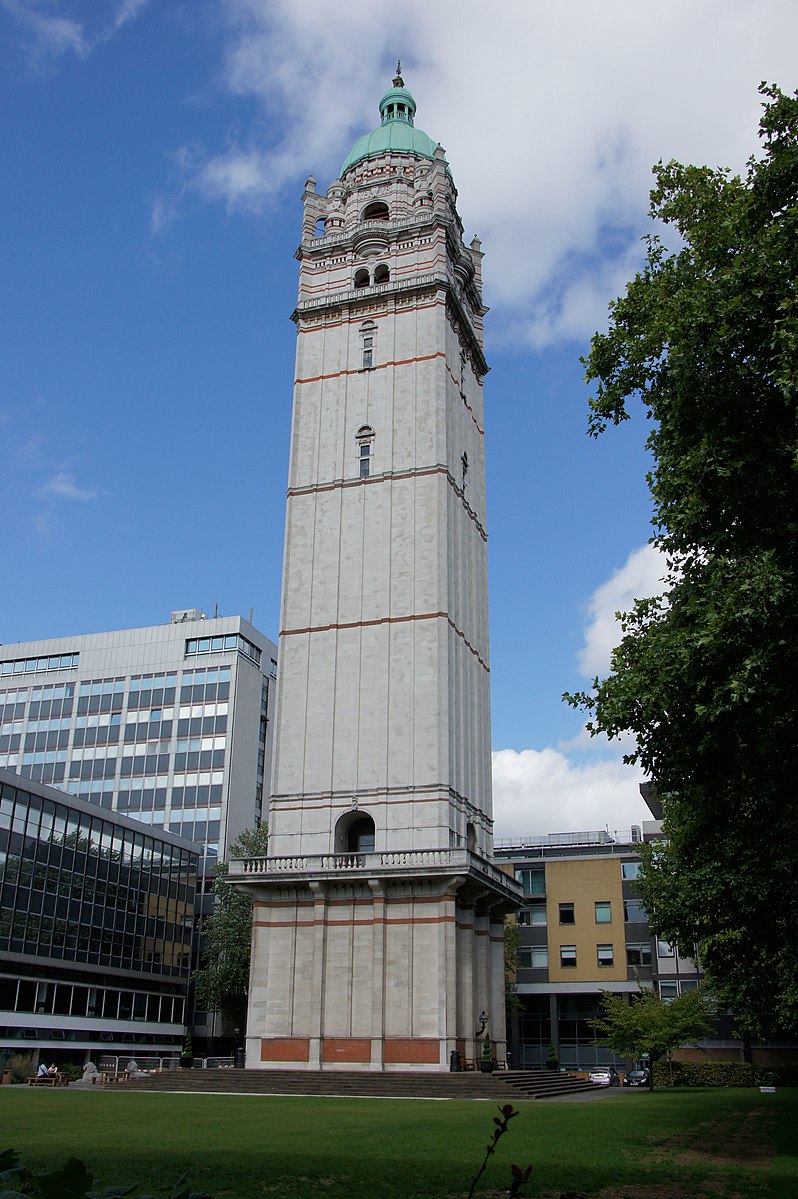
2. The tower, emerald dome still set afire by a sun which from my vantage has long since sunk into the ravenous outline of the library.
3. The statue, looking almost conventional from this angle. Lines of neon-red graffiti adorn its torso, too remote to read but I can guess at their essence. They must be recent, really recent – unmolested by caretakers or rainwater.
4. The grey buildings across the road, featureless in the dark, only two or three windows glowing. As I watch, a silhouette appears in the highest, backlit by bright fluorescence. It recedes after a second or two.
5. The sky, a pale azure turning to brilliant orange in the west. Something is unzipping it – over my head extends a lengthening streak of slate, diffuse at the back but hardening to a strict point at its end. There is a steady roar, like waves crashing somewhere far distant. Four turbines thrashing like crazy, modified fuselage churning out aerosol in immense volumes.
6. No stars. Not these days, thanks to our long and fruitful efforts.
When Leo arrives he approaches from my left and stands over me, grinning to hide his exhaustion. Two fingers tap behind his ears, and the implants are disabled. I ask him what he was listening to and the band he names sounds like a crossword clue. He calls me Al, because he finds it funny and he can’t pronounce Alparslan off the cuff.
‘Come on, Al,’ he says, ‘project time,’ He tries to take my hand.
‘Yeah,’ I respond, manoeuvring out of the way. ‘I know.’ I stand and stalk off towards the library. Unprepared for these English winters, I’m wearing just thin jeans and an Oxford shirt. The cold wraps around me. It burrows into my flesh. I imagine there might be frost tomorrow, emergent in the lee of buildings and bushes. I don’t think I’ve never seen frost before, not in my country, except maybe as a very young child. I have a vague memory of the fountain pool in our town square turning to ice, of the smooth and glittering surface like a mirror under my palm. Still, they say half your early memories are just subsequent inventions. I can’t trust myself to know.
In the library’s glass façade I see Leo following me. He’s dressed more sensibly than I am in a long, thick jacket. He fiddles with the lapel; I suspect he wants to shed the coat and drape it caringly over my shoulders. I walk a little faster and step gratefully indoors, sirocco air from the heaters a welcome relief. The rooms are largely empty, and I recognise many of the sparse occupants from our own course. Most degrees don’t set assignments this close to Christmas, but most degrees don’t have to justify their existence to the extent that Maths does. The department has been on death row for years, and they apparently feel that increasing the workload will present an image of vitality and necessity.
We find a spot on the fourth floor, by the western windows. The setting sun shines over the rooftops like a lighthouse from out across a black and frozen sea. Leo removes a silver rod from his pocket and fans it out into a screen and keyboard with a languid flick of his wrist. I try to ignore him and bring out my own laptop, firmly and consistently rectangular. It recognises my face and lights up, a picture of my parents frowning at a museum in İstanbul. I lean back in the chair until it starts to creak, and pull up the project. Spreadsheets and code, code and spreadsheets. Local Precipitation Effects of Marine Cloud Brightening, 2036-2039.
‘I can’t believe this,’ mutters Leo. ‘That we have to waste time on this crap.’ ‘Whatever. Just get on with it.’ I keep looking at the screen, but I hear him swing around to face me.
‘I mean, we’re supposed to be maths students, for god’s sake. I know it’s important, but there’s thirty other courses doing exactly this.’
I click my teeth together. ‘You realise that we are doing maths. You know, with the numbers and the sums and everything.’
‘Come on, you know what I mean.’
I do know what he means, unfortunately. My feet kick the ground and I rotate, not to look at him but back at the window. The sunset is unbelievably beautiful, a deepening bloodstain on the sky. The sulphur we’ve been pumping without end into the stratosphere has spread to every reach of the earth, making the Wild Blue Yonder that little bit whiter, making every evening shine that little bit more like burnished gold. They say you used the get the same effect after tests of nuclear weapons. The final formula for the aerosol was developed here, actually, at Imperial. It reflects enough heat to offset hundreds of thousands of times its weight in carbon dioxide. If you believe the press releases, it’s going to save the world.
Yes, we are the beating heart of progress. One of the last few universities in the UK, but we’re immune to the closures now. Practically every degree has turned its gaze towards the roiling, boiling planet, to the neglect of any other frontiers. Besides medicine, it’s the only
thing governments are willing or able to fund. There’s no time for any other pursuits. No time left at all.
‘Fifty people died in Kiribati last week.’ I say flatly. Leo pauses.
‘Yeah, I saw that. In Tuvalu or something…’
‘Tarawa.’ I still don’t look at him.
‘That’s it. Damn shame.’
‘A rogue wave took out the foundations of an emergency shelter. Whole thing just collapsed into the sea.’
‘Sure, tragic, but that’s not our fault.’ This now, this I laugh at. The sound of it rings with impertinence across the low-ceilinged space. From far behind me another student coughs, while a third drums their fingers on the table. In abject silence, noise can be contagious.
‘Of course it’s not our fault. By and large, it’s not the fault of anyone born this century. Still our planet though, isn’t it?’
‘Hmm.’ He folded his arms. ‘I think you’re looking at this wrong.’
Honestly, he’s a lot more tolerable when he’s arguing instead of flirting. ‘Go on, what do you think?’
‘You see Al, for me it’s about the principle…’
The sun disappears at last, and the starless sky presses down on the city like a bandage, like a hand.
***
I’m standing under a dark alder and I’m warm, and I’m tired, and here is what I can feel.
1. The rough bark behind me, uncompromisingly alive. My fingers trace its contours, the solid grooves slick with moisture and moss.
2. The leaf litter under my feet, crushed and crackling between bootheel and pavement. The little flakes carry their deaths with them, darting, dancing along the breeze.
3. The air, frigid and all too warm for this time of year. I sometimes imagine I can taste the changes in the wind, all the new and pervasive chemicals. What weaknesses we can find in the belly of the beast.
4. Leo’s coat across my shoulders. It’s heavy, and it smells of rain. I promised to return it tomorrow, and it’s a promise I intend to keep to the bastard. He left his gloves in the pockets and I play with the idea of pulling them on.
5. Hope, unexpected, maybe unwarranted. It wells up inside me and I exhale, my breath freezing instantly into a mist that swirls and drifts outwards into the night.
6. The world, spinning softly, dawn-bound, older than it has ever been before.
Inspired by my belief in the all-consuming severity of the climate crisis, and current theories of the geoengineering efforts that may have to be spearheaded by scientific institutions. I’m interested in how an increasingly singular focus for the natural sciences might be perceived, both in terms of its necessity and what other avenues might fall by the wayside amid such a pragmatic approach to research.
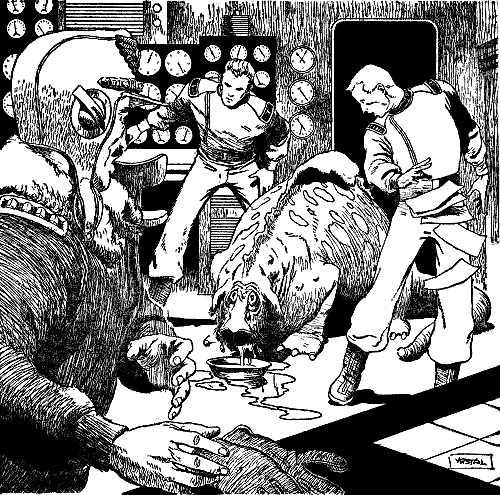
The slovenly wub might well have said: Many men talk like philosophers and live like fools.
I was introduced to the work of Philip K. Dick by my (then) boyfriend (ten years ago) when I was twenty-three. His sitting room was lined with bookcases, and from it, one day, he pulled a book of Philip K. Dick short stories. ‘Beyond Lies the Wub’is not the introduction to the work of PKD I would have chosen for myself. It explores none of the themes that interest me in PKD. The wub is a ‘huge dirty pig’. And the pig doesn’t want to be eaten. I was bored.
“Really, Captain,” the wub said. “I suggest we talk of other matters.”
PKD was forty-five years old in 1974. He had sold his first short story, ‘Roog’ in 1951 and his first novel, Solar Lottery, in 1955. Both had been simultaneously pulpy and ontological. He had won the Hugo Award for The Man in the High Castle (which also bores me) in 1963. The Three Stigmata of Palmer Eldritch had not won the Nebula Award in 1965 (losing out to Frank Herbert’s Dune). Later, in what came to be known as The Exegesis, he wrote that his ‘mystical experiences start[ed] in ’63 when’ he ‘saw the “Palmer Eldritch” visage [in] the sky’. For all the plurality of his ‘mystical experiences’, though, when people do talk about PKD’s mystical experiences, what they talk about is 2-3-74. In the 1986 17th issue of Weirdo, comix cartoonist Robert Crumb illustrated a (necessarily reductive) account of 2-3-74.
“Abolish the family? You might as well abolish gravity.” (1)
It is with these words, spoken by an imagined, horrified reader, that Sophie Lewis begins their new book. From the outset, the magnitude of the task ahead for family abolitionists is clear. To abolish the family is to attempt something frightening, something unthinkable, something which requires one to challenge the fundamental rules which bind our world together. It is, then, no surprise that again and again Lewis reaches for science fiction (SF) to articulate this vision of a world beyond the family. For an SF creator, to abolish a so-called law of nature is not a ridiculous proposition which can be used to embarrass utopians into giving up on their belief that “things could be different” (4, emphasis in original). It is rather a serious undertaking which involves an investigation of those forces which hold life as we know it together, the willingness to experiment with those same forces, and the determination to remake the world, however alien what comes next might be. This is the spirit in which we, the Beyond Gender research collective, approach Lewis’ book. We are a group of SF fans, researchers and creators who are committed to tapping into the radical potential of SF to undo the supposed naturalness of such myths as the binary model of gender, cis- and heteronormativity and, now, the family.
“Abolish the family? You might as well abolish gravity.”





 vector-bsfa.com