
No One at the Centre: Reading Dilman Dila’s The Blossoming of the Big Tree

By Kemi Cole

Adita does not want to lead anything. She is seventy years old, she would rather pedal a solar tractor across an acre than borrow a battery from a neighbour, and she has spent her life arranging her existence so that other people leave her alone. However, the system she lives under has other ideas.

Yat Madit, the political system Dilman Dila imagines in his novella The Blossoming of the Big Tree, distributes power so thoroughly that there is nowhere to hide from it. Dila has also written an essay tracing the precolonial Acholi governance structures that inspired this world, grounding the fiction in historical and political argument. This is the beating heart of the book, and also its best joke. Adita becomes the central figure of a narrative about a system explicitly built to have no central figures. The irony is precise and it does not soften.

What makes Adita remarkable is not that she changes. She does not. She remains uncomfortable in her own skin, hostile to touch, resistant to the idea that her interiority should be understood by anyone else. Dila never asks her to overcome this. The narrative does not cure her through the pressure of events or through a relationship. Instead, her introversion becomes the actual mechanism by which Yat Madit functions at scale. A leader who wants nothing consolidates nothing. A leader who retreats cannot become a tyrant. The political argument and the character are the same thing. That is what makes her work.

The world Dila builds around her is grounded and specific. Kampala is Kampala. Villages have names. Solar panels are made from a paste of leaves and algae. Governance runs on consensus down to the smallest communal decision. Dila embeds Acholi concepts into the narrative without translation. He is writing as if Uganda is the centre of the world, not a location that requires outsider comprehension. That act of centering is political. What is unusual is not the centering itself, which is a defining feature of Africanfuturism, but the depth and specificity of the political system he builds from precolonial Acholi structures, and his refusal to simplify it. 

When war arrives, Adita must navigate the central paradox of Yat Madit: how do you mount a defence in a system explicitly built to reject centralised command? A federation of hundreds of villages cannot coordinate quickly enough through pure consensus. The problem emerges early. As someone says in frustration: “Really? An idea to defeat the mighty army of USA? You?” The question is not cruel. It is structural. Dila is naming what his system cannot do. In response, they create a War Council of twelve people to speed up decision-making, but that very act risks betraying the founding principle that power should not concentrate. The danger, as Dila makes clear, is that such small numbers could lead to centralism, to a few people making decisions that affect everyone. They have created the thing they feared most in order to survive.

In face of this massive threat of war, solutions seem to arrive faster than the reader can absorb them. A spaceship appears. Technology embedded with living jok code, a form of sentient programming rooted in Acholi spiritual tradition rather than Western computing logic, is deployed. A satellite is accessed. Because so much depends on mechanisms the narrative never fully clarifies, the resolution feels contingent in ways that might be intentional but are also difficult to settle into.

Lokang, who should be the most complex figure in the novella, sits at the centre of this problem. En, the pronoun used for Lokang, is not a god. En is not quite human. En designed much of Yat Madit and then withdrew from public life, quietly innovating for decades. The novella never gives the reader enough to know what en actually is beyond those outlines. This means Lokang cannot quite carry the weight the final movement of the story needs from en. Dila seems aware of this and does not try to solve it by making Lokang less opaque. It is a choice, but it costs something in the narrative and might leave a reader wanting more.

What is not in question is the seriousness of what Dila is attempting. He is not interested in the aesthetics of Africanfuturism. He is interested in whether a society built on consensus can survive the demand for speed that crisis requires, whether precolonial political structures powered by contemporary technology could actually function, whether you can write about power without making power the story. These are genuine questions and the kind that speculative fiction is uniquely positioned to ask, using narrative to stress-test political ideas that policy cannot yet imagine.

In the aftermath, the federation does not solidify into a new order. Power begins to reconcentrate around those who used it well during the crisis. The system’s founding commitments are already being tested. Adita is alone. The tree, in Acholi tradition the meeting place where the village gathers, remains. The conversation never ends. That is not a triumphant ending. It is an honest one. It is the kind of ending that makes you want to argue with the book, which is exactly what Dila has built it to do.

The Blossoming of the Big Tree is a genuinely absorbing read, funny and serious in equal measure, and Adita is one of the most quietly original protagonists I have encountered in the genre in some time. 

Gender, Democracy, and SF/F Literary Awards

Published in Foundation 149 (winter 2024) edited by Paul March-Russell. Republished with permission.

By Jo Lindsay Walton and Polina Levontin

This article explores cultural and design dimensions of non-governmental voting systems, focusing on science fiction and fantasy (SFF) literary awards voted for by fans, with a focus on the British Science Fiction Awards. The design of such voting systems needs to juggle a range of goals, one of which is fairness with regard to gender — acknowledging that ‘fairness’ is not straightforward to define, particularly given such awards are embedded within broader gender inequalities. Our analysis suggests that men have been more likely than women to vote for works by men, and also more likely to vote in ways that amplify the influence of men’s votes under an Alternative Vote System. We suggest that SFF awards are cultural spaces which lend themselves to experimentation with new democratic forms, and briefly offer potential sources of inspiration. Just as SFF has aspired to be a space to think about the future of technology, gender, the environment, and many other issues, SFF award spaces could be spaces for thinking about the future of democracy. We also offer recommendations to SFF awards designers and communities to address gender bias (emphasising reflective practices over technical solutions), and to continue to explore how aesthetic and cultural values and identities are constructed and negotiated within SFF award spaces, and beyond. 

Science Friction

By Robert Kiely and Sean O’Brien

This academic article explores what it describes as ‘science friction,’ relatively recent near future SF depicting the intensification of contemporary economic tendencies, including increased automation and the spread of digital platforms. The bitterly critical tone and concerns of these works is in marked tension with the techno-utopianism prevalent within much twentieth-century science fiction, within contemporary literary science fiction studies, and within the uses of science fiction within contemporary political theory, including left accelerationism broadly construed. Such techno-optimist thinking is not naively enamoured of detailed, inflexible plans for what the future should look like, but it arguably leans too heavily on a vision of technology as a relatively neutral, repurposable and ever-proliferating resource, paying insufficient attention to its historical contingencies. The article ends by contending that there are material reasons why techno-optimist SF was readily available in the twentieth century, just as there are material reasons why it is less readily available now. Perhaps then ‘science friction’ invites us to contemplate the exhaustion of such thinking, an exhaustion that correlates with the closure (or at least profound transformation) of the radical political opportunities in which it was once rooted.


  • Review: This article underwent editorial review by two editors.
  • License: Copyright Robert Kiely and Sean O’Brien, all rights reserved.
  • Citation: Kiely, R and O’Brien, S. 2018. Science Friction. Vector #288. https://vector-bsfa.com/2018/11/16/science-friction/
  • Keywords:  algorithmic governmentality, economics, labour, near future SF, platform capitalism, post-scarcity, science friction, techno-utopianism

This article examines a series of near-future SF stories that offer snapshots of an immediate future dominated by the intensification of contemporary economic tendencies, including increased automation and the rise of digital platforms. Much twentieth century SF tends to traffic in a certain techno-optimism in its outlook, not so much to suggest that technological advances would produce positive outcomes but that they would continue to develop and expand in their complexity and productivity. Today this utopian legacy is carried forward both by literary science fiction studies and by the uses of science fiction within contemporary political theory. In a different vein, and in tension with this outlook, is what we call ‘science friction’: a literary practice of slowing down visions of technological and social progress.

econSF

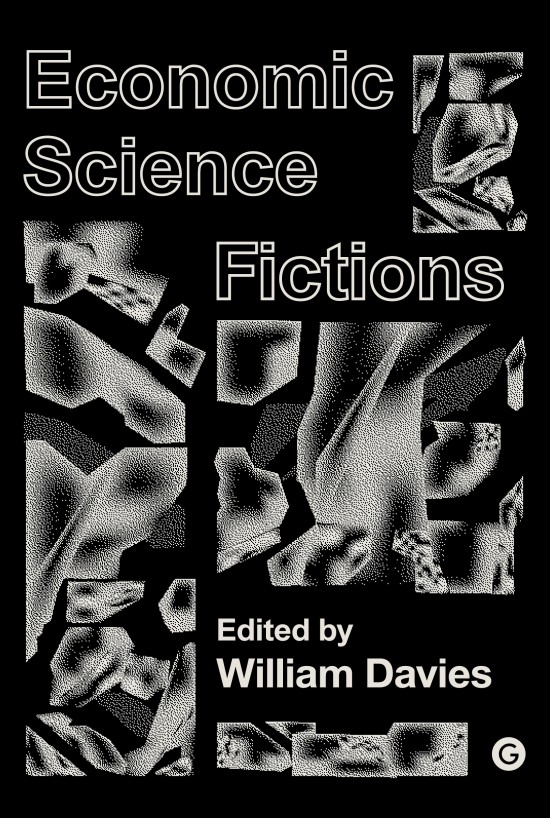
Two recent collections, Futures and Fictions (2017) and Economic Science Fictions (2018), look to SF to counter the dominant cultural narrative of what Mark Fisher calls ‘capitalist realism’—the Thatcherite idea that ‘there is no alternative’ to capitalism—with alternative visions of the future based largely on emerging technological innovations [1]. To puzzle over this position, as we’ll do below, is not to be fatalistic or to concede political ground on the terrain of the imaginary. Rather, it is to question the capacity of capitalist technology to usher in a postcapitalist future, especially under contemporary conditions of stagnation and precarity. As these works of science friction suggest, further development of capitalist technologies are likely to offer more of the same, but worse.

Critics such as Simon O’Sullivan, William Davies and Peter Frase have argued that a visionary SF can offer much-needed screenshots of a postcapitalist future, challenging the neoliberal status quo and bolstering a left that suffers from a perceived poverty of imagination. [2] In the discussion that opens Futures and Fictions, for example, O’Sullivan argues that ‘future fictions have a more general traction on the real, not least insofar as they can offer concrete models for other ways of life in the present.’ [3] Several of the essays in the collection suggest that the intensification of late capitalist technological developments will provide the means to realize a postcapitalist utopia if the economy were managed by a socialist state. Here, full automation and universal basic income (UBI) constitute transitional demands on the way to what Aaron Bastani brands ‘fully automated luxury communism’ [4].

Continue reading “Science Friction”