BSFA Survey Response: John Meaney

Survey coverJohn Meaney is a writer and black belt martial artist. His first novel, To Hold Infinity (1998), was shortlisted for the BSFA Award. Subsequent work includes the three-volume space opera Nulapeiron sequence (2000–2005), the gothic Tristopolis duology Bone Song (2007) and Dark Blood (2008), and many short stories. Just out is Edge, a near-future thriller (published as by Thomas Blackthorne), and forthcoming is Absolution, the first volume in a space opera series influenced by Norse mythology. Meaney was one of more than 80 writers to respond to the 2009 BSFA survey, and his responses are reproduced below.

1. Do you consider yourself a writer of science fiction and/or fantasy?

In the world of martial arts – bear with me: you talk to a writer, you get a fistful of metaphors – the ultimate fighting test is MMA, sometimes called cage fighting. The fighters are all-rounders operating in simultaneous modalities – jiu-jitsu, wrestling, kickboxing. Under those conditions, most martial artists fall to pieces.

In the ’90s, the field was dominated by one Brazilian family, working from their core art of Gracie Jiu-Jitsu. Nowadays, the light-heavyweight champion of the major worldwide circuit (the UFC) works from my own core system of shotokan karate, taking it into other modalities at world-class level.

Some of my work spans multiple genres – two of my novels are published as fantasy in the US but science fiction in the UK (and a different publisher offered to market them as police procedurals); while my novelette “Whisper of Disks” is almost pure literary fiction.

As a writer, my core discipline is science fiction; I take it with me wherever I go.

2. What is it about your work that makes it fit into these categories?

Rigorous physics runs through my dark fantasy, which is really an alternative history deviating from our own during the formation of the solar system – as astute readers have noticed. In my hard sf, the story always depends on some deep concept or mystery from science – for example, time’s arrow. (Not a single fundamental physics equation indicates time flowing from past to future.) Critics sometimes say they cannot tell where real science ends and my fictional science begins. Sometimes I take that as high praise; other times I cry: “It’s all real, didn’t you know?”

But that’s only in the books I’ve written so far…

3. Why have you chosen to write science fiction or fantasy?

As someone deeply interested in cognitive processes – and a trained hypnotist – I’ve observed (and therapeutically utilized) the phenomenon of unconscious choice. We make choices all the time; the most important decisions rarely operate with much self-awareness. (Human beings are skilled at confabulating rational justifications after the behaviour’s conclusion; but those stories are what we cognoscenti refer to as porky pies.)

As far the conscious mind is concerned, books write themselves – and as for choice, there isn’t any.

4. Do you consider there is anything distinctively British about your work, and if so what is it?

Sometimes yes; sometimes no. It’s American critics who say that I’ve written about class-ridden culture – in my Nulapeiron books – with a sensibility only a Brit could bring to bear. But the Tristopolis books are purely transatlantic, with a dark gothamesque setting that comes straight from my love of New York.

5. Do British settings play a major role in your work, and if so, why (or why not)?

Not in the books you can buy right now. There are recurring settings in secondary storylines, and Oxford is one of the cities I keep revisiting; but so is Zurich. I have two forthcoming novels set in near-future Britain, along with an alternate history cold-war thriller with a half-English protagonist and some British settings. (That’s in addition to my big hard sf trilogy in progress, the Ragnarok trilogy, which has a European timeline set partly in the UK.)

What’s interesting is that the books set entirely in Britain will almost certainly appear under a pseudonym, because they are more (literate) thrillers than hard sf. So perhaps John Meaney isn’t much for British settings, while his alter ego is.

6. What do you consider are the major influences on your work?

In childhood: Fireball XL5, Robert Heinlein, Andre Norton, Clifford Simak, A.E. van Vogt. Later, Roger Zelazny (everything he wrote) and Frank Herbert (only Dune, but I loved it). In the decades since, it’s non-SF writers whose writing resonates for me: John Irving, James Lee Burke, Robert B. Parker and Stephen King are my heroes; and their books are my mentors.

Oh, did you notice they’re American?

Of course, that’s only the fiction. When it comes to other influences… that’s everything I’ve experienced and everything I’ve done. Me and every other writer.

7. Do you detect a different response to your science fiction/fantasy between publishers in Britain and America (or elsewhere)?

Yes, but some of that is timing. My recent Tristopolis books generated similar responses in Britain, America and Germany.

8. Do you detect a different response to your science fiction/fantasy between the public in Britain and America (or elsewhere)?

American readers are more likely to email me! Thanks, guys…

9. What effect should good science fiction or fantasy have upon the reader?

There should be a massive BANG! Spattered on walls and ceiling, remnants of brain slurp and drip toward the floor…

How many people flick on a light switch without considering what happens to make it work? How many people think of TV as electrons dancing in magnetic synch across the nation like a subatomic Riverdance? Or look at tiny flecks on brickwork and think: oh, fantastic, lifeforms are everywhere…

Everything’s connected. Our 13.7 billion year old universe, like a giant sponge filled with dark-matter filaments; our world existing for a third of that time; evolution and complexity turning stardust into living, thinking beings. How dare people – and mundane fiction – be so ungrateful as to ignore the wonder that surrounds and fills us?

SF should be adrenaline slamming straight to the heart, caffeine direct to the brain, injected with a hard, thrusting needle.

10. What do you consider the most significant weakness in science fiction as a genre?

Hollywood. Mind you, there are novelists who write about aliens with DNA or suchlike nonsense, on a par with sound effects in space… But the psychological associations with film and TV repel as many readers as they tempt into our genre. And some of our best books do present a barrier of geekness. Or should that be geekitude?

11. What do you think have been the most significant developments in British science fiction and fantasy over the past twenty years?

We grew confident, maybe even aggressive… and good for us! (And let’s hear it once again for David Pringle. He did us proud.) SF and fantasy writers have overwritten the old constraints, redefining the genre just as surely as MMA – and urban athletes like free runners – breathed new, exciting, energetic life into their arena.

Twenty Years, Two Surveys (and other BSFA matters)

The survey has landed! Or, at least, is landing. BSFA members should receive their copies this week (or have already received them); non-BSFA members can order a copy (for the low low price of £7.99 plus postage! That is, plus £1.24 in the UK and £4.35 overseas) here.

bsfa_two_surveys_cover2

surveybook200320101995

Along with the book, BFSA members will receive their ballot for this year’s awards; note that these need to be turned around pretty sharpish (although you can send in your votes by email), unless you’re planning to vote at Eastercon.

Also in the post to BSFA members this week: the latest mailing, comprising a new Vector (the review of 2009), a new Focus (featuring Christopher Priest, Gareth L Powell, Nina Allan and others), and this year’s short fiction award booklet. I’m thinking of hosting discussions about each of the shortlisted stories next week, in the run-up to Eastercon, to encourage people to read the last of these!

And it would be remiss of me not to note that this week’s BSFA London Meeting, on Wednesday evening, will be a discussion of the awards shortlists, featuring Graham Sleight, Damien G Walter, and Martin McGrath. Be there, as they say.

Back to the survey. All comments are, of course, very welcome — indeed, I’d love to be able to include a really substantive letter column in the summer Vector. And, as I previously noted, there’ll be a panel to discuss the survey’s findings at Eastercon; at 5pm on the Friday, to be precise, with John Jarrold, Caroline Mullan, Claire Brialey, David Hebblethwaite and myself as panelists. Please do come along and offer your thoughts, if you’re going to be there. In the meantime, however, and since in the final book each question in the survey is considered in a separate chapter, with context and analysis, to give a flavour of the project, I thought it would be nice to post some authors’ original responses. So that’s what I’ll do this week.

Awards Awards Awards

1. BSFA Awards

For anyone who didn’t see the note buried in the comments of the shortlist post, Hal Duncan has withdrawn his essay “Ethics and Enthusiasm” from consideration for the Non-Fiction Award.

With that in mind, now, admittedly I don’t think it has a hope in hell of winning, but then I didn’t think it had a hope in hell of making the shortlist, so on the off-chance that it does… I think it would be criminal for my exploration of modes of critique to be accorded more status and attention than the exploration of issues of representation and diversity carried out by Deepa D, especially when those issues are precisely born of a disparity of status and attention. It would, I feel, be validating the very situation that requires redress if the BSFA Awards were to valorise abstractions that bear only a passing relevance to the field over a commentary that bears directly on its practical, political realities, not least because of the disparities of privilege at play here. It’s awesome to have people take note of what I say from my platform, but in this case I’m going to use that platform to say, there are other voices you should be listening to first.
[…]
So, with the utmost gratitude to those who put it there, and more than a little reticence because of course I’d fucking love a BSFA Award for non-fiction, I’d like to respectfully withdraw “Ethics and Enthusiasm” from the running, and leave the contest to those works which bear directly on the field.

The Guardian has noted the shortlists here — “After Booker snub, Adam Roberts in running for SF honour” — with a soundbite from me, in which I say I think it’s hard to pick a front-runner in the Best Novel category. All four books have been well received: Yellow Blue Tibia seems to have a critical mass of momentum behind it, Ark is a consecutive nomination for a previous winner of the Award, Lavinia is considered by many to be a masterwork by a multi Hugo- and Nebula-winner, and The City & The City has tremendous word-of-mouth. If you put a gun to my head I’d probably pick Mieville as the winner (I think it may be his year for a Hugo, too), but I wouldn’t want to put a lot of money on it. Nader Elhefnawy also has some thoughts on the shortlists here, and there’s an io9 post here.

2. Hugo Awards

Speaking of Hugo Awards, nominations are now open, until 13th March. Cheryl Morgan has a guest post at the Feminist SF Blog about “Hugo voting on the cheap” — which sadly means how to become an informed voter without having to buy a lot of books, rather than actual cheap voting memberships — with lots of recommendations for potential nominees. Joe Sherry has posted a draft of his Hugo ballot. I think this is a good idea, and will probably follow suit later this week.

3. The David Gemmell Legend Award

Nic Clarke reviews last year’s inaugural Legend Award shortlist for Strange Horizons. Part one of the review can be found here:

What do they mean by “in the spirit of David Gemmell”? According to the same web page, what they are looking for is something that grabs the reader immediately, with pace (“you know, books that you’re STILL reading at three in the morning!”), characters to root for, and convincing world-building. Stories, in other words, that take hold and won’t let go until the final page—the reason we all started reading fantasy in the first place.

Quality of prose goes unmentioned, but I’m afraid it won’t in this review; writing that makes me want to stab my own eyes out tends to interfere with my desire to still be reading at three in the morning. I’m fussy like that.

Part two is here, and there’s a related post by Mark Charan Newton here:

This, it seems, is one of the only actual comparisons of the fantasy titles that were shortlisted. I made noises at the time that no one was talking about the content of the books, and so here we go at last.

I must admit to finding it bizarre that any award can have a shortlist where titles are barely compared to each other. How can you call a book the “best” without such an analysis? Getting as many people to vote online seems a spurious way to go about this, when clearly no one could have read so many titles.

I’m not being grouchy here – please don’t misunderstand.

This is where my arguments lie: we bitch and moan about why we – the fantasy genre – are not taken seriously. But when we’re not going to compare and contrast, and dig into the content of some of the big fantasy titles of the year, how can the fantasy genre expect to better itself year on year? How can it expect to gain more respect? (If you don’t care for respect, then I guess that’s the end to my argument.) But we all know that we posses rather self-conscious moments, we fantasy readers, if we’re honest.

4. The William L. Crawford Award

Press release at Locus Online:

Jedediah Berry has been named the winner of the 2010 William L. Crawford Award for first novel The Manual of Detection. The Award, presented annually at The International Conference on the Fantastic in the Arts, is for a new fantasy writer whose first book appeared the previous year. This year’s conference will be March 17-21, 2010 in Orlando FL.

The award committee shortlisted Deborah Biancotti’s collection A Book of Endings, Kari Sperring’s novel Living with Ghosts, and Ali Shaw’s novel The Girl With Glass Feet, and wanted to commend two other authors whose works were ineligible this year but were highly regarded: Robert V.S. Redick, whose The Red Wolf Conspiracy appeared in 2008 and whose The Ruling Sea appears in 2010, and Michal Ajvaz, whose The Other City originally appeared in Czech in 1993 but was first translated into English by Gerald Turner in 2009.

A good winner, and a strong shortlist, I reckon.

London Meeting: Jim Burns

The guest at tonight’s BSFA London meeting is Jim Burns (SF artist, winner of the Hugo award for best professional artist three times—the only non-American ever to have won it—and winner of 12 BSFA Awards), who will be interviewed by Pete Young.

The venue is the upstairs room of The Antelope, 22 Eaton Terrace, London, SW1W 8EZ. The closest tube station is Sloane Square, and a map is here.

As usual, there will be people in the bar from 6-ish, with the interview starting at 7. The meeting is free, and open to any and all, though there will be a raffle with a selection of sf books as prizes. See you there, I hope.

Future meetings:
24th February: David Edgerton interviewed by Shana Worthen
24th March: BSFA Awards discussion*
21st April: Kari Sperring interviewed by Tanya Brown**

* Note that this is a month with five Wednesdays
** Note that this meeting is on the third Wednesday

2009 BSFA Awards Shortlists

Best Novel

Ark cover Lavinia cover
The City & The City cover Yellow Blue Tibia cover

Ark by Stephen Baxter (Gollancz)
Lavinia by Ursula K Le Guin (Gollancz)
The City & The City by China Mieville (Macmillan)
Yellow Blue Tibia by Adam Roberts (Gollancz)

Best Short Fiction
Sinner, Baker, Fabulist, Priest; Red Mask, Black Mask, Gentleman, Beast” by Eugie Foster (Interzone 220)
The Push by Dave Hutchinson (Newcon Press)
Johnnie and Emmie-Lou Get Married” by Kim Lakin-Smith (Interzone 222)
“Vishnu at the Cat Circus” by Ian McDonald (in Cyberabad Days, Gollancz)
The Beloved Time of Their Lives” [pdf link] by Ian Watson and Roberto Quaglia (in The Beloved of My Beloved, Newcon Press)
The Assistant” by Ian Whates (in The Solaris Book of New Science Fiction 3, ed. George Mann)

Best Artwork
Alternate cover art for 20,000 Leagues Under the Sea (art project), Nitzan Klamer
Emerald” by Stephanie Pui-Mun Law
Cover of Desolation Road by Ian McDonald, by Stephan Martinière, jacket design by Jacqueline Nasso Cooke
Cover of Interzone 220, Adam Tredowski
Cover of Interzone 224, Adam Tredowski
Cover of Interzone 225, Adam Tredowski

Best Non-Fiction
Canary Fever by John Clute (Beccon)
I Didn’t Dream of Dragons” by Deepa D
Ethics and Enthusiasm” by Hal Duncan [Note: withdrawn from consideration]
“Mutant Popcorn” by Nick Lowe (Interzone)
A Short History of Fantasy by Farah Mendlesohn and Edward James (Middlesex University Press)

Congratulations to all the nominees! Note that there are only four nominees in the Best Novel category, and six nominees in the Best Short Fiction and Best Artwork categories due to ties for fifth place. The Awards will be presented at this year’s Eastercon, Odyssey.

BSFA Award Nominations — Final Reminder!

Yes, today’s the day: nominations must be sent to Donna Scott, the Awards Administrator by 23.59 GMT today (Saturday). Don’t forget to include your membership number and/or postcode.

The four nomination-list posts have been updated with additional nominations received as of last night:

Me, I’m going to spend most of today reading short stories, I think…

BSFA Award Nominations Update

I’ve updated the list for each category to reflect nominations received between Friday and yesterday evening:

Note also that of the existing nominations, “The Beloved Time of their Lives” by Roberto Quaglia and Ian Watson has been made available as a pdf.

EDIT: More stories! Lavie Tidhar has released four of the tales included in The Apex Book of World SF into the wild, as pdfs:

FURTHER EDIT: And Kim Lakin-Smith’s story, “Johnny and Emmie-Lou Get Married“, has also appeared.

BSFA Award Nominations So Far — Best Artwork

To recap, for anyone who wasn’t reading over the weekend: the deadline for nominating for this year’s BSFA Awards is this coming Saturday, 16 January. BSFA members can nominate as many items as they like in the four categories — Best Novel, Best Short Fiction, Best Non-Fiction, and Best Artwork. The five items with the most nominations in each case go forward to the final ballot.

As an aid to memory, I’ve been posting the nominations received so far in each category — that is, lists of everything that has received at least one nomination:

Today, the last of the categories: Best Artwork. Any single science fictional or fantastic image that first appeared in 2009 is eligible; to add your support to any of the works listed below, or to nominate anything else, email the BSFA Awards Administrator with details of what you want to nominate, and your membership number or postcode.

The list:

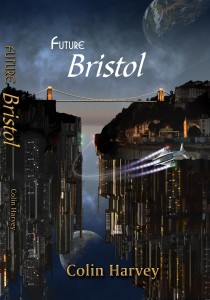
Cover of Future Bristol, ed. Colin Harvey by Andy Bigwood
Cover of The Push by Dave Hutchinson, by Andy Bigwood
Cover of The Gift of Joy by Ian Whates, by Vincent Chong
Alternate cover for Harry Potter and the Philosopher’s Stone by MS Corley
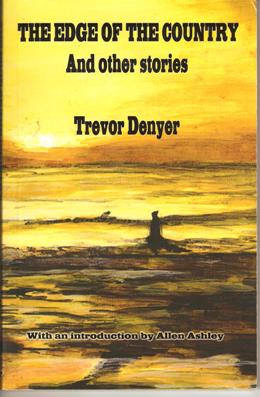
Cover of The Edge of the Country and Other Stories by Trevor Denyer
Cover of Boneshaker by Cherie Priest, by Jon Foster
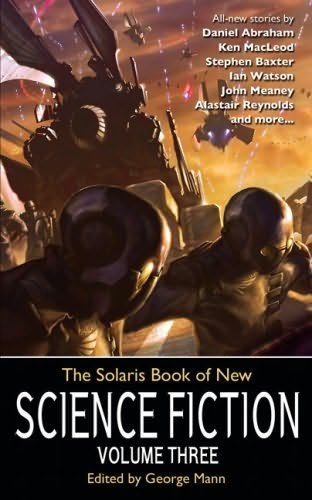
Cover of The Solaris Book of New Science Fiction, Volume Three ed George Mann, by Hardy Fowler
Alternate cover for 20,000 Leagues Under the Sea, art project by Nitzan Klamer
Cover of The Caryatids by Bruce Sterling, by Raphael Lacoste, jacket design is by David Stephenson.
Emerald” by Stephanie Law
Cover of Murky Depths 7, by Chris Moore
Cover of Desolation Road by Ian McDonald, by Stephan Martinière, jacket design by Jacqueline Nasso Cooke.
Cover of The Sad Tale of the Brothers Grossbart by Jesse Bullington, by Istan Orosz
Cover of World’s End by Mark Chadbourn by John Picacio
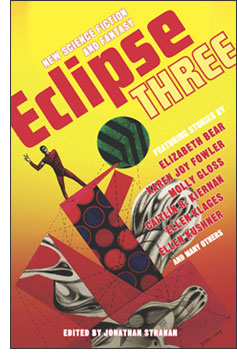
Cover of Eclipse 3 ed Jonathan Strahan by Richard Powers
Cover of Shadow of the Scorpion by Neal Asher by Steve Rawlings
Cover of Twisted Metal by Tony Ballantyne, by Jon Sullivan
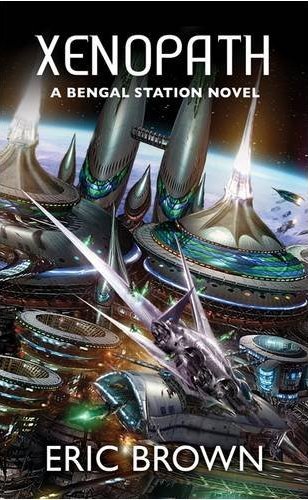
Cover of Xenopath by Eric Brown by Jon Sullivan
Cover of Interzone 220, by Adam Tredowski
Cover of Interzone 221, by Adam Tredowski
Cover of Interzone 224, by Adam Tredowski
Cover of Interzone 225, by Adam Tredowski
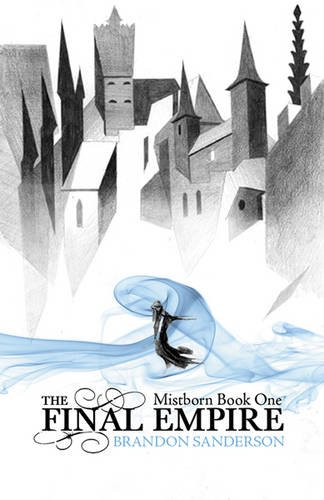
UK cover for The Final Empire by Brandon Sanderson, by Sam Green
Cover of Retribution Falls by Chris Wooding, by Stephan Martiniere
Cover of The Windup Girl by Paolo Bacigalupi, by Raphael Lacoste
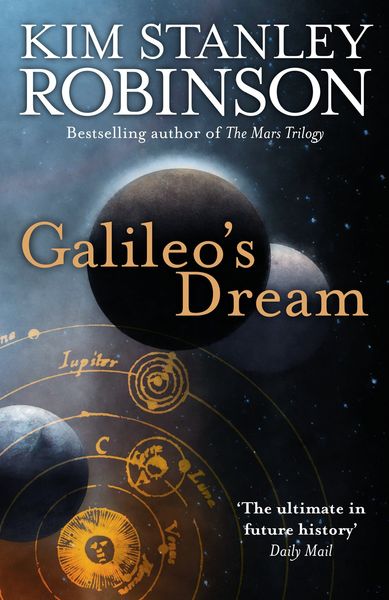
Cover of Galileo’s Dream by Kim Stanley Robinson
Cover of Journey Into Space by Toby Litt
Cover of The Resistance by Muse

Links are to the best-quality copies of each image that I could find; if you can improve on any of them (or if you know the artist details for any of the images that are missing them) do let me know.

BSFA Award Nominations So Far — Best Short Story

Once more, with feeling: this is a list of all works that have so far received at least one nomination for this year’s BSFA Award for Best Short Story. Why not read a couple? I’m going to try to get through as many of the ones I haven’t yet read as I can by next weekend. Send additional nominations with your membership number and/or postcode, by January 16th. After that, the five with the most nominations go forward to the final ballot.

The Best Monkey” by Daniel Abraham (The Solaris Book of New SF, Volume Three, ed. George Mann, Solaris)
After the Revolution” by Pauline J Alama (Abyss & Apex, first quarter 2009)
“Microcosmos” by Nina Allan (Interzone 222)
Genesis by Bernard Beckett (Quercus Publishing)
“Atomic Truth” by Chris Beckett (Asimov’s, April/May 2009)
“Diamond Shell” by Deborah Biancotti (request; from A Book of Endings, Twelfth Planet Press)
“Problems of Light and Dark” by Deborah Biancotti (request; from A Book of Endings, Twelfth Planet Press)
“Ys” by Aliette de Bodard (Interzone 222)
An Education of Scars” by Philip Brewer (Futurismic, March 2009)
Starship Fall by Eric Brown (PS Publishing)
“After the Change” by Stephanie Burgess (Future Bristol, ed Colin Harvey, Swimming Kangaroo Press)
“The Festival of Tethselem” by Chris Butler (Interzone 224)
The Branding of Shu Mei Feng” by Amanda Clark (Daybreak, 29 November 2009)
“Re-Creations” by David L Clements (Footprints)
“Erosion” by Ian Creasey (Asimov’s, Oct/Nov 2009)
“The Certainty Principle” by Colin Davies (Asimov’s, Feb 2009)
Tyrannia” by Alan DeNiro (Strange Horizons, 30/11/09)
“The Other Side of Life” by Ian R Faulkner (Murky Depths 10)
Sinner, Baker, Fabulist, Priest; Red Mask, Black Mask, Gentleman, Beast” by Eugie Foster (Interzone 220)
“It Takes Two” by Nicola Griffith (Eclipse 3, ed. Jonathan Strahan)
The Slows” by Gail Hareven (New Yorker, May)
Fembot” by Carlos Hernandez (Daybreak, 25/12/09)
Homeostasis” by Carlos Hernandez (Futurismic, July)
“The Assimilated Cuban’s Guide to Quantum Santiera” by Carlos Hernandez (Interfictions 2, ed. Chris Barzak and Delia Sherman)
All the Anne Franks” by Erik Hoel (Strange Horizons, 23/11/09)
The Push by Dave Hutchinson (Newcon Press)
Seventh Fall” by Alex Irvine (Subterranean, Summer 2009)
Spar” by Kij Johnson (Clarkesworld, October 2009)
Trembling Blue Stars” by Richard Kadrey (Flurb 7)
A Journal of Certain Events of Scientific Interest from the First Survey Voyage of the Southern Waters by HMS Ocelot, As Observed by Professor Thaddeus Boswell, DPhil, MSc; or, A Lullaby” by Helen Keeble (Strange Horizons, 1/06/09 and 8/06/09)
Galatea’s Stepchildren” by Sam S Kepfield (The Future Fire 16)
Johnnie and Emmie-Lou Get Married” by Kim Lakin-Smith (Interzone 222)
horrorhouse” by David D Levine (Daybreak, 30 October 2009)
“Where the Time Goes” by Heather Lindsley (Asimov’s, Oct/Nov 2009)
“Death Knocks” by Ken MacLeod (When it Changed, ed. Geoff Ryman)
“Moss Witch” by Sara Maitland (When it Changed, ed. Geoff Ryman)
“Vishnu at the Cat Circus” by Ian McDonald (in Cyberabad Days)
“A Clown Escapes from Clown-Town” by Will McIntosh (Interzone 221)
“Mother of Champions” by Sean McMullen (Interzone 224)
“Love in Another Language” by Eugene Mirabelli (Not One of Us 42)
“On the Road” b Nnedi Okorafor (Eclipse 3, ed. Jonathan Strahan)
“Silence and Roses” by Suzanne Palmer (Interzone 223)
“By Starlight” by Rebecca Payne (Interzone 225)
“Minya’s Astral Angels” by Jennifer Pelland (The Solaris Book of New SF, Volume Three, ed George Mann, Solaris)
The Language of Dying by Sarah Pinborough (PS Publishing)
Troublesolving” by Tim Pratt (Subterranean, Fall 2009)
“Unexpected Outcomes” by Tim Pratt (Interzone 222)
The Beloved Time of their Lives” by Roberto Quaglia and Ian Watson (The Beloved of my Beloved, Newcon Press; pdf link)
“The Receivers” by Alastair Reynolds (Other Earths, ed. Nick Gevers and Jay Lake)
“The Fixation” by Alastair Reynolds (The Solaris Book of New SF 3, ed. George Mann)
“Hair” by Adam Roberts (When it Changed, ed. Geoff Ryman)
“After Everything Woke Up” by Rudy Rucker (Interzone 220)
“Sublimation Angels” by Jason Sanford (Interzone 224)
“Here We Are, Falling Through Shadows” by Jason Sanford (Interzone 225)
Lily Glass” by Veronica Schanoes (Strange Horizons, 27/04/09)
Unrest” by Grace Seybold (Beneath Ceaseless Skies, 12/03/09)
“Dog-Eared Paperback of Our Lives” by Lucius Shepard (Other Earths, ed. Nick Gevers and Jay Lake)
The Very Difficult Diwali of Sub-Inspector Gurushankar Rajaram” by Jeff Soesbe (Daybreak, 13 October 2009)
“Black Swan” by Bruce Sterling (Interzone 221)
“Palimpsest” by Charles Stross (in Wireless)
Eros, Philia, Agape” by Rachel Swirsky (Tor.com, March 2009)
The Shangri-La Affair” by Lavie Tidhar (Strange Horizons, 19/01/09 and 26/01/09)
Spiders Moon” by Lavie Tidhar (Futurismic, November 2009)
The Radiant Car Thy Sparrows Drew” by Catherynne M Valente (Clarkesworld, August)
“The Island” by Peter Watts (The New Space Opera 2, ed. Gardner Dozois and Jonathan Strahan, Eos; read online [select “chapter two”])
“Out of Time” by Jack Westlake (Murky Depths 8)
“Glitch in the System” by Ian Whates (The Gift of Joy, Newcon Press)
“Ghosts in the Machine” by Ian Whates (The Gift of Joy, Newcon Press)
"The Assistant" by Ian Whates (The Solaris Book of New SF Volume 3, ed. George Mann, Solaris)
“Infected” by Lilah Ward (Not One of Us 41)

Well, the short story club selections seem to be doing pretty well; be interesting to see if any of them make the final ballot. Surprised not to see “Vishnu at the Cat Circus” nominated yet. And I think I’ve managed to link all the stories that are online, but if I’ve missed any, let me know.