Pedro Iniguez is a Mexican-American horror and science-fiction writer from Los Angeles, California. He is a Rhysling Award finalist and a Best of the Net and Pushcart Prize nominee.
His work has appeared in Nightmare Magazine, Never Wake: An Anthology of Dream Horror, Shadows Over Main Street Volume 3, and Qualia Nous Vol. 2, among others.
Forthcoming, his horror fiction collection, FEVER DREAMS OF A PARASITE, is slated for a 2025 release from publisher Raw Dog Screaming Press. https://pedroiniguezauthor.com/
Jean-Paul L. Garnier is the owner of Space Cowboy Books bookstore and publishing house, producer of Simultaneous Times Podcast (2023 Laureate Award Winner, BSFA, Ignyte, and British Fantasy Award Finalist), and editor of the SFPA’s Star*Line magazine. He is also the deputy editor-in-chief of Worlds of IF & Galaxy magazines. In 2024 he won the Laureate Award for Best Editor. He has written many books of poetry and science fiction. https://spacecowboybooks.com/
JPG – What made you want to take on the themes in Mexicans on the Moon through speculative poetry, and where did specpo take you that other mediums might not have allowed?
PI – I think there’s a power in the brevity and playfulness of poetry that really worked in my favor with this collection. Speculative poetry allows me to shift gears quickly from poem to poem. For example, in Mexicans on the Moon, you’ll find poems that are heartwarming, funny, sad, chilling, or thought-provoking. It allows the poems to take on their own life, be tonally different, while still feeling thematically coherent in the grand scheme of things.
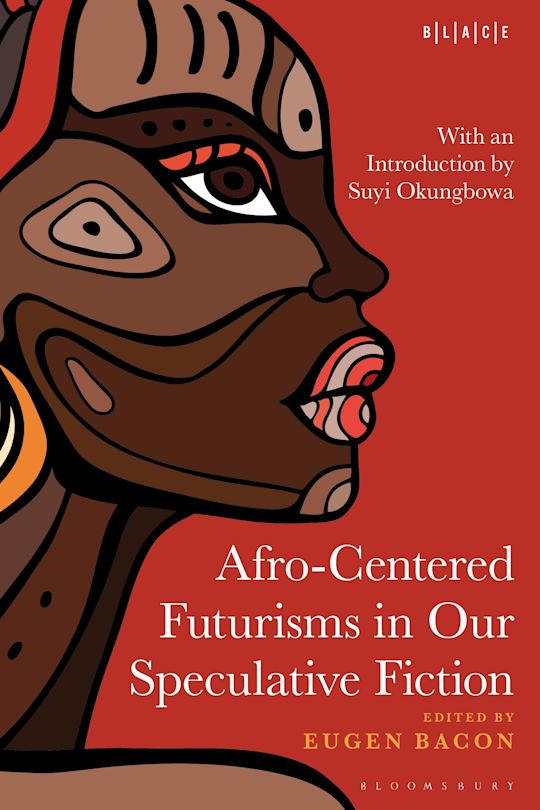
Edited by Eugen Bacon, Afro-Centered Futurisms in Our Speculative Fiction (2024) is an anthology of award-winning African speculative fiction writers, including Suyi Okingbowa, Cheryl S. Ntumy, and Dilman Dila.
The anthology pushes us to question the genre labels we take for granted – namely, Afrofuturism, Africanfuturism, and futurism – alongside introducing us to new terms, fusing specificity with inclusivity. Key to the anthology is the concept of the ‘gaze’: of looking in order to name, and the tension between fixity and fluidity that comes from it. With a blend of fiction and nonfiction, Bloomsbury describes the anthology as offering “excerpts from their work and creative reflections on futurisms with original essays.”
Afrofuturism, Africanfuturism and Afro-centred Futurisms
There are many names for speculative fiction by African writers. The anthology is chiefly concerned with differentiating Afrofuturism, Africanfuturism, and introduces Afro-centred Futurisms. ‘Afrofuturism’ often refers to Black speculative fiction, although the anthology reminds us of its origins in the United States of America through Mark Dery’s coinage. ‘Africanfuturism’ is Nnedi Okorafor’s invention to describe speculative fiction invested in African histories, presents and futures. ‘Afro-centred Futurisms,’ as Suyi Okungbowa defines it, is a plural term with an “active consciousness and open-armed framework — the privileging of the Afrodescendant self, an investment in timelessness, and an embrace of the spirituality-to-science spectrum” (18).
Samantha Mills is a Nebula, Locus, and Theodore Sturgeon Memorial Award winning author living in Southern California, USA. You can find her short fiction in Uncanny Magazine, Beneath Ceaseless Skies, Strange Horizons, and others, as well as the best-of anthologies The New Voices of Science Fiction and The Year’s Best Science Fiction & Fantasy 2023. Her debut science fantasy novel, The Wings Upon Her Back, is out now. You can find more at www.samtasticbooks.com.
JPG – The culture in The Wings Upon Her Back is a theocracy where labor and religion are intertwined, can you tell us about using this as a worldbuilding device?
SM – When developing The Wings Upon Her Back, I wanted a claustrophobic, monocultural setting to reflect the isolation of the main character and the fraught history of her city. Everything had to revolve around the five gods that are sleeping overhead.
In the book, the division of labor is a core tenet of their religious and social framework because they are emulating the gods, who arrived with very clearly defined roles. I ended up with five sects: the workers and farmers are the biggest groups, who keep the city running; the scholars and engineers are documenting and implementing the teachings of the gods; and the warriors keep the city isolated from outside forces. The primary conflict of the book comes from the unbalancing of these factions, as the warriors take more power over the others.
One of my favorite worldbuilding techniques is to build out social expectations – what everyone is supposed to believe, what everyone is supposed to do – and then to imagine the characters who do not fit the mold. I set a limit at five sects because it automatically creates tension: you can’t actually sort the breadth of humanity or the tasks needed to keep society running into such a small number of categories!
This tension permeates the book. There are jobs, such as medicine, that rely on teachings from multiple gods, and therefore arouse some unease. And there are many individuals who don’t fit neatly into their sect. My main character, Zemolai, was born into a family of scholars, but left them to be a warrior. The hodgepodge group of rebels she falls in with later in life have all either changed sects, or are revolting against the expectations placed on workers specifically. The right to question the division of labor (and therefore, the teachings of the gods) is central to the story.
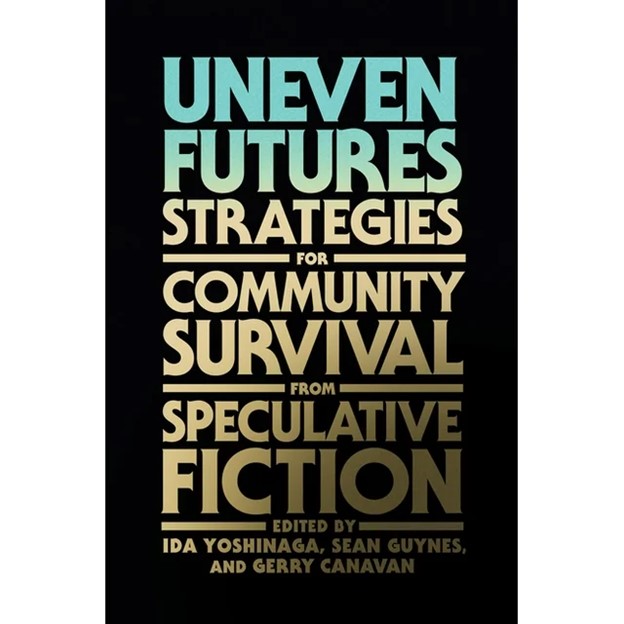
Science fiction, for all it encompasses strange new worlds and fantastical creatures, is a literary genre that is built and sustained by human communities. Writers, artists, and creators have imagined new social formations, technologies, economic, ecological, and sociopolitical systems for centuries; indeed, science fiction may be the most nakedly political of all literary genres, as thought-provoking as it is beguiling. Who is present in narratives of futurity? What kinds of technologies enable—or stymie—human connection? How can inter-species communities develop and flourish?
Pre-internet, fanzines and conventions were the spaces where editors, authors, and fans met, shaping the genre in new and exciting ways. Praise and critique and conflict and collaboration were equally already common before social media. Some landmark dates include: the first WorldCon (1939), the first British science fiction convention, Eastercon (1937), the Maleyevka seminars, Nihon SF Taikai (from 1962), and many others, around the globe.
In 2024, the ideologies of ‘community’ are under pressure and scrutiny. Violent geopolitical events shadowplay on smartphone screens, small enough to fit in the palm of our hands, fulfilling the most dystopian dreams of the genre; we venture to fight and commiserate and celebrate with people from all over the world, instantly. Where wealthy industrialists were (and are) once praised as saviors of humanity with the glittering promise of their space programs, now SF tends to show how the relentless logics of capitalism undermine any notions of transcendence. The challenge of space travel was supposed to unite us. What would the pioneers of SF make of the now-straining politics around the International Space Station, scheduled for dismantling by 2030?
In light of these challenges, the Vector team—for the journal’s milestone 300th issue—invites contributions that reify the notion of ‘community’ as it manifests in speculative cultures. What tools can SF offer us to construct better tomorrows, together? How can we innovate new ways of collaborating, such as the world-building projects of Syllble? What does ‘community’ look like in fiction, non-fiction, conventions, awards, conferences, collaborations, online spaces, and other literary and paraliterary formations?
Suggested questions / topics
history of fandom/conventions
the practice of writing: zines, magazines, letters
science fiction publishing: editors and collaborators on the printed page
utopias and dystopias
terraforming
defining personhood
future societies
sex and sexuality
navigating conflict
political divides, past and present
interspecies alliances
the posthuman
the future of communication
translating SF
Please submit your proposal by June 15th, 2024 to vector.submissions@gmail.com, including:
a 150-500 word proposal, including estimated length;
something about yourself, either a 50-100 word bio or a CV.
Articles should be between 1,000 and 8,000 words. Please let us know your estimated word count. We seek articles that are carefully grounded in scholarly research, while also being clear, engaging, and suitable for a broad audience (including non-academics). Articles will be due by July 31st, 2024.
Please also feel free to make queries about other formats, e.g. reviews, interviews, curated reading lists, roundtable discussions, unusual / innovative formats.



 vector-bsfa.com