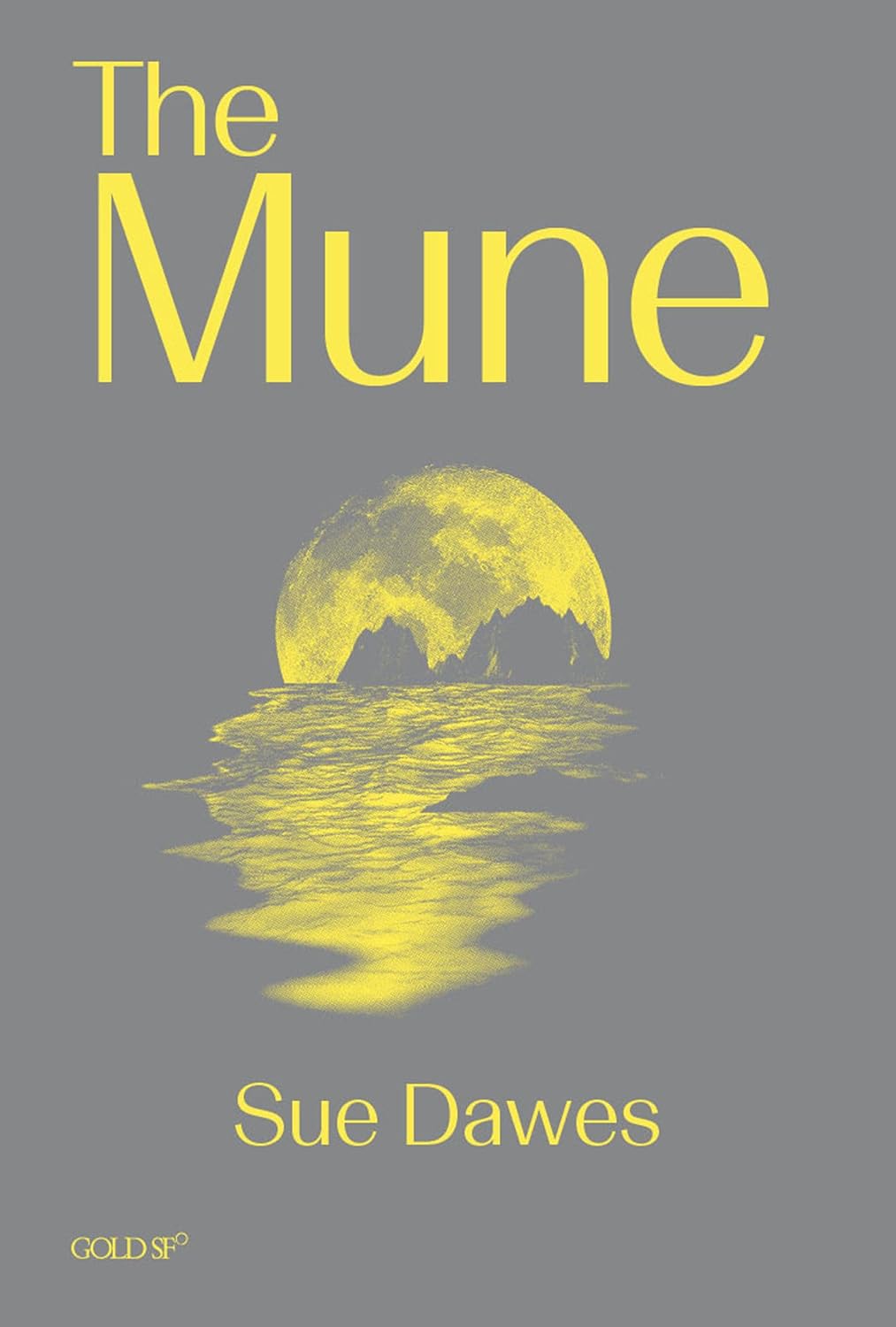
What came first, the characters, the language, or the shape of the commune? In some ways, the text suggests that the shape of the commune was predetermined: children needed to be raised communally because there was too much work… How much did initial conditions and the founders determine the trajectory?
Sue: The characters and the environment shaped each other as they interacted and the story developed, but I started off with two main ideas.
Firstly, I knew I’d have to set the story in the past, with a cast of characters who would want change but not be in a position to have an intellectual discussion about gender. Secondly, shipwrecking them on a hostile, barren island would force a departure from their rigid, oppressive gender roles, as survival would be their primary motivator.
The language evolved with the different dialects and experience each character brought to the island, which also affected the roles the founders adopted within the community.
There were a lot of adjustments made during the editing process.
The Mune functions without any form of money; was this a deliberate choice? The workload and resources are allocated without any particular system, even as crises pass and the commune grows.
The short answer is yes. I wanted to create as close to a true democracy as possible —where no role was valued more than another. Everyone on the island contributed what they could and had equal worth. Even when the Mune was stable, there was never an excess of food or time, so there was never complacency. They lived in the present not the past, with no desire to hoard.
History shows us that money tends to create inequality, and wealth is not an indicator of ability or productivity, quite often it’s down to luck and lineage.
Some of the commune’s most important tenets were suggested by a sci-fi story within the novel. The commune is a model of applied science fiction – however, the relationship is not linear, utopian stories don’t build utopian worlds. Did you intentionally separate the stories and their impacts?
Master’s Science stories are actually pastiches based on work written in the Victorian period that The Mune is set. The stories not only reflect the society of the time but showcase social and political ambitions and the methods imagined for achieving them. I hoped the stories would provide a bridge between accurate historical fact and SF narratives, which contained key nineteenth century ideas and technological advances, whilst imagining a more compassionate future. They also allowed me to shape my characters and add details about the island, reducing exposition in the main narrative.
Speaking of complexity, Betty and Master are among the most challenging protagonists, zigzagging from crimes to saviourism (and/or saviourism as crimes). They are on a different level of complexity compared to other characters. Incidentally, they are both science fiction writers. Is this a coincidence?
I wanted Betty’s character to be influenced by the stories she read with Master, and to use some of the key utopian ideas from those texts to shape the community. It felt just that Betty would be able to use her lived experience and imagination to gain her independence once back in the old world.
Master’s love of science fiction and discovery meant he was open to novel environments and more focused on discovery once on the island, than trying to control the community. Neither Betty nor Master is inherently bad, but a product of their environment. It’s the inability to change and adapt that causes the problems.
On the back of this, did you intentionally make the main protagonist one that your readers might grow to dislike, or did the Betty character come into her own as the story developed?
Betty came into her own as the story developed. Her character provided conflict, being so resistant to change. She reacts as I believe the majority of us would do in a life-altering situation, wanting to escape or be rescued rather than face her demons. She was just a child when she arrived on the island, having been gaslit and deeply traumatised.
If gender is technology, then The Mune is a very techno-optimistic narrative. Transformation happens quickly and thoroughly. It is a social tipping point – a tiny nudge (a vote) and all the awful stuff vanishes. It is exhilarating. But was there a temptation to make the process of change slower and painful for society as a whole, not just for Betty or Master?
I wanted the narrative to be optimistic so, there was never a temptation to slow the process of change or make the journey more painful for the society. I felt the majority of the founders had suffered enough in asylums, in service and on the streets of London. Despite the hard work of surviving, the founders acquired agency on the island, learned skills denied to them, and had the freedom to express themselves and there was no one on the island with (perceived) authority to oppose change. It seemed logical that they would want their children to be free of the shackles that bound them and embrace transformation.
The plot ends with a deus ex machina. Commune has to move. I was left with a longing, hoping that another novel was waiting around the corner, waiting to see the Old World remade by the intrusion. Will there be? And, why did you choose to end the story there?
There are a few characters who have refused to leave my imagination despite the fact I’m working on something quite different. There’s Star, the traveller, who would be well placed to reflect on our society, although currently it feels a little too dystopic! And there’s Betty’s child, in the womb on the island, who would have the advantage of the technology brought back by the Mune and witness the altered world.
However, I’d need my own shipwreck and an isolated island to write it all.
Dr Sue Dawes is an author, educator and editor. She has written and published a large number of science fiction, literary and crime short stories and articles in magazines and online, and her novel, The Mune, was published by Goldsmiths Press in 2025. Sue has taught creative writing at Essex University, for community groups and is a manuscript editor and mentor for The Writers Company. Sue completed her PhD in creative writing in 2023, specialising in gendered language and inclusion. She is currently studying to become an occupational therapist and has a particular interest in community narratives, the occupation of storytelling, and collaborative writing.
Placing Steven Erikson’s Manuromancy in the Larger Tradition of Hieromantic Divination: A Socratic Dialogue
By Mame Bougouma Diene with Steven Erikson in Conversation
The following real and fictional analysis of (by the grace of God) fictional Manuromancy (the art of divination in feces) is based on Steven Erikson’s novella Upon a Dark of Evil Overlords published by PS Publishing in 2021, the seventh novella in the Bauchelain & Korbal Broach series, spinning off from The Malazan Book of the Fallen.
It is divided into four parts:
I – Introduction.
II – A factual overview of the origins and practices of hieromancy/haruspices.
III – An overview of differing approaches to prophecy and divination in epic fantasy.
IV – A fictional contextualization of manuromancy in relation to hieromancy/haruspices.
I – Introduction
When Han Solo saved Luke Skywalker by slicing a Tauntaun open and emptying its guts, attempting to survive a night in the subglacial plains of Hoth, he missed a prime opportunity to read the future. If only he’d been more versed in the finer points of hieromancy, perhaps he would have saved Luke’s hand in the process.
Indeed, while many a finer class of societies frown upon the art of divination, perhaps because enough money and you do not so much need to foretell the future as to wish it into existence and/or weather it as the case may be, humanity as a whole, has, over the course of millennia devised ever more jaw-dropping techniques to predict and hopelessly attempt to thwart the wyrd sisters’ nigh karmic hand.
Even the most stubborn of disbelievers will, in a moment of despair, seek solace in the pages of their daily horoscope, in the chicken scratch of a fortune cookie, or while in the thrall of athletic frenzy, in the mental clairvoyance of goats, parrots, octopus, cats, pigs, ants, at least one kangaroo, meerkats, and/or penguins. Either that or unwashed underwear, which while objectively distasteful at least verges on hieromancy or to the point of this here paean, the under appreciated art of manuromancy and its objective equal distastefulness.
Bear with me.
[Steven Erikson: and with me, too. The strangeness of the world before the internet was that nobody really knew just how strange that world was. Imagine entering an outhouse, hungover and smelling of mosquito coils, peering down into the hole (as one does, if only to position oneself properly) and meeting a pair of beady eyes glinting back up at you from the earthy gloom below?
To this day I choose to believe that the woodchuck (or whatever it was) had an alternate route to and from the deep pit, and barring the unthinkable, had acquired a taste for slightly (or egregiously) used toilet paper. Or maybe it was just exploring.
Is it apocryphal the lurid tale of some guy caught lurking at the bottom of an outhouse? Imagine what your friends and family would think of that? ‘It was only the once, honey, I swear it!’ One presumes the perverse pleasures of the witnessing thereof lean more towards the divine than the divining, but who knows, right?
I like to think the woodchuck, which subsequently disappeared, then didn’t, then did, eventually set off to finer pastures. And if it had a mate, well, lipstick on the collar would surely have elicited a milder reaction upon its fateful return home. Either way, a night in the woodshed for the woodchuck.]
[Mame Bougouma Diene: This reminds me of a scene from The Young Pope, Steve, where Pius XIII surmises that buried under the ice of Greenland, that never quite thaws, there, you may find God.
I am of the belief that God resides not in the infinitely big, but in the infinitely small. That if you dig below the surface of the atom, into the smallest point in the universe, you will find a giant eye, staring back at you, holding the secrets of the universe.
Perhaps that woodchuck was but an avatar of the almighty, his ways, both spiritual and digestive, a mystery to the human mind.
In my days in the Southern Sahara, Northern Niger, in the sandstorm beaten town of Agadez, the millennial trading post known by the Tuareg as the Southern Cross, I had an encounter quite similar to yours.
Imagine my surprise, upon rising from my daily delivery (or sometimes thrice daily – if lucky – depending on the food I ingested and the cook’s cleanliness) and pulling the flush—only for a left over floater, to my utmost horror, to twist and turn, splashing the bowl with a will to live I could only admire, inducing a fit of prepubescent yelping that I am not ashamed to admit. “Holy shit what did I shit?” Were my exact words, I believe.
As it turns out it was a gecko, who, residing along the rim of the bowl, was dislodged from its home by the power of the rim jets. I could have flushed harder and sent it down the drain, but mercy guided my hand and, after much tribulation, it made its way back into the rim.
Needless to say, I never bothered to use that specific toilet again, for it was a house, a home and as I too like to imagine all these years later, much as your fated woodchuck, a humble abode of lizardly love.]
II – Entrails Divination in the Ancient World.
Hieromancy or Haruspicy (also known as Extispicy the latter focused specifically on intestinal divination), in our post-Western understanding of the world, resting upon divining the future in the entrails of, most often, animals, stems from the near east and Marduk’s priests. Predominantly, but not limited to, the liver. As many of our traditions, a Babylonian offshoot through way of Greece and filtered through the dominance of Roman cultural expansion.
The Latin terms haruspex and haruspicina are from an archaic word, hīra = “entrails, intestines” (cognate with hernia = “protruding viscera” and hira = “empty gut”; PIE *ǵʰer-) and from the root spec- = “to watch, observe”. The Greek ἡπατοσκοπία hēpatoskōpia is from hēpar = “liver” and skop- = “to examine”.1
Alexander Zelenyj is the author of the books Blacker Against the Deep Dark, Songs for the Lost, Experiments at 3 Billion A.M., Black Sunshine, and others. His most recent book is These Long Teeth of the Night: The Best Short Stories 1999-2019. His books and stories have been translated into several languages, including German, French, Romanian, Italian, Spanish, and Ukrainian. He has a collection of brand new stories forthcoming from Eibonvale Press in Fall 2024.
Zelenyj lives in Windsor, Ontario, Canada with his wife and their growing menagerie of animals. Visit him online at alexanderzelenyj.com.
Alexander Zelenyj
David Rix: Thank you for taking the time to talk! How are you finding this new year so far?
Alexander Zelenyj: My pleasure, thanks! I’m finding the year so far very busy. Busy with mostly good things. We have a new kitten and she’s a handful. She adopted us. Showed up at our back porch door on a cold night, tiny and frail. How could we turn her away?
DR: I feel we may need some kind of ‘cat tax’ here – that would definitely get all this off to a good start! But anyway – I have been involved with your writing in various ways for quite a long time now and I have published several of your books, so this is a good chance to dig in a bit and explore what is going on – what makes you tick, as it were.
When reading your stories, one gets the feeling of a lot of different threads coming together, from nostalgia for classic forms of writing to the much more surreal and experimental. Can you tell us a bit about the influences that came together to make you? And maybe which ones came first and which were added later?
AZ: My home library tells the story most clearly, I suppose because I’ve always bought a lot of books and rarely get rid of them. This means I still have all the ones I had when I was a young boy, certain of which had the most profound influence on me. I was most drawn to the stranger books, which turned out to be a lot of science fiction, fantasy and horror. Those genres and many key works from each became foundational influences for me. Especially authors like Robert E. Howard, who has stood the test of time, still has a primal power and weaves a very strong spell. I remember reading Howard’s story, “The Tower of the Elephant” as a boy and having a true moment of clarity—one of just three such moments I’ve ever had in my life—and understanding that I’d just discovered something magical and very powerful, something that called to me in such a strong way that I knew I had to write stories, too.
Authors like Arthur Machen, Ray Bradbury, Edgar Allan Poe, Richard Matheson, and James Tiptree Jr. also had a huge impact on me, and continue to do so. Harlan Ellison as well. His The Beast That Shouted Love at the Heart of the World was a revelation for me. All of his collections are amazing but this one has a huge amount of variety between its covers that I’m not sure he matched anywhere else, and it’s some of his most original work. The novella “A Boy and his Dog” does a wonderful job of establishing the lead character’s amoral motivations within a post-apocalyptic wasteland, which turns out to be the most disturbing aspect to the story because it asks (and answers) the question with a kind of unerring logic: how far away are we from being this boy, in this world?
Going back even further, I have an early memory of my mother reading to me from a book of Czech fairy tales by Karel Jaromír Erben. One story in particular, called “Otesánek”, really frightened me—it was about a couple who cares for a baby that has come to life from an inanimate piece of wood.
DR: Yes, people might be more familiar with this story from the film by Jan Švankmajer – Little Otik. That had quite an effect on me as well.
Jan Švankmajer – Little Otik
AZ: Yes, that’s the one. The baby’s appetite soon becomes much more voracious than its adoptive parents could have foreseen. Looking back on it, I see a deep pathos to this story about a childless couple wanting so desperately to have a baby that, through some magical means, the universe seemingly grants them their wish, only to have their dreams turn into this deeply disturbing, nightmarish scenario. I still have my childhood copy of the book, and it has a special place on my shelves. This might have been one of my earliest exposures to the supernatural, or the unknowable.
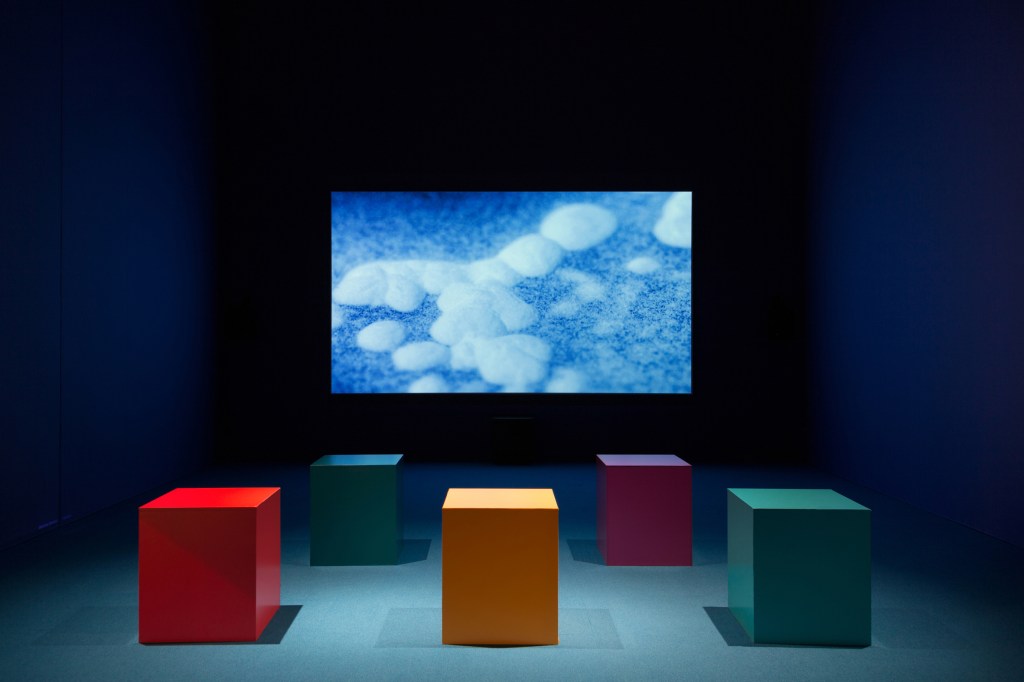
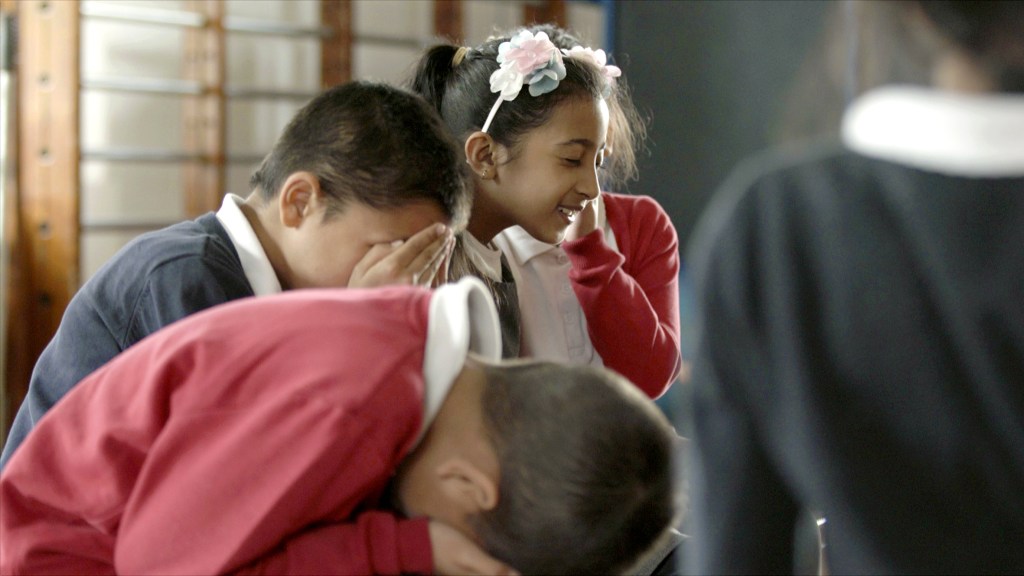
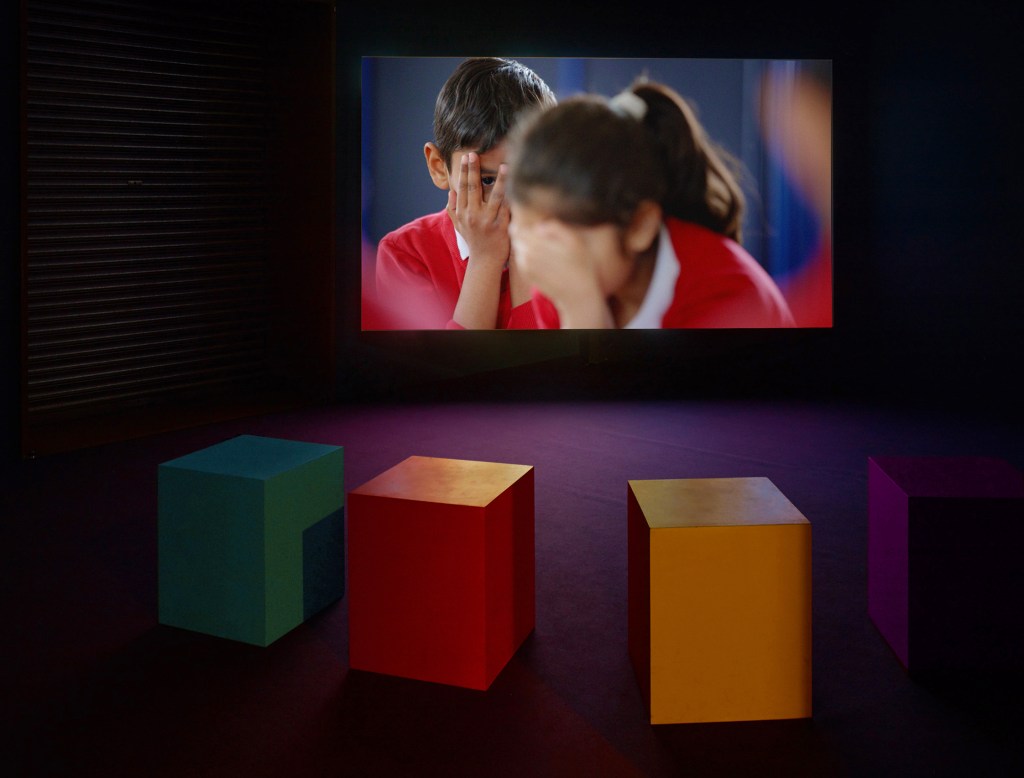
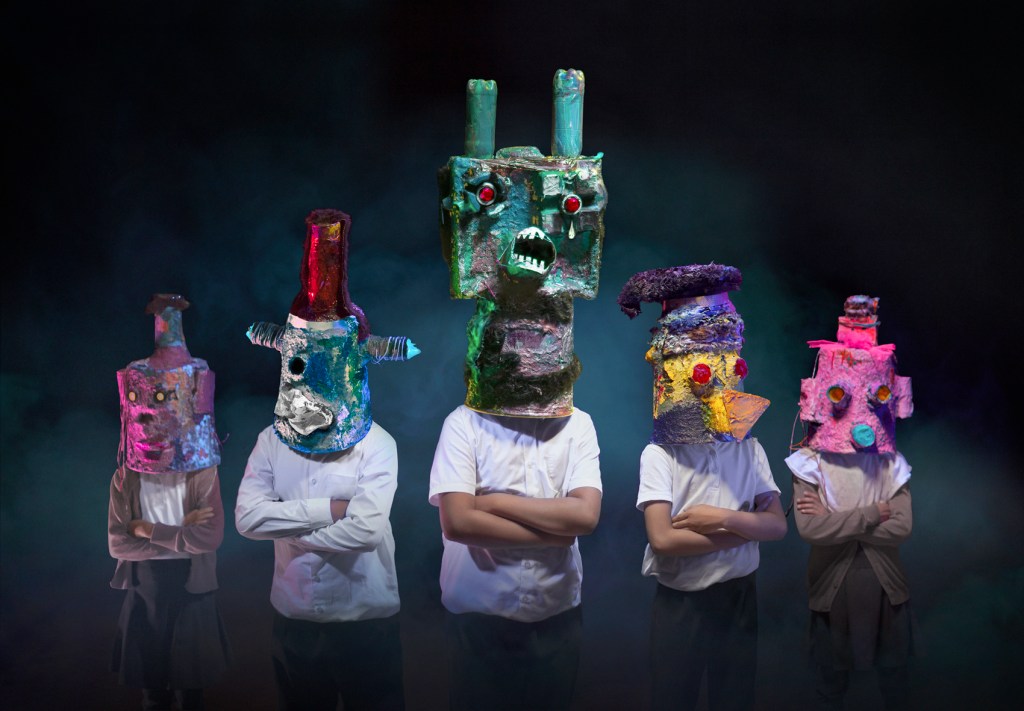
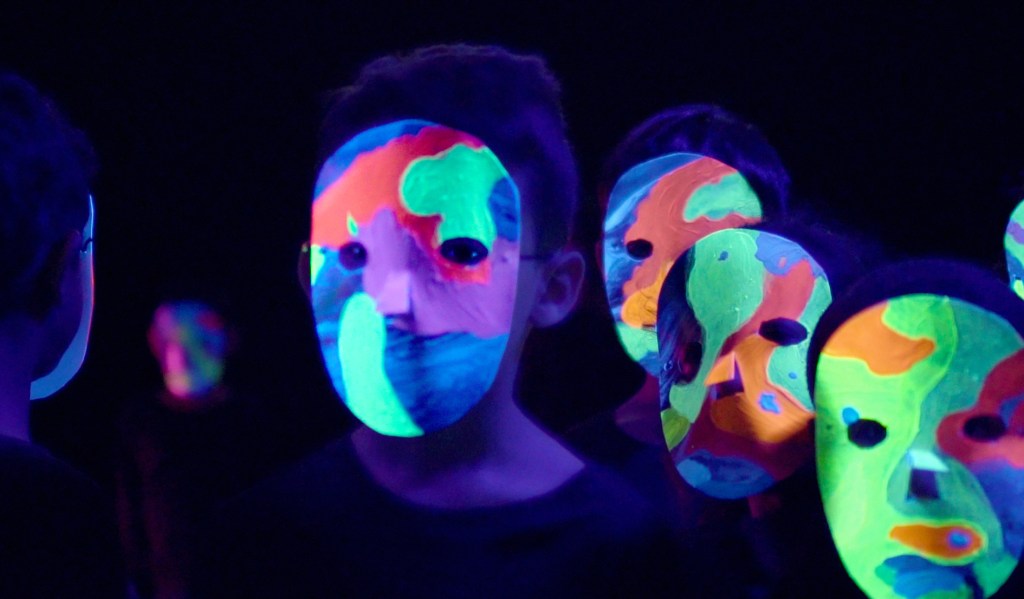
All images are part of No Ordinary Protest project, with permission from Mikhail Karikis.
Please briefly introduce yourself.
I am a Greek-born artist based in London and Lisbon. I work mostly in moving image, sound and performance. I develop projects through collaborations with individuals, collectivities and communities that are often located beyond the circles of contemporary art. In recent years, I have been working extensively with children, teenagers, young adults and people with disabilities.
Since the early stages of my practice, the politics and materiality of the voice have been key concerns, while at the same time engaging with themes that give voice to different ways humans relate to the environment. There has been an instinctive journey that I began with films exploring voicing conditions of labour in the context of extractivist practices. This moved forward by looking at models of sustainability and eco-feminism, and more recently eco-activism and emerging forms of labour that service nature.
I would say that my works prompt an activist imaginary and rouse the potential to imagine possible audiotopias (i.e. speculative places invoked through sound) and desired futures. I employ listening as an artistic strategy to help determine the content of my projects with the aim to highlight alternative modes of human action and solidarity, and to nurture critical attention and tenderness.
To what extent do you consider your work and practice to be ‘science fictional,’ if at all? Do you actively think about genre in your work, or do the labels come after the fact? (Surrealism, social realism, performance etc.)
I find science fiction and fantasy literature inspiring, but I do not think of my own artistic work through the lens of a specific genre. Perhaps where some science fiction literature and my art practice align is the way I employ my work to imagine and propose different worlds. I often start projects by embedding myself in different community contexts, and as such, social realism is always my starting point. Reflection, imagination and fantasy play an important role as I develop the themes and the projects mature and take shape. A decade ago and after I’d spent several years producing work that was furious and acutely critical, I took the decision to go further and invest my energy and imagination to proposing ‘better’ alternatives. My use of the word ‘better’ here implies a world with social and environmental justice, egalitarianism and practices of care.
Sounds plays a central role in much of your work. Can you say a little bit more about how you see the relationship between the sonic and visual aspects of a new project?
I am currently developing a project which explores our relationship to weather phenomena. I am approaching it from three sonic perspectives: folk songs that call out to the elements, capture and transmit traditional knowledge about seasonal change and meteorology; a second angle is that of music instruments that imitate the sounds of weather and bring the environment into the concert hall through sound, like, for example, wind machines and thunder sheets; and a third perspective is the acoustics of resistance generated through eco-activism and protest. I am working with folk singers, professional experimental musicians and young school children on this project to bring together these three different forms of auditory culture that are testimony to our profound connection and entanglement with the weather. As is common in my work, the performance of these different forms of sound will determine the visual dimension of the project. Be it on a macroscopic or microscopic dimension, all my films capture acts of communal sound-making, resonance and vibration, and document the power sound has to set into motion the material universe, activate our sentiments and mobilise political thinking and action.
Are there any works of science or speculative fiction (in any medium!) that have particularly inspired you?
Every child and teenager should read The Iron Woman by Ted Hughes for its environmental focus, for empowering children heroes with activist ecological thinking and rebelling against adults, and for the central role listening and noise play in the story as superpowers that activate empathy toward more than human beings. The Dispossessed by Ursula Le Guin is a book everyone ought to read for its acute reflections on capitalism, gender politics and anarcho-communism.
Interviewed by Phoenix Alexander and Jo Lindsay Walton
This interview first appeared in Vector 295.
Hi Alexis. Could you introduce yourself and say a little bit about your background?
Hello, my name is Alexis Panayiotou. I’m a fine artist and a drawing tutor on the BA: Fashion course at Central St. Martins.
As you know, this is a special issue of Vector focused on Greek SFF. So our first question is: do you consider yourself a Greek artist?
I think of my identity as mixed or somewhere between cultures. I was born and raised in London. My parents are both Greek, from Cyprus, both came to London very young, my mum nine and dad fourteen. They have lived here ever since. I have never been to Cyprus so I only have a vicarious idea of the place, through my parents and other relatives, and a bit from TV and radio.
I grew up in a Greek household, eating Greek food, hearing Greek music every day. Greek was my first language until I started school, although now I only have a rudimentary grasp. At home I was steeped in Greek culture and as a young man I would have described myself as solely Greek, and I remember feeling very lucky and proud to be so.
As for ‘artist,’ I’ve only recently started being comfortable using the term — it comes with lots of lofty aspirations! When I was young I drew a lot, like most kids, so there were always parents or teachers telling me I was an artist, or that I would be one.
Mother pinching her baby affectionately while breastfeeding
Thanks for chatting! How are you? Are you working on anything at the moment?
Well, I haven’t gotten COVID and my son didn’t get COVID and my parents didn’t get COVID and my sister didn’t get COVID. I am purposefully not working on anything at the moment. I’m watching deadlines crumble like empires.
Back in the past, you wrote on Livejournal: “A subculture is not a counterculture. A consumer culture is not a subculture. We are not all in this together.” Recently there were ripples in SFF writer communities over the term “squeecore.” Raquel S. Benedict and JR talk about it on an episode of Rite Gud. They weren’t expecting their words to get fine-toothed, so their description of squeecore is a grab-bag of gripes and jibes, not some kind of elaborate legal case. But the core of squeecore, as I understand it, is something like a “subculture that thinks it’s a counterculture.” What do you think of the term?
Squeecore seems to be a name for the commercially published writing created by authors who got interested in writing by participating in post-fanfiction.net fan fiction cultures. So, it reads differently from previous writing, including previous fanfic-inflected writing from, say, the K/S photocopy generation. I think the podcasters were essentially right, but made the error of creating a taxonomy in order to dismiss a particular taxon as bad and their own stuff as good.
Yes, there was a lot about the episode I liked — and I fully get why they would want to move from critique to pointing out alternatives — but I did find the recommendations list a wee bit less convincing. To their credit, they are upfront about the personal connections.
This is every new writer’s impulse. I was teaching at an MFA program a decade ago, and had to sit through a meeting of students pitching their academic theses. They had to write one academic thesis, and one creative thesis. Every thesis was “Why do all these books suck, except for the ones that inspired me?” I once asked Rudy Rucker why he created “transrealism” and he said that it was because he was just starting out and hadn’t been published much, so he wanted to get some extra attention. It works every time!
I used to invent a new genre every Wednesday, and none of mine caught on. So not every time. Can squeecore claim to any countercultural credentials?
Mackenzie Jorgensen is a Computer Science doctoral researcher working on the social and ethical implications of Artificial Intelligence. We invited Mackenzie to chat with novelist Eli Lee about her debut, A Strange and Brilliant Light (Jo Fletcher, 2021), and representations of AI and automation in speculative fiction. This is part two. Part one can be read here.
I wanted to ask about Janetta and her research into AI and emotion. There’s been a lot of research done into emotion detection, and a lot of critique. For example, what would it mean for a machine to ‘objectively’ know your emotions, when you may not even know yourself?
Yes. In the novel, Janetta is aspiring to teach AI about emotions, but she’s learning about emotions herself. She’s had a break-up and a rebound with someone who inspires her, but destabilises her as well. This experience is difficult but it helps her come into her own. She was a very unemotional person before that – she tried not to have emotions; but it turned out that she did.
So in that sense, the novel is more about Janetta being at peace with having emotions. Rather than the idea that emotional intelligence in auts is ever going to happen. I knew that it would be a novel about gaining emotional intelligence – but it was always meant to be in Janetta, someone who needed to do this.
You definitely see that growth throughout the novel. It’s such a hard thing to learn, but so important. Emotional intelligence, being able to be vulnerable, all of those things.
Thank you, that’s exactly it. Janetta has never been vulnerable. She’s used her work as a shield. I wanted this to be a story about being vulnerable, about screwing up, and about bringing yourself back from that.
“Do you think that AI can be taught to read emotions?”
Right, exactly. But it seemed like Janetta believed it could be done. So I was curious about your views.
I just don’t think it can be done at all, full stop. The research that’s been done, some based on facial recognition. One person could be smiling, but they could be desperately sad inside. Could an AI detect that? Humans don’t just detect emotions by observing from a distance. We interact, we probe, we learn. We use our own emotions to invite others how to feel theirs.
So yes, maybe AI can be trained in intersubjective standards of emotion recognition, enough to make reasonable ascriptions. Let’s say, to take a pretty clear emotion, in King Lear when Lear comes back on stage at the end, carrying the body of Cordelia, his beloved child. What does he say? “Howl, howl, howl, howl!” The majority of people can piece the evidence together and understand that he’s upset.
An AI could learn to do that. But in terms of the intricacies of people’s emotions, the depth and the context of them? No, I don’t think so. But what about you? Do you think that AI can be taught to read emotions?
I think researchers will continue to try, but I don’t think it’s really possible. Like you say, someone can be smiling yet struggling inside. And I think the attempts to develop that technology may do more harm than good – in relation to surveillance, for example.
I was thinking about care homes where they have companion AIs, seals and cats and things. That certainly has therapeutic potential. Otherwise, I don’t know how it could possibly read the nuances of human emotion. We don’t even understand our own behaviour sometimes!
I think with a lot of AI, the technology and the science behind it is very interesting. But at the end of the day, the real questions are around how it’s used. Who holds the power? Who has the data that it’s being trained on? That has a major, major impact.
Is that what you’re looking at in your PhD research?
I’m looking at Machine Learning classification settings. So an example of a binary classification setting might be, “Oh, we think this person will repay the bank if given a loan,” versus, “We think this person will default on the loan.” I’m exploring the potential delayed impact of a classification. For example, if you are a false positive, if an AI predicts you’ll repay but instead you default, then your credit score will probably drop. So there will be a negative impact on you too, even though you were given a loan.
How do you investigate this?
There isn’t much data, and it isn’t easy to track. It involves a lot of presumptions, and running simulations, and giving more weight to the false positives and the false negatives. I’m trying to understand, “Okay, maybe in these problems, we need to really focus on the false negatives, versus in these ones, the false positives.” Essentially, I’m exploring how we might mitigate the harm an AI decision has on a person. Also, I’m interested in investigating the impact on underrepresented or underprivileged groups, because we have a lot of issues with AI classification systems learning bias and perpetuating sexism and racism, for instance, from our society.
Is it a generally done thing? Say it was about applying for a loan – can the bank automatically exclude the people the AI doesn’t like, because they haven’t got enough income, or their credit’s bad, or because of some other factor?
“Algorithmic fairness has been a field that has really boomed recently, but it’s been around for a while.”
Sure. Algorithmic fairness has been a field that has really boomed recently, but it’s been around for a while. It came into the light in the ’60s and ’70s, when a lot of Civil Rights work was being done. At the time, the focus was on education and employment settings. Nowadays, it’s still focused on those settings, but also in areas like finance and economics, and many others.
That’s really great, you’re actually doing something that’s potentially making a difference in people’s lives. People who do AI (rather than just write about it in novels!) blow my mind. It’s impressive to have a brain that can do data, logic and mathematics – I’m very jealous.
No, I mean, I think anyone can code and learn about it. I know it seems as if it’s unattainable, but…
That’s a good point. I could learn to code, potentially!
Well, we do need more women in this area, so … ?
I suspect I’ll never get around to it…
What’s your background? Did you do English?
Yeah, I did English at uni, and since then, I’ve worked in editing, comms and publishing. I wrote three novels before this one, but I never sent them to an agent because I thought they weren’t very good. All I ever wanted to do was become a writer, so I’ve ended up with a narrow range of competencies. Writing and editing, essentially. But if that gets automated … what’s it called, GPT-3?
One of the big language models?
Yeah. Janetta’s job, for example, is safe from automation. Right up until AI is able to start consciously self-replicating – like in the movie Her, that sort of singularity moment – Janetta’s job is safe. But in my day job, where I edit publications, how safe is that? My skills are going to become obsolete soon. I might give it fifteen, twenty years. But that’s all I’ve ever trained myself for. It’s not an everyday worry, but it is a distant worry.
I think creativity, especially with regards to novel writing, is not something I can see an AI doing. They most likely would only be re-making other people’s ideas that they were trained on. I think being a creative thinker is a great spot to be.
That’s definitely the pragmatic view! I think the kind of deeply pessimistic, slightly addled-with-dystopia view is that they’re going to be able to recreate Madame Bovary within thirty years, and then all writers will be out of a job.
But yes, I think the greater question is around how AI might transform creative expression, rather than take it over. There will undoubtedly still be ways for us to bring our humanity to books and music and art.
Realistically, AI is everywhere.
“Realistically, AI is everywhere.”
Right, right. And going back to the novel, you really showcase auts in hospitality settings. Is that the main place that you see them potentially going? Or do you see them in other settings?
Realistically, AI is everywhere. It’s in our Netflix algorithms, and it’s in our traffic lights. So in that sense, I didn’t portray reality – I didn’t convey all the hidden AI that shapes everyday life. In terms of hospitality, I guess there’s already automation in the supply chains and the logistics, and places like the Ocado warehouses. I don’t know if you know about Ocado, the delivery company that went really heavily automated?
Yes.
Ocado has one of the most automated picking and packing systems in the world; these robot arms just picking up ketchup and putting it in bags! So I touched on that a bit, but yes, mostly cafés. Have you ever read Cloud Atlas by David Mitchell?
David Mitchell, the comedian?
Yet another uncanny double. There’s two David Mitchells. There’s the Peep Show comedian, and then there’s a novelist who doesn’t really write sci-fi, but he wrote a novel called Cloud Atlas, and there’s a chapter in a very futuristic setting. And I read it when I was quite young, and the imagery from it, where the utopia that masks a scary dystopia beneath, has stuck with me ever since.
Also, I love coffee shops. Coffee shops are so warm, cozy and human. I just knew that robot servers in a café were a way to have a real interface with humans coming in to get their coffees and being hit with, once again, uncanniness and unnerving futurity, and a slightly utopian, slightly dystopian vibe. In the novel, one of the characters, Van, sings while he works, and I imagined the coldness of that being replaced by auts.
I’m also someone who loves coffee shops. Their ambiance and conversations with the barista are two of my favourite things about them. They’re always in a very warm setting.
Coffee shops are a classic institution. You’re from Seattle, right?
Yes, I am.
The home of coffee shops!
Yup.
You have the best coffee – all of Seattle is like one big coffee shop. And then you know exactly; a good coffee shop is the most wonderful place.
Can we expect a sequel?
Potentially! I’m curious, would you see it as a free-ranging AI utopia, where they’ve managed to create this benevolent AI that’s also autonomously functioning?
I guess I wondered about Lal’s decision in the last chapter, and seeing what that actually does to Tekna and their world.
That makes sense. To be honest, I found writing this novel so difficult. I’d written a sci-fi novel before, and I think the reason it was difficult was because, well … do you read a lot of sci-fi?
Honestly, this was my first sci-fi book! I’m usually a non-fiction person. Currently, I’m reading non-fiction, Caste: The Origins of Our Discontents by Isabel Wilkerson, which is really good. Very different from this though.
I read quite a bit of literary fiction – writers like Elena Ferrante, Alice Munro. But I feel almost compulsively drawn to sci-fi, like it’s where my imagination wants to go. I realised during the writing of this that it had to be driven by plot, and then the characters react to that. So the automation and conscious AI plots were the engines of the novel.
Right.
And I wonder if I’m better suited to something where the engine is people living their lives in a more scaled-down way. I haven’t worked it out yet; I only know that when the Guardian called A Strange and Brilliant Light ‘character-driven’, they weren’t wrong!
Having written the novel, though, what are the major takeaways that you want readers to come away with?
I know it sounds potentially counterintuitive, because the novel is about AI. But I think to me, it is more about some of that more mundane, slow-burn stuff. It’s about figuring out who you are and allowing yourself to make messes and wrong choices, and then being able to do something about this. So all three of the girls do make pretty terrible choices, and then they manage to figure out who they need to be in order to make things better. So it’s that hokey stuff about being true to yourself, and having faith in yourself. Because even Lal shows she has faith in herself, in the end.
The other message is about vulnerability and emotional intelligence. Lal shows that at the end, because the person she needs to be vulnerable to is her sister. And Rose needs to stop being vulnerable to powerful men and put some boundaries down. Vulnerability and self-assurance are connected.
It’s a feminist novel. When you’re in your twenties, you go through a lot of self-doubt. Most people I know, unless they’re bizarrely confident, struggled quite a lot internally with who they should be and whether they’re doing the right thing, especially in their twenties. And I wanted to show some women who also struggle, but manage to figure things out.
“I wanted it to be about AI and automation, and I wanted to focus on class”
I loved that. Yeah, the emotional intelligence definitely was shining throughout. And yeah, it did seem like quite a progressive future, which was really cool to see, and very feminist as well.
I’m aware that there are other contemporary feminist issues it could have taken up. It could have contained more trans representation, for example – it could maybe have been more explicitly intersectional. I chose to not mention the main characters’ racial identities, too, beyond them being Iolran.
Yeah, I noticed that.
I think I knew that I wanted it to be about AI and automation, and I wanted to focus on class – you know: “let’s talk about class.” That doesn’t mean I wanted to ignore the other stuff, but not every book can be everything and this novel already packs so much in! And class and economics are deeply worthy of sustained focus, too.
Janetta is a queer character, but her sexuality is in no way definitive of her entire character.
I wanted it to not be an issue at all. There was a flashback scene that I ended up cutting, where she came out to her parents and they were totally unphased. Partly I felt like, as a straight person … it’s not that I can’t tell that story, but I asked myself: how qualified am I to tell this story?
And related to that, I was cautious of making it Janetta’s main thing. I really built her character around her genius. I wanted her to be a visionary and not be hampered by anything other than her own emotions, and her fear of her own emotions. So that’s why being lesbian was just part of her, and not a big deal.
I liked that she was still in love and dealing with those relationships throughout the novel as well.
Thank you. I worried I made her too involved in relationships. But then I thought, but that’s the point. Because she needs to learn how to love and how to grieve. That’s how she becomes the person she needs to be.
Well, speaking of vulnerability, it’s very brave of you to keep going and actually get it published.
Thank you. I think I reached a point where it was like, “Oh, this is the fourth novel, and it’s now or never.”
And you’re still interested in writing fiction?
Yes, definitely still speculative fiction. But I’m aware that when you write speculative fiction, you have to be open to your imagination going to unexpected places. At first the novel was only about automation. As I went along, though, I realised that when you write fiction about AI, you’re naturally drawn towards the idea of conscious AI – at least, I was.
I could have written a smaller and more focused novel, but to me, the singularity is an irresistible part of the collective imaginary about AI! And this made things very complex, plot-wise. There was an arc about automation and the loss of jobs, and a second one about conscious AI, and interweaving them was hard!
Before we go – with conscious AI, do you think we should be striving for that, or should we not?
No. It’s fun for movies and books, but that would be a crazy world, no?
Agreed. Yup. We’ve got a lot of problems we need to solve already in the world today. Climate change, poverty, hunger. I don’t think we need a conscious AI to stir the pot even more.
Exactly. Do you think it’s ever likely to happen, though?
I think it could happen. I mean, people are working in that space for sure, but I don’t know if we’ll exactly know when it does. It would probably happen by accident, and surprise people. I think it’s a possibility, but I’m not keen for a world where that does happen.
I couldn’t agree with you more.
Well, Eli, this has been wonderful speaking to you.
Thank you, it’s been really enjoyable. And your questions were excellent – it’s nice to have what you’ve written about reflected back at you by someone who asks such intelligent, thoughtful questions! So yes, thank you, that was great.
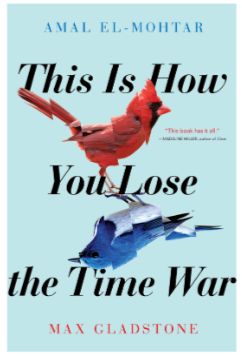
Amal El-Mohtar and Max Gladstone’s This Is How You Lose The Time War (Jo Fletcher, 2019) has been gathering a glowing reception. It’s an intense, lyrical, tragicomic novella about two elite warriors, Red and Blue, who strike up a correspondence across the millenia and across enemy lines. Adam Roberts, in his pick of SFF of the year, calls it ‘one of a kind.’ The novella has also made the shortlist for the 2019 BSFA Award. Late in 2019, Powder Scofield joined Amal and Max to shoot the breeze. This interview is a two-parter, with Part 2 dropping next week. Special thanks to Robert Berg for all his help with the interview.
PART I: ‘So we were in this gazebo …’
Powder: You’ve said one of the foundational premises of your friendship was writing physical letters to one another, and obviously that shows up in This Is How You Lose The Time War. Are there other bits of real life embedded in Time War? When you’re working on a project, how much are you intentionally processing past experience?
Max: Some of it’s intentional, but in my experience, intention is like a raft that’s on an ocean that’s in the middle of a storm. You’re aware of what you can see, but you’re not in control of it as much as you think you are. There’s a little rudder, and you can maybe try to paddle. But if a wave is driving you east, you’re going east. So I think when we sat down to write, we both knew that we were drawing on our experience of writing letters to each other, and of correspondence more generally, and the particular strange kind of time travel that you do when you’re writing a letter, especially a physical letter. But at the same time, there’s the raft, there’s the ocean, and there’s the storm.
Powder: There’s a line in the book, like, “There’s a kind of time travel in letters.” I can see that. The time it takes to write a letter, the time it takes to get there. The way letters can sometimes cross each other in transit.
Max: Exactly. You’re imagining who the other person is that will be receiving this, you’re imagining where you’ll be when they’re receiving the letter in a week or two. You’re wondering sometimes about the many forces that could stand between you dropping the small and very fragile piece of paper into a confusing and vast and twisty basically state system with the hope and trust that the $1.35 stamp will see it across the international border to someone else’s actual house just because you happen to put some words on it. So all of these steps create many different versions of yourself and of the recipient and of your respective spaces. I think that was the intent with Time War. But there are other things that I think were beneath and driving that intent.
Amal: And to answer really literally, when we were writing the book, we were also in a gazebo with no internet. So we were sitting across from each other and we only had recourse to our own bodies of knowledge. The book is built primarily out of no research, but instead what we both brought to the literal table between us in a literal gazebo as we wrote things! There’s so much in there built out of, for one thing, the surroundings. It was a gorgeous late June, early July in the Midwest. There were trees and birds and plants and things that were finding their ways into the things we were writing, for sure …
The guest at tonight’s BSFA London meeting is Dan Abnett, author of a lot, including the “Gaunt’s Ghosts” series of Warhammer 40,000 novels, and the recent alternate history Triumff. He will be interviewed by Lee Harris.
As usual, the meeting will be head in the upstairs room of The Antelope: 22 Eaton Terrace, London, SW1W 8EZ. The closest tube station is Sloane Square, and a map is here.
There will be people in the bar from 6-ish, with the interview starting at 7. The meeting is free, and open to any and all — not just BSFA members — and there will be a raffle with a selection of sf books as prizes.
The guest at tonight’s BSFA London meeting is Ian McDonald, author of Cyberabad Days, Brasyl, River of Gods and many other books. He will be interviewed by Simon Bradshaw (and not, as previous announcements have indicated, Tony Keen, because Tony is ill. Get well soon, Tony!)
The venue is the upstairs room of The Antelope, 22 Eaton Terrace, London, SW1W 8EZ. The closest tube station is Sloane Square, and a map is here.
As usual, there will be people in the bar from 6-ish, with the interview starting at 7. The meeting is free, and open to any and all, though there will be a raffle with a selection of sf books as prizes. See you there, I hope.





 vector-bsfa.com