SF and the future of security: an interview with Ping Zheng

Defiant Today
‘Defiant Today’ Phil Jones

In late December 2017, a group of writers and scholars of SF, scientists and technologists, and defence analysts and policymakers, gathered at Dstl (UK government’s defence science and technology laboratory) in Salisbury to explore science fiction’s contribution to defence policy. Vector caught up with Dr Ping Zheng from Canterbury Christ Church University Business School, to ask her about her impressions of the day, and a few other things …

During the first breakout session, you were in the Human Behaviour in Smart Environments group. How did that go?

ping 1
Dr Ping Zheng

We had some inspiring discussions about how humans may react in smart environments. I think the group dynamics probably extended the scope of planned discussions, and allowed us to engage in more diversified discourse, ranging from individual perspectives, to emergent impacts at a societal level, and also to policy perspectives. For example, two prominent issues were debated: national and cultural differences, and ethical concerns such as privacy.

Perhaps the value of events like these is that you might discover that your original questions can be re-framed, or that your stakeholders are not precisely who you imagined them to be. Your other breakout session was ‘Defence (In)efficiency: What Does the Future Hold?’?

Continue reading “SF and the future of security: an interview with Ping Zheng”
Lone Wolf Bioterrorists and the Trajectory of Apocalyptic Narratives

By Polina Levontin, Jo Lindsay Walton, John Mumford, and Nasir Warfa. 

In this academic article, the authors explore a range of science fictional texts dealing with so-called ‘lone wolf’ bioterrorism, and ask what we might learn from them about dealing with the real bioterror threats of the future. The possibility of an engineered pandemic is one of the more terrifying new risks of the 21st Century. As technology lowers thresholds for developing bioweapons, even individuals with relatively ordinary knowledge and budgets could become responsible for extraordinary threats. Although several real-life bioterror incidents are known, no large-scale pandemic has yet occurred as a direct result of terrorism. Fiction, however, offers detailed scenarios of such events. Writers of these narratives find themselves at the intersection of modern science and deep literary tradition of pandemic narratives, originating with biblical accounts of plagues. This academic working paper examines portraits of ‘lone wolf’ bioterrorists in several contemporary fictional sources, focusing on how writers draw on counterterrorism discourse, particularly in their attempts to psychologically model the perpertrators. It flags up the dangers of a truncated speculative space, and concludes with a discussion of impacts these imaginaries might have, through influencing how emergent bioterror threats are perceived by scientists, policymakers, and the public.

CAS_4qyz (1)
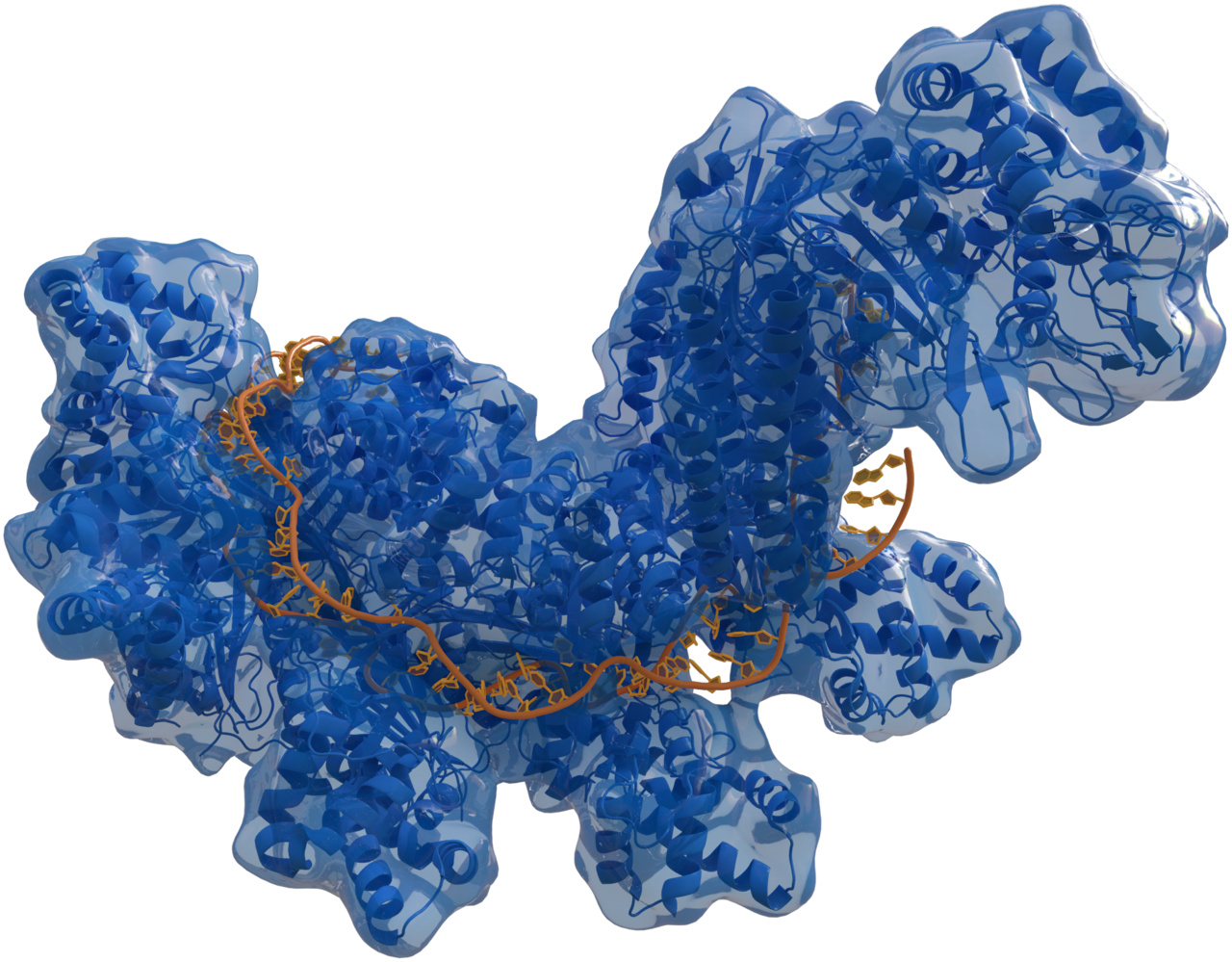
Type-I CRISPR RNA-guided surveillance complex (Cas, blue) bound to a ssDNA target (orange). By Thomas Splettstoesser

Dr. Polina Levontin, Centre for Environmental Policy, Imperial College London

Dr. Joseph Lindsay Walton, Institute for Advanced Studies in the Humanities, University of Edinburgh

Prof. John Mumford,  Centre for Environmental Policy, Imperial College London

Dr. Nasir Warfa, Centre for Trauma, Asylum and Refugees & Department for Psychosocial and Psychoanalytic Studies, University of Essex

Continue reading “Lone Wolf Bioterrorists and the Trajectory of Apocalyptic Narratives”