By Carrie Melmouth
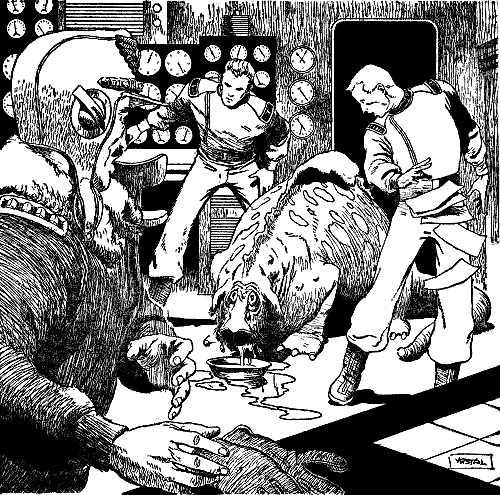
The slovenly wub might well have said: Many men talk like philosophers and live like fools.
I was introduced to the work of Philip K. Dick by my (then) boyfriend (ten years ago) when I was twenty-three. His sitting room was lined with bookcases, and from it, one day, he pulled a book of Philip K. Dick short stories. ‘Beyond Lies the Wub’ is not the introduction to the work of PKD I would have chosen for myself. It explores none of the themes that interest me in PKD. The wub is a ‘huge dirty pig’. And the pig doesn’t want to be eaten. I was bored.
PKD was forty-five years old in 1974. He had sold his first short story, ‘Roog’ in 1951 and his first novel, Solar Lottery, in 1955. Both had been simultaneously pulpy and ontological. He had won the Hugo Award for The Man in the High Castle (which also bores me) in 1963. The Three Stigmata of Palmer Eldritch had not won the Nebula Award in 1965 (losing out to Frank Herbert’s Dune). Later, in what came to be known as The Exegesis, he wrote that his ‘mystical experiences start[ed] in ’63 when’ he ‘saw the “Palmer Eldritch” visage [in] the sky’. For all the plurality of his ‘mystical experiences’, though, when people do talk about PKD’s mystical experiences, what they talk about is 2-3-74. In the 1986 17th issue of Weirdo, comix cartoonist Robert Crumb illustrated a (necessarily reductive) account of 2-3-74.


 vector-bsfa.com