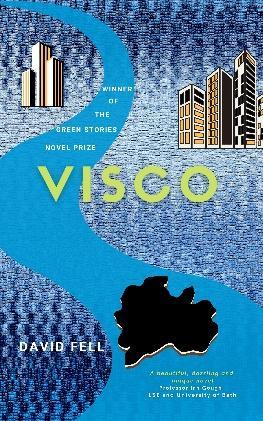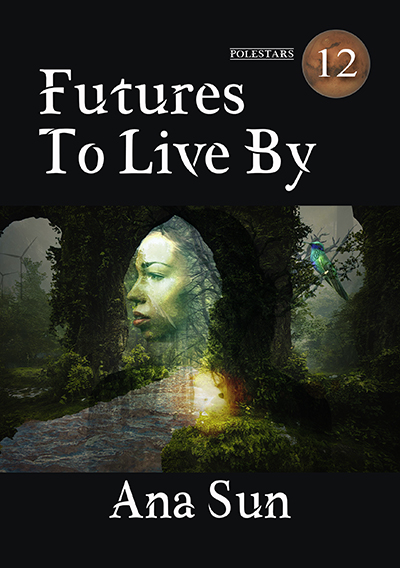
Introduction by Yen Ooi and Stephen Oram
When we started thinking about the call for articles last year, we wanted to approach it in a Zoefuturistic manner – by giving space and creating opportunities for the issue(s) and articles to ‘become.’ As a new topic, we were very aware that this is a process of exploration and discovery, more than a call to enforce and curate what we think Zoefuturism is. It needed to be reflective and malleable.
In this article, we will look at three of these creative reflections of Zoefuturism through different lenses:
- Compost Futures by the London Science Fiction Research Community Co-Directorate
- Station to Station by Goblin Futures
- “Narrative Structures and Zoefuturism” by Christopher Morrison
While all three pieces explore very different topics and perspectives, they are all reflections of Zoefuturism through practitioners’ creative action, and they form a Zoefuturistic response, as reactions to the introduction of Zoefuturism, playing with the ideas of our futures through relationality and constant becomings.
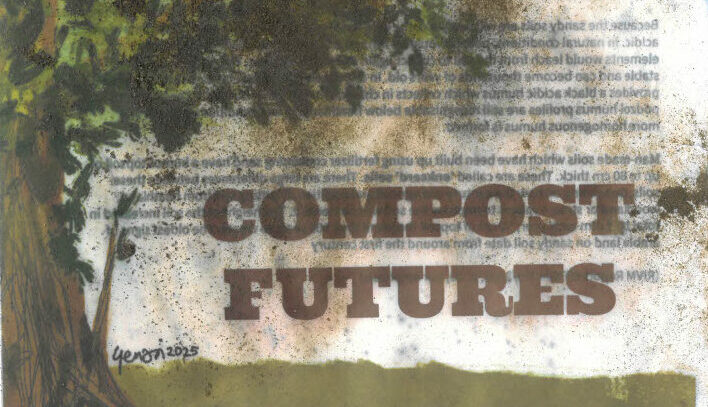
Compost Futures by the London Science Fiction Research Community (LSFRC). This creative-critical submission, in the form of a full zine, was made by the co-directorate of the LSFRC to explore questions around the relationships between humans with the other-than-human through the idea of “compost,” inspired by Zoefuturism. Follow the link to read and explore the articles and artworks, and to learn how co-authoring a zine with nature turned out.
Station to Station by Goblin Futures (https://goblin-futures.itch.io/station-to-station).
*Fishpunk is something we made up, not a pre-existing genre. In other words, Station to Station is fishpunk, and anything else people want to consider fishpunk they can, just as long as it is Approved By Fish.
**Weirdhope is a term coined by COPY/PASTE CO-OP, which they describe as a form of eco-punk that is stylistically and thematically opposed to grimdark. For more, you can check out their game ECO MOFOS!! or the webpage for the Weird Hope Engines exhibition that ran in the Bonington Gallery in 2025.
Narrative Structures and Zoefuturism
By Christopher Morrison
In the West[1] there is one story structure primarily taught to readers and practitioners alike. The Aristotelean 3-Act Structure/The Hero’s Journey. I’m well aware that’s two structures, but they are so inter-linked now as to be extensions of one another. And, most importantly, they share a core philosophical purpose. That purpose: re-enforce Heroic Individualism. The Protagonist must be the one to solve the problem. They, and only THEY. Some assistance is rendered along the way, but in the climax, it is them and them alone (usually smashing) their way to the end. And that end as a teleological conclusion forgives (or ignores) all things that came before.
Anything else is considered a “subversion of” or “breaking the rules”. But, as Matthew Salsess asks, “Who writes those rules?” (Salesses, Matthew. Craft in the Real World: Rethinking Fiction Writing and Workshopping. New York: Catapult, 2021.) It is the dominant culture in the West. Patriarchal, white supremacist[2], heteronormative. Those values that hold up a human being… all at once illustrating the protagonist as special and the norm. The story’s purpose is to make them a static, fixed Hero.
So, if this structure serves to support the Culture of Being in the West, what structures could support a culture of Becoming from Asian Cultures not shackled to the mast of Individualism?[3] What structures could a writer creating in a Zoefuturist context rely on to illustrate Human Becoming and relieve their woes about what comes next in their story?
Taking a cue from the absolute basic root of Dr. Ames’ work and the language he is immersed in, let’s look at ShengSheng (生生) – Procreativity. This word Dr. Ames presents as a crucial part of the early Cosmology of Confucian thought[4] and gives us a perfect jumping-off point:
Repetition.
We all understand one of the crushing features of humanity is the repetition of life. Buddhism tackles this issue with the simple mantra: “Before enlightenment: chop wood, carry water. After enlightenment: chop wood, carry water.” The road to human becoming must run directly through repetition just as the word and pictogram in Chinese suggests in its very form.
However, the West abhors repetition[5] (except in cases of utter personal sacrifice to the destruction of oneself[6]) and worships at the feet of novelty.
New or perish! You are only as good as your last ____!
Yet repetition itself holds true meaning-making. True becoming. But in Western storytelling it’s relegated to a “callback” or some “comment” on one form or another and not the core engine to drive story and meaning.
Let’s explore a few structures where repetition is the heart and engine of its purpose.
Spirals: first brought to my attention through the work of Jane Alison.[7] Humans are pattern recognition machines, therefore to create a literary or dramatic spiral one repeats meaning by bringing back a panoply of artistic resources. Place, character(s), theme(s), color, etc. Most powerful in the resource kit is repeating events in your story. What one may lose in novelty one gains in grounding your audience – their pattern recognition (and their simple act of becoming themselves – living life) brings the repetition to awareness and, if done well, the question – Why? Why repeat this now? Here? Or the repetition simply becomes the Breath of the narrative. Inhaling on return – exhaling on leaving – or vice versa. It is a structure that is close to life itself.
While not a Zoefuturist film, let’s look at Wong Kar-Wai’s In the Mood for Love (Wong Kar-wai, dir. In the Mood for Love. Block 2 Pictures, 2000). A love story where its lovers are not allowed to consummate their love… or even say the word to each other. They are married to others while falling in love with each other. It is primarily a Spiral of place. Hallway, stairway, alleyway. All intermediate places – not defined. Not of themselves, but conduits to other locations. Perfect locations for a relationship that isn’t formed – isn’t one or the other. The characters are also suspended; neither really married nor free; not in love, but in love. Repetitions of their own conditions. The continuous use of smoke as a repeated image in the film is powerful. Sure, it looks damn cool, but it’s neither solid nor liquid. Neither here nor there… just slowly looping around itself and evaporating. Repeating. Spiraling.
Next, we’ll look at ‘nested’ structure.
Mainly known from the 1001 Arabian Nights and the film Rashomon. Nested stories are stories-within-stories without being anthology or connected episodic in nature. Story layers. Characters may re-appear, settings may re-appear[8] but what certainly repeats is theme and/or a central question or as Henry Lien likes to point out: culture[9].
Again, here’s a structure that reflects life’s journey. We are stories-within-stories. We hold our story, our family’s story, we are minor or major characters in everyone’s stories that surround us. And other’s stories can affect us directly or indirectly if we appear in them or not. As Dr. Ames points out through Zoetological philosophy we are “…interdependent human ‘becomings’ rather than discreet human beings… [through a relational understanding].[10]”
Nested structure allows writers to sift through the depth of our humanity all in one frame. The flow of this structure is the essence of interconnected ‘becoming’. Again, like life, the more we lift the lid and interact with the depths and layers underneath the more meaning and interconnectedness we experience.
In conclusion, ‘spiral’ and ‘nested’ narrative structures are available to writers of every form and genre, but are especially powerful in a Zoetological and/or Zoefuturist context. They allow for a direct reflection into the bones of the work and to elevate stories from a single individualist journey into the wider world-view of human becomings. By leaving behind the strictures of Western storytelling obsessions we can imagine and enact a more interconnected future.
[1] Excluding Indigenous cultures.
[2] Colonial, at best.
[3] This is where I’ll ask you to forgive me. I’m a practitioner and not a scholar, perhaps others have done this work – I look forward to hearing about them if so… Henry Lien’s work comes to mind.
[4] Ames, R. T. (2025). Living Chinese Philosophy: Zoetology as First Philosophy (p. 8). State University of New York Press.
[5] To the point: In an early screenwriting class the “wisdom” of never repeating a location was handed down to me. (This was the working philosophy of a high-powered producer and their thoughts on scriptwriting.)
[6] Puritan work ethic for example. Or (especially for women) the carer role taken to its extreme… it is lauded and pitied and ridiculed all at once.
[7] Alison, J. (2019). Meander, Spiral, Explode: Design and Pattern in Narrative (p. 143). Catapult.
[8] Or remain the same as with Rashomon.
[9] Lien, H. (2025). Spring, summer, asteroid, bird: The art of Eastern storytelling (1st ed.). W. W. Norton & Company.
[10] Ames, R. T. (2025). Living Chinese Philosophy: Zoetology as First Philosophy (p. 8). State University of New York Press.