Aware of other sub-genres that might sit alongside, overlap or appear to be similar to Zoefuturism, we welcomed contributions about them, to help shape our understanding of Zoefuturism relationally.
Below, Manda Scott and Denise Baden set out strong cases for Thrutopia.
This is interesting from a zoefuturist perspective because Thrutopia is about change and the journey; imagining positive futures and the practicalities of getting there has to be a good approach.
However, Zoefuturism does not presuppose an end point or a goal, more that there is a distinct need to fundamentally alter our world-view, of how we interact and fit in with the world in the broadest sense. It also does not delve in binarisms like positivity/negativity inasmuch as binaries are composites of a holistic purview of life.
We need healthy relationships between all of ‘life’ and ‘non-life’ in the now, acknowledging the diversities while engaging in the nuanced relationships that encompass nature, technology, and more. We need to understand that change is constant and how we live is what affects the possible futures that it is becoming.
Read more: Thrutopia with Manda Scott and Denise BadenWe hope that celebrating other sub-genres while encouraging a Zoefuturist approach to reading and writing them will make them more impactful.
Yen Ooi and Stephen Oram (guest-editors, Zoefuturism)
Thrutopian Road Maps
An essay by Manda Scott (August 2025)
“At times, a single fluctuation … may become so powerful … that it shatters the preexisting organization. At this revolutionary moment … it is inherently impossible to determine in advance which direction change will take: whether the system will disintegrate into ‘chaos’ or leap to a new, more differentiated, higher level of ‘order.’” – Alvin Toffler
If we who write can craft clear routes from a recognisable present, mapping towards a future that engages people at the limbic level, we can help tip the balance to a future where a critical mass of us begins to yearn for the outcomes offered, and change will happen.
This is the explicit foundation of the Thrutopian genre: offering route maps—of which there are, self-evidently, an almost infinite number—towards a future we would be proud to leave to the generations that will follow us.
If we can imagine forward seven generations and look into the eyes of a young person living in the world for which we have laid the foundations, if they feel safe, confident, fully connected to all parts of themselves, each other and the Web of Life, then we’re on the road to the emergent edge of inter-becoming from which an entirely new system can potentially arise.
As writers, we can gather the building blocks that are already emerging and make of them stepping stones across the river. Stretching the metaphor to breaking point, the narratives we thereby shape must at least offer a glimpse of a reason to cross (motivation), the means to make the crossing (agency), the route to take (direction) and the freedom to take it (empowerment).
This is the heart of behavioural change: MADE:
Motivation: with all my heart, I yearn for a future I can glimpse but not yet embrace;
Agency: I have the tools to take the first steps towards this future;
Direction: I know the routes away from my present state that will lead me towards the future I yearn for;
Empowerment: I am free of constraint in the present moment enabling me to take the steps and wield the tools in ways that will be effective.
Each of these belongs squarely in the realms of creative imagination. I am not pretending that crafting these is easy; it’s not. One of the many reasons there are so many dystopias and so few genuine Thrutopias is that it’s mind-bendingly hard to find peaceful routes to an equitable world in which humanity flourishes in concert with – even in service to – Life.
But it isn’t impossible and frankly, if the hardest thing we have to do in the next decade is get our heads around the thinking that already exists at the emergent edge of possibility, then we will be supremely lucky.
And this is the single most important point. If you take nothing else away, please believe me that there are people already working at the emergent edge of wide boundary systems thinking, of food and farming systems (we have to abandon industrial agriculture as a matter of urgency), of biomimicry, doughnut/ecological/degrowth economics, distributed governance systems, regenerative use of AI, urban and rural planning based on fully regenerative principles…
Every one of these is actively being pursued, it’s just that our legacy media runs with the old style mindset of ‘if it bleeds, it leads’ and they’re not up to speed (yet) with the idea that the existing system is disintegrating and a new one is already emerging from the ashes.
This is part of the Thrutopian narrative shift of which we are an integral part: building routes through, from a recognisable present towards a future we’d all be proud to leave to the generations that come after us.
Writing a future we’d like to see, the thrutopian approach.
By Denise Baden (April 2026)
Science fiction often envisions not just technological innovations but societal ones. For example, Ursula Le Guin’s The Dispossessed imagines an anarchic/communist society that is broadly utopian in its ideals and has distinctly different arrangements and values surrounding ownership. However, there are few novels that show the process by which we might get from where we are now to such a future. Kevin Kelly coined the term ‘protopia,’ which describes the process of improvement over time. Rupert Read similarly talks about ‘thrutopia’: how we get from where we are now to where we’d like to be, i.e. a flourishing, sustainable society. The idea was so powerful that bestselling author Manda Scott set up a Thrutopia masterclass for writers: “writing our way to a future we’d be proud to leave to the coming generations.” She moved from writing historical fiction to a novel set in the near future, Any Human Power, which adopts the thrutopian approach.
In this article I discuss some of the books published by Habitat Press, an indie publisher with a niche interest in stories that showcase thrutopian or protopian pathways. There are numerous ‘cli-fi’ stories that present dystopian visions of what will happen if we don’t act. These can be unexpectedly problematic, as research has highlighted the dangers of trying to ‘scare people green.’ Dystopian stories run the risk of fear-driven counterproductive responses, such as the blaming of marginalised groups or buying up all the toilet rolls. There are also numerous eco-fiction stories that persuade us to love nature and plant trees but get us no nearer to understanding what the really effective solutions are and, even more importantly, how we might get there from where we are today. This is a gap that I haven’t seen any fiction (other than Ministry for the Future) fulfil.
Steve Willis, a climate engineer and author (Fairhaven, Defying Futility) has allowed me to share his diagram of films, books etc., which plots dystopian/utopian visions of the future against plausibility. It’s clear that there’s little that is both positive and plausible.

Habitat Press has published several books that write into this space. Many emerged from the Green Stories project which I founded with the goal of embedding climate solutions into mainstream fiction. It has run 21 competitions since 2018, resulting in numerous publications. One of these is the anthology of 24 stories: No More Fairy Tales: Stories to Save Our Planet, where we teamed experienced writers with climate experts to come up with stories that had solutions at their heart.
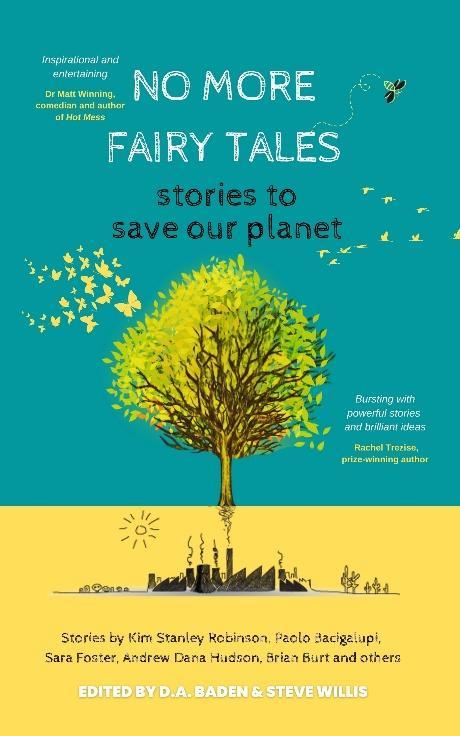
Stories range from technical solutions relating to carbon dioxide removal projects to more systemic aspects such as switching from GDP to a well-being index, sharing economy, personal carbon allowances, giving citizen assemblies legislative power – all of which would allow for a more sustainable long-term mindset conducive to directing investment towards sustainable technologies, practices, and decisions.
This anthology uses fiction as a testing ground to explore the more radical transformative ideas necessary for a truly sustainable society: ideas that are hard for politicians to talk about for fear of misunderstanding as they can’t easily fit into a soundbite. For example, an essential step is to upgrade our democracy to a form that allows us to think beyond short-term electoral cycles so that we can make more sustainable decisions. Citizens’ Assemblies are a positive step here.
One story from this anthology was adapted as a play called ‘Murder in the Citizens’ Jury.’ It’s a fun whodunit, set in a citizens’ assembly, where eight participants meet to deliberate upon climate solutions—and then there’s a murder!
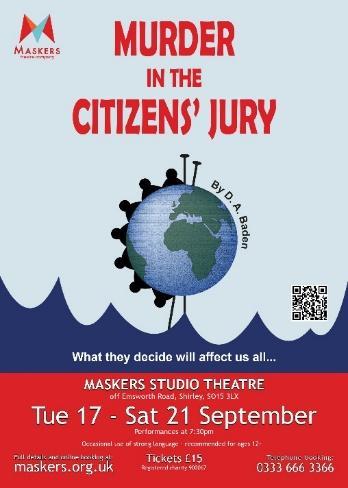
Caption: flyer for theatre production by amateur theatre group, The Maskers.
The play also has an interactive element. A voting app and pullout voting and comment sheet in the programmes allows the audience to share their views on their favourite policies, so they feel like they are part of the citizen’s jury themselves. You can see a brief video of the first production by a local amateur theatre group here. The play is available to purchase from LazyBee, but if you approach me directly, I’m happy to allow amateur and student theatre groups to stage it royalty free.
The play is also available as a novella and audio book, ‘The Assassin’ of 16,000 words:
Eight people in a citizen’s jury, discussing the most important challenge in the history of humanity – how to save ourselves from the looming climate crisis. Exciting new solutions are proposed, each with their own champions and detractors. What they decide will affect us all. But they all have their own issues to deal with, and one of them has a hidden agenda. Who is the assassin and who are they there to kill?
Such storytelling is a great way to showcase new ideas. Usually in business or government, one would use a stakeholder analysis to see who is benefitted/harmed by any policy and how. These can be dry, and it’s hard to engage with the impacts emotionally as the groups affected seem distant. This story allows stakeholders to become characters and as such we identify with them and their needs more easily. We can then view any climate policy from the perspective of a variety of people, all of whom have a unique relationship to the proposal.
The Assassin also acts as a story within a story in a full-length novel The Philosopher and the Assassin. It’s rather different – think campus novel meets moral philosophy meets whodunnit.
There’s no more important job than educator, and no subject as necessary as moral philosophy. The trick is getting the students to turn up. So, when the Dean proposes the controversial concept of education entertainment, Professor Iris Tate goes all in with a moral philosophy course based on a whodunnit that all assume is hypothetical – a murder in a citizens’ assembly on climate. A variety of characters provide an entertaining source of ethical dilemmas, but what the students don’t know is that the ultimate dilemma is very real, and their conclusions will have far-reaching consequences.
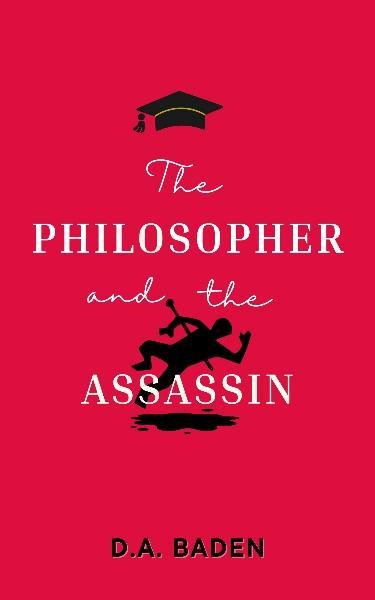
An adaptation for TV won the Writing Climate Pitchfest, 2024. The book lays out in fiction format a roadmap to a sustainable future. It focuses on social science innovations in democratic, economic, financial, and social institutions.
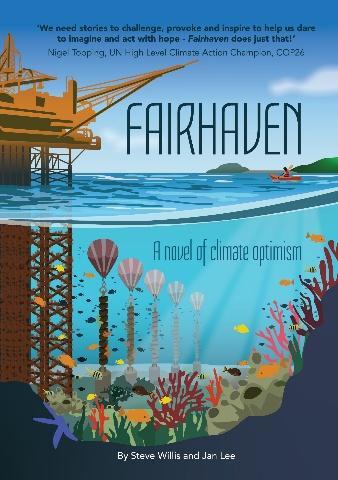
No More Fairy Tales: Stories to Save Our Planet features three short stories that explore the idea of giving the ocean a nation status. One is about the seed of the idea; another is set when the Ocean as Nation has begun and is facing its first challenge, and the final story is set decades in the future outlining what the new Ocean Nation looks like and how it has progressed. It was expanded into a properly thrutopian full-length novel, Fairhaven, written by engineer Steve Willis and writer Jan Lee.
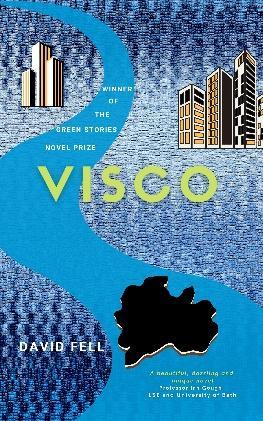
Visco won the 2020 Green Stories novel competition. The story imagines a giant music festival which allows free access to those who need care and their carers too. What emerges is a care-based mini-society. Those who attend love it so much, no one wants to go home when the music stops. So they don’t! This novel adopts the ‘protopian’ approach of imagining a quite plausible scenario whereby a mini community develops in stages. The characters face and overcome various challenges. David Fell brings to this novel all the knowledge he has gained in his years working as a sustainability consultant, using the novel to showcase alternative approaches such as the sharing economy and how a society based on care might work in practice.
Fiction, and science fiction in particular, is a great way to reach audiences beyond the environmental echo chamber, but to finish, I’ll talk about my next book, which is non-fiction but with a twist! It’s tentatively called A Jigsaw to Save the World. The twist – you guessed it – is that I plan to make it available also as a jigsaw.
I like the idea of a jigsaw as on the front cover is a picture which you are trying to get to. I read many books that do an excellent job of pinpointing the many problems society faces, and it’s usually not until the final chapter that any attempt is made at suggesting possible solutions. The news and pundits far and wide are keen to point out the problems we face. But it’s rare we take time to imagine what it might all look like if we did things better.
Rob Hopkins, in his book From What Is to What If, believes that when we take the time to immerse ourselves fully in imagining what kind of future we’d like to see, this creates a longing for it to happen. This in turn can galvanise action to make that dream come true. In his podcast From What Is to What Next, he asked guests to step into a virtual time machine, and to imagine themselves to be several years into the future and that we’ve done everything right and turned our society round. He then asked them to visualise what they see and hear around them. It’s a surprisingly powerful exercise when you do it yourself. Rob is right; it creates a yearning in the heart, a longing that almost makes you cry.
I do a lot of talks and workshops and often use this exercise myself. It’s remarkable that, in my experience, whatever the audience, the society people hunger for is always the same. First is always more nature. A close second is a sense of community, after that it’s more varied, but local food is often part of the picture, being outdoors more, less traffic. Public transport that is cheap, convenient and goes where you want, whenever you want. A more equal society, clean air and water. Access to health care and to feel hope for the future, or our children’s future. This is the picture on the front of the jigsaw. In every chapter, I will remind the reader of the society we are aiming towards.
Another reason I like the jigsaw metaphor is that we can see what pieces we may be part of in our own lives. It’s not just about building castles in the air for fun. The stakes are too high for that. We must work out how we get to our desired society. No one person or element can do it by themselves. We need every part of society to be working together to create this new picture. Whether we be in education, business, politics, members of our community, artists, journalists, or just as employees or voters with a voice, you can see where you fit in. At the end of every chapter, if you like what it’s proposing, I will suggest how you can make a difference.
I have an idea of the many pieces that will make up the jigsaw, and am working on the corners. The criteria for a policy to be a corner piece is that without that, all the other wonderful ideas or policies would not be as effective. Contenders for the corner pieces include citizens assemblies as our current democracy is constitutionally incapable of prioritising existential threats such as climate change over short-term issues. Another might be personal carbon allowances/tradeable energy quotas – also known as personal carbon trading. This would transform the decisions that are made by consumers and by businesses by incentivising us to choose low-carbon alternatives. Business purpose justifies a corner but it’s tricky. The current legal form of corporations makes it impossible for even well-meaning CEOs to prioritise societal welfare when it conflicts with profit maximisation for shareholders. What if all businesses were Benefit Corporations/social enterprises where their aim was sufficient profit to supply necessary goods and services rather than profit maximisation? What would happen to markets and pensions? It’s easy to imagine distant futures but the process of getting there without triggering collapse is harder. Yet the alternative could be human extinction. I’m running events to get people together to puzzle out these sticky problems. Details are available here.
While I’m writing the book I’m releasing abridged chapters as a fortnightly LinkedIn newsletter. Each edition focuses on one piece of the puzzle. Subscribe for free to feedback on the ideas and share your view on what the corner pieces should be. I’d love to know your thoughts!

