David Rix interviews Alexander Zelenyj

Alexander Zelenyj is the author of the books Blacker Against the Deep DarkSongs for the LostExperiments at 3 Billion A.M.Black Sunshine, and others. His most recent book is These Long Teeth of the Night: The Best Short Stories 1999-2019. His books and stories have been translated into several languages, including German, French, Romanian, Italian, Spanish, and Ukrainian. He has a collection of brand new stories forthcoming from Eibonvale Press in Fall 2024.

Zelenyj lives in Windsor, Ontario, Canada with his wife and their growing menagerie of animals. Visit him online at alexanderzelenyj.com.

Alexander Zelenyj
 

David Rix: Thank you for taking the time to talk! How are you finding this new year so far? 

Alexander Zelenyj: My pleasure, thanks! I’m finding the year so far very busy. Busy with mostly good things. We have a new kitten and she’s a handful. She adopted us. Showed up at our back porch door on a cold night, tiny and frail. How could we turn her away? 

DR: I feel we may need some kind of ‘cat tax’ here – that would definitely get all this off to a good start! But anyway – I have been involved with your writing in various ways for quite a long time now and I have published several of your books, so this is a good chance to dig in a bit and explore what is going on – what makes you tick, as it were.

When reading your stories, one gets the feeling of a lot of different threads coming together, from nostalgia for classic forms of writing to the much more surreal and experimental. Can you tell us a bit about the influences that came together to make you? And maybe which ones came first and which were added later?

AZ: My home library tells the story most clearly, I suppose because I’ve always bought a lot of books and rarely get rid of them. This means I still have all the ones I had when I was a young boy, certain of which had the most profound influence on me. I was most drawn to the stranger books, which turned out to be a lot of science fiction, fantasy and horror. Those genres and many key works from each became foundational influences for me. Especially authors like Robert E. Howard, who has stood the test of time, still has a primal power and weaves a very strong spell. I remember reading Howard’s story, “The Tower of the Elephant” as a boy and having a true moment of clarity—one of just three such moments I’ve ever had in my life—and understanding that I’d just discovered something magical and very powerful, something that called to me in such a strong way that I knew I had to write stories, too.

Authors like Arthur Machen, Ray Bradbury, Edgar Allan Poe, Richard Matheson, and James Tiptree Jr. also had a huge impact on me, and continue to do so. Harlan Ellison as well. His The Beast That Shouted Love at the Heart of the World was a revelation for me. All of his collections are amazing but this one has a huge amount of variety between its covers that I’m not sure he matched anywhere else, and it’s some of his most original work. The novella “A Boy and his Dog” does a wonderful job of establishing the lead character’s amoral motivations within a post-apocalyptic wasteland, which turns out to be the most disturbing aspect to the story because it asks (and answers) the question with a kind of unerring logic: how far away are we from being this boy, in this world?

Going back even further, I have an early memory of my mother reading to me from a book of Czech fairy tales by Karel Jaromír Erben. One story in particular, called “Otesánek”, really frightened me—it was about a couple who cares for a baby that has come to life from an inanimate piece of wood. 

DR: Yes, people might be more familiar with this story from the film by Jan Švankmajer – Little Otik. That had quite an effect on me as well.

Jan Švankmajer – Little Otik

AZ: Yes, that’s the one. The baby’s appetite soon becomes much more voracious than its adoptive parents could have foreseen. Looking back on it, I see a deep pathos to this story about a childless couple wanting so desperately to have a baby that, through some magical means, the universe seemingly grants them their wish, only to have their dreams turn into this deeply disturbing, nightmarish scenario. I still have my childhood copy of the book, and it has a special place on my shelves. This might have been one of my earliest exposures to the supernatural, or the unknowable.

Continue reading “David Rix interviews Alexander Zelenyj”
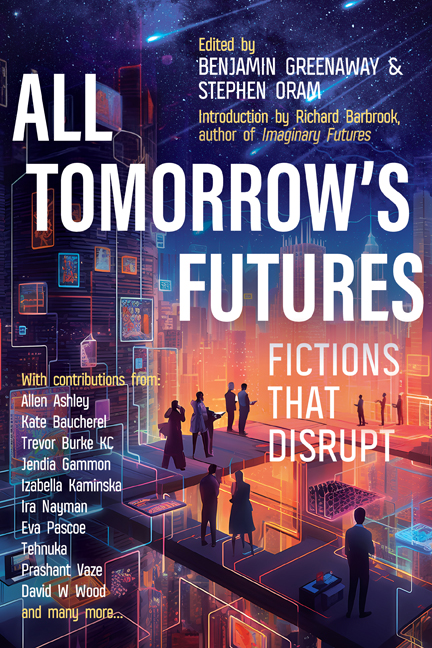
Mary Branscombe reviews All Tomorrow’s Futures: Fictions that Disrupt

Explore where technology might take us and what that might mean for how we live with this anthology that brings together experts and writers. 

It’s easy to view fiction as merely entertainment and escapism (both important in their own right), but stories – especially science and speculative fiction (SFF) – are also wonderful tools for exploring and learning, imagining possibilities and seeing how they might work. It is serious play and playful thinking. 

It’s almost a tenet of SFF that technology is secondary to the story. While SFF writers tend to explore ideas and the stories those ideas generate, their technology may be plausible but there’s no requirement for it to be. There are, however, countless movies and TV shows where an interesting premise is undermined by technology that absolutely doesn’t work. Futurists and researchers explore possibilities and trends, making predictions that are intended as realistic extrapolations of real or expected technology, with none of the Hollywood handwaving and convenient MacGuffins, but while fictional case studies illustrating predictions are so common that you’ll find them in IKEA’s latest research about homes and living, they rarely have the kind of characters, plot and drama that makes for compelling fiction.

What if you could combine the two, with experts and authors collaborating to write about possible futures in ways that are not just plausible but creative, with equally strong stories and technical chops? Like Cybersalon’s previous anthology, 22 Ideas About the Future, All Tomorrow’s Futures is predicated on (mostly) plausible technology and the impacts such technological developments might have on justice, energy, digital money, health and education. 

Continue reading “Mary Branscombe reviews All Tomorrow’s Futures: Fictions that Disrupt”

Science-Fiction, Quantum Physics and the Modernists

By Steven French

Introduction

In 1926, Erwin Schrödinger published the paper containing his eponymous equation, one of the most significant scientific achievements of the twentieth century. In the same year Hugo Gernsback founded Amazing Stories, dedicated to what he insisted at the time on calling ‘scientifiction’. Given this, an obvious question to ask is whether the new theory of quantum mechanics had any impact on this emerging genre of literature, and if so, in what form?[1] As far as I can tell, however, no one has seriously considered this before now.[2] That’s not to say that there are no studies of the impact of quantum physics on science fiction at all – there are, but they tend to focus on later, post-war, developments. My interest lies with the earlier years, stretching from the late 1920s into the 1940s, when the theory spread beyond a small set of theoretical physicists and not only began to be applied to a range of phenomena – physical, chemical and biological – but was also presented to the general public through a number of popular scientific texts.  

Unfortunately, however, with one or two exceptions, it appears to have had little impact on the science fiction stories of that era, beyond the occasional name-dropping and the odd, usually distorted, reference. it might be thought that this was because quantum mechanics was too new a theory and had not yet filtered into the consciousness of the general public, even of those who might be taken to be attuned to the latest scientific advances. Yet, this situation appears to contrast sharply with another form of literature prevalent at the time, namely Modernism. There is now a burgeoning literature on how the likes of Virginia Woolf were receptive to the new quantum physics, drawing on it to give non-traditional shape to their works. That suggests that the early authors of ‘scientifiction’ were not quite as ‘on the ball’ scientifically speaking as certain avant-garde writers in the UK. As we’ll see, however, things are not quite so clear, although there remains enough of a disparity to demand some form of explanation.

Continue reading “Science-Fiction, Quantum Physics and the Modernists”

Vector 299/Modernisms: Guest editorial by Paul March-Russell

Over the course of the last thirty years, the standard model of literary modernism has eroded.

This model offered an origin story, beginning with the fiction of Joseph Conrad and Henry James and the poetry of W.B. Yeats; a consolidation in the figure of Ford Madox Ford and the ethos of Impressionism; a quickening in the face of war and the avant-garde, as represented by Imagism and Vorticism; a fluorescence in the post-war aftermath of T.S. Eliot, James Joyce, and Virginia Woolf; and then a slow decay during the 1930s and `40s, culminating in the endgames of Samuel Beckett. What this narrative described was the rise and fall of a literary doctrine – art for art’s sake – in which the fever dream of history could be cooled by the impersonal application of myth and symbol. The type of artist this narrative valued was austere, detached, ironic and analytical. For John Carey, in his jeremiad The Intellectuals and the Masses (1992), such an image was but an excuse for elitism, social prejudice, and even fascism.

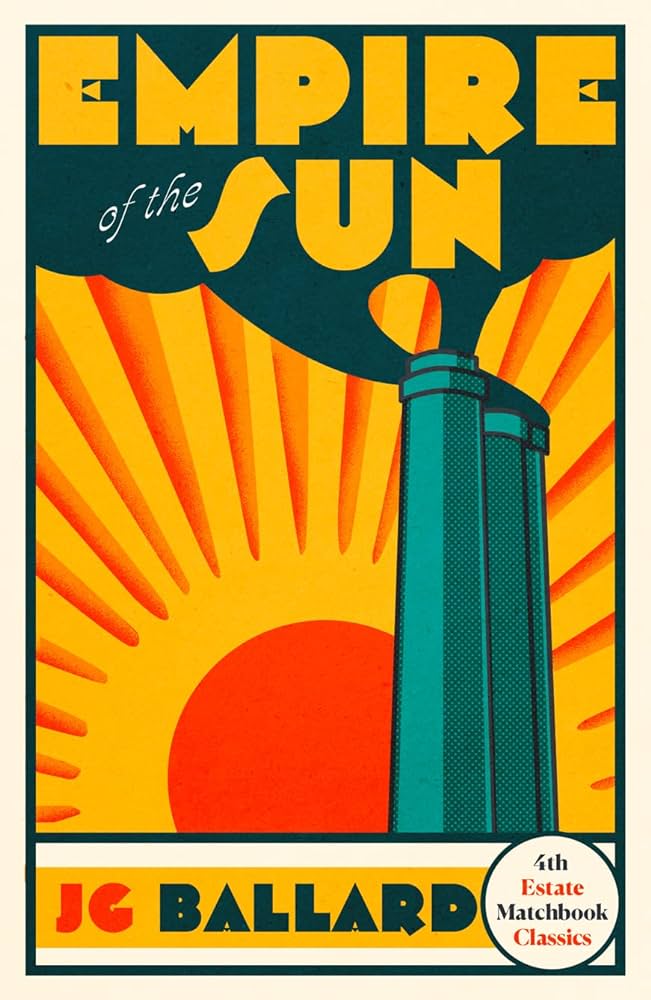
For an undergraduate like myself, though, it seemed a bit rich for the Merton College Professor of English Literature to be condemning other writers as elitists, especially when he pronounced that what the masses really wanted was the middlebrow novels of Anita Brookner. Growing up in working-class Gillingham, in a single-parent family that barely kept itself above the breadline, what I wanted was not Brookner’s insufferable Hotel du Lac but J.G. Ballard’s Empire of the Sun, outmanoeuvred on the 1984 Booker Prize shortlist by that year’s Chair, Professor Richard Cobb. When eight years later I was studying Joyce’s A Portrait of the Artist as a Young Man (1916) and realised that a whole passage had been parodied by Alfred Bester in The Stars My Destination (1955), this received history about modernism and mass culture began to smell decidedly fishy. 

Continue reading “Vector 299/Modernisms: Guest editorial by Paul March-Russell”

Vector 299/Modernisms: Torque Control by Phoenix Alexander

Peculiar Shuttling Movements

I half-jokingly say to anyone who engages me on the topic of science fiction that the 1960s and 1970s were the pinnacle of craft in the genre.

This period, of course, encompasses the New Wave, interpreted by Philip Wegner (cited by our wonderful guest editor, Paul March-Russell) as the moment when science fiction crashes into the modernist sensibilities of Literature-with-a-capital-L, exploding formal and thematic conventions. When science fiction, in Wegner’s words, ‘briefly becomes modernist.’ 

This is far too brief a space (and far too ignorant an author) to offer anything more than a speculation of the socio-historical forces that brought about this convergence. Perhaps it was the unhappy but generative confluence of decolonization, civil rights struggles, the ongoing threat of nuclear war, the resurgence of crises of and about immigration. Science fiction – that bright imaginer of glittering new technology and utopian social formations – suddenly found its joy leached away as the futures it tantalized became manifest in bleaker and, truthfully, mundanely cruel realities. Literature, always seen as a dangerous beast in times of social upheaval, became implicated in countercultural movements, and science fiction was no exception. It was time to throw away the spaceships and oddly familiar aliens, the simpering space damsels (jettison them entirely, they use up far too much oxygen) and dashing colonists. Outer space lost the sheen of adventure and became dull, cold, dead, and empty; Inner space became the place: woman looked out into the cosmos, and saw her own neuroses and hopes and desires staring, baldly, back at her. Doris Lessing defined inner-space fiction best (and possibly first) in the epigraph to her 1972 novel, Briefing for a Descent Into Hell: ‘there is never anywhere to go but in.’ 

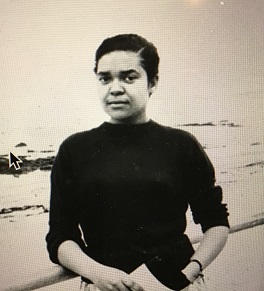
Bessie Amelia Emery Head

If the contributors to this special issue ‘tend to cleave to Anglo-European modernisms’, let me, in this remaining space, slice a bracing paper-cut before the cleft (if you will excuse the word-play). Let me make the bold claim that the Botswanan author, Bessie Amelia Emery Head, is one of the landmark figures of twentieth century Anglophone modernism. Let me cite A Question of Power (1974) as a novel that, like its almost-contemporary, Joanna Russ’s We Who Are About To… (1977), writhes not just in a refusal of prevailing cultural norms pertaining to race (on Head’s part), gender (both Russ and Head strangle that particular serpent) and class (likewise), but enacts a sitting-in that space. A discomfort that, like Claudia Rankine’s Citizen (2014), is almost, but not quite, deadly. It is almost too much for the English language to bear. 

Perhaps the comparison is unfair. Russ’s novel is acceptedly ‘science fiction.’ Head’s is not. I, of course, argue that both should be welcomed into the home-place of genre. 

Version 1.0.0

A Question of Power was Head’s third novel, and the second of hers to be published in the Heinemann African Writers’ Series: a bold, vexed, and expansive project that brought writers from the continent of Africa to the United Kingdom, from 1962 to 2003. (Again, here is not the place to transcribe the debates about whether the novel form, a distinctly European technology, was appropriate to writers and artists from primarily oral traditions. The series gave us Head, and Amos Tutuola, and Ngũgĩ wa Thiong’o, and so many other literary greats). Head herself was born in Pietermaritzburg in 1937 to a white woman and a black father. Much of her life was spent traveling between regions, stateless, illegible to an Apartheid regime. Her mental health, unsurprisingly, suffered. A Question of Power is a largely autobiographical novel that documents one woman’s struggle to make a ‘home-place’ (to repeat Carla Peterson’s human construct) in a country that not only wanted her dead, but that did not recognize her existence. Cruelty abounds within the narrative, but so too does beauty and grace. At times, the narrative falls apart, rupturing as it veers from descriptions of domesticity to mythic terror. Medusa makes an appearance, along with Hitler, Buddha, God Himself and His angelic cohorts, and Priapic demons that torment her with their sexuality. Caligula speaks. Icons of ‘classical’ western education manifest in the novel’s setting of Motabeng, Botswana, reversing the visual iconography of African art that so inspired those venerable European modernists. It is an extraordinary work. 

Helen Kapstein writes of the ‘peculiar shuttling movements’ made by Head throughout her life: moving from state to state, inverting violent social norms and turning them back upon themselves, ‘trespassing’ between frameworks of normalcy. Perhaps this is where the modernist subject resides, having ‘reeled towards death’, and then ‘turned and reeled towards life’ (Head, A Question of Power, p. 219).  In moving synchrony, it is a trajectory that similarly informs the writing of contemporary Motswana author Tlotlo Tsamaase. Speaking in a 2023 conversation in World Literature Today about her short story ‘Peeling Time’ (2022), Tsamaase describes it as a journey ‘from oppression to freedom, in conjunction with demonstrating one woman’s agency.’ 

If I may characterize contemporary SF: it has performed a similar swinging-back-necessarily-to offer stories of hope and adventure, inclusivity and peace: places where, as Tsamaase poignantly remarks in the same interview, the woman ‘does not die.’ The genre begrudgingly agrees, in one voice, to keep the woman on the spaceship, after all, and the modernist subject, in all its mess and complexity, may finally make it to outer space.

Phoenix Alexander, March 2024 

Stuck in the Middle with You: Speculative Structure and Concentric Reading in David Mitchell’s Cloud Atlas

By Matthew Burchanoski

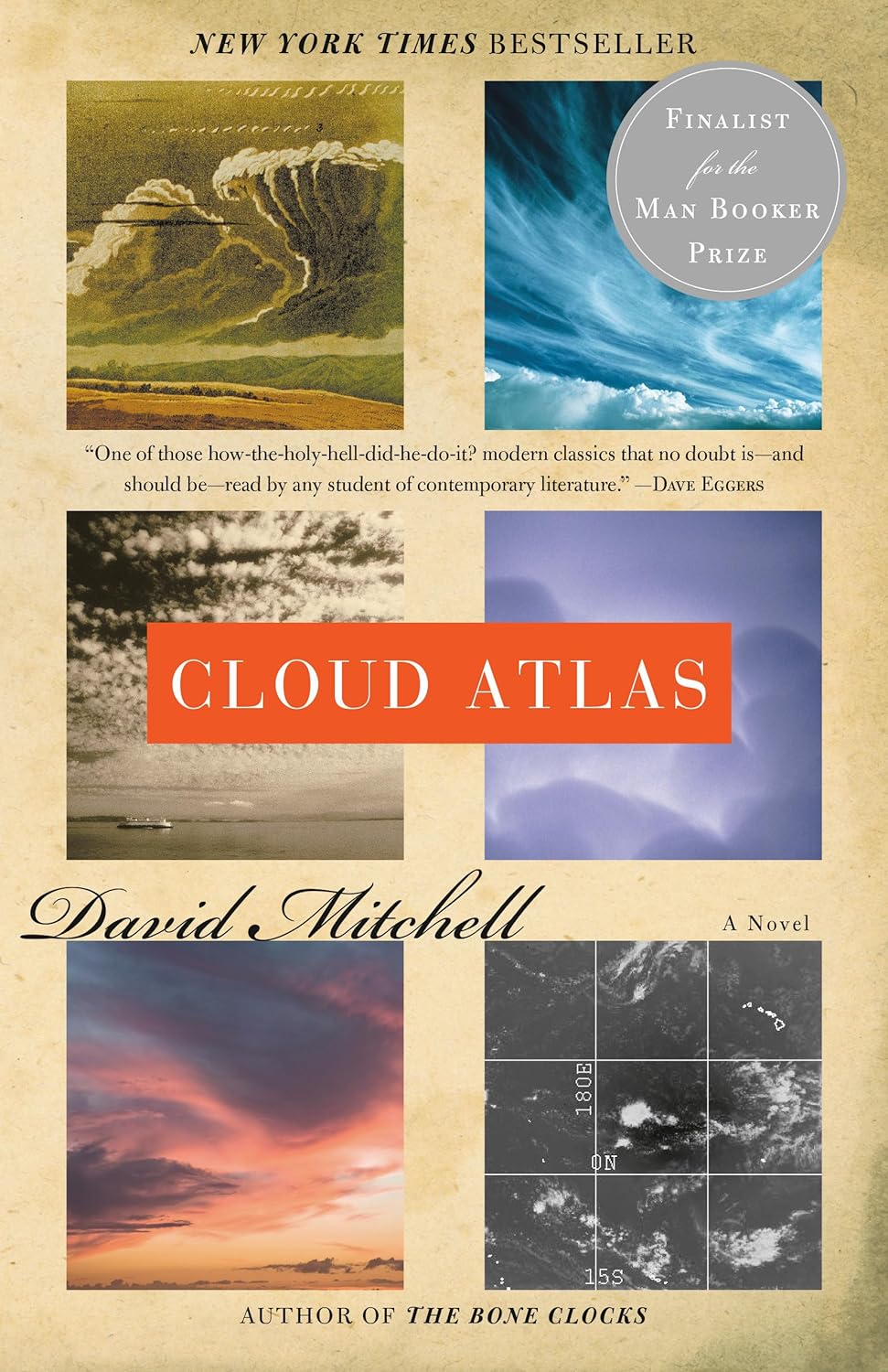
Immediately praised upon its release, David Mitchell’s Cloud Atlas (2004) stands as one of the most significant books of the 21st century. Though it has its skeptics, the novel was shortlisted for the Booker Prize, Arthur C. Clarke Award, and Nebula Award for Best Novel and won in Literary Fiction at the British Book Awards. The novel’s support across the communities of historical, speculative, and literary fictions is itself quite interesting but, suffice to say, the novel was well received and remains so in myriad lists of Best Books of the Century. 

One reason potentially behind its plaudits is how Cloud Atlas attempts to catalogue the challenges, tensions, and anxieties of its post-postmodern period. Many of the sociopolitical concerns shared by theorists regardless of their periodizing name of choice also drive Cloud Atlas’ structure and world. Less a realist representation of the contemporaneous moment than a warning about violent mistakes being repeated over and over, the novel assesses what entwines human’s past, present, and future morally as well as, in the broadest sense, politically. Put simply, Cloud Atlas is one of the most comprehensive attempts at understanding and representing the anxieties of the present moment. 

The impressive chronological and physical scope of Cloud Atlas is both obvious from its audacious structure and poured over in critical assessments. More than any other element, its expansive world motivates and helps organize analysis of the novel. Spanning roughly 1200 years with sections set on four different continents, Cloud Atlas presents a truly global vision of connectivity through time and space. The recurrence of objects, themes, and markers, as well as the reappearance of distinct, previous texts in newer sections, binds the eleven sections together as not simply diegetically related, but in many ways as repetitions of similar stories, phenomena, and souls. 

Continue reading “Stuck in the Middle with You: Speculative Structure and Concentric Reading in David Mitchell’s Cloud Atlas”

Interview with Renan Bernardo

By Jean-Paul L. Garnier 

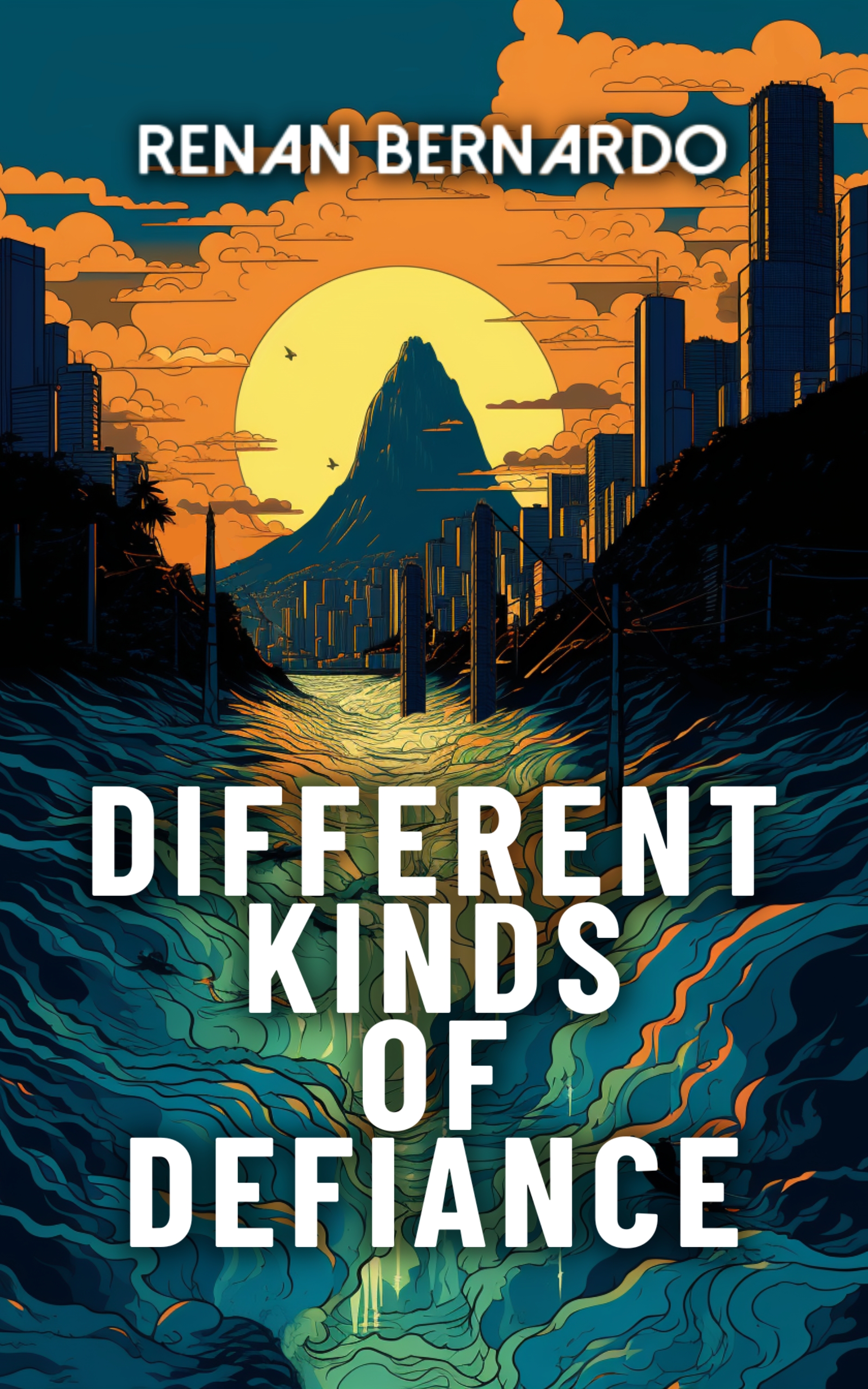
Renan Bernardo is a Nebula finalist author of science fiction and fantasy from Brazil. His fiction appeared in Reactor/Tor.com, Apex Magazine, Podcastle, Escape Pod, Daily Science Fiction, Samovar, Solarpunk Magazine, and others. His writing scope is broad, from secondary world fantasy to dark science fiction, but he enjoys the intersection of climate narratives with science, technology, and the human relations inherent to it. His solarpunk/clifi short fiction collection, Different Kinds of Defiance, was published in 2024. His fiction has also appeared in multiple languages, including German, Italian, Japanese, and Portuguese. He can be found at Twitter (@RenanBernardo), BlueSky (@renanbernardo.bsky.social) and his website: www.renanbernardo.com

Jean-Paul L. Garnier is the owner of Space Cowboy Books, producer of Simultaneous Times Podcast (2023 Laureate Award Winner, BSFA Finalist), and editor of the SFPA’s Star*Line magazine. He is also the deputy editor-in-chief of Worlds of IF magazine & the soon to be relaunched Galaxy magazine. He has written many books of poetry and science fiction. https://spacecowboybooks.com/

JPG – In many of your stories you juxtapose the past with the present, layering multiple times together, tell us about using this narrative device, and how you use it for emotional effect? 

RB – Layering past and present together without necessarily resorting to flashbacks is an excellent device to make the reader flow along with the main character’s feelings without breaking the pace of the story. I believe the past has a lot of things to say. Our past shapes who we are, so it always adds an interesting layer to my stories. Many answers to the present and the future are in the past. I believe that you were thinking of “Soil of Our Home, Storm of Our Lives” when you thought about that question. In this story, there are three timelines layered separately: past, present, future, each with different things to say about the characters, different emotional cores to introduce that end up fusing in the end. The challenge is always to weave them all together, so they don’t feel detached from each other, but I like to believe that I achieved it in this particular story.

JPG – Your stories often present utopias, but as you mention in your forwards, one person’s utopia can be another person’s dystopia. Can you speak about this concept and why cultures have a difficult time envisioning positive futures that include everyone?

RB – There are two stories in the collection that introduce this concept: “Anticipation of Hollowness” and “To Remember the Poison.” In “Anticipation of Hollowness,” there’s a sustainable city where everything seems perfect but the city is extremely gentrified and no one from lower or middle class is able to live in it anymore. And “To Remember the Poison” is an extreme version of it: a society based on justice, sustainability, and equality that got so detached from the rest of the world that it became an exclusive haven closed to the world. And though its focus is on education and expanding their “green” world, its inhabitants tend to follow a line of thought not so different from what billionaires imagine with their projects of selective bunkers or space stations. And given the concentration of resources and knowledge of Verdoá (the city in the story), it becomes a colonizing power in the region.

Continue reading “Interview with Renan Bernardo”

Interview with Samantha Mills

by Jean-Paul L. Garnier

Samantha Mills is a Nebula, Locus, and Theodore Sturgeon Memorial Award winning author living in Southern California, USA. You can find her short fiction in Uncanny Magazine, Beneath Ceaseless Skies, Strange Horizons, and others, as well as the best-of anthologies The New Voices of Science Fiction and The Year’s Best Science Fiction & Fantasy 2023. Her debut science fantasy novel, The Wings Upon Her Back, is out now. You can find more at www.samtasticbooks.com

JPG – The culture in The Wings Upon Her Back is a theocracy where labor and religion are intertwined, can you tell us about using this as a worldbuilding device? 

SM – When developing The Wings Upon Her Back, I wanted a claustrophobic, monocultural setting to reflect the isolation of the main character and the fraught history of her city. Everything had to revolve around the five gods that are sleeping overhead. 

In the book, the division of labor is a core tenet of their religious and social framework because they are emulating the gods, who arrived with very clearly defined roles. I ended up with five sects: the workers and farmers are the biggest groups, who keep the city running; the scholars and engineers are documenting and implementing the teachings of the gods; and the warriors keep the city isolated from outside forces. The primary conflict of the book comes from the unbalancing of these factions, as the warriors take more power over the others. 

One of my favorite worldbuilding techniques is to build out social expectations – what everyone is supposed to believe, what everyone is supposed to do – and then to imagine the characters who do not fit the mold. I set a limit at five sects because it automatically creates tension: you can’t actually sort the breadth of humanity or the tasks needed to keep society running into such a small number of categories!  

This tension permeates the book. There are jobs, such as medicine, that rely on teachings from multiple gods, and therefore arouse some unease. And there are many individuals who don’t fit neatly into their sect. My main character, Zemolai, was born into a family of scholars, but left them to be a warrior. The hodgepodge group of rebels she falls in with later in life have all either changed sects, or are revolting against the expectations placed on workers specifically. The right to question the division of labor (and therefore, the teachings of the gods) is central to the story. 

Continue reading “Interview with Samantha Mills”

Issue 300, ‘Community’— Call for proposals

Solaris (1972), Andrei Tarkovsky

Science fiction, for all it encompasses strange new worlds and fantastical creatures, is a literary genre that is built and sustained by human communities. Writers, artists, and creators have imagined new social formations, technologies, economic, ecological, and sociopolitical systems for centuries; indeed, science fiction may be the most nakedly political of all literary genres, as thought-provoking as it is beguiling. Who is present in narratives of futurity? What kinds of technologies enable—or stymie—human connection? How can inter-species communities develop and flourish? 

Pre-internet, fanzines and conventions were the spaces where editors, authors, and fans met, shaping the genre in new and exciting ways. Praise and critique and conflict and collaboration were equally already common before social media. Some landmark dates include: the first WorldCon (1939), the first British science fiction convention, Eastercon (1937), the Maleyevka seminars, Nihon SF Taikai (from 1962), and many others, around the globe.

In 2024, the ideologies of ‘community’ are under pressure and scrutiny. Violent geopolitical events shadowplay on smartphone screens, small enough to fit in the palm of our hands, fulfilling the most dystopian dreams of the genre; we venture to fight and commiserate and celebrate with people from all over the world, instantly. Where wealthy industrialists were (and are) once praised as saviors of humanity with the glittering promise of their space programs, now SF tends to show how the relentless logics of capitalism undermine any notions of transcendence. The challenge of space travel was supposed to unite us. What would the pioneers of SF make of the now-straining politics around the International Space Station, scheduled for dismantling by 2030? 

In light of these challenges, the Vector team—for the journal’s milestone 300th issue—invites contributions that reify the notion of ‘community’ as it manifests in speculative cultures. What tools can SF offer us to construct better tomorrows, together? How can we innovate new ways of collaborating, such as the world-building projects of Syllble? What does ‘community’ look like in fiction, non-fiction, conventions, awards, conferences, collaborations, online spaces, and other literary and paraliterary formations?

Suggested questions / topics

  • history of fandom/conventions 
  • the practice of writing: zines, magazines, letters 
  • science fiction publishing: editors and collaborators on the printed page 
  • utopias and dystopias 
  • terraforming
  • defining personhood 
  • future societies 
  • sex and sexuality 
  • navigating conflict 
  • political divides, past and present 
  • interspecies alliances
  • the posthuman 
  • the future of communication 
  • translating SF 

Please submit your proposal by June 15th, 2024 to vector.submissions@gmail.com, including:

  • a 150-500 word proposal, including estimated length;
  • something about yourself, either a 50-100 word bio or a CV.

Articles should be between 1,000 and 8,000 words. Please let us know your estimated word count. We seek articles that are carefully grounded in scholarly research, while also being clear, engaging, and suitable for a broad audience (including non-academics). Articles will be due by July 31st, 2024.

Please also feel free to make queries about other formats, e.g. reviews, interviews, curated reading lists, roundtable discussions, unusual / innovative formats. 

Electricity as a Speculative Device: The Romanian Modern(ist) SF

By Amalia Cotoi

This article explores how Romanian science fiction novels written between 1899 and 1954 engage with modernity. I am particularly interested in examining how key texts that center around the protagonist’s exploration beyond the familiar realms intersect with a modern development that was a game changer in human history: electric energy.  The analysis centers on three novels from the modernist era − Victor Anestin’s pioneering Romanian Sci-Fi novel, În anul 4000 sau o călătorie la Venus [In the Year 4000 or A Trip to Venus] (1899), Henri Stahl’s Un român în lună [A Romanian on the Moon] (1914), and Felix Aderca’s Orașe scufundate [The Submerged Cities] (1937) − and one written and published in the aftermath of WWII − Drum printre aștri  [Path Among Stars] (1954), penned by I. M. Ștefan and Radu Nor. If the works written during the interwar period represent initial major forays into the Sci-Fi genre, it wasn’t until the postwar era that the first notable presence of Sci-Fi in Romanian literature, holding institutional significance and capturing general interest, emerged. By including a novel written in the 1950s in this inquiry, I aim to challenge the chronological convention of the modernist era ending with World War II. The emergence of the communist regime, influenced by the Soviet model, signaled an unparalleled drive toward industrial and technological advancement in a European nation that was among the least developed, with a rural population twice the continental average (Murgescu, 140). Such a transition is all the more justifiable in the case of electricity, as the pace of electrification accelerated after World War II, particularly between 1950 and 1970 (Murgescu, 344), witnessing the shift from electricity as a speculative concept to a democratically commodified resource.

Continue reading “Electricity as a Speculative Device: The Romanian Modern(ist) SF”