By Cyril Simsa

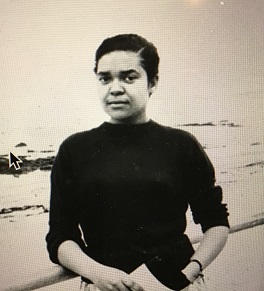
Eva Hauserová promoting her non-fiction title Na koštěti se dá i lítat [Broomsticks can also be used for flying], 1995
Of the many contemporary subgenres of sf that can claim they originated as a reaction to the cyberpunk revolution of the 1980s, one of the oldest is certainly “biopunk”, especially if one counts the mini-genre of “ribofunk” – shouted into existence by the American writer Paul Di Filippo (1954-) in 1990, and just as quickly extinguished – as a legitimate precursor (Di Filippo 1990). Probably only “steampunk”, coined by K.W. Jeter (1950-) in 1987, is older (Nicholls and Langford 2025).
“Biopunk”, as it is used today, refers to a subgenre of sf that adopts many of the stylistic and narrative tropes of cyberpunk – a focus on stories built around an ensemble cast of petty criminals, (gene) hackers and chancers, urban subcultures, and a “revolt into style” (if the reader will pardon the throwback to the cultural criticism of an earlier era) (Melly 1970) – while sourcing its McGuffins from biotechnology, rather than cybernetics. In this contemporary sense, biopunk has its origins in the American genre writing of the 1990s, with the first documented use (from two different, and almost certainly unconnected sources) in 1992, and the subsequent attempt to identify precursors in earlier genre history.1
Di Filippo takes this as far back as H.G. Wells’ The Island of Doctor Moreau (1896); of more recent antecedents, Greg Bear’s Blood Music (1985) and Bruce Sterling’s Schismatrix (1985) are frequently cited (Di Filippo 1990; Schmeink 2014b, 32). From these American genre roots, biopunk has spread around the world and into other media, film and TV in particular. The hit TV show, Orphan Black (2013-2017), with its saga of a shadowy organisation trying to direct the future of human evolution through gene hacking and the complications that arise when some of its human clones escape, would be a good example. All of which makes a neat teleological narrative of exactly the kind that, in theory, every self-respecting punk of whatever persuasion is supposed to abhor; and none of which quite holds together when examined in a broader framework.
Because there is a catch – of course, there is – and in a European context, this neat timeline is disrupted by the Czech writer Eva Hauserová (1954-2023), also known as Eva Hauser, who in 1988 independently came up with a literary intervention she called “biopunk,” and her coinage pre-dates the American one. This sits uncomfortably with the official chronicle, making her something later critics have had to explain away, though there are also those who have simply ignored her. (For the former, see Schmeink, who will be discussed below; for the latter, a simple Google search will reveal any number of biopunk, or biopunk-adjacent websites that have no idea of Eva’s existence.)