Charne Lavery [1,2], Laura Pereira [3,4], Bwalya Chibwe [4], Nedine Moonsamy [1], Chinelo Onwaulu [5], Naomi Terry [4].
1 Department of English, University of Pretoria, South Africa
2 WiSER, University of the Witwatersrand, South Africa
3 Global Change Institute, University of the Witwatersrand, South Africa
4 Stockholm Resilience Centre, Stockholm University, Sweden
5 Independent author and editor of African speculative fiction
It is widely recognised that nature must be valued in ways that go beyond narrow economic perspectives, and accommodate the interconnected social, cultural, aesthetic, and spiritual dimensions of nature. There is also now growing interest in futures that value nature in its own right, independent of the many benefits that nature provides to humans. How we imagine the future shapes what and how we value, and the decisions we make in the present. The Nature Futures Framework (NFF) offers high-level guidance for imagining nature futures that acknowledge the complex and interconnected values of nature. While there are many narratives and practices focused on valuing Nature-for-Society, there are fewer which value Nature-as-Culture or Nature-for-Nature. This article explores the potential for Africanfuturist science fiction to address these gaps in the NFF construct. Africanfuturist science fiction can provide visions of the future which embody the priorities and the lived experience of their African authors. This article explores a sample of Africanfuturist texts to highlight both their diversity and to draw out some significant commonalities.
Review: This article underwent editorial review from three editors.
The future is African: by 2100 one in three people are projected to be from the African continent (Council on Foreign Relations 2020). And yet the stories that the world tells itself about this future are decidedly not African — or at least not of a prosperous, plausible future Africa (Pereira et al. 2021). In a post-colonial world, Africa continues to be colonised by dominant perspectives that dictate what to aspire to and which values are important (Oelofsen 2015). This is to the detriment not only of the continent but the world. It misses the diverse possibilities that local cultures and traditions could offer in terms of preferable futures, drawing on pasts that are deeply connected to the land and ancestors. Addressing this marginalisation of knowledge systems and the people who practice them is of critical importance in the shift towards a more equal development agenda that values diversity (Tengo et al. 2014). The Sustainable Development Goals (SDGs) are a set of objectives set up by the United Nations to improve quality of life around the world, protect the environment, and promote peace and prosperity. There are seventeen SDGs, including the eradication of poverty and hunger, the spread of health and wellbeing, quality education, gender equality, and climate action. Governments, businesses and non-profits use the SDGs as a framework for understanding their broader purpose and impact. Are the SDGs fit-for-purpose? It’s a controversial question, but one thing is for sure: as the world struggles to meet these goals, fresh ideas, and bold pathways away from current trajectories, need to be explored.
Speculative fiction has a role to play in this. How we think about and imagine the future is an important aspect of decision-making in the present (Vervoort and Gupta 2018). As Lao Tzu says, “if you don’t change direction, you may end up where you are headed.” When we are continually confronted by stories of doom and gloom, these can often be self-fulfilling (Evans 2016). We end up where we are headed. We are currently experiencing overlapping global environmental crises. The most recent is the Covid-19 pandemic (zoonotic diseases are fundamentally linked to human-environment interactions). The most existentially threatening is climate change. The most ethically compromising is, arguably, the human-induced sixth mass extinction. A business-as-usual trajectory is suicide for humanity. However, what are the futures towards which we do want to navigate? And how might we begin to imagine them?
Part of the answer lies with how we value nature. Calls are growing to reimagine transformative futures for nature using more than just positivist science (Wyborn et al. 2020). Traditional environmental policy has often treated nature as a realm whose laws we can know and master, to maximise its economic benefits to humans. In recent years, there has been more recognition that economic benefits are interconnected with social, cultural, and even spiritual benefits. The beauty and abundance of nature give inspiration and solace to humans in ways that are hard to quantify, let alone control, ways that are grounded in the diverse values that people find in nature. Yet perhaps this still doesn’t go far enough. There is now growing interest in futures that value nature in its own right, independent of the many benefits that nature provides to humans.
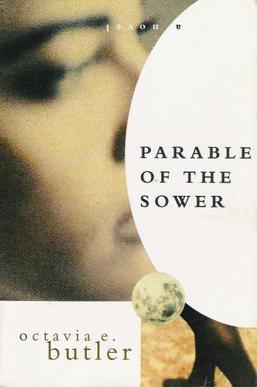
In science fiction writing, the future is both a territory for extraction and a site of resistance. Through what cultural theorists Kodwo Eshun and Mark Fisher have called ‘sf [science fiction] capital’, capitalism extracts value from futurity.[3] The financialisation of the economy is one way that sf capital colonises the future.[4] The hyper-commodities of the Star Wars franchise are another.[5] At the same time, the future of the planet — the future of the human species — is threatened by the rapacious extractivism that capital demands. Further, the futures of the peoples most subjugated and exploited under capitalism have always already been under threat. Kathryn Yusoff writes that the ‘Anthropocene might seem to offer a dystopic future that laments the end of the world, but imperialism and ongoing (settler) colonialisms have been ending worlds as long as they have been in existence’.[6] This dual vision — both proleptic and retrospective — is present in the novels Parable of the Sower (1993) and Parable of the Talents (1998) by Octavia Butler and The Stone Gods (2007) by Jeanette Winterson. Both authors envision futures of the Anthopocene that are discursively (and recursively) engaged with colonial pasts, a conception of the future that finds it is, as Henriette Genkel argues in her anthology Futures and Fictions, ‘already implicated in the different dimensions of time’.[7] Both Butler and Winterson’s texts unsettle the narratives of empire and capital by orienting themselves in the alternative temporalities of speculative fiction.[8] They fiction futures to produce a ‘significant distortion of the present’, something that Samuel Delany considers a central technique of science fiction.[9] Their texts wonder at the possibility of other worlds and other futures, while grappling with the neoliberal fiction that such possibility is already foreclosed, that we are at the ‘end of history’.[10]
In science fiction writing, the future is both a territory for extraction and a site of resistance.
In John Akomfrah’s The Last Angel of History, his documentary-cum-science-fiction film about afrofuturism and the entanglements of ‘space, music, and the future’ in late-twentieth century black culture, the time-travelling narrator declares that the:
first touch with science fiction came when Africans began playing drums to cover distance. Water carried the sound of the drums, and sound covered the distance between the Old and the New World.[11]
Butler, who features in the film, writes from a similar position of awareness that, since the violence and displacement of the Middle Passage, science fiction has been a black technology of resistance, of establishing relationships with the ‘Old and the New World’, and of sense-making beyond the end of the world.
The Northman (2022) – Director: Robert Eggers; Writer: Sjón/Eggers.
Vikings are very much in vogue again, with a slew of releases in recent years reaching fever pitch in 2021-2022, many of which draw laterally, rather than literally, upon Viking culture: MCU’s Loki and Thor: Love and Thunder; Vikings: Valhalla; The Last Kingdom; The Northman; The Lord of the Rings: The Rings of Power... Readers and viewers are perhaps more adept at perceiving the loose historicity of such retellings than scholars credit them; and are drawn to the new tales largely because of the storytelling, the characters, and the aesthetic. For some, such texts are a ‘gateway drug’ to the hit of history, the fix of the source material, the Gothic allure of the archive.
Yet for many, it is perhaps something more visceral. Martin Amis said novels come from the ‘base of the spine’, but maybe the appeal of narrative flights of fancy do also.
It is perhaps not surprising that tales of warriors and their warrior gods are in favour in such tumultuous times (it could be argued we live in a new Viking Age, where the mask of civility has been forsaken and the strong take what they wish from the weak, or at least try), but Viking culture and Norse mythology has had an especial appeal to writers of Fantasy for a long time. Mike Ashley defines ‘Nordic Fantasy’ as ‘That body of FANTASY which draws its heart from the MYTHOLOGY of the Scandinavian and Teutonic races and incorporates the stories retold in the SAGAS.’ (1999: 691)
In this article (from an author and academic who has written two Viking-inspired novels of his own), I explore this phenomenon. What is Viking Fever? When and how did it go viral? And is this latest ‘wave’ just a variant of a long-running cultural mutation that originates in the birth of Scandinavian and English literature, and perhaps even in the very foundations of storytelling?
Kingdoms of Elfin, Sylvia Townsend Warner’s 1977 short story collection, is one of her oddest and most fantastical works, the culmination of “a progressive shifting away from realism toward the explicitly anti mimetic modes of allegory and fable” (Castle, 1993), a departure which “seemed calculated to irritate and confuse a great many readers.” (Harman, 2015, p. 312) The tales were written over a period of several years, originally published separately in the New Yorker, before being published as a collection about a year before Townsend Warner’s death in 1978. They are loosely satires of class systems and aristocracy, as Harman describes: “She used Elfindom as a mirror to society, although all the satire in her elfin stories is very casually arrived at; she seems too uninterested in human dealings to aim at them with any care” (Harman, 2015, p. 313). Elfin (or fairy, the terms are often used interchangeably by both author and critics) society is portrayed as deeply decayed and corrupt, with a rigid class structure and archaic rituals dependent primarily on the whims of the powerful, disintegrating under the weight of their own isolationism and greed, and in opposition to the mortals of the tales, who are “almost universally working class”. (Priest, 2010)
There are two main layers to the class division in these stories. The most prominent is the division within Elfin society, between “flying servants [and] strolling gentry” (p.93). The division between Elfin and human society is also stratified along class lines, with the aforementioned working class mortals forming the main part of the human characters. The intersections between both of these stratifications will serve as the basis for my exploration of Warner’s treatment of class.
Claire Harman, in her 1989 biography of Sylvia Townsend Warner, describes the Elfins as “anarchic [and] amoral”. Harman is likely using ‘anarchic’ in the colloquial sense, to mean ‘chaotic’, however, in contrast to the literal sense of the word, we see that Elfin society is deeply hierarchical, and the power of flight, through the possession and usage of wings, is frequently employed as a symbol of the delineation of those hierarchies. It’s a physical power, an inherited characteristic, a visual marker to differentiate between Elfins and those they consider to be their human inferiors. It serves as a marker of the differences between Elfins and humans, a demonstration of Elfin superiority that is tied in with human religious symbolism. It also serves as a class marker within Elfin society, between the working classes who must rely on flight for labour and transport, and the upper classes who consider it beneath their dignity. We are told quite flatly of the theoretically simple social position of flight: Elfins “fly or don’t fly according to their station in life”, and the aristocrats “marked their social standing by scorning to use their wings” (p. 66). The stories frequently concern themselves with instances in which these social rules are transgressed.
I am resisting the impulse here to taxonomise every symbolic function of the power of flight in these stories, to fit them all into some universal system, since this runs counter to the playfully and deliberately contradictory nature of these stories. Partly this is due to their being written over a long period of time, changing style and tone to suit the needs of particular stories, and partly it is an artefact of the stories’ function as social satires. Though some critics have discussed her “attempt to construct a typology of fairies” (Simons in Davies & Malcolm eds. 2006), I would disagree that she makes any such attempt. It is possible to read a typology into the book, but I’d argue that this requires flattening a lot of the apparent contradictions. Flight is forbidden, except when it’s not. Contact with humans is forbidden, except when it’s not. Religion is irrelevant to them, except when it’s not. She sets out a theoretical typology, then throughout the collection she explores the complications and violations and contradictions of this typology. It might be more accurate to say that the book is a typology of contradictions, and in laying out the Elfin contradictions we are led to consider the human ones.
In writing about Warner’s treatment of animals in her fiction, Mary Sanders Pollock discusses Warner’s project to “suggest ways that Marxist thinking might permeate and complicate the boundaries […] between the “human” and the other lively beings” (2015), which I would suggest applies equally to her treatment of the Elfins as it does to her treatment of animals. We see a convergence of these two concepts in the tale ‘The Mortal Milk’, which concerns “the Royal Pack of Werewolves” (p. 68) in the Court of Brocéliande as they sicken and die. They are described as both men and beasts, as both unnatural and mortal, as a liminal state between sapient and animal, and their treatment mirrors the treatment of the human children raised in Elfin. Permeability is a recurrent symbol in these stories, be it the permeable geographical boundaries between the two worlds, the permeable species boundaries between humans and Elfins, or the resisted permeability of class boundaries.
“I mean I can book the acts, but I can’t tell the acrobats which way to jump!”
James George Hacker (portrayed by Paul Eddington)—Yes Minister, Series 2, Episode 2: ‘Official Secrets‘
Utopia and Irrigation
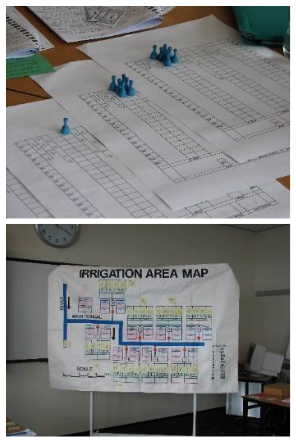
This is an article about The Irrigation Management Game (IMG), reflecting on my own use of the game in educational settings, and drawing some links with utopian and dystopian thought. The relationship between water and human wellbeing has been extensively studied and debated. Perhaps the most famous overarching theory is that of Karl Wittfogel. Wittfogel argued that certain climates imply certain forms of irrigation, which in turn imply certain political and social institutions.[1] In particular, Wittfogel thought that ancient Egypt and Mesopotamia, Hellenistic Greece, Imperial Rome, the Abbasid Caliphate, Imperial China, the Moghul Empire, and Incan Peru, were all ‘hydraulic societies,’ whose despotic character arose from the need to manage complex irrigation infrastructures. Although Wittfogel’s environmental determinism has since been discredited, his work remains a great reminder that water management is seldom simply a set of technical problems. Instead, water management is intimately linked with power, labor, knowledge, discipline, control, and utopian and dystopian possibilities. Anyone who has read George Orwell’s 1984 or Aldous Huxley’s Brave New World—or is a fan of Michel Foucault—will surely recognize such themes.[2] Irrigation is one of many domains where governments have attempted to improve collective welfare without undue interference in individual freedoms.
Irrigation was on many development agendas, in states as diverse as the Neo-Assyrian empire[3], colonial states in the 19th and 20th centuries[4] and modern settings[5]. In these developmental settings, irrigation—including its aspects of control—was often associated with utopian futures, at least within state propaganda and planning discourse. In colonial Africa, for example, European powers imposed irrigation regimes on communities they treated as ‘historyless’, while perceiving themselves as creating an ideal, rational order.[6] After the Second World War, with many colonized countries gaining independence, irrigation systems that had been constructed and/or planned became part of post-colonial international development.[7] Former colonial experts became international experts, and new experts were trained within irrigation approaches developed in colonial times.
In the first decades of post-WWII development, the main focus was on building new and rehabilitating existing irrigation infrastructure. From the 1970s onwards, more attention was paid to issues of managing these infrastructures—including relationships between managers, farmers, and other water users. These discussions intensified in the 1980s, if only because results lagged behind the expectations (sometimes too optimistic—utopian!—expectations) of governments and engineers. New methods of design and management began to emerge, and slowly began to adopt more participatory processes, to accommodate stakeholders’ knowledge and wishes. The main topic of this article, the Irrigation Management Game (IMG), is a result of these intensified efforts.
The IMG was initially developed to support discussions among irrigation managers on farmer strategies and water delivery problems, especially in the larger systems in South and South-East Asia.[8] After positioning the IMG within a gaming context, I will examine how the game reflects the realities that I study—both in practical and theoretical terms. I will conclude by suggesting that the IMG allows us to explore how utopia and dystopia are in the making, and not fixed in advance by a given environmental setting and management system. Especially in irrigation, I will suggest, the margin between utopia and dystopia can be thin.
This article is a brief introduction to science fiction theatre by Greek artists based in Greece and the UK. I’m happy to have been asked to also discuss the theatre company I co-founded, Cyborphic, as the main case study. One would hope that science fiction theatre hardly requires an introduction: the genre has been on stage for at least a hundred and one years, since Karel Čapek’s R.U.R. (Rossum’s Universal Robots), which premiered in 1921 in Hradec Králové. However, science fiction theatre has been present as a largely invisible and underexplored category. In the 20th century, it not only included stage adaptations of Mary Shelley’s and H.G. Wells’s novels, or musicals such as Little Shop of Horrors or the Rocky Horror Show; it also included plays by Samuel Beckett, Caryl Churchill, George Bernard Shaw, Alan Ayckbourn, and Vladimir Mayakovsky. A foundational text by Ralph Willingham, Science Fiction and the Theatre (1993), remains one of the few studies that demonstrate the strength of the science fictional imagination in 20th century theatre.
The genre has proliferated in the 21st century, most notably in experimental and fringe productions. More and more artists and theatre companies appear happy to label their work ‘science fiction theatre,’ marking a change from the last century, in which dystopian and post-apocalyptic settings such as that of Beckett’s Endgame, or devices such as time travel or alternate history, could often appear on stage without terms like “sci-fi” appearing anywhere in the accompanying marketing. Notable exceptions to this included the Science Fiction Theatre of Liverpool (founded in 1976), and Ray Bradbury’s theatrical adventures in Los Angeles, where he led the Pandemonium Theatre Company and adapted several of his well-known science fiction stories for the stage.
More recently, Jennifer Haley’s The Nether, a crime/science fiction thriller set in a virtual realm, had its world premiere in California in 2013. Plays by Alistair McDowall, such as Pomona (2014), X (2016), and The Glow (2022), featured genre elements, from Lovecraftian horror to science fiction and the supernatural, and have been staged in the National Theatre and the Royal Court. Jordan Harrison’s Marjorie Prime was a finalist for the 2015 Pulitzer Prize in Drama, later adapted into a 2017 film. The first theatre festival to focus on science fiction was Sci-Fest LA in 2014; it included theatrical adaptations of works by Neil Gaiman and Clive Barker. California seems to be particularly friendly to the genre, as does New York, where the Untitled Theater Company #61 has staged new science fiction plays by Edward Einhorn and his adaptations of Ursula K. Le Guin’s and Philip K Dick’s work. Also in New York, Mac Rogers has presented his Honeycomb Trilogy (2012), a trilogy of science fiction plays based on R.U.R. Meanwhile, in the UK, science fiction plays and performances have been populating fringe festivals such as the Edinburgh Fringe, Vault Festival and others — including the Talos Science Fiction Theatre Festival since 2015. On that note, and to begin discussing where contemporary Greek theatre-making fits into this world, I will next reflect on a company and a festival dedicated to science fiction on stage.
I. On Cyborphic — or do Orphics dream of Cyber sheep?
Cyborphic is a London-based Greek and Science Fiction theatre company, founded in 2017, producing ancient and contemporary Greek theatre. The company is run by playwright and lecturer Dr Christos Callow Jr. and dramaturg and classicist Dr Andriana Domouzi. Its projects have included a reconstruction of Euripides’ fragmentary tragedy Melanippe Wise, and the solo performances Mayuri and Posthuman Meditation. Cyborphic has also run the TalosScience Fiction Theatre Festival of London (which predates the company, being founded in 2015). The festival has featured contemporary science fiction plays, including work by Greek theatremakers, such as Superhero by Andreas Flourakis. Cyborphic also organised the Performing Greece conferences on contemporary Greek theatre (including papers on Greek science fiction theatre) and the latest Stage the Future conference on science fiction theatre. The company runs a small network for science fiction theatre artists and academics, SF Theatre Network, and organised a network of Greek artists in London.
Liza Callinicos as Mayuri
Of these projects, the most ambitious is Melanippe Wise. The completed text included Domouzi’s translation of the play’s surviving fragments and is based on Domouzi’s doctoral research into Euripides’ two lost Melanippe tragedies, Melanippe Wise (c.418-411 BC) and Melanippe Captive (c. 413-412 BC). It was first presented at the Hope Theatre in London in November 2019, funded by the Institute of Classical Studies and the University of Derby. The process for researching and reconstructing the play was explored in a workshop series titled “Lost Greek Tragedy: Staging the Fragmented and the Fantastic” (Domouzi 2020), and will be further explored in a chapter of Domouzi’s forthcoming edited volume Tragedy Resurrected. Reconstructing, Adapting and Staging Lost Greek Tragedy, to be published by De Gruyter.
Finally, Cyborphic aims to bring interdisciplinary research to theatre-making. Cyborphic’s website features an online database of 21st century science fiction theatre plays and performances, chronicling more than 100 plays with sci-fi elements, including Afrofuturist, contemporary fantasy, horror, and others. Currently, Cyborphic are planning TalosV, and a full production of Melanippe Wise.
II. On Greek Science Fiction Theatre; Live or Leave your Myth in Greece
If we’re happy to consider proto-science fiction when discussing the underexplored Greek science fiction theatre, one may start as early as the fragmentary play Daedalus by Sophocles (likely a satyr drama) where the fragments “160 and 161 testify that the play contained something about Talos” (Sophocles, 1996), the artificial man of bronze. If we were to maintain this flexible approach to genre, we could consider several Greek adaptations of classical Greek drama that have used science fictional, futuristic and/or dystopian elements across the 20th century. One of the most interesting such texts is Medea by Vasilis Ziogas, written in 1995, which features a chorus of metahumans in addition to three goddesses, and blends ideas from Greek philosophy, Christianity and astronomy along with a posthuman take on Medea. The play is unpublished but there’s a copy in the library of the Department of Theatre Studies of the University of Athens. The following quote demonstrates well the style and attitude of the play:
And you Metahumans, that the wisdom you achieved while you were living, rewarded you with the fourth level of galactic life. It is not Jason that elevated himself to the meadow of the fourth dimension, but it was me who descended to meet him. (Ziogas, cited in Domouzi, 2016)
What is of particular interest here — and this is an important theme that science fiction and ancient Greek theatre share — is the struggle of the individual with the cosmos, a struggle which takes mythical proportions. Domouzi argues that at the heart of the play is “the dual substance of Medea,” who is presented here as “some kind of human goddess,” and that the “meaning of the universe and the purpose of existence are central to the text, positioning the characters and the myth against a cosmic problem” (Domouzi, 2016).
Besides such adaptations of classical Greek plays, there have been in Greece — as is the case everywhere — several theatrical adaptations of science fiction films and novels, including quite a few takes on Clockwork Orange as well as We ; an adaptation of The Man from Earth was at Theatre Alkmini from 2013 to 2014, and theatre director Katerina Evangelatos had presented a new adaptation of 1984 in 2016.
But what of Greek science fiction on stage? The first co-production of the Greek National Theatre with the Greek National Opera, Galaxy, also premiered in 2016. The show combined ambitious visual effects, dance and performance, and explored, among other things, cosmic topics from the Big Bang to hopes of alien life elsewhere in the universe. Other examples include another production at Alkmini, Mars 1, by the theatre company “θεατρικό σωματίδιο πΟδήλατρΟν” (which might best be translated to “theatrical particle bIcycle”) and the dystopian drama 3% by Vily Sotiropoulou — set in 2040 — which first ran from 2016 -2017, and was presented again in early 2021. Even its pre-pandemic edition featured Skype connections with actors based in other countries. There was also Mission to Planet Earth by Sakis Serefas, produced by the National Theatre of Northern Greece in 2010 and concerning two alien beings that visit Earth. Home Greco by Vaggelis Alexandris and Odysseas Androutsos, which ran from December 2018 to March 2019 at Theatre Stathmos, was an intergalactic sci-fi comedy exploring the history of Greece through aliens. Another surreal but sf-relevant play is Blood Enemies by Arkas, published in 2007 and performed in 2008 at Neos Kosmos Theatre in Athens; the play features anthropomorphised organs in the body of a dying alcoholic shortly after an accident — the dialogue between the Small Intestine and the Colon is meant to be both funny and existential, as they’re stuck in a Beckettian scenario, with no luck being transplanted and thus surviving in another body, unlike other organs.
It is safe to assume that if Greek science fiction theatre is influenced by anything, it’d primarily be the Theatre of the Absurd and subsequently Science Fiction Cinema and Literature, rather than the lesser known tradition of science fiction on stage, such as in American or British theatre. I doubt that Alistair McDowall or Anne Washburn are well-known in Greek or Greek-Cypriot theatre; however there was a staging of Caryl Churchill’s A Number in Athens at 2005 and a staged reading of a Jennifer Haley’s The Nether directed by Evita Ioannou in October 2020 in Lefkosia, Cyprus.
Many of the performances mentioned above rely more heavily on surreal and absurdist elements than science fiction; what is exciting from an interdisciplinary perspective is how Greek theatre aesthetics can influence the exploration of science fiction in Greece, Cyprus and European theatre more broadly. Some of these plays explore what it means to be Greek, or to exist in modern Greece, from an alien or dystopian perspective. But what of Greeks abroad?
When it comes to thinking about science fiction theatre and performance of the Greek diaspora, especially in the UK, identity issues related to immigration and isolation may be more dominant, alongside general concerns about the state of the world and/or of the planet.
An Ice Thing to Say by London-based Vertebra Theatre and directed by Mayra Stergiou, has involved several Greek artists in its production and has participated at several festivals (in London, Melbourne, Reykjavik, Stockholm and elsewhere), having had both digital versions for online events (that blended live and recorded performance) and live, in-person shows. The performance, blending elements of physical theatre and ice installation, explores the encounter between a human being and a polar bear, and engages with issues of the Anthropocene Era and anthropocentrism. It also featured in one of the Talos theatre festivals (at the Cockpit Theatre in November 2020) alongside another theatre project by Greek creatives, Genome Theatre’s Genesis 37, an immersive performance that involved audience participation both in-venue and online (via Zoom and thanks to a projector and live-streaming from a camera-person on stage), in a feminist story exploring the ethics of cloning.
My own science fiction play, Mayuri; or, The New Human, was performed as part of the Kensington + Chelsea Festival and online for Edinburgh Fringe in August 2021, and explored issues of robotics, posthumanism and immigration. I’d rather not talk about it in my own words here; but according to Geraint D’Arcy in a lovely review in Foundation 140 (Winter 2021 issue), the play is centred “on the triumph and anguish of abandoning the body in favour of a technological and philosophical unknown.”
III. A Conclusion; or, perhaps, a Cliffhanger
One of the challenges of science fiction theatre-making is the creation of work that succeeds both as theatre and as science fiction. Willingham noted that most of the science fiction plays he catalogued in Science Fiction and the Theatre “are the work not of science fiction writers, but of independent dramatists schooled in the old playwriting formulas” (Willingham, 1994, 3). The ideal perhaps here is that, as the cultures of science fiction and theatre continue to explore each other, we have in the 21st Century more plays that build on both traditions. My hope for the future of Greek science fiction theatre is that it engages with both the more-developed science fiction theatre traditions beyond Greece, and with contemporary science fiction literature by Greek writers — rather than operating in a vacuum or reacting mainly to classic dystopian texts. Another hope is that it interacts more with the speculative fiction — and proto-sci-fi themes — of Greek myth and classical theatre.
In any case, I hope that this article has demonstrated that — for better or worse — Greek science fiction theatre exists, and that it has a growing (and perhaps a glowing) presence.
D’Arcy, G, 2021, “Review of Mayuri, or the New Human,” Foundation, vol. 140, no. 50.3, pp.130-132.
Domouzi, A, 2016, “The Metahuman in Modern Greek Theatre: science fiction motifs in Medea by Vasilis Ziogas.” Performing Greece II: Conference on Contemporary Greek Theatre, 3 December, London.
Domouzi, A. (2020) “New life for lost Greek drama: reflections on reconstructing and staging Euripides’ Melanippe Wise.” Institute of Classical Studies blog. July 2020. Available from: ics.blogs.sas.ac.uk/2020/07/09/new-life-for-lost-greek-drama-reflections-on-reconstructing-and-staging-euripides-melanippe-wise. Last accessed 2 February 2022.
Sophocles (1996). Fragments. Edited by Hugh Lloyd-Jones. Cambridge, MA: Harvard University Press. P.64
Willingham, R. (1994). Science Fiction and the Theatre. London: Greenwood Press.
Christos Callow Jr is a Greek British Playwright and Lecturer in Creative Writing at the University of Derby. He has founded the Talos: Science Fiction Theatre Festival and has written several science fiction plays which have been presented at Being Human Festival 2021, Kensington + Chelsea Festival and Edinburgh Fringe.
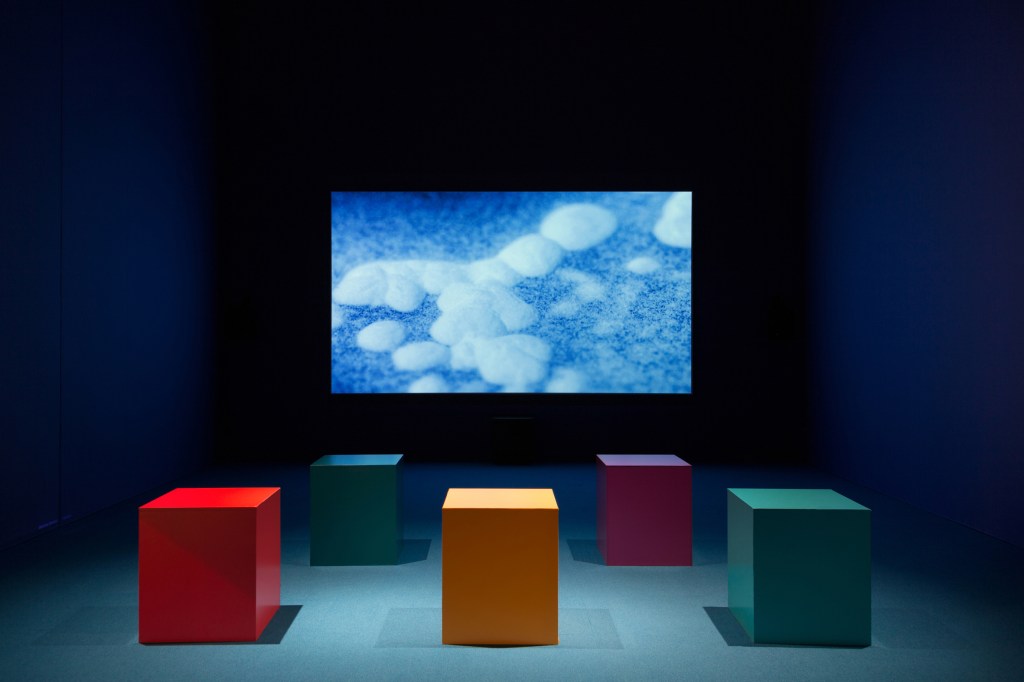
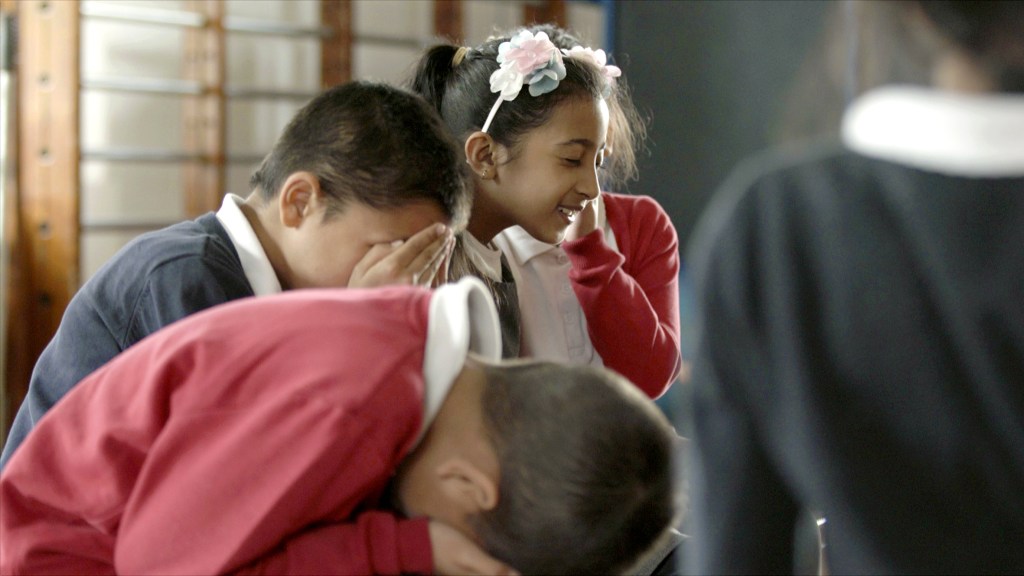
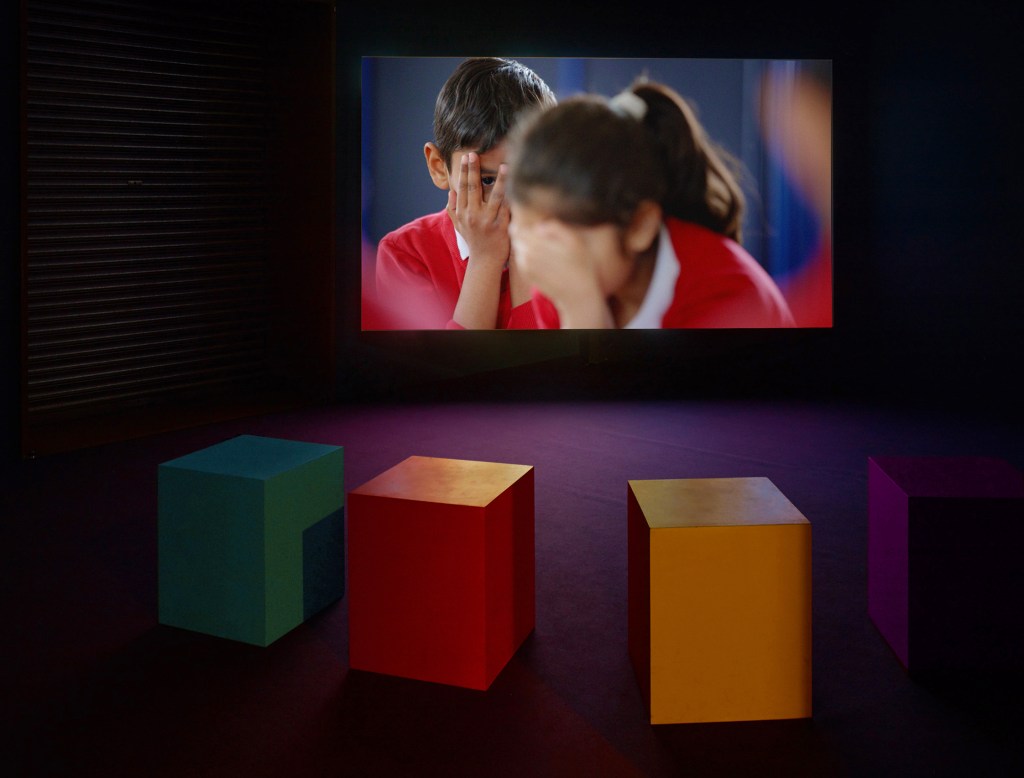
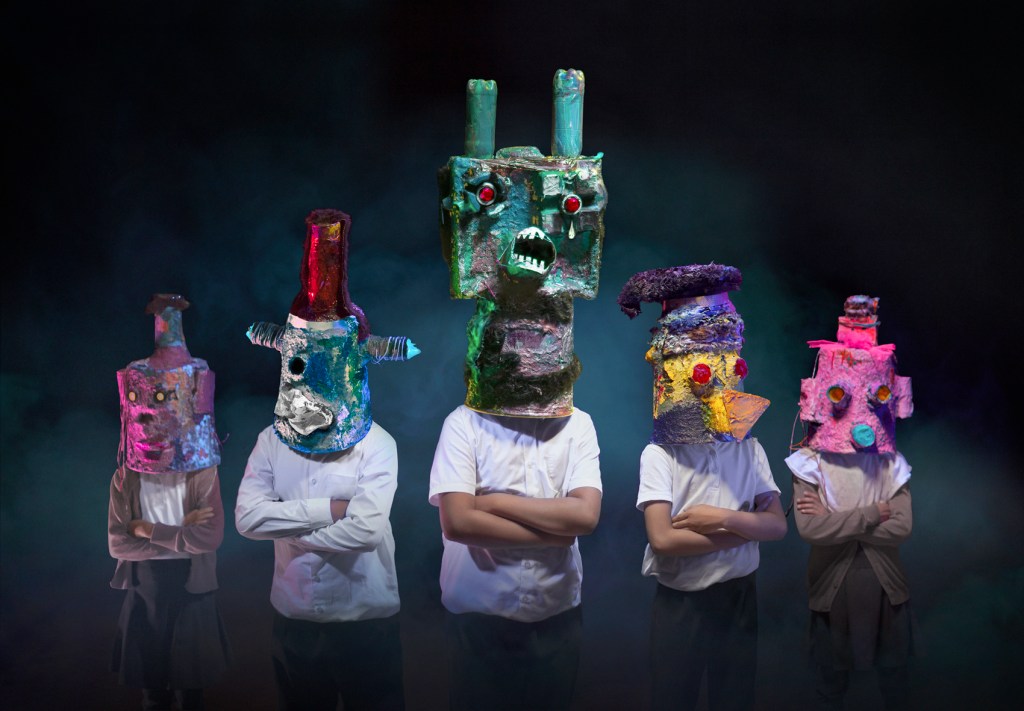
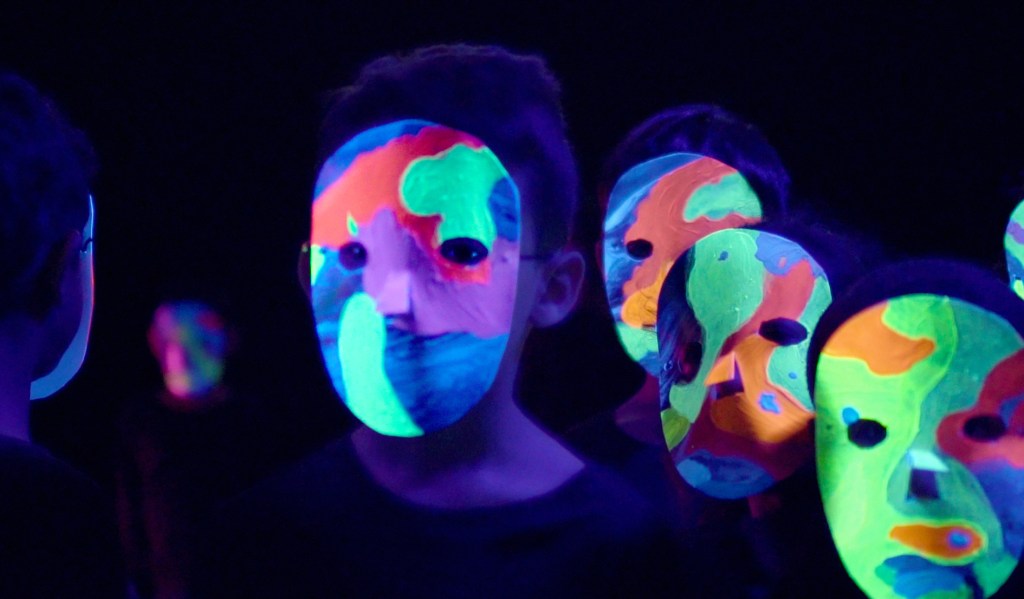
All images are part of No Ordinary Protest project, with permission from Mikhail Karikis.
Please briefly introduce yourself.
I am a Greek-born artist based in London and Lisbon. I work mostly in moving image, sound and performance. I develop projects through collaborations with individuals, collectivities and communities that are often located beyond the circles of contemporary art. In recent years, I have been working extensively with children, teenagers, young adults and people with disabilities.
Since the early stages of my practice, the politics and materiality of the voice have been key concerns, while at the same time engaging with themes that give voice to different ways humans relate to the environment. There has been an instinctive journey that I began with films exploring voicing conditions of labour in the context of extractivist practices. This moved forward by looking at models of sustainability and eco-feminism, and more recently eco-activism and emerging forms of labour that service nature.
I would say that my works prompt an activist imaginary and rouse the potential to imagine possible audiotopias (i.e. speculative places invoked through sound) and desired futures. I employ listening as an artistic strategy to help determine the content of my projects with the aim to highlight alternative modes of human action and solidarity, and to nurture critical attention and tenderness.
To what extent do you consider your work and practice to be ‘science fictional,’ if at all? Do you actively think about genre in your work, or do the labels come after the fact? (Surrealism, social realism, performance etc.)
I find science fiction and fantasy literature inspiring, but I do not think of my own artistic work through the lens of a specific genre. Perhaps where some science fiction literature and my art practice align is the way I employ my work to imagine and propose different worlds. I often start projects by embedding myself in different community contexts, and as such, social realism is always my starting point. Reflection, imagination and fantasy play an important role as I develop the themes and the projects mature and take shape. A decade ago and after I’d spent several years producing work that was furious and acutely critical, I took the decision to go further and invest my energy and imagination to proposing ‘better’ alternatives. My use of the word ‘better’ here implies a world with social and environmental justice, egalitarianism and practices of care.
Sounds plays a central role in much of your work. Can you say a little bit more about how you see the relationship between the sonic and visual aspects of a new project?
I am currently developing a project which explores our relationship to weather phenomena. I am approaching it from three sonic perspectives: folk songs that call out to the elements, capture and transmit traditional knowledge about seasonal change and meteorology; a second angle is that of music instruments that imitate the sounds of weather and bring the environment into the concert hall through sound, like, for example, wind machines and thunder sheets; and a third perspective is the acoustics of resistance generated through eco-activism and protest. I am working with folk singers, professional experimental musicians and young school children on this project to bring together these three different forms of auditory culture that are testimony to our profound connection and entanglement with the weather. As is common in my work, the performance of these different forms of sound will determine the visual dimension of the project. Be it on a macroscopic or microscopic dimension, all my films capture acts of communal sound-making, resonance and vibration, and document the power sound has to set into motion the material universe, activate our sentiments and mobilise political thinking and action.
Are there any works of science or speculative fiction (in any medium!) that have particularly inspired you?
Every child and teenager should read The Iron Woman by Ted Hughes for its environmental focus, for empowering children heroes with activist ecological thinking and rebelling against adults, and for the central role listening and noise play in the story as superpowers that activate empathy toward more than human beings. The Dispossessed by Ursula Le Guin is a book everyone ought to read for its acute reflections on capitalism, gender politics and anarcho-communism.
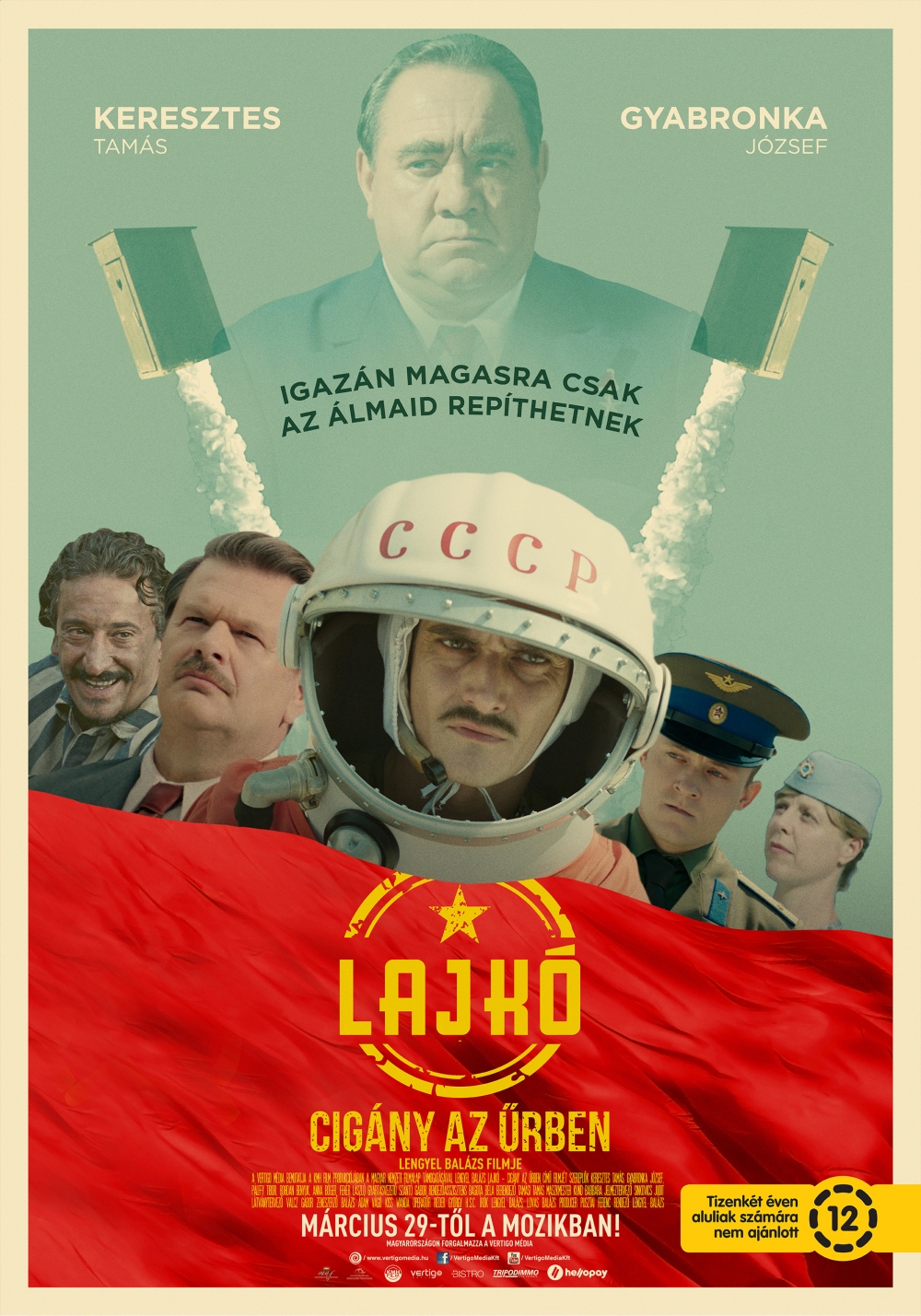
The representation of marginalized communities is extensively explored in both academic SF studies, and popular discourse around SF, particularly since the second half of the 1960s. Themes such as to what extent and by what means the living conditions, adversities, modes of resistances, worldviews, etc. of such communities are represented in SF narratives, as well as the role that individuals identifying themselves as community members play in the production/consumption/reception of SF, have been investigated by practitioners of quantitative and qualitative research. To date, however, there appear to be no studies that address the representation of the Roma in contemporary Hungarian SF speculative fiction. The present paper aims to do the following: (1) to introduce contemporary Hungarian SF short fiction and its readership; (2) to briefly explore the politics of “integration” and “reverse integration” as a means to contextualize the Roma within contemporary Hungarian society; (3) to give an outline of those “semiotic” means by which Roma characters in the short stories under scrutiny are identified; (4) to characterize the particular Roma representations from “invisibility” through “genocide” to “social mobility” that are present in the narratives in question. The texts used for my investigation are the relevant pieces of those submitted in 2014-2018 as candidates for the Péter Zsoldos Award, a national annual prize awarded for the best (published) Hungarian SF novel and short story.
Review: This article underwent one anonymous peer review and editorial review from three editors.
License: CC BY-NC-ND 4.0.
Citation: Domokos, Áron. 2022. “Gypsy in Space”: A Note on the Representation of the Roma in Contemporary Hungarian SF Short Stories. Vector. 28 May 2022.
Keywords: Roma; Hungarian SF; representation
DOI: Forthcoming
“Gypsy in Space”: A Note on the Representation of the Roma in Contemporary Hungarian SF Short Stories
Together and apart: that is the definition of fraternity. The one we love is another. But the one we love is as close to us as we are to ourselves. So what is needed is not to see the Roma as only a ‘problem’ – and especially not as a ‘problem’ of the white majority – but to act according to the well-known rules of human love, which as a sentiment is not so simple (I have also described it as a contradiction), but in my humble view it is the only right one.
(Tamás 2017)
“Well, white folks ain’t planning for us to be here.”
I want to begin by mentioning that it is comparatively easy to notice the lack of Black representation in mainstream American SF up to the 1970s. Observing that there was not a single Black character in the now legendary 1976 dystopian film Logan’s Run,stand-up comedian Richard Pryor commented: “Well, white folks ain’t planning for us to be here. That’s why we got to make movies” (Pryor 1976). As for the Roma,1 science fiction literature in English and other languages since the 19th century had very few Romani characters, and even fewer narratives were written by Romani authors. Let us now take a closer look at the Hungarian-language SF scene.
My study considers nearly 300 pieces of short fiction shortlisted for the 2014-2018 Péter Zsoldos SF Award, and takes a brief look at works in other media. I am going (1) to place the discourses on the representation of the Roma in a social-philosophical framework; (2) to problematize the issue of Roma representation and its “semiotic” aspect; and, in light of this, (3) to classify different ways in which Romani people are represented in contemporary Hungarian SF.
With Natalia Theodoridou, Eugenia Triantafyllou, Eleanna Castroianni and George Cotronis
By Phoenix Alexander
Hi everyone. Let’s start by introducing ourselves to readers / each other!
ET: Hello! I am Eugenia Triantafyllou, a writer and artist currently based in Athens. My fiction has appeared in places like Uncanny, Strange Horizons, Apex and has been nominated for Ignyte and Nebula awards.I am also a Clarion West 2019 alumna. My preferred genres are dark fantasy and horror, although I do like to mix genres and switch it up a lot.
NT: Hi! I am a speculative fiction writer and game designer. Originally from Thessaloniki, Greece, with roots in Russia, Georgia, and Turkey. I now split my time between Greece and the UK. I’ve published over 100 short stories in places like Clarkesworld, F&SF, Kenyon Review, Beneath Ceaseless Skies, and Nightmare, among others, and have three games/interactive novels out by Choice of Games. If you want a taste of my work, I’d recommend starting with “Ribbons” in Uncanny Magazine, “The Birding: a Fairy Tale” in Strange Horizons (which won the World Fantasy Award for Short Fiction), or my Nebula-nominated game, Rent-a-Vice. My work is queer and dark, and I tend to overstep genre boundaries.
EC: Hi, I’m Eleanna, a writer and poet with work in Clarkesworld Magazine, Strange Horizons, Fireside, Beneath Ceaseless Skies and elsewhere. My usual setting is literary science fiction or fantasy where the repercussions of war and oppression feature prominently. I draw a lot from my background as a human geographer and, in particular, from Anthropocene humanities and landscapes of de-industrialization and decay. I am also heavily inspired by contemporary Greek history with its share of complex politics and violence, by the pagan darkness of folk traditions, and by the fragility and cruelty of childhood.
GC: Hello! I’m George Cotronis and I’m a writer and illustrator from Greece by way of Sweden, where I was born. I’ve created book covers for authors like Stephen Graham Jones, Livia Llewellyn and Harry Connolly. When I’m not illustrating, I write short stories. I’ve sold a handful of stories mostly to anthologies like Lost Signals, Robots & Artificial Intelligence and places like Pantheon Magazine and Tales to Terrify.
Interviewed by Phoenix Alexander and Jo Lindsay Walton
This interview first appeared in Vector 295.
Hi Alexis. Could you introduce yourself and say a little bit about your background?
Hello, my name is Alexis Panayiotou. I’m a fine artist and a drawing tutor on the BA: Fashion course at Central St. Martins.
As you know, this is a special issue of Vector focused on Greek SFF. So our first question is: do you consider yourself a Greek artist?
I think of my identity as mixed or somewhere between cultures. I was born and raised in London. My parents are both Greek, from Cyprus, both came to London very young, my mum nine and dad fourteen. They have lived here ever since. I have never been to Cyprus so I only have a vicarious idea of the place, through my parents and other relatives, and a bit from TV and radio.
I grew up in a Greek household, eating Greek food, hearing Greek music every day. Greek was my first language until I started school, although now I only have a rudimentary grasp. At home I was steeped in Greek culture and as a young man I would have described myself as solely Greek, and I remember feeling very lucky and proud to be so.
As for ‘artist,’ I’ve only recently started being comfortable using the term — it comes with lots of lofty aspirations! When I was young I drew a lot, like most kids, so there were always parents or teachers telling me I was an artist, or that I would be one.
Mother pinching her baby affectionately while breastfeeding







 vector-bsfa.com