From Our Archive: On Falling in Love

The Finns achieved independence on December 6, 1917  – 100 years ago. To celebrate with Finland, we republish a review of a beautiful novel Not Before Sundown by Johanna Sinisalo.

Reviewed by Geneva Melzack

Peter Owen Publishers, London, 2003, 236pp, £12.50, t/p, ISBN 0720611717

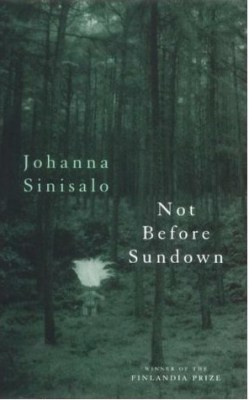
trollNot Before Sundown has also been published under the title Troll: A Love Story. The alternative title is, in some ways, a literal description of the book. The first chapter opens with photographer Angel stumbling across a sick creature near his home. It is a troll, and Angel takes it back to his flat and nurses it back to health. The rest of the book explores the consequences of having a wild troll living in close proximity to and interacting with human beings (and whether or not some of those interactions constitute a love story is perhaps a matter of interpretation).

The two prizes Not Before Sundown has found favour with reflect two major aspects of the novel. The Finlandia Prize reflects the book’s roots in Finnish culture and folklore, while the James Tiptree Jnr Award reflects the way it explores issues of identity and sexuality. The best way into both aspects of the novel is through its structure. Not Before Sundown utilises a very unusual narrative technique. The story unfolds through a series of relatively short (a couple of pages or less, and sometimes no more than one or two lines) first person narratives, as well as ‘extracts’ from texts on Finnish folklore, newspaper reports, and various other sources dealing with the history, biology and mythology of trolls, some real (most of the folklore extracts are genuine), some not. Thinking about these extracts and the role they play in the story is a route into understanding the book’s Finnishness, as well as the place it inhabits in the field of fantastic literature. Continue reading “From Our Archive: On Falling in Love”

From the BSFA Review: The Trials of Apollo

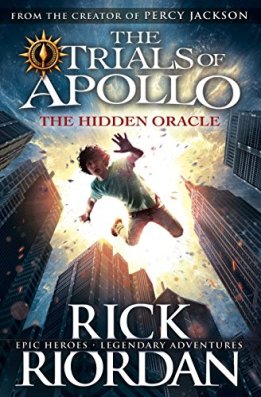
trial1The Hidden Oracle, Book One of The Trials of Apollo series by Rick Riordan (Disney Hyperion, 2016)

The Dark Prophecy, Book Two of The Trials of Apollo series by Rick Riordan (Disney Hyperion, 2017)

Reviewed by Christopher Owen

Winner of the 2016 Goodreads Choice Awards: Middle Grade and Children’s, The Hidden Oracle begins the next adventures in the Camp Half-Blood Chronicles. The Hidden Oracle and The Dark Prophecy are the first two books in The Trials of Apollo pentalogy by New York Times #1 Best-Selling Author, Rick Riordan. The Camp Half-Blood Chronicles is primarily made up of three five-book series. The first two, Percy Jackson and the Olympians and The Heroes of Olympus respectively, follow the adventures of twenty-first century demi-gods, teenage children of mortals and either Greek or Roman gods/goddesses. In this third series, Riordan does something different, focusing instead on the adventures of the god Apollo.

At the end of The Heroes of Olympus, Apollo is blamed for the problems the heroes have had to resolve. This third series picks up a few months following the events of the second series with Apollo’s punishment beginning with him falling from the sky and crashing in an alleyway dumpster. At first Apollo’s punishment appears to be one simply designed to humble him: he is transformed from a beautiful, powerful god to an awkward, acne-covered teenaged human. He is then further humbled when a couple thugs beat him up, when he is forced into the servitude of a young girl named Meg, and when he realizes that he is exceptionally less talented at music and archery than when he was a god. His inner-struggles throughout the narrative consist of a conflict between his over-zealous ego and his melodramatic horror at his newfound limitations. But Apollo also faces exterior struggles, and it is in these conflicts that he learns that his punishment is not just to be humbled, but also to right previous wrongs. Apollo must save five missing oracles and stop a secret organization called the Triumvirate. The Triumvirate is made up of three re-born Ancient Roman Emperors who have been pulling the strings in the background all along, causing all of the problems of the Camp Half-Blood Chronicles.

In The Hidden Oracle, children at Camp Half-Blood, a secret camp for demi-gods, are going missing. One by one they head into the forest as if hypnotized and are never seen again. While previous heroes in the Chronicles have travelled far in an American road trip-style adventure, in The Hidden Oracle Apollo does not need to travel farther than the forest neighboring the campgrounds. This changes the structure of the narrative from the previous books. Apollo is able to head back and forth between the forest as site of adventure and the campgrounds as site of respite, healing and communicating with aids. Furthermore, while previous books touch on the other campers only briefly, this book spends a great deal more time getting to know the people who live at camp year-round. This includes three of Apollo’s children, adding another interesting dynamic to this book, a greater focus on the relationships between demigods and their godly parents, something that is only touched on briefly in the first two series.

trial2The sequel, The Dark Prophecy, follows Apollo’s quest to save both his friend and all of Indianapolis from the control of the Triumvirate. This book follows a similar structure as The Hidden Oracle. While the characters travel from Long Island Sound to Indianapolis for this novel, and thus there is the potential for a road trip-style structure that the original two series of the Chronicles use, this book begins at the end of the journey, as the characters are arriving in Indianapolis. Within the first few chapters, the heroes are lead to a magical hideout called the Waystation, which functions in the same way as Camp Half-Blood in The Hidden Oracle. The heroes go back and forth between fighting their enemies in Indianapolis, and re-grouping and healing at the Waystation. During these adventures, Apollo and his friends team up with a variety of different species, adding interesting new group dynamics unexplored in previous novels of the Chronicles.

Both The Hidden Oracle and The Dark Prophecy feature intense final battles that take place in Apollo’s space of respite and safety, Camp Half-Blood and the Waystation respectively. Unable to go home on Mount Olympus, every home that Apollo tries to make for himself on his adventures is attacked, almost completely destroyed and becomes the site from which he must leave to continue his important mission to stop the Triumvirate. It is also from here that he meets and joins forces with previous heroes from the Chronicles, including Leo Valdez and Grover Underwood, suggesting, perhaps, that what is truly valuable is not the place called home, but rather the people we call family.

On the topic of family, one of Apollo’s sons, Will Solace, is dating a boy named Nico Di Angelo, a central character from the previous two series of the Chronicles. There are very few LGBTQ+ characters in middle-grade children’s fiction; three of them are in The Hidden Oracle. In The Dark Prophecy, a lesbian couple runs the Waystation, and the main villain is Apollo’s ex-boyfriend. The book uses frequent flashbacks to focus on the relationship between Apollo and his ex-boyfriend. Apollo is bisexual, making him very much a rarity as a same-sex attracted first-person narrator in a children’s fantasy novel. With six central LGBTQ+ characters, a wide range of ethnicities represented, and explicit feminist ideals, these books work very well to present progressive ideologies and a diverse representation of characters.

While reading the other ten novels in the Chronicles allows for a greater appreciation of The Trials of Apollo, this is not entirely necessary in order to follow the story. These books work well to begin a new, exciting series in Riordan’s universe. The adventure continues in The Burning Maze, which will be released in May 2018.
 

From the BSFA Review: That Bastard Wonderland by Lee Harrison

That Bastard Wonderland by Lee Harrison (Wrecking Ball Press, 2016)

Reviewed by Arike Oke

bastar

You can take the lads out of Hull, but you can’t take Hull out of the lads. That’s okay, I’m a daughter of Hull myself. That means I appreciate the dourness, sarcasm and bittersweet melancholy of my home, all of which come through beautifully in this love letter of a fantasy debut from Lee Harrison. I mean: mushy peas get an origin story.

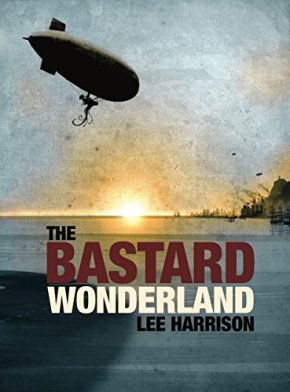
There’s a backlash right now against maps in fantasy books. Utter tosh say I. A novel with this geographic ambition, outlining a startlingly well realised alternative world, could only benefit from a map. I kept flicking to the frontmatter and the endpapers to find only blank pages, beautiful blank pages though. Wrecking Ball Press, a small press operating out of Hull (see, some kind of theme emerging!), has made a gorgeous edition of this book, cover, paper and font all working together to make a quality volume. Is the image chosen for the cover a small spoiler of a one of the story’s treats? Perhaps, but it looks well on’t.

The protagonist, and main point of view character, is Warboys. No relation to the tragic lost boys of Mad Max Fury Road, this Warboys is as laddish and uncouth as they come. He reluctantly teams up with his dad on a begrudging journey across their world. They are caught up in the expansionist ambitions of a Napoleon–like figure, but soon come up against the old belief systems of the territories they are forced to invade. It seems that there might be some truth in the old myths, but who can Warboys and his dad trust? Is anyone looking out for the underdogs in this war that on the surface is about a conflict of cultures, but underneath is as much about broken dreams and sickening ego as any real-world conflict throughout our own history.

Harrison shows us the other side of the conflict through the eyes of Nouzi Aaranya, a young man groomed from childhood in more ways than one to be a soldier and martyr for a cause he barely grasps. Whereas Warboys is solidly placed within the world of pubs, back streets, sailors, drinking and swearing, Nouzi is altogether more delicate. He’s led a life of direct indoctrination, rather than the societal conditioning of Warboys’ context. Nouzi’s own identity gradually surfaces as the plot unfolds. This forms an enlightening counterpoint to Warboys’ growing sense of responsibility to others. By the end of the book both men find themselves changed.

Harrison handles the dual point-of-view third person narration deftly. Each character is well drawn and distinctive. The plot, once past an avoidably slow and dialogue heavy first act, trips along happily building towards a satisfying, touching and cinematic denouement that still somehow manages to retain the ‘call a spade a spade’ Northern tone. Female characters are few and far between in this boys’ own tale, but as this story can be read as intrinsically about male relationships this paucity of female representation is hardly unexpected.

The world that Harrison has created for this story is startling in its clarity and depth. The technology, the big reveal, the language, religion, even the descriptions of landscape, sea and street are deft and convincing. It is a nice touch that Harrison prefaces sections of the book with quotations from archival texts from within the universe he’s created. Harrison has set up a world that could contain many more stories. We are not left with a cliff hanger so much as an open window looking out across a vista of real humans living real lives in which Harrison will find rich pickings for many more stories. I’ll be in line to read them, pattie buttie and chips in hand and wearing my ‘It’s Never Dull in Hull’ t-shirt. One request though, forget what the internet forums say: next time let’s have a map, eh lad?


Jeremy Shaw’s ‘Liminals’

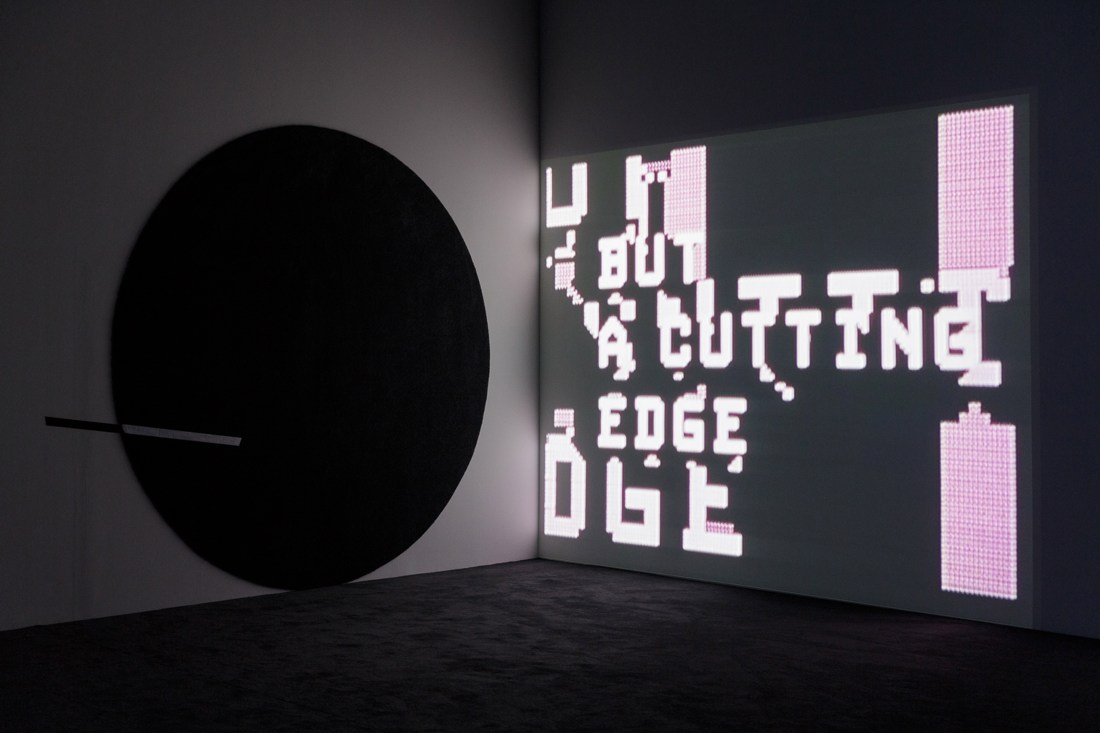
jeremyJeremy Shaw’s Liminals can be seen at The Store Studios 180 The Strand, until 10th of December 2017. It is the first off-site exhibition by Berlin based KÖNIG Galerie and forms part of their recent expansion to London.

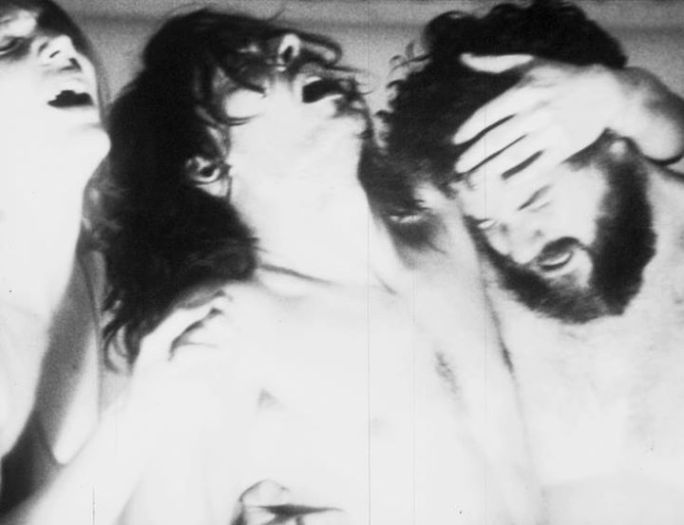
Liminals, a work of Vancouver-born artist Jeremy Shaw, takes the form of a fictional documentary made not more than a couple of decades into our future. From the narration, we reconstruct some of its historical context, although the focus of the documentary is on ‘periphery altruist cultures’. The Liminals are one such sub-cultural group, who are observed by the posited filmmakers with a detached fascination (and a style) reminiscent of the early 20th century ethnographies.

It is far from clear who is the intended audience, because humanity’s days, the documentary reveals, are numbered. Technology is to blame, specifically, choosing to let computation replace ritual. Kieslowski’s warning in the first episode of Decalogue against elevating computers above faith has clearly gone unheeded, and in 2024 all spiritual experiences are replaced by VR via a technological innovation called ‘The Unit’. ‘The Singularity Disaster’ follows in 2033, and soon after ‘The Announcement’ of ‘the countdown to extinction’ is made.

Amongst the general apathy that ensues, radical groups emerge, as they always do – observes the film’s narrator – during the Millenarian periods of history. The most radical of these groups believe that a possible salvation lies in the ideas of ‘pre-Unit’ science fiction writer Samuel Delany, specifically the paraspace:

a specific paraspace could serve as a transitory zone for humanity – an intermediate area between the physical and the virtual where a generative incubation period towards our next phase in evolution could take place. They refer to this paraspace as The Liminal.

The documentary is an exposition of the methods by which The Liminals are trying to reach that paraspace.


Book Reviews: ‘The Murders of Molly Southbourne’ and ‘Rosewater’ by Tade Thompson

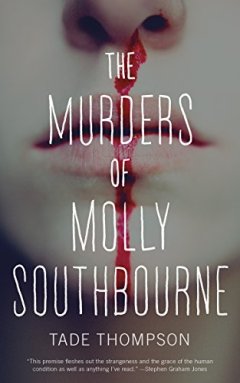
mollyTade Thompson, whose novel Rosewater was reviewed in Vector earlier this year (see below), has just published a new work of fiction. The Murders of Molly Southbourne is set to appear on screen as well, which is not surprising given the beautifully harrowing images that the novel fosters. It is a work of science fiction which reads like a thriller. It might be bloodier than Cormac McCarthy, yet it has the sweetness of a coming-of-age romance. The emotional confrontation with one’s reading self that ensues (‘should I be enjoying this scene?’), as well as all other inner conflicts, are put into perspective by the novel’s narrative of self-destruction. The science-fictional world of Molly Southbourne is a combination of Cold War past and a low-fertility future. The latter is particularly refreshing given the dominance of overpopulation scenarios in both science fiction and everyday conversations. Tade Thompson’s medical and psychiatric knowledge is always put to good use in his novels, the characters are entirely plausible in their contradictions, and the science is internally consistent and evidently very carefully thought through.

Continue reading “Book Reviews: ‘The Murders of Molly Southbourne’ and ‘Rosewater’ by Tade Thompson”

Exhibition Review: Haroon Mirza/HRM199

Haroon Mirza hrm199_Chamber for Endogenous DMT (Collapsing the Wave Function), 2017. Tim Bowditch, courtesy the artist and ZC Low Res-7734

Haroon Mirza/HRM199 reviewed by Polina Levontin

The Zabludowicz Collection in North London is hosting an art exhibition until December 17, which is of particular interest to the sf community. The commissioned work is by Haroon Mirza, whose own studio is located nearby. The exhibition is titled ‘For a Partnership Society’ and the word partnership is key to thinking about the works presented. Firstly, the exhibition itself is a collaborative project on many levels and in almost all of these collaborations science plays a role. Science is invoked in the exhibition as a subject, for example, when the production of scientific knowledge is being compared to a process of forming other sorts of beliefs. Science appears as an object when the standard theory of physics or excerpts from topology lectures become the material parts of an art installation. A history of science serves as a context for the conversation about the fundamental building blocks of a belief system. Furthermore, both technology and scientific methods are intentionally employed as tools for making the artwork, as well as appearing as subjects for Mirza’s artistic explorations.

The premise of Mirza’s work is that the fictional, the religious, the artistic and the scientific are not separable modes, that ‘science, like art, politics and religion often relies on system of beliefs in its pursuit of truth’ [Zabludowicz Collection]. References to a Pythagorean society which practised mathematics as religion remind the viewer that the pretence of decontextualized objectivity in science is a relatively recent phenomenon.  In his 1984 essay ‘No Apocalypse, Not Now’ Derrida gives another reason for why we should no longer pretend that beliefs and science can be disentwined: technological powers have passed the threshold where the science itself poses an existential threat to humanity. Derrida was referring to nuclear physics, something which Mirza references in almost all the works that are part of the current exhibition. Since 1984, when Derrida wrote ‘one can no longer oppose belief and science, doxa and episteme’ because modern/atomic technology ‘coexists, cooperates in an essential way with sophistry [imagination]’, new technological threats such as AI have emerged.  Mirza’s work is a manifestation of this quote:  the AI and other forms of technology coexist and cooperate in an essential way with his art.

Haroon Mirza hrm199_Pathological Theology, 2017. Tim Bowditch, courtesy the artist and Zabludowicz Collection Low Res-6038

At least one part of the exhibition is literally a scientific experiment, conducted with researchers from Imperial College. In ‘Chamber for Endogenous DMT (Collapsing the Wave Function)’ Mirza constructs a confined sensory deprivation space which is being used by the scientists to explore human perception. Like the scientists, Mirza is interested in the potential of art to influence a state of mind, or even alter the state of mind as much as some psychotropic chemical substances or meditation practices. In a spirit of experimental design and following a framework for scientific investigations, Mirza’s art installations produce a range of sensory input levels – from near complete deprivation to sensory overload.

The scientific method is used by Mirza not just in setting up progressively increasing levels of exposure to sensory inputs, but also in taking a deductive approach as the principle for creating artwork. He dissects, breaks down and analyses various materials (including works of other artists) as a scientist would in trying to understand the basic principles of how something works.  His approach is hierarchical, making explicit different meta-levels. For example, Mirza takes a ‘found’ YouTube video where young Bjork is seen examining the functions of a cathode ray tube and, echoing her curiosity about technology, breaks the wholeness of the video down to expose its more elemental aspects: the RGB (Red, Green, Blue) system of colour projection, the individuality of video frames and how these are cropped, sequenced and made to follow one another at predetermined intervals (24 frames per second).

Haroon Mirza hrm199_The System, 2013, installation view, Tim Bowditch, Courtesy Zabludowicz Collection_Low Res-7017

Mirza’s thesis is that a partnership first and foremost requires the dismantling (or at least the questioning of) barriers. Mirza successfully makes the viewer (even a scientifically trained one like myself) uncertain of where scientific knowledge ends and the pseudo-scientific begins. Science is never presented as an isolated subject, more poignantly, videos with snippets of lectures on topology are shown side-by-side with a commentary on a history of colonialism. The idea that there is only one true system of knowledge is questioned as the viewer is invited to contemplate the standard theory of physics alongside indigenous knowledge systems, shamanic rituals and AI. Topology, colonialism, quantum physics, environmental catastrophes and political upheavals dissolve into one another with the aid of the AI Deep Dream technology.  Cumulatively all these ideas are given an inorganic but seemingly living presence by Mirza who uses an Emerging Paradigm (hrm199) technology to forge a coalescence of synchronised video, sound and led lights.  Mirza’s genius of generating meaning out of seemingly inarticulate materials is evident in the title of this work. It is simply a pair of numbers, ‘9/11 11/9’. Mirza uses the succinctness of mathematical notation to tell a complex story, where an attack on the World Trade Centre becomes conjoined with the 9th of November, the date Trump’s victory in the American election was declared.

Mirza’s many disruptive dualities are designed to induce the kind of ‘cognitive estrangement’ (Darko Suvin) that is characteristic of sf. Further, his preoccupation with science and technology and their interactions with human perception and understanding of reality places his work in the critical space occupied by the theorists of science fiction.

Haroon Mirza hrm199_Pathological Theology, 2017. Tim Bowditch, courtesy the artist and Zabludowicz Collection_Low Res-6124

From the BSFA Review: Lagos_2060

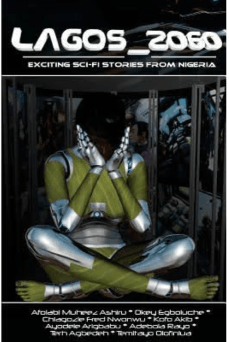
Lagos_2060 curated by Ayodele Arigbadu (DADA books, 2013)

Reviewed by Polina Levontin

Lagos_2060

Writing about present day Lagos, Rem Koolhaas warns that already ‘the city itself has mutated into something’ quite unrecognizable to Westerners who think of cities in terms of European or North American models.  ‘What will the city be like in 2060?’  This was the question posed to 8 Nigerian science fiction writers during a workshop that yielded an anthology: Lagos_2060. The resulting eight stories, three of which are written by women, represent a diverse range of imaginaries all set in Lagos, the year 2060.  These stories engage with science and governance, city infrastructure and climate change, co-evolution of technology and social norms, urbanization and the future of global capitalism. Yet these scholarly themes emerge from stories that are first and foremost exciting, often romance-filled adventures.  There are man-eating frogs and time-travel inducing herbs, girls with luminous tattoos and zero-gravity bedrooms, albeit in separate stories…

Individual writers approached the remit to imagine the future of one of the world’s greatest cities each with their own genre pallette and a remix of intellectual priorities.  But what these stories share is a sense of dynamic liveliness that can only be a feature of a work in progress, their various literary forms reflective of the chaotic process by which the city itself is shaped. Their gift is the recklessness of trying out new things. These are pioneering works, regardless of how one decides to date science fiction in Nigeria.

What interested me in particular were the discourses on science.  The first story of the anthology, ‘Amphibian Attack’ by Afolabi Muheez Ashiru presents the dangers of leaving the sciences in the hands of the private sector.  The private company ‘Bright Life Group’ is so efficient in curing diseases and supplying energy that it has to use science also to undo the progress, secretly engineering catastrophes, so that it can keep itself profitable and powerful by fixing its own ‘accidents’.   The discourse in the second story ‘Animals on the Run’ by Okey Egboluche is that of conflict between technological progress on one hand and society and environment on the other.  The value of robotics in particular is questioned because it reduces employment in conditions where large numbers of people need jobs.  Robotics is critiqued on an intimately personal scale in another story in the collection, ‘Metal Feet’ by Temitayo Olofinlua.

Technological advances such as land reclamation to expand Lagos are questioned as risky and as a violation of ‘natural order.’  In ‘Mango Republic’ by Terh Agbedeh scientific rationalism is instituted in Lagos, making it ‘the most beautiful prison in the world ever conceived by man’ (p. 197).  But even supreme scientific achievements are shown to be powerless against the forces of nature unhinged by climate change. Floods and rising sea levels threaten Lagos, while environmental destruction elsewhere in Nigeria swells the city’s population beyond capacity. In ‘Mango Republic’ the discourse of science is survivalist – science is our last hope to adapt to a perilous future.  Yet, exemplifying the complexity of the narratives in Lagos_2060, other stories demonstrate the political danger of seemingly desirable scientific solutions.  On the extreme opposite spectrum from ‘Amphibian Attack’, scientific knowledge becomes highly guarded government property in ‘Cold Fusion’.  A new way to produce cheap renewable electricity reinforces the government’s control over the people of Lagos and stirs political ambitions to secede from the rest of Nigeria.   Science promising energy independence actually does enable the politicians who rule Lagos to secede from Nigeria in another story – ‘Coming Home’ by Rayo Falade.

The collection is full of ideas pertinent not only to the future of Lagos but the future of humanity in general. The writers don’t envision Lagos in isolation but as an integral part of the global economic and natural system. Their visions and hopes for Lagos, their individual philosophies and fears are expressed with humor and showmanship. Their ability to ask urgent questions about the direction we are heading is made invaluable by their skills to entertain.

vN by Madeline Ashby

vN: The First Machine Dynasty by Madeline Ashby (Angry Robot, 2012)
Reviewed by Andy Sawyer

The robots in Canadian author Madeline Ashby’s novel are self-replicating artificial humanoids designed by a “global mega-church” as post-Rapture “helpmeets” for those humans left behind after the ascension of the just. Why, it’s not clear – though given what we learn about how these robots are conditioned to engage with humanity, something beautifully ironic and poignant could have emerged. That is not what we get but vN is an interesting though flawed work.

Amy is one such construction, the daughter of robot Charlotte and flesh-human Jack. vN robots like Amy and her mother eat special robo-food and are fitted with a “failsafe” – a kind of First Law which not only prevents them from harming humans but actually causes them to shut down if violence is observed. On Amy’s graduation from kindergarten, her grandmother Portia turns up and attacks Charlotte. Amy eats her in her furious attempt to defend her mother but Portia somehow survives as a consciousness linked to Amy’s. Fleeing, Amy encounters Javier, a “serial iterator” who has given birth (vN reproduction is not gendered and vNs exist in networks of identical clades) to a dozen unauthorised copies of himself and becomes involved in a rather hazy political plot. The revelation that in her the failsafe has broken down is key: each side, human and vN, sees her as a potential weapon to be used or destroyed.

The novel only takes us so far and like many sf futures, vN suffers from something of a lack of focus. The robot-world is well evoked, with vN vagrants living off junk and tensions between vNs and humans. There has been a violent quake on the USA’s West Coast and, somewhere, a (semi?)-autonomous city-state of Mecha exists as a possible sanctuary. But is this culture all world-wide? Does every country in the world “have” vN humanoids? All this may be explored in subsequent volumes but some generic flattening undermines the interesting things Ashby is doing with the “robot” icon.

Still, there are fascinating things here in what is implied about families here – notably the relationship between Amy and her artificial-humanoid mother and human father and between her and Portia, the predatory grandmother. There’s also a skilful creepiness. It’s clear that these robots are – as ‘real’ robots may well be – used as sex toys. The term helpmeet does not necessarily have (in its original Biblical context) a sexual implication but it certainly derives this as a term for marriage partners and equally certainly New Eden Ministries, Inc. means this. The ungrown “child” vNs are of course tempting for those whose interests lie that way. The development of the ability in Amy’s clade to overcome their failsafes is ingeniously linked to her family history and the darker side of desire for robot sextoys that will do whatever you want.

There is, though, a lot about the nature of love (not all sexual) in the novel: obsessive love, the kind of love that may be simply exploitative. And here the most interesting figure may be Jack, Amy’s father: “Charlotte didn’t do drama… now he suspected he’d find human women too warm, too loud, too mobile.” Or, on the same page, “at one point [Amy] and Charlotte would be indistinguishable. Jack worried about that sometimes. What if one day, years from now, he kissed the wrong one as she walked through the door?”

This review originally appeared in Vector #271. vN has been shortlisted for the 2012 Golden Tentacle Award for debut novel that best fits the criteria of progressive, intelligent and entertaining. The winners of this award and the rest of The Kitschies will be announced on Tuesday, 26 February 2013.

Spirit, Part 1: Take One

I started Gwyneth Jones’ Spirit at the wrong time, or at least in the wrong headspace. The plot was a Lego patchwork of interlinked episodes, and it didn’t seem to have enough momentum to take me much of anywhere plot-wise, even as it spanned a barely-known universe in its events. I hadn’t read any of Jones’ other Aleutian novels, had no greater context thus far into which to slot it. I didn’t feel lost, but it wasn’t a universe to which I had any existing commitment.

It didn’t help that I knew there was a rape scene coming, somewhere in its expansive, multi-volumesque middle. With that looming, somewhere, I read more and more episodically, which did nothing to help the volume’s flow. Doom, gloom, and stuckness overwhelmed the characters and I, seeing no hope for them and fearing what I knew was coming, went adrift. I stopped reading.

Despite that unpromising beginning, I always meant to go back to it. My intentions were good. The SFX blurb promised me a take on The Count of Monte Cristo, a novel I remembered fondly and whose plot I’d happily revisit. Nearly halfway through the book, I was barely halfway through the lavishly extensive blurb on the back of the book when I failed to keep reading.

It really is quite a blurb. As Martin Lewis observed in his discussion of the novel last week, it synopsizes up to page 255 out of 472 pages. At the time, however, it was a token framework for me, a checklist of events which the plot had gotten around to, rather than any real roadmap of structure. (Which raises the question: is it still really a spoiler once it’s mentioned in the blurb?) It really was the wrong time and headspace for me to be reading the novel.

Fortunately, Martin suggested I have another go at the novel this March, complete the task I set myself last year when I undertook to write – or host writing on – the eleven best science fiction novels by women from the first decade of this millennium.

I’m glad he did. The second time around, the book was good.

Updates: Guess the Clarke shortlist, BSFA Awards, Spirit

It’s been an exciting week, with the guesses coming in as to what will be on this year’s Arthur C Clarke Award shortlist.

In posting her guesses to her blog as to what books might be on that shortlist, Nina Allan wrote,

What matters most about the Clarke is not who wins, but that it acts as a showcase for what is happening in SF now. As such, I believe it should take a pride in presenting writers who are prepared to risk themselves intellectually, stretch themselves imaginatively and hone their skills as writers to produce works of artistic originality and lasting literary power.

It is certainly not clear exactly which six books will be on the shortlist for this year’s, but every guess in the contest (ongoing until Sunday) is a contribution toward the wider discussion of “what is happening in SF now”.

What impresses me in particular about this year’s guesses so far is how wide-ranging they are. About two-thirds of the submitted books have appeared on one or more possible lists so far. It’s entirely possible that one or more of the currently unguessed books will be on that shortlist. Last year, only one person correctly guessed that Declare would be on it, after all.

For those of you who haven’t already entered the contest (and those of you thinking about the state of SF today), here are the currently unguessed-at books for your consideration:

Dead of Veridon by Tim Akers (Solaris)
Novahead by Steve Aylett (Scar Garden)
Sequence by Adrian Dawson (Last Passage)
The Last Werewolf by Glen Duncan (Canongate)
Gods of Manhattan by Al Ewing (Abaddon Books)
Final Days by Gary Gibson (Tor UK)
Heaven’s Shadow by David S. Goyer & Michael Cassutt (Tor UK)
The Ironclad Prophecy by Pat Kelleher (Abaddon Books)
Shift by Tim Kring and Dale Peck (Bantam)
Echo City by Tim Lebbon (Orbit)
Nemonymous Nights by D.F. Lewis (Chomu Books)
The Age of Odin by James Lovegrove (Solaris)
The Shadow of the Soul by Sarah Pinborough (Gollancz)
The Straight Razor Cure by Daniel Polansky (Hodder and Stoughton)
Here Comes The Nice by Jeremy Reed (Chomu Books)
The Demi Monde: Winter by Rod Rees (Jo Fletcher Books)
War in Heaven by Gavin Smith (Gollancz)
The Noise Revealed by Ian Whates (Solaris)
Son of Heaven by David Wingrove (Corvus)

The contest is open for entries until this coming Sunday night, 11th March, at 23:59 GMT.

The Clarke Award isn’t the only thing going on right now. Hopefully, many of you are busy reading and examining the shortlists for the BSFA Awards, which will be announced on the Sunday of Eastercon this year. Forbidden Planet is offering discounts on all the novels on the shortlist. Also, the BSFA Awards short story booklet is on track to go out with the next mailing.

Finally, we never quite finished discussing all of the books we had planned to last year, here on Torque Control. We’ll be filling in those gaps this year, starting with Gwyneth Jones’ Spirit, toward the end of March.