Future of Education: Wild Blue Yonder by Daniel Hesk

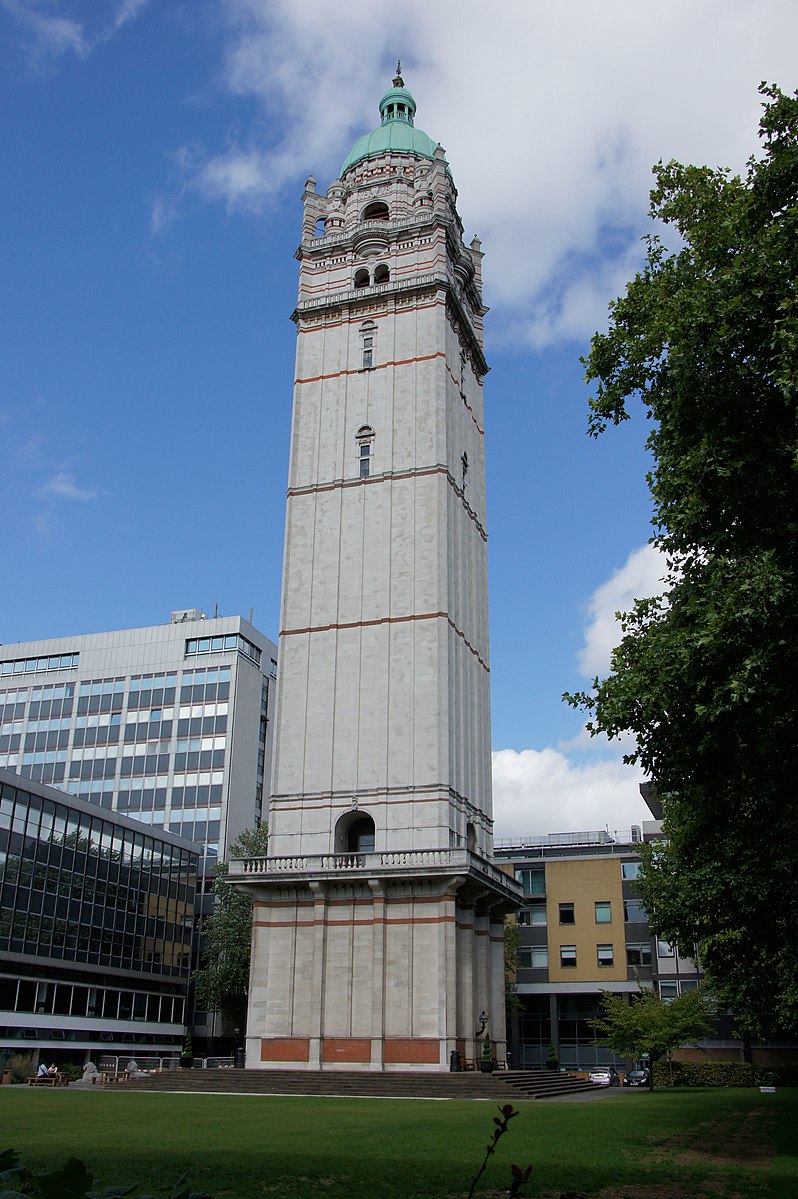
Queen’s Tower, Imperial College London

The Faculty of Natural Sciences (FoNS) at Imperial College London held a speculative fiction contest on the subject of education in 2045. Here is the story that won first place.

The world is changing and there is little doubt that the future will be different from today, possibly profoundly.

In the face of these possible futures, what could this mean for education and for FoNS? What do we teach and how do we teach it? What is it like being a student or a lecturer here?

We invite you to join FoNS in the year 2045. What will you be doing? How will you be learning or teaching? We do not just want to hear about futuristic technologies or subject matter, nor do we want a purely dystopian vision. Instead, we invite you to write about what life is really like using those technologies or learning about relevant subjects in the context of a challenging world. Build us a world where we can look around and see the fabric of our faculty and university in all its detail.

www.imperial.ac.uk/natural-sciences/education-and-teaching/short-story-competition/

Wild Blue Yonder

By Daniel Hesk

I’m sat on the bench and I’m cold, and I’m tired, and here is what I can see: 

1. The prim lawn, stretching off into the haze of dusk. An upswelling wind pulls a few leaves across the grass and mud towards me. My eyes water in the chill blast. 

2. The tower, emerald dome still set afire by a sun which from my vantage has long since sunk into the ravenous outline of the library. 

3. The statue, looking almost conventional from this angle. Lines of neon-red graffiti adorn its torso, too remote to read but I can guess at their essence. They must be recent,  really recent – unmolested by caretakers or rainwater. 

4. The grey buildings across the road, featureless in the dark, only two or three windows glowing. As I watch, a silhouette appears in the highest, backlit by bright fluorescence.  It recedes after a second or two. 

5. The sky, a pale azure turning to brilliant orange in the west. Something is unzipping it – over my head extends a lengthening streak of slate, diffuse at the back but hardening to a strict point at its end. There is a steady roar, like waves crashing somewhere far distant. Four turbines thrashing like crazy, modified fuselage churning out aerosol in immense volumes. 

6. No stars. Not these days, thanks to our long and fruitful efforts. 

When Leo arrives he approaches from my left and stands over me, grinning to hide his exhaustion. Two fingers tap behind his ears, and the implants are disabled. I ask him what he was listening to and the band he names sounds like a crossword clue. He calls me Al, because he finds it funny and he can’t pronounce Alparslan off the cuff. 

‘Come on, Al,’ he says, ‘project time,’ He tries to take my hand.

‘Yeah,’ I respond, manoeuvring out of the way. ‘I know.’ I stand and stalk off towards the library. Unprepared for these English winters, I’m wearing just thin jeans and an Oxford shirt.  The cold wraps around me. It burrows into my flesh. I imagine there might be frost tomorrow, emergent in the lee of buildings and bushes. I don’t think I’ve never seen frost before, not in my country, except maybe as a very young child. I have a vague memory of the fountain pool in our town square turning to ice, of the smooth and glittering surface like a mirror under my palm. Still, they say half your early memories are just subsequent inventions. I can’t trust myself to know. 

In the library’s glass façade I see Leo following me. He’s dressed more sensibly than I am in a long, thick jacket. He fiddles with the lapel; I suspect he wants to shed the coat and drape it caringly over my shoulders. I walk a little faster and step gratefully indoors, sirocco air from the heaters a welcome relief. The rooms are largely empty, and I recognise many of the sparse occupants from our own course. Most degrees don’t set assignments this close to Christmas,  but most degrees don’t have to justify their existence to the extent that Maths does. The department has been on death row for years, and they apparently feel that increasing the workload will present an image of vitality and necessity. 

We find a spot on the fourth floor, by the western windows. The setting sun shines over the rooftops like a lighthouse from out across a black and frozen sea. Leo removes a silver rod from his pocket and fans it out into a screen and keyboard with a languid flick of his wrist. I  try to ignore him and bring out my own laptop, firmly and consistently rectangular. It recognises my face and lights up, a picture of my parents frowning at a museum in İstanbul. I  lean back in the chair until it starts to creak, and pull up the project. Spreadsheets and code,  code and spreadsheets. Local Precipitation Effects of Marine Cloud Brightening, 2036-2039. 

‘I can’t believe this,’ mutters Leo. ‘That we have to waste time on this crap.’ ‘Whatever. Just get on with it.’ I keep looking at the screen, but I hear him swing around to face me. 

‘I mean, we’re supposed to be maths students, for god’s sake. I know it’s important, but  there’s thirty other courses doing exactly this.’ 

I click my teeth together. ‘You realise that we are doing maths. You know, with the numbers  and the sums and everything.’ 

‘Come on, you know what I mean.’ 

I do know what he means, unfortunately. My feet kick the ground and I rotate, not to look at him but back at the window. The sunset is unbelievably beautiful, a deepening bloodstain on the sky. The sulphur we’ve been pumping without end into the stratosphere has spread to every reach of the earth, making the Wild Blue Yonder that little bit whiter, making every evening shine that little bit more like burnished gold. They say you used the get the same effect after tests of nuclear weapons. The final formula for the aerosol was developed here,  actually, at Imperial. It reflects enough heat to offset hundreds of thousands of times its weight in carbon dioxide. If you believe the press releases, it’s going to save the world. 

Yes, we are the beating heart of progress. One of the last few universities in the UK, but we’re immune to the closures now. Practically every degree has turned its gaze towards the roiling, boiling planet, to the neglect of any other frontiers. Besides medicine, it’s the only  

thing governments are willing or able to fund. There’s no time for any other pursuits. No time left at all. 

‘Fifty people died in Kiribati last week.’ I say flatly. Leo pauses. 

‘Yeah, I saw that. In Tuvalu or something…’

‘Tarawa.’ I still don’t look at him. 

‘That’s it. Damn shame.’ 

‘A rogue wave took out the foundations of an emergency shelter. Whole thing just collapsed  into the sea.’ 

‘Sure, tragic, but that’s not our fault.’ This now, this I laugh at. The sound of it rings with impertinence across the low-ceilinged space. From far behind me another student coughs,  while a third drums their fingers on the table. In abject silence, noise can be contagious. 

‘Of course it’s not our fault. By and large, it’s not the fault of anyone born this century. Still  our planet though, isn’t it?’ 

‘Hmm.’ He folded his arms. ‘I think you’re looking at this wrong.’ 

Honestly, he’s a lot more tolerable when he’s arguing instead of flirting. ‘Go on, what do  you think?’ 

‘You see Al, for me it’s about the principle…’ 

The sun disappears at last, and the starless sky presses down on the city like a bandage, like  a hand. 

*** 

I’m standing under a dark alder and I’m warm, and I’m tired, and here is what I can feel. 

1. The rough bark behind me, uncompromisingly alive. My fingers trace its contours, the solid grooves slick with moisture and moss. 

2. The leaf litter under my feet, crushed and crackling between bootheel and pavement. The little flakes carry their deaths with them, darting, dancing along the breeze. 

3. The air, frigid and all too warm for this time of year. I sometimes imagine I can taste the changes in the wind, all the new and pervasive chemicals. What weaknesses we can find in the belly of the beast. 

4. Leo’s coat across my shoulders. It’s heavy, and it smells of rain. I promised to return it tomorrow, and it’s a promise I intend to keep to the bastard. He left his gloves in the pockets and I play with the idea of pulling them on. 

5. Hope, unexpected, maybe unwarranted. It wells up inside me and I exhale, my breath freezing instantly into a mist that swirls and drifts outwards into the night. 

6. The world, spinning softly, dawn-bound, older than it has ever been before.

Inspired by my belief in the all-consuming severity of the climate crisis, and current theories of the geoengineering efforts that may have to be spearheaded by scientific institutions. I’m interested in how an increasingly singular focus for the natural sciences might be perceived,  both in terms of its necessity and what other avenues might fall by the wayside amid such a pragmatic approach to research.

Daniel Hesk
Adventures in Science Fiction Prototyping

Andrew Merrie and Pat Keys in conversation with Jo Lindsay Walton (and briefly Polina Levontin) about science fiction prototyping and the Radical Ocean Futures project. 


Radical Ocean Futures project

JW: We’re lucky enough to be joined by Andrew Merrie and Pat Keys. Andrew is a Research Liaison Officer at the Stockholm Resilience Centre, Stockholm University (Sweden) and the Head of Futures at Planethon. Pat is an Assistant Professor in the Department of Atmospheric Science at Colorado State University (USA).

We want to find out more about your very intriguing Radical Ocean Futures project, and Science Fiction Prototyping in general—as well as adjacent ideas like applied science fiction, critical design fiction, diegetic prototyping, speculative design, all part of the theme of this special issue. But I guess let’s start with the high seas themselves. How do we define the high seas? What are some of the issues that arise in their governance? Surely mighty Poseidon is ungovernable? To me, those words already feel strange in a sentence together: ‘governing the high seas.’ 

AM: The high seas are areas of the ocean that are not managed by any single authority. In some ways they represent this largely unexplored ‘wild west’ of the global ocean. When you’re trying to think about how to govern the high seas, you are thinking about things like climate change, overfishing, deep sea mining, genetic resources and so on. But you also have to contend with the pace of change. The ecosystems are changing, and the technology is changing, and companies and other kinds of actors can basically take advantage of these gaps or delays in regulation, and sort of do what they want in this ocean space. Interestingly enough, just a few weeks before this issue of Vector went live, a historic deal was made, after nearly 20 years of talks to put in place a legal framework, the UN High Seas Treaty. That said, monumental governance challenges remain and though very consequential, this is really the start of another 20 years of work.

JW: In this context, does ‘governance’ refer to international law?

AM: Partly. Governance is actually broader than that. It refers to a variety of laws, regulations, institutions, certifications, norms and so on. It’s everything that is relevant to how we look after the oceans, or fail to look after them. For example, for the governance of marine ecosystems, computer modelling is very important. But you can’t just look at a model and go, ‘OK, here is what will happen, if we follow this management strategy.’ There are all kinds of questions about what is possible or plausible. About what models to use, what their assumptions are, how you should interpret and use their outputs. All that could be part of governance. 

JW: OK. And these questions are more than technical questions, right? They quickly get us into the realm of politics and ethics. But sticking with ocean ecology for a moment. Honestly, when I think of the ocean, I mostly think, ‘I have no idea what’s going on in there.’ I want to quote a 2016 WIRED article about your project. ‘Earth’s oceans are having a rough time right now. They’re oily, hot, acidic, full of dead fish—and their levels are rising.’ Can you tell us a bit more?

Continue reading “Adventures in Science Fiction Prototyping”

Vector ‘Futures’: Torque Control

Apply Science Fiction Here

Jo Lindsay Walton and Polina Levontin

Every issue of Vector is special, but this one is especially special. It is guest-edited by science fiction author Stephen Oram, and it was made possible through a collaboration between the British Science Fiction Association (BSFA), the UK’s oldest and largest association for writers, publishers and fans of science fiction1, and the Institute for Development Studies (IDS), an independent think tank affiliated with the University of Sussex.

The theme is ‘futures.’ Plural, obviously: science fiction would never be content with just one future. ‘Futures’ is also shorthand for ‘futures studies‘: horizon-scanning, strategic foresight, scenario planning, anticipatory governance, forecasting and backcasting, red teaming and wargaming, speculative design and diegetic prototyping, experiential futures, futures futures, superforecasting and plenty more besides. 

When businesses, governments, financial institutions and other actors seek to peer into the future, they often use some variety of risk management. Risk management overlaps with futures studies, but it is really pretty distinct. As crystal balls go, it’s a prosaic one. It involves identifying risks, assessing (perhaps quantifying) them, monitoring them, and implementing treatment strategies (such as avoiding, reducing, sharing, transferring, or informed acceptance). There is even an International Standard for Risk Management (ISO 31000). By contrast, future studies is a field where the expert and the charlatan can be difficult to distinguish. Many futures practitioners may be unsure themselves which of these they are, or in what proportion they are both. 

Continue reading “Vector ‘Futures’: Torque Control”

Chinese SF industry

By Regina Kanyu Wang et al. Published as part of Vector 293 exploring Chinese SF.

According to Science Fiction World, the concept of “science fiction (SF) industry” was first proposed in academia in 2012, when a group of experts were brought together  by the Sichuan Province Association of Science and Technology to comb and research SF related industry, and put together the Report of Research on the Development of Chinese SF Industry. Narrowly defined, the SF industry includes SF publishing, SF films, SF series, SF games, SF education, SF merchandise, and other SF-related industries, while a broader definition also includes the supporting industries, upstream or downstream in the industry chain.

According to the 2020 Chinese Science Fiction Industry Report, the gross output of the Chinese SF industry in 2019 sums up to 65.87 billion RMB (about 7.4 billion GBP), among which games and films lead the growth, with publishing and merchandise following (check out more in Chinese here). The SF industry plays an important part in China’s cultural economic growth.

We have invited sixteen organizations, companies, and projects that play a role in China’s SF industry to introduce themselves to the English readers. You can see the diversity and vigour from the texts they provided. We’ve tried to keep editing to a minimum in order to show how they posit and define themselves in the SF industry. Here they are, ordered alphabetically.

Continue reading “Chinese SF industry”

Call for Submissions: Prediction, Innovation, & Futures

Vector and Focus invite proposals from academics of all disciplines, and from industry, policy, and practice backgrounds, on the theme of speculative fiction in relation to prediction, innovation, and futures. Please see here for the full call.

The principal output will be a special issue of Vector, guest edited by Stephen Oram, and relevant proposals will also be considered for publication in Focus (ed. Dev Agarwal), and/or for online publication. Prospective contributors are encouraged to move conversations forward; to challenge received wisdom; to historicise the use of speculative fiction within science communication, policy, foresight, innovation, education, and research contexts; and/or to reflect in detail on your own personal experiences of using speculative fiction. Contributions may take the form of:

  • articles of any length;
  • snapshots / key findings / lightning summaries of your research or activities;
  • methods and tools, and/or reports on their use;
  • interviews, roundtables;
  • other formats — be as innovative and imaginative as you like!

We especially welcome proposals from BIPOC contributors, and/or proposals which connect applied speculative fiction to themes of diversity, decoloniality, and social, environmental, and economic justice. Priority fields of interest include futures studies, innovation studies, Science and Technology Studies, applied ethics, and the history and philosophy of science. Topics might include prediction, modelling, decision analysis and decision support, hacking and makerspaces, speculative design, critical design including Critical Race Design, anthropological futures, design fiction, diegetic prototyping, strategic foresight, wargaming, anticipatory governance, predictive data analytics, algorithmic governmentality, speculative fiction as technology, speculative fiction and aspects of methodology such as reproducibility and validation, user stories as a form of speculative fiction,  science communication, protoscience, exploratory engineering, design futurescaping, experiential futures, serious gaming or participatory scenario workshopping, financial modelling and financial activism, creative disruptions, future fabbing, the use of speculative fiction to engage communities and stakeholders, the ethical obligations of the speculative fiction writer, the use of speculative fiction to facilitate interdisciplinary encounters, the use of speculative fiction to model risk and uncertainty, issues around speculative fiction and Intellectual Property, the sci-fi-industrial complex, Indigenous futurisms, energy futures, education futures, all kinds of futures, and the history and future of the future. 

Submission details

Please submit proposals by 5 September 2021 to vector.submissions@gmail.com. Very early proposals very welcome. A proposal should typically contain:

  • a 150-500 word proposal;
  • an estimated word count; and
  • some information about you, e.g. a 50-100 word bio or a CV.

We seek contributions that are carefully grounded in research, while also being clear, engaging, and suitable for a broad audience (including non-academics). Articles will be due by 1 February 2022.

Links

The Value of Science Fiction

By Martin Griffiths, Brecon Beacons Observatory

Science fiction (SF) has many definitions. From the perspective of educators, Joanna Russ’s definition must be one of the best: SF is “a literature that attempts to assimilate imaginatively, scientific knowledge about reality and the scientific method, as distinct from the merely practical changes science has made in our lives.” It is this imaginative approach to science that underlies SF’s broad appeal. The phenomenal success of high-grossing films such as Star Wars, Independence Day, Jurassic Park, ET, Close Encounters, The Day After Tomorrow, Avatar, the Marvel Cinematic Universe movies, and many more, attest to the success of not only SF’s value as entertainment, but its ability to excite, fascinate and encompass human values.

Science fiction and education

The inclusion of SF in the schooling curriculum can promote discriminating faculties with applicability in later life. Some of the greatest scientists of the previous century, figures such as Carl Sagan, Robert Goddard and Richard Feynmann, were inspired by the speculations found in SF. Scientists such as Isaac Asimov, Fred Hoyle, Gregory Benford, David Brin, Paul McAuley, Alastair Reynolds and Kim Stanley Robinson also became award-winning SF writers. 

Continue reading “The Value of Science Fiction”

SF and the future of security: an interview with Ping Zheng

Defiant Today
‘Defiant Today’ Phil Jones

In late December 2017, a group of writers and scholars of SF, scientists and technologists, and defence analysts and policymakers, gathered at Dstl (UK government’s defence science and technology laboratory) in Salisbury to explore science fiction’s contribution to defence policy. Vector caught up with Dr Ping Zheng from Canterbury Christ Church University Business School, to ask her about her impressions of the day, and a few other things …

During the first breakout session, you were in the Human Behaviour in Smart Environments group. How did that go?

ping 1
Dr Ping Zheng

We had some inspiring discussions about how humans may react in smart environments. I think the group dynamics probably extended the scope of planned discussions, and allowed us to engage in more diversified discourse, ranging from individual perspectives, to emergent impacts at a societal level, and also to policy perspectives. For example, two prominent issues were debated: national and cultural differences, and ethical concerns such as privacy.

Perhaps the value of events like these is that you might discover that your original questions can be re-framed, or that your stakeholders are not precisely who you imagined them to be. Your other breakout session was ‘Defence (In)efficiency: What Does the Future Hold?’?

Continue reading “SF and the future of security: an interview with Ping Zheng”

The Quiet Links