Jean-Paul L. Garnier: What was your initial attraction to works of science fiction in translation, and what made you decide to start reviewing them?
Rachel Cordasco: I started reviewing Anglophone science fiction for John DeNardo’s SF Signal in the mid-2010s. One day, he asked if I’d like to review a work of Chinese science fiction in translation—The Three-Body Problem. I jumped at the chance and absolutely loved that book. But it was only when he then sent me Jacek Dukaj’s The Old Axolotl and Marek Huberath’s Nest of Worlds that I actually started thinking about what it meant that these texts were all translated. I had never thought about where science fiction was written, and I realized that, of course, it was written around the world. This led me to think about what other works of science fiction there were in English translation. I started a list on a personal blog, and before I knew it, I had found dozens of titles. Ten years later, I’ve catalogued thousands of short-form and long-form works of SF in translation. I’ve always loved learning other languages and I read a lot of classics in English translation when I was a teenager, so bringing together two of my favorite things—speculative fiction and translation—made so much sense. I started asking John to send me as much SFT (science fiction in translation) as he could, and then, when SF Signal shut down, I started my own site dedicated to SFT.
JPG: In the ten years since founding https://www.sfintranslation.com/ what are some of the most interesting things that you’ve learned, and some of the biggest gaps in the field that you’ve identified?
RC: One of the most surprising things I learned is that there is so much SFT out there. Early science fiction texts, especially from Western Europe in the late-19th and early-20th centuries, were being translated into English very quickly (though apparently not very accurately, in some cases, ahem ahem Jules Verne’s stories). When you start looking into the speculative novels, anthologies, and collections that were published in translation throughout the 20th century, you find that so many of these books just flew under the radar or went out of print quickly. This process of finding and cataloging as much SFT as I can is basically my way of excavating items that aren’t buried but just hidden in plain sight.
I’ve learned that Japanese science fiction developed at warp speed following the American occupation of the island following World War Two; I’ve learned that giants of American golden age science fiction like Isaac Asimov and Theodore Sturgeon wrote introductions to anthologies of Russian science fiction at the height of the Cold War; and I’ve learned that, despite the fact that so much speculative fiction has been translated into English, the Anglophone genre world has mostly (except for the 70s and 80s) ignored SFT…until recently. Hopefully, the tide is shifting once again toward SFT and more speculative fiction readers will learn about what people are writing and thinking about around the world.
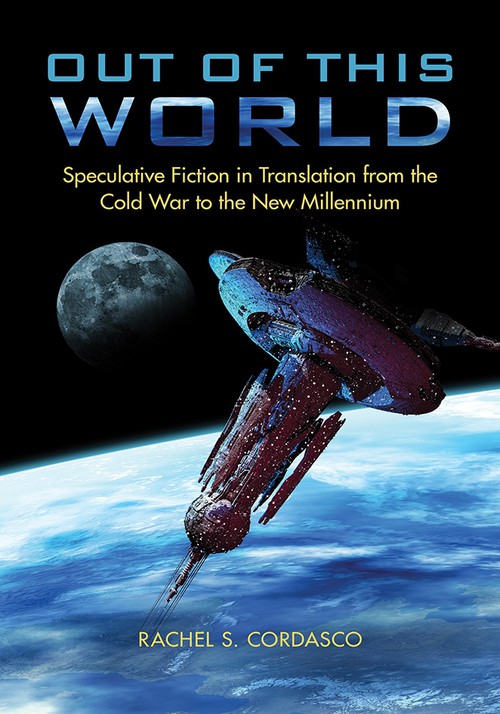
JPG: You wrote the book on SF in Translation, Out of this World. What did this process look like for you, and why did you decide to go with University of Illinois Press as your publisher rather than an SF publisher?
RC: I realized, after working on the site for several years, that it was time to write an annotated bibliography of SFT, à la Neil Barron’s Anatomy of Wonder books. I had just finished reading Dale Knickerbocker’s excellent edited anthology about global science fiction, Lingua Cosmica, and asked for his advice regarding my own book idea. He suggested the University of Illinois Press, which had published Lingua Cosmica, so I sent them a proposal, which they accepted. Instead of an annotated bibliography, though, Illinois wanted me to develop each source language chapter into a full-blown essay. Ultimately, this worked out well, because it gave me the opportunity to offer readers analysis and context for each chapter that might otherwise have been left out. Illinois was great to work with, and, as I mentioned in my previous answer, the speculative fiction world mostly ignores SFT, so I don’t really know if, back in 2019, any SF publisher would have even looked twice at my proposal.
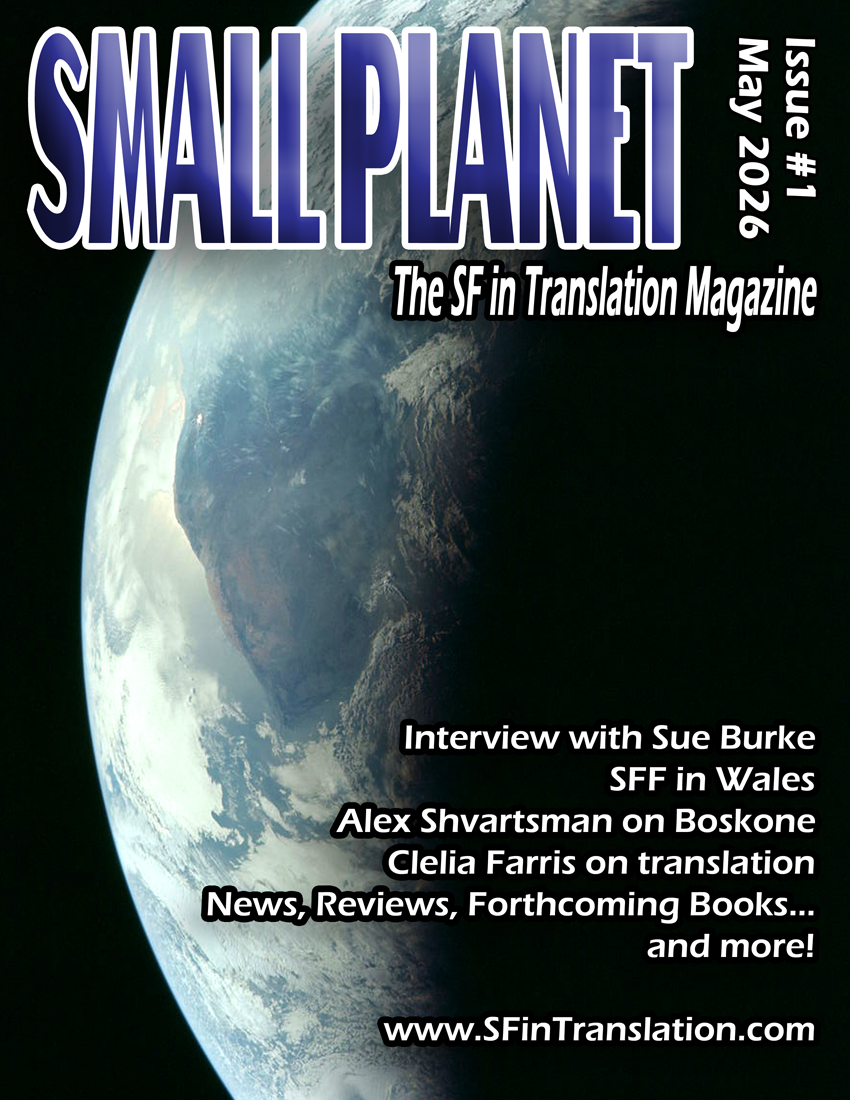
JPG: What are your motivations behind starting Small Planet magazine, and what are your plans for its future?
RC: The idea for a magazine had been kicking around in my brain for a year, and one day earlier this year, while working on a review, I just couldn’t wait anymore. The magazine had to happen! I want to read and learn about so many aspects of SFT, but as one person, I simply don’t have the time or energy to take on more than one or two projects at a time. A magazine, I figured, would be my selfish way of enlisting all of the brilliant people out there, who I knew were already writing about SFT, to write about it…for me! I had all of these ideas about interviewing translators and finding people who would write essays on Polish fantasy or French horror or Japanese surrealism and enlisting people to review underappreciated SFT. All I had to do was put the word out that I wanted to start an SFT magazine and so many wonderful people jumped on board right away, offering to design, write, edit, interview, and help in any other way they could. I want this magazine to be the Locus of the SFT world, providing readers with a steady stream of interesting essays, interviews, reviews, stats, and more.
JPG: What do you think are some of the most effective ways that readers and the public can motivate publishers to publish more works of SF in translation?
RC: One major way to encourage publishers to bring us more SFT is for readers to buy more of it. And yet, an interesting thing I learned recently is that a lot of SFT doesn’t even come from speculative fiction publishers. In fact, New Directions, which focuses on international literature, published more SFT in the last few years than any genre publisher. To make matters even more interesting, the 90 works of long-form SFT last year came out from 60 different publishers/imprints. Ultimately, I’m waiting for SF publishers to start dedicating more of their resources to SFT and acknowledge that these stories, told all over the world and in many different languages, are all part of the same effort: humanity trying to understand itself and its place in the cosmos.
JPG: For you, what are some of the most important aspects of cross-cultural exchange through literature?
RC: One of the most exciting things I’ve discovered while reading SFT is that writers from all over the world will take up the same theme or event or technology and explore them in fascinatingly similar and different ways. I started tracking this on my site (under the tab “Subject Index”) and I’m going to delve deeper into this in the magazine with a special column in each issue called “Crossing Borders.” Cloning in Greek and Spanish SFT, vampires in Hungarian and Swahili SFT, monstrous mothers in Hebrew and Japanese SFT—I find this stuff thrilling! You’ll hear this discussed whenever two or more literary translators are together in one space—reading what others around the world have written is how we deepen and enrich human civilization. Anglophone culture and language is rejuvenated when it comes into contact with other cultures and languages. We learn from one another, celebrate our differences, and learn about our surprising similarities. After all, one would hope that, if aliens do swing by Earth for a tour one day, they’ll see that, on this one small planet, we actually have a working knowledge of one another. It would be pretty embarrassing otherwise, right?
JPG: What are the top 5 SF books that you’d like to see translated?
RC: As always, I’m keeping a list! In no particular order…
– the rest of Élisabeth Vonarburg’s Tyranaël series (1997) (Mon frère l’ombre, L’Autre Rivage, and La Mer allée avec le soleil)
– Cheon Seon-ran’s A Broken Bridge (2019)
– Harry Mulisch’s The Future of Yesterday (1972)
– Shimon Adaf’s Rose of Judea series (2010-2012)
– Gilda Musa’s Domesticated Jungle (1975)
JPG: What are some of the greatest challenges you face when working as a translator, and are any of these specific to SF?
RC: A professional translator would be better able to speak to this question, but as someone who has translated several short- and long-form works for various Italian authors, especially the brilliant Clelia Farris, I can say that trying to capture the author’s tone and style while trying to make my translation read well is always challenging. It’s the nature of translation—making choices about how a word or phrase gets brought over into English. Working with Clelia on my translations is always fun because we get to discuss, for instance, exactly how certain sayings would best translate across languages. In fact, in this most recent issue of Small Planet, Clelia has an essay in which she describes some of the choices we had to make when I was translating her story “Gabola,” like turning the literal translation “you don’t get out much” into the more emotionally accurate “you’re behind the times.”
In terms of translating SF specifically, working on Clelia’s novella Veg-humans was more difficult than anything else I’d translated before because this is a story that includes a wide variety of plant species and technologies the characters use to try and survive the punishing heat of a near-future world that is being swallowed up by drought. Finding the words in English to reflect Clelia’s terms for these things was challenging, but we worked patiently together to find what sounded best.
JPG: Can you tell us about the push to get works in translation as a category for the Hugo Awards, and your work with https://translatedhugo.org?
RC: Jake Casella Brookins, the editor of Ancillary Review of Books, kickstarted the latest effort to push the Hugo Awards to include a translation category (Chris Barkley had tried this a few years before). Casella enlisted me and many other SFT critics and enthusiasts in the project, but the process is slow because the rules and requirements for adding a category to the Hugo Awards are apparently very stringent. Hopefully, this effort will, down the road, lead to a category that recognizes the wonderful work that translators do in bringing us SF from around the world.
JPG: What’s coming up next for you, and what are you currently working on?
RC: I’m excited to continue publishing Small Planet and roping in people from all over the world to write for it. I also have ideas for at least three more books, one of which will be about the history of SFT in the Anglophone world. Hopefully I can also translate much more of Clelia’s work because Anglophone readers really do need more of her stories—they are intriguing, unexpected, and beautiful.
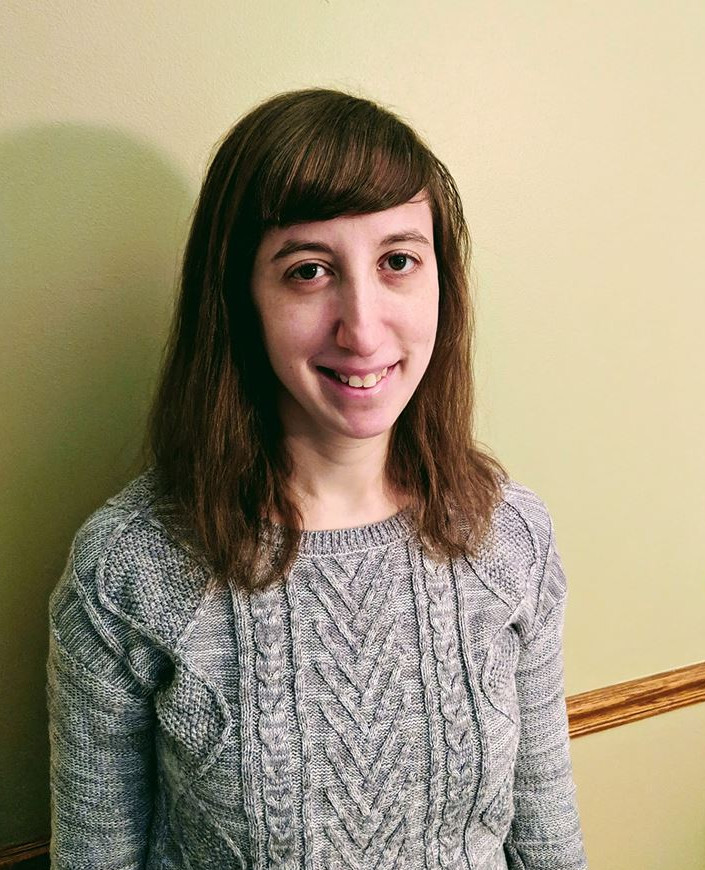
Rachel Cordasco founded the website SFinTranslation.com in 2016 and regularly reviews SFT for Strange Horizons and World Literature Today. She also translates Italian speculative fiction, which has been published in Clarkesworld Magazine and Future Science Fiction Digest. Rachel’s book Out of This World: Speculative Fiction in Translation From the Cold War to the New Millennium is out from the University of Illinois Press. Her second book, Speculative Fiction in Translation From Around the World, is forthcoming from the University of Wales Press.
Jean-Paul L. Garnier is the owner of Space Cowboy Books bookstore and publishing house, producer of Simultaneous Times Podcast (2023/25 Laureate Award Winner, 2024 BSFA, Ignyte, and British Fantasy Award Finalist), and was the editor of the SFPA’s Star*Line magazine from 2021-2025. He is also Editor-in-Chief of Electronic Brain magazine. In 2024 he won the Laureate Award for Best Editor. He has written many books of poetry and science fiction. https://spacecowboybooks.com/

