2018 Science Fiction Foundation Masterclass in Science Fiction Criticism

Applications are now open for the 2018 Science Fiction Foundation Masterclass in Science Fiction Criticism. The 2018 Masterclass, the Eleventh, will take place from Friday 29 June to Sunday 1 July. This year we will be at Anglia Ruskin University.

The 2018 Class Leaders are:

Nick Hubble (Brunel University) – Nick is co-editor of the Science Fiction Handbook (2013) and London in Contemporary British Fiction (2016)

John J. Johnston (Egypt Exploration Society) – John is co-editor of the mummy anthology Unearthed, his introduction for which was shortlisted for the BSFA Award for Non-Fiction.

Stephanie Saulter (author) – Stephanie is the author of Gemsigns and its sequels

Price: £225; £175 for registered postgraduate students.

To apply please send a short (no more than 3,000 words) piece of critical writing (a blog entry, review, essay, or other piece), and a one page curriculum vitae, to farah.sf@gmail.com.

Applications received by 1 March 2018 will be considered by an Applications Committee. Applications received after 30 March may be considered if places are still available, on a strictly first-come first served basis.

A deposit of £50 will be payable within a week of acceptance.  This deposit is only refundable in the event of another student taking your place

Past Masterclass students are encouraged to apply again (though we will prioritise applications from those who have not been previous students).

Information on past Masterclasses can be found at http://www.sf-foundation.org/masterclass. Please direct any enquiries to masterclass@sf-foundation.org.

Why science fiction set in the near future is so terrifying

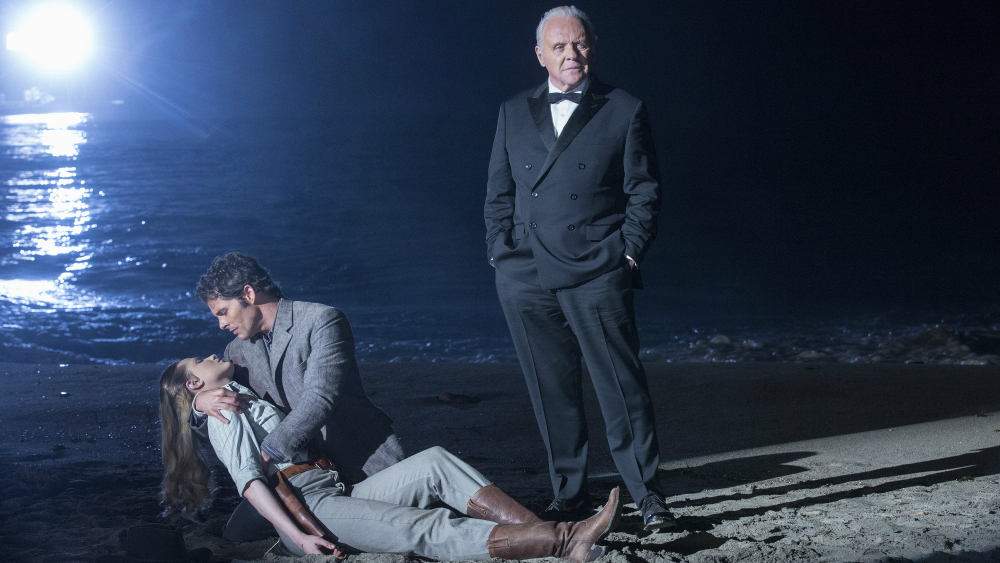
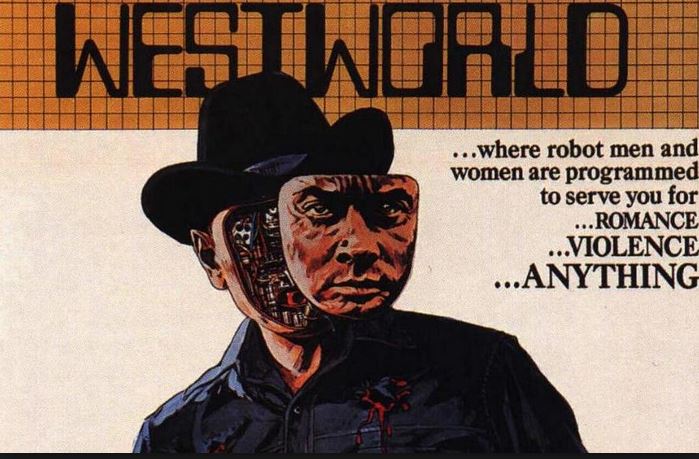
Image 20170224 22983 kskule.jpg?ixlib=rb 1.1Westworld: how far away is this future?
©2016 Home Box Office, Inc. All rights reserved

Amy C. Chambers, Newcastle University

This article accompanies episode 10 of The Anthill podcast on the future.


From Humans to Westworld, from Her to Ex Machina, and from Agents of S.H.I.E.L.D to Black Mirror – near future science fiction in recent years has given audiences some seriously unsettling and prophetic visions of the future. According to these alternative or imagined futures, we are facing a post-human reality where humans are either rebelled against or replaced by their own creations. These stories propose a future where our lives will be transformed by science and technology, redefining what it is to be human.

The near future science fiction sub-genre imagines a future only a short time away from the period in which it is produced. Continue reading “Why science fiction set in the near future is so terrifying”

City Now City Future at the Museum of London

MOL1

#BonusLevels #LawrenceLek #utopia#CityNowCityFuture
Visual artist, Lawrence Lek has created Bonus Levels, a series of playable video games depicting a dreamy, utopian, but recognisable London.

Bonus Levels is on at the Museum of London until January 3rd, 2018. It is part of the museum’s City Now City Future – a year-long theme which is foregrounded by the ‘Imagined Futures’ curated by Dr Caroline Edwards located near the entrance.

Imagined_Futures_main_img_

According to the blurb:

Of all cities, London is one of the most widely represented in literature. During the 19th century, when it rose to prominence as the centre of the British Empire, London was considered the peak of civilisation. However, this achievement was matched by the violence of a colonial system that damaged the places and peoples from which the city drew its vast wealth, in India, Africa and the Caribbean.

London therefore made the ideal setting in which to imagine future visions – in books that destroy the metropolis through scenes of devastation, or rebuild it as a fairer society. From Mary Shelley’s disaster novel, The Last Man (1826), to H. G. Wells’s techno-utopian vision in The Sleeper Awakes (1899), London established its reputation as a city in which to enact different visions of the future in literature.

In the 20th century, such imagined futures became increasingly bleak, particularly in the post-World War II period, and by the 1970s writers were experimenting with surreal future London landscapes. More recently, London has become home to the leading characters in influential books for younger readers, such as J. K. Rowling’s Harry Potter series and Neil Gaiman’s Neverwhere (1996). In the 21st century, as we come to terms with the environmental impact of climate change, the city has once again found a new role as a literary setting.

This display was curated by Dr Caroline Edwards, Senior Lecturer in Modern & Contemporary Literature at Birkbeck, University of London, and designed by Martin McGrath Studio. Quotes reprinted by kind permission of the authors/publishers.

From our archive: An interview with Saul Williams by Richard Howard

slamSaul Williams is a poet, hip-hop M.C., producer and actor who first came to prominence through his victory at the poetry Grand Slam at the Nuyorican Poets Café in 1996. This event kick-started an acting career for Williams with the lead role in the feature film Slam in 1998, and a music career in which Williams began to blend his poetry with his love of hip-hop. What makes Williams’ work interesting from a science fiction standpoint is the obvious affinity he has with the genre, evident in his lyrics and the soundscapes that he chooses to rhyme over. From the outset, Williams wrote and produced with a speculative bent. In the song ‘Ohm’ from 1998’s Lyricist Lounge compilation, Williams announced ‘I am no Earthling, I drink moonshine on Mars/And mistake meteors for stars ‘cause I can’t hold my liquor/But I can hold my breath and ascend like wind to the black hole/And play galaxaphones on the fire escapes of your soul’. The glimmering production on ‘Ohm’ is no less science fictional, especially as it accelerates at around the three-minute mark.

Continue reading “From our archive: An interview with Saul Williams by Richard Howard”

BSFA events: Anne Charnock interviewed by Glyn Morgan

The BSFA holds regular events in London, usually on the last Wednesday of the month, at the Artillery Arms near Old Street. These events are free, and open to members and non-members alike. Keep an eye on the BSFA website for news of future events. In November 2017, former Vector editor Glyn Morgan interviewed acclaimed author Anne Charnock, whose first novel A Calculated Life was nominated for a Philip K Dick Award and whose second novel, Sleeping Embers of an Ordinary Mind was listed by The Guardian as one of the Science Fiction Books of the Year in 2016. She also regularly takes part in The Ada Lovelace Conversations, a collaborative project between The Arthur C Clarke Award for science fiction literature and Ada Lovelace Day, an international celebration of the achievements of women in science, technology, engineering and maths. Anne’s latest novel, Dreams Before the Start of Time, is out now.

 Andrew Wallace has checked his watch, confirmed he was there and reports as follows…

What will survive of us is love

dreamsThe themes of Anne’s latest novel Dreams Before the Start of Time evolved from ideas about reproductive technologies likely to be with us within the next forty years. The book explores the psychological, ethical, legal and social implications of these technologies by following generations of the same family into the future as they take advantage of these new opportunities and deal with the unexpected consequences. Anne believes that fiction offers the best means of analytically, emotionally and aesthetically engaging with the potential impacts of innovations and trends, from our ‘reproduction’ as digital selves to artificial intelligence, genetic engineering and the emergence of China as both a strategic world player and presence in our future lives.

Continue reading “BSFA events: Anne Charnock interviewed by Glyn Morgan”

My Friend, The Bot

By Jay Owens.

I first met @botaleptic on 10th March, 2015. We were introduced by our mutual Twitter friend, Hugo.

We soon got talking:

We soon got talking

@botaleptic is a Twitter bot created by Hugo Reinert, who tweets as @metaleptic. His DNA is simple: “he” is a ruby script, running on a free app server, based on mispy’s twitter_ebooks code. Like all Twitter bots — automated ‘robot’ accounts — @botaleptic is simply an algorithm.

In this essay, I want to talk about how @botaleptic is much more than an algorithm.

Continue reading “My Friend, The Bot”

Lone Wolf Bioterrorists and the Trajectory of Apocalyptic Narratives

By Polina Levontin, Jo Lindsay Walton, John Mumford, and Nasir Warfa. 

In this academic article, the authors explore a range of science fictional texts dealing with so-called ‘lone wolf’ bioterrorism, and ask what we might learn from them about dealing with the real bioterror threats of the future. The possibility of an engineered pandemic is one of the more terrifying new risks of the 21st Century. As technology lowers thresholds for developing bioweapons, even individuals with relatively ordinary knowledge and budgets could become responsible for extraordinary threats. Although several real-life bioterror incidents are known, no large-scale pandemic has yet occurred as a direct result of terrorism. Fiction, however, offers detailed scenarios of such events. Writers of these narratives find themselves at the intersection of modern science and deep literary tradition of pandemic narratives, originating with biblical accounts of plagues. This academic working paper examines portraits of ‘lone wolf’ bioterrorists in several contemporary fictional sources, focusing on how writers draw on counterterrorism discourse, particularly in their attempts to psychologically model the perpertrators. It flags up the dangers of a truncated speculative space, and concludes with a discussion of impacts these imaginaries might have, through influencing how emergent bioterror threats are perceived by scientists, policymakers, and the public.

CAS_4qyz (1)
Type-I CRISPR RNA-guided surveillance complex (Cas, blue) bound to a ssDNA target (orange). By Thomas Splettstoesser

Dr. Polina Levontin, Centre for Environmental Policy, Imperial College London

Dr. Joseph Lindsay Walton, Institute for Advanced Studies in the Humanities, University of Edinburgh

Prof. John Mumford,  Centre for Environmental Policy, Imperial College London

Dr. Nasir Warfa, Centre for Trauma, Asylum and Refugees & Department for Psychosocial and Psychoanalytic Studies, University of Essex

Continue reading “Lone Wolf Bioterrorists and the Trajectory of Apocalyptic Narratives”

From Our Archive: On Falling in Love

The Finns achieved independence on December 6, 1917  – 100 years ago. To celebrate with Finland, we republish a review of a beautiful novel Not Before Sundown by Johanna Sinisalo.

Reviewed by Geneva Melzack

Peter Owen Publishers, London, 2003, 236pp, £12.50, t/p, ISBN 0720611717

trollNot Before Sundown has also been published under the title Troll: A Love Story. The alternative title is, in some ways, a literal description of the book. The first chapter opens with photographer Angel stumbling across a sick creature near his home. It is a troll, and Angel takes it back to his flat and nurses it back to health. The rest of the book explores the consequences of having a wild troll living in close proximity to and interacting with human beings (and whether or not some of those interactions constitute a love story is perhaps a matter of interpretation).

The two prizes Not Before Sundown has found favour with reflect two major aspects of the novel. The Finlandia Prize reflects the book’s roots in Finnish culture and folklore, while the James Tiptree Jnr Award reflects the way it explores issues of identity and sexuality. The best way into both aspects of the novel is through its structure. Not Before Sundown utilises a very unusual narrative technique. The story unfolds through a series of relatively short (a couple of pages or less, and sometimes no more than one or two lines) first person narratives, as well as ‘extracts’ from texts on Finnish folklore, newspaper reports, and various other sources dealing with the history, biology and mythology of trolls, some real (most of the folklore extracts are genuine), some not. Thinking about these extracts and the role they play in the story is a route into understanding the book’s Finnishness, as well as the place it inhabits in the field of fantastic literature. Continue reading “From Our Archive: On Falling in Love”

Organic Systems: Environments, Bodies and Cultures in Science Fiction

The London Science Fiction Research Community (LSFRC, possibly pronounced “Lucifer” for those who prefer their initalisms to be acronyms) played host to a larger crowd than usual in Gordon Square on Saturday 16th September for their first day-long conference, organised principally by Rhodri Davies, Francis Gene-Rowe, and Aren Roukema. One of the primary activities of the LSFRC is its monthly reading group: each year, the organisers decide on a theme and request suggestions for texts that might interact with the theme in interesting ways. Once the (typically extensive) list has been compiled, it is voted on by the community, and the texts which come out top form the next year’s reading list. “Organic Systems” was the topic of discussion for 2016-2017 – for anyone interested the topic for 2017-2018 is “Sublime Cognition: Science Fiction and Metaphysics” and the group meets in Gordon Square on the first Monday of each month (I’d advise checking the Facebook group for relevant details). Consequently, this one-day conference marked the culmination of a year of discussion and gently percolating thought regarding, in Chris Pak’s words, “interlocking systems intersecting on multiple levels” within sf and its accompanying critical discourse. I suppose it should be noted for reasons of editorial balance that I did attend at least some of the reading group sessions.

posterLSFRC Sublime Cognition poster by Sing Yun Lee

Continue reading “Organic Systems: Environments, Bodies and Cultures in Science Fiction”

#SciFiSessions: Adam Roberts & Jeff Noon

The first of Sci-Fi Sessions with Glyn Morgan, at Waterstones (Gower Street, London). Click here for details of future events, #SciFiSessions return in January 2018.

scifi1

Andrew Wallace

Host Glyn Morgan (a former editor of Vector) was joined by two distinguished science fiction authors: Adam Roberts and Jeff Noon. Adam is a lecturer in nineteenth-century fiction at Royal Holloway and the author of seventeen books, including the British Science Fiction Association Award-winning Jack Glass. Jeff is a former punk, doyen of the 90s Madchester rave scene and author of eleven books, the first of which, Vurt won the Arthur C Clarke Award in 1993. Both have recently published new novels; Jeff’s A Man of Shadows is published by Angry Robot; Adam’s The Real Town Murders by Gollancz.

rtown2017Both novels blend crime fiction and science fiction, challenging the genre boundaries. A Man of Shadows is the film noir-influenced story of a 1940s-style gumshoe private eye searching for a teenage runaway, while The Real-Town Murders follows another private investigator trying to solve a case that seems impossible. The idea for the murder came from Alfred Hitchock, who posited: what if a dead body was discovered in the boot of a car that had been assembled by an automatic factory with no human intervention? Hitch said that if he could work out how the body got there he would make the film. He couldn’t, so never did and now Adam Roberts has picked up the challenge.

Continue reading “#SciFiSessions: Adam Roberts & Jeff Noon”