Fantasy Fiction with Vic James, Anna Smith Spark & Lucy Hounsom. A SciFi Sessions conversation, hosted by Glyn Morgan at Gower Street Waterstones in London.

IMG_0283By Andrew Wallace

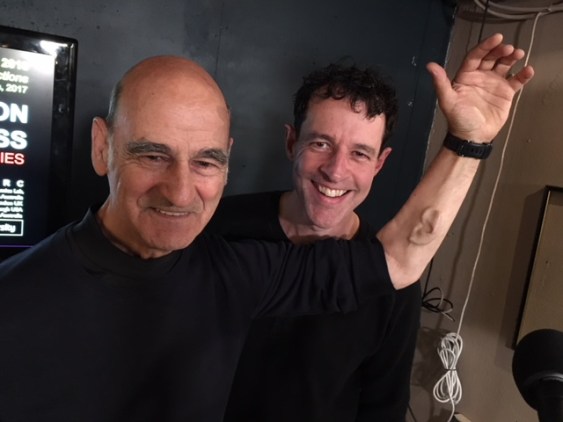
January’s Sci-Fi Sessions was a conversation between three very different contemporary fantasy authors. Each one has a trilogy in progress. Lucy Hounsom has just released the final book of her acclaimed Worldmaker series (Starborn, Heartland and Firestorm). Tarnished City, the second novel in Vic James’s Dark Gifts trilogy, was published last year. It follows the success of book one, Gilded Cage, as a BBC 2 Book Club Choice. Finally, Anna Smith Spark’s Court of Broken Knives, the opening volume of her Broken Empire sequence, has already been nominated for numerous awards for best fantasy novel of 2017, with second and third volumes yet to follow. Continue reading “Fantasy Fiction with Vic James, Anna Smith Spark & Lucy Hounsom. A SciFi Sessions conversation, hosted by Glyn Morgan at Gower Street Waterstones in London.”

SF and the future of security: an interview with Ping Zheng

Defiant Today
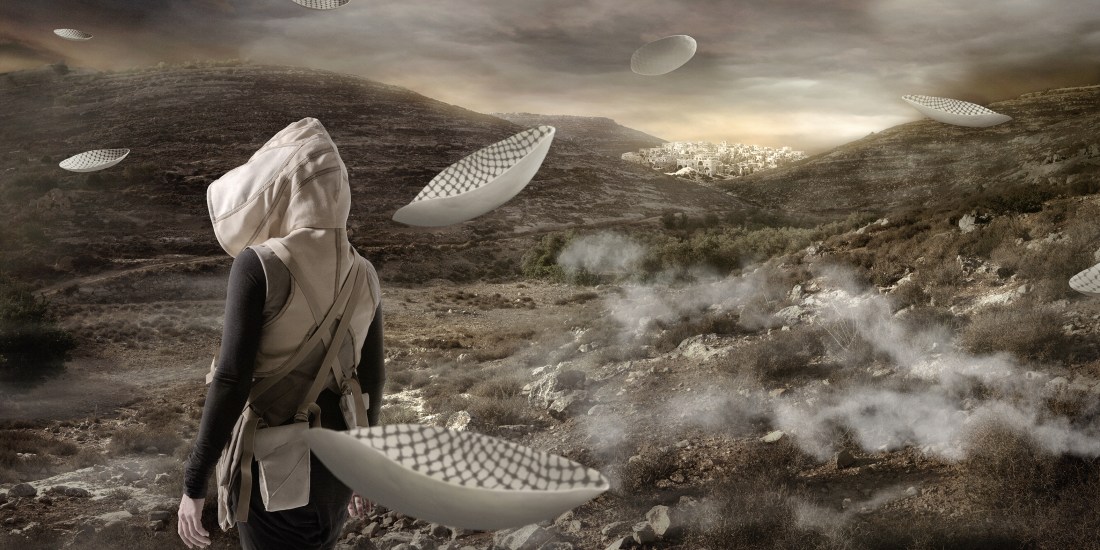
‘Defiant Today’ Phil Jones

In late December 2017, a group of writers and scholars of SF, scientists and technologists, and defence analysts and policymakers, gathered at Dstl (UK government’s defence science and technology laboratory) in Salisbury to explore science fiction’s contribution to defence policy. Vector caught up with Dr Ping Zheng from Canterbury Christ Church University Business School, to ask her about her impressions of the day, and a few other things …

During the first breakout session, you were in the Human Behaviour in Smart Environments group. How did that go?

ping 1
Dr Ping Zheng

We had some inspiring discussions about how humans may react in smart environments. I think the group dynamics probably extended the scope of planned discussions, and allowed us to engage in more diversified discourse, ranging from individual perspectives, to emergent impacts at a societal level, and also to policy perspectives. For example, two prominent issues were debated: national and cultural differences, and ethical concerns such as privacy.

Perhaps the value of events like these is that you might discover that your original questions can be re-framed, or that your stakeholders are not precisely who you imagined them to be. Your other breakout session was ‘Defence (In)efficiency: What Does the Future Hold?’?

Continue reading “SF and the future of security: an interview with Ping Zheng”

Vector’s pick of science news in 2017

Transdimensional
‘Transdimensional’ by Phil Jones

In the spirit of Vector’s traditional “Best of” print edition, which is nearly ready, here is our pick of science news for 2017.

First of all, water. Two new inventions for increasing the supply of drinking water caught our eye:

In other exciting fluid-related news, scientists have made a fluid with negative mass. In the face of our growing global water crisis, maybe this development doesn’t feel quite so relevant as the other two … but then, the usefulness of inventions can be hard to judge at first. Story prompt, writers?

The New York Times is not a place where one expects to find encounters between the Navy and UFOs. Then again, the NYT in 2017 has felt like a distinctly genre venue, as the reality around us grows far-fetched and more than a little dystopian. So it has been worth the extra effort to look for technoscience news which seemed less likely to transform our world in drastic and unpredictable ways (as AI or CRISPR), and more likely to offer tangible and specific benefits, like eyesight for the blind.

Although some writers could surely imagine a downside to artificial eye retinas, many have already questioned science’s quest to prolong life or enable reproduction without women, or bodies for that matter. Wait, so we’ve had nearly 50 years to figure out the ethics — Shulamith Firestone’s The Dialectic of Sex: The Case for Feminist Revolution was advocating cyberwombs in 1970 — and we still don’t know?

In 2017, the world got more of its energy from renewables and technology continues to improve. Fast enough? The outlook for climate change in 2017 was not especially comforting. What humanity learned to speed up in 2017 is evolution. Gene drives could increase the rate at which genes spread in ways that could be beneficial. Worth the risks?

If we get it all wrong, it may come as a consolation that at least Earth is not the only habitable planet. In 2017, NASA identified hundreds of planets similar to Earth. Does this make Earth less precious? Not if we love it. Most scientists do. Many strive to help here and now, such as buying time for corals so they can adjust to climate change rather than die off, taking down entire ecosystems with them.

Other scientists conduct research on different dimensional scales. 2017 saw an end to the Cassini mission, which plunged to Saturn in order to avoid contaminating its moons (that Cassini revealed so much about). And the year’s most abstractly beautiful piece of new knowledge has been the discovery of gravitational waves – ripples through spacetime – predicted by Einstein’s theory. What caused these ripples on the spacetime surface that we learned to observe? A kilonova — a collision of two neutron stars… But could we process this new knowledge if our imaginations had not been prepared for it by, say, Samuel Delany?


Robotics, science fiction and the search for the perfect artificial woman

File 20171024 30565 p2y72k.jpg?ixlib=rb 1.1
Ociacia/Shutterstock.com

Irena Hayter, University of Leeds

Three photographs have been shortlisted for 2017’s Taylor Wessing Photographic Portrait Prize, hosted by the National Portrait Gallery in London. But there is something out of the ordinary about one of this year’s contenders for the prize. One of the portraits – by the Finnish artist Maija Tammi – is not of a human, but a female android.

The android in the photograph is Erica, described by her creator, Osaka University professor Hiroshi Ishiguro, as “the most beautiful and intelligent” robot in the world. The hardware beneath her silicone skin helps her achieve facial and mouth movements, but these can be rather unnatural, out of sync with her synthesised voice. She is cognitively sophisticated, though still unable to work out answers to complex questions from first principles, and she cannot move her arms and legs.

If this seems like something out of science fiction, you’re not far off. One of Ishiguro’s first female robots was named Repliee Q1 and he himself has said that the name derives from the French for “replicate” and from the “replicants” in Blade Runner: science fiction and robotics have always been entwined. Indeed, in a documentary made by the Guardian about Erica, Ishiguro reveals that he wanted to be an oil painter and insists on the similarities between his work and artistic creation.

It is difficult not to see here a masculine Pygmalionesque desire to create the perfect artificial woman. “Ishiguro-sensei is my father and he understands me entirely,” Erica pronounces in the documentary. Her vaunted autonomy seems more like a projection on the part on the roboticists who programme her thoughts, but also occasionally anthropomorphise her: the scientist who introduces himself as Erica’s “architect” also thinks that she is “really excited to interact with people”.

One of Them Is a Human #1 by Maija Tammi (Erica: Erato Ishiguro Symbiotic Human-Robot Interaction Project).
© Maija Tammi

Continue reading “Robotics, science fiction and the search for the perfect artificial woman”

How sci fi-inspired innovation treads a fine line between dystopia and utopia

Image 20160705 807 1imto07.jpg?ixlib=rb 1.1
Pie in the sky?
Chase Elliot Clarke, CC BY

Paul Levy, University of Brighton

The race is on to bring a jetpack to market. New Zealand-based Martin Aircraft has a jetpack which is due to go on sale this year and US-based JetPack Aviation is working on a more streamlined offering. So aviation junkies with the cash to spare will soon be able to get their hands on what has long been the preserve of science fiction.

Jetpacks follow a long line of sci-fi inspired innovation. E M Forster’s novel The Machine Stops is often credited as a source of inspiration for, or at least a predictor of, the internet. The idea of 3D printing was foreshadowed in numerous books and, most famously, in Star Trek in the guise of “replicators”. Then you have more frivolous ideas such as the self-lacing shoes worn by Mart McFly in Back to the Future, which shoemaker Nike plan to bring out this year.

Visionary and imaginative writing has always been an important source of inspiration for inventors and innovators. But success has been mixed. Continue reading “How sci fi-inspired innovation treads a fine line between dystopia and utopia”

Friday essay: science fiction’s women problem

Image 20160915 4972 gqonsw.png?ixlib=rb 1.1
We need women to participate equally in science fiction’s conversations about humanity’s future.
MsSaraKelly, CC BY-SA

Bronwyn Lovell, Flinders University

Since 1953, the Hugo Awards have been one of science fiction’s most prestigious honours – past winners include Isaac Asimov, Arthur C Clark and Ursula Le Guin. The 2016 results were recently announced, and women and diversity were the clear winners.

However, if you saw the list of titles in contention for the awards, you’d have noticed some oddities, such as Chuck Tingle’s Space Raptor Butt Invasion and My Little Pony’s The Cutie Map. That’s because the awards – nominated and voted on by science fiction writers and readers – have been targeted by two major voting blocs: the Sad Puppies, who started their campaign in 2013, and the Rabid Puppies, who appeared the year after and have been growing stronger ever since.

The Sad Puppies wanted more traditional, mainstream popular science fiction on the ballot. The more extreme Rabid Puppies, who have ties with the Gamergate movement, were about creating chaos. So their bloc included ridiculous-sounding works: both to mock the awards and stack the ballot to prevent more diverse books being nominated.

Both groups’ gripe is with contemporary trends in science fiction toward more literary works with progressive themes. Vox Day, leader of the Rabid Puppies, complains that “publishers have been trying to pass off romance in space and left-wing diversity lectures as science fiction”. Last year’s leader of the Sad Puppies, Brad R. Torgersen, likewise complains about “soft science majors (lit and humanities degrees) using SF/F as a tool to critically examine and vivisect 21st century Western society”. The Hugos, he says, are being used as an “affirmative action award”.

A significant number of those “soft science majors” writing “left-wing diversity lectures” are, of course, women. Female authors have dominated science fiction awards of late.

This year, women (and people of colour) did very well at the awards. Ironically, the Puppies’ activities have now galvanised more progressive members of the World Science Fiction Society to use their voting rights. The best novel was The Fifth Season, a tale of a planet experiencing apocalyptic climate change, written by NK Jemisin – a black, female writer. Best novella was Binti by Nnedi Okorafor. The best short story, Cat Pictures Please, was written by Naomi Kritzer and both best editor gongs went to women.

But the ongoing saga of the Puppies and their attempts to derail the Hugos exemplifies broader conflicts within the realm of science fiction – an enormously popular, lucrative and controversial genre that has major issues with women.

Hugo award winner Nnedi Okorafor at a reading of her work.
byronv2, CC BY-NC

A male dominated genre

Continue reading “Friday essay: science fiction’s women problem”

“This is Not Going to Go the Way You Think”: The Last Jedi Is Subversive AF, and I Am Here for It

Bitter Gertrude

lastjedi John Boyega as Finn, Daisy Ridley as Rey, and Kelly Marie Tran as Rose Tico in The Last Jedi

NOTE: This post is full of spoilers.

“This is not going to go the way you think.” — Luke Skywalker

Star Wars has always had its finger on the pulse of the cultural fear of the moment. In the original trilogy in the 1970s and early 80s, it was The Man– an evil establishment that needed to be purified by a younger generation. In the prequels of the 90s, it was evil corporations secretly colluding with a corrupt government to create endless war.

Now, in early 21st century America, the villain is an unstable young white man who had every privilege in life, yet feels like the world has wronged him. Unbeknownst to his family, he finds and communicates with a faraway mentor who radicalizes him with a horrific, authoritarian ideology…

View original post 1,526 more words

LSFRC event: Brian Stableford–Le Roman Scientifique

sabBrian Stableford will be speaking about the evolution of an important early science fiction form, the French roman scientifique, supported by the London Science Fiction Research Community (LSFRC).

Monday, February 12th, from 6:30 pm until 8pm, at The Keynes Library, 43 Gordon Square, London.

Brian’s lecture will map its way according to several signposts: Beginning with the origins of the roman scientifique in the illicit “philosophical fiction” of the eighteenth century, he will also discuss the after-effects of the French Revolution on utopian thought and the future impact of technological advancement on society; the development of “travelogue fiction” before and after Jules Verne; the preoccupation with future wars after 1870; the development of “scientific marvel fiction”; and the particular influence of WWI on French writers and their speculative fiction.

In addition to critical studies of science fiction, Stableford has authored more than 70 novels and translated even more, most from French to English. His work on the development of the roman scientifique in the long nineteenth century has vital significance for understanding later manifestations of science fiction in France, the Anglo-American setting, and around the globe. We hope you can join us for what is sure to be a fascinating evening with one of the most influential and prolific figures in science fiction.

#SciFiSessions: M John Harrison & Gary Budden

A SciFi Sessions conversation, hosted by Glyn Morgan at Gower Street Waterstones (London).  Click here for details of future events,  #SciFiSessions return in January 2018 with a special three author event showcasing British fantasy talent. 

 Weird Fiction for Weird Times by Andrew Wallace

HSMike John Harrison, a veteran of the 60s New Wave SF scene, and Gary Budden, an award-nominated short story writer whose first collection Hollow Shores (Dead Ink Press) is out now, discussed how weird fiction is indispensable for processing contemporary political realities.

Mike recounts JG Ballard at a party held by seminal SF magazine New Worlds predicting how the world would become ever more fantastical and psychopathic. At the time, everyone thought Ballard was overstating the case; now, Mike says, his own ferocious, mythic engagement with the culture feels redundant. Indeed, far from our culture inhabiting an exciting new realm of limitless possibility, some reality would be rather welcome. Gary says that the current fractured, nonsensical nature of the world means that weird fiction is resurgent; that the genre is merely reporting on the psychological state of our culture. Indeed, a contemporary writer of ‘realist’ fiction would now need to accommodate the weird simply to reflect what is going on.

Both writers engage with landscape in ways that challenge its conventional certainties. For example, Gary read a short piece about the actor Peter Cushing, who lived in Whitstable. In the story, the actor is referred to via his greatest roles, like ‘the Vampire Hunter’, as he wanders around the seaside town accompanied by his best friend, ‘the Vampire’ (presumably Christopher Lee). They meditate on their great fictional battles, surrounded by the everyday bustle of modern life, and meditate on an uncertain future. This blending of myth and reality has personal note: Gary grew up in Whitstable and the area has a strong folkloric identity. He writes weird fiction because that is the only genre that reflects his understanding of this familiar landscape. One way to reconcile the desire for his home space to be closer to its mythical – but not idealised – identity, and further from its proximity to prime UKIP country, is to use techniques of psychogeography, or as Gary calls it ‘landscape punk’. The Hollow Shores are a real place; the name is drawn from history like some treasure previously submerged that has slowly come to light.

However, the stratification of the English landscape brings political peril. The online Hookland project, which explores a fictional English county using folklore, spent the day of the discussion fighting off an English neo-Nazi who wanted to use the site to justify national/racial purity. Mike says that writers should make their position on landscape politics clear, and maintain awareness that landscape itself has no sentimentality at all. It has its own language, often weird, that should be used with full awareness to avoid the descent into easy nationalism.

Gary is interested in the fringe elements of our island; how its marginal landscapes change over time in a way that seems arbitrary, even absurd. For example, Whitstable would not even have been on the coast when the area now known as Doggerland linked Kent to mainland Europe 10,000 years ago. Doggerland was flooded at the end of the last Ice Age, a prospect we face on the attenuated landmasses of our own time. But for a few degrees’ variation in temperature, the Britain we know would not have existed and neither, in our current form, would we. There is a sense of possibility, only just missed, that folkloric weird fiction reflects so well.

harrisonCreation of a fictional Doggerland-like continent lay behind one of Mike’s projects for New Worlds, in which elements of a series of seemingly unconnected narratives would reveal that a new continent had appeared. Although the book never came to fruition, the stories evolved and formed part of his new collection, You Should Come With Me Now, published by Comma Press. He read a story from the collection called Psychoarcheology. Ostensibly a satire about the unending discovery of royal remains beneath car parks, it also looked at how the royals themselves are as trapped by their DNA into a life of rule they may not want, as their bodies are trapped beneath tarmac. This layering is an example of one of the different narrative techniques Mike uses to draw the reader through stories that do not have conventional narrative plots. Another is ‘reframing’, in which characters are moved through different landscapes as if on a journey, placing them in unfamiliar locations to accentuate the essential quality of strangeness. The weird, then, is as much to do with the way the story is told as its subject matter.

BSFA Awards – Stage 2

The BSFA Awards are awarded each year to the best Novel, Short fiction, Non-Fiction and Artwork.

The process for choosing the 2017 award winners is underway! We are currently in the second (shortlisting) stage. To vote in stage 2, visit this link: https://tinyurl.com/BSFA2017shortlisting

Who can shortlist?

 You may vote to shortlist a work if YOU:

AND

  • Send or give your shortlisting votes to the Awards Administrator to arrive by the 31st January of each year. See here for further details.

The last year’s winners were:

Cover art by Sarah Anne Langton

This year’s nomination lists are extensive, see below. Where a work (or an excerpt) is available online, we have provided a link. If you are a publisher or author and wish to make a work or an excerpt available, please contact awards@bsfa.co.uk and we will be happy to add a link. 

Continue reading “BSFA Awards – Stage 2”