By Robert Kiely and Sean O’Brien
This academic article explores what it describes as ‘science friction,’ relatively recent near future SF depicting the intensification of contemporary economic tendencies, including increased automation and the spread of digital platforms. The bitterly critical tone and concerns of these works is in marked tension with the techno-utopianism prevalent within much twentieth-century science fiction, within contemporary literary science fiction studies, and within the uses of science fiction within contemporary political theory, including left accelerationism broadly construed. Such techno-optimist thinking is not naively enamoured of detailed, inflexible plans for what the future should look like, but it arguably leans too heavily on a vision of technology as a relatively neutral, repurposable and ever-proliferating resource, paying insufficient attention to its historical contingencies. The article ends by contending that there are material reasons why techno-optimist SF was readily available in the twentieth century, just as there are material reasons why it is less readily available now. Perhaps then ‘science friction’ invites us to contemplate the exhaustion of such thinking, an exhaustion that correlates with the closure (or at least profound transformation) of the radical political opportunities in which it was once rooted.
- Review: This article underwent editorial review by two editors.
- License: Copyright Robert Kiely and Sean O’Brien, all rights reserved.
- Citation: Kiely, R and O’Brien, S. 2018. Science Friction. Vector #288. https://vector-bsfa.com/2018/11/16/science-friction/
- Keywords: algorithmic governmentality, economics, labour, near future SF, platform capitalism, post-scarcity, science friction, techno-utopianism
This article examines a series of near-future SF stories that offer snapshots of an immediate future dominated by the intensification of contemporary economic tendencies, including increased automation and the rise of digital platforms. Much twentieth century SF tends to traffic in a certain techno-optimism in its outlook, not so much to suggest that technological advances would produce positive outcomes but that they would continue to develop and expand in their complexity and productivity. Today this utopian legacy is carried forward both by literary science fiction studies and by the uses of science fiction within contemporary political theory. In a different vein, and in tension with this outlook, is what we call ‘science friction’: a literary practice of slowing down visions of technological and social progress.
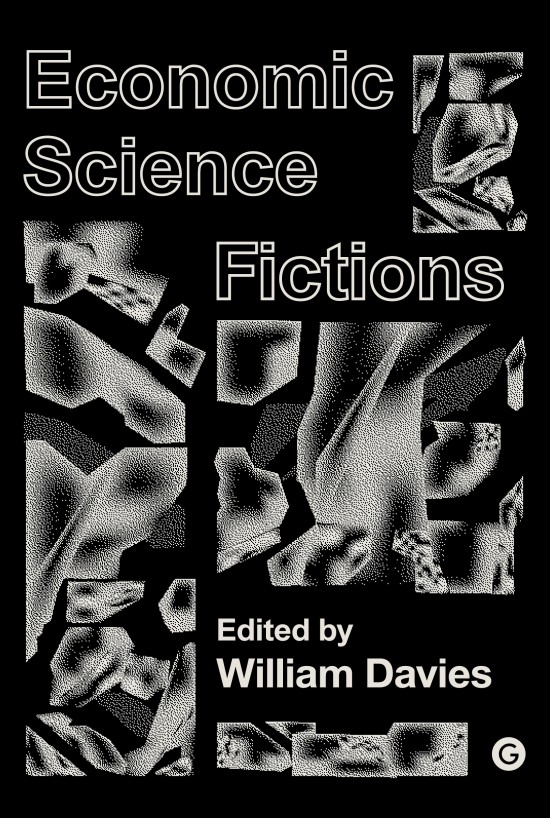
Two recent collections, Futures and Fictions (2017) and Economic Science Fictions (2018), look to SF to counter the dominant cultural narrative of what Mark Fisher calls ‘capitalist realism’—the Thatcherite idea that ‘there is no alternative’ to capitalism—with alternative visions of the future based largely on emerging technological innovations [1]. To puzzle over this position, as we’ll do below, is not to be fatalistic or to concede political ground on the terrain of the imaginary. Rather, it is to question the capacity of capitalist technology to usher in a postcapitalist future, especially under contemporary conditions of stagnation and precarity. As these works of science friction suggest, further development of capitalist technologies are likely to offer more of the same, but worse.
Critics such as Simon O’Sullivan, William Davies and Peter Frase have argued that a visionary SF can offer much-needed screenshots of a postcapitalist future, challenging the neoliberal status quo and bolstering a left that suffers from a perceived poverty of imagination. [2] In the discussion that opens Futures and Fictions, for example, O’Sullivan argues that ‘future fictions have a more general traction on the real, not least insofar as they can offer concrete models for other ways of life in the present.’ [3] Several of the essays in the collection suggest that the intensification of late capitalist technological developments will provide the means to realize a postcapitalist utopia if the economy were managed by a socialist state. Here, full automation and universal basic income (UBI) constitute transitional demands on the way to what Aaron Bastani brands ‘fully automated luxury communism’ [4].
Continue reading “Science Friction”


 Westworld: how far away is this future?
 The success of Air in the latest Clarke award is nothing less than an act of magic.
 So rich a sea, so broad the currents … in exploring fantastic literature by African-descended authors, where do we start?
 someone who valued her loneliness very highly. Yet a major concern of the heroine of
  [The cover] painting is a made-up decoration merely done in Pacific Northwest style … meant to say to a reader “This novel is based on the mythology of the Pacific Northwest,” just as covers for other kinds of fantasy use images from Celtic, Norse, or Japanese mythologies to signal “pick me up” to the right kind of reader. ([Name withheld], p.c. Feb. 9, 2005)
 vector-bsfa.com