Download Issue 3


By Dev Agarwal. This review first appeared in Vector 287.
Get Out premiered at the Sundance Film Festival in January 2017, and was theatrically released in the United States a month later. The film was well-received by critics and audiences, with particular praise for Jordan Peele’s writing and directing and for Daniel Kaluuya’s performance. Get Out was chosen by the National Board of Review, the American Film Institute, and Time magazine as one of the top 10 films of the year, and received four Oscar nominations.
The film is both its own unique story and part of a canon of socially relevant horror films. It blends social commentary, comedic elements, drama and genuine scares to bring together a coherent narrative about exploitation and the black experience in America today.
Besides being the highest grossing feature debut for an original screenplay, the film made Peele the first black writer-director to reach $100 million on a feature debut. And at $162.8 million, it’s the biggest domestic hit from a black director. It cost $4.5 million dollars but it now grossed $175 million in the USA and 254 million worldwide. It is the third highest ranking for an R rated horror after IT and The Exorcist.
In fannish circles, Get Out arrives at a time when some loud voices are decrying diversity as “virtue signalling” and “message fiction.” Message fiction, they claim, puts politics ahead of all other considerations, especially storytelling and entertainment. As science fiction writer Larry Correia puts it: “Let’s shove more message fiction down their throats! My cause comes before their enjoyment!” This little schism in science fiction reflects a greater schism in western society itself. For the first time in decades, the neoliberal consensus is under serious pressure, both from the left and from the alt right. Long held certainties are in question. Brexit has wobbled the postwar European project. Nuclear Armageddon is being credibly imagined once more. There are actual Nazis everywhere; Marine Le Pen of the Front National brushes against the French presidency while White Nationalists run down protesters in Charlottesville. And, of course, looming over everything is the still remarkable phrase: President Donald Trump.
And none of this is fiction. Not even the most outlandish science fiction. Into this volatile, surreal world comes the movie Get Out.
Get Out posits the story of a black man, Chris, driving from his comfortable middle-class home in Brooklyn to upstate New York. But just before we get to Chris and his story, there is a pre-credit prologue. A black man is lost in a prosperous white suburb … a ‘nice’ part of town. We have, for many years and regardless of our own origins, been invited to follow the story from the default setting of white protagonists navigating white society. Get Out invites us to instead follow black protagonists navigating white society, and horror proves a relevant genre. As this prologue unfolds, the terror mounts, and racial identity become an increasingly urgent matter.
Tanarive Due draws a comparison with ‘The Comet’ by W.E.B. DuBois, observing that DuBois “was writing horror from the heart. And, of course, what he’s trying to counteract with that story is a different horror […] There were moments in the DuBois story where he’s nervous about where he goes and how he’s seen from the outside. It’s similar to the opening of Get Out, being lost in a strange, white neighbourhood. That’s so real.”
Manohla Dargis, reviewing in the New York Times observes that “Peele briskly sets the tone and unsettles the mood. He’s working within a recognizable horror-film framework here (the darkness, the stillness), so it’s not surprising when a car abruptly pulls up and begins tailing the man […] when this man anxiously looks for a way out, the scene grows discordantly disturbing because you may, as I did, flash on Trayvon Martin.”
The film soon introduces our main character, Chris, played by Daniel Kaluuya. A staple of horror is that things begin very “normally.” Chris is a black man in Brooklyn, living a comfortable middle-class life with his white girlfriend, Rose, who is played by Allison Williams. So things may seem normal, even humdrum. Chris has been invited to meet Rose’s family, who live upstate on a huge estate. At the outset, the implication is that Rose’s family are part of the wealthy white middle classes, post-racial, egalitarian, liberal, and welcoming. Chris’s attempts to anticipate any racial awkwardness are met with disarming humour by Rose. This premise could be lifted from Poitier’s Guess Who’s Coming to Dinner from 1967, but then projected through the amplifying lenses of both horror and science fiction.
As we journey closer to Rose’s family, things begin to steadily deviate from anywhere near “normal.” On the drive upstate, Rose and Chris hit a deer – a jump scare and also a distressing and bloody encounter. A white policeman arrives on the scene and his reaction to the traffic accident is to demand Chris’s ID. It’s a moment designed to outrage a liberal audience. But it also reveals how both characters react. Chris is pragmatically compliant, whereas Rose, the one who was actually driving the car, confronts the officer. Following this tense, ambiguous encounter, Chris affirms Rose’s act – “that was some ride or die shit, baby; I like that” – but it’s a remark with many layers, and even below those layers, we sense that there is a lot he isn’t saying. This film doesn’t just talk about race, but also about silence: about all the ways race isn’t talked about.
By the time he arrives on the estate, Chris has been through two unnerving events, the death of an animal and the threat of a police officer. Neither incident is fantastical, and yet they add to the accumulation of tension and discomfort. Now, the family who awaits him ranges from the patronisingly liberal to the loutish and offensive. It’s just the welcome Chris appeared to fear at the outset.
In this sense, the film is experimenting with the use of ‘normality’ in the standard horror arc. As Tananarive Due points out, “Horror is a great way to address this awful, festering wound in the American psyche, the slavery and genocide that was present during our nation’s birth.” The possibility of being arrested or murdered whenever he meets the police is part of Chris’s reality that Rose is shielded from. Likewise, the awkwardness of managing the family’s creepy behaviour is ‘normal’ for Chris.
Nevertheless, at this stage, the story may seem more social drama than horror. However, Peele has already skilfully slipped in cues which will resonate later in the film. The narrative’s details continue to accrete like coral. The black characters on the estate are mostly servants, and they remain distinctly uncommunicative with Chris, or weirdly out of sync in their behaviour. Indeed, it is these few black characters who create the gateway into the horror genre proper. Their uncanny presence, and the reactions of the white characters to their disturbed behaviour, is the chief source of tension in this part of the film. The smallest details imply warnings of the looming terror, as the ‘minor’ characters start to leak their secrets, and bit by bit the skin of the genteel peels back to expose a brutal, fantastically horrific foundation.
I’ll avoid any big spoilers, but this is a film you can run your mind over afterwards, admiring the many small, clever details that reveal its careful construction. Many audiences may be satisfied with the jump scares and plot surprises, while more schooled genre viewers will take the extra pleasure in their anticipation of horror and SF tropes. Peele engages established genre elements – hypnotic suggestion, out-of-body experiences, experiments on human subjects that would fit within David Cronenberg’s body horror films. We even get grainy video footage of the 1980s that looks like the Dharma Project from Lost, or recalls that moment in Quatermass where a major plot development is explained by silent film footage.
At the same time, Peele never resorts to mere pandering allusions or cheap tricks. He asks us to emotionally invest in the characters’ lives, and that means understanding how they feel in specific settings or situations. The film draws on the history of slavery and exploitation, as well as the racist stereotypes about the ‘physical vitality’ of black bodies. The allegory has resonated so widely that a UCLA course in African-American Studies has now been named after a key conceit of the film: ‘Sunken Place: Racism, Survival, and Black Horror Aesthetic.’ The course is now made available to anyone online. The trick that Peele pulls off is to make the message mesh with his story in such a way that they become synergistic and ultimately indivisible.
Get Out cost $4.5 million dollars to make and took $33.3 million on its opening weekend. It’s now surpassed the $175 million mark in the US alone, putting it behind The Exorcist and It for R-rated horror. In financial terms, Get Out is a success.
And, in cultural terms, the film is already earning the sobriquet “revolutionary.” In an interview with Evan Narcisse for io9, Tananarive Due said that, “just recently, we were talking to some network execs about a pilot we were developing […] and they were like, “Oh, like in Get Out.” And it’s not that it’s anything similar to Get Out, it’s just that was now the new framework. That’s what black horror looks like: Get Out. They can now have a reference point and you can continue with the conversation. Because before, you could barely even get that conversation started.”
Any work that is discussed as revolutionary resists pigeon-holing, especially if categorisation itself is symptomatic, as in the case of Get Out being nominated in the “comedy” category at the Golden Globes. Peele himself has said that “[t]he reason for the visceral response to this movie being called a comedy is that we are still living in a time in which African-American cries for justice aren’t being taken seriously. It’s important to acknowledge that though there are funny moments, the systemic racism that the movie is about is very real. More than anything, it shows me that film can be a force for change. At the end of the day, call Get Out horror, comedy, drama, action or documentary, I don’t care. Whatever you call it, just know it’s our truth.’’
The BSFA holds regular events in London, usually on the last Wednesday of the month, at the Artillery Arms near Old Street. These events are free, and open to members and non-members alike. Keep an eye on the BSFA website for news of future events. In November 2017, former Vector editor Glyn Morgan interviewed acclaimed author Anne Charnock, whose first novel A Calculated Life was nominated for a Philip K Dick Award and whose second novel, Sleeping Embers of an Ordinary Mind was listed by The Guardian as one of the Science Fiction Books of the Year in 2016. She also regularly takes part in The Ada Lovelace Conversations, a collaborative project between The Arthur C Clarke Award for science fiction literature and Ada Lovelace Day, an international celebration of the achievements of women in science, technology, engineering and maths. Anne’s latest novel, Dreams Before the Start of Time, is out now.
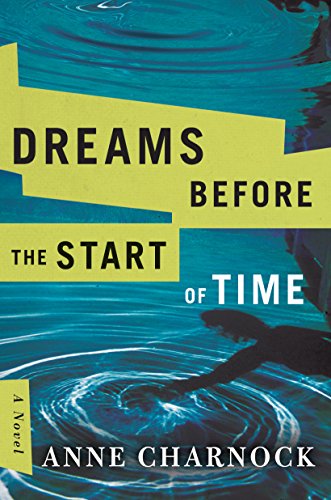 The themes of Anne’s latest novel Dreams Before the Start of Time evolved from ideas about reproductive technologies likely to be with us within the next forty years. The book explores the psychological, ethical, legal and social implications of these technologies by following generations of the same family into the future as they take advantage of these new opportunities and deal with the unexpected consequences. Anne believes that fiction offers the best means of analytically, emotionally and aesthetically engaging with the potential impacts of innovations and trends, from our ‘reproduction’ as digital selves to artificial intelligence, genetic engineering and the emergence of China as both a strategic world player and presence in our future lives.
Continue reading “BSFA events: Anne Charnock interviewed by Glyn Morgan”
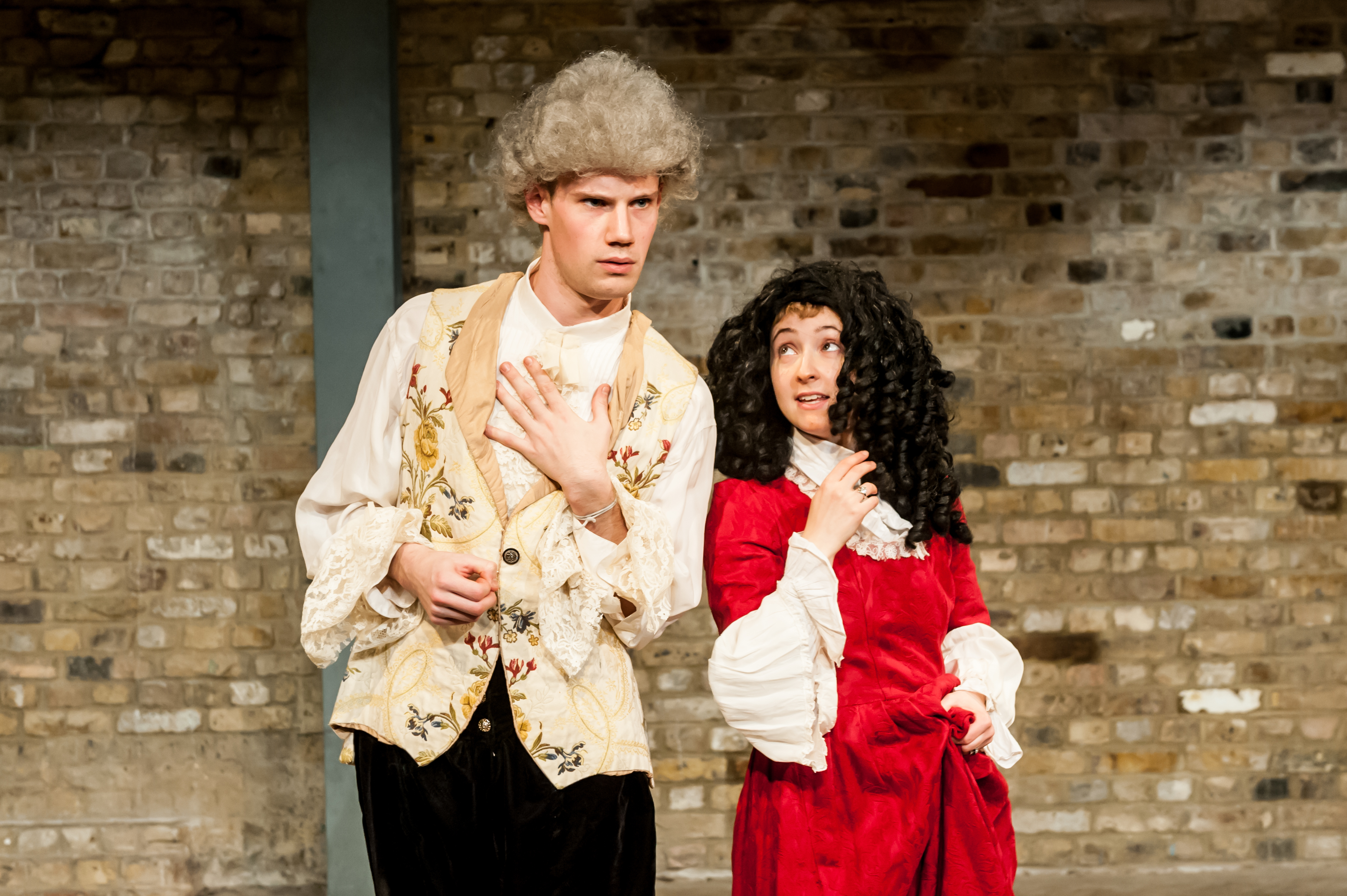 London, 1680. Photo: Lidia Crisafulli
The play consists of four love stories set in 1680, 1936, 1978-9, and 2223. The stories talk to each, the text demanding their simultaneous presence on stage at several crucial moments in the play. These instances are key to some of the thematic threads that span the epic, knitting it together. Each viewer might perceive their own connections, beyond the obvious commonality that is part of the title: each story involves a love affair between people of the same sex. The complexity and the wit of the play are dazzling. There are stories within stories. In 1680s London, Arabella Hunt is an opera star, and we first encounter her rehearsing the lines from Cleopatra:
[…] and all the world,
is if it were the business of mankind to part us,
is armed against my love: even you yourself
join with the rest; you, you are armed against me
This sentiment echoes through time, the world is armed against homosexual love even when we are on the moon in 2223, albeit this time through its absence – Cal and Lorn are all that is left of homo sapiens, and only one of them is biologically human. Cal is an android that Lorn built, an android those very conscious existence depends on convincing Lorn that he loves him. With humanity having driven itself to extinction, Lorn is afraid of hope, and hence of love.
 Lorn and Cal, Moon, 2223. Photo: Lidia Crisafulli
Continue reading “Science fiction in theatre: Callisto – a queer epic”
Peter Owen Publishers, London, 2003, 236pp, £12.50, t/p, ISBN 0720611717
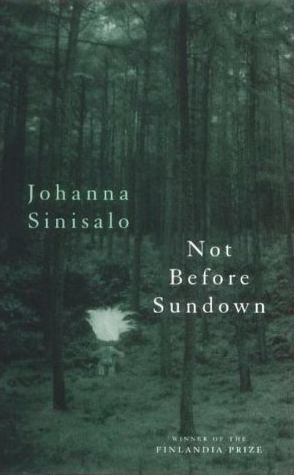 Not Before Sundown has also been published under the title Troll: A Love Story. The alternative title is, in some ways, a literal description of the book. The first chapter opens with photographer Angel stumbling across a sick creature near his home. It is a troll, and Angel takes it back to his flat and nurses it back to health. The rest of the book explores the consequences of having a wild troll living in close proximity to and interacting with human beings (and whether or not some of those interactions constitute a love story is perhaps a matter of interpretation).
The two prizes Not Before Sundown has found favour with reflect two major aspects of the novel. The Finlandia Prize reflects the book’s roots in Finnish culture and folklore, while the James Tiptree Jnr Award reflects the way it explores issues of identity and sexuality. The best way into both aspects of the novel is through its structure. Not Before Sundown utilises a very unusual narrative technique. The story unfolds through a series of relatively short (a couple of pages or less, and sometimes no more than one or two lines) first person narratives, as well as ‘extracts’ from texts on Finnish folklore, newspaper reports, and various other sources dealing with the history, biology and mythology of trolls, some real (most of the folklore extracts are genuine), some not. Thinking about these extracts and the role they play in the story is a route into understanding the book’s Finnishness, as well as the place it inhabits in the field of fantastic literature. Continue reading “From Our Archive: On Falling in Love”
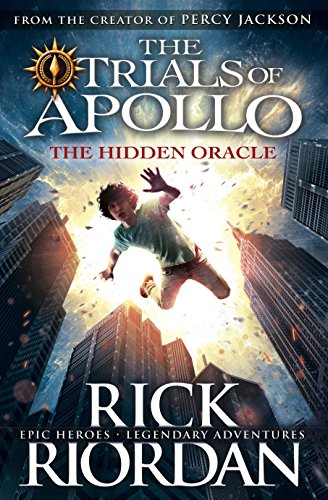 The Hidden Oracle, Book One of The Trials of Apollo series by Rick Riordan (Disney Hyperion, 2016)
The Dark Prophecy, Book Two of The Trials of Apollo series by Rick Riordan (Disney Hyperion, 2017)
Reviewed by Christopher Owen
Winner of the 2016 Goodreads Choice Awards: Middle Grade and Children’s, The Hidden Oracle begins the next adventures in the Camp Half-Blood Chronicles. The Hidden Oracle and The Dark Prophecy are the first two books in The Trials of Apollo pentalogy by New York Times #1 Best-Selling Author, Rick Riordan. The Camp Half-Blood Chronicles is primarily made up of three five-book series. The first two, Percy Jackson and the Olympians and The Heroes of Olympus respectively, follow the adventures of twenty-first century demi-gods, teenage children of mortals and either Greek or Roman gods/goddesses. In this third series, Riordan does something different, focusing instead on the adventures of the god Apollo.
At the end of The Heroes of Olympus, Apollo is blamed for the problems the heroes have had to resolve. This third series picks up a few months following the events of the second series with Apollo’s punishment beginning with him falling from the sky and crashing in an alleyway dumpster. At first Apollo’s punishment appears to be one simply designed to humble him: he is transformed from a beautiful, powerful god to an awkward, acne-covered teenaged human. He is then further humbled when a couple thugs beat him up, when he is forced into the servitude of a young girl named Meg, and when he realizes that he is exceptionally less talented at music and archery than when he was a god. His inner-struggles throughout the narrative consist of a conflict between his over-zealous ego and his melodramatic horror at his newfound limitations. But Apollo also faces exterior struggles, and it is in these conflicts that he learns that his punishment is not just to be humbled, but also to right previous wrongs. Apollo must save five missing oracles and stop a secret organization called the Triumvirate. The Triumvirate is made up of three re-born Ancient Roman Emperors who have been pulling the strings in the background all along, causing all of the problems of the Camp Half-Blood Chronicles.
In The Hidden Oracle, children at Camp Half-Blood, a secret camp for demi-gods, are going missing. One by one they head into the forest as if hypnotized and are never seen again. While previous heroes in the Chronicles have travelled far in an American road trip-style adventure, in The Hidden Oracle Apollo does not need to travel farther than the forest neighboring the campgrounds. This changes the structure of the narrative from the previous books. Apollo is able to head back and forth between the forest as site of adventure and the campgrounds as site of respite, healing and communicating with aids. Furthermore, while previous books touch on the other campers only briefly, this book spends a great deal more time getting to know the people who live at camp year-round. This includes three of Apollo’s children, adding another interesting dynamic to this book, a greater focus on the relationships between demigods and their godly parents, something that is only touched on briefly in the first two series.
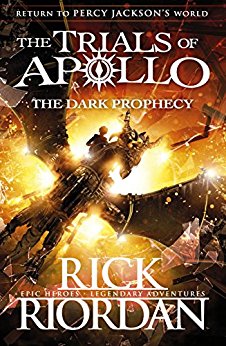 The sequel, The Dark Prophecy, follows Apollo’s quest to save both his friend and all of Indianapolis from the control of the Triumvirate. This book follows a similar structure as The Hidden Oracle. While the characters travel from Long Island Sound to Indianapolis for this novel, and thus there is the potential for a road trip-style structure that the original two series of the Chronicles use, this book begins at the end of the journey, as the characters are arriving in Indianapolis. Within the first few chapters, the heroes are lead to a magical hideout called the Waystation, which functions in the same way as Camp Half-Blood in The Hidden Oracle. The heroes go back and forth between fighting their enemies in Indianapolis, and re-grouping and healing at the Waystation. During these adventures, Apollo and his friends team up with a variety of different species, adding interesting new group dynamics unexplored in previous novels of the Chronicles.
Both The Hidden Oracle and The Dark Prophecy feature intense final battles that take place in Apollo’s space of respite and safety, Camp Half-Blood and the Waystation respectively. Unable to go home on Mount Olympus, every home that Apollo tries to make for himself on his adventures is attacked, almost completely destroyed and becomes the site from which he must leave to continue his important mission to stop the Triumvirate. It is also from here that he meets and joins forces with previous heroes from the Chronicles, including Leo Valdez and Grover Underwood, suggesting, perhaps, that what is truly valuable is not the place called home, but rather the people we call family.
On the topic of family, one of Apollo’s sons, Will Solace, is dating a boy named Nico Di Angelo, a central character from the previous two series of the Chronicles. There are very few LGBTQ+ characters in middle-grade children’s fiction; three of them are in The Hidden Oracle. In The Dark Prophecy, a lesbian couple runs the Waystation, and the main villain is Apollo’s ex-boyfriend. The book uses frequent flashbacks to focus on the relationship between Apollo and his ex-boyfriend. Apollo is bisexual, making him very much a rarity as a same-sex attracted first-person narrator in a children’s fantasy novel. With six central LGBTQ+ characters, a wide range of ethnicities represented, and explicit feminist ideals, these books work very well to present progressive ideologies and a diverse representation of characters.
While reading the other ten novels in the Chronicles allows for a greater appreciation of The Trials of Apollo, this is not entirely necessary in order to follow the story. These books work well to begin a new, exciting series in Riordan’s universe. The adventure continues in The Burning Maze, which will be released in May 2018.
That Bastard Wonderland by Lee Harrison (Wrecking Ball Press, 2016)
Reviewed by Arike Oke
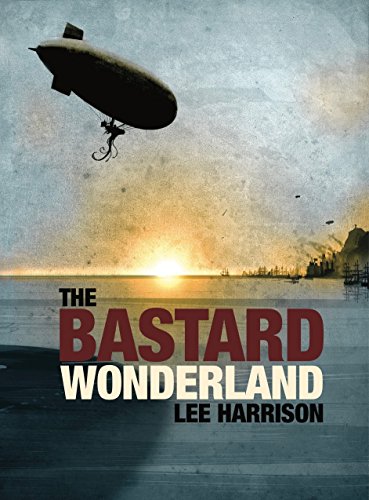
You can take the lads out of Hull, but you can’t take Hull out of the lads. That’s okay, I’m a daughter of Hull myself. That means I appreciate the dourness, sarcasm and bittersweet melancholy of my home, all of which come through beautifully in this love letter of a fantasy debut from Lee Harrison. I mean: mushy peas get an origin story.
There’s a backlash right now against maps in fantasy books. Utter tosh say I. A novel with this geographic ambition, outlining a startlingly well realised alternative world, could only benefit from a map. I kept flicking to the frontmatter and the endpapers to find only blank pages, beautiful blank pages though. Wrecking Ball Press, a small press operating out of Hull (see, some kind of theme emerging!), has made a gorgeous edition of this book, cover, paper and font all working together to make a quality volume. Is the image chosen for the cover a small spoiler of a one of the story’s treats? Perhaps, but it looks well on’t.
The protagonist, and main point of view character, is Warboys. No relation to the tragic lost boys of Mad Max Fury Road, this Warboys is as laddish and uncouth as they come. He reluctantly teams up with his dad on a begrudging journey across their world. They are caught up in the expansionist ambitions of a Napoleon–like figure, but soon come up against the old belief systems of the territories they are forced to invade. It seems that there might be some truth in the old myths, but who can Warboys and his dad trust? Is anyone looking out for the underdogs in this war that on the surface is about a conflict of cultures, but underneath is as much about broken dreams and sickening ego as any real-world conflict throughout our own history.
Harrison shows us the other side of the conflict through the eyes of Nouzi Aaranya, a young man groomed from childhood in more ways than one to be a soldier and martyr for a cause he barely grasps. Whereas Warboys is solidly placed within the world of pubs, back streets, sailors, drinking and swearing, Nouzi is altogether more delicate. He’s led a life of direct indoctrination, rather than the societal conditioning of Warboys’ context. Nouzi’s own identity gradually surfaces as the plot unfolds. This forms an enlightening counterpoint to Warboys’ growing sense of responsibility to others. By the end of the book both men find themselves changed.
Harrison handles the dual point-of-view third person narration deftly. Each character is well drawn and distinctive. The plot, once past an avoidably slow and dialogue heavy first act, trips along happily building towards a satisfying, touching and cinematic denouement that still somehow manages to retain the ‘call a spade a spade’ Northern tone. Female characters are few and far between in this boys’ own tale, but as this story can be read as intrinsically about male relationships this paucity of female representation is hardly unexpected.
The world that Harrison has created for this story is startling in its clarity and depth. The technology, the big reveal, the language, religion, even the descriptions of landscape, sea and street are deft and convincing. It is a nice touch that Harrison prefaces sections of the book with quotations from archival texts from within the universe he’s created. Harrison has set up a world that could contain many more stories. We are not left with a cliff hanger so much as an open window looking out across a vista of real humans living real lives in which Harrison will find rich pickings for many more stories. I’ll be in line to read them, pattie buttie and chips in hand and wearing my ‘It’s Never Dull in Hull’ t-shirt. One request though, forget what the internet forums say: next time let’s have a map, eh lad?
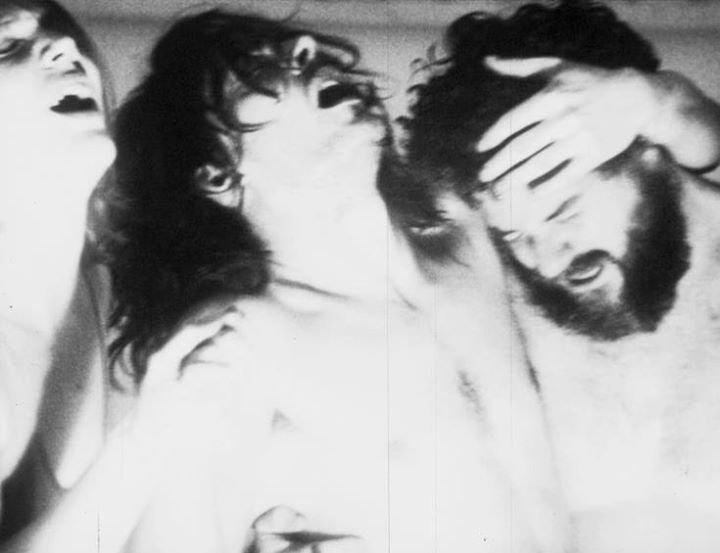 Jeremy Shaw’s Liminals can be seen at The Store Studios 180 The Strand, until 10th of December 2017. It is the first off-site exhibition by Berlin based KÖNIG Galerie and forms part of their recent expansion to London.
Liminals, a work of Vancouver-born artist Jeremy Shaw, takes the form of a fictional documentary made not more than a couple of decades into our future. From the narration, we reconstruct some of its historical context, although the focus of the documentary is on ‘periphery altruist cultures’. The Liminals are one such sub-cultural group, who are observed by the posited filmmakers with a detached fascination (and a style) reminiscent of the early 20th century ethnographies.
It is far from clear who is the intended audience, because humanity’s days, the documentary reveals, are numbered. Technology is to blame, specifically, choosing to let computation replace ritual. Kieslowski’s warning in the first episode of Decalogue against elevating computers above faith has clearly gone unheeded, and in 2024 all spiritual experiences are replaced by VR via a technological innovation called ‘The Unit’. ‘The Singularity Disaster’ follows in 2033, and soon after ‘The Announcement’ of ‘the countdown to extinction’ is made.
Amongst the general apathy that ensues, radical groups emerge, as they always do – observes the film’s narrator – during the Millenarian periods of history. The most radical of these groups believe that a possible salvation lies in the ideas of ‘pre-Unit’ science fiction writer Samuel Delany, specifically the paraspace:
a specific paraspace could serve as a transitory zone for humanity – an intermediate area between the physical and the virtual where a generative incubation period towards our next phase in evolution could take place. They refer to this paraspace as The Liminal.
The documentary is an exposition of the methods by which The Liminals are trying to reach that paraspace.