As Heraclitus pointed out, you can’t step in the same river twice. The current is continually flowing, responding to the seasons and the weather, swirling into ever changing fractal patterns. While this is literally true, the power of the adage is metaphorical. We live with this constant change. Some people like it. Some people don’t like it. But it’s more complicated than that. For most of the history of the human race – up to the end of the Palaeolithic and into the Neolithic – people lived fluid, seasonally nomadic lives in tune and rhythm with natural change. Just to be clear, I’m not romanticising that lifestyle. To paraphrase George Orwell, I’m a selfish and lazy intellectual who expects their oat milk and New Statesman to be delivered to the doorstep. However, the larger point that I’m trying to make is that we can choose to live fluidly in relation to change or we can choose to live against change, by metaphorically damming the river. Most of recorded history is dominated by the latter approach, which broadly takes the form of imposing solid-state, hierarchical social structures in place of fluid cultures.
Here, I’m defining culture not in the narrower sociological sense as being the way of life of a particular society, but in the broader anthropological sense of the holistic manner in which humans interact with each other and the wider natural world. When sociologists talk about social reality, they are talking about the norms and behaviours resulting from a particular social structure. In the world today, the dominant social structure is that of nation states, bound together through a system of global capital. The core organisational features of the nation state are rigid class hierarchy and a hard binary divide between two genders. These features are so central to the ‘social reality’ of a nation state like the UK that many confuse them with inescapable human nature and biology. However, if culture is seen as broader and independent of social structure, then it challenges the norms that constitute social reality. The clash between these two opposed value systems underpins the culture wars that have increasingly raged across the Anglosphere and beyond.
While it is difficult to think outside the parameters of the social structures we inhabit, science fiction does offer imaginative possibilities for freeing ourselves from such constraints. For example, in devising ‘the Culture’, Iain M. Banks suggested that a future technologically advanced civilisation could choose to align itself with a fluid sense of life and change outside state structures rather than attempting to socially engineer a perfect society within those structures in the manner of Soviet Communism. In 2025, however, we are not choosing between solid-state socialism and some sort of futuristic anarcho-communism. Instead, the choice being offered – at least, as it’s often portrayed in the mainstream media – appears to be between, on the one hand, varying models of authoritarian ‘respect’ for traditional values and, on the other hand, ideas of autonomy and social justice, which are now often described by their political opponents as the ‘woke’ progressivism of a metropolitan liberal elite. Demoralised, as most of us are, by the seemingly endless ebb and flow of the struggle between these two apparently opposing worldviews, it’s difficult to imagine any meaningful future let alone the prospect of a utopian culture. It’s far easier to picture a not-too-distant future in which two women are huddling outdoors at night by a bonfire while wolves howl around them.
I recently came across a most curious and unsettling pair of essays by Brian Aldiss that I am still trying to process, because they seem to strike against the very heart of science fiction literature, and even much of Aldiss’s own writing. “As far as we know, we are alone in a universe,” Aldiss points out in the second of these essays on the subject of aliens (Aldiss 1999, 340), and he is absolutely right. As far as we know.1 But although the jury is still out on the Big Question, in this essay Aldiss seems fervidly convinced that extraterrestrial sentience simply does not exist. When Aldiss argues “the case for mankind’s solitary state here [the universe], for which the evidence is plentiful” (Aldiss 1999, 334). He appears to accept an absence of evidence as evidence of absence, an extrapolative leap which defies logic and scientific method.
“There is no scientific evidence that [alien sentience exists], any more than there was ever any evidence for the long-held belief in spontaneous generation”2 (Aldiss 1999, 335), an unfair comparison, because spontaneous generation (the theory that living creatures could arise from nonliving matter—for example, that flies grow from rotting meat or that frogs grow from mud) was disproved by scientific evidence against it, a state of affairs that has not been reached regarding the existence or non-existence of sentient extraterrestrial life.
Still, anyone who believes in aliens absent any definite proof is misleading themselves, according to Aldiss. Such belief “represents a continuation of that venerable credulity” (Aldiss 1999, 340) that cursed our race with gods and monsters. Yet absent any definite proof that aliens do not and have never existed, Aldiss seems to be just as guilty of relying on a type of faith — just as “credulous” — in forming his conclusions.
Whatever the reasons for it, or the reasoning behind it, this personal disbelief in the existence of aliens is of little consequence to anyone but Aldiss himself. Of far greater import, however, and far more troubling to the science fiction genre, is an earlier essay in which Aldiss presents an overview of the development of the role and portrayal of sentient alien life in SF literature from its long pre-Campbellian days to the present, and an examination of the causes and effects of the debased and increasingly “monsterish” concept of aliens and what is alien (Aldiss 1996).
Yen Ooi: When I first came across Professor Roger Ames’s lecture on Zoetology, I felt a surge of relief alongside excitement, as finally, there was language to explain my “rationality” – the foundational thought-structure that I had grown up with. This applied easily onto science fiction, since it is literature that is grounded in “rational science,” allowing me to understand and explore why “rationality” in speculative fiction can differ so much from culture to culture, subgenre to subgenre.
As I discovered Zoetology alongside a depth of other theories (like convergence culture, participation revolution, techno-Orientalism, tabula plena, neo-colonialism, post-colonialism, polymedia, and more), and amidst all the distressing news in the world today (of wars, the climate crisis, the AI bubble, etc.), while my life kept “becoming” (through motherhood, researching and practising Zen, and lots of writing!), everything came together to become Zoefuturism in an organic discovery. Zoefuturism isn’t a new idea inasmuch as zoetology is what Ames calls “a new name for an old way of thinking.”
Stephen Oram: Talking with Yen over coffee about her theories behind Zoefuturism, the phrase she coined, was more than an insight into a new way of approaching science fiction, it chimed beautifully with some of my own thinking.
My cultural background is not one of eastern religions or philosophy, quite the opposite. However, since my teenage years I’ve been sceptical of absolutes, developing a keenness for seeing life as directional. By that I mean keeping an eye on whether things are going in the right direction towards a “notion” rather than setting absolute goals or end-points. More recently, I’ve been actively attempting to hold knowledge and ideology lightly, passionately but with the understanding that both will change and develop. This focus on change is reflected in a lot of my writing.
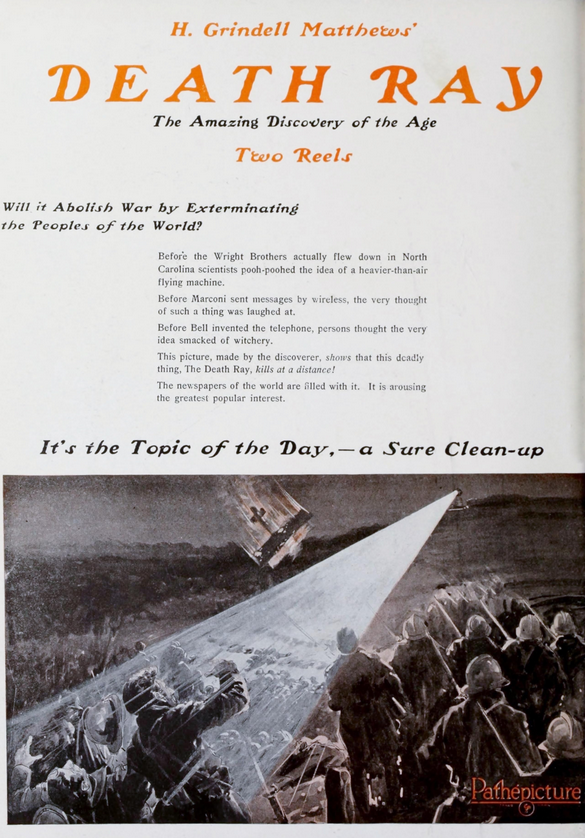
There, squatting beside a bush, projecting from the field, like a tilted spotlight precariously balanced atop a porcelain beehive, we behold the death ray, its tentacle-like power cables snaking across the English countryside to somewhere off-frame. Invented in 1923 during the interwar period as the ultimate deterrent to the enemies of England, Harry Grindell-Matthews’ device sits mercifully unused, mysteriously untested, a mere testament to the destructive potential of the modern scientific mind. From the surviving photographs and the rare newsreel footage of the death ray, we can see an eerily thin beam, sweeping across an assortment of objects, a motorcycle engine, a lump of gunpowder, a quivering mouse, like that of a handheld flashlight, only, instead of illuminating each of the objects, the beam slices them like a pair of scissors, severing them from the sense of continuity between one moment and the next. First, there is light and the object, a rupture, and then an explosion to splice the two parts together. In the end, Grindell-Matthews would destroy the device, along with all the related plans, notes, and records, leaving behind only anecdotes, rumours, and film strips as evidence of this great realization of science fiction in the past.
Apart from its strange imagery, like some untimely precursor to the independent exploitation films that would appear decades later, the death ray is fascinating for the way it lingers in the popular imaginary. Despite the lack of conclusive demonstrations of the device, the way descriptions of it change from one account to another, and Grindell-Matthews’ reticence about its materials and operation, there appears to have been a widespread faith in the real possibility of the invention’s existence, and even today something like a pious agnosticism surrounds the death ray. When we consider the efforts of early silent cinema scholars to confront the often irreparable degeneration or complete loss of the films of so many marginalized filmmakers, and the implications of such loss for our understanding of the history of silent cinema, the persistence of the death ray as the lost work of a modern inventor-genius seems especially questionable. Where the absence of marginalized films and filmmakers from the official canon of silent film history is often attributed to the real material loss of their films in the present, the death ray highlights one of the central ironies of historical writing about this period: namely, that if a narrative is compelling enough to be believed, there is no problem inventing evidence to suit its ends.
As the guest editors Stewart Baker and Phoenix Alexander write in their editorial:
The articles in this issue of Vector work in both directions, teasing out the ways archives and libraries can be informed by SFF works while also exploring the assumptions SFF works make about libraries and archives.
In “The Librarian, The Computer, The Android, and Big Data,” Nichole Nomura and Quinn Dombrowski ask the question of whether librarians exist in the future of Star Trek—certainly a topic of relevance to today’s “AI search” upheavals. In “The Queen a Librarian Dreams of,” Kathryn Yelinek examines the connection between information literacy and restorative justice in the fantasy world of Kristin Cashore’s Bitterblue.
Hopping back to libraries, Guangzhou Lyu’s “Library of Disassembled Past” takes a look at a floating library in China Mieville’s The Scar, exploring how libraries can serve as places of “deterritorialisation and reterritorialisation.” In “Magic and Critical Librarianship,” Ellie Campbell interrogates the ways libraries and other memory institutions can institutionalise racism, colonialism, misogyny, and homophobia, as shown in three fantasy short stories. And the last article in the issue, Monica Evans’s “You Are the Library,”considers how digital games can engage players in “library-like mechanics,” drawing on the long history of the value of information and exploration in game design.
Whether you’re a librarian thinking about installing a science fiction reading room, a fantasy novelist looking for worldbuilding nuggets for your next doorstopper about nautical librarians, a SFF academic who’s intrigued by archives concepts in games, or just someone who’s stopped by the information desk of this editorial to ask where the metaphorical toilets are, we hope you’ll enjoy your time with the insightful explorations of libraries, archives, and the future of information that make up this issue of Vector!
Cover by Kalina Winska. Original artwork title: The ethereal and eternal contest, with no winners and no losers, occasional bursts of anger, frustration, and perhaps…shame; waves of humility are often too weak to reach the edge of the world. (graphite, acrylic paint, gouache, and ink on wood panel, 36 x 48 inches, 2020).
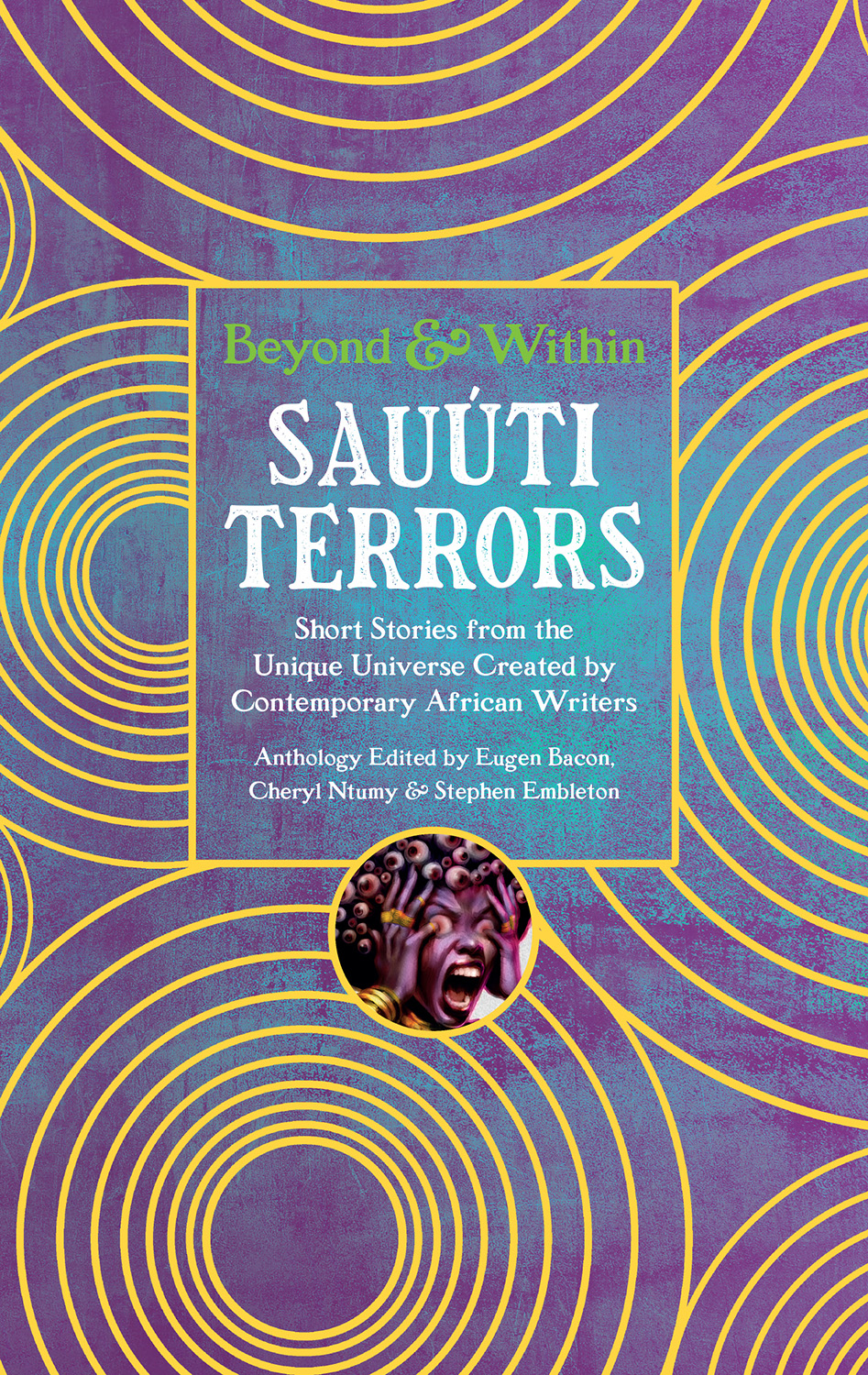
My first direct encounter with the Sauútiverse was in 2022 when, at the Ake Books and Arts Festival in Lagos, panellists Wole Talabi, Dare Segun Falowo, Stephen Embleton, and Cheryl Ntumy, members of the Sauúti Collective, introduced the shared world project. I sat there in the audience, watching as the lights dimmed and a video of the Sauúti creation myth was played to us. Over the animated visuals was an echoing voice apparently merged from the real voices of the Sauúti founding members. This voice, supposedly that of the Mother, the chief deity of Sauúti lore, told the story of the universe’s birth from a single Word.
The two-minute clip entranced me, and, long after the lights had been turned back on and the applause had faded, I was still transfixed by its power. There, on stage, the panellists introduced several aspects of this vast, sprawling secondary world featuring a two-star system, five planets, and three moons. Since then, the Sauútiverse has exploded, birthing two anthologies, three novellas, numerous short stories and poems, a novel, and additional works in the pipeline, all set in and exploring the diverse cultures, science, belief systems, and history of this intricately built shared world inspired by Africa. It has also been picked up and nominated for various awards, including the Nommos and the BSFA.
In this latest anthology, we’re shown a dark and terrible aspect of this world, not as a mere scare tactic, but to remind us that a universe this wide and sprawling wouldn’t be remotely realistic if it didn’t possess a horrific underbelly. Stories here do not shy away from the unsettling, the bone-chilling, the hair-raising, and the blood-curdling. The writers are super inventive in the ways they describe horror and fright. Across 18 short stories and poems, they boldly unleash all manner of terror. The writers commit strongly to Sauúti lore, which includes new words and Sauúti-specific terminologies. This, of course, can be a bit difficult for a new reader to grasp. But if they endure and get beyond that, they’d see that it adds to the overall uniqueness and beauty of the Sauútiverse.
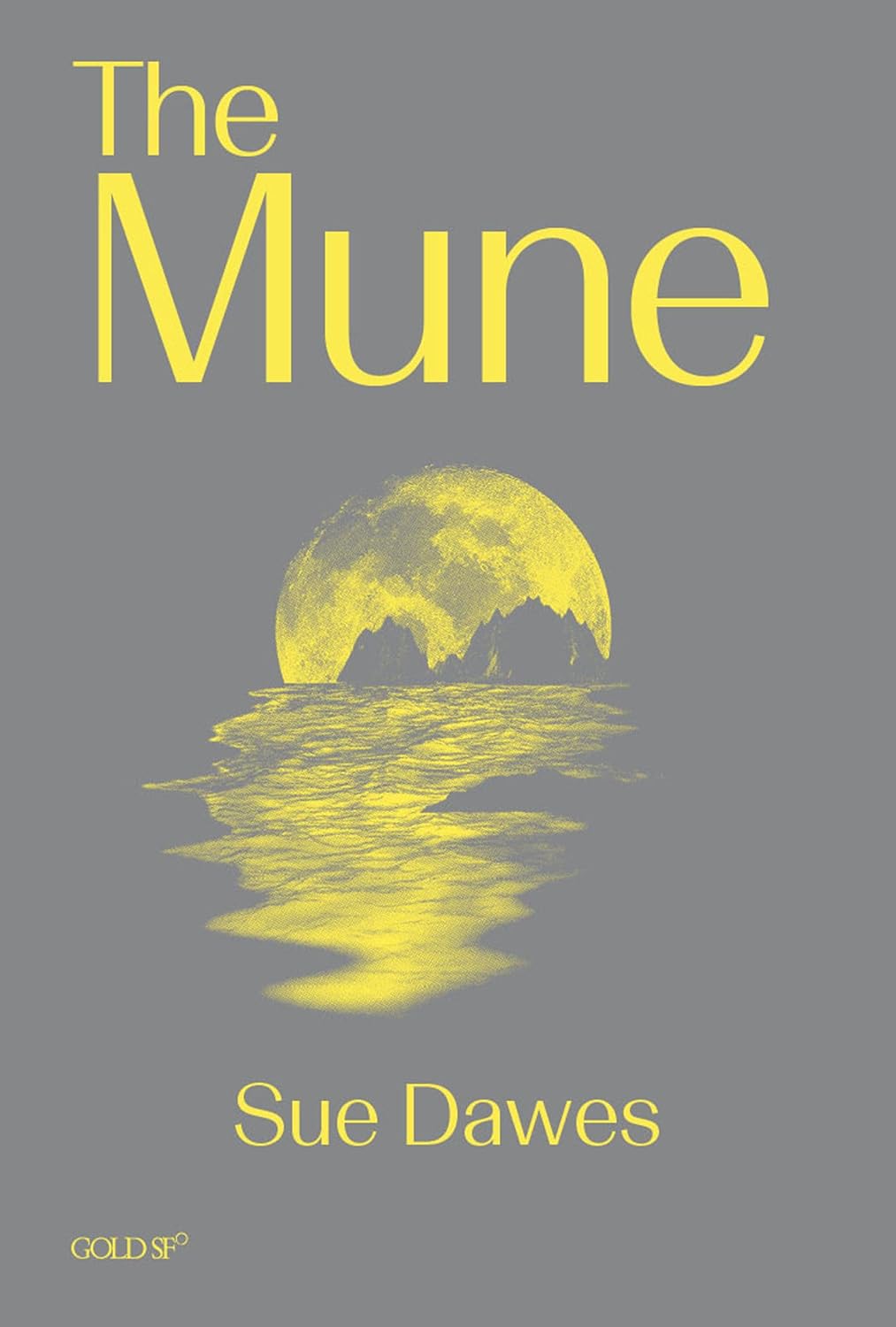
What came first, the characters, the language, or the shape of the commune? In some ways, the text suggests that the shape of the commune was predetermined: children needed to be raised communally because there was too much work… How much did initial conditions and the founders determine the trajectory?
Sue: The characters and the environment shaped each other as they interacted and the story developed, but I started off with two main ideas.
Firstly, I knew I’d have to set the story in the past, with a cast of characters who would want change but not be in a position to have an intellectual discussion about gender. Secondly, shipwrecking them on a hostile, barren island would force a departure from their rigid, oppressive gender roles, as survival would be their primary motivator.
The language evolved with the different dialects and experience each character brought to the island, which also affected the roles the founders adopted within the community.
There were a lot of adjustments made during the editing process.
The Mune functions without any form of money; was this a deliberate choice? The workload and resources are allocated without any particular system, even as crises pass and the commune grows.
The short answer is yes. I wanted to create as close to a true democracy as possible —where no role was valued more than another. Everyone on the island contributed what they could and had equal worth. Even when the Mune was stable, there was never an excess of food or time, so there was never complacency. They lived in the present not the past, with no desire to hoard.
History shows us that money tends to create inequality, and wealth is not an indicator of ability or productivity, quite often it’s down to luck and lineage.
Some of the commune’s most important tenets were suggested by a sci-fi story within the novel. The commune is a model of applied science fiction – however, the relationship is not linear, utopian stories don’t build utopian worlds. Did you intentionally separate the stories and their impacts?
Master’s Science stories are actually pastiches based on work written in the Victorian period that The Mune is set. The stories not only reflect the society of the time but showcase social and political ambitions and the methods imagined for achieving them. I hoped the stories would provide a bridge between accurate historical fact and SF narratives, which contained key nineteenth century ideas and technological advances, whilst imagining a more compassionate future. They also allowed me to shape my characters and add details about the island, reducing exposition in the main narrative.
Speaking of complexity, Betty and Master are among the most challenging protagonists, zigzagging from crimes to saviourism (and/or saviourism as crimes). They are on a different level of complexity compared to other characters. Incidentally, they are both science fiction writers. Is this a coincidence?
I wanted Betty’s character to be influenced by the stories she read with Master, and to use some of the key utopian ideas from those texts to shape the community. It felt just that Betty would be able to use her lived experience and imagination to gain her independence once back in the old world.
Master’s love of science fiction and discovery meant he was open to novel environments and more focused on discovery once on the island, than trying to control the community. Neither Betty nor Master is inherently bad, but a product of their environment. It’s the inability to change and adapt that causes the problems.
On the back of this, did you intentionally make the main protagonist one that your readers might grow to dislike, or did the Betty character come into her own as the story developed?
Betty came into her own as the story developed. Her character provided conflict, being so resistant to change. She reacts as I believe the majority of us would do in a life-altering situation, wanting to escape or be rescued rather than face her demons. She was just a child when she arrived on the island, having been gaslit and deeply traumatised.
If gender is technology, then The Mune is a very techno-optimistic narrative. Transformation happens quickly and thoroughly. It is a social tipping point – a tiny nudge (a vote) and all the awful stuff vanishes. It is exhilarating. But was there a temptation to make the process of change slower and painful for society as a whole, not just for Betty or Master?
I wanted the narrative to be optimistic so, there was never a temptation to slow the process of change or make the journey more painful for the society. I felt the majority of the founders had suffered enough in asylums, in service and on the streets of London. Despite the hard work of surviving, the founders acquired agency on the island, learned skills denied to them, and had the freedom to express themselves and there was no one on the island with (perceived) authority to oppose change. It seemed logical that they would want their children to be free of the shackles that bound them and embrace transformation.
The plot ends with a deus ex machina. Commune has to move. I was left with a longing, hoping that another novel was waiting around the corner, waiting to see the Old World remade by the intrusion. Will there be? And, why did you choose to end the story there?
There are a few characters who have refused to leave my imagination despite the fact I’m working on something quite different. There’s Star, the traveller, who would be well placed to reflect on our society, although currently it feels a little too dystopic! And there’s Betty’s child, in the womb on the island, who would have the advantage of the technology brought back by the Mune and witness the altered world.
However, I’d need my own shipwreck and an isolated island to write it all.
Dr Sue Dawes is an author, educator and editor. She has written and published a large number of science fiction, literary and crime short stories and articles in magazines and online, and her novel, The Mune, was published by Goldsmiths Press in 2025. Sue has taught creative writing at Essex University, for community groups and is a manuscript editor and mentor for The Writers Company. Sue completed her PhD in creative writing in 2023, specialising in gendered language and inclusion. She is currently studying to become an occupational therapist and has a particular interest in community narratives, the occupation of storytelling, and collaborative writing.
Adedapo Adeniyi (also goes by Dapo The Abstract) is a Nigerian artist working in literature, film and photography, music (DJ) as well as art curation and counterculture archiving. He expresses his art through abstract avant-garde sensibilities. His debut novel, Wanderer, is available in stores. You can read an excerpt of his novel below, courtesy of the author.
Chisom Umeh is a Nigerian fiction writer and poet. His short stories have been featured in Omenana, Apex, Clarkesworld, Year’s Best African Speculative Fiction 2023, African Ghosts anthology, Isele, Mythaxis, Scifi Shorts, and elsewhere. His short story, “Ancestor’s Gift”, won the 2024 Tractor Beam short story contest. He was a finalist for the Seattle Worldcon Short Story Contest and is the winner of the 2025 Nommo Award for Best African Speculative Fiction Short Story.
Chisom, holding a copy of the Wanderer. Image: African Imaginary
Chisom: Hey Dapo.
Nice to have you do the interview.
I finished reading your novel Wanderer a couple of days ago, and I must say, the journey feels like one long dream. It’s a steady flow of alternating sentences and logic that sometimes contradict each other and yet, strangely enough, feels complete and cohesive. Can you tell me how you were able to keep the story you were trying to tell in focus, even while spinning such a wild tale?
Dapo: Thank you, Chisom. I’m excited to have this interview with you.
I want to start by saying the story mostly wrote itself; I was just a conduit. Most of this book was written in an automatist, stream-of-consciousness style. They were retellings of dreams, memories, and reality, and I wanted them to appear that way. I never lost sight of the story because I welcomed getting lost as I was writing it to find myself.
Chisom: Oh, that’s pretty interesting. To me, the novel reads like Amos Tutuola’s The Palmwine Drinkard crossed with Vajra Chandrasekera’s luminous prose. It definitely felt like older hands were guiding yours on the page. Were there literary influences you were channeling when writing the book?
Dapo: Yeah, I mean, I try to stay away from direct influences while I’m writing, and I didn’t read The Palmwine Drinkard until after I wrote Wanderer. I took influences more from films and cinematic sensibilities than literary, but in that regard, Borges, Philip K. Dick, Timothy Leary, André Breton’s Surrealist Manifesto, Aldous Huxley’s The Doors Of Perception, and my editor and friend, Manuel Marrero. I think these are the ones I can remember right now, plus I don’t want to go overboard. But these people and their works across surrealism, psychedelia, paranoid fiction, sci-fi, metafiction, and so on influenced me in many ways and were formative for how I approached writing and this book.
Chisom: It’s interesting that you mentioned Surrealist Manifesto, psychedelia, and paranoid fiction, because in an essay in Medium titled Abstractism Manifesto, you talked about how ‘abstractism’ is a term that subsumes all of these concepts and more. I like the way you explained it in the essay and how it relates to your work. But could you do a quick description of the term (abstractism) so we could understand it in relation to your work?
Dapo: Absolutely! So when I wrote the Abstractism Manifesto in early 2023, I defined it as being an amalgamation of solipsism, surrealism, psychedelia, subjective reality, and the physics of psychosis. I believe abstractism brings these concepts together to take reality and the world around us from a state of form to an abstract sensory state of formlessness, and that’s what I try to do with my work — the dissolution of some absolute real into an abstract cosmic real.
Chisom: In your experience as a filmmaker, what is the major difference between visual storytelling and written one? Do you prefer one medium over the other?
Dapo: I mean, writing is definitely cheaper. Making films is more expensive and taxing. I also think it’ll kill me faster so that might be why right now it excites me more than writing does. But, frankly, the major difference is the painting. With words, I’m guiding the readers’ imagination. At the end of the day, everyone will come out of it with different images. But with film, I have to literally represent those images on the screen. I’m doing the painting for the audience, they just have to watch and engage.
Chisom: Besides making movies, I know that you do some DJ work on the side. You had a collaboration with NTS, which is really great. How did that happen?
Dapo: Let me put it in context: I work with this new-age collective called Freewater, which was founded by my friends. I serve as its curator and co-director. Freewater secured a residency with NTS Radio, and since I also DJ, they featured one of my mixes as part of the collective. We’re having an underground, new wave music festival/concert on the 11th of December (I think the interview will be out after it?), and NTS is our major partner.
Chisom: That’s incredible, actually. So, does your music influence your writing in any way? Some writers like to curate playlists for particular writing projects. Something they listen to just to put themselves in the mood. Are you that kind of writer?
Dapo: Music definitely plays a huge part in my process. When I was writing Wanderer, all I listened to was shoegaze. I found a shoegaze playlist that had over a hundred songs and it was all I listened to while I slept and dreamt and while I wrote as well. I’ve been DJing for almost 2 years now, and it’s made me understand music as well as how different people interact with it. There are sensibilities of transience I borrowed from writing and translated to how I DJ.
Chisom: I kept wondering about the shoegaze reference when I was reading the book. Something told me there was more to it than just being an element in the story, and I’m glad you just confirmed that. Which brings me to your process with writing your stories and how you edit them. Do you edit while writing or after?
Dapo: Oh yeah, shoegaze has a very dreamlike, haze-inducing feeling and I wanted the book to feel like that. I do very minimal editing while writing. I finished the entire thing then read it over a couple of times before sending it to my editor, and we had this period of sending drafts back and forth and conversations on the subject matter.
But enough about me, I want to hear what type of music you listen to and how editing works for you. I mean, you just won the Nommo, haha.
Chisom: Oh, lol.
Well, I’m very mundane with my music. I don’t have any playlists or do any sort of curation. In fact, when I’m writing, I wouldn’t want to hear any music at all as it easily interferes with my thought processes and breaks my stream-of-consciousness, AKA “flow”. But when I do listen to music, outside writing, it’s very Davido and Asake and Victony, and whatever Dlala Thukzin just released. For edits, I can’t move forward with writing if I feel like there’s something wrong with a previous sentence. So I tinker with that till it feels fine to me. So we’re maybe kind of opposites on this.
Dapo: Correct me if I’m wrong but you seem like a very calculated writer. You’re delicate about detail, you’re careful. I think it’s beautiful. I wish I could be that type of writer. Like I said before (this may sound a little pretentious but I fully believe it), I don’t really do any writing, these things write themselves and use me as a conduit. I don’t know where they come from or where they are going or why; they come raw and I write in real time. My flow can be erratic most times.
Chisom: I like to think I have an eye for detail, but, trust me, I’m not really that meticulous. I know writers who would draw up elaborate plots that cover the first scene to the last, and fill up a board with sticky notes. Me? I mostly just sit down and write a story as it comes into my head. I think both our approaches are valid, so long as the outcome is something folks can read and enjoy. When I’m done writing and send the work out, that’s where my effort ends. But I’ve seen you go through hell and high water to publicize your book. And it has really paid off. Maybe that’s something you’d teach me someday?
Nardwuar holding a copy of Dapo’s first novel, Wanderer
Dapo: You’re amazing, so we’re kin.
Thank you, I think it’s been a learning curve. A lot of how this book has been handled is experimental, constantly trying to see how to reinvent whatever a rollout is supposed to be. Some days before the book came out I’d post videos of just my legs as I was walking around. Wandering, if you will. I made cards and handed out googly eyes. I’ve had readings and talks. I even had an abstractism lecture and played a psychedelic techno set. I keep thinking of ways to present a work of literature outside of just the confines of literature, especially as a multimedia artist. I look forward to reinterpreting the book and presenting it in so many other formats: photograph, sound, installation, you name it.
Chisom: Say I wanted to try my hand at writing abstractism, are you holding one of those lectures anytime soon?
Dapo: Hopefully sometime early next year. I’m working on writing another edition of the manifesto that’s more professional, but I think that through reading the manifesto that’s up right now, as well as Wanderer and some of my short stories, anyone could get the gist of what abstractism is.
What’s next for you now Chisom? In the world of African Speculative Fiction.
Chisom: For me, I’m also trying to piece together a collection of short stories that hopefully might be my debut in the book-publishing space. I want most of the stories in the collection to be centered around two themes, so that means I’m writing mostly new stories.
Anyway, it’s really been wonderful having this chat with you. I’m looking forward to reading more of your stuff in the future.
Dapo: Sending you love and the best of wishes Chisom, excited to see your collection. I’ll send you mine as it comes along. You’re a refreshing voice in the scene here.
The Bone River by Nkereuwem Albert is an urban fantasy published by Phoenix, an imprint of Ouida Books focused on Science Fiction and Fantasy stories.
There are many things to love about The Bone River.
There is the magic system, the sense of a thick and present world bubbling away beneath the fabric of our own world. In Nkereuwem’s Calabar, miracles are the work of Pastors contorting magic in front of a blind congregation, and penises can, in fact, be stolen. By virtue of your initiation and belonging to one of four houses, you become a conduit to magic and mystery seeping out of the earth. You can command the dead, kindle fire from within you, and form familiars out of bone. You can shape it into beasts and seal gods. It is a land of infinite possibility. If you’re creative enough, you can conjure magic in service of peace—or to deceive.
This brings me to the story itself. By the time you put down Nkereuwem’s The Bone River, you would have witnessed how fragile peace can be, while war remains a latent possibility. This in itself should not be a discovery. We are well familiar with the flexibility of politicised narratives, the speculative reality of a truth wielded by authority. Surely, it should not take too much imagination to condense the abstraction of the lie beneath Calabar’s secret peace into a manner of critique about the cities we inhabit or the stories we tell about the blood that soaks our collective memories. After all, there is even greater violence than a certain bastard’s deception that is used every day as a tool to maintain a semblance of “status quo,” a peace with which no one is comfortable. And yet, the discovery of deception, as you read, grabs you. You know things like this happen, and yet, you are shocked. Why wouldn’t you be? It is the job of good fantasy to re-expose us to reality afresh. When you have seen and seen and seen with all your seeing eyes, the world unseen can and should shock you in new ways.
There’s a moment in the Wachowski’s seminal 1999 movie the Matrix where Keanu Reeves’s elegantly blank Neo sees the same black cat walk past a doorway twice. In the movie, such moments are signals that the nefarious Agents are about to emerge into Neo’s simulated reality and give him the mother of all cardio workouts.
But what if something similar were to happen to you?
Perhaps you have a similar moment of déjà vu, notice that roses now seem to smell like freesias or that the sky suddenly looks a bit purple. Everyone you tell about this discovery, however, insists that everything is the “same as it ever was” (in the words of the old song). Roses smell as sweet as they ever did. The sky is the same old blue.
After a while you might accept that it’s your perception that is at fault, shrug a little, and decide to get on with the gardening. But at the back of your mind there might be a nagging doubt. Perhaps you were never supposed to notice the difference.



 vector-bsfa.com