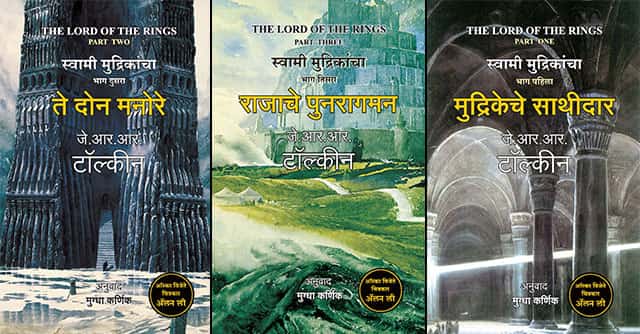
Following the interest generated by the Tolkien and Diversity panel at Oxonmoot 2020, (hosted by Sultana Raza), another panel on Global Tolkien was proposed and accepted by the Tolkien Society for Oxonmoot 2021. The idea for this panel was formed because of a troubling trend among some SFF and Tolkien enthusiasts against diversity in fandoms and interpretations of SFF writers. Luckily, the Tolkien Society doesn’t seem to ascribe to this view, and has been encouraging further dialogue on this topic.
The panelists included Sultana Raza (also the Moderator), Ali Ghaderi (Iran), María FernandaChávez Guiñez (Chile), and Gözde Ersoy (Turkey). Gözde Ersoy (assistant-professor of English Literature at Muğla Sıtkı Koçman University, Turkey) also briefly presented a video of an online event she had organized with school children in Turkey, on the Tolkien Reading Day, where they’d read an excerpt from The Hobbit in Turkish.
The following roundtable was written after Oxonmoot was over, and is an approximation of some of the points discussed during the Global Tolkien panel, which was accompanied by comments in the chat from the lively audience. A hybrid event, the Global Tolkien panel took place via Zoom (with 300+ viewers), while the organizers and a few participants logged in from Oxford where they were attending Oxonmoot in person. While there was quite a bit of interaction amongst the panellists, it’s not possible to re-create it in this written format, as the texts were sent in by email. The following roundtable contains spoilers for all of Tolkien’s stories mentioned below. Disclaimer: The opinions presented in this roundtable are those of the speakers, and not necessarily of the Tolkien Society.
The abstract of Global Tolkien was sent to the panellists beforehand, in form of broad but poignant questions:
Why does Tolkien’s fiction have a global appeal? Why are people from all continents drawn to Tolkien’s stories? What does that tell us about common human values? Only works of depth and substance can garner such a massive following all over the world. Conversely, have the 6 Peter Jackson films, and various games drawn in fans who’re more interested in the action/adventure or violence, and war aspects of the films and games than in the core values embedded in the stories? Should we encourage diverse readings of Tolkien from different geographical locations? Can this coming together of readers from different countries foster an international fellowship, as outlined in his books? Or conversely, should his fans be confined to people of just one race or ethnicity? If the interpretations, readings, or ideas of POC readers are not acceptable by some fans, then should these POC readers be allowed to consume these books/films/games? Should POC fans be limited to being consumers, but not commentators or scholars of Tolkien? Is it even possible to limit POC fans from engaging with, and commenting upon Tolkien’s works? Due to the recent wave of cancel culture, to what extent can we re-read or re-contextualize Tolkien’s works to fit in with our fluctuating world view?
It is as human to move from one place to another in search of a better life, as it is to divide the world into categories of “us” and “them.” However, there is no universal definition of a ‘migrant’. Migrants are not inherently vulnerable. However, they often find themselves marginalized in the host country and are perceived by some to threaten national identity, economy, social cohesion and cultural norms. As Saskia Bonjour and Sebastien Chouvin warn us, “discourses on migration, integration and citizenship are inevitably classed, because representations of Self and Other are inevitably classed [1]”. Practices of inclusion/exclusion are based on power dynamics which are rarely fair and more often than not based on a set of prejudices, including racial prejudices that perpetuate inequality and can lock the families in the boundaries of their ‘migrant’ status for generations. Hence, children of ‘migrants’ are continued to be seen by some members of society as migrants as well despite being born in the country or having lived there for most of their lives, thus reinforcing cultural alienation and inequality. Further, the continuity of colonialist discourse fuels dehumanisation of migrants. Read through this lens of colonialism, Yan Ge’s Strange Beasts of China offers a unique experience of sieving through the questions of migration, acceptance, domination and hybridity in the body of a chimera, a creature of fantasy. The book keeps asking the readers to re-evaluate the ideas of power and possession, speech and silence. Who colonised who, are humans nothing but the former beasts who have conquered the land and re-written its history? Who has the right of speech? Is silence a way of telling a story by the marginalised (beasts)? The entwined story of memory and oblivion for monsters and humans in Strange Beasts of China turns the narrative into a battlefield of falsifiable identities and historical assumptions. “This vast city, the beasts that come and go, all of this, is a secret,” muses Yan Ge’s narrator. “No one knows why they come or why they go, why they meet or why they leave. These are all enormous, distant mysteries [2]”. Yan Ge’s Yong’an is a postcolonial space where the story of subjugation of the beasts, or the struggle for de/re-territorialisation is already part of history, and the question that haunts both humans and beasts is the same that haunts in our day and time: how the interdependence of colonisers and the colonised has shaped – and continues shaping – our understanding of the world [3].
Vector editors are bringing their Communicating Climate Risk: A Toolkit to COP26 in Glasgow. You can register here to watch Jo Lindsay Walton at the launch, live-streamed from the Science Pavilion. We talk about science fiction in a chapter on communicating around the tipping points.
The science of tipping points can lend itself to apocalyptic storytelling. What are some of the pros and cons?
“Are you getting this on camera, that this tornado just came and erased the Hollywood sign? The Hollywood sign is gone, it’s just shredded.”
— Character in The Day After Tomorrow (2004)
From the perspective of climate risk communication, tipping points can be associated with apocalyptic and cataclysmic narratives. The tipping points session at the COP26 Universities Network Climate Risk Summit, late 2021, provides an illustration (Mackie 2021). The session opened with a slide alluding to the 2004 Hollywood blockbuster The Day After Tomorrow.Of course, this movie stretches science in ways that are regrettably familiar. “Scenarios that take place over a few days or weeks in the movie would actually require centuries to occur” (National Snow & Ice Data Center 2004). Nonetheless, The Day After Tomorrow does represent a real tipping element: the potential shutdown of AMOC, a large system of ocean currents that conveys warm water from the tropics northwards, which is responsible for the relative warmth of the North Hemisphere.
Movies like The Day After Tomorrow vividly communicate the fragility of human lives — as tornadoes tear apart the Los Angeles skyline and toss cars through the air, as New Yorkers scramble down narrow streets from oncoming tsunami-like waves — in ways that are not always captured by terminology such as “extreme weather events.” In the broader context of climate action, is it useful to tug on the heartstrings in this way? Much of the literature on catastrophic narratives and climate storytelling focuses on a distinction between fear and hope. An overreliance on fear has been quite widely criticised.
[…] some studies suggest that there are better chances to engage an audience by including positive messages in film narratives about environmental risks, especially climate change, rather than adopting the strategy of fear, which would instead distance and disengage them, making them feel overwhelmed and helpless […]
However, one thing we should remember is that apocalypses are about many more emotions than fear and hope. A movie like The Day After Tomorrow showcases a range of emotions including exhilaration, confusion, companionship, desire, curiosity, anger, encounters with the sublime, and even moments of humour, both grim and sweet. As many scriptwriters will tell you, an immersive narrative needs emotional variety, or the audience will introduce variety of their own — they will daydream, feel bored, pick holes in the plot, or find their own things to laugh about. Apocalyptic hearts are full hearts: there is probably no human emotion that cannot find some niche in narratives of disaster and collapse. Indeed, the end of the world can feel alluring. The more dissatisfied people are with their existing lives, the more alluring it may feel. As the recent ASU Apocalyptic Narratives and Climate Change project describes (focusing on the US context):
From infectious disease to war, a broad swath of the public has long interpreted social and environmental crisis through the prism of apocalypse, casting potential catastrophes and their causes in religious and moral terms. These apocalyptic visions are often narrated from the point of view of the survivors (the “elect”), thus reinforcing a sense that the end times need to be survived by remaining among the elect, rather than prevented through pragmatic action.
Alternatively, an apocalyptic or eschatalogical idiom can sometimes make climate change feel like nothing special. When has the world not been ending? “For at least 3,000 years, a fluctuating proportion of the world’s population has believed that the end of the world is imminent” (Garrard 2004). Insofar as apocalyptic framings feel extreme yet in a familiar way, they can be counterproductive, especially with audiences who are already wary. This includes those who are ready to view anthropogenic climate change as a left wing conspiracy (perpetrated by charlatan scientists to secure themselves power and funding, in cahoots with governments that aim to justify increasingly authoritarian, totalitarian, and unjust policies) or as a neocolonialist agenda (perpetrated by the rich countries of the world to impose new forms of domination, indebtedness, and exploitation on the Global South).
De Meyer et al. (2021) offer an intriguing spin on the respective merits of fear, hope, and other emotions: they suggest that current debates on climate communication have exaggerated the role of emotions altogether. Instead they advocate for a focus on practice, by storytelling (and doing other things) to create spaces where new audiences can experience agency in relation to the climate, at many different scales and in many different circumstances. People should be able to see what they can do.
Here, we propose that both place-based, localized action storytelling, and practice-based action storytelling have a role to play in expanding climate agency. As examples of the latter, for creative writers and journalists the required agency would be about knowing how to make action on climate change part of their stories; for architects, how to bring climate change into building design; for teachers, how to teach about climate action within the constraints of the curriculum; for fund managers, how to bring climate risk into their investment decisions; for health professionals, to support the creation of place-based community systems that respond to the health impacts of climate change. These examples of communities of practice provide different opportunities and challenges to expand the notions of climate action beyond the current notions of consumer choice and activism.
De Meyer et al. (2021)
Let’s summarise, then, some approaches to effective climate risk communication. One approach is to focus on information. How can information be clearly expressed and tailored for users to easily incorporate it into their decision-making? A second approach (partly in response to perceived shortcomings of the first) places more emphasis on emotion. What mixture of emotions should be appealed to in order to motivate action? This focus on emotion is also implicitly a focus on moral normativity, an appeal to the heart rather than the head (there is of course a great body of literature deriding this split between reason and emotion, which in reality are always mutually entangled). More recently we are seeing the emergence of a third approach, not strictly supplanting but rather complementing the other two, which focuses on practice.
The distinction between a “practice” focus vs. a focus on “informative and tailored stories” or “stories of hope not fear” is a bit subtle. Of course the three may often overlap. It may be helpful to think about what the “practice” focus means in the longer term. In the longer term, each new representational domain of climate agency will not emerge solely through hopeful portrayals of an agent (e.g. journalist, architect, teacher, fund manager) exemplifying an orthodox version of their role-specific climate action, however cognitively and affectively well-judged. Telling these stories may certainly be the priority in the short term. But what they should hope to kickstart are diverse stories filled with diverse agents, affects, and values: stories which superficially contradict each other in many ways, but whose deeper presuppositions mesh to create fields of imaginable action that can accommodate the particularity and the creativity of real people. “Environmental activist” is a social role that is available for real people to fill precisely because it can be filled in many ways (not just one way) and because it means many contradictory things (not just one thing). The same is true of the figure of the ethical consumer.
Audiences are more likely to engage with stories about the world they live in, than about who they must be in that world. Successful rapid mitigation and adaptation entails shifting to more participatory and equitable societies. Many audiences with centrist or conservative leanings may struggle to see themselves accepted within such societies. They may reject realistic climate narratives as hoaxes, or even welcome the end times: revel in fantasies of courage, ingenuity, largesse and revenge, set amid the ruins of civilisation. More can be done to create narratives that accommodate a range of self-reported aspirational virtues across the political spectrum, in ways that are cohesive with an overall just transition. Storytelling that focuses on multiplying domains of agency also entails interventions beyond representational techniques altogether, transforming the material contexts in which people seek to exercise agency.
Adam Jensen, protagonist of the games Deus Ex: Human Revolution and Deus Ex: Mankind Divided, laments his cybernetic prosthetics in the first trailer for Human Revolution, replete with images of him as Icarus with burning wings, and a stylized rendering of himself as the subject in Rembrandt’s “The Anatomy Lesson of Dr. Nicolaes Tulp,” all of which suggests that the use of prostheses is not only counter to the normative body, but considered a destruction of the subject.
The Deus Ex series is not unique: science fiction is replete with cyborg bodies as both the sites of destruction and reification of the normative body and “augmentation” that turn the subject into something “better,” such as with the oft-quoted Six-Million Dollar Man tagline, “We can rebuild him […] Better than he was before,” or The Bionic Woman, described as, “Better. Faster. Stronger.” The cyborg subject is also applied as a divorce from one’s humanity, seen in Star Wars with Obi Wan Kenobi’s line about Darth Vader: “He’s more machine than man.” In either case, the implication is clear: something of the original human is lost through the process of prosthesis implementation, even if is portrayed as “enhancement.”
While a number of stories complicate the idea of the cyborg, there has been (comparatively) little critical exploration of cyborg bodies in disability studies until relatively recently. Yet, such analyses are of critical importance for understanding how the visual language of prosthesis has evolved. At this juncture of the cyborg and disability sits Kimiko Ross, the protagonist of Arryn Diaz’s webcomic, Dresden Codak. Ross prominently features prosthetic body parts, and the ways in which Diaz sets up scenes with Ross grab from the spectrum of cyborg subjecthood. These range from frank dealings with images of disability, images of power and “augmentation,” and even sexuality (the latter not overt, but noticeable enough to be said to sit within that tradition of sexualized cyborg subjecthood, similar to the opening sequence to the 1995 Ghost in the Shell film, which lingers on images of the naked cyborg body at several points). The specific frames that centre on Ross’ body create a network of significations that both reifies and frustrates three aspects of a representation: the cyborg, the traumatised body, and the disabled body.
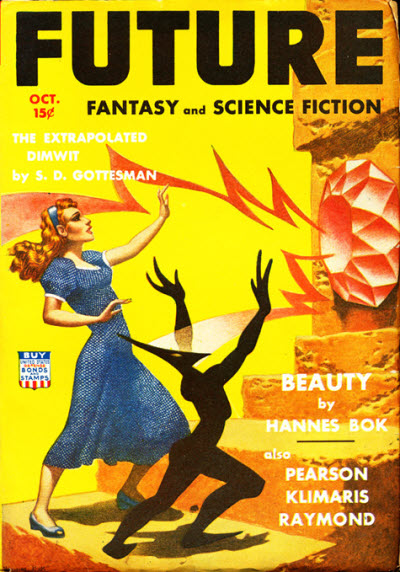
Abstract: This article discusses the novelette “The Inheritors” by John B. Michel and Robert A.W. Lowndes, first published in the October 1942 issue of the pulp magazine Future Fantasy and Science Fiction, edited by Lowndes. The article shows the story’s pioneering approach to discussing environmental issues long before this theme appeared frequently in science fiction. The hypothesis defended in this article is that this pioneering was only possible because Michel and Lowndes were part of The Futurian Society of New York. The group was a creative force that operated in the early 1940s and brought a new perspective to science fiction at the time, with the climatic discussion of “The Inheritors” being part of it.
Review: This article underwent editorial review from one editor.
This is the cover of the issue where the novelette was published.
Introduction
As I write this article, the news I’m hearing this week is quite worrying: flooding in Nigeria, fires in Greece, record deforestation in the Amazon rainforest, which may now be generating more greenhouse gases than it is absorbing. A UN report reinforces what many have long known: humans are the cause of climate change, which is expected to intensify in the coming years.
Climate is a concern for many current science fiction authors, especially in the subgenre known as climate fiction or cli-fi. The purpose of this article is to show how a 1942 novelette, written by Futurians John B. Michel and Robert A.W. Lowndes, anticipated this concern and brought this discussion to science fiction at the time.
The second ever FiyahCon virtual convention took place between 16th and 19th September 2021, and featured over sixty different panels, presentations, workshops, write-ins and more. Hosted by FIYAH Literary Magazine, the convention excelled in its elevation of BIPOC (Black, Indigenous and People of Colour) voices from across the world of Speculative Fiction.
FiyahCon 2021 was a weekend of both educational and entertaining content, with sessions focused on the craft and commercialisation of BIPOC Speculative Fiction as well as its community, effect and its excellence. Sessions ran twenty-four hours a day throughout the weekend, making it easily accessible for international attendees and guests. I especially enjoyed the BonFIYAH sessions, formerly known as ‘FiyahCon Fringe’, which were free sessions geared towards timezones outside of the States.
It was clear from just the convention’s opening ceremony alone how much passion and dedication had gone into the impressive organisation of FiyahCon. Speculative writer and founding creator of FIYAH Literary Magazine L. D. Lewis served as this year’s Director, alongside Senior Programming Coordinator Brent Lambert and BonFIYAH Co-Directors Iori Kusano and Vida Cruz.
FiyahCon featured a wide range of speculative genres and topics, from BonFIYAH sessions on climate change in science fiction and fantasy, to panels on the non-western gothic, fan fiction and publishing strategies. ‘What does Justice look like?’ was a panel featuring speculative authors Cadwell Turnbull (The Lesson), Brittney Morris (SLAY) and Bethany C. Morrow (A Song Below Water). In the session, panellists considered representations of justice within both their own works and speculative fiction more generally. The panel featured important and nuanced discussions on topics such as law and order, policing, Black Lives Matter and how wider societal discourse is influenced through entertainment and literature.
Screenshot of the ‘What does justice look like?’ panel (by Riziki Millanzi)
Other notable FiyahCon sessions include the BonFiyah panel on ‘Power Dynamics and Worldbuilding’, in which Rivers Solomon (An Unkindness of Ghosts) considered how we might possibly remove the ‘poison of colonialism’ from our writing, and the Friday session on ‘Vampire Mythology from Around the World’, which saw panellists consider the Eurocentric tropes and conventions that shape the genre. The Saturday evening panel on ‘Palestinian Futurism’ was an especially humbling and powerful session that explored ideas of gaslighting, realism and using futurism as a way of breaking out of constricting and defensive narratives.
FiyahCon 2021 featured three guests of honour: Comic book creator Vita Ayala (New Mutants, The Wilds), Vlogger Njeri (ONYX Pages, SOULar Powered Afrofuturism Slow-Reading Group) and speculative writer Malka Older (Infomocracy, …and Other Disasters). The virtual convention also hosted the 2021 IGNYTE Awards ceremony, which saw Rebecca Roanhorse’s Black Sun win the award for Best Adult Novel. Damian Duffy and John Jennings’ graphic novel adaptation of the late Octavia Butler’s Parable of the Sower won Best Comics Team, whereas Tracy Deonn’s Legendborn walked away with the award for Best YA Novel.
The importance of community and empowerment was present throughout the convention, and FiyahCon’s utilisation of the Airmeet platform made interaction between panellists, guests and attendees easy and inclusive. The daily write-ins, breakout tables and office hours available provided FiyahCon with vital opportunities for socialization and networking that some virtual conventions often lack. One attendee even organised a collaborative reading list, comprised of all the works mentioned, celebrated and discussed. The two ‘Em-Dash’ writing game shows were also great fun, both for the participants and viewers alike. ‘Em-Dash’ challenged writers to create short pieces of flash fiction in three short rounds, including random scenarios, tropes and ingredients selected by the FiyahCon community.
FiyahCon 2021 was incredibly accessible, eye-opening and, above all, exciting. As a woman of colour, researcher and massive fan of Speculative Fiction, I have never attended anything like it. I was left feeling inspired and validated like never before, and truly appreciate the effort that the convention directors had put into making guests feel like they belong and matter within the world of speculative fiction. After two successful and invigorating conventions, it looks like FiyahCon is set to become an integral and trailblazing part of both the BIPOC and speculative community. I am incredibly grateful to the BSFA for giving me the opportunity to attend.
Mackenzie Jorgensen is a Computer Science doctoral researcher working on the social and ethical implications of Artificial Intelligence. We invited Mackenzie to chat with novelist Eli Lee about her debut, A Strange and Brilliant Light (Jo Fletcher, 2021), and representations of AI and automation in speculative fiction. This is part two. Part one can be read here.
I wanted to ask about Janetta and her research into AI and emotion. There’s been a lot of research done into emotion detection, and a lot of critique. For example, what would it mean for a machine to ‘objectively’ know your emotions, when you may not even know yourself?
Yes. In the novel, Janetta is aspiring to teach AI about emotions, but she’s learning about emotions herself. She’s had a break-up and a rebound with someone who inspires her, but destabilises her as well. This experience is difficult but it helps her come into her own. She was a very unemotional person before that – she tried not to have emotions; but it turned out that she did.
So in that sense, the novel is more about Janetta being at peace with having emotions. Rather than the idea that emotional intelligence in auts is ever going to happen. I knew that it would be a novel about gaining emotional intelligence – but it was always meant to be in Janetta, someone who needed to do this.
You definitely see that growth throughout the novel. It’s such a hard thing to learn, but so important. Emotional intelligence, being able to be vulnerable, all of those things.
Thank you, that’s exactly it. Janetta has never been vulnerable. She’s used her work as a shield. I wanted this to be a story about being vulnerable, about screwing up, and about bringing yourself back from that.
“Do you think that AI can be taught to read emotions?”
Right, exactly. But it seemed like Janetta believed it could be done. So I was curious about your views.
I just don’t think it can be done at all, full stop. The research that’s been done, some based on facial recognition. One person could be smiling, but they could be desperately sad inside. Could an AI detect that? Humans don’t just detect emotions by observing from a distance. We interact, we probe, we learn. We use our own emotions to invite others how to feel theirs.
So yes, maybe AI can be trained in intersubjective standards of emotion recognition, enough to make reasonable ascriptions. Let’s say, to take a pretty clear emotion, in King Lear when Lear comes back on stage at the end, carrying the body of Cordelia, his beloved child. What does he say? “Howl, howl, howl, howl!” The majority of people can piece the evidence together and understand that he’s upset.
An AI could learn to do that. But in terms of the intricacies of people’s emotions, the depth and the context of them? No, I don’t think so. But what about you? Do you think that AI can be taught to read emotions?
I think researchers will continue to try, but I don’t think it’s really possible. Like you say, someone can be smiling yet struggling inside. And I think the attempts to develop that technology may do more harm than good – in relation to surveillance, for example.
I was thinking about care homes where they have companion AIs, seals and cats and things. That certainly has therapeutic potential. Otherwise, I don’t know how it could possibly read the nuances of human emotion. We don’t even understand our own behaviour sometimes!
I think with a lot of AI, the technology and the science behind it is very interesting. But at the end of the day, the real questions are around how it’s used. Who holds the power? Who has the data that it’s being trained on? That has a major, major impact.
Is that what you’re looking at in your PhD research?
I’m looking at Machine Learning classification settings. So an example of a binary classification setting might be, “Oh, we think this person will repay the bank if given a loan,” versus, “We think this person will default on the loan.” I’m exploring the potential delayed impact of a classification. For example, if you are a false positive, if an AI predicts you’ll repay but instead you default, then your credit score will probably drop. So there will be a negative impact on you too, even though you were given a loan.
How do you investigate this?
There isn’t much data, and it isn’t easy to track. It involves a lot of presumptions, and running simulations, and giving more weight to the false positives and the false negatives. I’m trying to understand, “Okay, maybe in these problems, we need to really focus on the false negatives, versus in these ones, the false positives.” Essentially, I’m exploring how we might mitigate the harm an AI decision has on a person. Also, I’m interested in investigating the impact on underrepresented or underprivileged groups, because we have a lot of issues with AI classification systems learning bias and perpetuating sexism and racism, for instance, from our society.
Is it a generally done thing? Say it was about applying for a loan – can the bank automatically exclude the people the AI doesn’t like, because they haven’t got enough income, or their credit’s bad, or because of some other factor?
“Algorithmic fairness has been a field that has really boomed recently, but it’s been around for a while.”
Sure. Algorithmic fairness has been a field that has really boomed recently, but it’s been around for a while. It came into the light in the ’60s and ’70s, when a lot of Civil Rights work was being done. At the time, the focus was on education and employment settings. Nowadays, it’s still focused on those settings, but also in areas like finance and economics, and many others.
That’s really great, you’re actually doing something that’s potentially making a difference in people’s lives. People who do AI (rather than just write about it in novels!) blow my mind. It’s impressive to have a brain that can do data, logic and mathematics – I’m very jealous.
No, I mean, I think anyone can code and learn about it. I know it seems as if it’s unattainable, but…
That’s a good point. I could learn to code, potentially!
Well, we do need more women in this area, so … ?
I suspect I’ll never get around to it…
What’s your background? Did you do English?
Yeah, I did English at uni, and since then, I’ve worked in editing, comms and publishing. I wrote three novels before this one, but I never sent them to an agent because I thought they weren’t very good. All I ever wanted to do was become a writer, so I’ve ended up with a narrow range of competencies. Writing and editing, essentially. But if that gets automated … what’s it called, GPT-3?
One of the big language models?
Yeah. Janetta’s job, for example, is safe from automation. Right up until AI is able to start consciously self-replicating – like in the movie Her, that sort of singularity moment – Janetta’s job is safe. But in my day job, where I edit publications, how safe is that? My skills are going to become obsolete soon. I might give it fifteen, twenty years. But that’s all I’ve ever trained myself for. It’s not an everyday worry, but it is a distant worry.
I think creativity, especially with regards to novel writing, is not something I can see an AI doing. They most likely would only be re-making other people’s ideas that they were trained on. I think being a creative thinker is a great spot to be.
That’s definitely the pragmatic view! I think the kind of deeply pessimistic, slightly addled-with-dystopia view is that they’re going to be able to recreate Madame Bovary within thirty years, and then all writers will be out of a job.
But yes, I think the greater question is around how AI might transform creative expression, rather than take it over. There will undoubtedly still be ways for us to bring our humanity to books and music and art.
Realistically, AI is everywhere.
“Realistically, AI is everywhere.”
Right, right. And going back to the novel, you really showcase auts in hospitality settings. Is that the main place that you see them potentially going? Or do you see them in other settings?
Realistically, AI is everywhere. It’s in our Netflix algorithms, and it’s in our traffic lights. So in that sense, I didn’t portray reality – I didn’t convey all the hidden AI that shapes everyday life. In terms of hospitality, I guess there’s already automation in the supply chains and the logistics, and places like the Ocado warehouses. I don’t know if you know about Ocado, the delivery company that went really heavily automated?
Yes.
Ocado has one of the most automated picking and packing systems in the world; these robot arms just picking up ketchup and putting it in bags! So I touched on that a bit, but yes, mostly cafés. Have you ever read Cloud Atlas by David Mitchell?
David Mitchell, the comedian?
Yet another uncanny double. There’s two David Mitchells. There’s the Peep Show comedian, and then there’s a novelist who doesn’t really write sci-fi, but he wrote a novel called Cloud Atlas, and there’s a chapter in a very futuristic setting. And I read it when I was quite young, and the imagery from it, where the utopia that masks a scary dystopia beneath, has stuck with me ever since.
Also, I love coffee shops. Coffee shops are so warm, cozy and human. I just knew that robot servers in a café were a way to have a real interface with humans coming in to get their coffees and being hit with, once again, uncanniness and unnerving futurity, and a slightly utopian, slightly dystopian vibe. In the novel, one of the characters, Van, sings while he works, and I imagined the coldness of that being replaced by auts.
I’m also someone who loves coffee shops. Their ambiance and conversations with the barista are two of my favourite things about them. They’re always in a very warm setting.
Coffee shops are a classic institution. You’re from Seattle, right?
Yes, I am.
The home of coffee shops!
Yup.
You have the best coffee – all of Seattle is like one big coffee shop. And then you know exactly; a good coffee shop is the most wonderful place.
Can we expect a sequel?
Potentially! I’m curious, would you see it as a free-ranging AI utopia, where they’ve managed to create this benevolent AI that’s also autonomously functioning?
I guess I wondered about Lal’s decision in the last chapter, and seeing what that actually does to Tekna and their world.
That makes sense. To be honest, I found writing this novel so difficult. I’d written a sci-fi novel before, and I think the reason it was difficult was because, well … do you read a lot of sci-fi?
Honestly, this was my first sci-fi book! I’m usually a non-fiction person. Currently, I’m reading non-fiction, Caste: The Origins of Our Discontents by Isabel Wilkerson, which is really good. Very different from this though.
I read quite a bit of literary fiction – writers like Elena Ferrante, Alice Munro. But I feel almost compulsively drawn to sci-fi, like it’s where my imagination wants to go. I realised during the writing of this that it had to be driven by plot, and then the characters react to that. So the automation and conscious AI plots were the engines of the novel.
Right.
And I wonder if I’m better suited to something where the engine is people living their lives in a more scaled-down way. I haven’t worked it out yet; I only know that when the Guardian called A Strange and Brilliant Light ‘character-driven’, they weren’t wrong!
Having written the novel, though, what are the major takeaways that you want readers to come away with?
I know it sounds potentially counterintuitive, because the novel is about AI. But I think to me, it is more about some of that more mundane, slow-burn stuff. It’s about figuring out who you are and allowing yourself to make messes and wrong choices, and then being able to do something about this. So all three of the girls do make pretty terrible choices, and then they manage to figure out who they need to be in order to make things better. So it’s that hokey stuff about being true to yourself, and having faith in yourself. Because even Lal shows she has faith in herself, in the end.
The other message is about vulnerability and emotional intelligence. Lal shows that at the end, because the person she needs to be vulnerable to is her sister. And Rose needs to stop being vulnerable to powerful men and put some boundaries down. Vulnerability and self-assurance are connected.
It’s a feminist novel. When you’re in your twenties, you go through a lot of self-doubt. Most people I know, unless they’re bizarrely confident, struggled quite a lot internally with who they should be and whether they’re doing the right thing, especially in their twenties. And I wanted to show some women who also struggle, but manage to figure things out.
“I wanted it to be about AI and automation, and I wanted to focus on class”
I loved that. Yeah, the emotional intelligence definitely was shining throughout. And yeah, it did seem like quite a progressive future, which was really cool to see, and very feminist as well.
I’m aware that there are other contemporary feminist issues it could have taken up. It could have contained more trans representation, for example – it could maybe have been more explicitly intersectional. I chose to not mention the main characters’ racial identities, too, beyond them being Iolran.
Yeah, I noticed that.
I think I knew that I wanted it to be about AI and automation, and I wanted to focus on class – you know: “let’s talk about class.” That doesn’t mean I wanted to ignore the other stuff, but not every book can be everything and this novel already packs so much in! And class and economics are deeply worthy of sustained focus, too.
Janetta is a queer character, but her sexuality is in no way definitive of her entire character.
I wanted it to not be an issue at all. There was a flashback scene that I ended up cutting, where she came out to her parents and they were totally unphased. Partly I felt like, as a straight person … it’s not that I can’t tell that story, but I asked myself: how qualified am I to tell this story?
And related to that, I was cautious of making it Janetta’s main thing. I really built her character around her genius. I wanted her to be a visionary and not be hampered by anything other than her own emotions, and her fear of her own emotions. So that’s why being lesbian was just part of her, and not a big deal.
I liked that she was still in love and dealing with those relationships throughout the novel as well.
Thank you. I worried I made her too involved in relationships. But then I thought, but that’s the point. Because she needs to learn how to love and how to grieve. That’s how she becomes the person she needs to be.
Well, speaking of vulnerability, it’s very brave of you to keep going and actually get it published.
Thank you. I think I reached a point where it was like, “Oh, this is the fourth novel, and it’s now or never.”
And you’re still interested in writing fiction?
Yes, definitely still speculative fiction. But I’m aware that when you write speculative fiction, you have to be open to your imagination going to unexpected places. At first the novel was only about automation. As I went along, though, I realised that when you write fiction about AI, you’re naturally drawn towards the idea of conscious AI – at least, I was.
I could have written a smaller and more focused novel, but to me, the singularity is an irresistible part of the collective imaginary about AI! And this made things very complex, plot-wise. There was an arc about automation and the loss of jobs, and a second one about conscious AI, and interweaving them was hard!
Before we go – with conscious AI, do you think we should be striving for that, or should we not?
No. It’s fun for movies and books, but that would be a crazy world, no?
Agreed. Yup. We’ve got a lot of problems we need to solve already in the world today. Climate change, poverty, hunger. I don’t think we need a conscious AI to stir the pot even more.
Exactly. Do you think it’s ever likely to happen, though?
I think it could happen. I mean, people are working in that space for sure, but I don’t know if we’ll exactly know when it does. It would probably happen by accident, and surprise people. I think it’s a possibility, but I’m not keen for a world where that does happen.
I couldn’t agree with you more.
Well, Eli, this has been wonderful speaking to you.
Thank you, it’s been really enjoyable. And your questions were excellent – it’s nice to have what you’ve written about reflected back at you by someone who asks such intelligent, thoughtful questions! So yes, thank you, that was great.
Reviewed by Sandra Unerman. This review first appeared in The BSFA Review.
In her introduction to this collection, Melissa Edmundson refuses to pin down a definition of the Weird. She discusses the history of the genre and considers ghost stories, Victorian Gothic and encounters with the unknown. But she places the stories chosen within a broader tradition of supernatural writing by women. As a reader, I enjoyed the mixture of flavours and moods, which results from this eclecticism, in preference to a narrow focus on one kind of tale.
The stories all convey a strong sense of place, in settings from Australia to Canada by way of the English countryside. For example, ‘The Red Bungalow’ by Bithia Mary Croker is set in Northern India, in the days of the Raj. It expresses the vulnerability and alienation experienced by British women and their children in a country that is not theirs, with a landscape and traditions they do not understand.
A sense of history is also a common characteristic. Even the stories set within the lifetime of the authors introduce the current reader to details and attitudes strange to us now, like the shirt waist and corduroy skirt suitable for young women travelling in Sarah Orne Jewett’s ‘The Green Bowl’. One story set further into the past is Marjory Bowen’s ‘Florence Flannery’, which provides a thoroughly unromantic depiction of a Devon manor in 1800, with a couple brought together by loneliness and poverty, who are haunted by events from three hundred years earlier. ‘The Blue Room’, by Lettice Galbraith, set in a Scottish castle, also concerns a haunting of earlier times, from the 17th century but sets characters with deliberately modern (at the time) attitudes, including a ‘clever, strong-minded young lady’ to challenge the evils of the past.
The role of women is often the focus of attention. ‘A Twin-Identity’ by Edith Stewart Drewry, is narrated by a female French police detective, who shows persistence and courage in her pursuit of a murderer, as well as the sensitivity to follow the supernatural clues she is given. Other tales take a more complex approach. In ‘Young Magic’, by Helen Simpson, Viola grows up neglected by her mother and her nursemaid but is content to play by herself, ‘exactly as a cat does’. She finds opportunities for encounters with invisible beings, which are both more satisfying than those she invents and disappointing because her contact with them is so limited. At one level, the story is about the constraints and limitations of her life as a middle-class girl, especially as she grown into adolescence. At another, it is about the power and danger of the imagination.
Some stories draw their strength from their depiction of character and setting, while others evoke the uncanny with more intensity. Katherine Mansfield’s ‘The House’ is one of the most memorable entries, as it draws the reader into the painful emotions of a young woman, and her vision of domestic bliss. For me, the supernatural element here seems almost incidental, not a significant feature of the story. By contrast, I found it difficult to sympathise with the narrator of ‘Outside the House’ by Bessie Kyffin-Taylor, a man reluctant to take advice or consider the wishes of his fiancée and her family. But the haunting of the family house from the outside struck me as both unusual and powerful, particularly in the way it engages with class conflict and industrial tragedy.
Two of the thirteen stories show familiar authors in an unexpected light. L.M. Montgomery’s ‘House Party at Smoky Island’ deals with love and jealousy in a darker mode than Anne of Green Gables, while Flora Poste of Cold Comfort Farm might not approve of the way the narrator of Stella Gibbons’s ‘Roaring Tower’ indulges her emotions. But the greater strength of the collection lies in its revival of authors who have been forgotten and I enjoyed being introduced to many of them.
Includes stories by Nnedi Okorafor, T.L. Huchu, Dilman Dila, Rafeeat Aliyu, Tlotlo Tsamaase, Mame Bougouma Diene, Mazi Nwonwu, and Derek Lubangakene.
Reviewed by Alexander Buckley
With a short introduction to African science fiction by Wole Talabi, himself a Nommo Award winning writer, Africanfuturism: An Anthologycontains eight stories and boundless insights into what Africanfuturism actually is, what it should look and read like. The anthology is freely available from Brittle Paper, a literary magazine established in 2010 that champions upcoming African artists and writers. The stories invite the reader to delve into imaginative futures of African societies, all of them conjuring up a range of compelling ideas, some offering novel interpretations of dystopian ways of living.
The anthology opens strong with a short, hospitable story by T.L. Huchu, a Zimbabwean writer, known for his debut novel The Hairdresser of Harare (2010) and his many award-nominated short stories. Huchu’s “Egoli”, written in the second person, details the life of an aged Shona woman living between the past and the future in her small village; her grandson is away working as a miner in space, meanwhile, this woman uses a smartphone and finds solace in the BBC World Service on the radio. The nostalgic inspection into the past is warm and balmy, contrasted with the introspective world of tomorrow that’s slowly encroaching, attempting to sever this woman from the life she tirelessly tries to hold on to. It’s beautiful. The writing is neat and immerses the reader in this woman’s life that seems so lonely and distant from everything around her. It’s one of the most interesting and developed stories in the anthology and is a fantastic introduction for anyone interested in Africanfuturism.
The second story is “Sunrise” by Nnedi Okorafor, whose definition of Africanfuturism, a term she coined, is featured at the beginning of the anthology. Okorafor’s “Sunrise” begins with a famous Nigerian-American science fiction writer being harassed while trying to board a flight with her sister. It then shifts into a narrative about the erratic uncontrollable nature of the Artificial Intelligence on her phone and the spoilt visit to her uncle’s house. The story doesn’t seem to know which way it wants to go, and the writing doesn’t help the confused nature of the storyline. The part at the beginning, about Nnedi’s self-insert being harassed by ‘Ian Scott’ who struggles to pronounce her name correctly is strong enough to be a standalone story. Everything afterwards felt tacked on and a little needless.
Ugandan filmmaker and science fiction writer Dilman Dila’s “Yat Madit” tells the story of Amaro, whose ex-president father is released from prison. Her father visits his smart, tech savant daughter to seek advice about using the voter’s online avatars to get himself re-elected. Yat Madit is the hardware that hosts everyone’s avatar and fosters interconnectedness, the nature of which remains enigmatic. The worldbuilding is very compelling, inspiring many questions about what Yat Madit is and how it works. Yat Madit means ‘a big tree.’ There are hints that a stormy family drama is buried underneath the narrative layer, but it’s unable to emerge through the text. The father tries ludic ways to reconcile with Amaro, but the back-and-forth trial does not suffice to banish the shadow of his criminal past. The writing struggles to support the plausibility of attempts to resolve the emotional conflict between Amaro and her father. “Yat Madit”’s main strength is its science fiction novum and worldbuilding. There’s a whole future happening within the story and it would have been great to explore more of the history of the avatars. This is a case where the science-fictional ideas are more interesting and involving than the emotional story they are embedded in. This is unfortunate because the characters want to do so much and be given the same treatment as the science that is being foretold.
Mazi Chiagozie Nwonwu is co-founder of Omenana, an essential Nigerian-produced magazine dedicated to speculative fiction from Africa and the African diaspora. Nwonwu’s “Rainmaker” is about a young boy named Bama who must perform a Raindance to bring rain to the dry, dusty planet of Arid. “Rainmaker” is a fun, short adventure story with a simple premise. It begins with an exciting encounter with ‘dust devils’ as Bama and his friend Katma are heading to school. From there, the story doesn’t let go of its sense of adventure and vision. On Arid, it’s believed that anyone who stands up to a dust devil is granted a wish. The story is wholesome and earnest. A journey on this strange arid planet is filled with bright characters and an involving mythos. Mazi Nwonwu’s writing is clear and hospitable and he serves the planet and its inhabitants to us like a tasty, filling meal.
Tlotlo Tsamaase is a Motswana writer of fiction, poetry and architectural criticism. Her work is featured in The Best of World SF (2021)edited by Lavie Tidhar, and appeared in Strange Horizons and the quarterly British magazine Wasafiri. Her story “Behind Our Irises” details the day in the life of a graphic designer working for a depressing corporate business to keep her life afloat after years of unemployment. This sinister company installs new technology into their employees, fitting holes into the back of their necks, draining them of their freedoms and exploiting them for profit. Although the company is based in and runs throughout Africa, one of the higher-ups is a “European man with a balding hairline, stocky fingers and a certain kind of confidence that intimidated me.” The various themes explored throughout the story are subtle and may not be so apparent on a first reading. Towards the end, the protagonist, against her will and quite suddenly, is forced to undergo ‘maintenance’ work on her ‘ports’. She is approached by “a man in blue coveralls that looked like a cross between a doctor and mechanic.” She tries to evade the procedure but finds she cannot move. She can’t even yell for help, and the man in blue coveralls nonchalantly takes what he came for then lets her go. This dystopian, sad, almost borderline horror short is well made and thought out. This story is a great addition to the anthology, reflecting on emerging issues in labour relationships between workers and corporations.
Derek Lubangakene, whose work has appeared in Omenana and Strange Horizons, brings “Fort Kwame” to the anthology, named after the orbital city that suffers the consequences of a failed rebellion. Its protagonist, Jabari Asalur, “acknowledged his dread.” Fort Kwame, and the inhabitable planet it floats above, is a deep and detailed world, full of exciting science-fictional ideas and entertaining characters. Lubangakene’s exploration of this futuristic orbital city is quite an adventure. The workings of Jabari’s “thermskin” are particularly well imagined and tickle a certain sci-fi itch. “Fort Kwame” fits perfectly into the anthology.
On her website, Rafeeat Aliyu’s describes “Fruit of the Calabash” as being “something I initially dreamed of, I recall hastily jotting down memories of the creepy dream before it faded”. In the story, Maseo fertilizes artificial wombs in her lab. The development of a fetus for the local senator doesn’t go as planned and she heeds the advice of a wise, judicious woman to help gain insight into the reason behind the fiasco. The plot develops with an urgent pace; elements of Maseo’s world are immersive and plausible, the characters are believable, the story feels like it could become a reality. It’s a delight to read and get lost in.
Mame Bougouma Diene, whose novella Hell Freezes Over which was nominated for a Nommo Award, blends mysticism with science fiction in “Lekki Lekki”, the final story of the anthology. Huge trees contain “engines” that connect humans to a giant network of seemingly everything. Humanity had harmed nature, and now it must painfully adapt. This story conjures up interesting imagery for the mind and the story’s lyrical ecocritical otherworldliness is noteworthy.
The anthology is a host to a range of wonders and imaginative worlds. Judging by what is contained within these digital pages, it’s regrettable that some of these writers have yet to become as widely read as their Western peers. This anthology is a brilliant introduction to Africanfuturism and hopefully its free PDF edition will attract new readers to the genre. I think it’s important that all serious fans of science fiction are conscious of the emerging talent in African science fiction. Publishers around the world should snap their stories quickly before they get beaten to it.
Reviewed by Nick Hubble. This review first appeared in The BSFA Review.
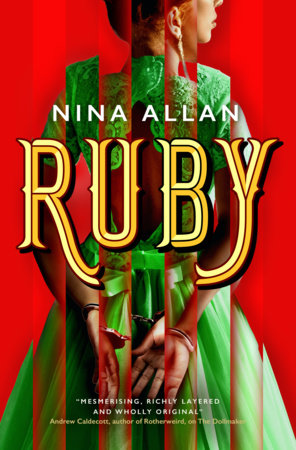
Titan have been publishing Allan’s work since they brought out an expanded edition of The Race in 2016. This was followed by The Rift in 2017 and an updated edition of The Silver Wind in 2019. Their latest offering from her is Ruby, which was originally published as Stardust: The Ruby Castle Stories in 2013. As that earlier title indicates, this book consists of a sequence of linked stories. At first, they seem to be very loosely linked––tied together only by fleeting references to the eponymous Ruby, a film star whose career ends when she is imprisoned for murder––but more connections become apparent to the reader in later stories.
Indeed, when I got to the end, I had to fight hard against an overwhelming urge to go back to the beginning again with my new knowledge and put all the events in the stories together into one coherent plotline. However, that would be the wrong reason to read these beautiful and entrancing stories again. Not only is there no overall temporal continuity but also, to the extent that these are horror stories, the horror lies in wait for those determined to keep religiously to the straight and the narrow. Morally these stories are ‘chaotic neutral’ and trying to impose order on them would at best be inviting frustration and at worst risking getting trapped in some maze-like time loop, as happens to several characters in these stories. Paradoxically, though, for those prepared to embrace the apparent unreason of time paradoxes and coincidences that unspool sinuously through these stories, potential nightmares turn into dreams of possibility.
For example, in ‘Laburnams’, Christine ‘had often wondered if it was possible to take a wrong turning and end up living a life that was not your own’ and there are lot of people in these stories trapped in lives that are not their own. In ‘Wreck of the Julia’, this condition is explicitly linked to the evasion and lying inherent to south London lower-middle-class suburbs such as Croydon and Sidcup, which are very similar to the one I grew up in. And you don’t get out of those lives by conforming to the moral parameters that structure and limit them. Therefore, escape is itself a traumatic experience that scars and is only overcome retrospectively by sensing the rightness of the new life. The protagonist of ‘Stardust’ feels ‘the change happen, a discernible click, as if a key had been twisted inside me’.
Such transformations also have little to do with free choice and that is what makes them doubly scary. One of the protagonists tries to make sense of his experiences through ‘dream science’ and ‘the idea of the subconscious as a crime writer’ throwing out as many red herrings as useful clues. But it is only by negotiating both the red herrings and the clues that he finds his way again. These stories are not merely tales of the unexpected or simple mysteries but a series of labyrinthine twists which simultaneously fold in and out on themselves to reveal unexpected perspectives and hidden views. The result of such an intricate weaving together of signs and wonders is a collection of stories that reads like a novel which you want to go on and on. So, while I didn’t immediately reread the stories, I would have been happy to have continued to lose myself within more of them for another thousand pages or so. Nevertheless, I didn’t end Ruby feeling unfulfilled because after thinking about it––and these stories do tend to embed themselves in your mind for a while––I realised that I could take the fluid mode of reading that the stories had seduced me into adopting and use it to read other stories and novels in productive ways. In this manner, Allan not only generates possibilities through her writing, but she also teaches her readers to generate possibilities through their reading.






 vector-bsfa.com