Torque Control

Phoenix Alexander is the new Editor-in-Chief

Vector is building a bigger team and is delighted to welcome a new Editor-in-Chief!

Phoenix Alexander (he/him) is the Jay Kay and Doris Klein Librarian for Science Fiction and Fantasy at the University of California, Riverside, where he curates one of the world’s largest collections of catalogued science fiction. 

He completed his Ph.D. in the departments of English and African American Studies at Yale University, where he also worked as a curatorial assistant at the Beinecke Rare Book and Manuscript Library for three years. Prior to coming to UCR he was the Science Fiction Collections Librarian at the University of Liverpool. 

Phoenix is a queer, Greek-Cypriot scholar and writer of science fiction himself. His work has appeared in The Magazine of Fantasy and Science Fiction, Beneath Ceaseless Skies, Black Static, Safundi: the Journal of South African and American Studies, and Science Fiction Studies. He is a full member of the Science Fiction Writers Association (SFWA), and served as a judge for the Arthur C. Clarke Award for 2021 and 2022.  

Bittersweet Utopias: An interview with Kellynn Wee

We were lucky enough to chat with Kellynn Wee, researcher and designer of tabletop roleplaying games, about solarpunk, utopia, memory, narrative and chance, the TTRPG scene in Singapore, and much more.

Hi Kellynn. Why don’t you start by introducing yourself?

Sure, my name is Kellynn Wee, and I’m currently a PhD candidate at UCL. I’ve been looking at play communities in Singapore, and how players relate to fantasy and speculative worldbuilding in tabletop roleplaying games. I have a background in anthropology, so I’m interested in the social relationships and meanings that emerge from these play communities – in how games can become sites to explore different relationships and identities, and how games allow us to deal with different forms of value, different approaches to uncertainty, or new ways of imagining the self. I’ve also been working on a climate futures game, Move Quietly and Tend Things, which I describe as a bittersweet utopia. 

This research involves a lot of playing games, right?

Oh for sure. I’ve never played so many games in my life! I recently calculated and it was nearly 250 games in about twenty months of ethnography, which should kill my passion for games, but somehow hasn’t. And I think that’s a good sign.

Wow! Has the play sometimes felt like work?

It’s a good question. There are always interesting tensions between play and work, right? Have you read Play Money by Julian Dibbell? It’s about quitting his day job and becoming a full-time loot farmer …

No, but that sounds kind of up my street.

Well, there were definitely games that felt like drudgery. I think it’s because of the volume of games I played. Some games just didn’t spark. It might be the dynamics of the players at the table, the kind of energy people are bringing to it. Roleplaying games are so dependent on the particular constellation of individuals at that point in time. 

Right.

But even when they don’t quite spark, it’s not exactly like work. I mean, I still had fun!

That’s good! I guess ‘work’ and ‘play’ is one wobbly binary, and then ‘work’ and ‘fun’ is another wobbly binary? There is some interesting writing by Bo Ruberg about the variety of emotions associated with play — fun is an important one, but it’s not the only one.

Sure.

You are researching the games and the players and the communities. But can I ask about games themselves as research tools? I’m wondering how games and play have been used in anthropological research historically, and whether you see potential for using them in new ways in the future.

Well, it’s pretty common for games to be pedagogical tools, right? They’re ways to place students into an anthropological frame of mind. I know that games have been successfully used to reframe research findings beyond textual outputs. For instance, I recently attended a talk by Andrea Pia, who designed a game for students to explore the topic of Chinese rural migration. They transformed their research into an interactive digital narrative where you’d make choices for a migrant character to proceed through the world, and it used photos, videos, quotes and characters that derived from Pia’s fieldwork. 

That sounds interesting.

Yes, it was really interesting. Using games as research methodologies though? Maybe that’s something that hasn’t been explored all that much, or at least it’s something I’ve yet to fully grasp myself. I wonder why not though, right? Playing, especially role-playing, and ethnography share many principles. The first thing that comes to mind is the art of asking questions well. There’s this act of iteration, of only understanding whether a method works by doing it, and then coming back to ask what sort of tools or approaches you need to get to an understanding that you want. There’s the act of making the implicit explicit, of paying attention to what is unsaid as much as what is said. There’s the consideration of different relationships, different identities, how people are going to come together and interact in the same space. There’s this element of sharing sensorial or bodily space. 

These are all aspects that anthropologists pay attention to. And so do tabletop roleplayers. A roleplaying game can also make aspects of relationships and elements of social currency visible. I also think games can act almost like a kind of meta-reality tool. While anthropologists and other social scientists often act on the principle of making the familiar strange when thinking about their work, I think games can often carry out the opposite act of making the strange familiar–exploring peculiar worlds and peculiar viewpoints by using everyday tools that help us frame our capacity for action regardless of the circumstances. So yes, many game practices resemble ethnographic practices and ethnographic thinking. It’s exciting to think what might be done with that, but it’s still a question I’m exploring. 

Your answer is making me think of this interview as a very rules-lite roleplaying game.

Should I roll some dice?

Continue reading “Bittersweet Utopias: An interview with Kellynn Wee”

Ambitopia: Futures Beyond the Binary

By Redfern Jon Barrett

We live in a golden age for speculative fiction. Futurist novels, shows, and movies have achieved a cultural saturation which would have been difficult to foresee just a couple decades ago, largely thanks to our increasingly unpredictable and perilous world. But rather than simply doling out temporary escapist relief, speculative stories help us comprehend our own cultures and their problems. Often, contemporary issues are approached via one side of a binary: either they’re exaggerated, showing us their destructive potential via a dystopia, or else they’re understood via their solution, producing a utopia.

So far, so obvious. But why are utopia and dystopia the genres we use to exaggerate and comprehend our own societies? Human communities are not structured according to a simplistic binary, instead being dependent on ever-changing laws, ideas, and social conventions. We know that truth ultimately lies in shades of grey, so why do black and white narratives still predominate in speculative fiction? Is this binary still useful as we wade deeper into the 21st century? What alternatives are out there?

Binary Problems

A few years ago the speculative writer Laurie Penny and I were interviewed on the subject of utopia. Penny, who is also a prominent journalist, posited a serious problem with utopias: namely, that the desire to create an idealised society has been used to justify numerous atrocities throughout our own history. Considering the many massacres committed in the name of a perfect world – theocratic, eugenicist, nationalist, agrarian, or Communist – it’s a difficult point to argue with. In Penny’s words, “true utopia is fascism”, underscored by a rigid set of idealised rules, unable to ever truly change or adapt; at best stagnant, and at worst, totalitarian.

Continue reading “Ambitopia: Futures Beyond the Binary”

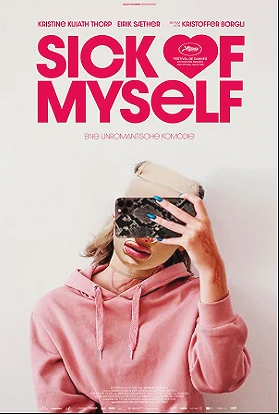
Sick of Myself: a Manic Satire on Spectatorship, Vomiting Blood, and the Icarian Limits of Identity Politics

A film review by Maz Jardon

“Beautiful tragedy” might seem like an oxymoronic statement, but one that holds multitudes of truth for Western aesthetics, from the inclusion of Little Nell’s malady in Charles Dickens’s The Old Curiosity Shop as synonymous with her beauty and purity, to the recent trend of “Sick-Lit” Young Adult novels that blend medical drama narratives with teen romance themes. What emerges from these depictions is a distorted mirror image of the reader both seeking and being subjected to, the social power of being a medical spectacle. Kristoffer Borgli’s debut feature film Sick of Myself comments on the trend of reflexive voyeurism-exhibitionism by countering the notion of a Romantic affliction with grotesqueness and a liberal dose of body horror. Scathing in commentary and relentless in gore, Sick of Myself (2022) provides a riotous narrative layered with a critique on postmodern loneliness, the economy of sympathy, and the mirage of corporate inclusivity.  

Sick… follows 20-something Signe (Kristine Kujath Thorp) and her tragi-comedic attempts to eclipse her boyfriend’s artistic success by attracting sympathy through medically induced self-harm. Sick premiered on May 22nd, 2022 at the 75th Annual Cannes Film Festival but would not receive a global release until 2023, to largely positive, albeit polarising, reviews. 

Signe consuming Lidexol

Opening with a scene of Signe and her boyfriend Thomas (Eirik Sæther) at an upscale restaurant competing for attention with their respective techniques – Signe, pretending it is her birthday, and Thomas, pretending he is rich and successful – the film’s premise is set. The up-the-stakes dynamics of the plot is affirmed when Thomas flees the restaurant, with a stolen $1000 bottle of wine in hand, and is chased by their waiter. Later, Signe witnesses a near-fatal dog attack and overcomes the Bystander Effect to call an ambulance and care for the woman’s wounds until the ambulance arrives. During her walk home, when onlookers see her covered in blood and assume she is the victim, she realises she can receive far more attention from sympathy than gratitude. The narrative escalates, much like how an untreated dog bite festers.

Continue reading “Sick of Myself: a Manic Satire on Spectatorship, Vomiting Blood, and the Icarian Limits of Identity Politics”

An emotional affair with a particular orchid

Plants in Science Fiction: Speculative Vegetation. Edited by Katherine E. Bishop, David Higgins and Jerry Määttä. University of Wales Press, 2020.

Reviewed by Rhona Eve Clews


Before we dive into the myriad wonders of the first-ever collected volume on plants in SF, let me signpost by saying this article is not intended as a straightforward book review, more a subjective-entangled way into an intense and highly transformative text. As an Artist, Ecologist, Healer and dyspraxic my approach might be perceived as that of a fuzzy set, so named by Brian Attlebury, that is ‘affiliated with other texts that might seem to belong to other…terrains’ and tending to spy unexpected connections and join unexpected dots. I draw attention to this method as the unconventional, multidisciplinary approaches might be the essence of what this book points to, namely an urgent need for cross-species intimacy, or inter-kingdom intimacy. My hope is that bridging the separate islands on which different academics tend to reside will foster such closeness.

 Slurp, collage, Rhona Eve Clews
Continue reading “An emotional affair with a particular orchid”

CfP: Speculative Modernisms

Ibrahim El-Salahi: Behind the Mask series 2020-2021

Vector invites proposals for articles on speculative modernisms, exploring modernist, experimental, and avant-garde literary and artistic traditions in relation to science fiction, fantasy, and cognate genres and modes.

The inspiration for this topic arises from Nina Allan’s nomination, in Strange Horizons, of Nicola Barker’s H(A)PPY as her favourite novel of 2017. As Allan writes, the ‘profound’ and ‘unsettling’ experience of reading Barker’s experimental text is ‘inextricably bound up in the novel’s innovative use of form’. Although the apex of science fiction’s interaction with literary modernism is often identified with Michael Moorcock’s tenureship of New Worlds, we argue that not only is there a more sustained relationship but that modernism was not confined solely to the literary. In its political guises, modernism also imagined new social and technological regimes in ways that complemented, utilised and informed SF’s utopian visions. As Ali Smith has proposed, modernism ‘broke everything up and everything could start all over again. So you could understand both reality and books from a new angle, a renewed angle’. Disruption, novelty, estrangement, defamiliarization – these too are often regarded as characteristics of science fiction. As Virginia Woolf wrote to Olaf Stapledon, on receipt of Star Maker (1937), ‘it seems to me that you are grasping ideas that I have tried to express, much more fumblingly, in fiction.’ Woolf, like Stapledon, was fascinated by discoveries in physics and biology that fundamentally changed our understanding of reality, as well as its artistic representation. From H.G. Wells’s influence on the European avant-garde to contemporary slipstream novels, such as Ned Beauman’s Venomous Lumpsucker (2022), we can see that ongoing interaction. ‘Speculative modernisms’, though, are not confined solely to literature – they can also be found in art, architecture, film, music, design and photography. As the critical focus on postmodernism wanes, we perhaps now have ‘a renewed angle’ on a half-buried history of modernism and SFF. 

We are open to submissions from academics from any discipline and at any career stage, from independent scholars, as well as from SFF writers, fans, and others. We especially welcome voices from marginalized groups. All contributions will automatically be considered for publication in a special issue of Vector (guest-edited by Paul March-Russell) as well as Vector’s digital platform.

Please submit your proposal by 4 September 2023 to vector.submissions@gmail.com, including:

  • a 150-500 word proposal, including estimated length;
  • something about yourself, either a 50-100 word bio or a CV.

Articles should be between 1,000 and 8,000 words. Please let us know your intended word count. We seek articles that are carefully grounded in scholarly research, while also being clear, engaging, and suitable for a broad audience (including non-academics). Articles will be due by 29 January 2024.

Please also feel free to make queries about other formats, e.g. reviews, interviews, curated reading lists, roundtable discussions, unusual / innovative formats. 

Suggested questions / topics

  • Science fiction and literary experiment
  • Global modernisms and science fiction
  • Modernism and techno-culture
  • Modernist utopias/dystopias
  • Science fiction and the visual arts
  • Science fiction and modernist architecture
  • Science fiction and modernist cinema
  • Modernism and SF theatre
  • Scientific influences on modernism and science fiction
  • Language, modernism and science fiction
  • Science, modernist poetics and science fiction
  • Modernism and Afrofuturism, Africanfuturism, and other regional futurisms
  • Modernism and Indigenous futurisms
  • Modernism, science fiction and non-Western knowledges
  • Modernism, science fiction and sexual expression
  • SF fanzines, modernism and science communication
  • Politics, modernism and science fiction
  • Coteries in modernism and science fiction

Bibliography

Tim Armstrong, Modernism, Technology and the Body: A Cultural Study (CUP, 1998)

Gunter Berghaus, ed. Futurism and the Technological Imagination (Rodopi, 2009)

Matthew Biro, The Dada Cyborg: Visions of the New Human in Weimar Berlin (University of Minnesota Press, 2009)

David Brittain, Eduardo Paolozzi at New Worlds: Science Fiction and Art in the Sixties (Savoy Books, 2013)

Ian Christie, The Last Machine: Cinema and the Birth of the Modern World (BBC Books, 1994)

Seo-Young Chu, Do Metaphors Dream of Literal Sleep? A Science-Fictional Theory of Representation (Harvard University Press, 2010)

Sara Danius, The Senses of Modernism: Technology, Perception, and Aesthetics (Cornell University Press, 2002)

James Gifford, A Modernist Fantasy: Modernism, Anarchism, and the Radical Fantastic (ELS Editions, 2018)

Alex Goody, Technology, Literature and Culture (Polity, 2011)

Linda Dalrymple Henderson, The Fourth Dimension and Non-Euclidean Geometry in Modern Art (Princeton University Press, 1983)

Holly Henry, Virginia Woolf and the Discourse of Science (CUP, 2003)

Stephen Kern, The Culture of Time and Space, 1880-1918 (Harvard University Press, 1983)

Roger Luckhurst, ‘Laboratories for Global Space-Time: Science-Fictionality and the World’s Fairs, 1851-1939’, Science Fiction Studies 39.3 (2012)

—– Science Fiction (Polity, 2005)

Paul March-Russell, Modernism and Science Fiction (Palgrave, 2015)

—– ‘Science Fiction, Modernism, and the Avant-Garde’, in Gerry Canavan and Eric Carl Link, eds. The Cambridge History of Science Fiction (CUP, 2019)

Sarah J. Monstross, ed. Past Futures: Science Fiction, Space Travel, and Postwar Art of the Americas (MIT Press, 2015)

Mark S. Morrisson, Modernism, Science and Technology (Bloomsbury, 2017)

Adam Roberts, The History of Science Fiction (Palgrave, 2006)

Andrew Ross, Strange Weather: Culture, Science and Technology in the Age of Limits (Verso, 1991)

Charlotte Sleigh, ‘“Come on you demented modernists, let’s hear from you”: Science Fans as Literary Critics in the 1930s’, in Robert Bud et al, eds. Being Modern: The Cultural Impact of Science in the Early Twentieth Century (UCL Press, 2018)

Richard Stites, Revolutionary Dreams: Utopian Vision and Experimental Life in the Russian Revolution (OUP, 1989)

Adam Stock and Miranda Iossifidis, eds. ‘Modernism and Science Fiction’, Modernism/Modernity Print + 6.3 (2022), https://modernismmodernity.org/forums/modernism-and-science-fiction

Cecelia Tichi, Shifting Gears: Technology, Literature, Culture in Modernist America (University of North Carolina Press, 1987)

Philip E. Wegner, Shockwaves of Possibility: Essays on Science Fiction, Globalization, and Utopia (Peter Lang, 2014)

Michael H. Whitworth, Einstein’s Wake: Relativity, Metaphor, and Modernist Literature (OUP, 2001)

Flights of fantasy

By Janet Philp

Fantasy tales are littered with beings that can fly, whether in video games like The Legend of Zelda1 and Skyrim2, classic films such as Prince Vultan’s hawk men in Flash Gordon3, dozens of Marvel and DC heroes, TV series, blockbusters like the Harry Potter4 series and the classic Dungeons and Dragons5. The fantasy creatures of China Mieville provide us with a multitude of winged and armed creatures whilst Le Guin provides us with winged entities of a more recognisable feline form (Le Guin, 1999).

Characters who can fly capture our imagination.  They are seen as having the ability to rise above and they often have power and God-like appearances. In this article we will be looking at the anatomy of flight and whether it can help us understand how these beings can fly, or whether it is best left to special effects. 

As we are looking at self-propelled flight, we will ignore characters who fly by some means of alternative propulsion such as Ironman6, Thor7 and Mary Poppins8.  We shall ignore those that fly using a cape such as Dr Strange9 and potentially Superman10 and we will limit our exploration to those creatures who present with anatomical wings that propel flight as opposed to fins or flaps that allow for gliding.

In the history of life on Earth there have only been four classes of creatures who have possessed the ability to truly fly.  These are the pterosaurs, insects, birds, and bats. 

Pterosaurs have been extinct for millions of years and so how they flew can only be speculated upon. Insects, due to their exoskeletons have a different anatomy and flight patterns which are not often represented in fantasy literature, although accurately depicted in the new Dune movie11.  This article will concentrate on bats and birds and how they can inform our understanding  (Evans 2020) of the flight of fantasy creatures.

Wings of Desire (1987)
Continue reading “Flights of fantasy”

Black Utopias: Speculative Life and the Music of Other Worlds

Reviewed by Rebecca Hankins

Black Utopias: Speculative Life and the Music of Other Worlds by Jayna Brown. Duke University Press, 2021. Paperback 212 pg. $24.95. ISBN: 978-1478010548

Brown’s Black Utopias is one of the most scholarly and comprehensive works exploring Black Utopian futures. Very apt for a Covid-19 pandemic period that has seen the initial overwhelming loss of Black and Brown lives. In light of this mass death, Brown’s study asks — and through this work, answers — “What might Black futures mean, and how might we challenge our imaginations to create futures that are not only different to what we know and what we expect, but even allows us to evolve beyond our physical existence? Packed into these pages is a narrative that encompasses Afro-futurism, death, theology, spirituality, music, philosophers, science fiction, fantasy, and gender, stories that had to be absorbed, analyzed, and contemplated before beginning the review. There were layers after layers of new ideas packed into a narrative that also centered the stories of Black women’s religious and cultural beings in which they constantly sought a physical and metaphysical utopia within an Afro-futurist and Afro-centric framework. 

Cultural critic Mark Dery is credited with coining the term Afro-futurism as “techno cultural aesthetic that blends science fictional imagery, technology, philosophy, and the imagery, languages, and cultures of Africa and the worldwide African diaspora.” Scholar Yusuf Nuruddin also notes that Afrofuturism “includes black science fiction or Afrocentric science fiction, more broadly defined as African American signification about culture, technology and things to come” (or, in the case of alternative histories, “things that might have come” from a reconfigured past). Brown’s adds to our understanding of Afro-futurism that undergirds her work: Brown defines Afro-futurism as “a program for recovering the histories of counter-futures […] most notable for resisting disciplinary boundaries” (p17). Moreover, combined with this Afro-centric, interdisciplinary attitude toward futures and counter-futures, the genre of Afro-futurism centers works of science fiction, fantasy, and other speculative fiction created by African Americans, Africans and the African diaspora. Afro-centricity embodies works that are often critical writings that focus on race, the institution of slavery, class, gender, oppression, inequality, and sexuality, all woven throughout Brown’s book. 

Continue reading Black Utopias: Speculative Life and the Music of Other Worlds

2-3-74: Philip K. Dick and His Far-Out Exegesis

By Carrie Melmouth

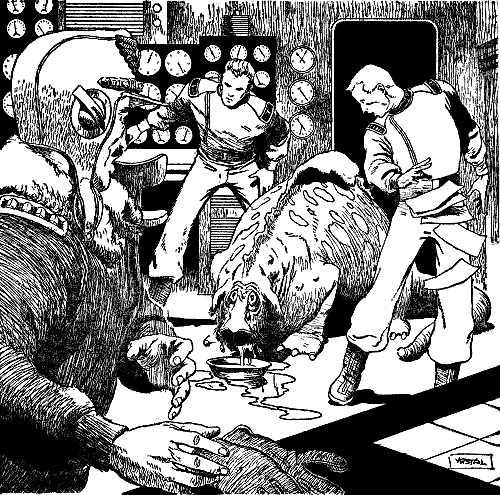
The slovenly wub might well have said: Many men talk like philosophers and live like fools.

I was introduced to the work of Philip K. Dick by my (then) boyfriend (ten years ago) when I was twenty-three. His sitting room was lined with bookcases, and from it, one day, he pulled a book of Philip K. Dick short stories. ‘Beyond Lies the Wub’ is not the introduction to the work of PKD I would have chosen for myself. It explores none of the themes that interest me in PKD. The wub is a ‘huge dirty pig’. And the pig doesn’t want to be eaten. I was bored.

“Really, Captain,” the wub said. “I suggest we talk of other matters.”

PKD was forty-five years old in 1974. He had sold his first short story, ‘Roog’ in 1951 and his first novel, Solar Lottery, in 1955. Both had been simultaneously pulpy and ontological. He had won the Hugo Award for The Man in the High Castle (which also bores me) in 1963. The Three Stigmata of Palmer Eldritch had not won the Nebula Award in 1965 (losing out to Frank Herbert’s Dune). Later, in what came to be known as The Exegesis, he wrote that his ‘mystical experiences start[ed] in ’63 when’ he ‘saw the “Palmer Eldritch” visage [in] the sky’. For all the plurality of his ‘mystical experiences’, though, when people do talk about PKD’s mystical experiences, what they talk about is 2-3-74. In the 1986 17th issue of Weirdo, comix cartoonist Robert Crumb illustrated a (necessarily reductive) account of 2-3-74.

Continue reading “2-3-74: Philip K. Dick and His Far-Out Exegesis”

Beyond Gender Collective: Abolish the Family!

Abolish the Family by Sophie Lewis

Review by Beyond Gender

Abolish the family? You might as well abolish gravity.” (1)

It is with these words, spoken by an imagined, horrified reader, that Sophie Lewis begins their new book. From the outset, the magnitude of the task ahead for family abolitionists is clear. To abolish the family is to attempt something frightening, something unthinkable, something which requires one to challenge the fundamental rules which bind our world together. It is, then, no surprise that again and again Lewis reaches for science fiction (SF) to articulate this vision of a world beyond the family. For an SF creator, to abolish a so-called law of nature is not a ridiculous proposition which can be used to embarrass utopians into giving up on their belief that “things could be different” (4, emphasis in original). It is rather a serious undertaking which involves an investigation of those forces which hold life as we know it together, the willingness to experiment with those same forces, and the determination to remake the world, however alien what comes next might be. This is the spirit in which we, the Beyond Gender research collective, approach Lewis’ book. We are a group of SF fans, researchers and creators who are committed to tapping into the radical potential of SF to undo the supposed naturalness of such myths as the binary model of gender, cis- and heteronormativity and, now, the family.

“Abolish the family? You might as well abolish gravity.” 

“Okay then, might as well.”

Continue reading “Beyond Gender Collective: Abolish the Family!”