Torque Control

Post-it Utopia: The Promises and Pitfalls of Arium’s Lean Worldbuilding

By Nicholas L. Stefanski 

Arium: Create

The worldbuilding TTRPG Arium: Create by Adept Icarus promises a utopian procedure for creating gameworlds that are generative, safe, and liberating environments for roleplayers, an undertaking animated by recent debates over the prevalence of harmful, stereotypical, or simply repetitive tropes throughout the TTRPG industry. While the shift away from these problematic tropes is admirable and perhaps overdue within the industry, Arium’s approach to addressing this issue is also notable for its enthusiastic endorsement of creativity techniques stemming from the world of corporate management and innovation consulting. Specifically, Arium’s Lean Worldbuilding approach shares many commonalities with the Lean management philosophy that emerged in the 1990s, largely inspired by Toyota’s operating model. Both Arium’s Lean, and Lean as it is now understood in business, are associated with the pervasive use of Post-it notes for ideation and collaboration.

Image Credit: Shutterstock

This article explores how Arium’s utopian solutionism and endorsement of a signature technique of post-Fordist management presents both pitfalls and opportunities for inventive, utopian roleplay. Beginning in the critical mode, I suggest that by adopting techniques that reduce the art of imaginative worldbuilding to a ritualized formula, Arium: Create risks building worlds that are creative merely for the sake of creativity, and consensual mainly in their appeal to the lowest common denominator. Inspired by Adorno and Horkheimer’s critiques of jazz and the culture industry, and following Eitan Wilf’s ethnography of Post-its and critiques of the innovation and creativity industry, the first movement of the article asks whether such strategies of routinized, commodified creativity can only ever produce the ‘freedom to choose what is always the same.’[i] Nevertheless, while this danger should not be ignored, I argue that it would be wrong to dismiss Arium or to label it as utopian in only the pejorative sense. Taking cues from theorists responding to Adorno’s pessimistic stance toward popular culture, notably Adorno’s Frankfurt School colleague and interlocutor Walter Benjamin, the second movement of the article suggests that despite its embrace of corporate solutionism, Arium’s collaborative worldbuilding contains a generative kernel, revealing an additional movement in the dialectic between oppressive technologies of control and the utopian impulse.

Continue reading “Post-it Utopia: The Promises and Pitfalls of Arium’s Lean Worldbuilding”

Mikhail Karikis: Activism and audiotopia

Phoenix Alexander interviews Mikhail Karikis

All images are part of No Ordinary Protest project, with permission from Mikhail Karikis.

Please briefly introduce yourself.

I am a Greek-born artist based in London and Lisbon. I work mostly in moving image, sound and performance. I develop projects through collaborations with individuals, collectivities and communities that are often located beyond the circles of contemporary art. In recent years, I have been working extensively with children, teenagers, young adults and people with disabilities. 

Since the early stages of my practice, the politics and materiality of the voice have been key concerns, while at the same time engaging with themes that give voice to different ways humans relate to the environment. There has been an instinctive journey that I began with films exploring voicing conditions of labour in the context of extractivist practices. This moved forward by looking at models of sustainability and eco-feminism, and more recently eco-activism and emerging forms of labour that service nature. 

I would say that my works prompt an activist imaginary and rouse the potential to imagine possible audiotopias (i.e. speculative places invoked through sound) and desired futures. I employ listening as an artistic strategy to help determine the content of my projects with the aim to highlight alternative modes of human action and solidarity, and to nurture critical attention and tenderness.

To what extent do you consider your work and practice to be ‘science fictional,’ if at all? Do you actively think about genre in your work, or do the labels come after the fact? (Surrealism, social realism, performance etc.)

I find science fiction and fantasy literature inspiring, but I do not think of my own artistic work through the lens of a specific genre. Perhaps where some science fiction literature and my art practice align is the way I employ my work to imagine and propose different worlds. I often start projects by embedding myself in different community contexts, and as such, social realism is always my starting point. Reflection, imagination and fantasy play an important role as I develop the themes and the projects mature and take shape. A decade ago and after I’d spent several years producing work that was furious and acutely critical, I took the decision to go further and invest my energy and imagination to proposing ‘better’ alternatives. My use of the word ‘better’ here implies a world with social and environmental justice, egalitarianism and practices of care. 

Sounds plays a central role in much of your work. Can you say a little bit more about how you see the relationship between the sonic and visual aspects of a new project?

I am currently developing a project which explores our relationship to weather phenomena. I am approaching it from three sonic perspectives: folk songs that call out to the elements, capture and transmit traditional knowledge about seasonal change and meteorology; a second angle is that of music instruments that imitate the sounds of weather and bring the environment into the concert hall through sound, like, for example, wind machines and thunder sheets; and a third perspective is the acoustics of resistance generated through eco-activism and protest. I am working with folk singers, professional experimental musicians and young school children on this project to bring together these three different forms of auditory culture that are testimony to our profound connection and entanglement with the weather. As is common in my work, the performance of these different forms of sound will determine the visual dimension of the project. Be it on a macroscopic or microscopic dimension, all my films capture acts of communal sound-making, resonance and vibration, and document the power sound has to set into motion the material universe, activate our sentiments and mobilise political thinking and action. 

Are there any works of science or speculative fiction (in any medium!) that have particularly inspired you?

Every child and teenager should read The Iron Woman by Ted Hughes for its environmental focus, for empowering children heroes with activist ecological thinking and rebelling against adults, and for the central role listening and noise play in the story as superpowers that activate empathy toward more than human beings. The Dispossessed by Ursula Le Guin is a book everyone ought to read for its acute reflections on capitalism, gender politics and anarcho-communism. 

Yesterday’s Technological Tomorrows?

By Paul Kincaid

A review of Futures of the Past: An Anthology of Science Fiction Stories from the 19th and Early 20th Centuries, with Critical Essays, edited by Ivy Roberts. McFarland, 2020, 196pp. 978-1-4766-7810-8.

For a literature supposedly intent upon the new, the inventive, the futuristic, science fiction seems inordinately interested in its own past. I am as guilty as anyone of this, which may be why I notice the phenomenon so much. But the question is: what are we looking for in the past, and (a very different question) what are we finding? Generally, the past is assumed to hold the key to where we are now and what we might become. That, however, is far from always being the case. The history of science fiction is extraordinarily full of false trails, dead ends, U-turns, twists, side tracks, abrupt changes of direction, and so on. Somehow, where we are today emerged out of the mess of what we once were, but in retrospect the route is neither clear nor consistent. Simply diving willy-nilly into the science fiction of days gone by, shining a light at random onto a story over here, a novel over there, offers no clue as to how or even if those writings are connected. And it offers even less of a clue about the evolution of what came after.

That, in a nutshell, is my problem with this latest selection of hoary tales from the dusty and neglected by-ways of science fiction’s infancy. Or rather, since the various contributors seem wedded to Gary Westfahl’s bizarre argument that true science fiction only came into being with the launch of Amazing Stories, this is science fiction from before there was science fiction. There are seven stories and three novel extracts gathered here, the earliest of which was written in 1826 (though not published until 1863), and the most recent published in 1923. Ten pieces of writing drawn from near enough a century of science fiction, each accompanied by an introduction (to call them “critical essays” as the subtitle does is, to my mind, to over-inflate their role); there should be enough here to forge a narrative, give us a perspective from which to consider where we come from and where we might be going.

Continue reading “Yesterday’s Technological Tomorrows?”

“Gypsy in Space”: A Note on the Representation of the Roma in Contemporary Hungarian SF Short Stories

By Áron Domokos

The representation of marginalized communities is extensively explored in both academic SF studies, and popular discourse around SF, particularly since the second half of the 1960s. Themes such as to what extent and by what means the living conditions, adversities, modes of resistances, worldviews, etc. of such communities are represented in SF narratives, as well as the role that individuals identifying themselves as community members play in the production/consumption/reception of SF, have been investigated by practitioners of quantitative and qualitative research. To date, however, there appear to be no studies that address the representation of the Roma in contemporary Hungarian SF speculative fiction. The present paper aims to do the following: (1) to introduce contemporary Hungarian SF short fiction and its readership; (2) to briefly explore the politics of “integration” and “reverse integration” as a means to contextualize the Roma within contemporary Hungarian society; (3) to give an outline of those “semiotic” means by which Roma characters in the short stories under scrutiny are identified; (4) to characterize the particular Roma representations from “invisibility” through “genocide” to “social mobility” that are present in the narratives in question. The texts used for my investigation are the relevant pieces of those submitted in 2014-2018 as candidates for the Péter Zsoldos Award, a national annual prize awarded for the best (published) Hungarian SF novel and short story.

  • Review: This article underwent one anonymous peer review and editorial review from three editors.
  • License: CC BY-NC-ND 4.0.
  • Citation: Domokos, Áron. 2022. “Gypsy in Space”: A Note on the Representation of the Roma in Contemporary Hungarian SF Short Stories. Vector. 28 May 2022. 
  • Keywords: Roma; Hungarian SF; representation
  • DOI: Forthcoming

Gypsy in Space”: A Note on the Representation of the Roma in Contemporary Hungarian SF Short Stories

Together and apart: that is the definition of fraternity. The one we love is another. But the one we love is as close to us as we are to ourselves. So what is needed is not to see the Roma as only a ‘problem’ – and especially not as a ‘problem’ of the white majority – but to act according to the well-known rules of human love, which as a sentiment is not so simple (I have also described it as a contradiction), but in my humble view it is the only right one.

(Tamás 2017)

“Well, white folks ain’t planning for us to be here.”

I want to begin by mentioning that it is comparatively easy to notice the lack of Black representation in mainstream American SF up to the 1970s. Observing that there was not a single Black character in the now legendary 1976 dystopian film Logan’s Run, stand-up comedian Richard Pryor commented: Well, white folks ain’t planning for us to be here. That’s why we got to make movies” (Pryor 1976). As for the Roma,1 science fiction literature in English and other languages since the 19th century had very few Romani characters, and even fewer narratives were written by Romani authors. Let us now take a closer look at the Hungarian-language SF scene.

My study considers nearly 300 pieces of short fiction shortlisted for the 2014-2018 Péter Zsoldos SF Award, and takes a brief look at works in other media. I am going (1) to place the discourses on the representation of the Roma in a social-philosophical framework; (2) to problematize the issue of Roma representation and its “semiotic” aspect; and, in light of this, (3) to classify different ways in which Romani people are represented in contemporary Hungarian SF.

Continue reading ““Gypsy in Space”: A Note on the Representation of the Roma in Contemporary Hungarian SF Short Stories”

Everybody makes monsters: An interview with Kim Newman

Kim Newman is the author of Anno Dracula (1992), a novel set in an alternate Victorian London where Dracula has become the Prince Consort and vampires have emerged as the new ruling class. Since then he has written many more books in the series. Anno Dracula is being reissued by Titan Books in October 2022 as a deluxe signed hardcover edition with an introduction by Neil Gaiman and a new short story by the author. Under the name Jack Yeovil, Newman has also published books which helped to build Games Workshop’s Warhammer Fantasy and Dark Futures universes. In addition to writing fiction, Newman is a major critic of horror cinema whose work can be found in Nightmare Movies (1985) and his Sight & Sound columns. He also served as the executive producer of Prano Bailey-Bond’s Censor (2021).

Updates about Newman’s work can be found at his website and on Twitter @annodracula. We are delighted to have Kim back to chat to Vector, as Jordan S. Carroll asks him about Anno Dracula, shared world writing, film criticism, as well as Kim’s latest novel, Something More Than Night (2021), a horror-detective mystery set in Hollywood during the 1930s and starring Boris Karloff and Raymond Chandler

How did you get started writing?

I hate defaulting to other people’s quotes, but somebody asked George Bernard Shaw that question, and he said he couldn’t remember — because writing was like the taste of the water in his mouth. It was something he’d always done.

I mean, I wrote from childhood. I’m not quite sure at what point that went from writing stories for my own purposes to writing for an audience. I think I always wanted to communicate. It took me a while to consider that this might also be a way of making a living. But as a teenager, I wrote plays and comedy sketches with my friends at school. I wrote novels, or rather novel length manuscripts, in my teens.

The useful thing about starting early is you get a lot of the embarrassing stuff out of the way early on when nobody can see it. Now, you just put your stuff online free for people to read, but it is there forever. It comes back to haunt people. I’m not even sure if I have copies of the stuff I wrote as a kid. I think if I do, it’s in a trunk somewhere very deep.

What drew you to horror in particular?

I started out being interested in monsters, I suppose. I was one of those kids who liked monster movies. I liked the effect of horror, I read a lot of it. But I read a lot of general stuff as well. I’m interested in genre, but I’m not necessarily somebody who wants to be confined by it. I don’t self-identify as a horror writer, or a science fiction writer, a crime writer, a mystery writer. I’ve done all of those things. But I do recognize that I operate best in that kind of arena.

When you tag yourself as a horror writer, that comes with an obligation to be frightening, in the same way that picking comedy comes with an obligation to be amusing. And I think some of my stuff is scary. Certainly other readers have reported that. But I think for a lot of my writing, being frightening is not its primary purpose. I’m interested in exploring other things. I tend to write more about what makes me angry than what makes me frightened. Although obviously there’s an overlap.

So what is it that makes you angry?

The world! And what’s more, I have not calmed down with age. Having written a series of books about what happens when really truly terrible evil people come to power … well, the last ten years have just made me think I overestimated people.

How would you describe your writing process?

Continue reading “Everybody makes monsters: An interview with Kim Newman”

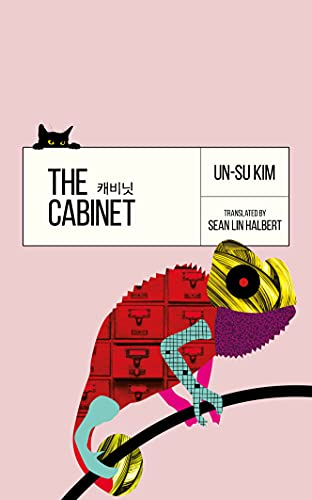
From Woman at Point Zero by Nawal El Saadawi to The Queue by Basma Abdel Aziz

Merit Ariane Stephanos 

Even the titles of the novels – The Queue and Woman at Point Zero – reroute  the thoughts towards recent emotionally exhausting lockdowns. They conjure interminable waiting, to the point of breakdown.  In a way, this is precisely what these books describe. However, the denials of freedom to move, associate and connect are not caused by a global pandemic but by local patriarchal, totalitarian societies. The fictionalised/documentarian versions of Egypt spiritually and physically destroy the respective protagonists, Armani and Firdaus. Both women are driven to extreme forms of exile from their societies, Firdaus by accepting a death sentence, Armani by self-enforced mental alienation. Although all genders in these two novels suffer from oppression, women are subjected to specific forms of violence highlighted by the writers. 

The sensitivity and detail in the portrayal of these forms of gendered violence is related to the fact that not only are respective authors both women, but they are both psychiatrists. Both writers are important figures in Egyptian society, renowned for their activism and respected as powerful intellectuals. The two authors have personally experienced state-inflicted violence for their resistance, their feminism, and their criticisms of other forms of oppression. Nawal El Saadawi was fired, exiled and threatened with imprisonment; Basma Abdel Aziz’s nickname is ‘the rebel’. Both novels portray an Egyptian society from a historical vantage point that are four decades apart (1975 and 2013). These have not been decades of ‘progress’: albeit fictionalised, oppression as presented by Basma Abdel Aziz in The Queue (2013) has become more suffocating and more all consuming.

Continue reading “From Woman at Point Zero by Nawal El Saadawi to The Queue by Basma Abdel Aziz”

Contemporary Greek Speculative Fiction: A Roundtable

With Natalia Theodoridou, Eugenia Triantafyllou, Eleanna Castroianni and George Cotronis

By Phoenix Alexander 

Hi everyone. Let’s start by introducing ourselves to readers / each other!

ET: Hello! I am Eugenia Triantafyllou, a writer and artist currently based in Athens. My fiction has appeared in places like Uncanny, Strange Horizons, Apex and has been nominated for Ignyte and Nebula awards.I am also a Clarion West 2019 alumna. My preferred genres are dark fantasy and horror, although I do like to mix genres and switch it up a lot. 

Twitter: @FoxesandRoses

eugeniatriantafyllou.com

NT: Hi! I am a speculative fiction writer and game designer. Originally from Thessaloniki, Greece, with roots in Russia, Georgia, and Turkey. I now split my time between Greece and the UK. I’ve published over 100 short stories in places like Clarkesworld, F&SF, Kenyon Review, Beneath Ceaseless Skies, and Nightmare, among others, and have three games/interactive novels out by Choice of Games. If you want a taste of my work, I’d recommend starting with “Ribbons” in Uncanny Magazine, “The Birding: a Fairy Tale” in Strange Horizons (which won the World Fantasy Award for Short Fiction), or my Nebula-nominated game, Rent-a-Vice. My work is queer and dark, and I tend to overstep genre boundaries. 

Twitter: @natalia_theodor

natalia-theodoridou.com

EC: Hi, I’m Eleanna, a writer and poet with work in Clarkesworld Magazine, Strange Horizons, Fireside, Beneath Ceaseless Skies and elsewhere. My usual setting is literary science fiction or fantasy where the repercussions of war and oppression feature prominently. I draw a lot from my background as a human geographer and, in particular, from Anthropocene humanities and landscapes of de-industrialization and decay. I am also heavily inspired by contemporary Greek history with its share of complex politics and violence, by the pagan darkness of folk traditions, and by the fragility and cruelty of childhood.

Twitter: @nomadological

eleannacastroianni.wordpress.com

GC: Hello! I’m George Cotronis and I’m a writer and illustrator from Greece by way of Sweden, where I was born. I’ve created book covers for authors like Stephen Graham Jones, Livia Llewellyn and Harry Connolly. When I’m not illustrating, I write short stories. I’ve sold a handful of stories mostly to anthologies like Lost Signals, Robots & Artificial Intelligence and places like Pantheon Magazine and Tales to Terrify. 

Twitter: @ravenkult

cotronis.com

Continue reading “Contemporary Greek Speculative Fiction: A Roundtable”

“Part of the attraction was fear…” an interview with Alexis Panayiotou

Interviewed by Phoenix Alexander and Jo Lindsay Walton

This interview first appeared in Vector 295.

Hi Alexis. Could you introduce yourself and say a little bit about your background?

Hello, my name is Alexis Panayiotou. I’m a fine artist and a drawing tutor on the BA: Fashion course at Central St. Martins.

As you know, this is a special issue of Vector focused on Greek SFF. So our first question is: do you consider yourself a Greek artist?

I think of my identity as mixed or somewhere between cultures. I was born and raised in London. My parents are both Greek, from Cyprus, both came to London very young, my mum nine and dad fourteen. They have lived here ever since. I have never been to Cyprus so I only have a vicarious idea of the place, through my parents and other relatives, and a bit from TV and radio. 

I grew up in a Greek household, eating Greek food, hearing Greek music every day. Greek was my first language until I started school, although now I only have a rudimentary grasp. At home I was steeped in Greek culture and as a young man I would have described myself as solely Greek, and I remember feeling very lucky and proud to be so.

As for ‘artist,’ I’ve only recently started being comfortable using the term — it comes with lots of lofty aspirations! When I was young I drew a lot, like most kids, so there were always parents or teachers telling me I was an artist, or that I would be one. 

Mother pinching her baby affectionately while breastfeeding
Continue reading ““Part of the attraction was fear…” an interview with Alexis Panayiotou”

Five questions for SF Club of Athens

Interviewed by Hephaestion Christopoulos

Instead of introducing you to one or two artists, interviewing them thoroughly, I chose to present here a number of them, as I think they are all noteworthy and you should definitely get to know them. Besides, their work speaks for itself. So I gave ten authors plus one visual artist a limited space to answer the same set of questions:
  1. Name one of your works that is special to you and briefly explain why.
  2. It’s often said that artists have a central theme their work revolves around. Can you spot such a theme in your work?
  3. What do you consider your greatest success in your creative career and what was your greatest frustration, if any?
  4. What have been the challenges in getting your work known? What are the pros and cons of your local market vs getting your work abroad? Do social media really help?
  5. Finally, please tell us what your next plans are.
I sincerely hope their answers will intrigue you enough to check them out.
Lina Theodorou. J-scape, 102 cm X 222 cm, acrylics on canvas, 2021.
Continue reading “Five questions for SF Club of Athens”

Make Shift

Make Shift: Dispatches from the Post-Pandemic Future. Edited by Gideon Lichfield. The MIT Press, 2021.

Reviewed by Ksenia Shcherbino

In my head, collections of short stories are proof of the many-world interpretation of quantum mechanics – once an experiment with different possible outcomes is performed, all outcomes are obtained, each in a different newly created world. To a certain extent, this is the starting point for the Twelve Tomorrows project – an annual anthology of science fiction short stories, published by MIT Technology Review – but unlike in physical experiments, it allows us to observe all of the alternative worlds. Make Shift: Dispatches from the Post-Pandemic Future is the 2021 addition to this project, and it appeared in the most difficult times. The world, having gone through all types of lockdowns, quarantines, social restrictions, furlough policies, has irrevocably changed, and eleven contributors to the book led by the editor Gideon Lichfield are trying to chart out those changes into newly opened futures. 

It’s a great challenge to prepare such a collection of short stories still in the midst of the pandemic (May 2021). It takes the honed instinct of a veteran of MIT Technology Review and, currently, WIRED editor to make sure that these stories still ring pitch-perfectly a year later. When Lichfield wrote in the preface how coronavirus “has ripped open a gaping hole in [capitalist liberal democracy] that may never be closed up,” he could not have possibly known that a year later Europe would be plunged into a war, and that the future would seem even darker, even more dystopian than through the lens of the pandemic alone. Now the world is once again lost in dis-es and mis-es of discord, displacement, dysfunction, misunderstanding, mistreatment and misery, and we struggle to see our place in it.

Nonetheless, the authors gathered under this cover are not new to imagining futures that embody resistance, resilience and hope. They are, in Lichfield’s words, “known for their ability to imagine a plausible future in realistic detail,” and they carve out new possibilities from the minutest details of our everyday life. Professional futurists, skilled world-builders and word-weavers, the volume’s writers are also journalists, sociologists, biotech consultants, activists, lawyers – they both shape the world, and care for the future with an intensity that burns through their words. More than once I finished reading a story in this collection with my eyes wet and my heart beating fast – a testament that the writing is wholehearted, earnest, relevant. It strikes a fighting chord with me despite the fact that there are no wars in these narratives, no large acts of heroism or self-sacrifice. Through the stories of ordinary people, in undramatic settings, they give you hope that, quoting Lichfield again, “the new normal, though forged in pain and suffering, could be a healthier, more robust, and in some ways more creative society.” They give you hope that your life matters. 

“No one is more important than you are,” says Chela in Malka Older’s “Interviews of Importance.” Chela works as operator for a new digital technology that records the memories of the elderly. Her job is to talk to them about their past. But what Chela wants most is to talk to her own mother, and to learn the story she never shared. Chela’s clients love talking to her, she is good at her job, yet somehow she can’t find the right words for the one person who is so important to her. She is afraid that she will never know her mother’s life story, and “there is a difference between knowing the outlines and understanding why things had happened and what it felt like.” COVID had an enormous impact on all emotional bonds that hold us together. Due to travel restrictions, I haven’t seen my mother for over two years now. I know how it feels – the slow erosion of intimacy, the blinding worry that you will be too late to say the right words. 

Family relationships are in the centre of Indrapramit Das’s “A Necessary Being,” a beautiful and sad story about bonding and parting. Our ruined world is being slowly tended back to life by giant omnipotent robots, doing all the menial tasks to make the planet livable again. They are operated by people who inhabit their mechanical bodies and give up on all human connection. But one day one of the operators rescues a little girl. She has nowhere to go, so he adopts her and lets her live with him inside the machine and pilot it. Together they become “heart” and “soul” of the robot. But is this life too much or not enough for a human child? The fragile ecosystem of father-daughter relationship unfurls against the background of the recovering world, and raises questions about gratitude, loyalty and our future survival. 

Stories like this are read through empathy and contemplation instead of adrenaline, as befits a collection of stories about futures after pandemics. Little happens in terms of the plot, or even character development. Yet they can still connect emotionally, and they are a treasure trove of inspirational ideas for the tech-savvy reader. The quadratic voting system in Karl Schroeder’s Sherlockian “The Price of Attention” is presumably unhackable and ensures fair votes by making people invest in the issues that matter the most to them; the system evolved out of the same mechanisms as COVID track-and-trace system. The Nene Huddle network in Ken Liu’s palimpsestic “Jaunt” allows people to establish a secure, yet anonymous and hard-to-trace connection with a telepresence robot and enables virtual travel in a world where conventional travel is extinct, and governments try to lock down and control population in the name of the common good. Such innovations are explained in exhaustive and plausible detail, which gives the stories a certain solidity, while serving as a reminder for us to pay attention to science and technology developments, spurred on by pandemic.

Some of the stories ring hilariously – and dangerously – true to our early pandemic experiences. Confusion, anger, and victimization were part of our initial reaction to COVID, and they are not easy to dispense with. Madeline Ashby’s “Patriotic Canadians Will Not Hoard Food!” recall empty shelves in London supermarkets during the first lockdown and anti-mask riots, as in her post-pandemic Canada, a farmer participates in a government ration exchange program and is persecuted by her neighbours for putting disposable masks on her scarecrows. Lockdowns gave us a chance to rediscover our creative side – and D.A. Xiaolin Spires picks up on this surge of DYI and innovation. In her “Mixology For Humanity’s Sake” the main protagonist is a sake brewer who helps with vaccination delivery – a story that acquires new layers of meaning once you remember the volunteers who were part of the NHS vaccination campaign. Ken Liu’s story with its xenophobic surveillance-obsessed president Bombeo and his anti-immigration policies holds a distorted mirror to both Priti Patel’s and Donald Trump’s agendas, while Adrian Hon’s “Little Kowloon” addresses the challenges faced by Hong Kongers settling in the UK after the 2021 Chinese crackdown on civil rights. Yet through those dark glimpses of our reality shines an unshakeable belief in humanity – in our ability to overcome our troubles without losing our feelings of compassion. It does not matter that our future may not literally resemble the worlds portrayed in Make Shift, since there’s one thing that the collection aptly and truthfully demonstrates: human beings are not neat pieces of a jigsaw puzzle. We never fully fit into any imaginary world, but are constantly adjusting and looking for solutions: political, technological, and above all emotional. 

In one sense, the opening conversation between Wade Roush (a technology journalist and editor of the 2018 edition of Twelve Tomorrows) and Ytasha L. Womack (author, filmmaker and Afrofuturist scholar) stands apart yet defines the tone of the book. Not only does it put this quantum multi-world experiment into the context of racial and social injustice, it also brings out hope for rebuilding from within, or, using Womack’s apt description, for “collective acknowledgement of life.” And this is probably the book’s most important message.